
Blue Star Farm produces a variety of vegetables and the core of the farm is composed of a mosaic of intensively-managed beds, cover crops, fallow fields, and mowed drive strips. Towards the surrounding tree lines and forest patches, there are also less frequently-mowed meadow areas and narrow bands of “soft edges”, where low woody plants provide a transition from field to forest. For my exploration of the wild-growing plants on the farm, I spent around four hours on July 11, 2024 mostly in the less-intensively managed areas of the farm. This included brief visits to two adjacent patches of swamp forest, one ancient (probably not cleared for agriculture for centuries, if ever, and visible as a triangle in the historical aerial photo from the 1940s in Conrad’s blog from yesterday) and the other, just east of the current fields, recently reforested from a formerly cleared area. I also spent some time recording the plants in and around the recently dug irrigation pond. The inventory resulted in a list of 200 plant species, half of which considered native to this region. In this blog, I’ll try to provide a glimpse of the wild-growing plant life on the farm.
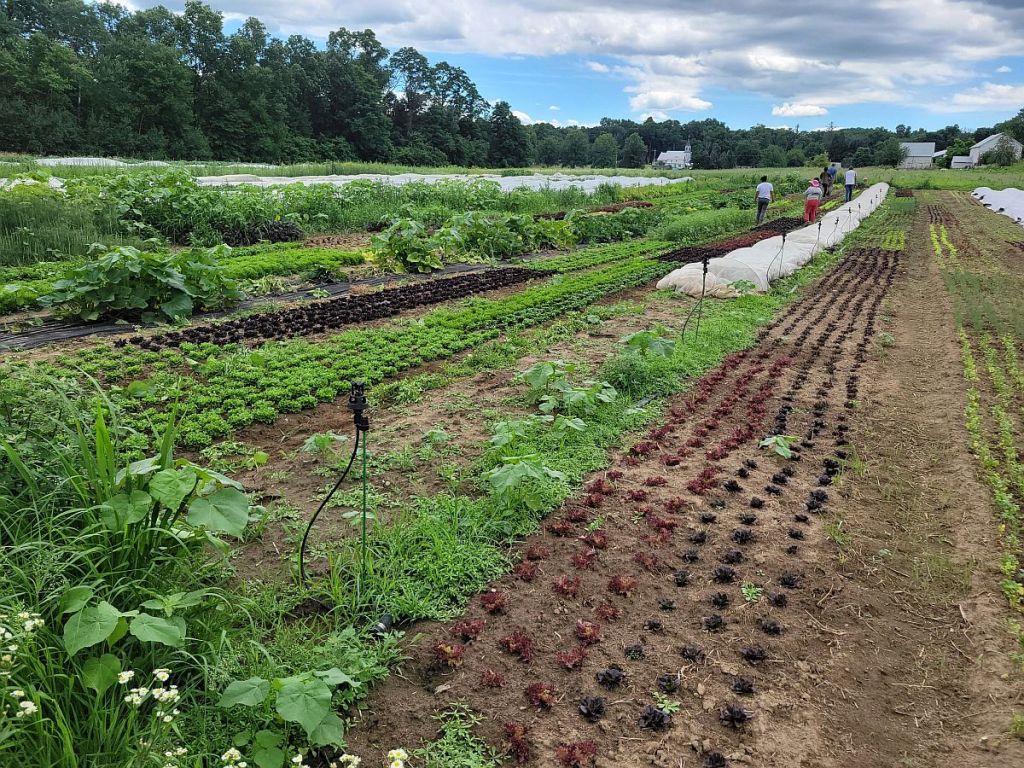
This first picture gives an impression of Blue Star Farm looking south from the approximate center of the fields, with the edge of the young swamp forest on the east side in the background.
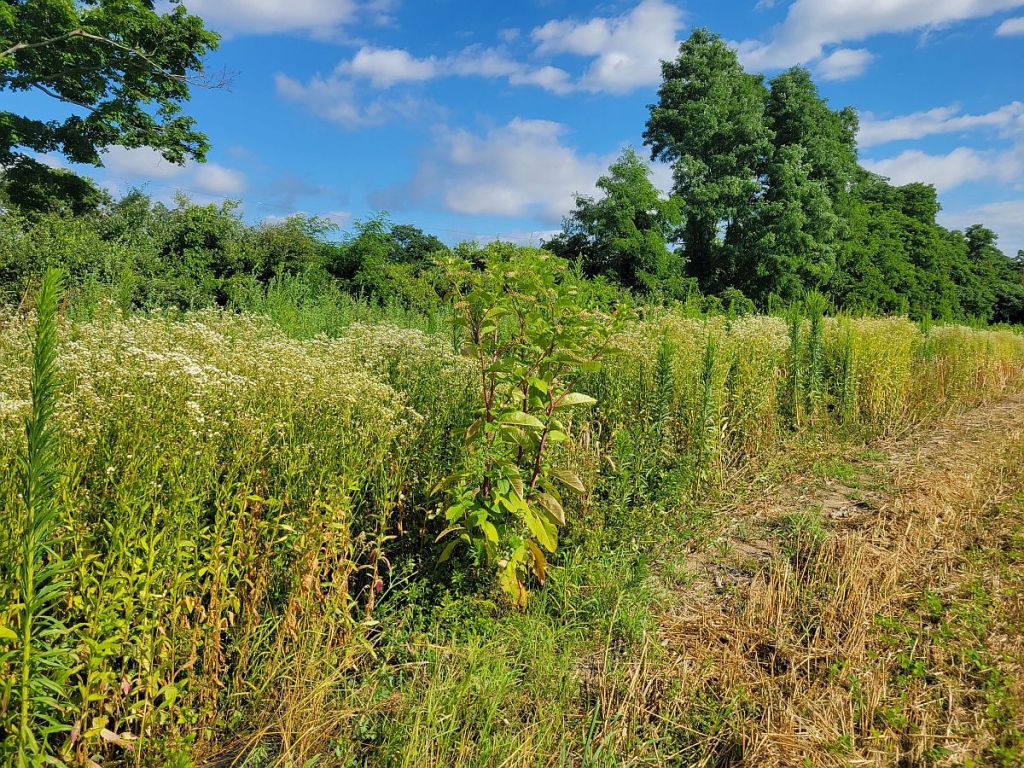
A fallow field (it produced kale last year, but had not been worked this season) along the western edge features some of the most common wild-growing plants in the actively-farmed area: Daisy Fleabane (Erigeron annuus; sea of white flowers) and Horseweed (Erigeron canadensis; slender, tall plants, not yet in bloom). Both species are native to Northeastern North America and can become quite common in 1st year fallows of formerly tilled fields. Their shallow flowers provide nectar to small insects, including parasitoid wasps. The picture also shows a single individual of Pokeweed (Phytolacca americana).
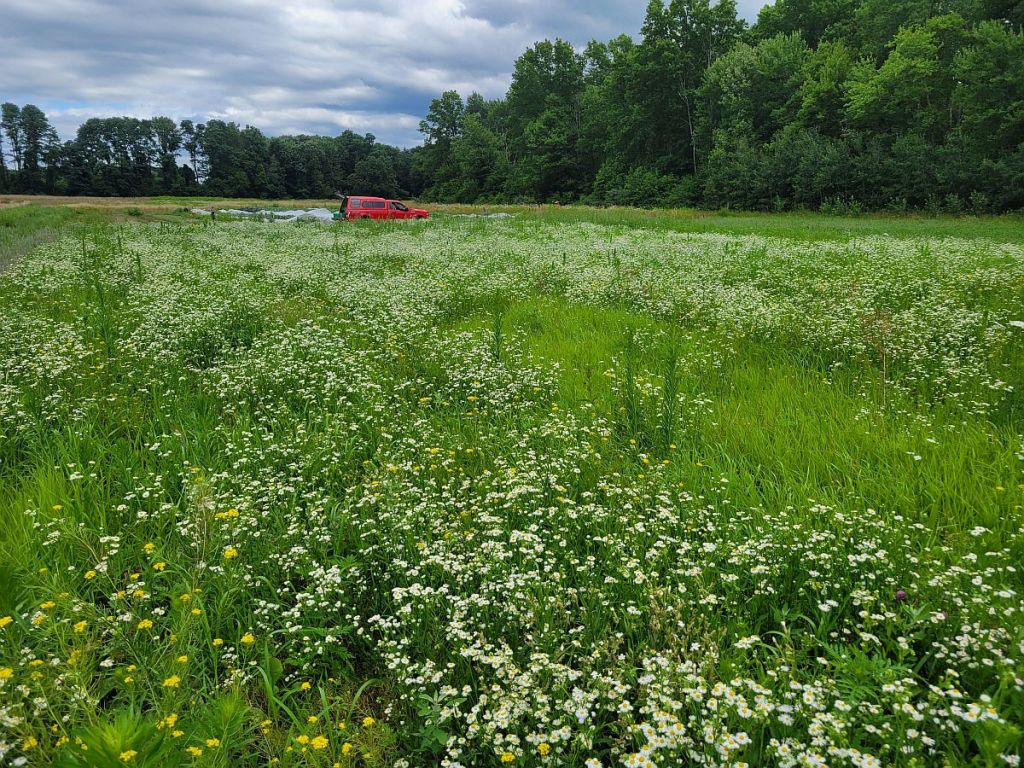
Another fallow field along the eastern edge supports a similar plant community.

A closer look at the daisy-like flower heads of Daisy Fleabane. This species can be seen in bloom from May to October and has smaller flower heads than Oxeye Daisy (Leucanthemum vulgare), which also blooms in early summer. It has more white ray flowers (arranged like petals around the yellow disk flowers) than the many similar-looking aster species, which will open their flowers in August/September.
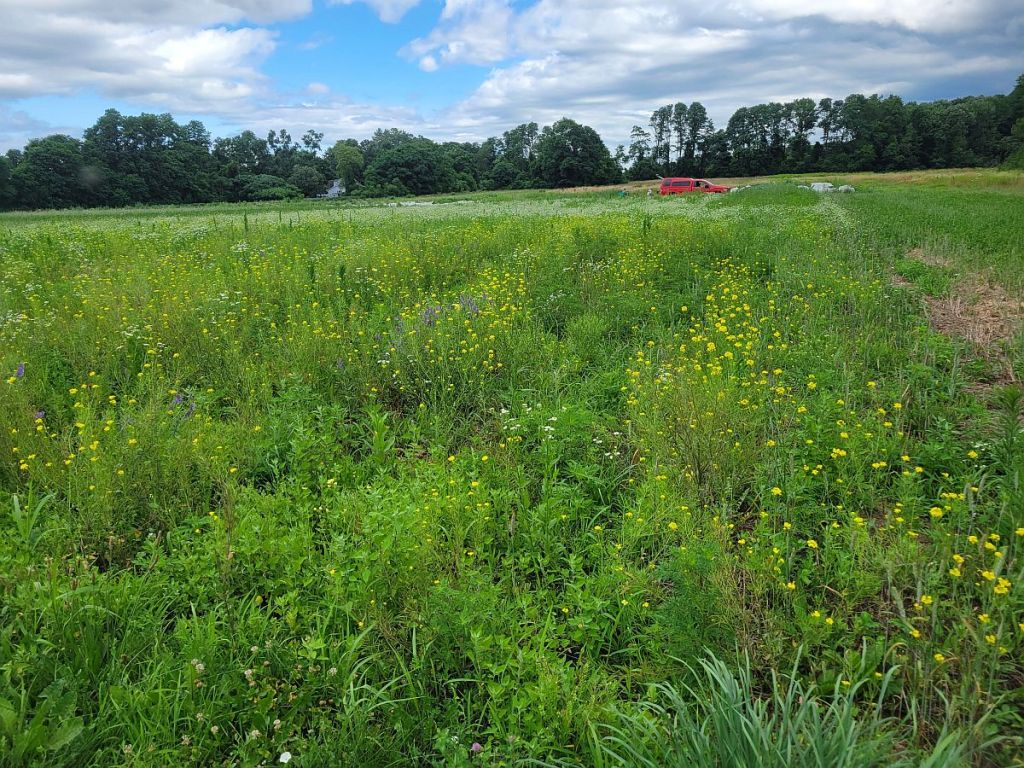
Another common wild-growing plant in 1st year fallow fields was the yellow-flowering Tall Hedge-mustard (Sisymbrium loeselii). It is a European plant that has been spreading relatively recently and rapidly across North America and is not included in my favorite field guide. Therefore, I suspect that I might have been mis-identifying it for a few years as one of the more established, and better-known species in the same genus.
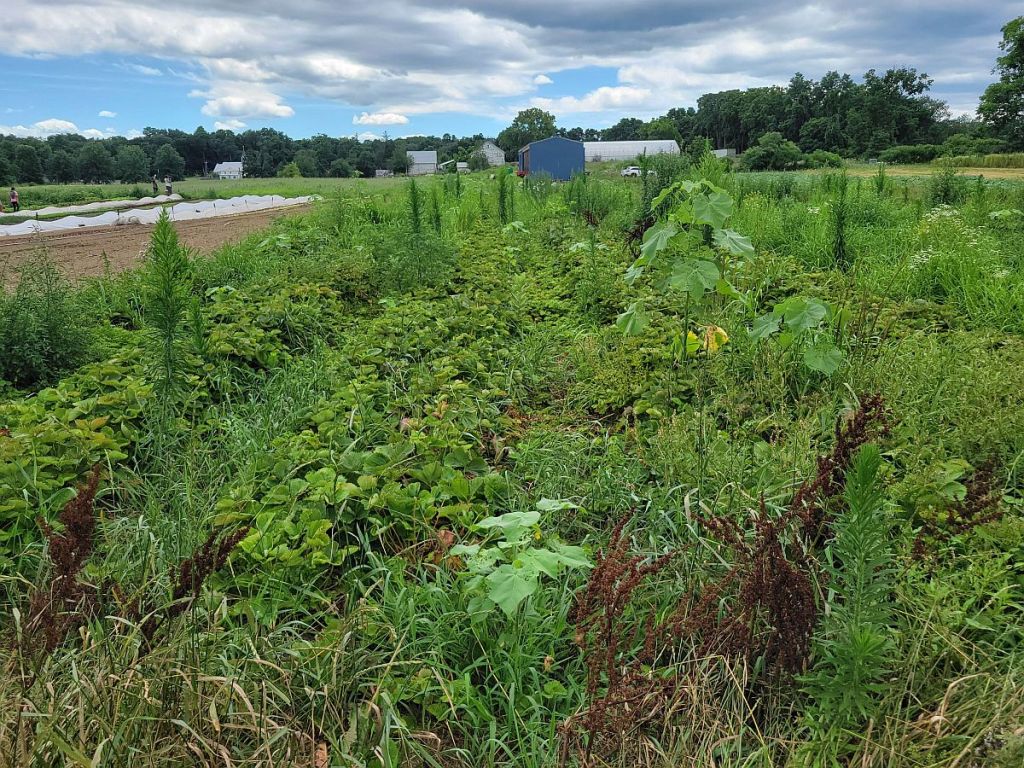
This former strawberry field has a good representation of the most common weeds at Blue Star Farm, including Velvetleaf (Abutilon theophrasti), which is easily recognized by its large, heart-shaped (and velvety) leaves. Reportedly, it has been intentionally introduced to America as a source of fiber. In Asia, where this species originated, it is also used for medicinal and veterinary purposes. In a quick internet search, I could not find any reference about what an abundance of this plant might tell us about the soil conditions (this was a question Sue brought up during our visit–sorry, no new insights).
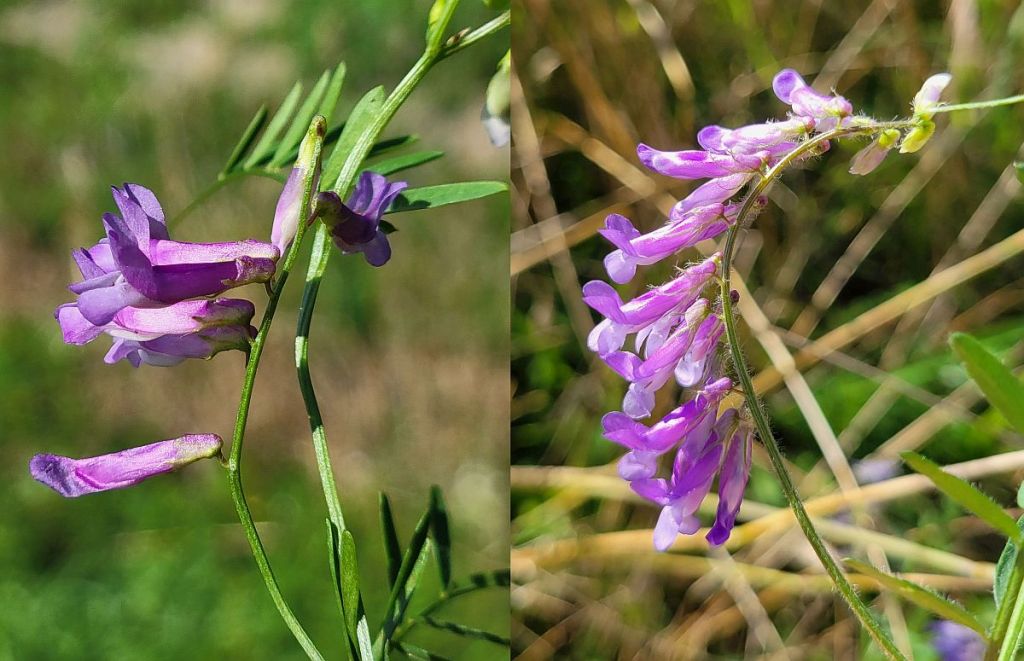
Here and there in the fallow fields and unmowed areas of the farm, one finds examples of (I think) two very similar-looking vetch species: Cow, Bird, or Tufted Vetch (Vicia cracca; left) and Hairy or Winter Vetch (V. villosa) on the right. Tufted Vetch has a larger upper petal (“flag”) and upper calyx lobes that are broadly triangular, while Hairy Vetch has a shorter flag and upper calyx lobes that are narrowly triangular. I might not be getting this right, yet, but both species are reportedly common on farms in our area. A third species, Slender Vetch (V. tetrasperma) is a very delicate plant with much smaller and fewer pink (instead of purple) flowers, and also grows at Blue Star Farm. All three are originally from Europe.
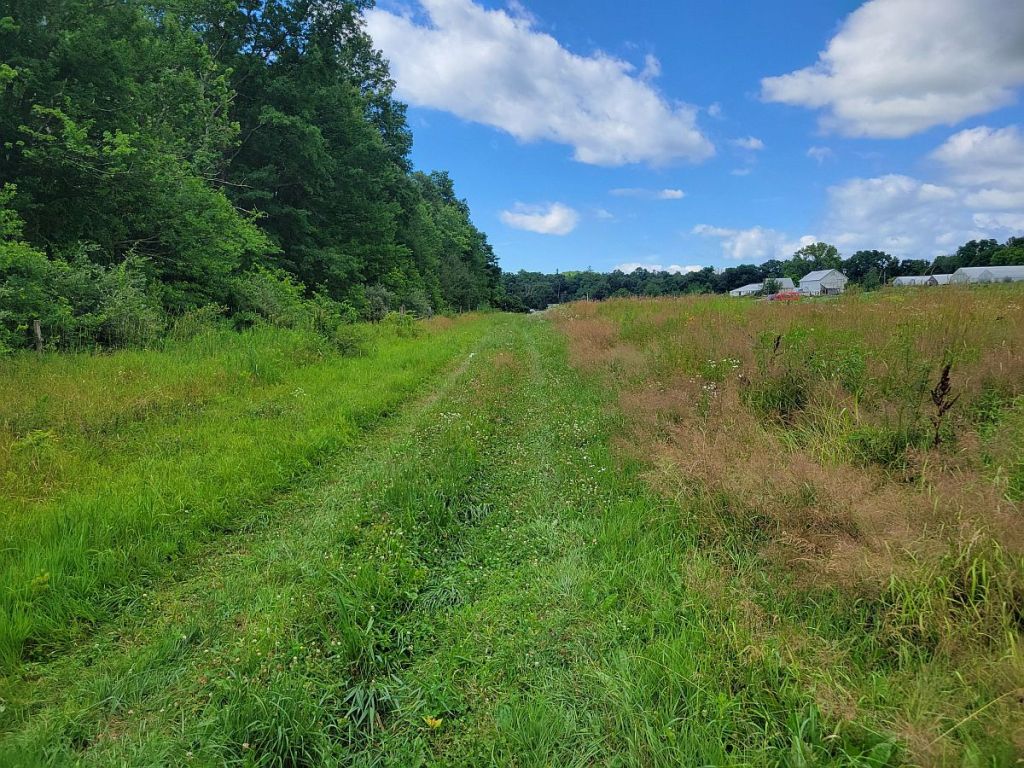
The reddish hue in the fallow field on the right is from Redtop (Agrostis gigantea), a European grass.
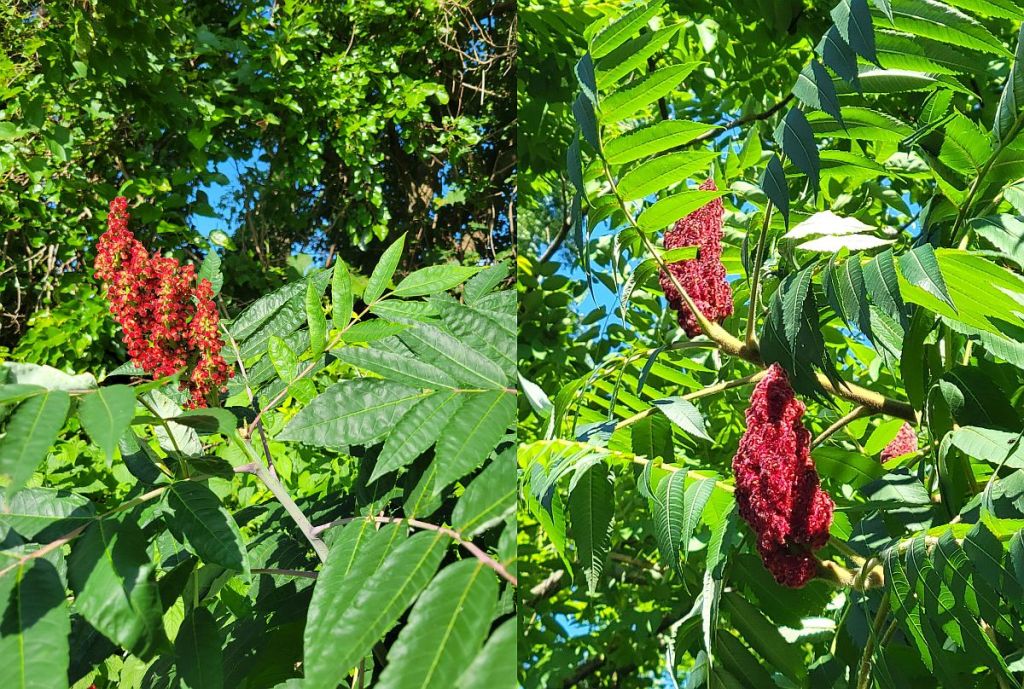
Two species of sumac grow along the western field edge: Smooth Sumac (Rhus glabra; left) and Staghorn Sumac (Rhus typhina; right). Note the difference in the surface texture of their shoots: that of Smooth Sumac is glaucous, with a waxy layer that can be rubbed off, while that of Staghorn Sumac is velvety hairy, like the growing antlers of a deer. Both images show female plants, which are producing berries. Their male counterparts had yellow flowers in the spring, which spread their pollen and are now wilted.
These two species are very different from Poison Sumac (Toxicodendron vernix), which is more closely related to Poison Ivy (T. radicans) and is a shrub with white berries that grows in wetlands. It is not usually found on farms or along roadsides.

The very invasive, non-native Tree-of-Heaven (Ailanthus altissimus) has leaves similar to those of the native Smooth and Staghorn Sumacs and—like them—forms clonal colonies with a joint root system.
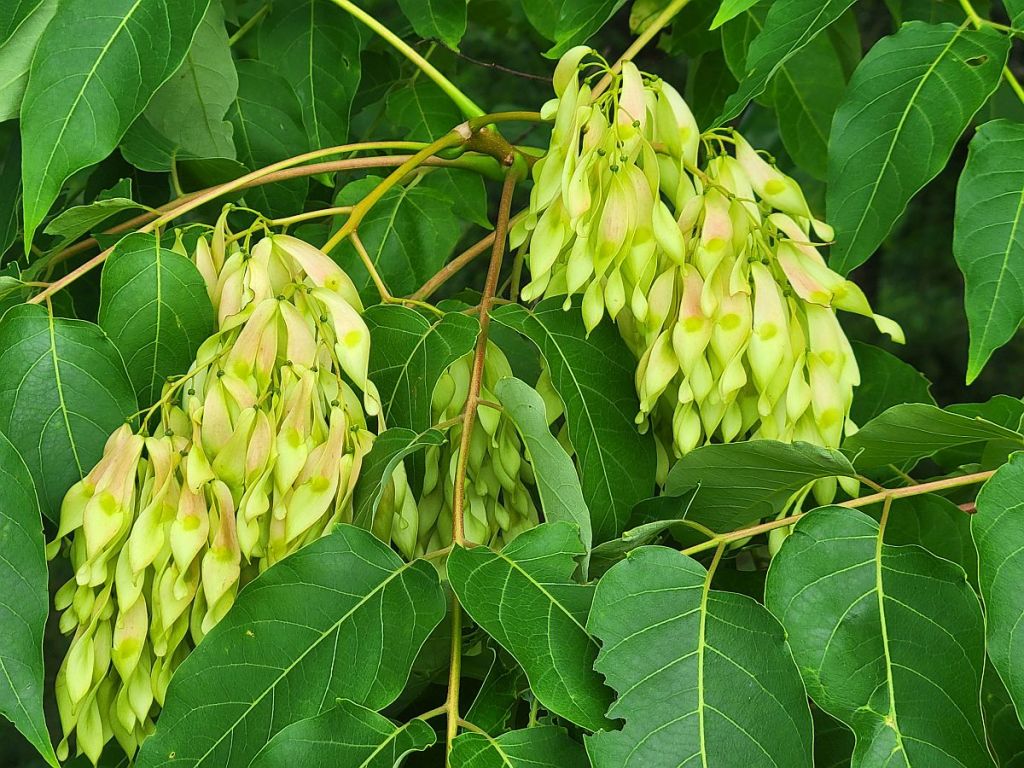
However, the female Tree-of-Heaven plants produce wind-dispersed, propeller-shaped fruits that are very different from the red Sumac berries. If you haven’t tried it, the smell of their leaves is also a good way to distinguish the Sumacs and Tree-of-Heaven. To me, the crushed leaves of Sumacs have a pleasant, aromatic, resinous scent, while crushed Tree-of-Heaven leaves have a rank smell reminiscent of rancid peanut butter.
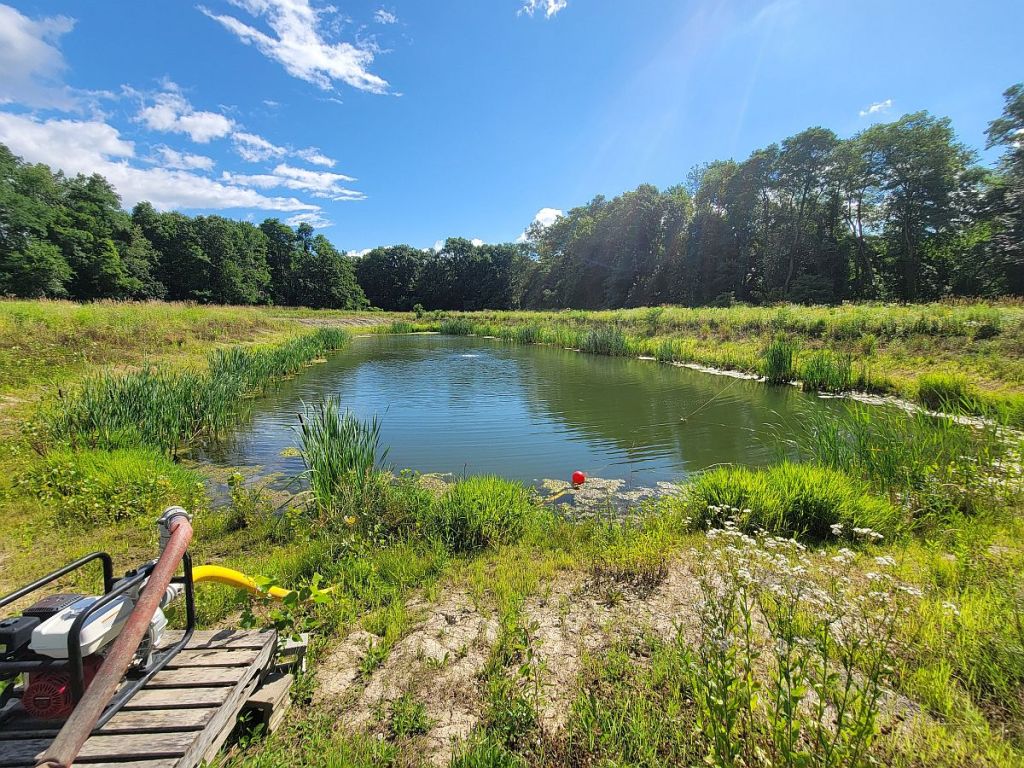
Now, let’s explore a bit the plant life in and around the newly dug irrigation pond. The tall plants right along the water’s edge are two species of native cattails. Although most of the water is clear, you can see some “greenery” floating on the surface around the shoreline.
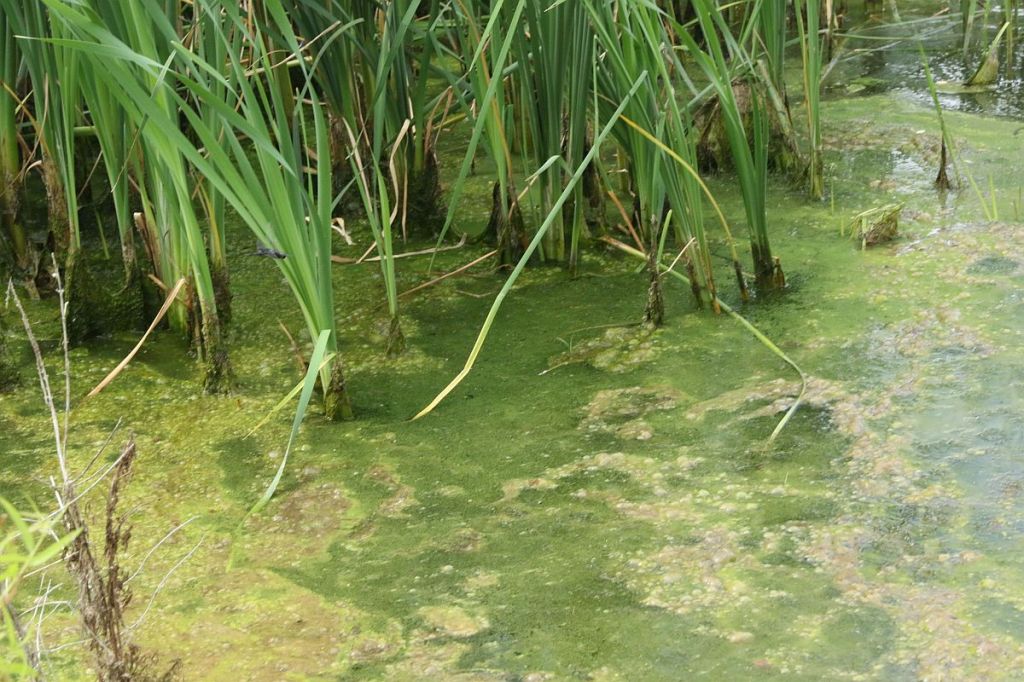
This “pond scum” is most likely composed of filamentous green algae (not to be confused with the sometimes toxic cyanobacteria, which are often referred to as “blue-green algae”). Ecologically, the filamentous green algae are nothing to worry about if they occur in small amounts. They indicate that there are some nutrients in the water, which is not surprising, if a pond is dug in an area that has long been farmed.
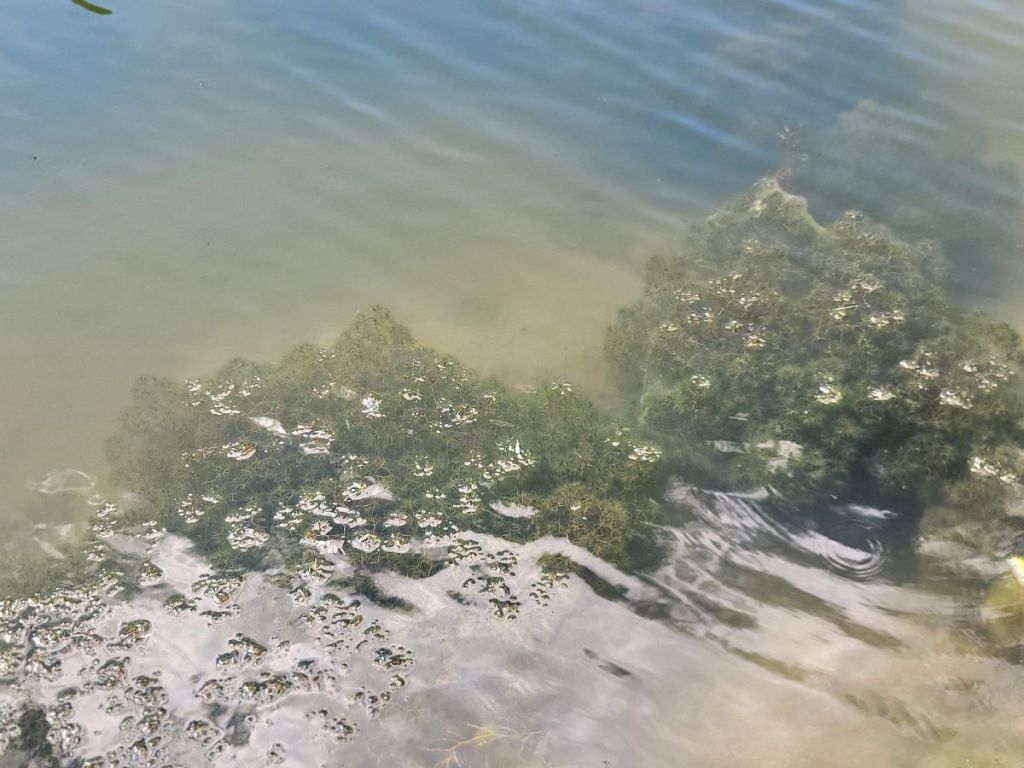
In shallow water, just underneath the surface grows a native aquatic plant, aptly called Eutrophic Water Nymph (Najas minor), another indicator of nutrient-rich water.
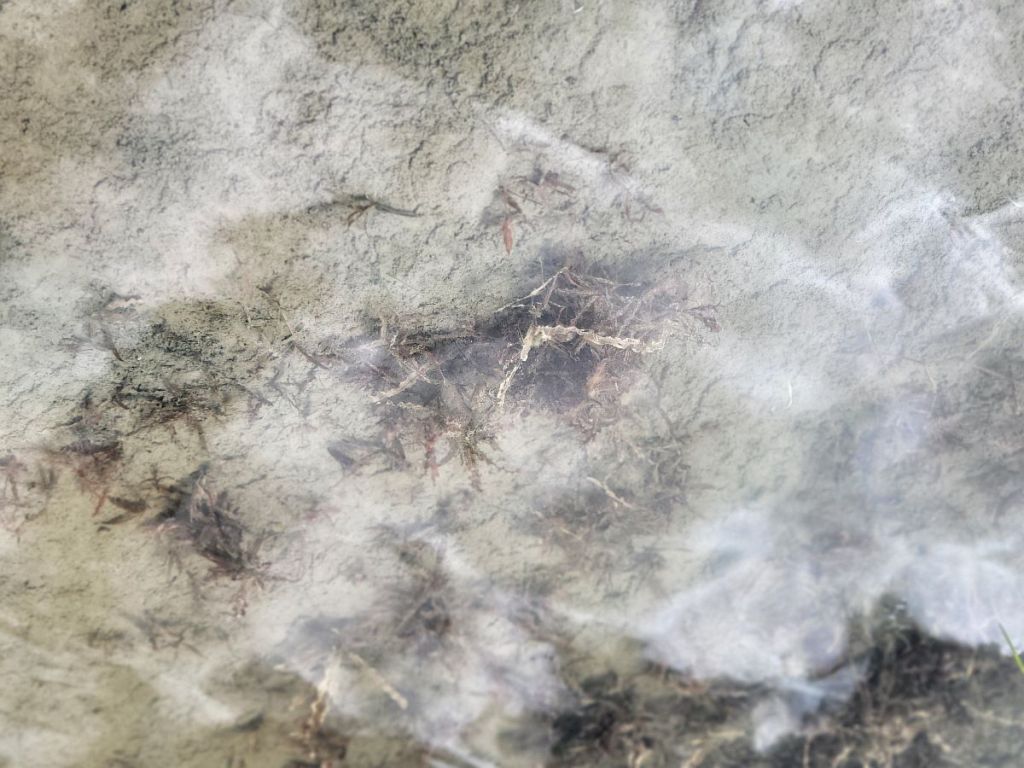
In the shallow water along the shore, there were also some small plants of the invasive, non-native Curly Pondweed (Potamogeton crispus). As the pond matures, it remains to be seen how this species behaves… Some amount of aquatic plants is a very good thing to provide shelter and food for aquatic insects (including dragonfly larvae) and amphibians. Should the aquatic plants ever become too much, please consider mechanical removal (which has the added advantage that the nutrients stored in them get removed from the waterbody) and DO NOT introduce grass carp to control the vegetation! In our experience, these plant-eating fish turn ponds into a turbid soup without any plant life and little habitat value for aquatic insects and amphibians.

On the east side of the pond is a well-established meadow composed of at least 50 (probably many more) different grasses, sedges, wildflowers, as well as some shrubs and vines. This was one of the most flower-rich and botanically-diverse areas of the farm and is a perfect example of a “soft edge” to the neighboring forest.

Common Boneset (Eupatorium perfoliatum) is an example of a native wildflower only seen in this meadow during the botanical survey.
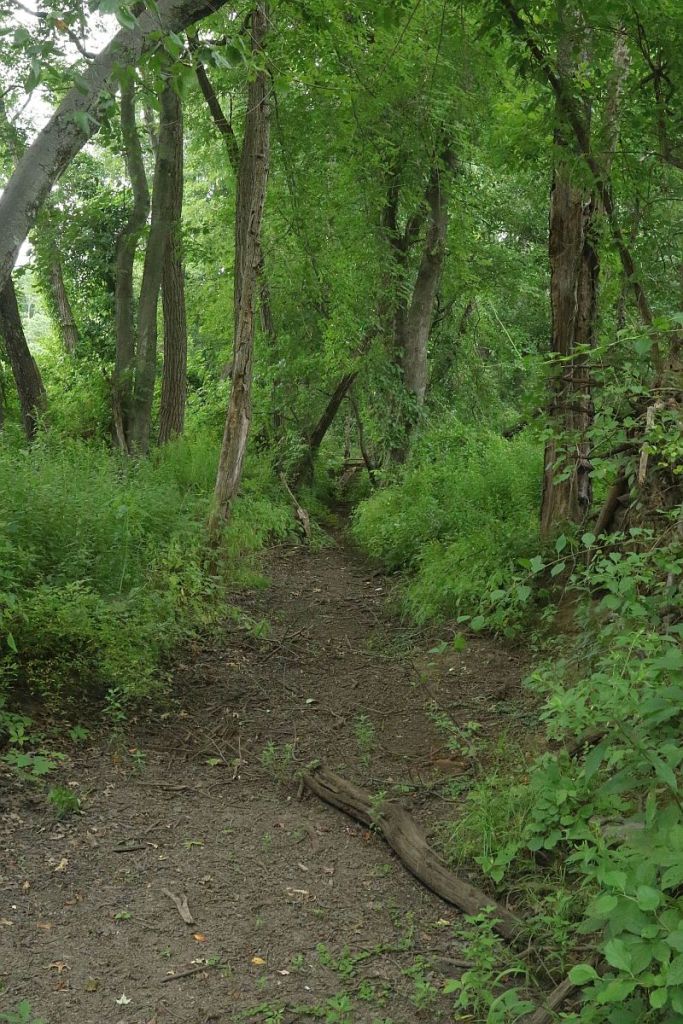
East of the pond is a narrow band of recently reforested swamp forest. We did not take the time for a complete tree inventory, but noted the presence of Pin Oak, Red Maple, Black Cherry, Black Locust, White Mulberry, and Trembling Aspen. This area also harbors some invasive shrubs and seems to be the epicenter of the invasive Japanese Stiltgrass (Microstegium vimineum; not pictured) on the Farm.
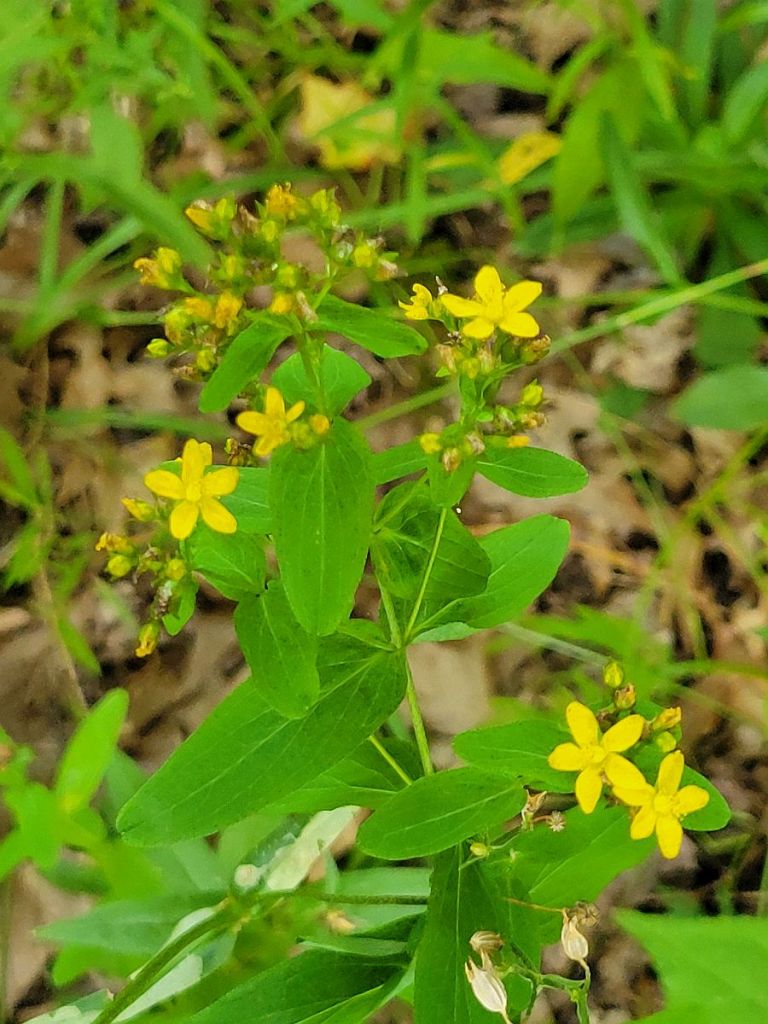
Nonetheless, there were also some native botanical treasures in this young swamp forest, such as the Spotted St. John’s-wort (Hypericum punctatum). This is one of three St. John’s-worts found at Blue Star Farm. The other two are the native Dwarf St. John’s-wort (H. mutilum), spotted on the shore of the irrigation pond, and the non-native Common St. John’s-wort (H. perforatum) which was seen here and there in the unmowed areas.
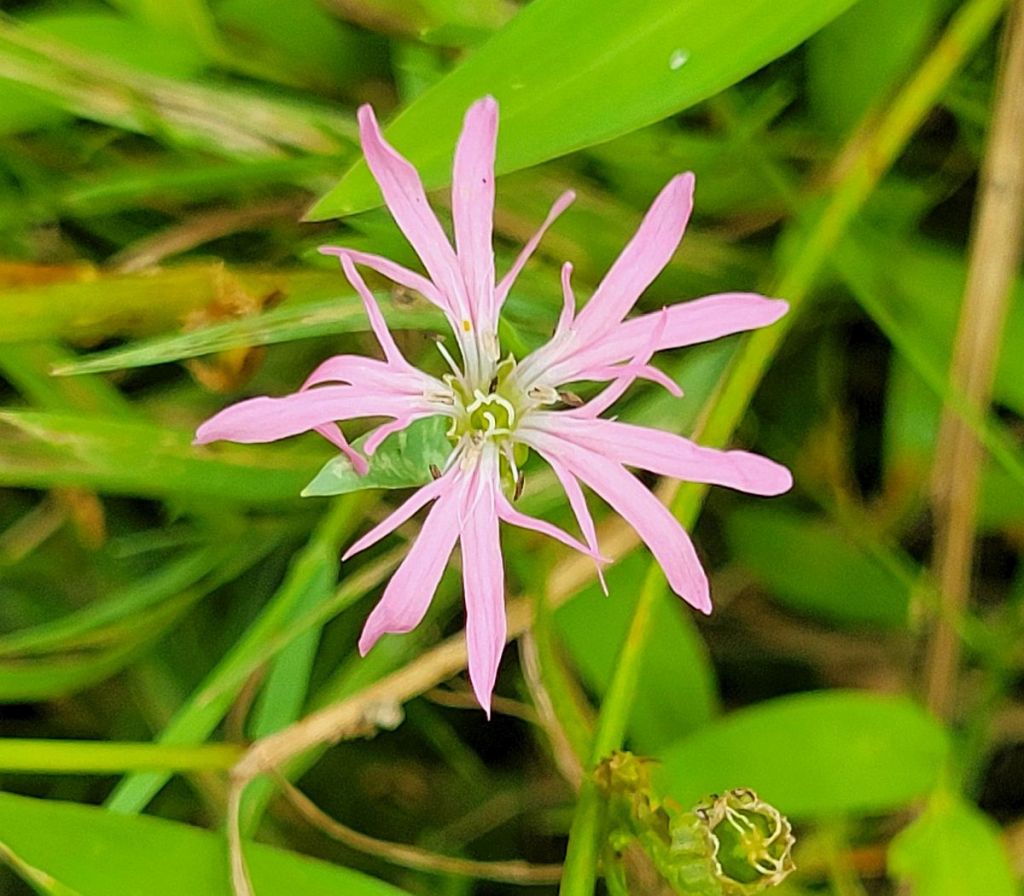
Ragged Robin (Lychnis flos-cuculi) is a European plant, related to chickweeds and carnations. It grew in the young swamp forest and was also found in the meadows east of it.
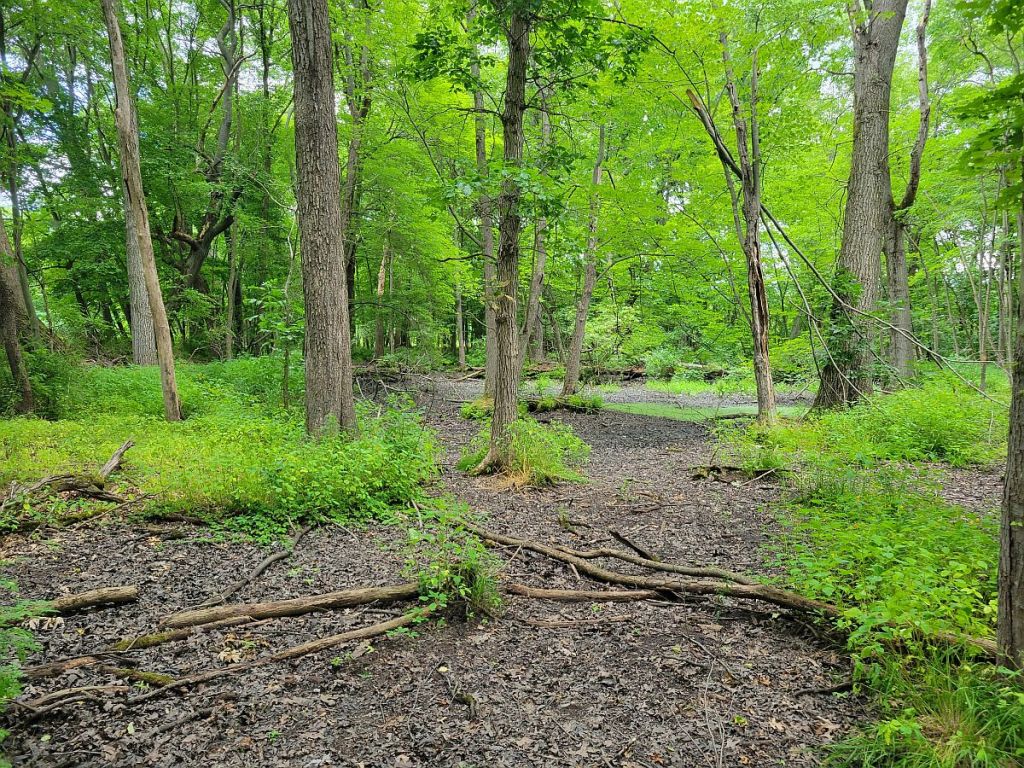
Finally, we reach the patch of ancient swamp forest further east (indicated by the triangular area of forest at the center of the historical aerial photo in Conrad’s post from 13 July). This forest is characterized by very few invasive species and by the presence of some unique tree species, seemingly not found anywhere else on the Farm. The patches without vegetation indicate seasonally flooded areas, which might serve as breeding grounds for vernal pool amphibians, if they hold water long enough in the spring to allow tadpoles of Spotted Salamanders and Wood Frogs to develop. However, the presence of these amphibians on the Farm was not confirmed during our brief survey!
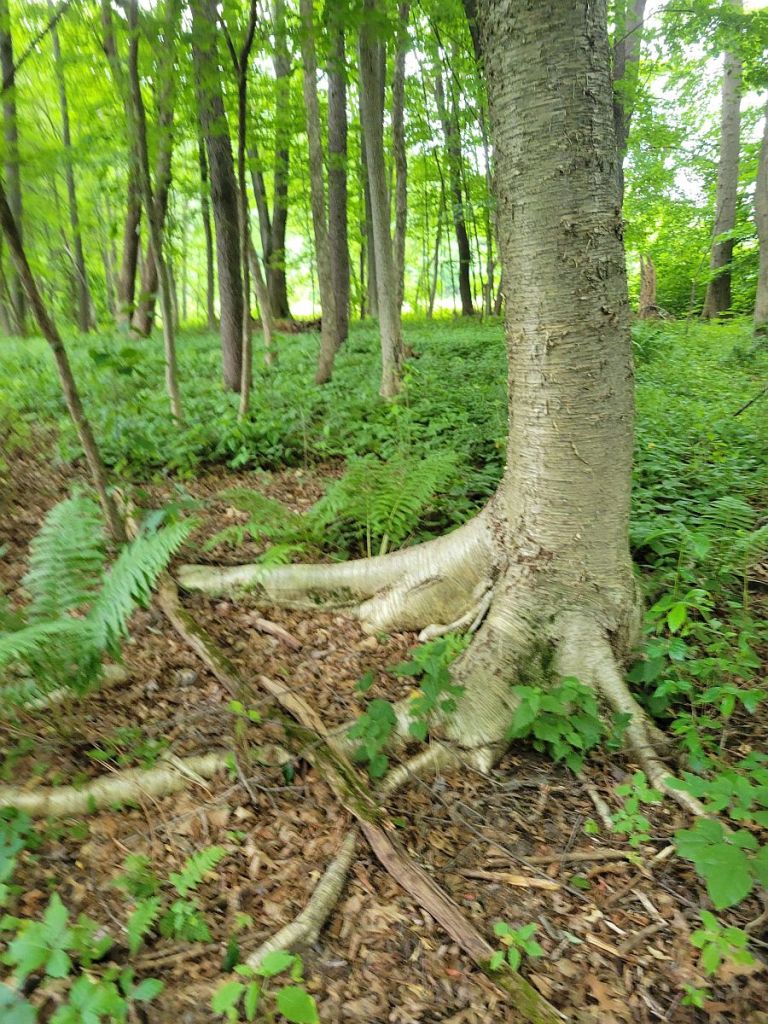
Yellow Birch (Betula alleghaniensis) is easily recognized by its shiny, peeling bark and the often octopus-like, superficial roots. It is one of the two “sweet birches”, whose twigs smell of wintergreen (= root beer). In our experience, this species does not readily establish in post-agricultural forests and—at least in our area—is a good indicator of “ancient forest” (a forest that has not been cleared for agriculture during European colonization.)
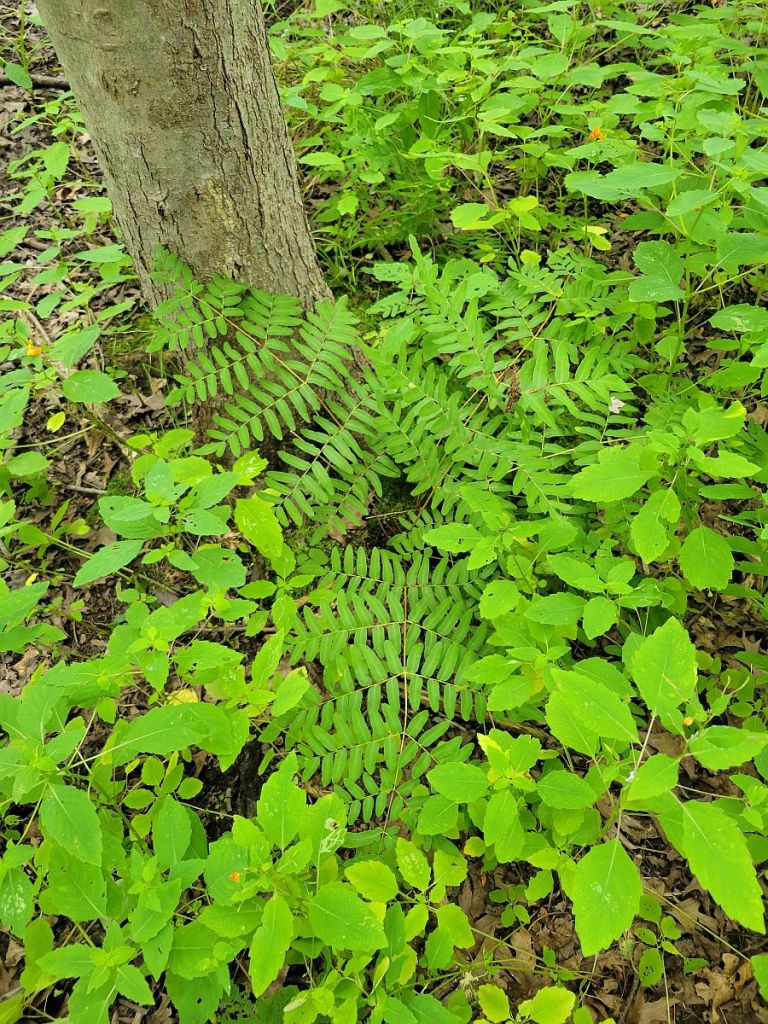
At the center of this image, you see the uniquely-divided leaves of Royal Fern (Osmunda regalis), an uncommon native wetland fern. It is surrounded by Spotted Jewelweed (Impatiens capensis), which made up the bulk of the ground cover in this forest.
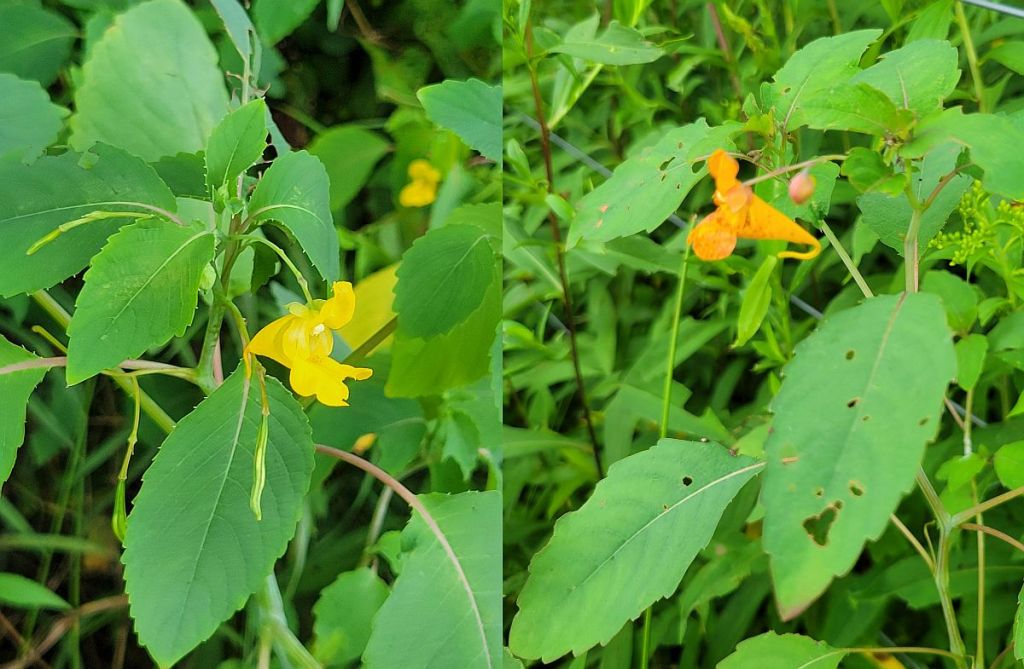
There are two species of native Jewelweeds at Blue Star Farm. Spotted Jewelweed (I. capensis) has orange, spotted flowers and usually no more than nine teeth along the margin of each side of its leaf. As we have seen, it grows abundantly in the ancient swamp forest. Its yellow-flowering cousin is Pale Jewelweed (I. pallida), which was found along the southern edge of the young swamp forest. Note how its leaf margins have more than nine teeth. Fortunately, the invasive, pink-flowering (and much taller!) Himalayan Jewelweed (I. glandulifera) is still quite rare in Columbia County and was not found at Blue Star Farm.
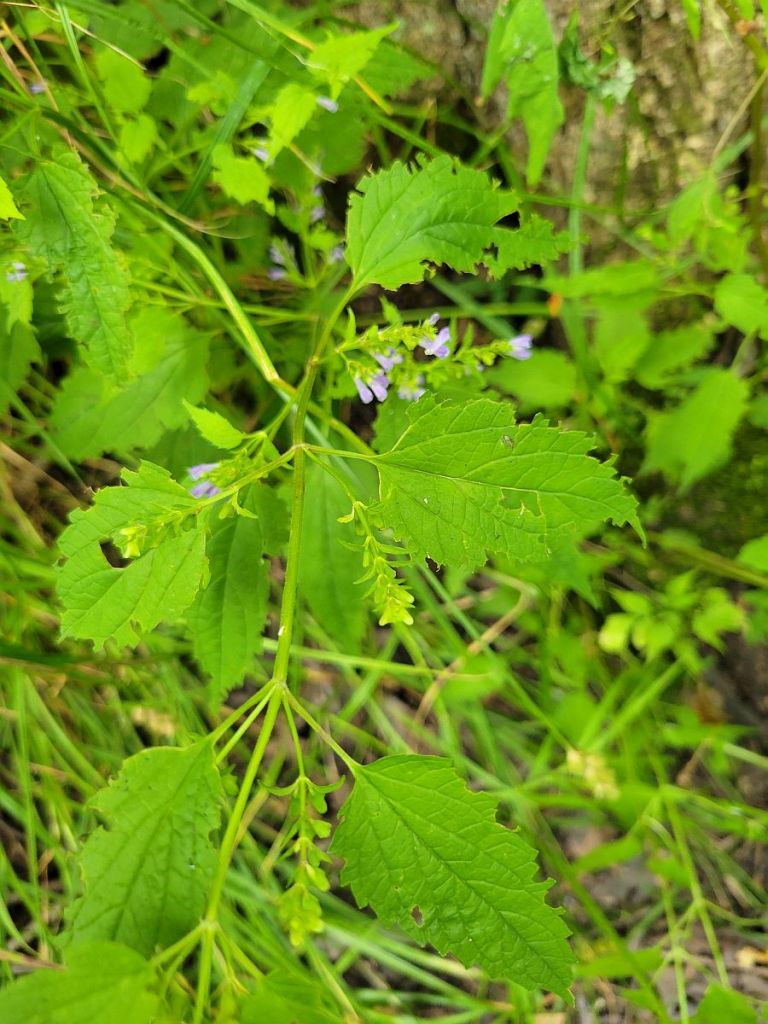
This, admittedly somewhat tattered, plant is Mad Dog Skullcap (Scutellaria lateriflora), a native member of the mint family, which reportedly is used in herbal medicine as a mild sedative and anti-anxiety treatment. In the 18th century, there was a belief that this plant could cure rabies (hence the name “Mad Dog”), but this has been disproven.
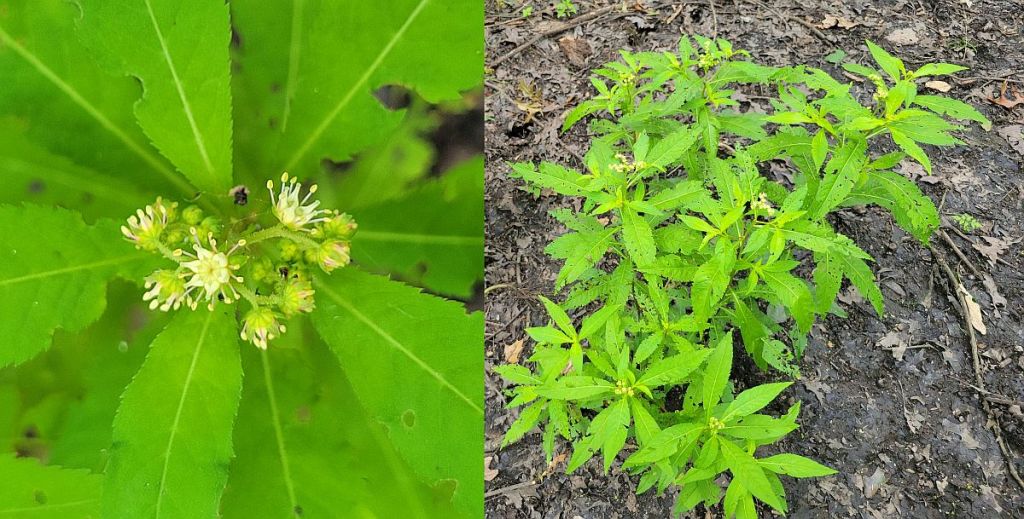
Another nice find in the ancient swamp forest was Ditch Stonecrop (Penthorum sedoides), a native wetland plant not seen anywhere else at Blue Star Farm.
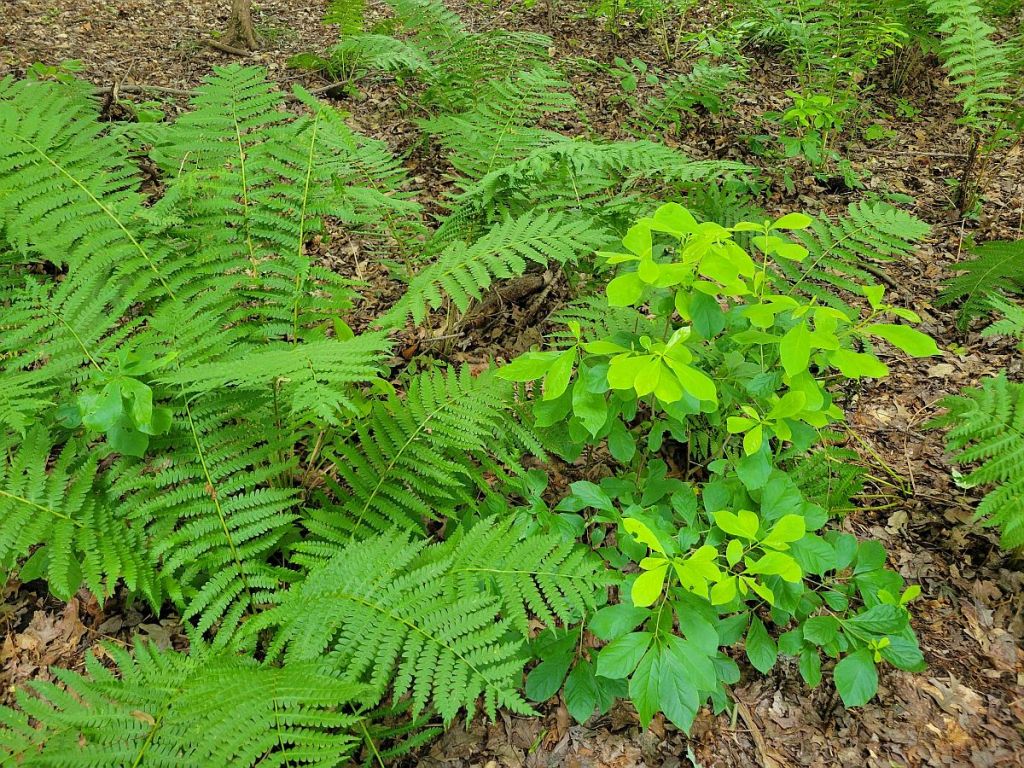
Finally, this parting shot shows a Blackgum (Nyssa sylvatica) seedling, growing next to the luxuriant fronds of Interrupted Fern (Osmunda claytoniana). Blackgum is an uncommon tree in Columbia County, usually found in swamp forests and around vernal pools. Cinnamon Fern (Osmundastrum cinnamomeum) which looks similar to Interrupted Fern, but is not pictured here, was also abundant in the ancient swamp forest.
 Farmer-Ecologist Research Circle