
by Conrad (with some photos and field assistance from Laura & Meg).
First of all, I’m not trying to ‘back date my check’ by associating this with a date of 9 days ago – that is when we visited Rose Hill, not the date on which this was written. Because phenology changes rapidly, it seems important to use the date we were actually on the ground.

In 1936, on the current land of Rose Hill Farm only the northwest corner appeared to be in orchard.
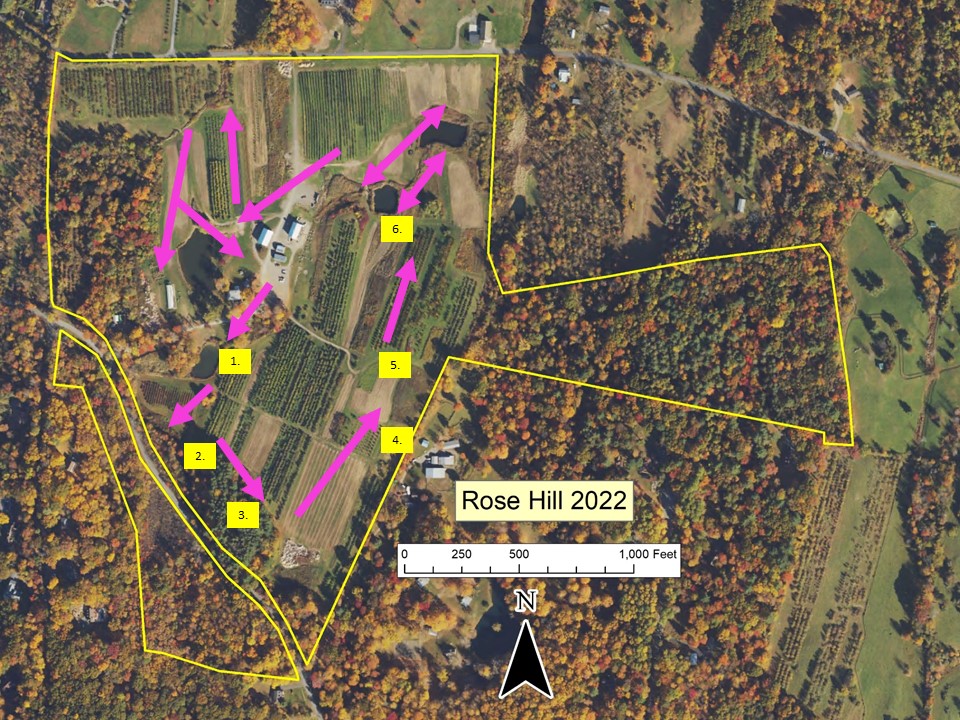
Today, orchards of various sorts fill much of Rose Hill. Surprisingly, one of the areas reverting to forest is that northwest area which appeared to be orchard in the earlier image. The pink line refers to our approximate path, and yellow-boxed numbers indicated the approximate locations of some of the below landscape shots.

Several ponds are scattered across Rose Hill. This photograph was taken looking southwest from roughly point 1 on the above map. All ponds probably had predatory fish, possibly reducing their ecological value for some dragonflies.
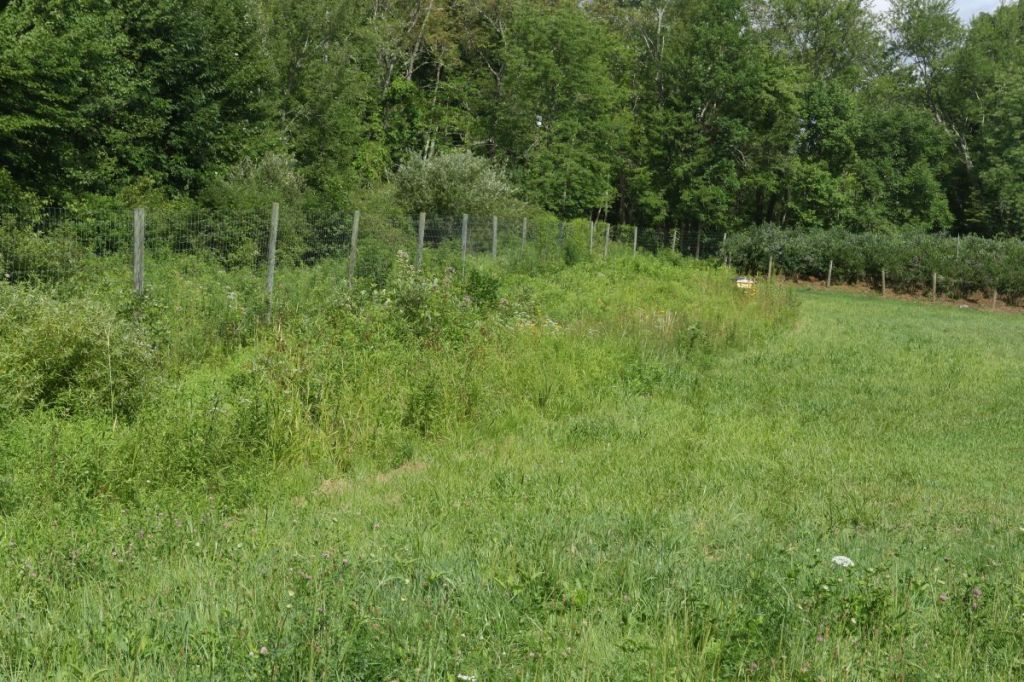
One of the ecologically most interesting areas was the wet meadow shown in this photo, taken looking west-northwest along the fence from near point 2. There is wetland beyond the fence here and that wetland has snuck into Rose Hill.
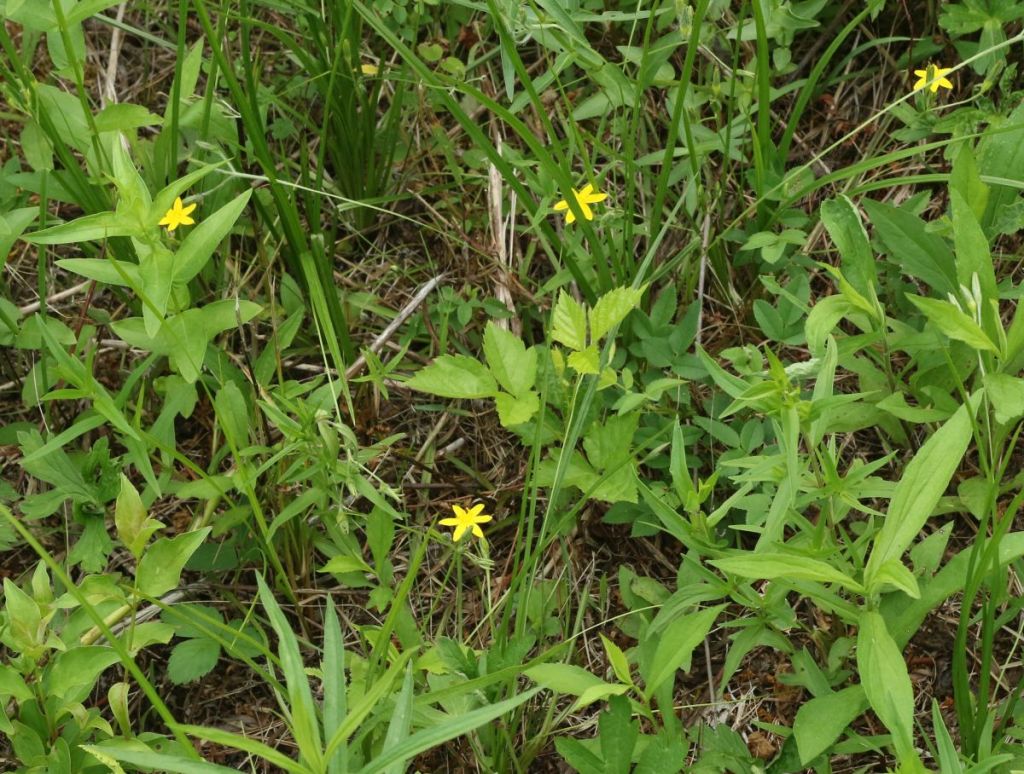
Among the fun plants spotted in this area were Yellow Star Grass (a somewhat unusual plant found in both wetlands and dry forests) and…

Square-stemmed Monkey Flower, a moist-meadow plant.
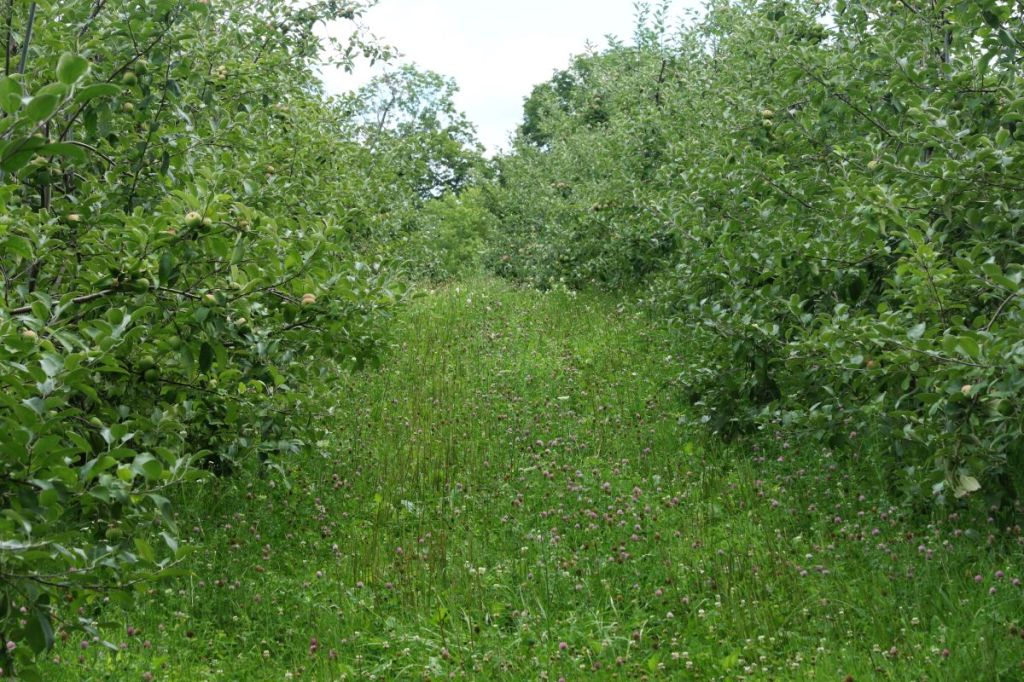
Some of the strips between trees had been left unmowed, leaving a welcome abundance of clover. This picture was taken near point 2, looking north.

Mowing had occurred between the rows of some smaller trees, although taller vegetation, including Common Milkweed and Indian Hemp, was growing up within rows but between the trees. This photo was taken looking northeast from around point 3.
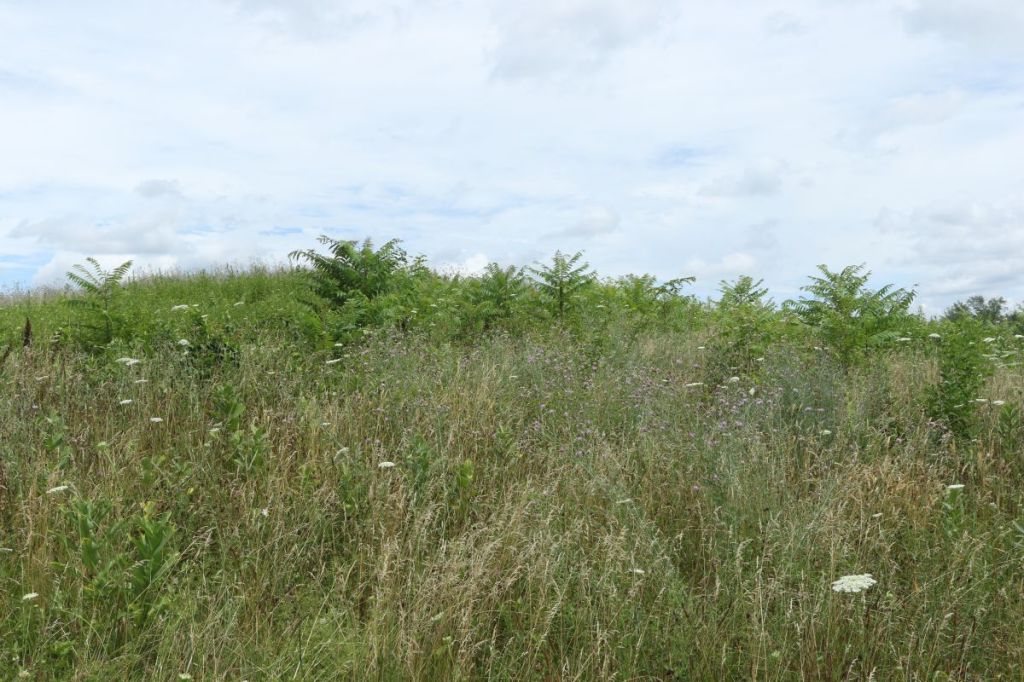
There were also larger patches of uncut vegetation, including this dry hillock north of point 4 and capped by sumach and knapweed.
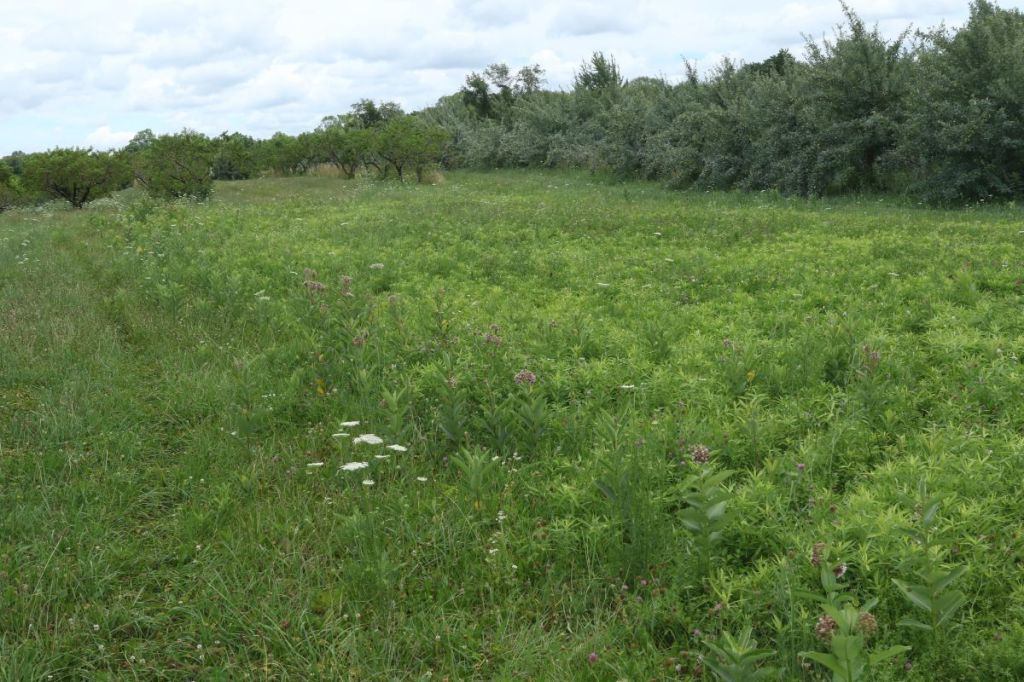
This moister, unmowed block was located roughly north of point 5. Flowers included Queen Anne’s Lace (aka Wild Carrot) and Common Milkweed. The Rose Hill bioblock, where they are experimenting with organic production, is located just beyond this meadow, but we did not enter because it had recently been sprayed with organic pesticides.

This photo was taken looking north from point 6; a pond is hidden behind the bushes and surrounded by this wetter meadow.
We split up and circled around these ponds before rejoining for a quick lunch near the main parking lot and heading out for a final loop through the northwest section of the Farm.
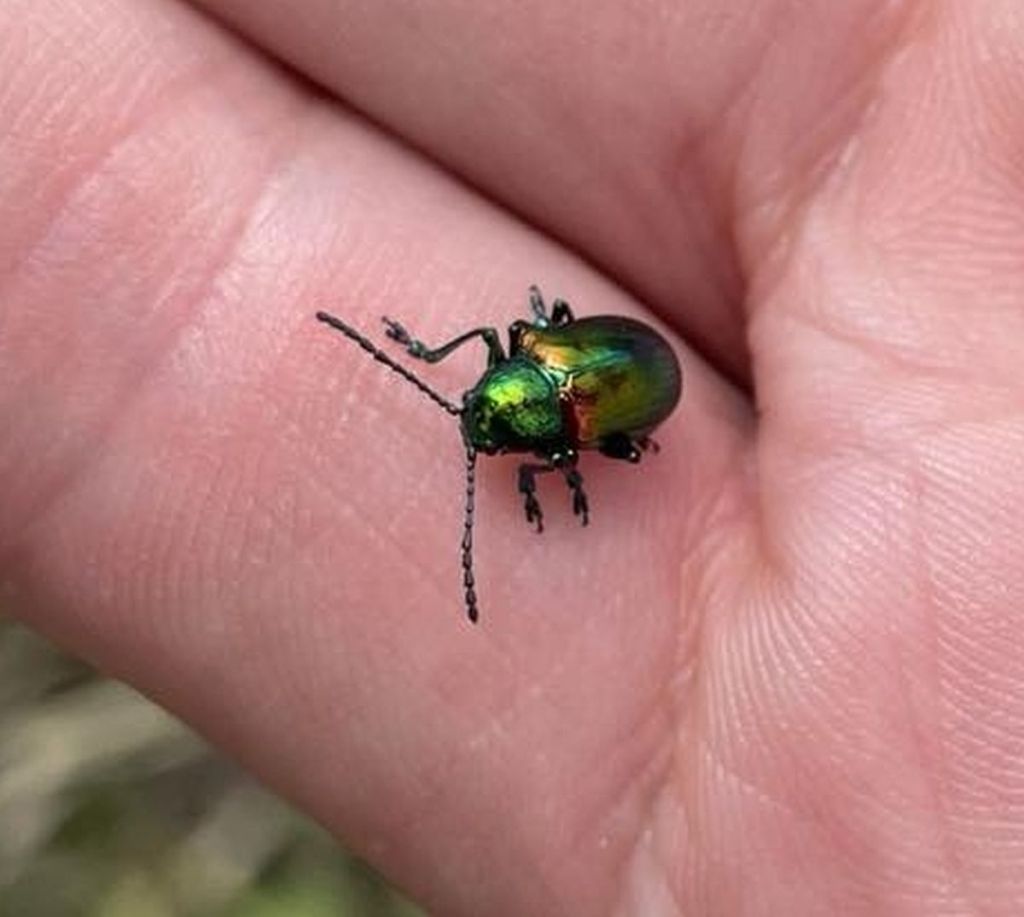
We’ll begin our ‘insect hodge-podge’ section with this species, the elegant, iridescent Dogbane Beetle, which we found hanging out in the Indian Hemp (a species of Dogbane).
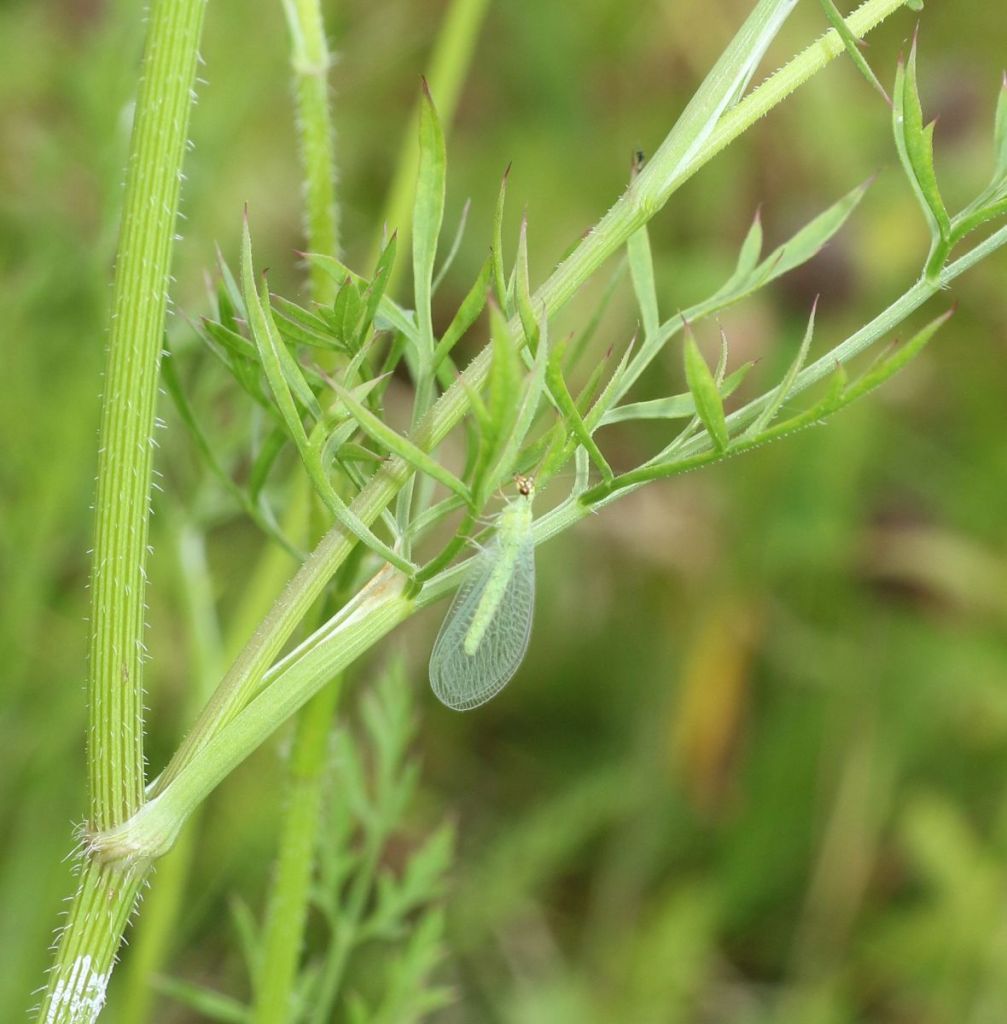
Lacewings are described as beneficials, largely because of their predatory larvae. One can even buy them commercially. However, we see their adults and larvae so rarely that it’s hard to believe that, in our region at least, they are usually having much of a demographic impact on pests. If you have observed otherwise, please let us know!
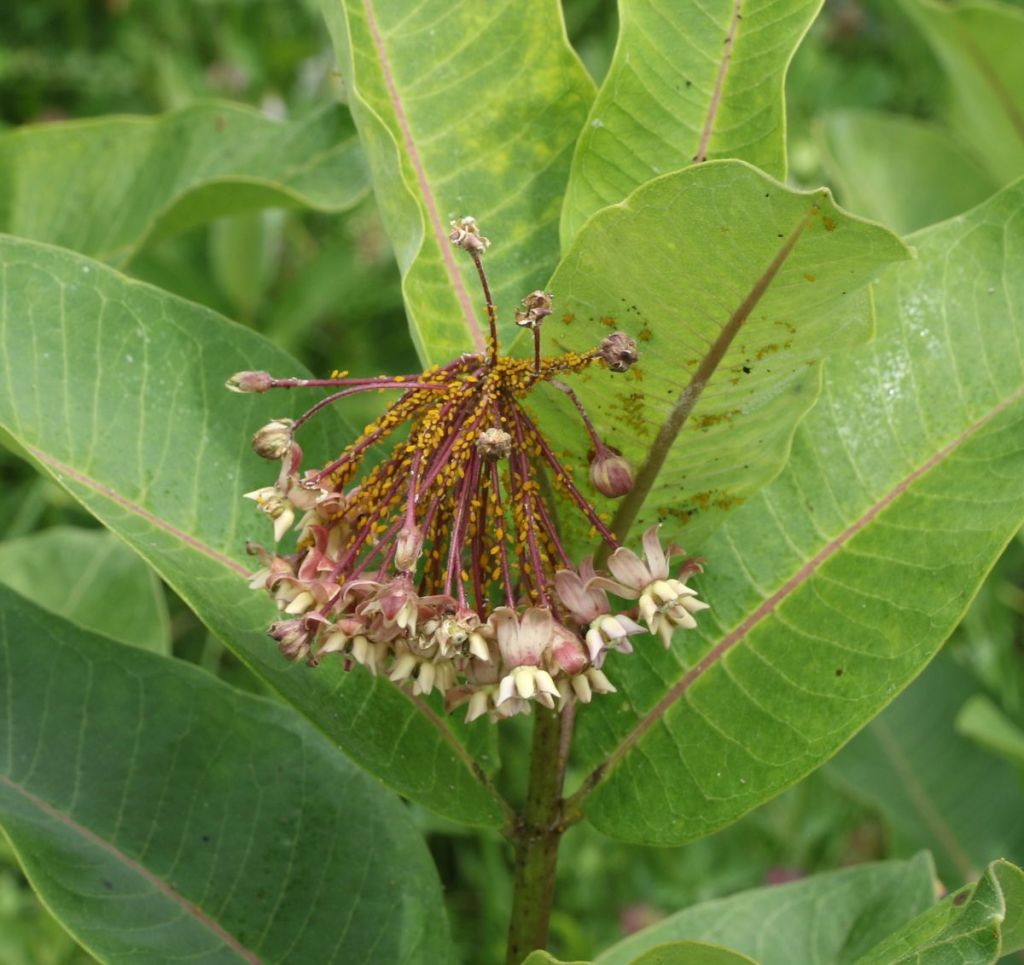
Crops aren’t the only plants afflicted by aphids – here Common Milkweed flowers appear to sag under their aphid load.
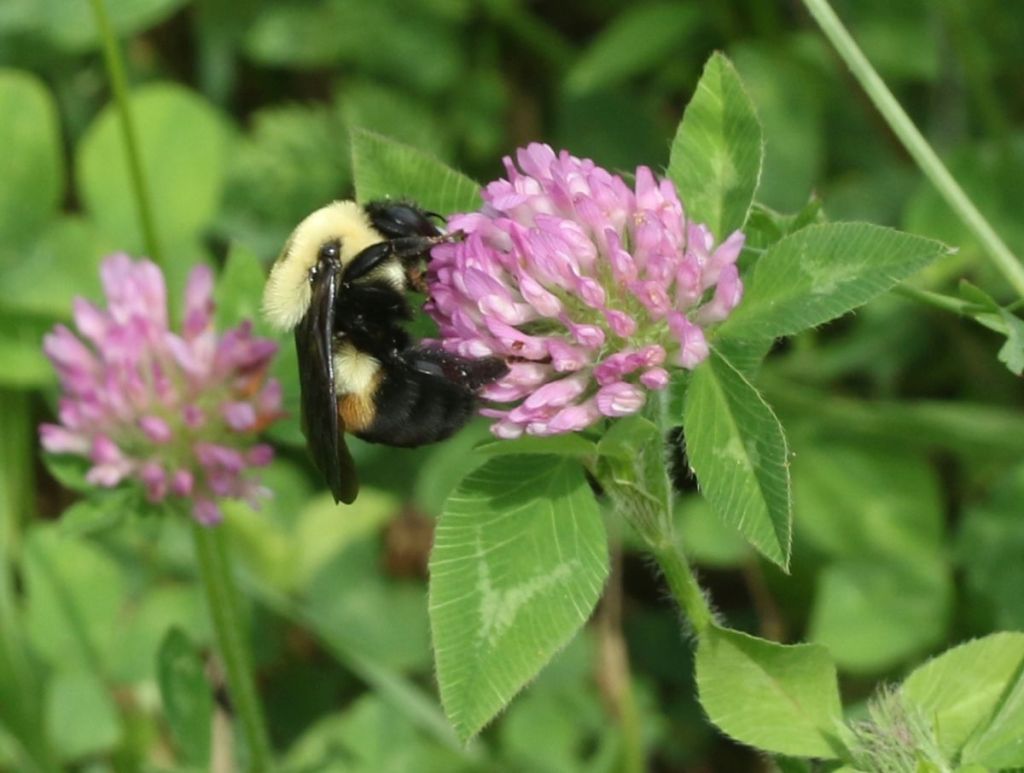
Honey Bees were the most common bee we observed (not surprising, given the on-farm bee hives), however we did observe some other bees including this Brown-belted Bumble Bee (Bombus griseocollis) and this…

This is a Giant (or “Sculptured”) Resin Bee. I was rather baffled by this bee, and do not recall having seen it before. This is an Asian bee that was apparently accidentally introduced to the US in the early 1990s; it now occurs throughout most of the East Coast. It is solitary and makes its solo nests in wood cavities. It apparently doesn’t make its own excavations, and so sometimes uses the holes pre-drilled by our native carpenter bees.
Dragonfly and damselfly diversity was not particularly high, perhaps because of the presence of fish. Among the species we noted were the following:
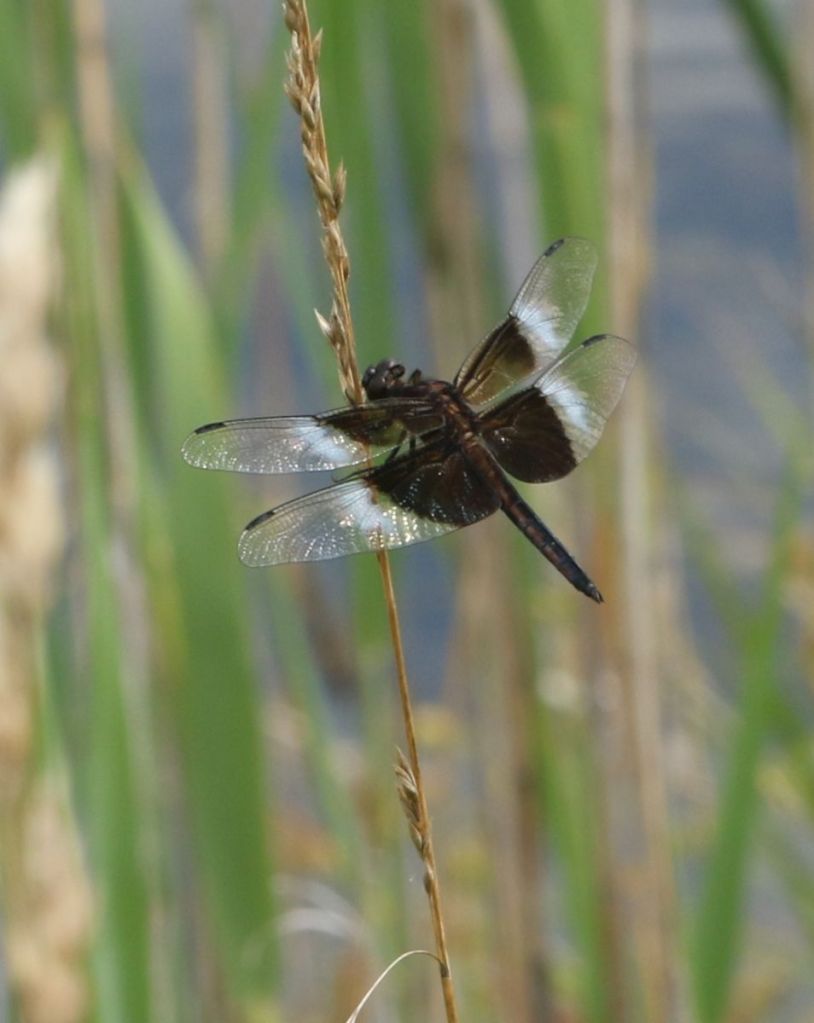
The common, widespread Widow Skimmer; this mature male shows the characteristic black wing bases fringed with white frosting.
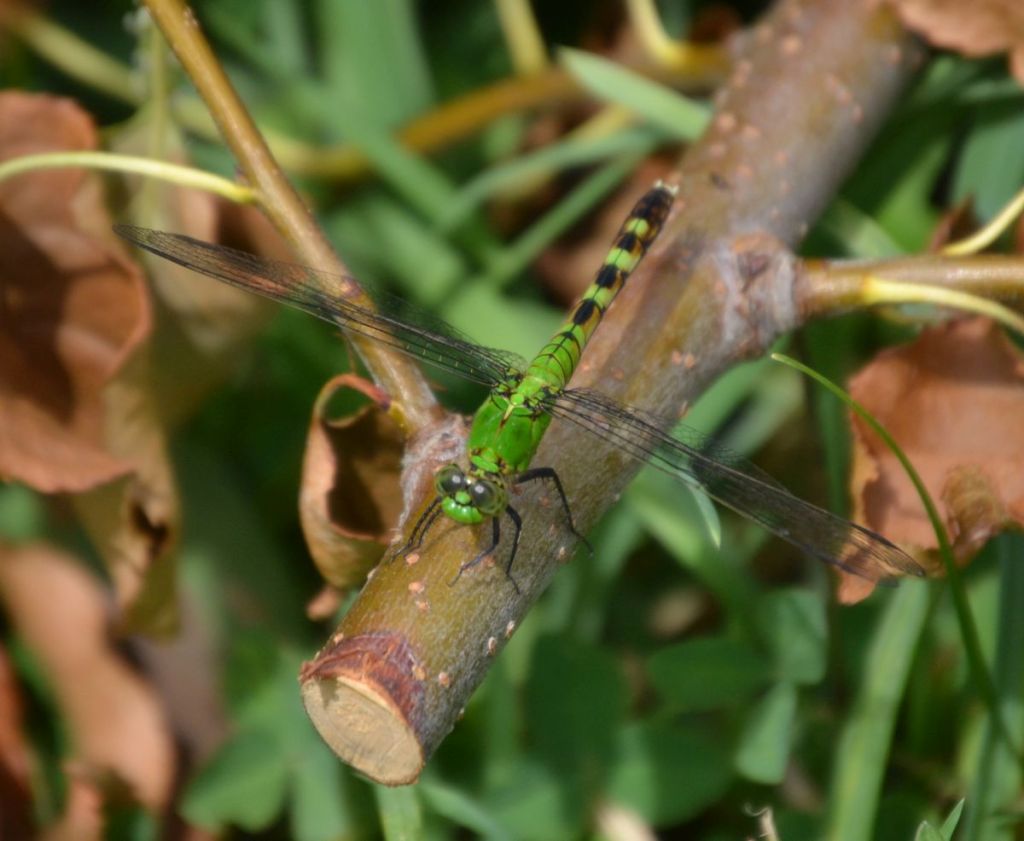
This bright green beast is a female Eastern Pondhawk; she’s really our only dragonfly with such a vibrant green coloration.
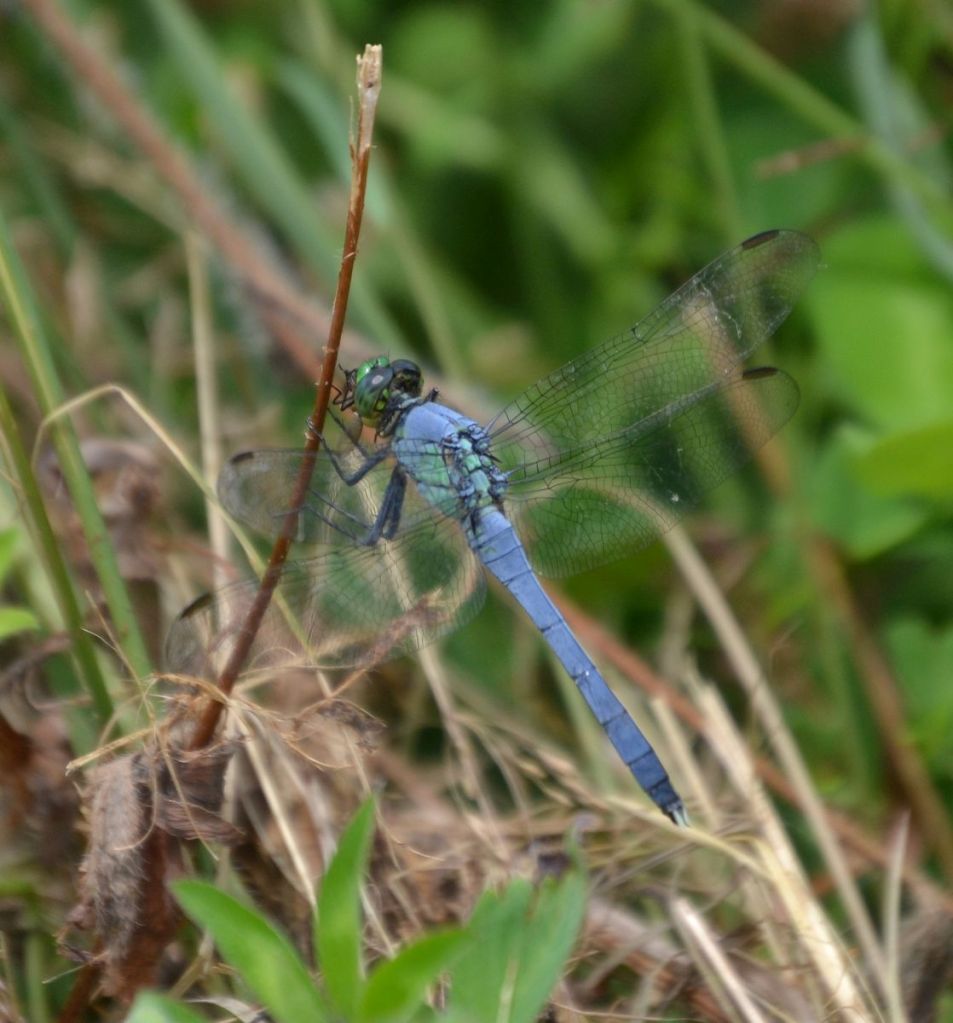
The maturing blue male of the Eastern Pondhawk, both sexes have that white tail tip.
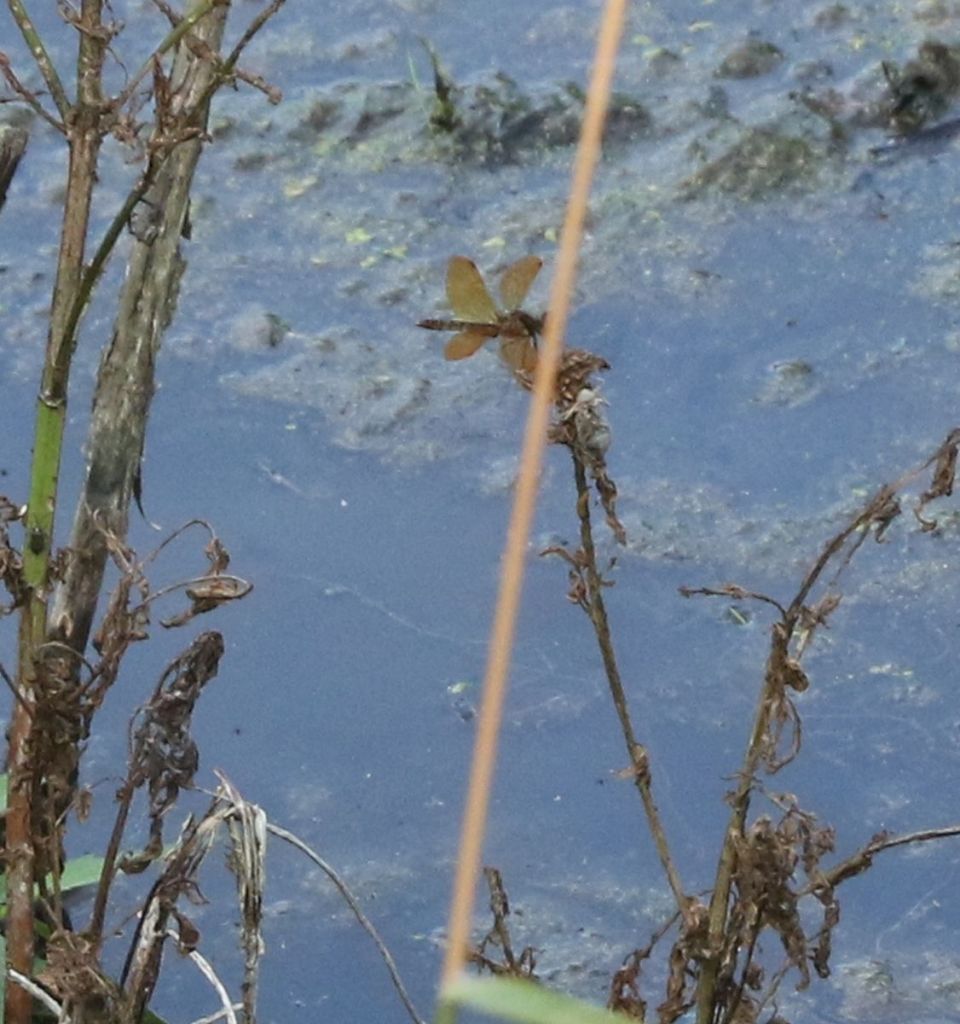
Sorry for the ‘headless’ photograph, but at least this image shows the distinctive orange wings of the male Eastern Amberwing.
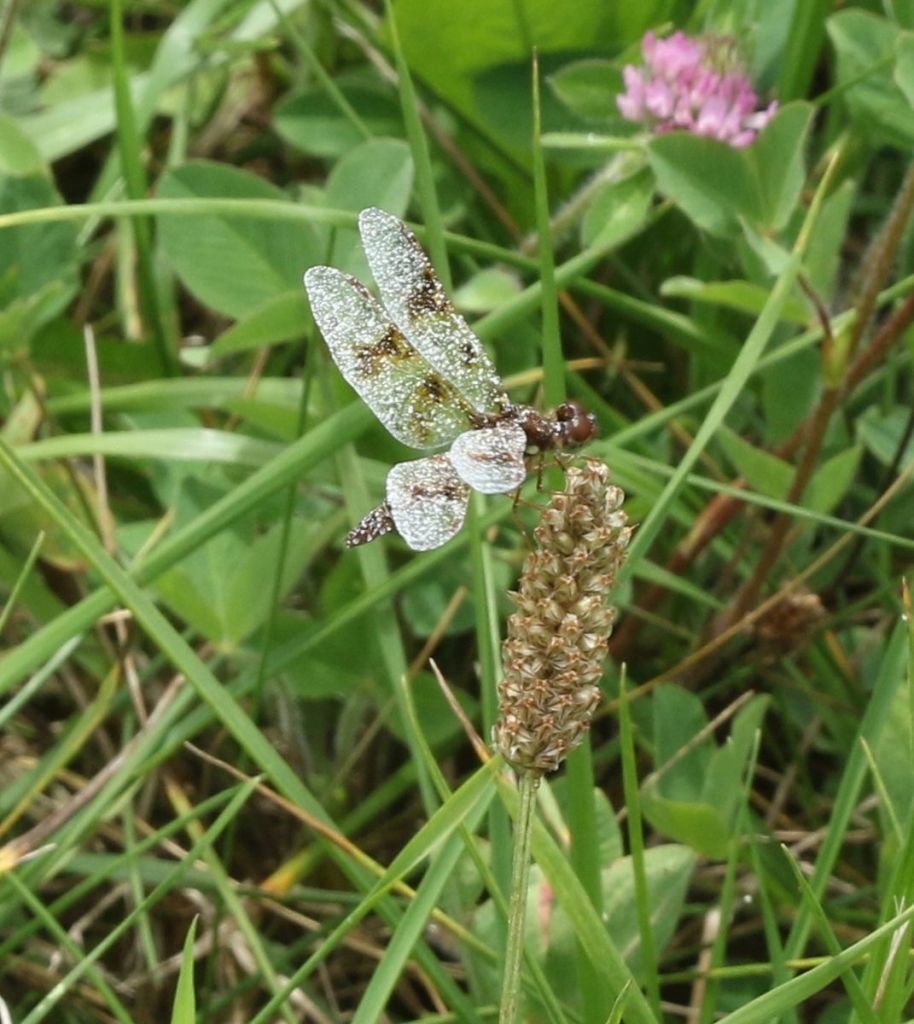
It appears that this female Eastern Amberwing may have flown too close to the clay sprayer. In organic orcharding, a clay compound is used to coat fruit with a protective clay layer.
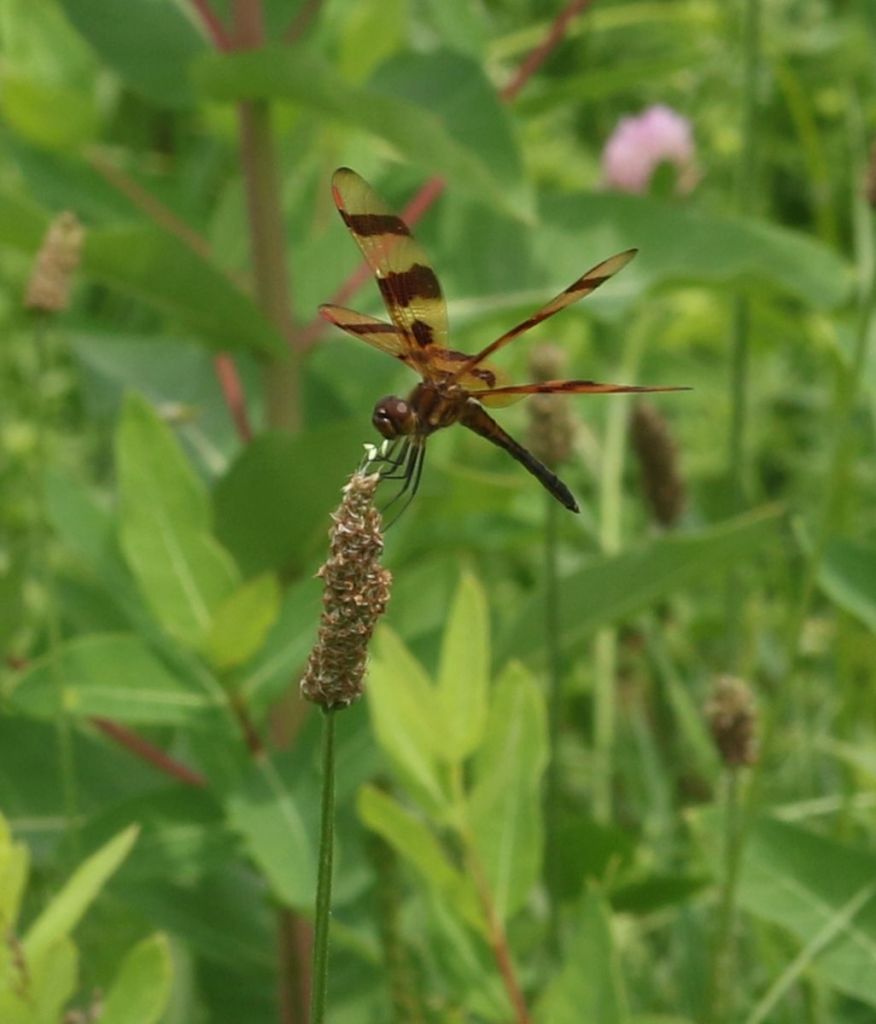
The colorful Halloween Pennant is common in our fields at this time of year.
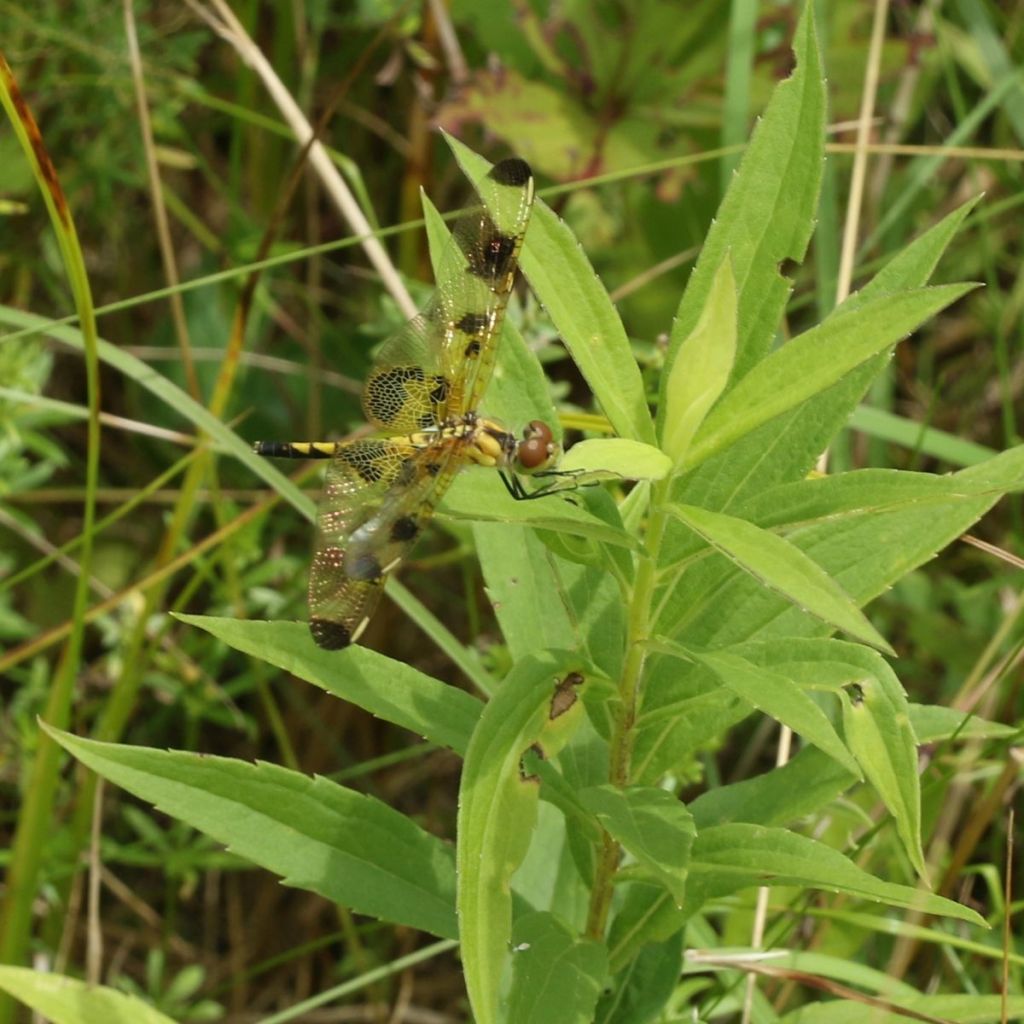
For longer than I should have, I mistook this for the preceding species because of its similar size, behaviour,and orange-yellow coloration. However, note the different patterning of the dark dots on the wings. This is a Calico Pennant, whose females and young males look like this. Mature males are…
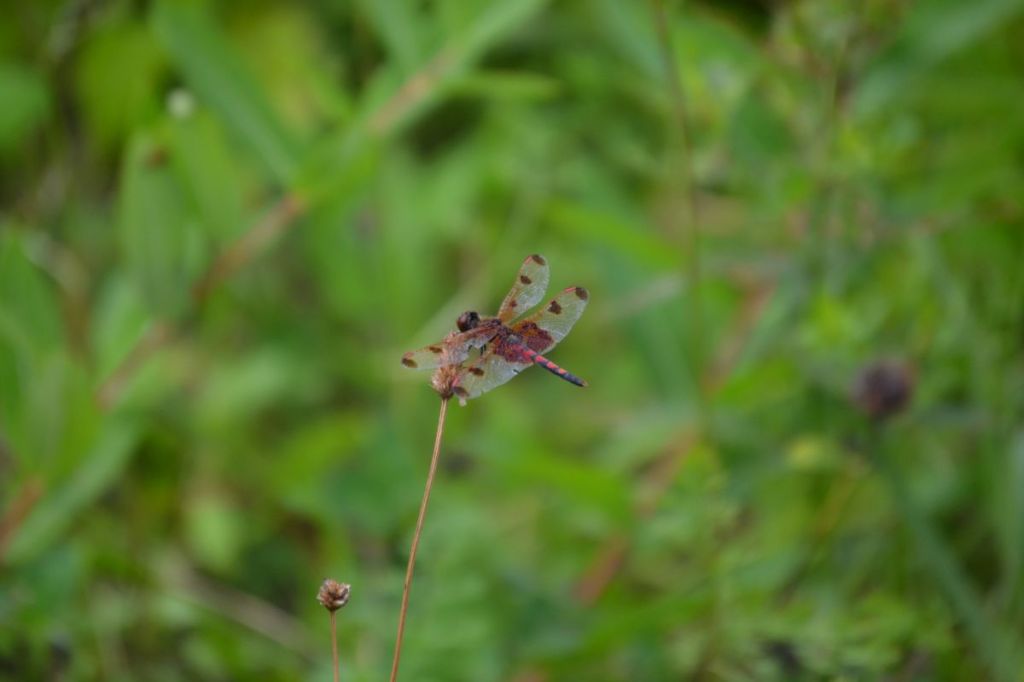
a distinct red (but don’t mistake them for Meadowhawks!).
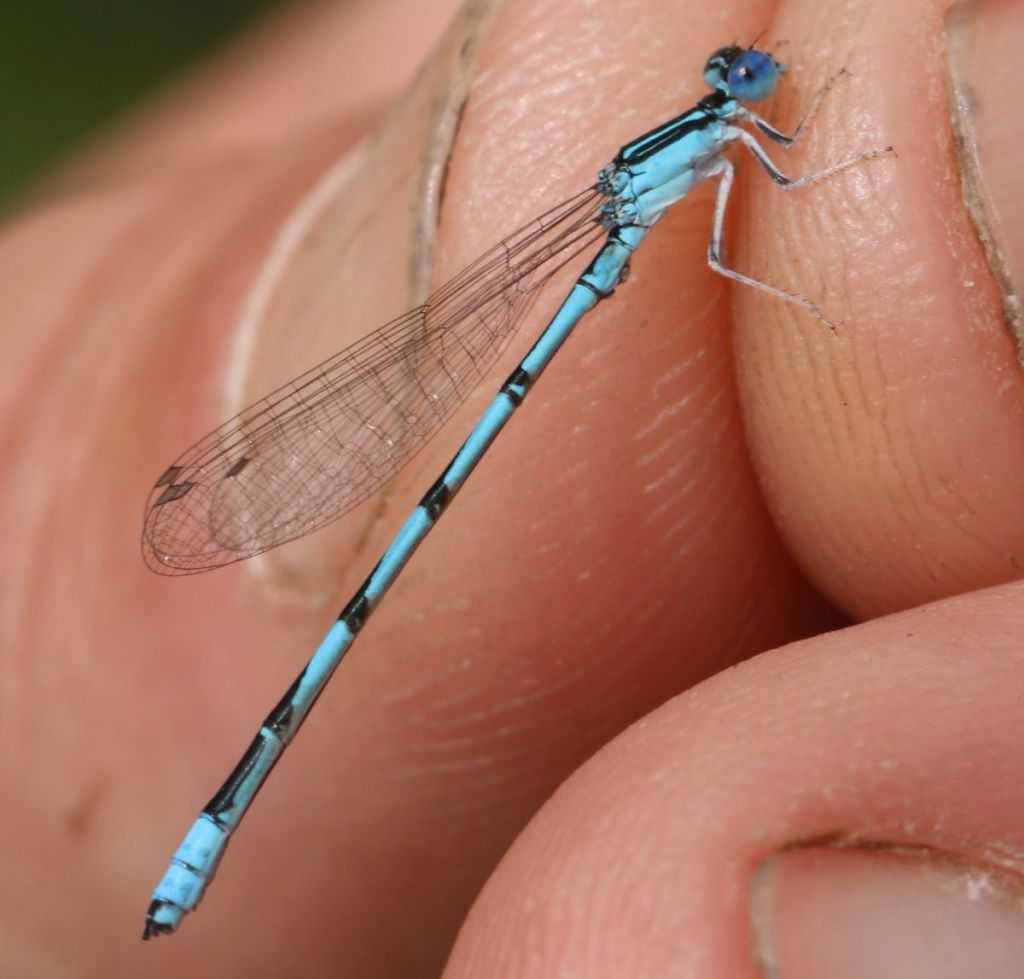
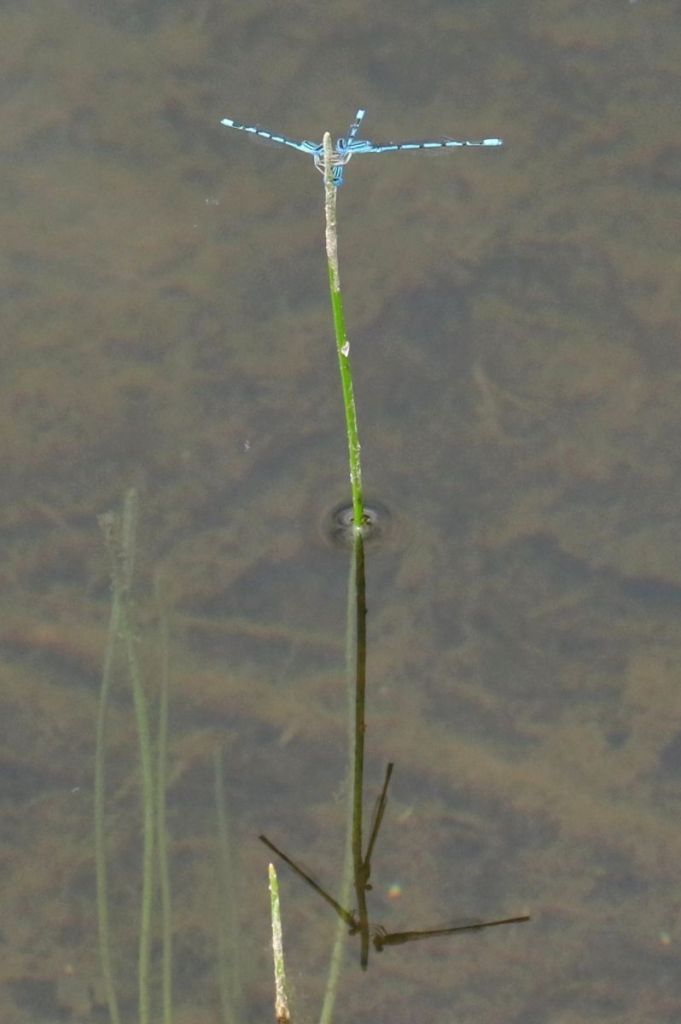
Damselflies, such as this bluet, tend to be smaller and thinner.

One of the key characteristics for identifying these insects is the shape of the so-called claspers – the structures that the males use to grasp the females behind the head. Because that physical pairing is a integral part of the mate bonding, clasper structure tends to be unique, perhaps creating something like a lock-and-key with the architecture of the female. The shape of these claspers (together with features of its coloration) suggest that this is a Familiar Bluet. As the name suggests, this is a common species; it found throughout almost the entire continental US.
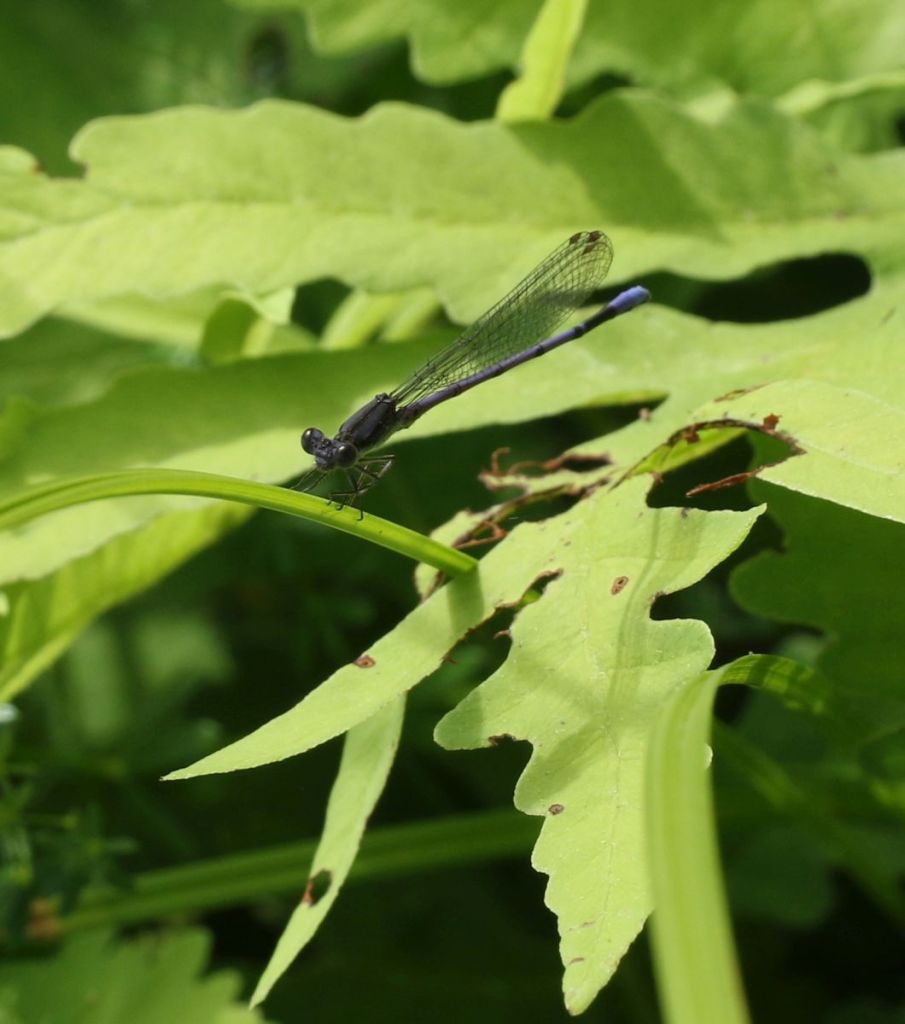
The purplish hue of this damselfly earmark it as a Variable Dancer. This another relatively common species, with the core of its distribution in the eastern US.
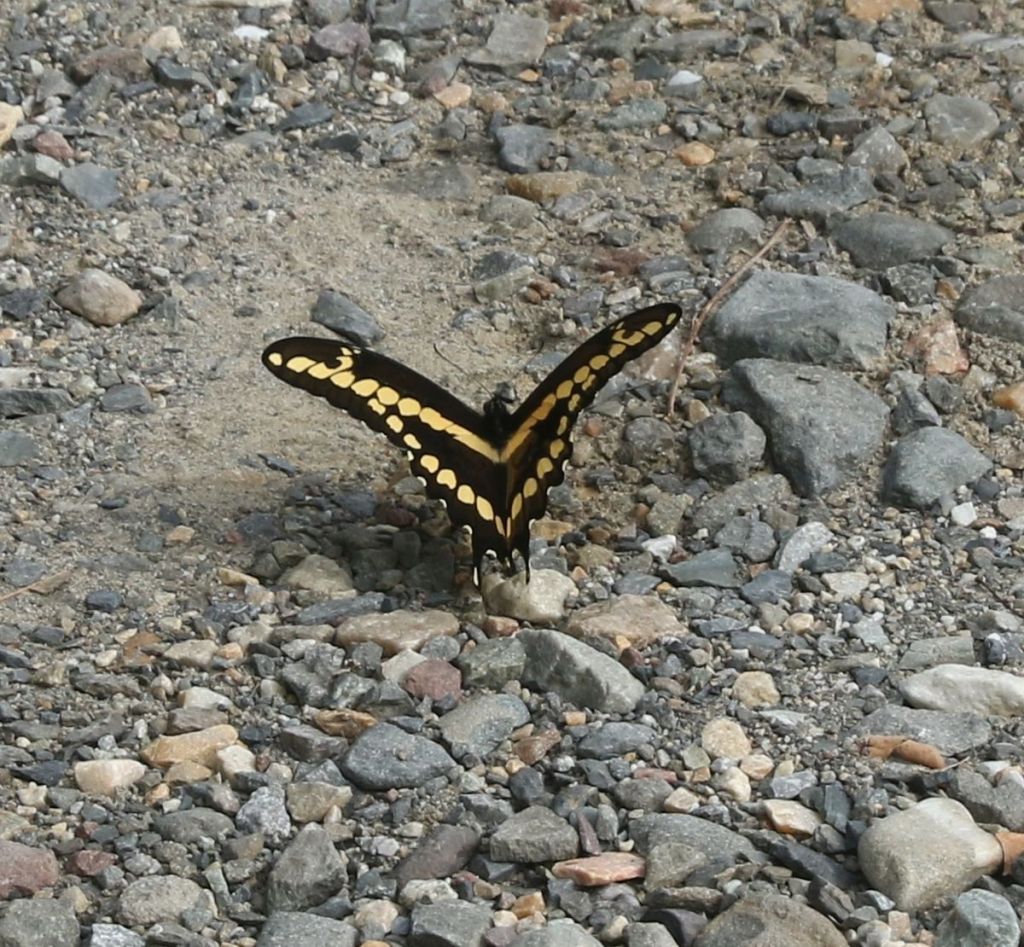

Turning to the butterflies, we were welcomed to the parking lot by a Giant Swallowtail. As the name implies, this is our largest swallowtail species. Unique among our species, it appears to be yellow with black markings below and black with yellow markings above. This is a southern species that occasionally comes north in greater or lesser numbers. This years seems to be a relatively good one for it, as we have noted it at various locations. Its only regional caterpillar foodplant (outside of some garden exotics) is probably Northern Prickly Ash, a sparsely distributed species in our region.
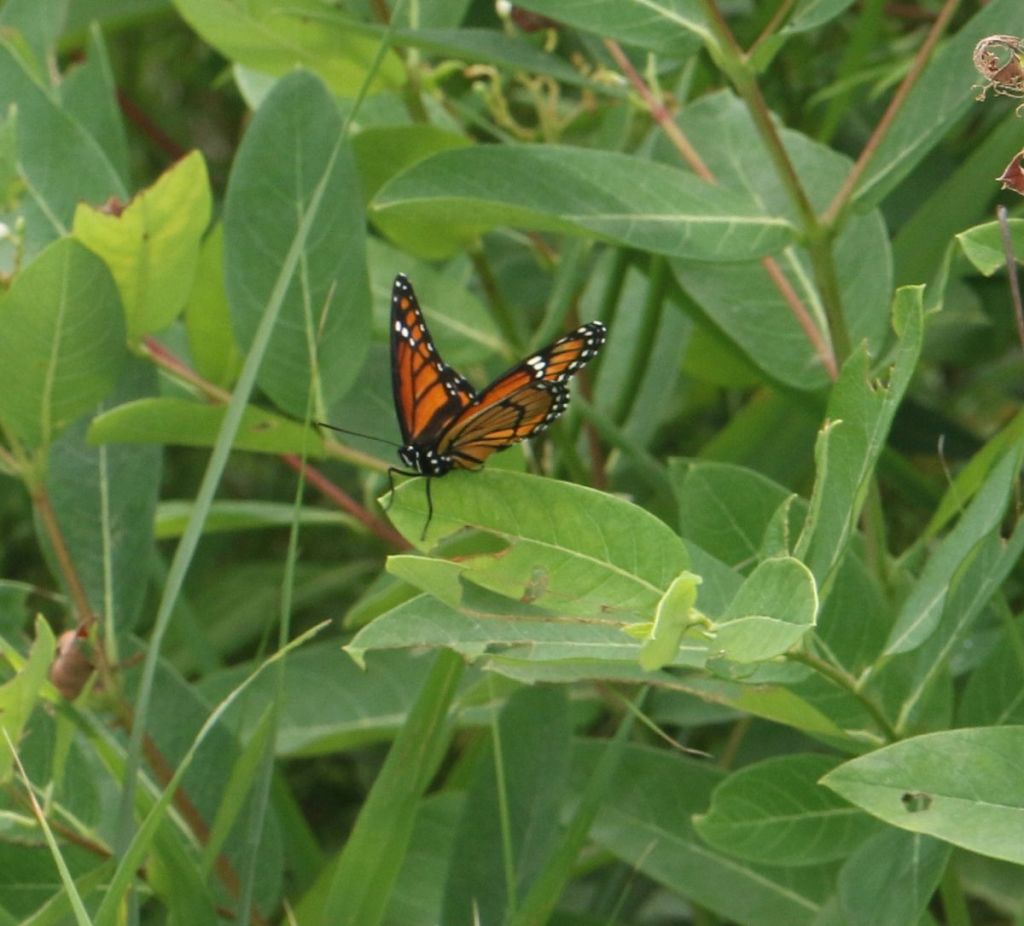
A Viceroy hanging out on Indian Hemp, as documented below…
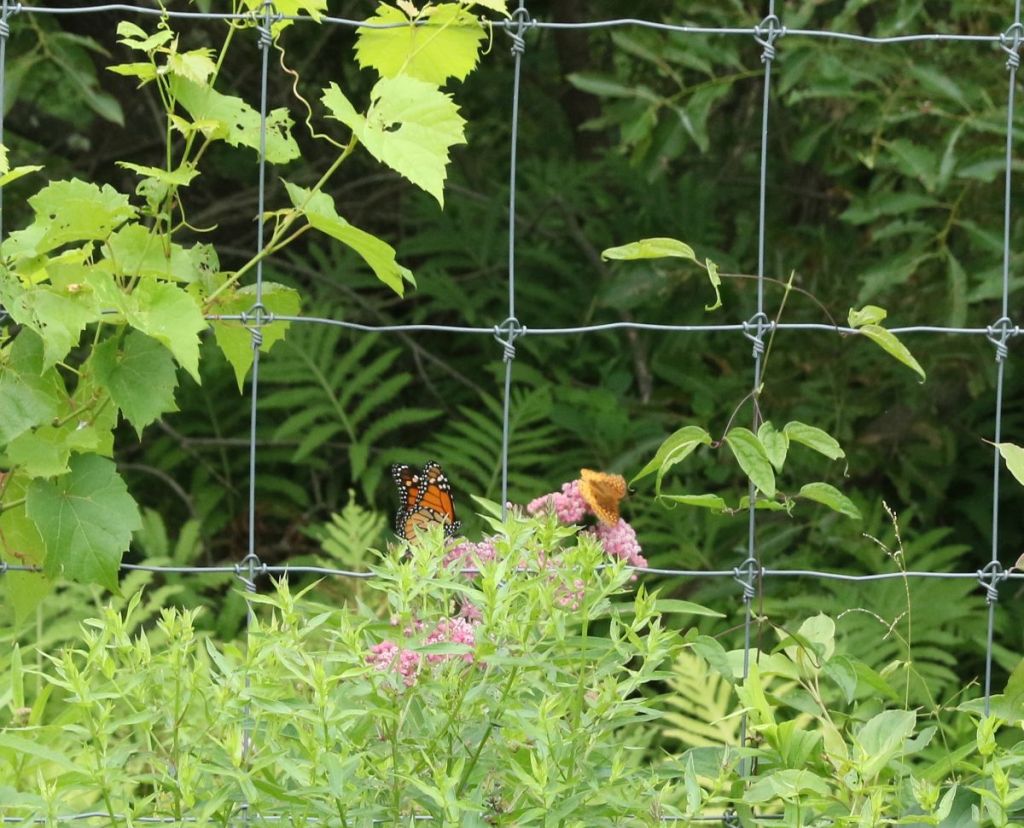
its look-alike, the Monarch, was also present. It was once thought that the palatable Viceroy mimicked the distasteful Monarch. It is now believed that both are distasteful and so reinforce each other’s warning coloration. Here, a Monarch visits milkweed in the wet meadow of the southwest corner. Also present in this photo is..

what appears to be a Great Spangled Fritillary. Last year was a banner year for this species, they seem noticeably less abundant this year. Because their caterpillars eat violets, they tend to be associated with forest edges. Although we didn’t get a good photograph of it, we also saw one individual of the Great Spangled’s smaller cousin, the Meadow Fritillary.
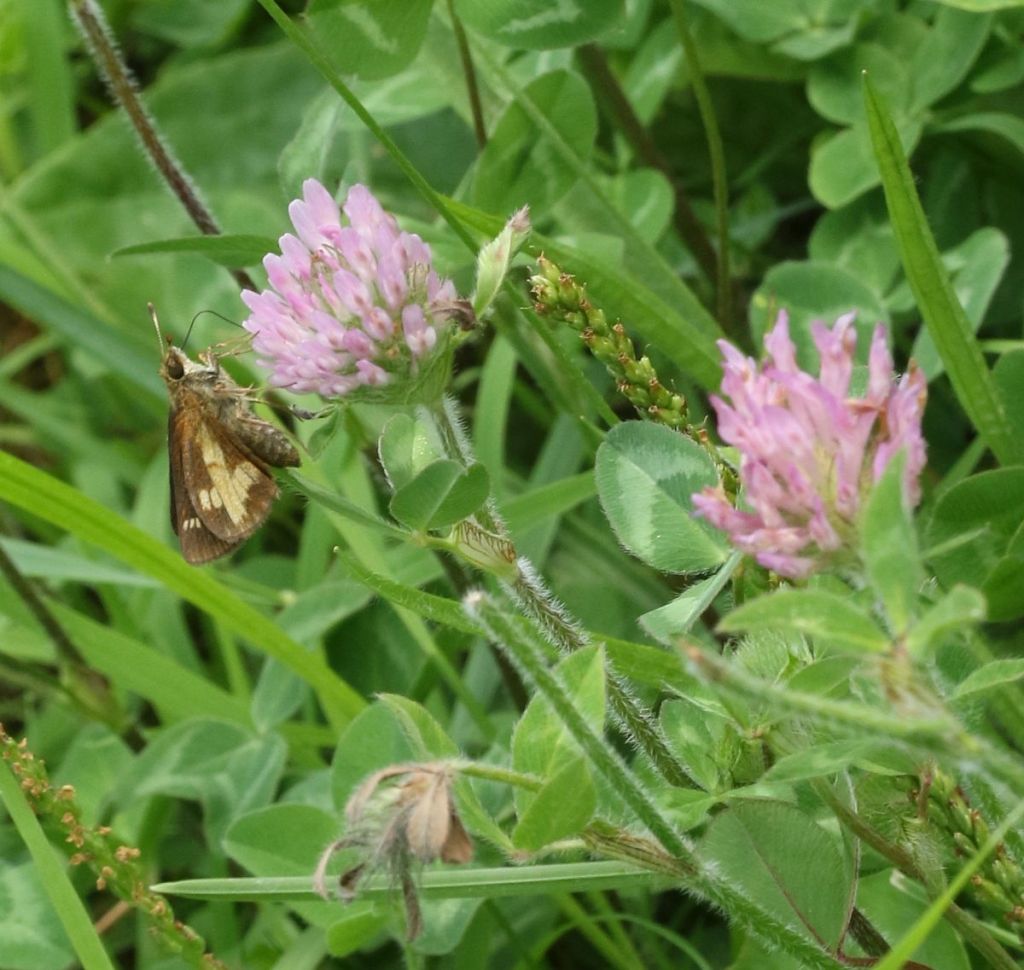
This sharply marked little skipper was found relatively near that same wet meadow. This is a Mulberry Wing (so named because some fresh individuals have a distinctly purplish hue). Its caterpillars feed on sedges and we generally associate it with well-developed, older wetlands, and we consider it somewhat unusual.
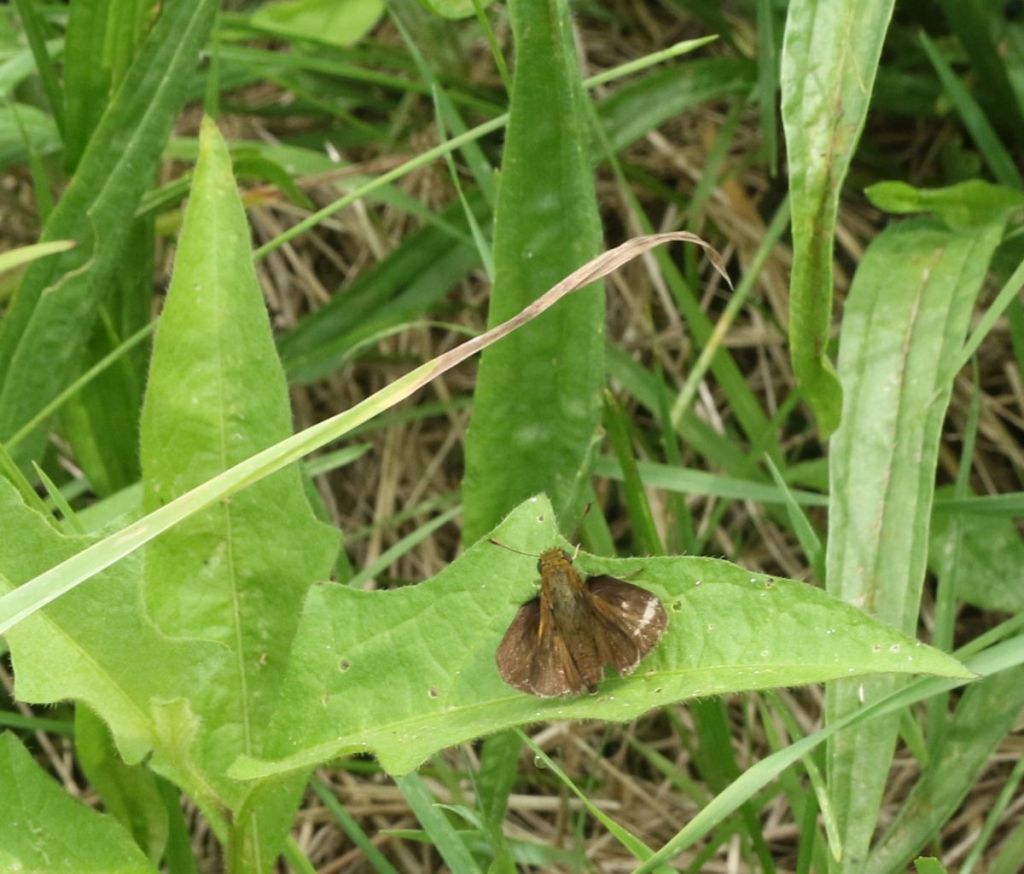
Dun Skippers were more common. This individual has an atypical white wing marking on one side, perhaps associated with some developmental quirk or a post-metamorphosis run-in. Its caterpillars are also sedge feeders, but it doesn’t seem to be a tightly associated with wetlands.

To finish with the skippers, this large species was relatively common both here and at other farms – which butterfly is it?

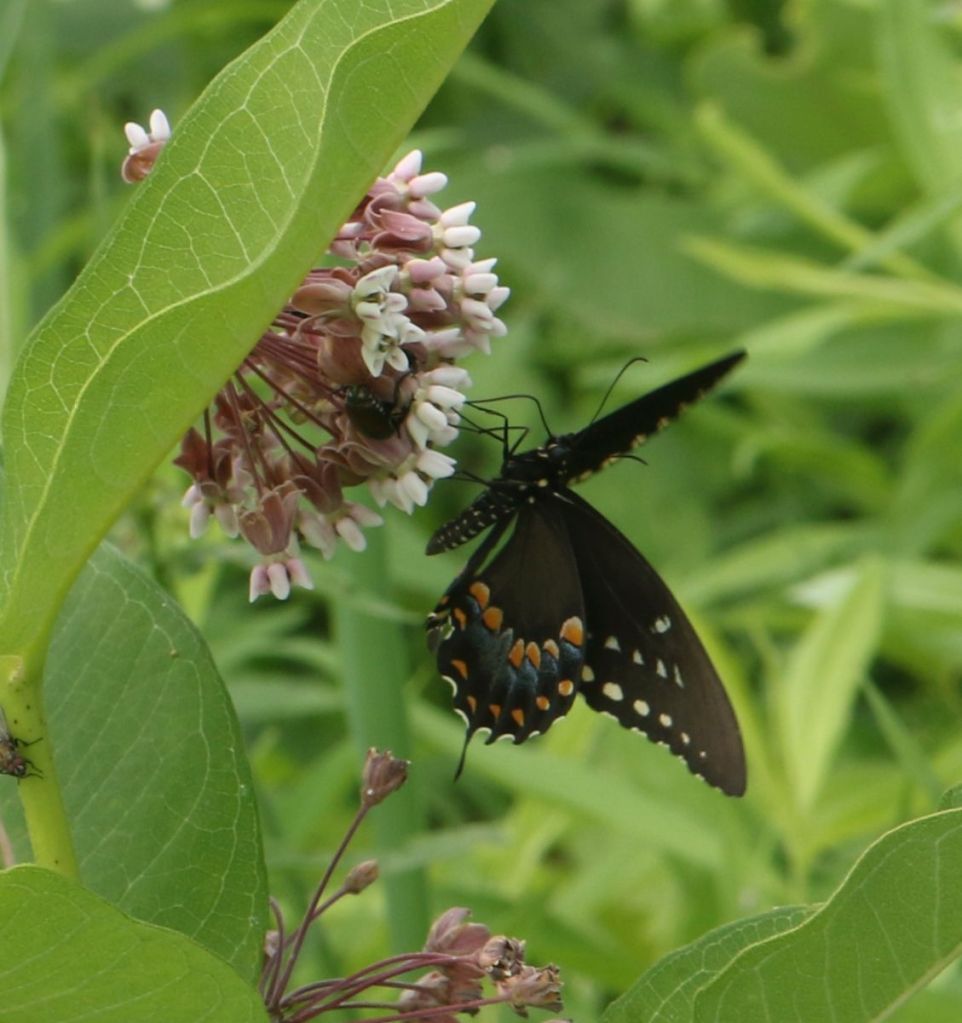
At first glance, one might think that both of these are Black Swallowtails, but actually only the top photograph is that species. The bottom is a Spicebush Swallowtail (so identified by the one missing orange spot along the inner row of orange spots on the underside of the hind wing); as the name implies, its caterpillars feed on Spicebush, a shrub of wet areas.

Common Ringlet, a butterfly that should already be familiar if you have read previous blogs; it is regularly found bouncing across old fields at this time of year.
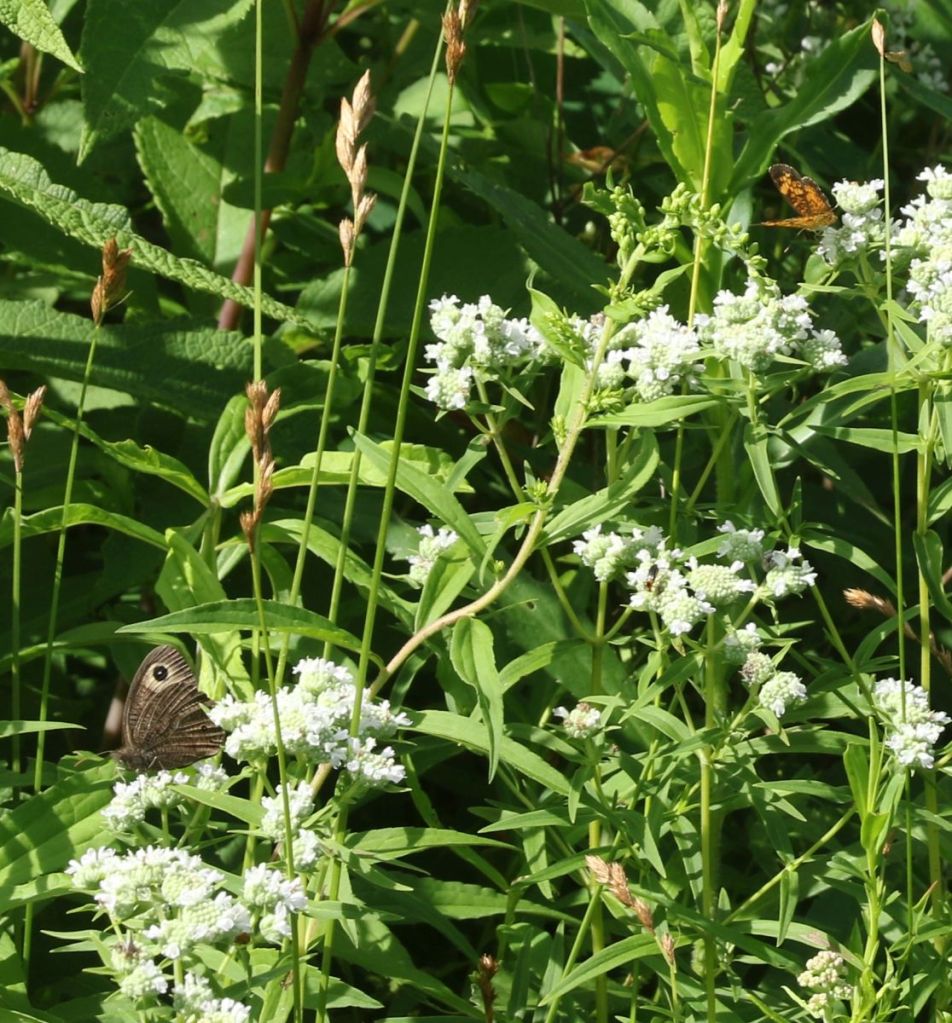
Two more welcome ‘regulars’ during this time of year, a Common Woodnymph (lower left) and Pearl Crescent (upper right).
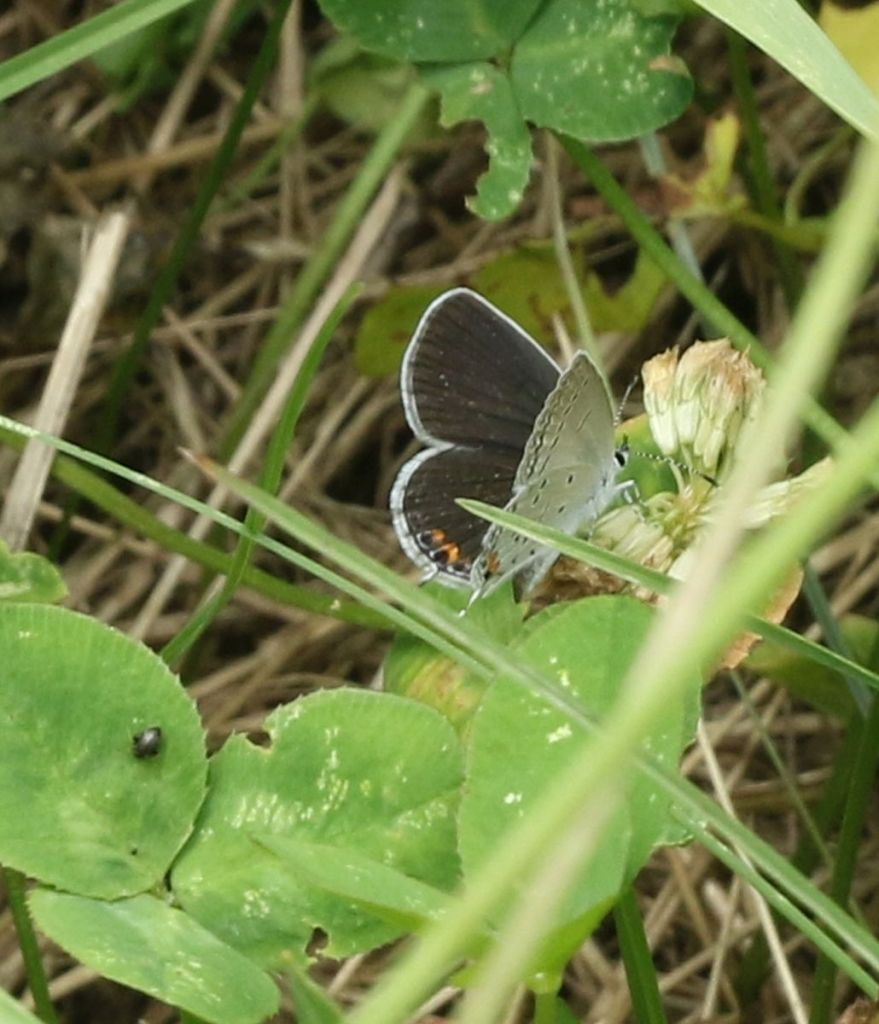
Eastern Tailed-blues tend to be most common (or at least visible!) in short, grassy areas. Sooty grey means this is a female.

This beauty is a good butterfly shot to end with – our only truly green regional butterfly, the Juniper Hairstreak, is widespread but sparsely distributed in our area. Its caterpillars feed on Red Cedar (actually a juniper), and it is usually found near stands of that tree. Its presence at Rose Hill surprised us because we hadn’t come across many Red Cedar on the farm. However, Kevin assured us they are nearby. Some orchardists aren’t fond of Red Cedar, because it is the alternate host of Apple-Cedar Rust.

As listed above, we saw about 21 butterfly species at Rose Hill, the core group of widespread openland butterflies was spiced by a few species associated with damper areas (indicated in blue hues above). While some of these (fainter blue) seem to range more widely, Mulberry Wing and Spicebush Swallowtail (brighter blue) have tighter wetland associations. Also augmenting the diversity were a couple of species that, while not rare, we only see occasionally: Juniper Hairstreak and Giant Swallowtail. The ample flowers left along edges, around ponds, and in ‘roughs’ retained within the orchards helped attract and support this diversity.
As noted, the dragonfly community was primarily composed of relatively common (nothing wrong with that!) pond dragonflies and damselflies.
Three Familiar Bluets have a tête-à-tête.
 Farmer-Ecologist Research Circle