
by Conrad.
Sorry, but the field season, got in the way of our best intentions of keeping this blog ‘live’. We have now made most of our farm visits and over the next couple of months plan to post the reports of those visits here, albeit two-three months behind the times! As a little teaser, this is a short profile of some of the beetles we found by the North Peters Kill, which runs along the southwest edge of Hudson Valley Seed Company’s Airport Rd property in Accord, NY. We made this visit on 6 Sept. 2024.
As some of you may know, ground beetles and I go back a long way together. I first got interested in ground beetles when we were doing a floodplain forest study many years ago – such forests and the associated stream banks tend to have a diversity of ground beetles, and so they can be used to assess forest ‘condition’. Later, as we started doing more agroecology work, the ground beetle interest turned to the question ‘how can these purported beneficials be encouraged on farms?’. We currently have various projects related to that question at the Hudson Valley Farm Hub.
However, as they say, it’s nice to get back to ones roots…
While snooping along the rock margins of the North Peters Kill, I came across an appealing cross-section of stream-bank ground beetles. With a few exceptions, stream-bank ground beetles rarely venture into agricultural fields, so I won’t claim that the beetles profiled here are somehow integral to sustainable agriculture; I just want to make the case that, in their own little ways, they’re exquisite.
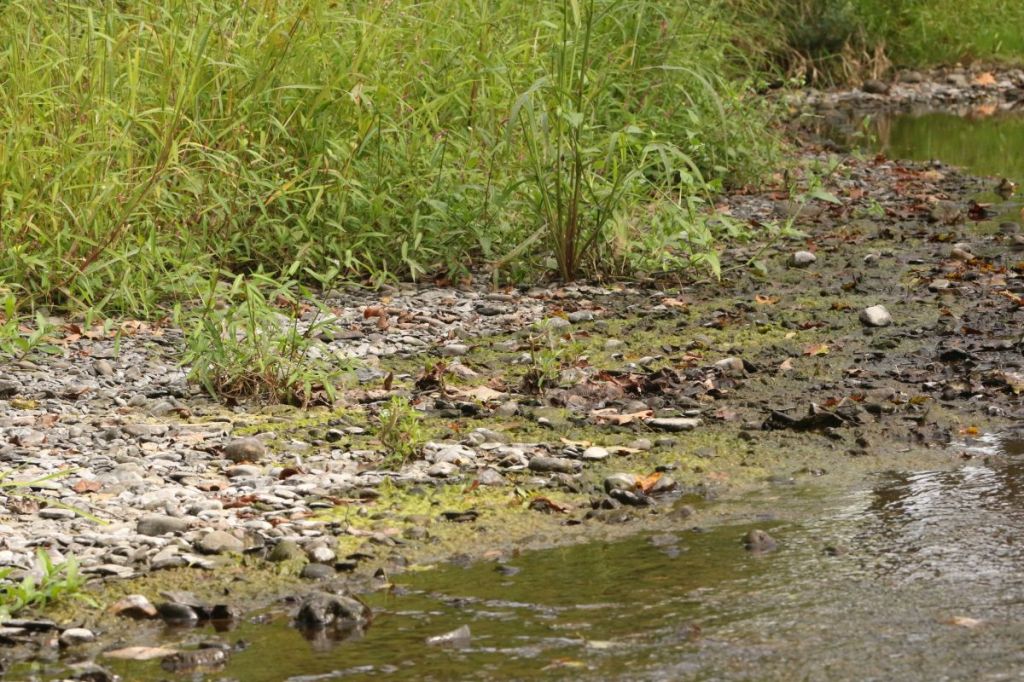
First, before talking beetles, imagine this stream-edge habitat. Rocks sit waist deep in water, ‘fertilized’ by whatever periodically washes downstream or grows in this moist, often sunny, environment. This is prime habitat for scavengers who feed directly on the flotsam and rock fuzz (that’s NOT a scientific term!) and for predators feeding on those scavengers. Largely but not completely missing are those banner scavengers, the ants.
The stereotypical ground beetle is an elongate, black oval with relatively long legs and a propensity to scurry. And some creekside ground beetles do fit the mold. Agonum is a genus of ground beetles which includes, but is not limited to, a range of medium-sized, relatively nondescript (until you get out the microscope) beetles of wetter areas.
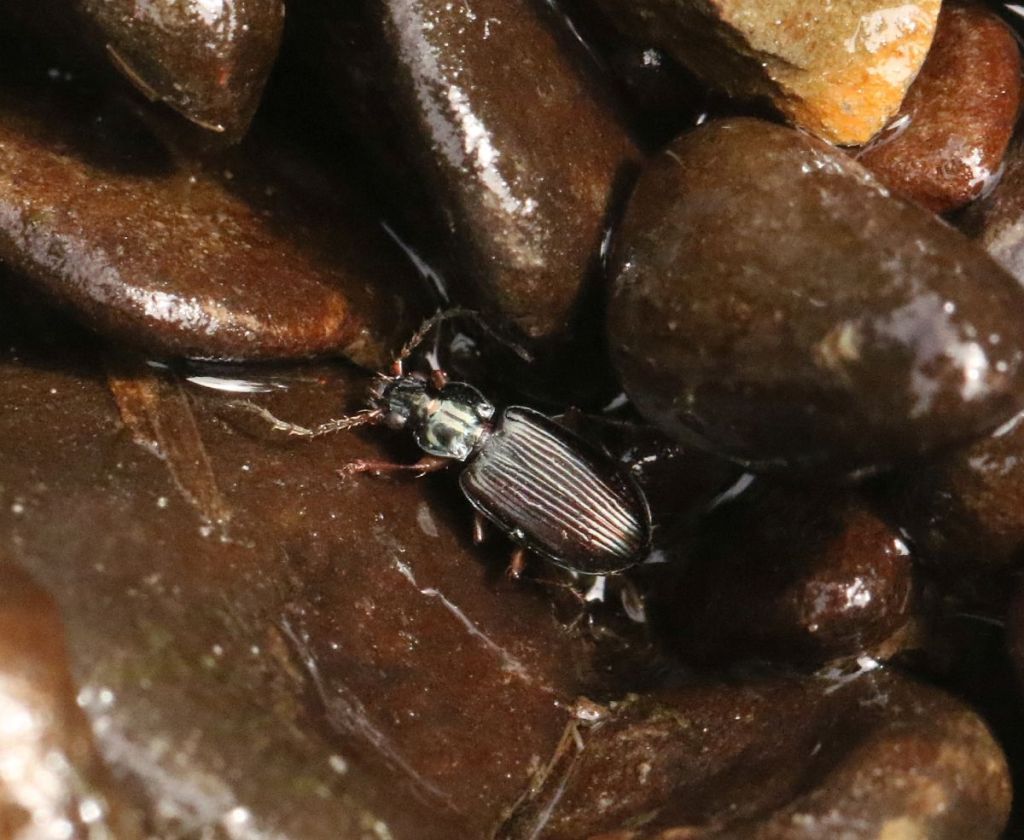
But more exotic beetles may lurk beneath the rocks….
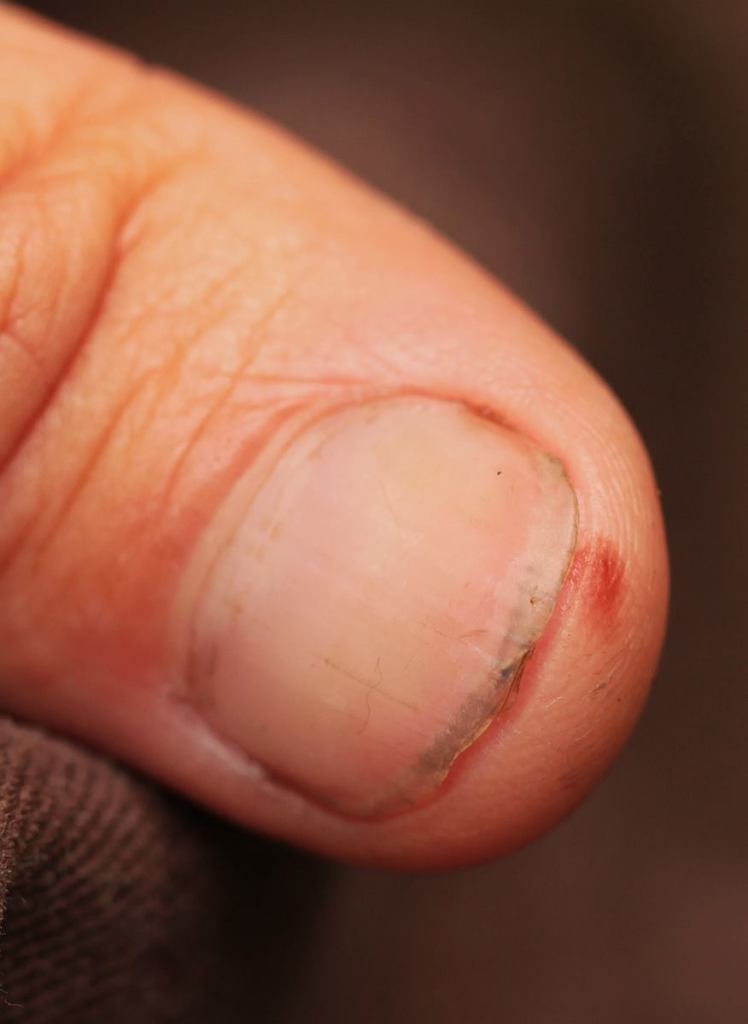
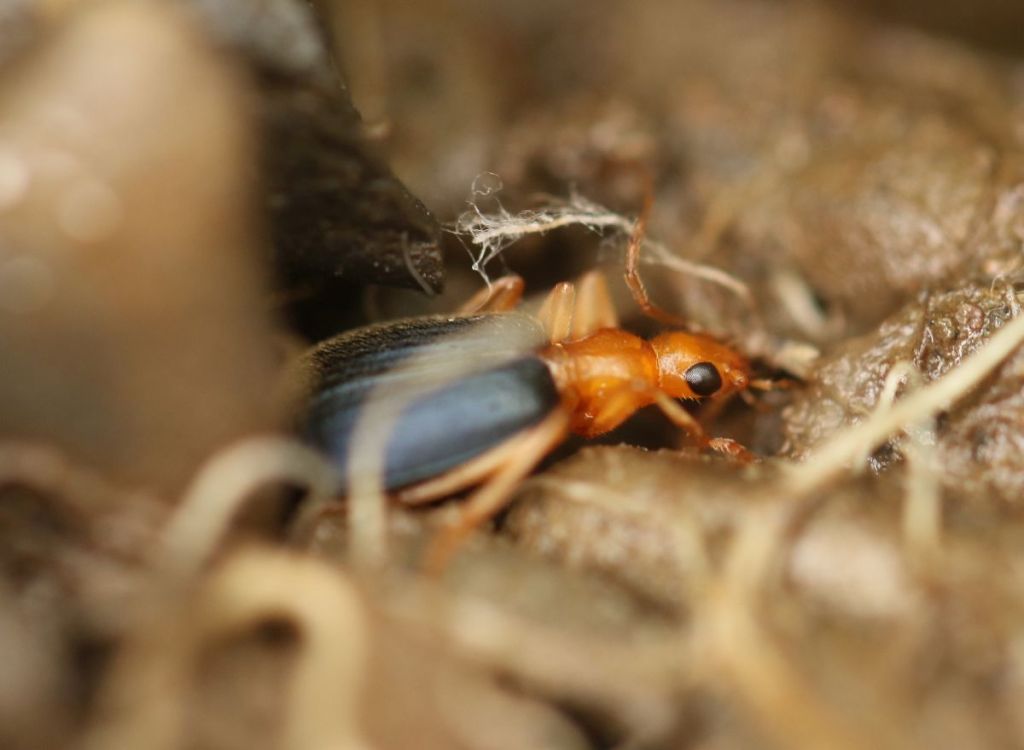
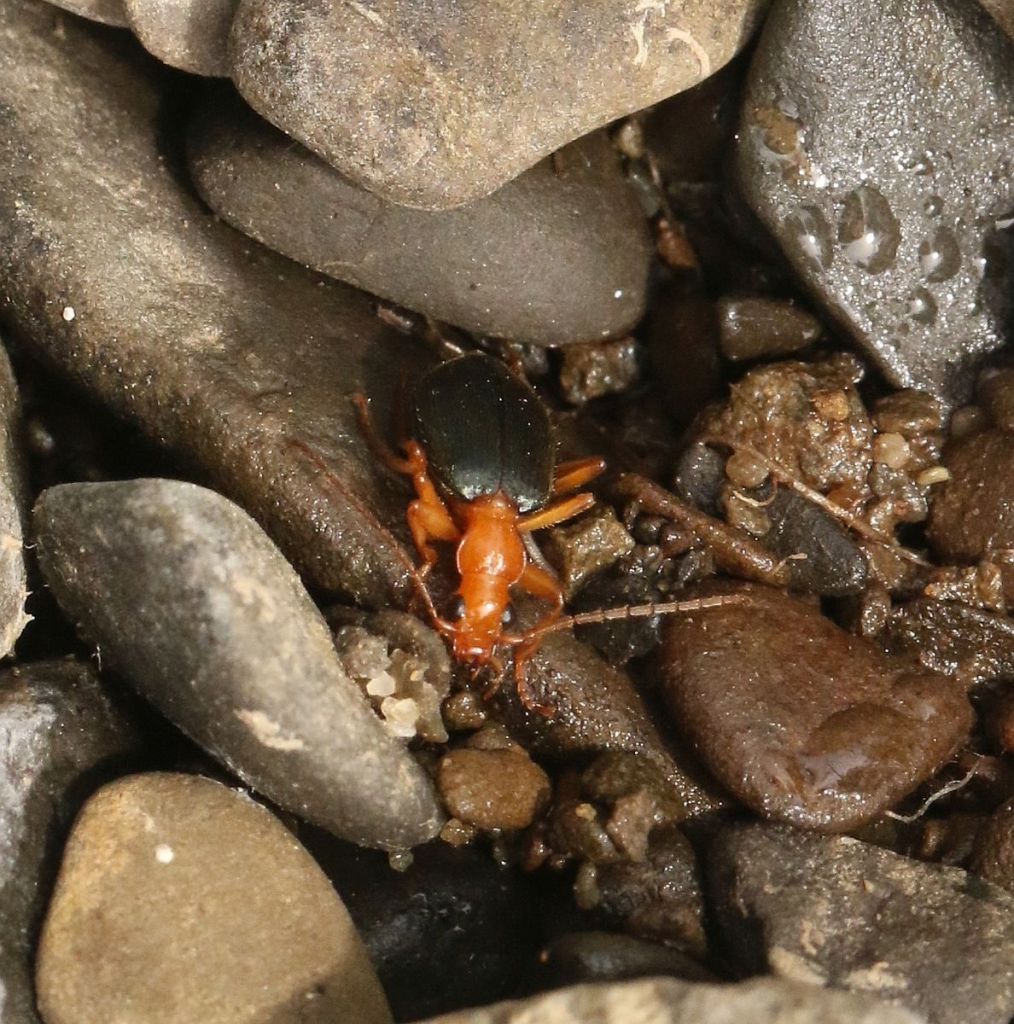
Bombardier Beetles, like many other ‘noxious’ (at least to their would-be predators) insects are conspicuous. Their colors say, “Eat me and you’ll regret it.”. Inside their bodies are two chemicals which, when mixed together, become a very caustic substance. When irritated, the beetles combine these two chemicals and squirt the new compound out the directional nozzle on their rear ends. (For videos of this in action, go to 3 mins into this BBC clip.) The burn on my thumb came when I picked up a Bombardier Beetle. There was a faint “Ffffft” and a base-ball sized cloud of vapor which left this ‘wound’ on my thumb. I didn’t feel anything but I wouldn’t want to be a bird who got that in the eye or a small insect who was bathed in it.
These beetles are reported to be mainly carnivorous. Could they also use their scalding hose to hunt?
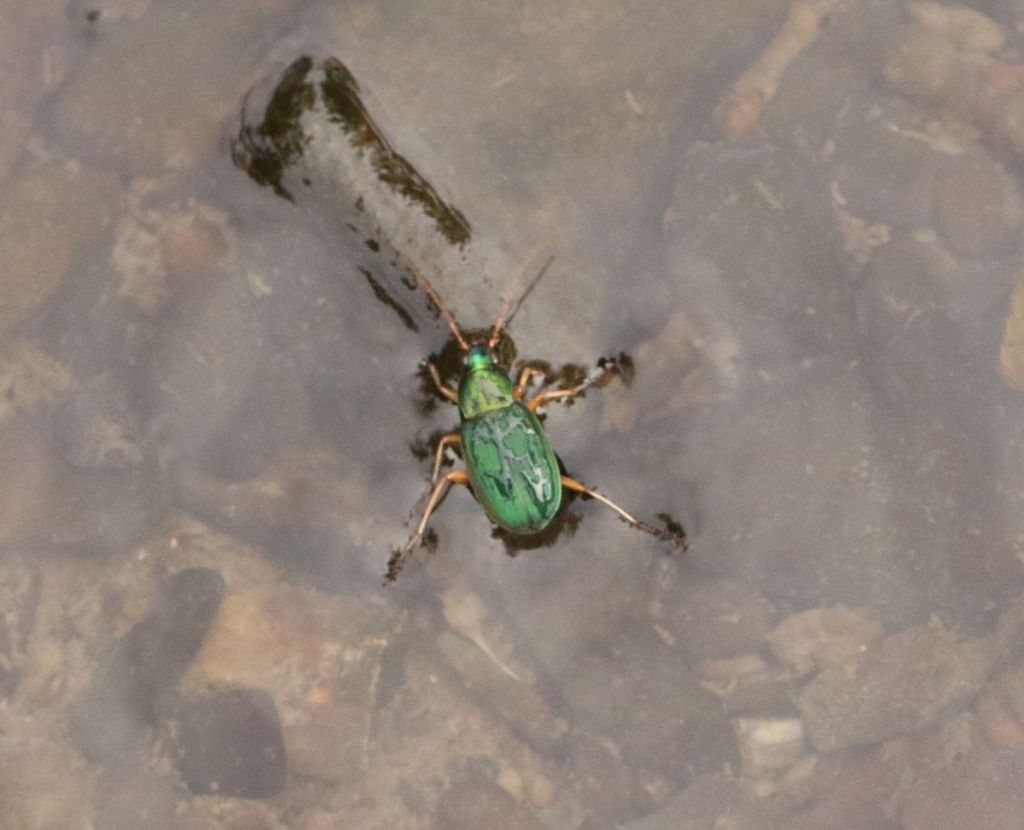
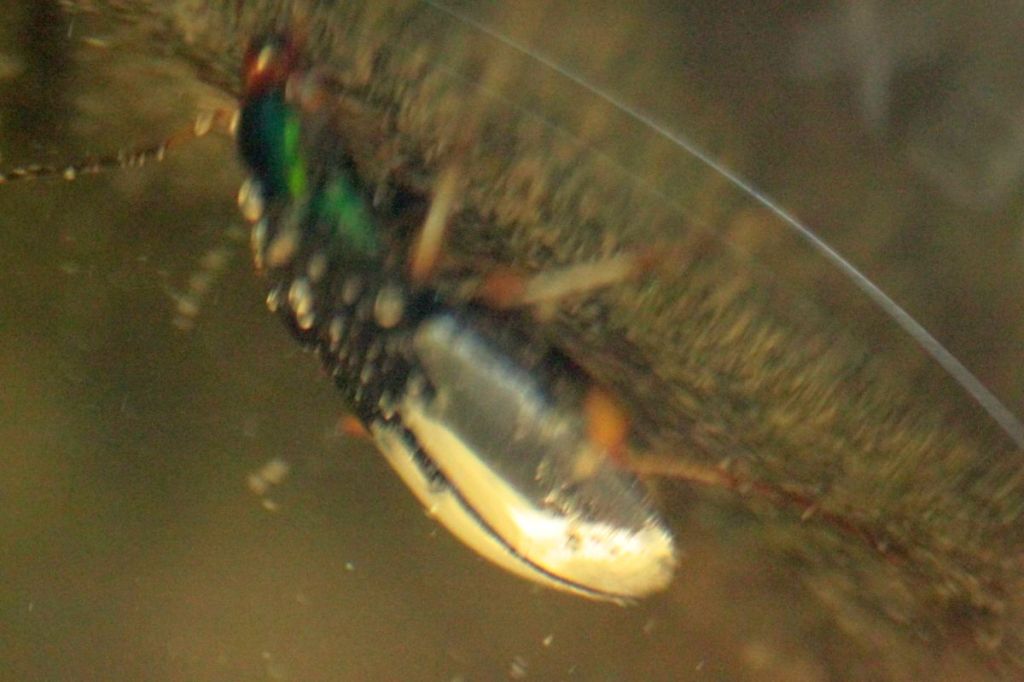
Another showy ground beetle of the North Peters Kill banks is, to use its scientific name, Chlaenius sericeus. This is a large, startlingly green beetle covered in a fine fuzz. It is reportedly another predator on the prowl. While these beetles don’t possess the Bombardier’s chemical canon, they are not short on odor – for most of the rest of the afternoon after picking one of these up while taking these photographs, my fingers smelt of rancid butter. This is a hairy genus of ground beetle, literally. Most ground beetles are relatively smooth-surfaced. A few upland species are fuzzy, and this tends to accumulate the dust of their surroundings, seemingly providing effective camouflage. But these are wetland creatures, not apt to get dust covered, so what might be the utility of the pelage?
To suggest an answer to that, I need to talk about photography. I sometimes take the ‘desert island’ approach to photographing live ground beetles. Ground beetles are fast. Often, if you just put one down on the ground, it’s gone before you can snap a picture. So, I put them on a rock surrounded by water and, while they try to figure out their predicament, I take some photos before usually releasing them somewhere back on dry land. For many ground beetles that approach works but, as it turns out, not for Chlaenius. Those beetles either crawl down the side of the rock and voluntarily fully submerge themselves or they take off in a skating/swimming motion across the water. In either case, those hairs could help. By trapping air, they could make the ground beetle more buoyant, facilitating swimming. Alternatively, if they can pull themselves underwater, that trapped air could serve as a diving bell of sorts, providing them with an air reserve.
This is a cool beetle who really deserves a good common name, any suggestions?

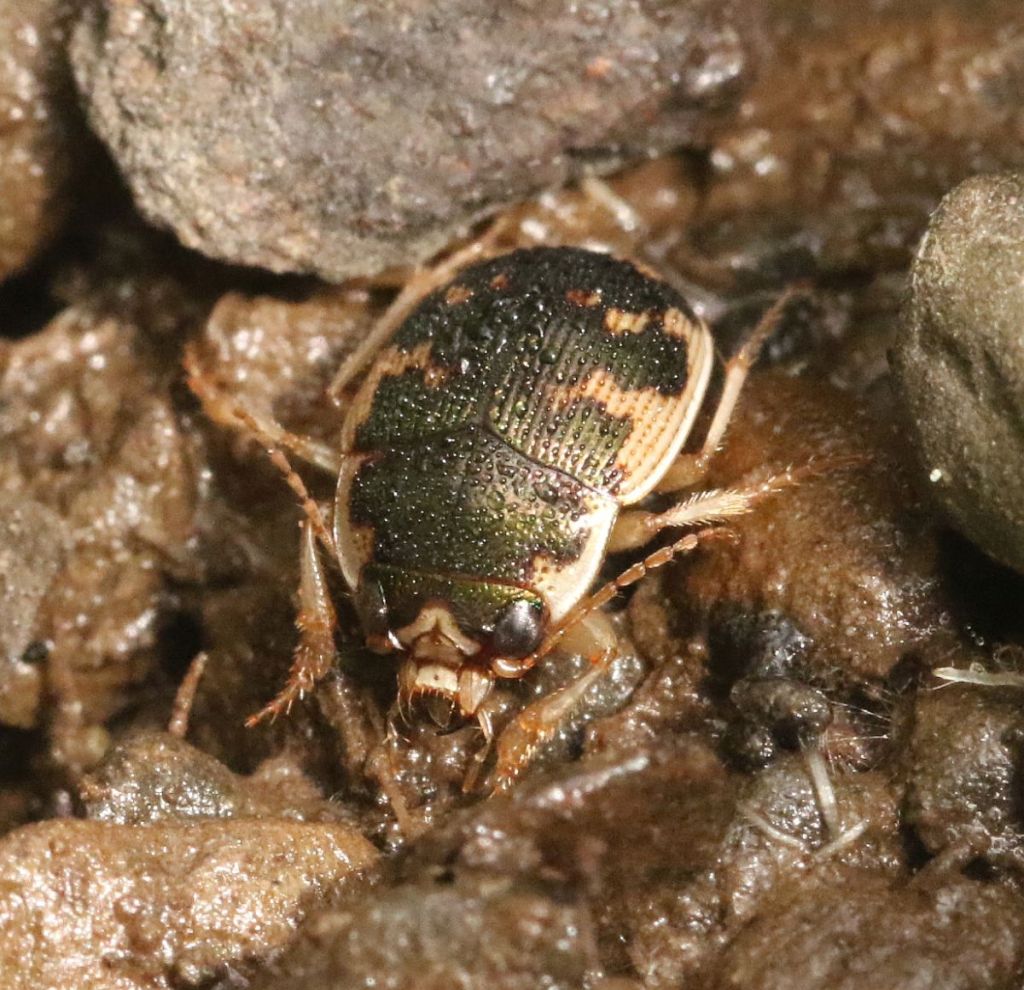
To add to this exotic fauna, we have the pill-shaped Omophron americanus. A ground beetle so oddly shaped that it is hard to believe it’s even a ground beetle. These are beetles of gravelly or sandy stream banks. It has been suggested that their round shape helps them quickly bury themselves in loose sand. One often finds them by pouring water on such beaches and then waiting to see who pops out of the ground for air (it is an understandable general behaviour of stream-side ground beetles that when water arrives, they head for higher ground). As their impressive mandibles suggest, they are predatory.

Most of the above-mentioned ground beetles are found primarily along waterways or around water bodies. Only rarely do we find them in farm fields. But Patrobus longicornis is an exception. This polished, black ground beetle is supported by spindly, light-colored legs that make it a spritely runner. I didn’t actually find this species in my short visit to the North Peters Kill, but have seen it along many other regional creeks. However, we also regularly find it in and around farm fields. It’s an omnivore and could, conceivably, be consuming weed seeds. One of our current projects is exploring the diets of on-farm ground beetles to see if we can better describe their potential agronomic role.
However, to end back at the beginning, it’s sometimes nice to forget about utility and just spend some time appreciating the ‘exotic’ in our own backyards.

 Farmer-Ecologist Research Circle
Pingback: 6 Sept. 2024: Butterflies & Some Other Insects of The Hudson Valley Seed Company. – Farmer-Ecologist Research Circle