

The diversity of habitats in such a compact area, including a stream and riparian zone, upland pasture, hedgerows, weedy field margins, and vegetated crop zones permit many species of birds to coexist with the farming practices of Little Seed.
On a bright sunny morning on 17 June I was able to document breeding evidence for the following species at Little Seed
- American Redstart (Feeding Young)
- Bank Swallow (Used Nest)
- Belted Kingfisher (Used Nest)
- Chestnut-sided Warbler (Fledgling)
- Common Grackle (Fledgling)
- Common Yellowthroat (Singing territorially)
- Eastern Kingbird (Feeding Young)
- Field Sparrow (Fledgling)
- Gray Catbird (Carrying Food for Young)
- Indigo Bunting (Singing territorially)
- Killdeer (Fledgling)
- Northern Rough-winged Swallow (Fledgling)
- Red-eyed Vireo (Carrying Food for Young)
- Red-winged Blackbird (Fledgling)
- Savannah Sparrow (Singing territorially)
- Spotted Sandpiper (Singing territorially)
- Song Sparrow (Fledgling and Nest with Eggs)
- Warbling Vireo (Singing territorially).
- Wood Duck (Fledgling)
As Conrad and Cladia described in their post, one of the most ecologically interesting and unique features of this farm is the stream and riparian edge that runs adjacent to the farm’s pastures. In addition to looking like a well-used and marvelous swimming hole, the stream and shorelines hosted a variety of interesting birds.
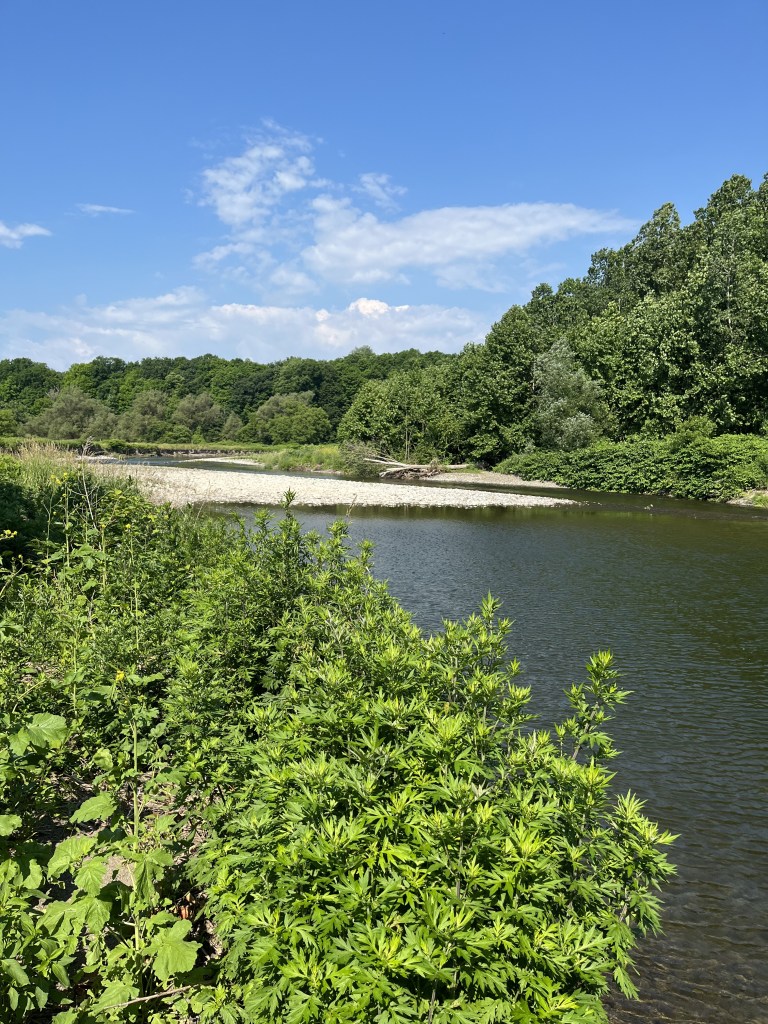
The pebble beach and distant exposed stream banks hosted several range-restricted riparian species of birds
The silt embankment of the stream provided nesting sites for three species of birds that take advantage of this specialized habitat. Bank Swallows, aptly named for their tendency to dig into the soft silt/sand edges of watercourses to form communal nesting cavities were present. Northern Rough-winged Swallows (that often nest as single pairs rather than in groups) also called this section of the stream home.
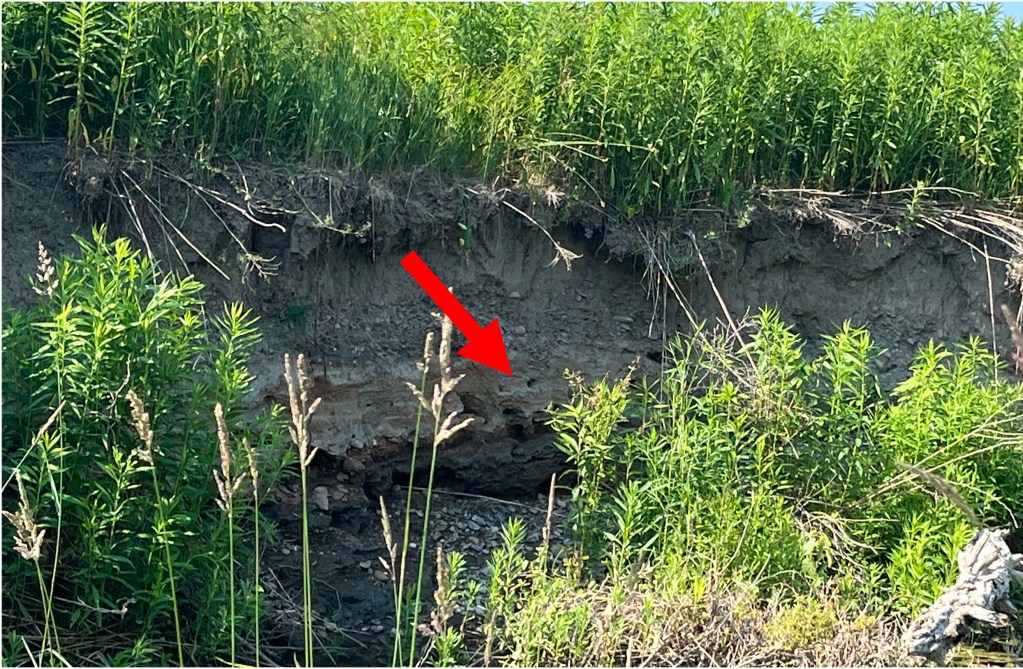
The red arrow points to one of the excavated cavities of a Bank Swallow nest. Bank Swallows were present flying over the creek, but this particular nest is likely abandoned, perhaps picked up by another cavity nester such as the Northern Rough-Winged Swallow. Bank Swallow colonies are inherently ephemeral, taking advantage of recently exposed banks due to flooding or erosion. Bank Swallows have been documented nesting in human-altered gravel banks and sand mines when natural habitat is unavailable.

This Bank Swallow was photographed by Mike Birmingham in the Hudson Valley. Like all swallows, its long wings allow it the great aerial performance necessary to chase and catch flying insects. Bank Swallows arrive to the Hudson Valley in May and depart to Central America in late August and September when flying insect biomass begins to decreases here locally.

The larger cavity to the left was recently used by a Belted Kingfisher, a much larger fish-eating crested bird that also nests in exposed embankments. This nest looks like it was also used in a previous season. Fresh nests show two clean groves where the adult kingfisher drags its feet as it enters and exits. A variety of mammals will renovate and inhabit this kind of valuable real estate when the breeding season ends.
An adult Wood Duck, another cavity nester, swam past on the creek with seven recently fledged ducklings in tow. Ducklings are a classic example of precocial young, meaning that shortly after they hatch they are mobile and able to explore and feed. Contrast these young swimmers with the pink, blind and helpless young of an American Robin (which are altricial young) that must be fed and kept warm to survive. Wood Ducks nest in cavities, but as their name implies, inside the cavities of trees rather than soil embankments. Sometimes suitable nesting holes can be so scarce that multiple females will lay in the same cavity creating super clutches of forty or more young. As soon as the birds are hatched and mobile they exit the cavity (sometimes falling 20 or 30 feet to the ground). Wood Duck chicks have a layer of fat that cushions the fall as they don’t always drop into the water from their nesting trees!
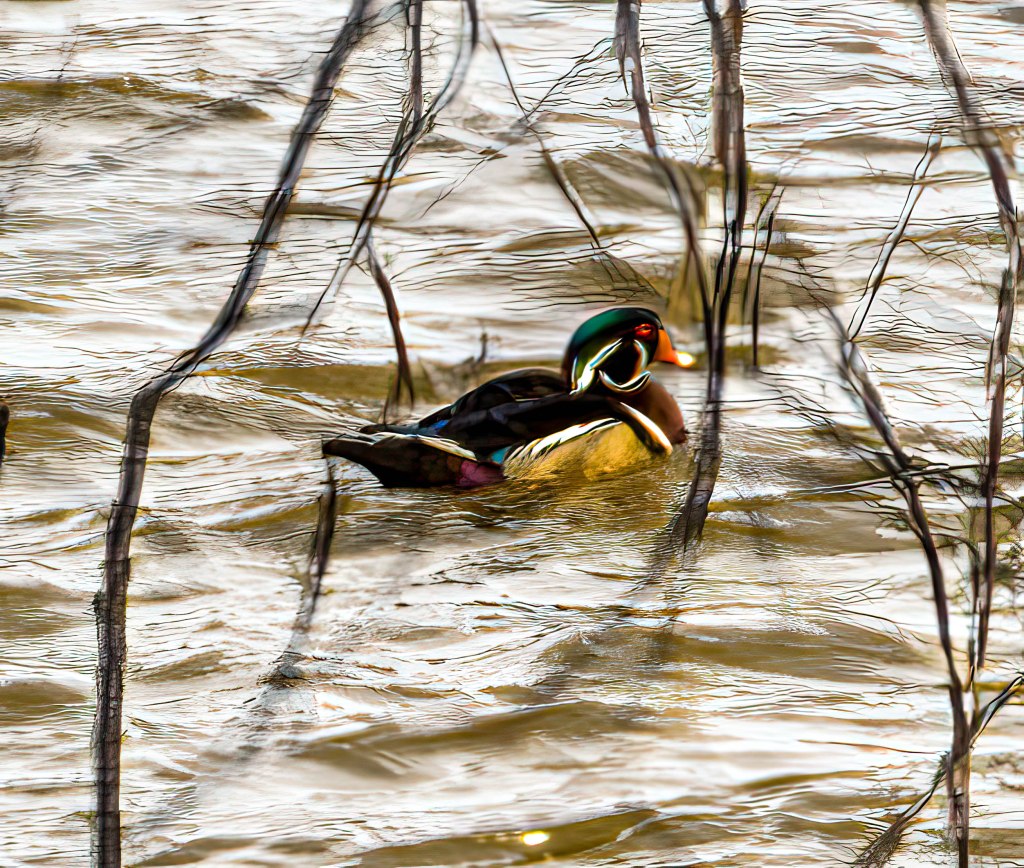
A drake (male) Wood Duck photographed by Mike Birmingham. Wood Ducks are examples of short-distant migrants. They typically leave the Hudson Valley in December but don’t go too far, finding open water in the Mid-Atlantic States. They return earlier than most migrants as well, typically showing up in the Hudson Valley in March. More than 100 years of data have shown us that as the climate warms, Wood Ducks linger here longer in the fall and arrive earlier in spring, often returning in February now, 2-3 weeks earlier than average.
In the pasture adjacent to the stream, three species of early breeding birds are already wrapping up the year’s nesting cycle. Red-winged Blackbirds fly in mixed age flocks in the pasture. They alight and drop back down into the grasses like rain. Common Grackles and their recently fledged soft gray young join them. These small flocks begin as the association of a few dozen breeding pairs. As the summer draws to a close these local flocks aggregate, joining others of their own species and and perhaps too by European Starlings and Brown-headed Cowbirds, sometimes reaching numbers in the tens of thousands. Birds of a Feather Flock Together, so the proverb goes, but in this literal sense the ecological needs of these bird change. In the summer, males aggressively defend individual territories. The proud red flash of a Red-winged Blackbird is designed in part to keep others away from their nesting territories. As breeding season ends, however, and their sexual hormones diminish, the value of so many neighbors becomes an essential survival tool. Many eyes can quickly spot predators and the dodge and weave of a large flock of blackbirds confuses their assailants. There is safety in numbers.
Some of the more experienced Red-Wing Blackbirds will raise a second clutch, but the bulk of breeding is already over just as the summer solstice arrives. Other species of birds, like the pair of American Goldfinch that fly over the pasture, are just forming their pair bonds and attracting mates, not yet ready to lay eggs. They will gather together nests of spider webs and milkweed silk embroidered with lichens as the first apples of the Hudson Valley are picked. Each species of bird has its own season and rhythm.
Tree Swallows, a third early breeder also flies over the stream near the pasture. These iridescent blue-green, white-bellied swallows nest in tree cavities just like Wood Ducks. Placing a bluebird box next to a water course is almost certain to attract them. They are the first swallows to arrive to the Hudson Valley each year, typically in March, and the last to leave. Unusual for migrants, they have a long season locally after their breeding cycle. In early July they perch crowded on local power lines and those flocks always remind me of the pivotal moment when summer has peaked and we begin the long slow walk to winter. They seem to be able to eke out a living when other species of swallows have long departed and it’s not impossible to see them in our area as late as October.
On many conventional farms, active cropping areas typically have low bird diversity, but the unmanaged edges at Little Seed provide habitat for birds even in places that are heavily travelled and used for production.
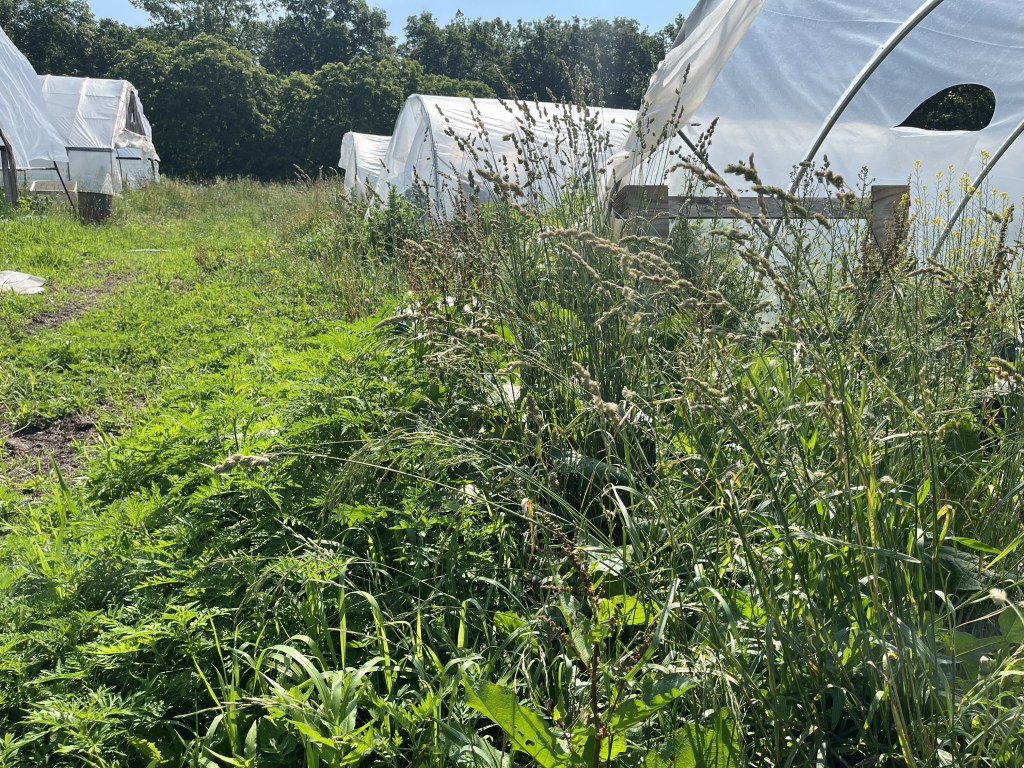
The seeding grasses in and around these plastic tunnel greenhouses provide enough habitat for sparrows to nest and feed.
Song Sparrows are particularly good at finding small breeding niches in weedy field margins and hedgerows when given the chance. They are true omnivores feeding on a variety of insect prey, seeds, and fruits.
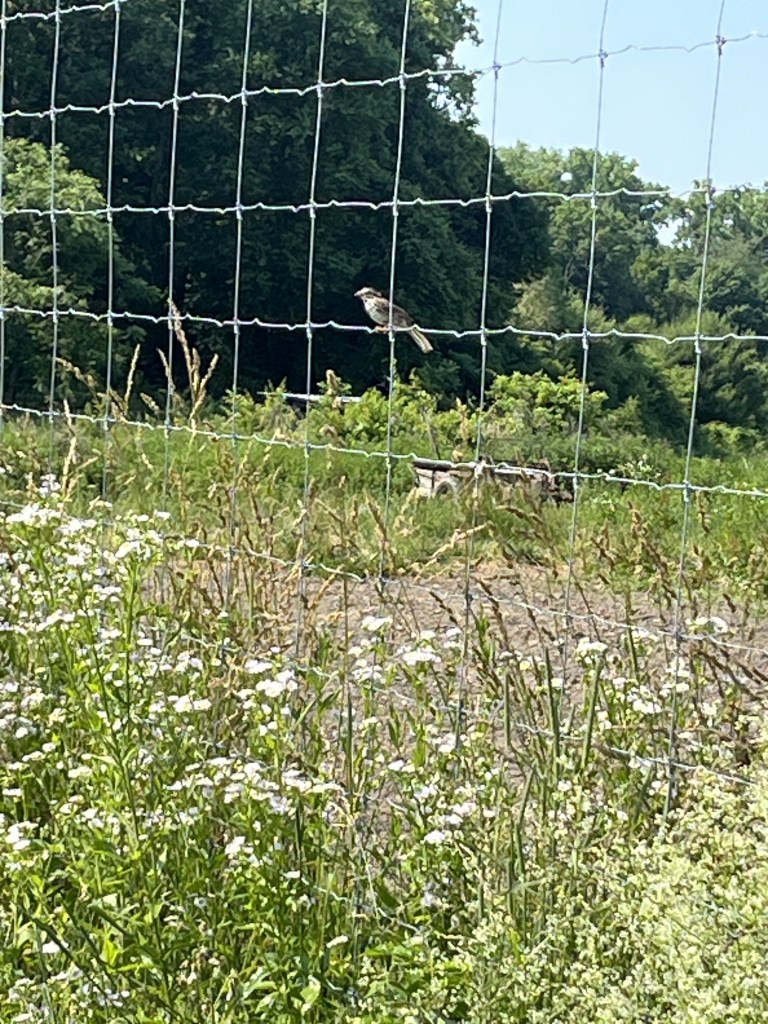
As their name implies, Song Sparrows have complex — and to our ears, pleasant — songs that they sing over and over to define and defend their territories.
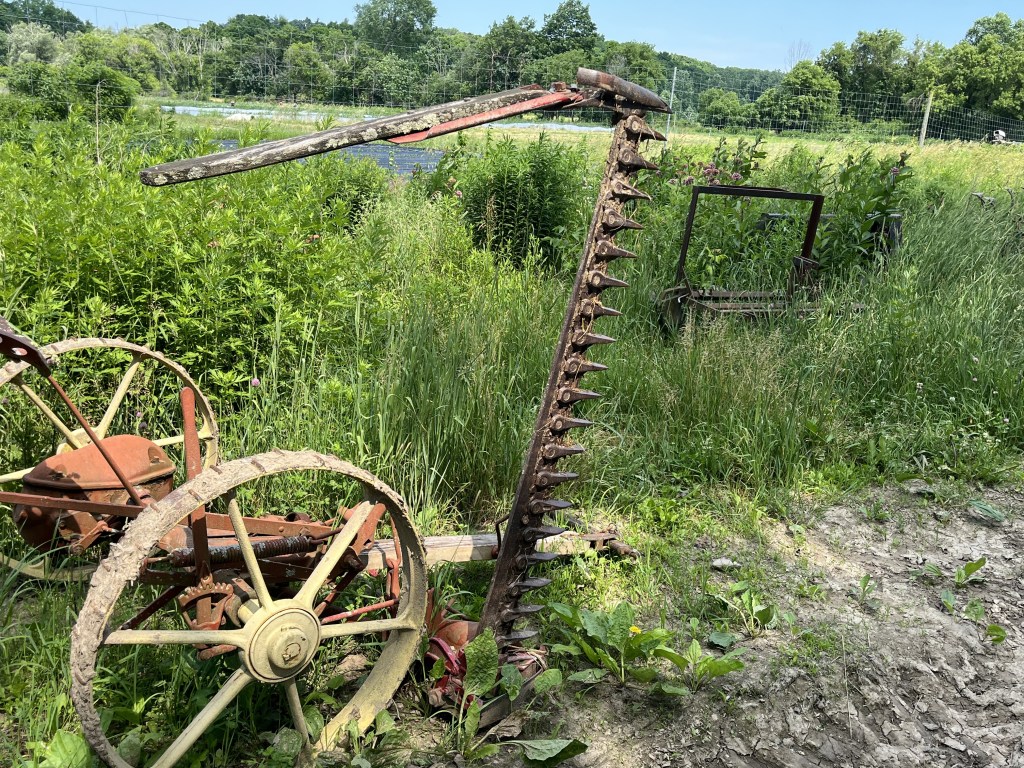
Even the seasonal weeds that grow up around equipment storage sties can be an oasis for sparrows and other birds
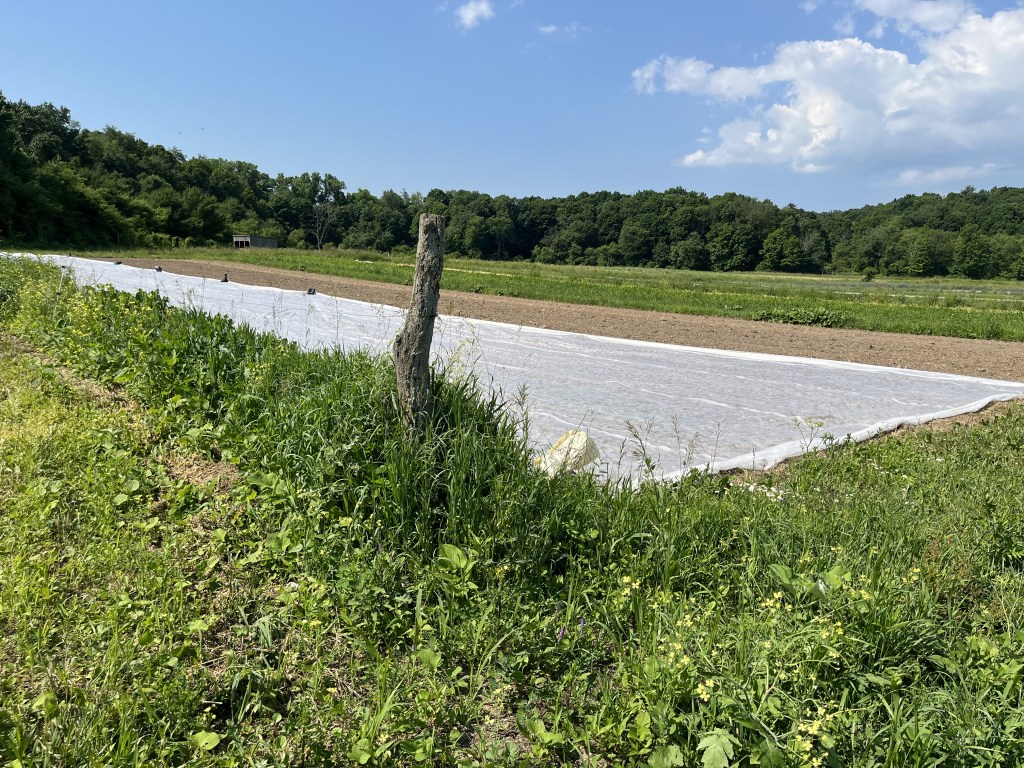
Fenceposts can be important feeding sites for birds. An Eastern Bluebird (that just dived out of view of my camera!) used this post to ambush and pounce down onto insects below.
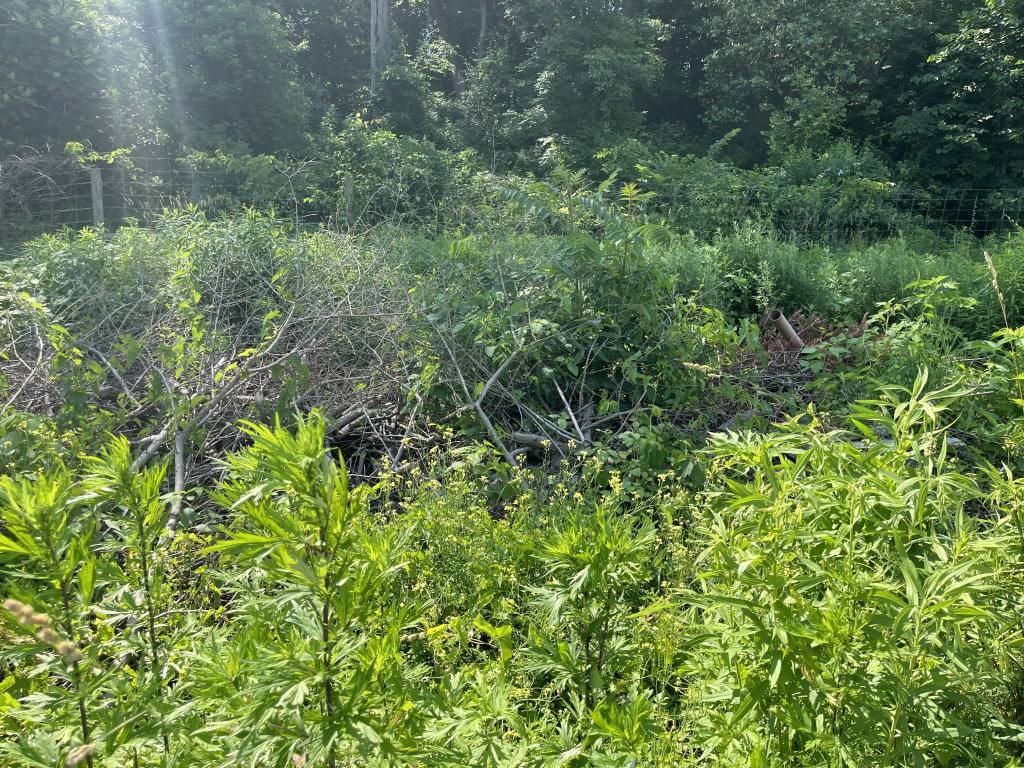
Brush piles can be essential cover for sparrows and other birds, particularly in the winter when the lack of leaves makes many small birds easy targets for aerial predators.
As an ecologically minded farmer, I often ask myself the question: Is it better to provide wildlife habitat on my farm by encouraging more undisturbed and fallow land, or should I work harder to integrate spaces for wildlife in and among my cropping areas? Little Seed clearly demonstrated both solutions. And although, I’m not sure there is ever a firm answer to this question, or if I have even framed it correctly, I left the farm thinking more and more about these two approaches.
 Farmer-Ecologist Research Circle