6 Sept. 2024: Butterflies & Some Other Insects of The Hudson Valley Seed Company.
by Conrad.
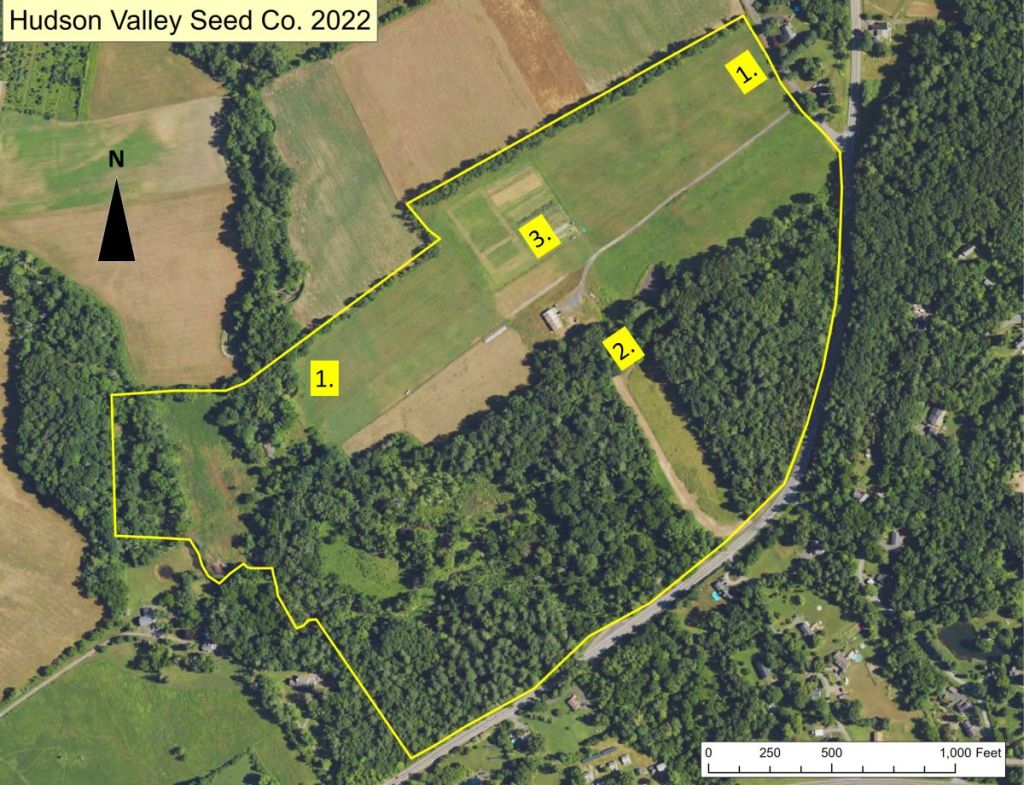
Looking northeast from around # 3 on the below aerial. We are standing within the main gardens on the site.
The new facilities of the Hudson Valley Seed Company are located on Airport Road in Kerhonkson, Ulster County, NY. This business mixes seed production (including of native wild flowers) and artwork in order to encourage and facilitate gardeners.
A 2022 image of the land of the Hudson Valley Seed Company, with numbered squares indicating the approximate locations from which the accompanying landscape shots were taken.
The semi-open area through the woods about 600′ due south of the #1 is the wetland that Claudia profiled in her earlier plant posting. In that same post, Claudia also describes the botany of other parts of the property. The earlier posting on creekside beetles was based on observations made just a short way southwest of #1.
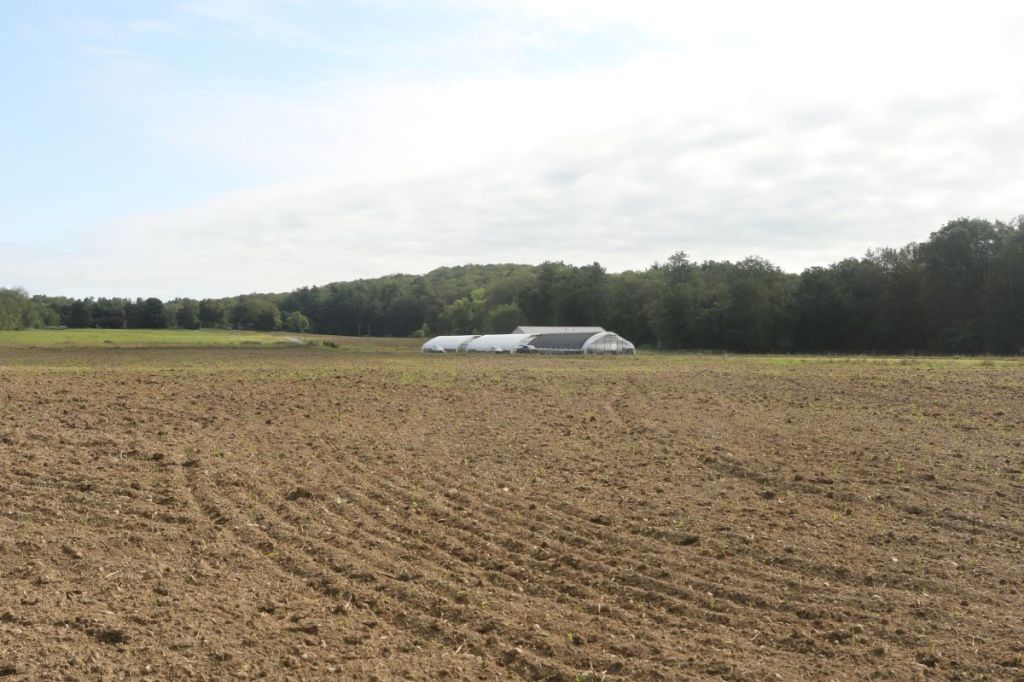
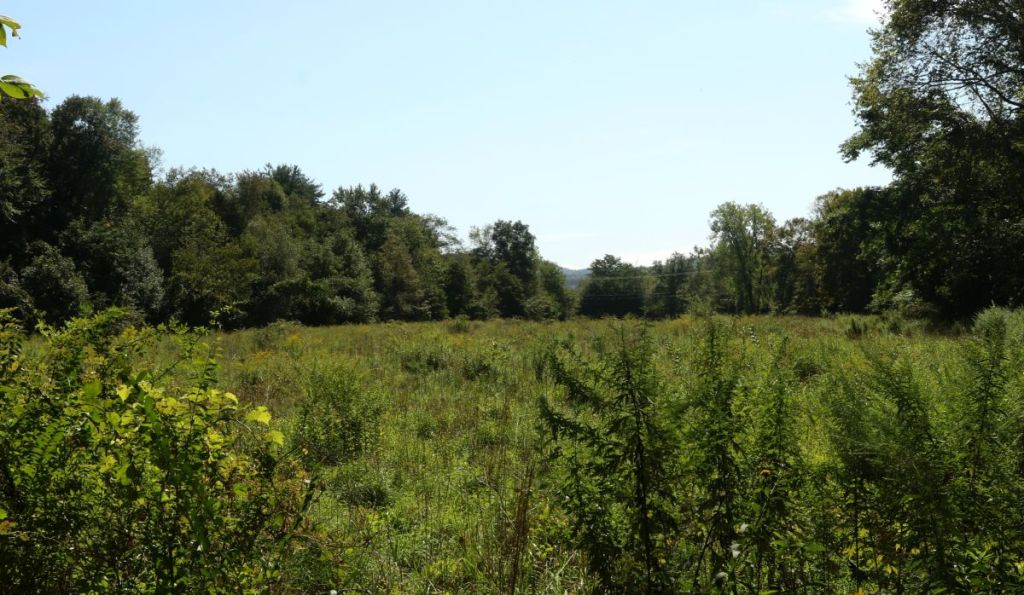
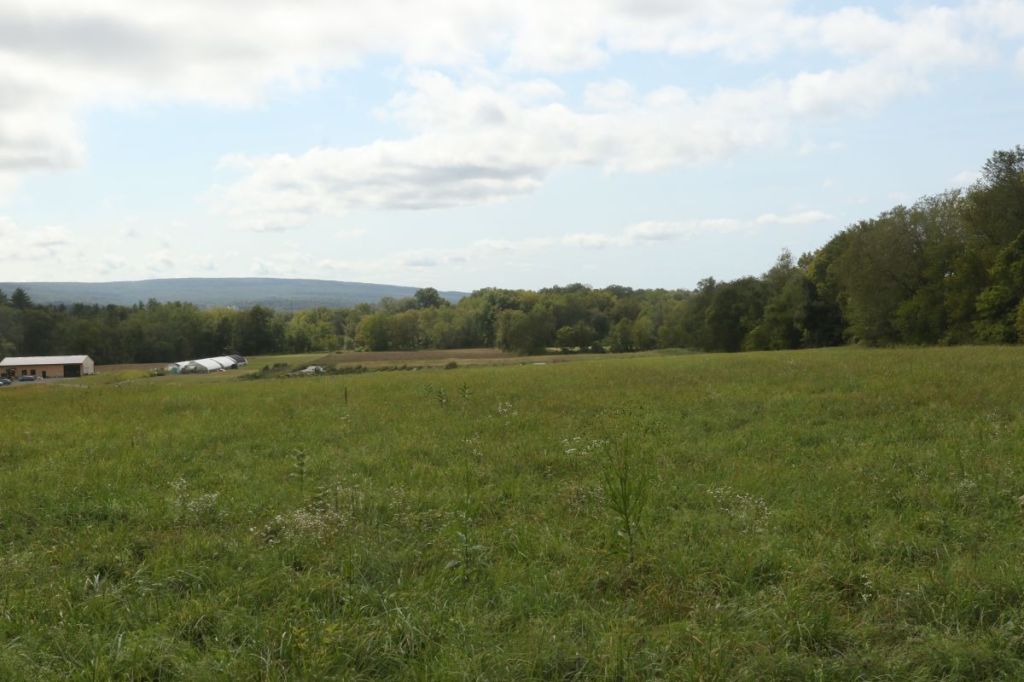
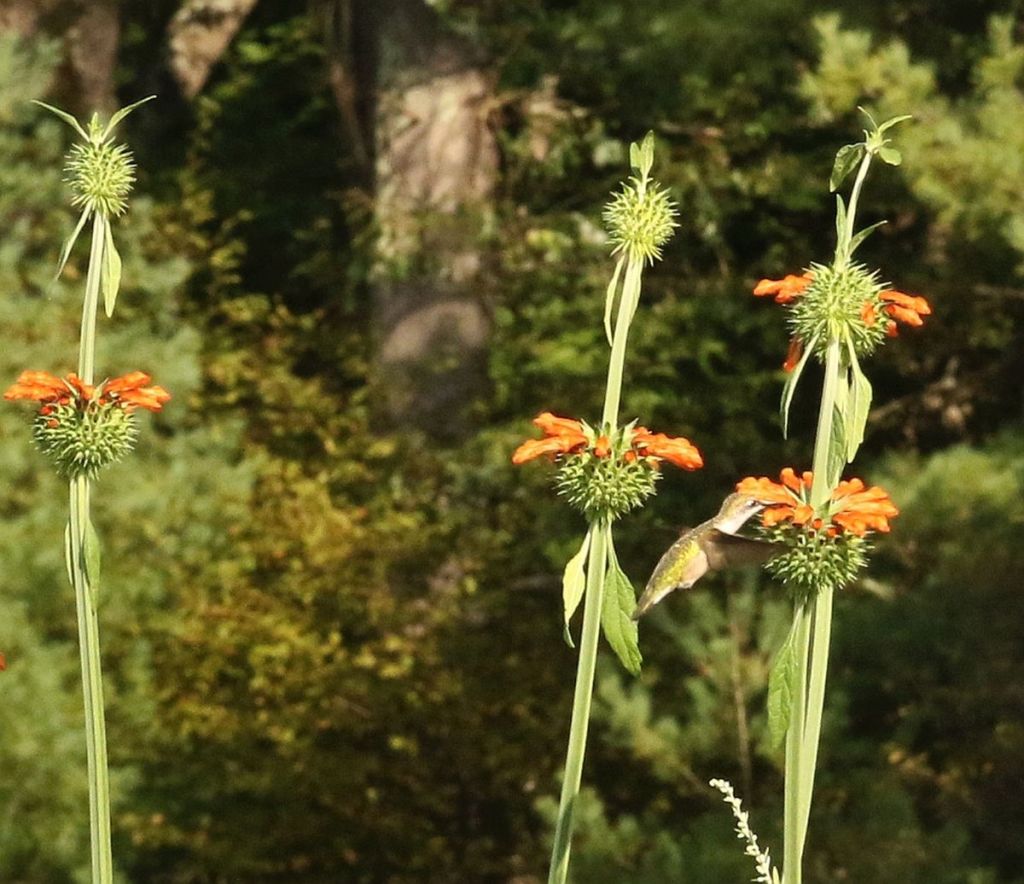
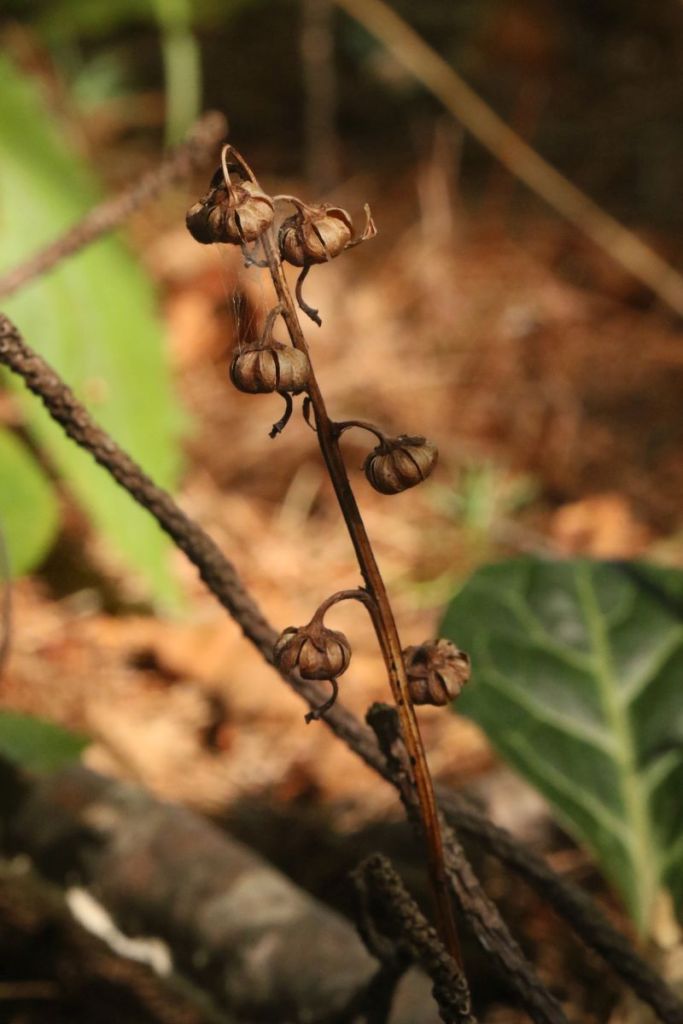
A 1958 image of the same land. Portions of the forest in the southeast half of the property appear to still be growing in this era. Looking northeast from #1 across what was, at the time of the photograph, a relatively freshly ploughed field. Looking south-southeast into the clearing from #2.Looking southwest from #3. The building in the center left is the new shop and processing facility .OK, so it’s not an insect. A female Ruby-throated Hummingbird takes a nip at Klip Dagga (Leonotis nepetifolia), a cultivated species in the mint family.Ooops, not an insect either. These are the ornate seed heads of Shinleaf (Pyrola elliptica), a wild-growing plant found in a damp, wooded area just northeast of #2. I stumbled on it while looking for butterflies. The (blurry) dark green leaf with white veins hiding in the background also belongs to this species.
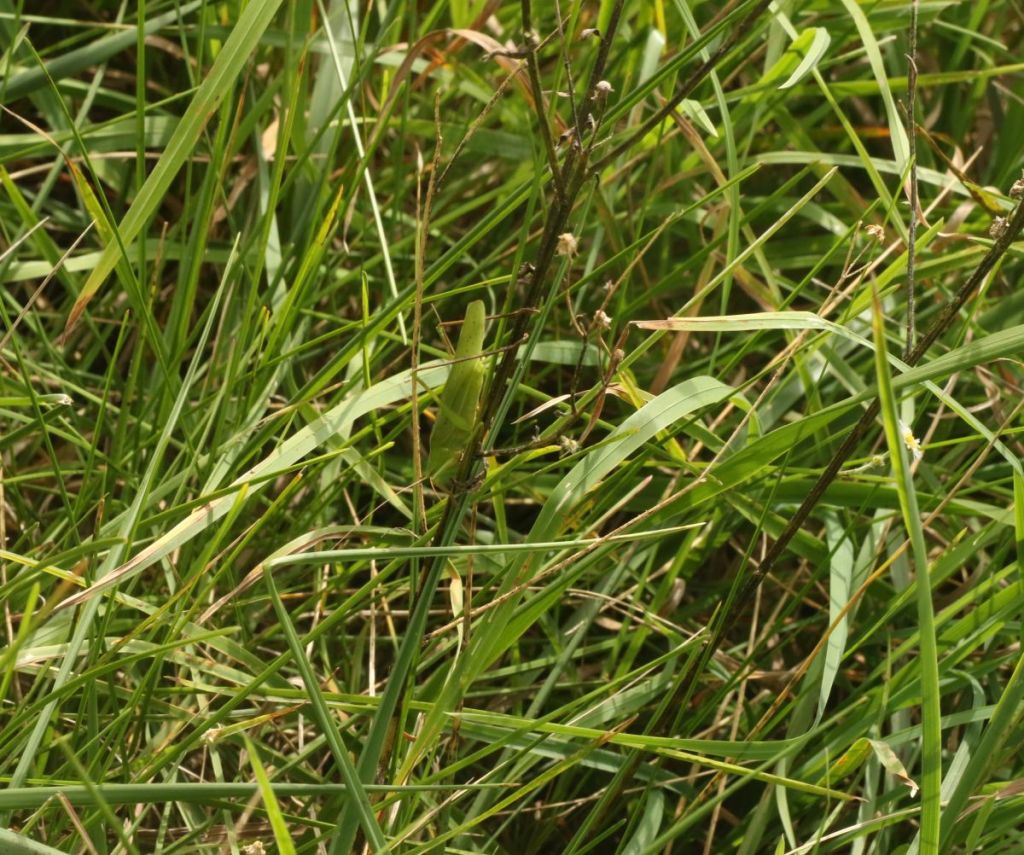
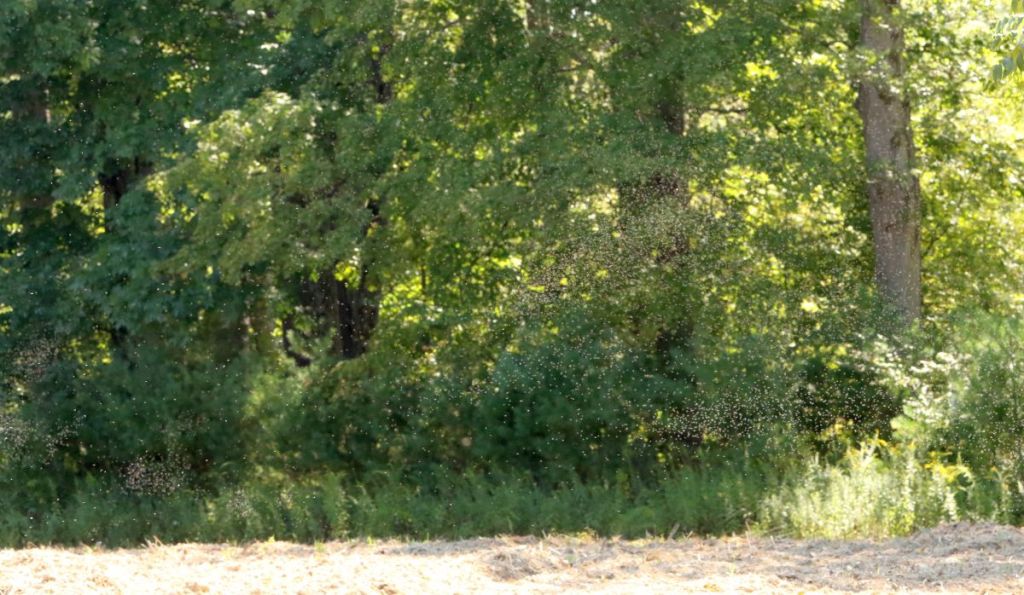
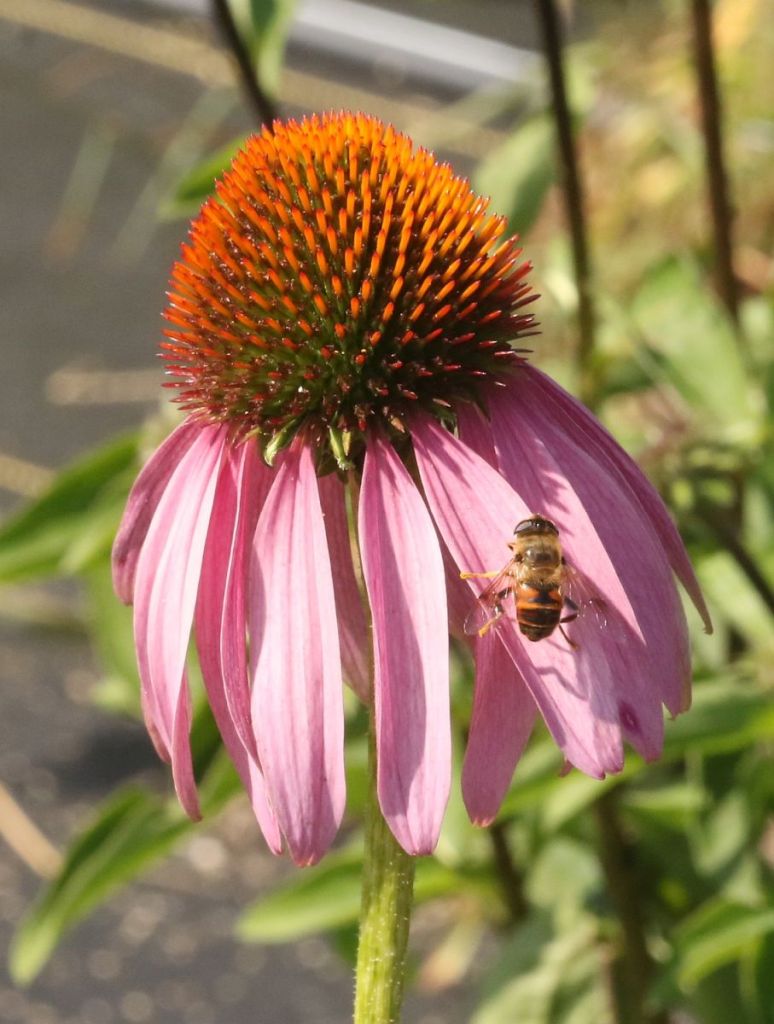
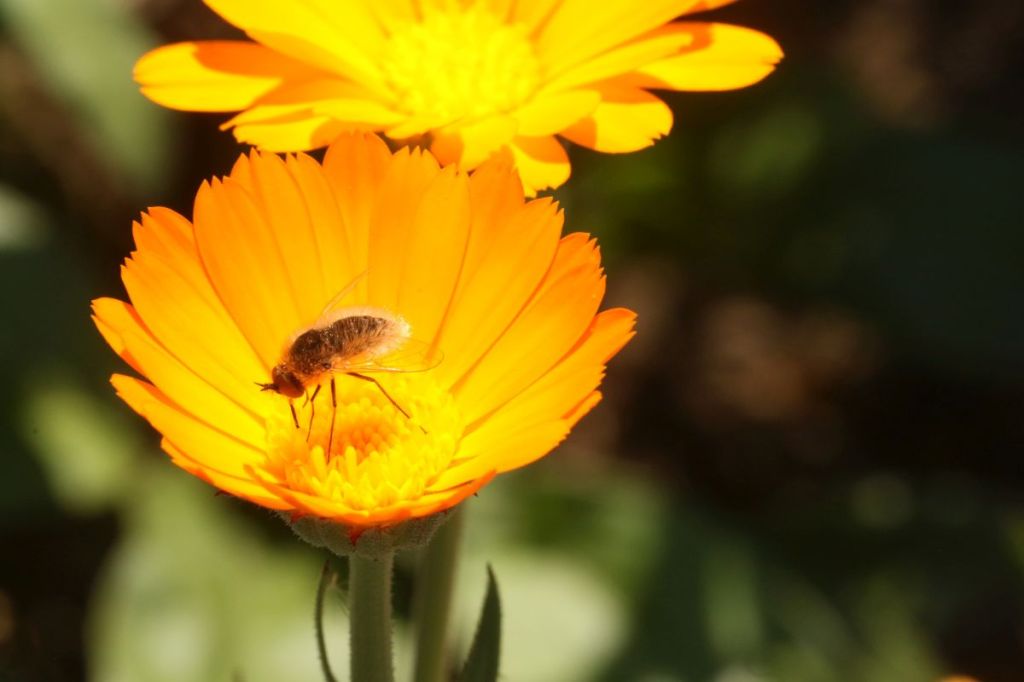
More plants, just an assortment of grasses. No, wait a second, there is an insect. Do you see it? It took me a while to figure out why I had taken this photograph. Coneheads, such as this appears to be, are among the singing insects of late-summer grasslands and edges.Another field singer was this female Short-winged Meadow Katydid. They reportedly have a relatively broad diet, eating not only plants but other insects such as aphids.The insects in this image are also not conspicuous, although video would have made them more apparent. Above the ploughed ground in front of the forest are clouds of small creatures whose dancing swarm was especially evident when seen in motion.Here, they appear as a light brown dappling in front of the foliage.Capturing one of these swarmers in a butterfly net, reveals a small fly, perhaps some sort of midge. The wavering clouds are thought to be part of their mating ritual.While we’re on flies, here’s an introduced species of drone fly; it is thought to be a mimic of Honey Bees. We’ve already seen it in at least one previous post.These fuzzy, long-legged flies are called bee flies.
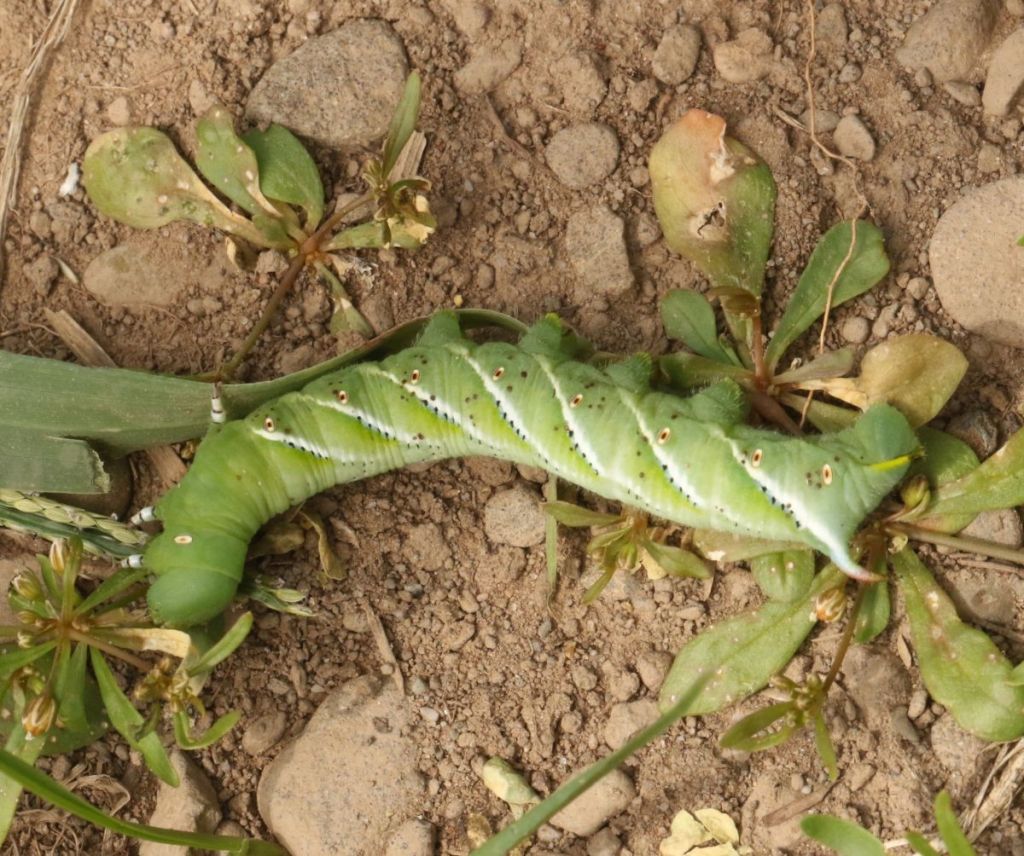
As adults, bee flies seem to be avid nectar feeders, and, while they do not appear to intentionally collect pollen, pollen does sometimes gather on their furry bodies. They are parasitoids, laying their eggs near those of a variety of insect hosts. The bee fly larvae hatch and proceed to eat their host’s larvae. At least some species reportedly have an interesting pattern of coating their eggs in sand and then aerial dropping them into or near the burrows of their hosts. The young of ground-nesting beetles, wasps and bees seem to be the most common prey of bee fly larvae.Speaking of parasitoids…. this Tobacco Hornworm (Manduca sexta, the caterpillar of a sphinx moth) was found near the tomatoes seen in the garden shown in the first photo.
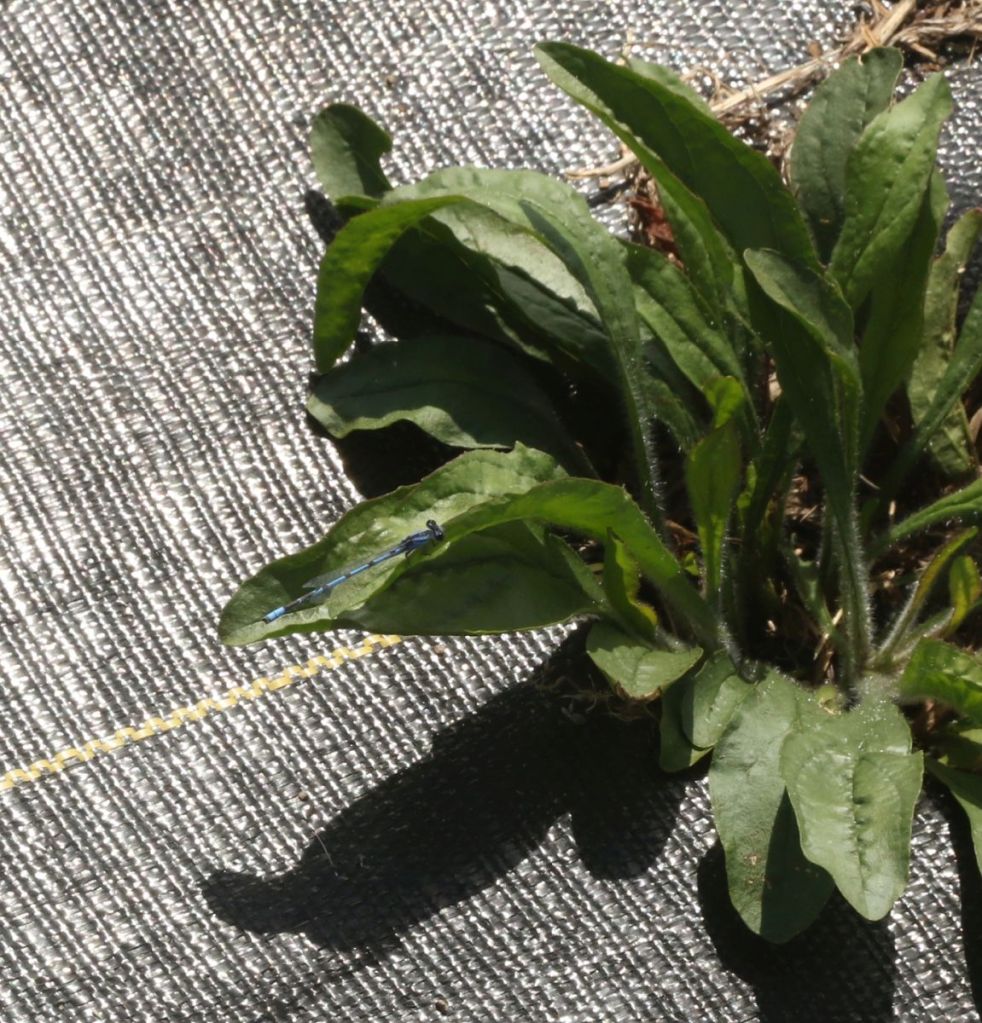
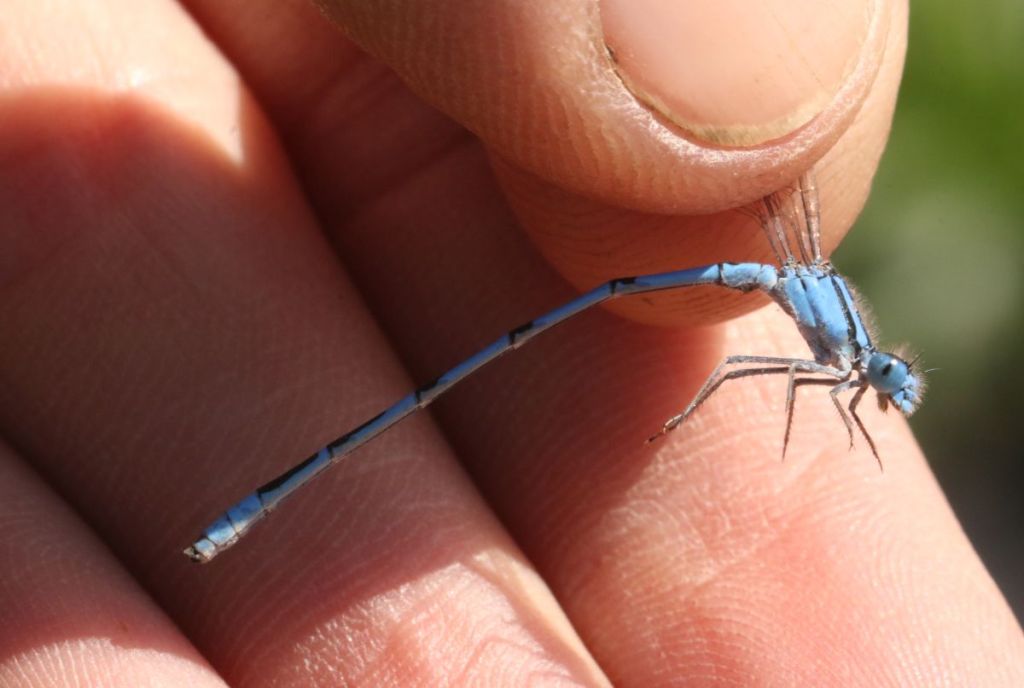
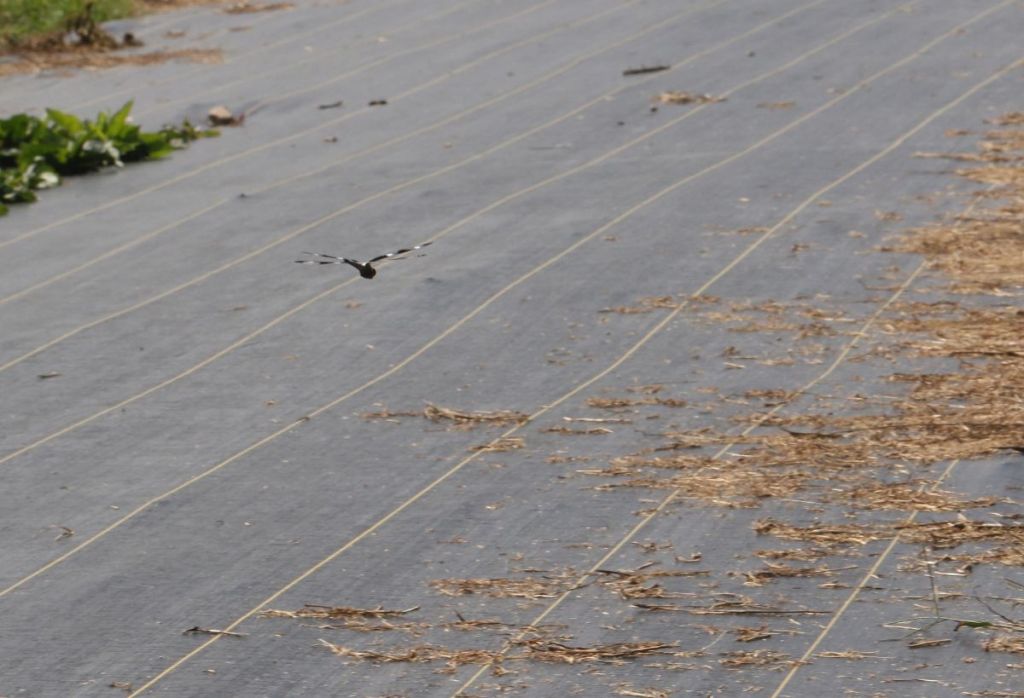
Tobacco Hornworms sometimes host a parasitoid wasp who, upon pupating, can cover a caterpillar with what looks like a coat of small rice grains. While none of those pupae are visible on this individual, the random dark points (not the ones along the white lines nor the bullseye spiracles) on its skin may be the work of a wasp. The closely related Tomato Hornworm (Manduca quinquemaculata) also occurs in our area and both species eat tobacco and tomato; both are also affected by parasitoids.What appears to be a Familiar Bluet (a type of damselfly) was hanging out on this a poking through ground cloth. As shown by the bottom photo, moderately certain ID required live-capturing one for a closer look.Twelve-spotted Skimmers and some other dragonflies patrolled overhead. Why?A ground-cloth pond?
Such a cluster of dragonflies and damselflies would make sense were there swarms of their insect prey in the air but, so far as I could tell, such prey were not particularly abundant. Watching further, I saw some dragonflies periodically dive down as if trying to touch the ground cloth with the tips of their abdomens. This behaviour is similar to what females do when depositing their eggs in water, and I am guessing that these insects were actually mistaking the smooth, reflective ground cloth for open water. Have any of you ever noticed something like this on your own farms? If so, I would be curious to hear about it.
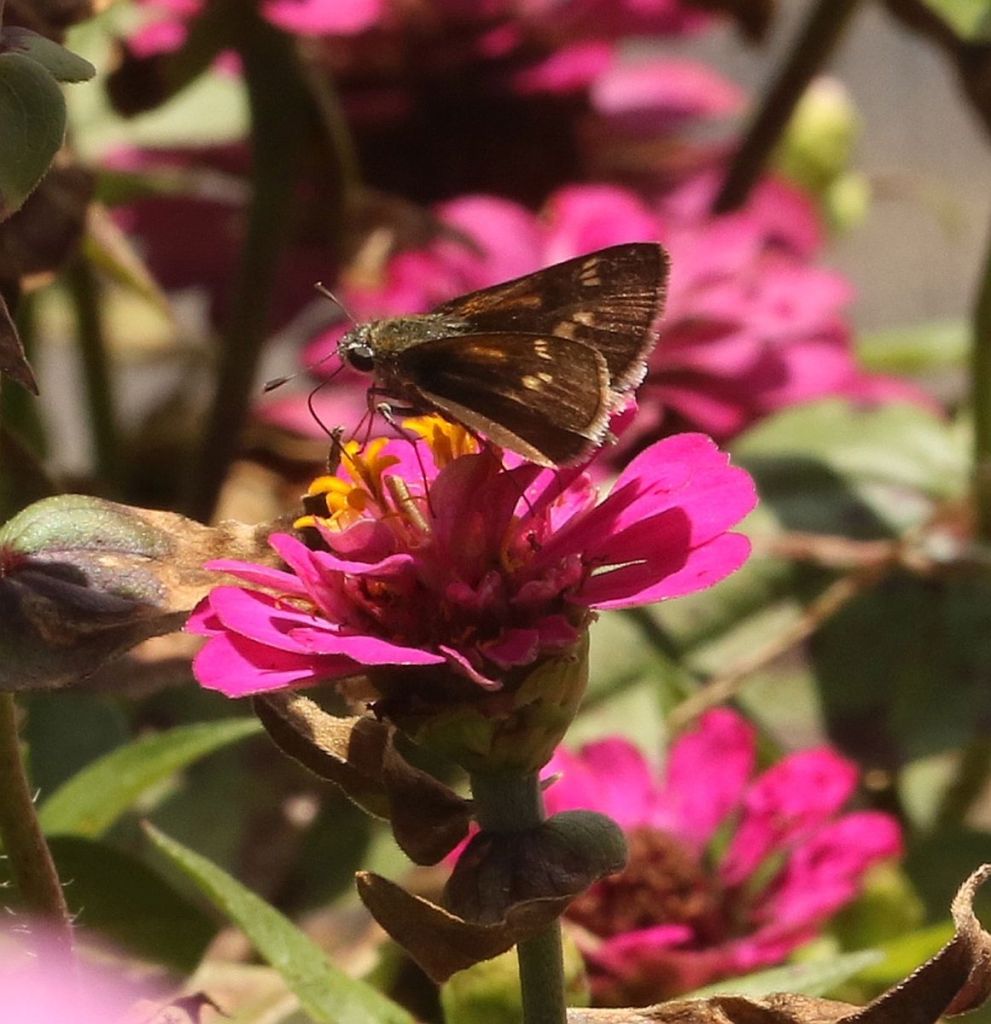
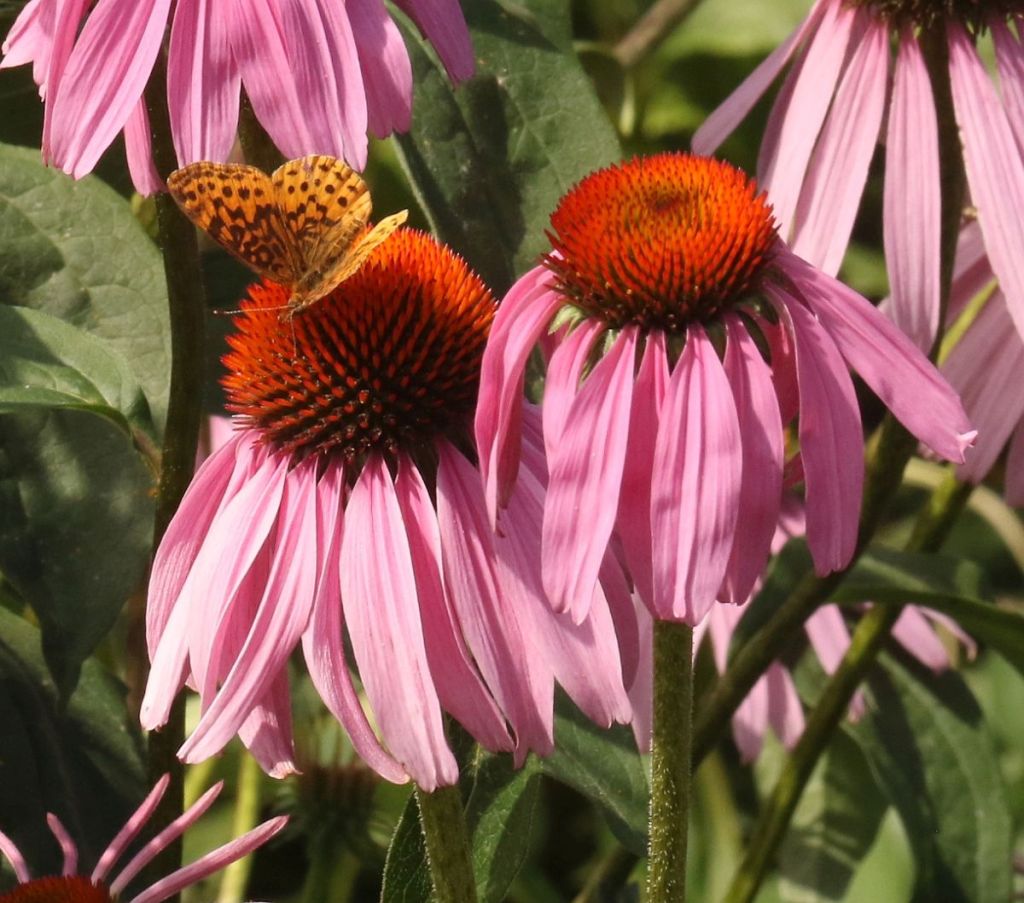
Turning finally to butterflies, I believe this is a Northern Broken Dash skipper, one of the three, hard-to-identify ‘witches’. It gets its name from the pattern formed by a dark band of pheromone-producing cells on the wings of the male. This, however, is a female. The caterpillars feed on an array of grasses. It is neither a particularly rare nor common species.Meadow Fritillaries are trim, middling-sized butterflies, who seem to be rarer than they ought to be given the prevalence of the violets that their caterpillars eat.
In general, probably because of the lateness of the season, butterflies were not particularly diverse during my visit. The rarest butterfly spotted was one of the so-called Emperors (either a Hackberry or Tawny Emperor); unfortunately for this post, it flew away before I could get a photo.
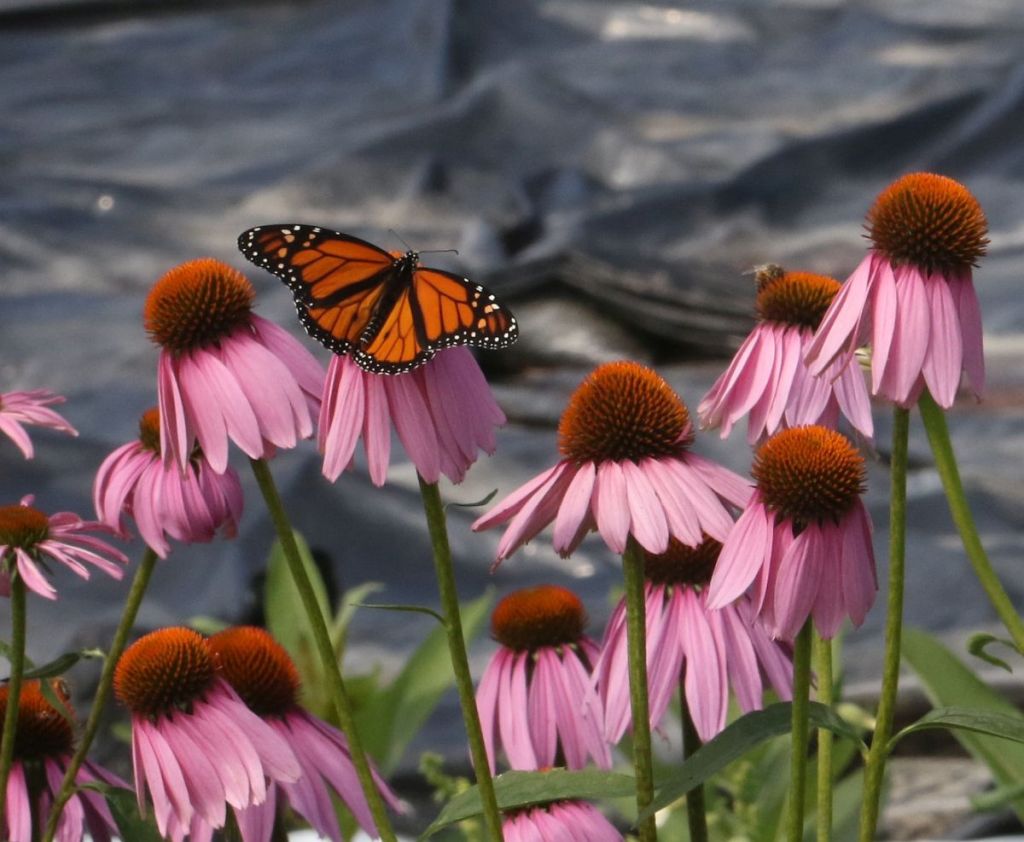
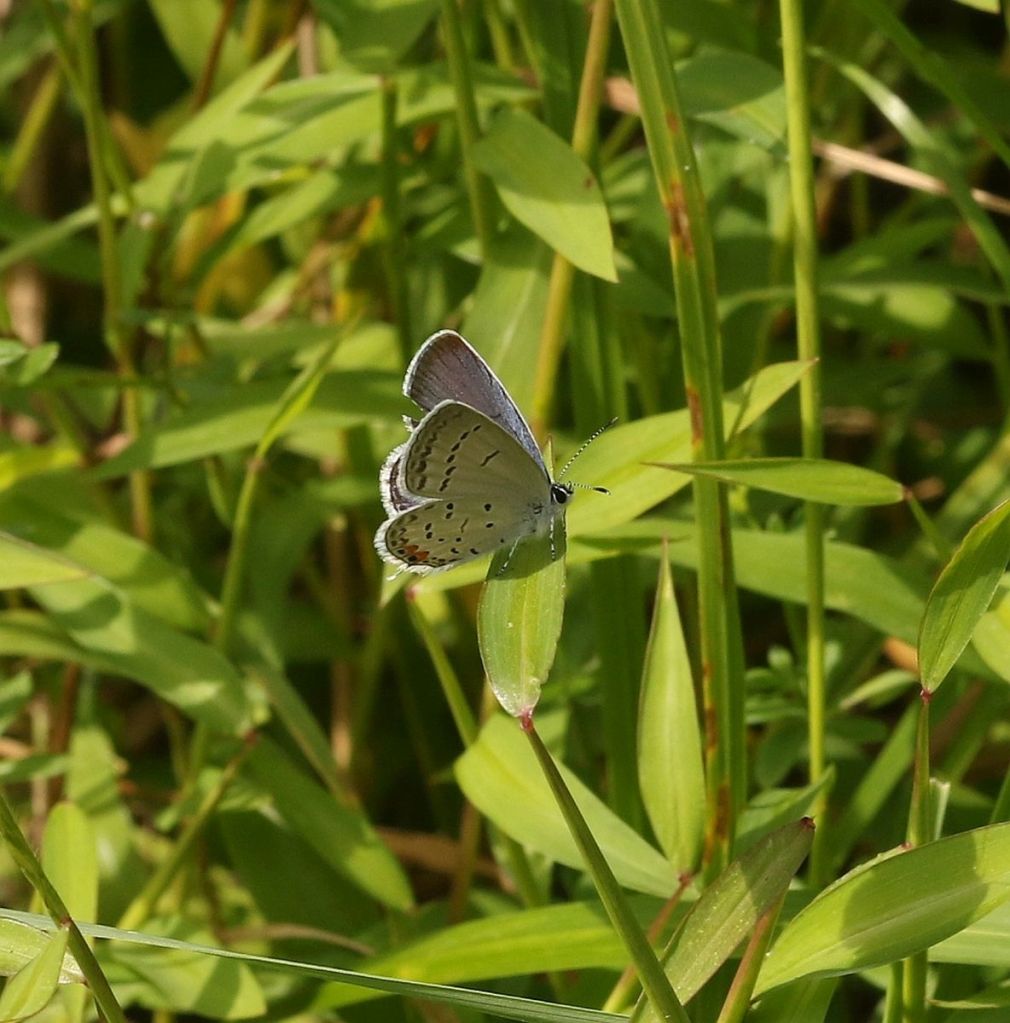
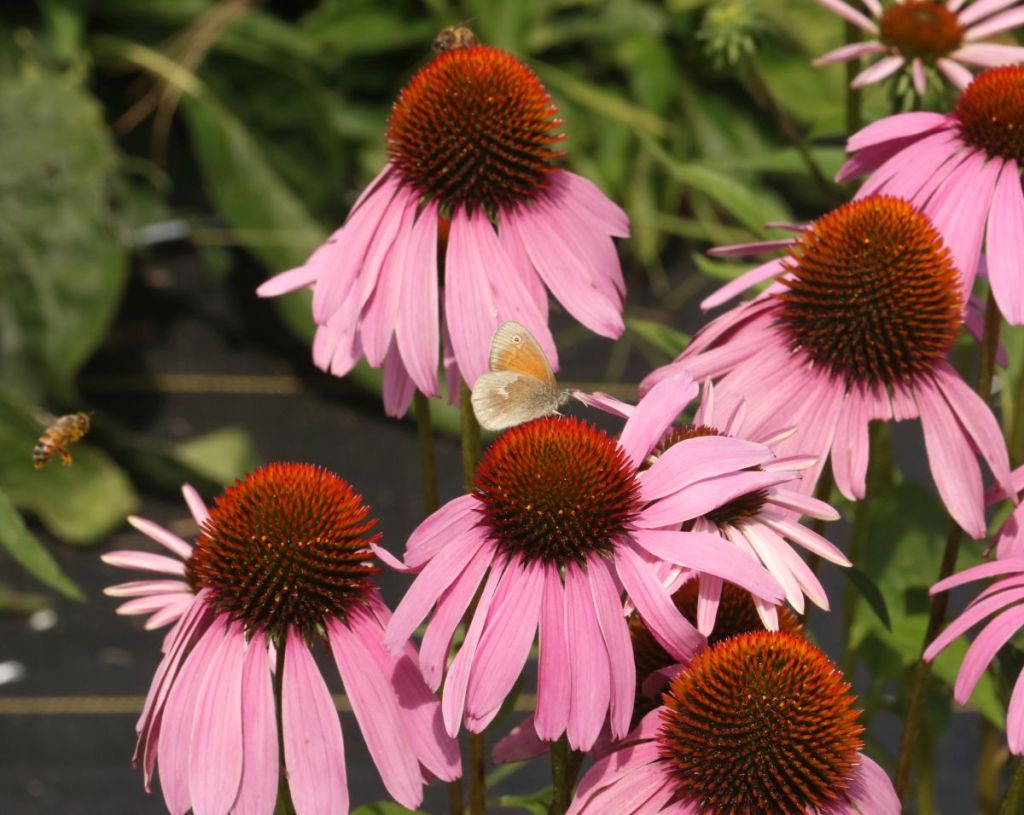
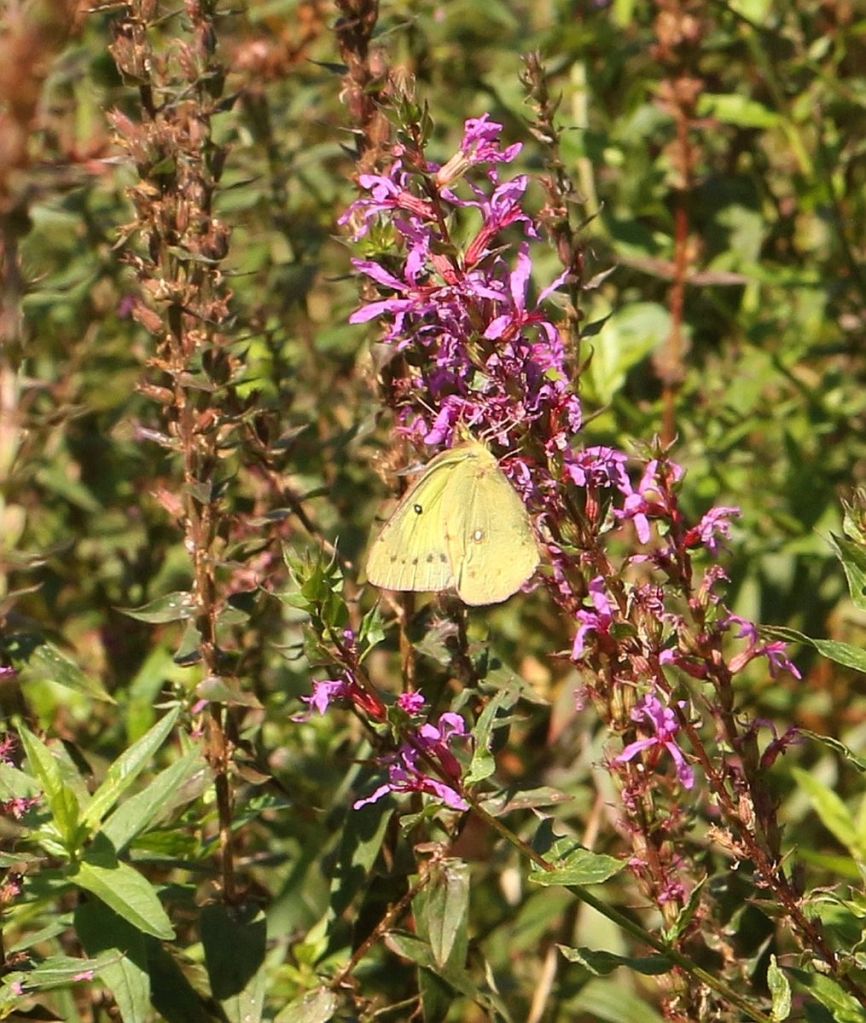
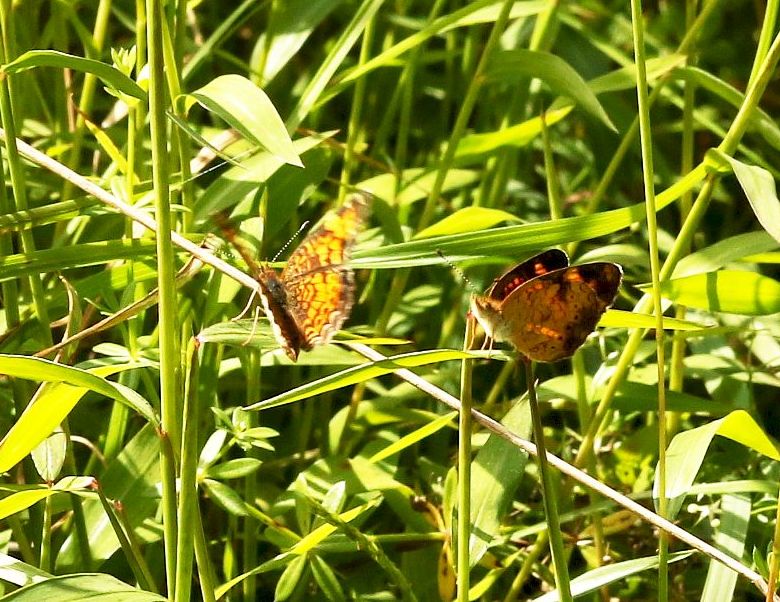
This is the last butterfly post of the season, and you should now be well-versed in our common butterflies. So, as your final exam, here are five relatively common butterflies photographed at the Hudson Valley Seed Company…
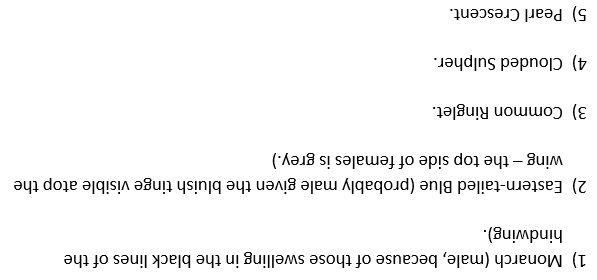
1) Who is this butterfly and, for extra points, is it male or female?2) And what about this one? And, again, extra points for male or female.3) And whose is this northern interloper?4) And this one (whose females are sometimes white and sometimes not)?5) This one gets its name from the lighter colored patch visible in the darker, underside field along the hind edge of the rear wing as seen in the right butterfly. Who is it?






 Farmer-Ecologist Research Circle