This blog shares some of the botanical observations from Churchtown Dairy on 19 July 2024. Will had visited the farm separately and written about the “Birds of the prairie” at this farm in his blog posted on 13 October 2024.
The following map shows the approximate route walked for the botany survey. The numbers (referenced throughout this blog) indicate places where botanical observations were made or pictures were taken.
Map of the approximate plant survey route (in sky blue). The numbers (referenced throughout this blog) indicate places where botanical observations were made or pictures were taken.
Let us begin by sharing some habitat images from the farm:
By far the largest amount of the farmland north of Route 12 is currently dedicated to pasture (view from #7 looking west).On the east, the pastures border mostly young forest and have a shrubby edge (#3).There are also pockets of wetlands along the eastern boundary (#4).Throughout the farm there are some long-established hedgerows dividing the fields (this is the view from #16). More recently planted hedges flank the main farm road.
The northern part of the farm is hilly (view north from #13)
There are also a couple of ponds. This smaller one (#15) is surrounded by a recent tree planting for silvopasture.
After this brief visual introduction to the farmland at Churchtown Dairy, we’ll go into more botanical detail.
Most of the pastures were closely-grazed at this point. As typical for pastures and hayfields in our region, most of the plants in the pastures themselves were European species of grasses, legumes, and other common plants of perennial agricultural meadows. One exception stuck out immediately: many of the pastures had patches of Common Milkweed, a wildflower native to North America and one of the host species for Monarch caterpillars, as well as a number of other native milkweed-specialists. It was nice to see that the milkweed plants across the farm were at different stages of development, some going to seed, some in mid-bloom, and some just beginning to put out new leaves after having been grazed or clipped. Maintaining such diversity of developmental stages throughout the growing season is beneficial for the insect community, because it ensures the availability of a variety of resources (ranging from tender leaves for young caterpillars to nectar for adult butterflies and many other insects) for an extended time period (compared to the scenario were all plants of a species mature and go to seed at the same time).
Common Milkweed plants in a pasture (#2)
The hedgerows and forest edges bordering the pastures were composed of a variety of native and non-native woody plants. The hedgerows bordering the central laneway and separating some pastures had been planted relatively recently (10-20 years ago) with a small selection of species, including Osage Orange and Honey-locust (both considered native to areas south of here), and hawthorn and hazel (species and native status uncertain). However, the longer-established hedges and field edges supported wild-growing, native Staghorn Sumac…
One of the long-established hedgerows, including Staghorn Sumac
… Red Cedar …
Another one of the long-established hedgerows, including Red Cedar
… and even an occasional stately oak (pictured here is a Red Oak, whose leaves were partly eaten by Spongy Moth caterpillars)…
A field edge with a big Red Oak
… and a willow, probably the native Black Willow (Salix nigra).
A long-established hedgerow with a big willow tree
Non-native, invasive shrubs, such as Eurasian shrub honeysuckle (Lonicera morrowii or L. x bella), Multiflora Rose, Common Buckthorn, Autumn Olive, and Oriental Bittersweet were also quite common in many of the hedges and field edges.
A field edge with a variety of invasive shrubs
There were a few small wet meadow areas at Churchtown Dairy, such as the one in the next picture at the east end of D6 (#4 on the aerial photograph). These wet meadows support vegetation very different from that in the adjacent upland pastures. European species are also a component of these wet meadows and some, such as the invasive Reed Canary Grass, seen on the left in this image, can be quite common. However, these wet meadows are also important reservoirs of native biodiversity, because they harbor a number of native wildflowers, grasses, sedges, and ferns, which are not found anywhere else on the farm.
Wet meadow (#4)
Rough-leaved Goldenrod (Solidago patula) is one example of a regionally uncommon native species I stumbled across in the wet meadow east of D6. This goldenrod, which typically occurs in calcium-rich wetlands, does not grow in dense, rhizomatous colonies like its more common cousins typical of old fields. Instead, a few (eventually) flowering stalks emerge from a cluster of large basal leaves that have the texture of sandpaper.
Rough-leaved Goldenrod (Solidago patula)
One part of the wet meadow east of D6 supported a colony of Sensitive Fern and cattails (both native species), in addition to a patch of the invasive Reed Canary Grass visible in the front right of the image.
Wet meadow (#4)
The Black-and-Yellow Gardenspider (Argiope aurantia) builds its net in tall, undisturbed vegetation, and the wet meadow provided ideal habitat for this gorgeous hunter.
Black-and-Yellow Gardenspider (Argiope aurantia)
Another beautiful small example of a species-rich wet meadow was found in the drainage southwest of the Bobolink Field (#11). Note the diverse textures and colors in this habitat!
A small wet meadow (#11)
A closer look reveals the native species Woolgrass (Scirpus cyperinus; in front left), Smooth Goldenrod (Solidago gigantea; yellow flowers), Common Boneset (Eupatorium perfoliatum; white flowers), Blue Vervain (Verbena hastata; purple flowers), and Tussock Sedge (Carex stricta; in front right).
A closer look at a small wet meadow (#11)
Back at the east edge of D6-11, I entered the forest and found small areas of swamp forest (#5) where the canopy was dominated by Red Maple trees.
Swamp forest (#5)
Rough-leaved Goldenrod grew here and there in the understory.
Rough-leaved Goldenrod (Solidago patula)
Unfortunately, the invasive Japanese Stiltgrass had also established itself in this forest (as well as in the “grove”). This grass is currently one of the most rapidly spreading non-native species in our region and there don’t seem to be any “silver bullets” for its control. It is an annual grass with wiry stems and relatively broad (and short!) leaves, which often have a broad white line along their midrib.
Japanese Stiltgrass (Microstegium vimineum)
Black Swallowwort (Vincetoxicum nigrum) is an invasive vine with opposite, shiny oval leaves, small, dark purple flowers, and seed pods reminiscent of milkweeds. It was found only in small numbers at Churchtown Dairy. Scattered plants were spotted in the swamp forest and wet meadow east of D6-11, as well as in the “grove.” This might be an invasive species still rare enough on the farm that its spread could be curtailed by systematically pulling it out, whenever it is encountered.
Black Swallowwort (Vincetoxicum nigrum)
Another potentially troublesome species is this pretty ornamental shrub, Jetbead (Rhodotypos scandens), which probably had jumped the fence onto the young forest on the farm’s land from one of the neighboring yards. I had never seen it growing wild in Columbia County, but was told that it had spread throughout Central Park and might become more assertive in our region, in the future… This might be another species to discourage early on wherever it shows up on the farm.
Jetbead (Rhodotypos scandens)
Tree-of-Heaven is the last invasive species I want to mention. It currently occurs at a low enough density at Churchtown Dairy, that its further spread might be avoided by removing the seed-producing trees, like this one next to the “grove.” Unfortunately, if a Tree-of-Heaven is felled, its roots tend to produce sprouts which—if unchecked—can result in an entire colony of new trees. Therefore, it is important to continue to annually monitor and—if needed—manage the site where an adult tree has been felled or girdled.
Tree-of-Heaven (Ailanthus altissima); this specimen was found between #12 and #13
Returning to the east edge of D6-11, after emerging from the swamp forest, I entered a small stand of Red Cedar trees (#6), which seemed to serve as an occasional forest pasture. I made no exciting native plant discoveries in this habitat.
Red Cedar forest (#6)
Emerging out of the Red Cedar forest, I found myself on the hilly, eastern section of pasture D11 (#7). Although dry pastures like this sometimes harbor uncommon native plants, I did not observe any noteworthy native species here, either.
Dry pasture (#7)
Eventually, I found myself in the “Bobolink Field,” (#12) a hay meadow cut late in the season to give ground-nesting Bobolinks enough time to raise their young. Like in the pastures, the vegetation in this field was mostly composed of European grasses and—to a lesser extent—legumes.
Late-cut hayfield (#12) which is managed to accommodate ground-nesting birds.
Another wetland, this one dominated by shrubs and trees, including Swamp White Oak, Green Ash (many dying), and Red Maples, borders the “Bobolink Field” on the east. Native shrubs, such as Winterberry, Arrowwood, Silky Dogwood, and Wild Raisin, occur side-by-side with the common invasive shrubs that dominate the understory.
Wetland (#11E)
Spotted Joe-Pye-weed grew along the herbaceous edge of this wetland and also in some of the other wet meadows along the eastern edge of the farm.
Spotted Joe-Pye-weed (Eutrochium maculatum)
The “grove” (#13) is the only forest at Churchtown Dairy (at least north of County Route 12) that grows on land that seems to have never been completely cleared. It harbors some exceptionally large specimens of Hop-hornbeam trees and some beautiful White Oaks. At the north end, there are several Common Pear trees and Pignut Hickories. Although hardly an “old-growth” forest, this woodland fits our definition of an “ancient forest,” whose soils have not been homogenized by the plow. Therefore, they might have the potential to support soil life and understory plants that are slow to recolonize post-agricultural forests. However, its current understory vegetation is mostly composed of invasive species and European plants typical of nutrient-enriched barn yards. This is likely due to the recent use of this woodland as a pig pasture.
The “grove” (#13) might be an example of an ancient forest.
On the way back to the barns, I took a quick detour to this small, marshy pond (#15), which had very little open water. Cattails (tall green vegetation at the center) were growing in a wide band around the shore and were flanked by patches of Reed Canary Grass (tall tan vegetation left and right of the cattails). Closer inspection revealed several native wetland plants we had not noted in the other areas surveyed for plants at Churchtown Dairy that day. They included the regionally common: Water Purslane, Nodding Bur-marigold, and Soft Bulrush.
A small, marshy pond (#15) harboring some unique wetland plants
Transgenerational Farm is a very small market garden on approximately three leased acres adjacent to the hop yard of Arrowwood Farm. It is surrounded on three sides by forest. We were able to only visit briefly (2 hours) on 30 August 2024, and it was an overcast morning—hardly the ideal conditions to see many insects.
The following aerial photo traces the approximate route taken for the plant surveys and letters indicate locations of the habitat photos we share below.
Aerial photo of Transgenerational Farm with the approximate route taken for the botany survey in sky blue; capital letters reference locations from which the following habitat photos were taken.The core of the farm is an area of approximately one acre of mixed vegetable beds, supplemented by some greenhouses (looking west from Point A on the map)There were also some cut flower beds (looking southeast from Point B on the map)The area west of the greenhouses is home to a small flock of chickens and the vegetation is a savanna-like patchwork of mowed lawn, unmowed weeds, and widely-spaced small trees (looking north from Point C on the map)Further west are rows of berries (looking west from Point D on the map)A low fence separates the leased land from the neighboring hop yard (looking north from Point E on the map)A deer fence surrounds the leased land on the three other sides (looking west from Point F on the map) and includes the hop yard.
The closely-mowed lawn had its share of typical European lawn weeds, such as the two species of plantains, Red and White Clover, Dandelion, two species of crabgrass, and the usual set of European cold season grasses (Timothy, Tall Fescue, Kenntucky Bluegrass, and Smooth Brome Grass). However, it also had the native Common Blue Violet and Indian-tobacco, in addition to many of the native and non-native weeds also found in the tilled beds. I was surprised that in some areas, the most abundant grass (at least late in the summer) seemed to be the native Nimblewill Muhly (Muhlenbergia schreberi).
Closely-mowed lawn
The weeds in the tilled beds were the usual cohort of familiar annual warm-season weeds (Common Ragweed, Horseweed, Lamb’s-quarters, pigweeds, crabgrasses, foxtails, etc.), at least 25 different species in total.
Tilled beds
I did meet one new weed, which I had not seen on any other farm before: Clammy Glandular-goosefoot (Dysphania pumilio; since then also seen at the Hudson Valley Seed Company). Originally from Australia, it is suspected to have been introduced to North America as a contaminant in sheep’s wool and seems to have spread throughout southern New England and obviously into the southern Hudson Valley. It is also documented from a few isolated counties in other parts of New York.
Clammy Glandular-goosefoot (Dysphania pumilio)
Near one of the sheds, I spotted another (to me) unfamiliar weed, which I was able to key out as Urban Goosefoot (Chenopodium urbicum). Originally from Europe, it reportedly has established itself in scattered locations throughout Eastern North America and the Midwest. However, I have never noticed it in the Hudson Valley before.
Urban Goosefoot (Chenopodium urbicum)
Finally, the third new weed was Indian Strawberry (Potentilla indica). It grew under the blueberry bushes and its watery berry tasted of absolutely nothing! This species, which was introduced from India, still seems to be quite rare in our region, but is a common weed further south.
Indian Strawberry (Potentilla indica)
Two nightshades were growing as weeds near the compost pile, probably both wild-growing plants of cultivars. I suspect the one on the left with the larger flowers and rather smooth leaves to be a variety of tomatillo (possibly Physalis philadelphicus or P. ixocarpa). The one on the right, with the smaller flowers and hairy leaves is probably a variety of ground cherry (possibly Physalis peruviana). I don’t usually see these species growing in the wild, so don’t feel completely confident with their identification. If anybody has any alternative suggestions, I’d be happy to hear them!
Tomatillo (possibly Physalis philadelphicus or P. ixocarpa; left) and ground cherry (possibly Physalis peruviana; right)
Finally, let’s have a closer look at the unmowed herbaceous vegetation along the deer fences and the adjacent band of shrubs at the edge of the forest (this image shows the southeast corner of the deer fence). Along the fences, we have some of the usual edge suspects, such as the invasive Tree-of-Heaven, Multiflora Rose, and Oriental Bittersweet.
Vegetation along the perimeter deer fencein the southeast corner
However, along the south fence, we also spotted a small group of the native Early Goldenrod (Solidago juncea) growing out of some pallets. While not exactly a rare species, this goldenrod is not common, either. It does not compete well with the four rhizome-forming old field goldenrods that are generally very common in our landscape (though not at Transgenerational Farm). Note how the Early Goldenrod in the image is surrounded by the invasive Japanese Stiltgrass and adjacent to a patch of the almost ubiquitous invasive Mugwort.
Mugwort, Early Goldenrod, and Japanese Stiltgrass
Possibly the most common native wildflower along the south fence was the light-blue flowering Heart-leaved Aster (Symphyotrichum cordifolium). It can be recognized by its large, heart-shaped stem leaves with sharply serrated margins. However, note the tiny leaves on the flowering branches!
Heart-leaved Aster (Symphyotrichum cordifolium)
There were also a few plant of the native white-flowering Lance-leaved Aster (Symphyotrichum lanceolatum).
Lance-leaved Aster (Symphyotrichum lanceolatum)
The shrub layer along the forest edge certainly had its share of invasive species. Pictured here from left to right are Autumn Olive, Privet, and Multiflora Rose, but we also observed quite a few Japanese Barberry and Eurasian shrub honeysuckle (Lonicera morrowii or L. bella).
Shrubs along the deer fence on the northern boundary line
However, native shrubs and young trees from native species in the adjacent forest were also common along the edge, and we observed Staghorn Sumac, Sassafras, Black Walnut, American Elm, Sugar Maple, Red and Black Oak, Black Cherry, Hackberry, Red Cedar, White Pine, and even Hemlock. In fact, this was the only one of the nine farms visited this season, where we observed Hemlock.
Shrubs and trees along the deer fence on the northern boundary
Not surprising, given the very small size of Transgenerational Farm, we observed the least overall number of plant species here compared to the other eight farms we visited this season. Much of the native plant diversity we did observe occurred in the narrow, unmowed herbaceous and shrubby vegetation along the deer fence and in the adjacent forest.
Some Insect Notes.
by Conrad.
It was spitting rain on the 30th of August when we visited Transgenerational Farm. Neither the lateness of our visit nor the weather were propitious for seeing abundant butterfly life and, in fact, we only noted a quartet of butterflies – Pearl Crescent, Eastern Tailed-blue, Least Skipper, and Monarch. Nonetheless, the abundant ‘edge habitat’ that Claudia noted early makes me think that a sunny July visit would have resulted in substantially more sightings. And, besides, butterflies aren’t the only game in town…
Pearl Crescents can be one of our most common and long-flying butterflies.
In our own regional surveys, we have records from 21 April to 7 October (and they probably fly earlier and later, but we’re just not out surveying butterflies!). That doesn’t mean that there’s a constant Pearl Crescent spigot, instead there appear to be multiple broods, i.e., distinct batches who appear across the season. As I alluded to in an earlier post, Crescent taxonomy seems to be something of a mess, and multiple, sometimes overlapping, generations raise the possibility of ‘cryptic species’ – previously undetected species who, because of high similarity (at least in our eyes) to named species, go unnoticed. The Northern Crescent, a very similar looking butterfly, also seems to occur regionally. We also used to have a third species of Crescent – the Tawny Crescent, but that species has apparently nearly disappeared from the Northeast. Mind you, post a Crecent photo on iNaturalist, and few people are willing to go out on a limb and provide a species ID, plus genetics papers have detected some evidence of interbreeding, so who know what’s happening! (A paper published just this year, does suggest that these three species are more or less distinct, at least in the West.) Who thought such a ‘simple’, common butterfly could be so confusing?
Note the rain water… Alright, this butterfly has shown up in many of our previous blogs, so it’s time for a quiz – who is this little nipper?The blue iridescence of an Eastern Tailed-blue.
The Eastern Tailed-blue is another common butterfly, but why the tail? That little wisp looks like something of an afterthought and it’s hard to imagine its potential function, at least from this angle. But think of what it looks like with the wings closed…
An Eastern Tailed-blue (affectionately, we call these ETBs) with its wings closed. This is a photo from another farm, but it shows the species’ side view well.
If you were a bird dashing by in search of meal, mightn’t you sometimes mistake that tail and associated wing dots for eyes and antennae? Maybe you only make that mistake once in four times, but, from the perspective of the species, that’s a huge plus and pretty strong evolutionary selection. Indeed, not infrequently we see tailed butterflies whose tails have been replaced by beak-shaped gaps.
A dashing male Monarch.Feeling as if you’re seeing fewer Monarchs? Here’s a butterfly abundance chart from webutterfly.org, this is for Monarchs in NY (webutterfly.org reports the nationwide 4th of July butterfly counts organized by the North American Butterfly Association). Don’t worry about the small print. Each column is a year, abundance is on the vertical axis, and the time span is 1990 to 2022. It almost looks as if Monarch populations might be somewhat cyclical, but it will be interesting to see what the 2023 and 2024 data look like, not to mention what happens next year. We saw a few this year, but it didn’t feel like as many as in some previous years.Switching to bees… Honey Bees were out and about. I like this photo, taken on Knapweed, because it shows the hairy eyeballs of Honey Bees. Study a pollen-covered Honey Bee, and you’re likely to see that its vision is probably a little clouded by pollen sticking to its eye hairs.
Honey Bees are not native, they were brought from Eastern/Southern Europe by early European settlers because of their honey-making talents. (I do wonder how many sea-sick colonies survived the trans-Atlantic voyage; presumably the voyage would be made during Winter, using a hive stocked with Honey.) However, aside from honey, Honey Bees have another advantage – at least in part because of their honey-making and social skills, they can ‘get up early’ in the Spring and start pollinating while conditions are still relatively cold. Some native bees, such as bumble bees, mining bees, and mason bees, also get going early, and, in healthy ecosystems, they can usually handle the pollination demands of early fruit flowers, but Honey Bees are sometimes considered a safety net for Spring pollination. Aside from Spring, Honey Bees are usually pretty dogged in foraging during cool and rainy weather, as these images suggest. Unfortunately for the native bees, there’s some evidence that high Honey Bee populations can hamper native bee foraging.
Those Sunflowers certainly provide an appealing bull’s eye.Here, another Honey Bee is checking out the target.Another Sunflower fan, but this time probably a native mining bee.With their fuzzy thoraxes (the body part the wings attach to), carpenter bees can look a lot like large bumble bees, but their shiny abdomens (tail ends) distinguish them; bumble bees usually have fuzzy derrieres. This wasp (a Four-toothed Mason Wasp) looks a bit daunting, but it’s generally mild-mannered and solitary (i.e., you won’t need to face a swarm of them).
While adult Four-toothed Mason Wasps primarily feed on nectar and, perhaps, pollen, they prepare their young for the World by supplying the burrow-nursery of each cossetted egg with a live, but paralyzed caterpillar. When the egg hatches, the larva devours the caterpillar. Given that those caterpillars can sometimes be agricultural pests, such wasps have generally been classed as beneficials. Clearly, agronomists, not moths, are making that call.These elegant wasps, Blue-winged Scoliids, were very common during our visit. Indeed, whether it was season, weather, and/or ecological ambience, Transgenerational was where I saw the most of them.
Blue-winged Scoliid Wasps follow a slightly modified version of the Four-toothed Mason Wasp’s game plan. Like the previous wasp, the adults feed on nectar and pollen, hence the first image of them on flowers. But their time on the ground, as in the above photo, is spent looking for beetle grubs, specifically those of Japanese Rose Beetle and the Green June Bug. Once found, the grub is again paralyzed and an egg is laid upon it. On hatching the wasp larvae feeds on the adjacent grub. Again, since white grubs and Rose Beetles in particular are often considered pests, seeing a bunch of these likewise mild-mannered solitary wasps is an indication that biocontrol is in action.
A ground beetle (probably an Anisodactylus of some flavor). In the photo above, this beetle appears to be feeding on the pollen of Common Ragweed.
Many of our so-called “beneficials” are generalists. Spiders, for example, will seemingly eat a bee or prey mantis (both considered “beneficials” in their own right) with as much gusto as they will consume some hapless, pestiferous herbivore. Likewise, many of our ground beetles will happily eat seeds and/or pollen of an array of plants, whether those happen to be your crops or your weeds. Life is complicated and the net effects of these creatures on production will depend on your particular agroecosystem. Certainly, some generalization are possible, but nothing can completely substitute for keeping an eye out for the creatures you see in action in your own fields.
On 6 September 2024, we spent ~ 4.5 hours documenting the wild-growing plants of a cross-section of habitats at the new site of the Hudson Valley Seed Company on Airport Road in Accord. The following image highlights the approximate route taken and numbers observation points we will refer to throughout the blog.
We began our survey along the west and north edges (#1 & #2) of a large tilled field. We found the usual field edge/hedgerow mix of common native and non-native plants. Half of the 20 invasive species recorded on the property were also represented in this area: Oriental Bittersweet (Celastrus orbiculatus), Eurasian shrub honeysuckle (Lonicera morrowii or L. bella), autumn-olive (Elaeagnus umbellata), Japanese Barberry (Berberis thunbergii), privet (Ligustrum sp.), Winged Burningbush (Euonymus alatus), Black Locust (Robinia pseudoacacia), Japanese Stiltgrass (Microstegium vimineum), Mugwort (Artemisia vulgaris), and Canada Thistle (Cirsium arvense).
Hedgerow and unmowed field along northern boundary (#2 on map)
We also found an abundance of the native (but sometimes over-enthusiastic) spiny vine, Common Greenbrier (Smilax rotundifolia). Its fruits ripen in the autumn and somewhat resemble grapes, and some people consider them edible (I have never tried them). However, there are amply references on the internet of people eating the tender shoots in spring, and also using the dried roots to make a starchy powder used in a variety of ways.
Common Greenbrier (Smilax rotundifolia)
These fuzzy little seed heads belong to another native vine, Virgin’s Bower (Clematis virginiana). It is related to buttercups and, like many plants in that family, has secondary compounds that are poisonous/medicinal (depending on dosage).
Virgin’s Bower (Clematis virginiana)
Several tall Bitternut Hickory (Carya cordiformis) trees could easily be identified by their thin-husked fruit with four “seams.” The related Shagbark Hickory (C. ovata) has a much thicker husk and Pignut Hickory (C. glabra) does not have the pronounced “seams.”
Bitternut Hickory (Carya cordiformis)
Black Walnut (Juglans nigra) was also present in the field margin (#3) and down near the stream. In the southern field margin (#8a), we also found Butternut (Juglans cinerea). These two, closely-related native species of walnuts are easily distinguished when fruits are present: the fruits of Black Walnut are almost round, while those of Butternut are more elongated (think of a stick of butter!).
Black Walnut (Juglans nigra)
At the west end of the big field, we found an unmowed meadow sloping down to the stream. The dry part of this meadow (#4) was dominated by two invasive species, Japanese Stiltgrass (Microstegium vimineum) and Brown Knapweed (Centaurea jacea; purple, thistle-like flowers visible on the bottom right in the image).
Unmowed meadow (#4 on map) on west end of farm, above stream
However, there was also a nice clump of the Fragrant Rabbit-tobacco (Pseudognaphalium obtusifolium), as well as a smattering of other native species, including Wild Bergamot (Monarda fistulosa) and one of the common oldfield asters, possibly Pringle’s Aster (Symphyotrichum pilosum var. pringlei).
On the dry slope leading down to the stream, we also discovered a turtle egg that had been dug out of its underground nest and been preyed upon. We don’t know which turtle species had made the nest here, but the stream and adjacent floodplain forest might be home to the rare Wood Turtle.
Remnants of a turtle egg that had been preyed upon
Further down the slope and closer to the stream, the vegetation was taller and indicative of a wet meadow (#5), including Broad-leaved Cattail (Typha latifolia), Woolgrass (Scirpus cyperinus), and Tall Goldenrod (Solidago altissima). There were also large patches of the invasive Mugwort (Artemisia vulgaris),visible in the foreground of this image.
Wet meadow (#5 on map) near stream
The stream had small gravel bars with a mix of native and non-native plants, including Japanese Knotweed (Reynoutria japonica), visible in the background of this image.
Stream with gravel bars
This wetland (#7), which had a mosaic of shrub swamp and wet meadow, was a bit difficult to move through, but harbored some botanical treats, including many plants of Rough-leaved Goldenrod (Solidago patula), visible in the foreground, one of our less-common goldenrods, which seems to be a good indicator for calcium-rich wetlands.
Wetland (#7 on map)
We also stumbled across the Turtlehead (Chelone glabra) in full bloom. The leaves of this species are the preferred caterpillar food of Baltimore Checkerspot butterflies.
Turtlehead (Chelone glabra)
Another exciting find in the wetland was this Groundnut (Apios americana) with fruits. While we occasionally see flowers of this uncommon wetland plant in the Hudson Valley (see blog about the plants at Rose Hill Farm posted on 17 November 2024) it seems to rarely produce seeds in our region. According to Wikipedia, this species has diploid and triploid plants, with seemingly no big difference in their appearance. Only diploid plants (which tend to be more common south of our region) can produce viable seeds, while triploid plants (more common in our region and north of here) rely on vegetative reproduction.
The potato-like tubers of Groundnut are edible and have a long history of use (and likely cultivation) by native Americans.
Groundnut (Apios americana)
This is a more shrubby part of the wetland with a Common Winterberry (Ilex verticillata) in the foreground.
Common Winterberry (Ilex verticillata)
Quite common among the shrubs was Poison Sumac (Toxicodendron vernix), which is an upright-growing plant closely related to Poison Ivy (T. radicans) and has the same rash-inducing urushiol resin. In contrast to our other sumacs (Rhus spp.), which have red berries, the berries of Poison Sumac are white like those of Poison Ivy.
Like the Rough-leaved Goldenrod mentioned earlier, Poison Sumac is considered a good indicator for calcium-rich wetlands.
Poison Sumac (Toxicodendron vernix)
The northern edge of the wetland supported patches of Cinnamon Fern (Osmundastrum cinnamomeum), seen here as yellowish clumps, mixed with a tall, rhizomatous (non-clumping!) native sedge, Lake Sedge (Carex lacustris), and the ubiquitous, invasive Purple Loosestrife (Lythrum salicaria).
Northern edge of wetland (#7 on map)
The edge between the upland forest (#8) and the wetland (#7) is not a straight line. In this picture, a “finger” of low ground with wetland vegetation reaches between two areas of upland forest on higher ground.
Edge between the upland forest (#8 on map) and the wetland (#7 on map)
In the edge to the field (#8a) we found the before-mentioned Butternut tree.
Field edge (# 8a on map)
This field edge also had a small patch of an interesting native plant not seen anywhere else at the Hudson Valley Seed Company, nor at any of the other farms we have surveyed this summer. Flat-topped White Aster (Doellingeria umbellata) is a northern species, common in the Adirondacks and in northern New England, but we rarely see it in the Hudson Valley south of Troy.
Flat-topped White Aster (Doellingeria umbellata)
Near the buildings (#9), we noticed a small “island” of native plants in the vegetation that was otherwise dominated by common European plants.
Small “island” of native plants near buildings (#9 on map)
Early Goldenrod (Solidago juncea), Gray Goldenrod (Solidago nemoralis), and Little Bluestem (Schizachyrium scoparium) might have been seeded here or might have come in on their own. These three species often are found growing together on dry soil.
Early Goldenrod (Solidago juncea), Gray Goldenrod (S. nemoralis), and Little Bluestem (Schizachyrium scoparium)
Yellow and Giant Foxtail (Setaria pumila and S. faberi) were very common in the recently disturbed soil around the new building. Yellow Foxtail has upright, yellow-brown spikes of seeds; Giant Foxtail has light green, nodding spikes.
Yellow and Giant Foxtail (Setaria pumila and S. faberi)The seed production garden (# 10) of the Hudson Valley Seed Company.
Common Milkweed (Asclepias syriaca; big leaves in picture below) and Indian-hemp (Apocynum cannabinum; small leaves in picture below) were two native plants growing between the cultivated rows (#10). They both belong to the same plant family and have white latex. Both produce flowers that are visited by many pollinators.
Common Milkweed (Asclepias syriaca) and Indian-hemp (Apocynum cannabinum)
The strip of meadow along the north edge of the driveway (#11) had a lot of the native warm-season grass Purple-top (Tridens flavus), while the large hayfield (#13) beyond was dominated by the European cold-season grass Orchard Grass (Dactylis glomerata).
Meadows of different plant composition north of the driveway (#11 and #13 on the map)
It was nice to see that the Orchard Grass-dominated meadow (#13) had some Common Milkweed mixed in. The fields A, B, and C were all recently-tilled and bare ground during our visit. Field D was an unmowed old field dominated by goldenrods, interspersed by Purple Loosestrife.
Plenty of Common Milkweed was found in one of the meadows (#13 on the map)
This blog shares some of the botanical observations made at Rose Hill Farm on 23 August 2024 during a 4 hour survey along the route indicated in sky blue in the aerial image below. The numbers indicate locations referenced throughout this blog posting. (Note that we shared habitat images from Rose Hill Farm in a blog posted 21 June 2024; Conrad posted about insects on 12 July 2024 and Will about birds on 16 November 2024.
Route of botanical survey on 23 August 2024
I started my walk-around from the parking area along the driveway back towards the entry gate.
Entry ally to Rose Hill Farm with a weeping willow (Salix cf. babylonica x alba) and Red and Sugar Maples (Acer rubrum and A. saccharum) beyond (seen from #1).
Along the driveway is a shrubland that contains both Tree-of-Heaven (Ailanthus altissima; left on both images below) and Staghorn Sumac (Rhus typhina; right on both images below). Both have pinnate, “feather-like” leaves, composed of a midrib with leaflets arranged opposite each other along both sides. However, the margin of the leaflets is toothed like a saw blade in the Sumac, while the margin of the Tree-of-Heaven leaflets is almost smooth, with just a couple of blunt teeth at the very base. Furthermore, the two species have very different smells: the Sumac has a (to me) very agreeable, aromatic, resinous smell, while the smell of Tree-of-Heaven reminds many people of rancid peanut butter.
Tree-of-Heaven (Ailanthus altissima; left on both images) and Staghorn Sumac (Rhus typhina; right on both images)
South of the driveway is a small wet meadow (#2) that supports a diverse plant community, composed of native and non-native species, such as Smooth Goldenrod (Solidago gigantea; yellow flowers) and Purple Loosestrife (Lythrum salicaria; deep pink flowers), respectively. I quickly tallied a total of 40 (!) species in this very small meadow.
Species-rich wet meadow south of the driveway (#2)
Just west of this wet meadow, I found a very small patch of forest on and surrounding a rock outcrop (#3). At the forest edge, there were several individuals of two native shrub species not seen anywhere else during my survey at Rose Hill (or any of the other eight farms surveyed this summer). This image shows Prickly Ash (Zanthoxylum americanum), which has pinnate leaves and thorny branches. Prickly Ash is one of the host plants for the caterpillars of Giant Swallowtail butterflies. Conrad shared a picture of a Giant Swallowtail he had seen at Rose Hill in his blog from 12 July 2024, but we don’t know yet, if they are actually successfully reproducing here or if an occasional individual flies in from further south.
Prickly Ash (Zanthoxylum americanum; #3)
Bladdernut (Staphylea trifolia), which grew right next to the Prickly Ash, has leaves composed of three leaflets (similar to clovers) and unique, three-chambered, bladder-like fruits. Both of these species tend to occur in calcium-rich soils.
Bladdernut (Staphylea trifolia; #3)
I am no geologist, but the outcrop (#3) might well be some sort of limestone or related rock that is rich in calcium.
Suspected limestone (or other calcium-rich rock) outcrop (#3)
False Solomon’s-seal (Maianthemum racemosum) also grew at the base of the rock, which was surrounded by large trees, including Sugar Maple, American Basswood, Red Oak, and American Elm.
False Solomon’s-seal (Maianthemum racemosum; #3)
I found a very different, much younger forest north of the wood chip piles (#7). It still had the remnants of Red Cedar (Juniperus virginiana), which are early-successional trees that often grow on abandoned farm fields or pastures. As the historical aerial photo in Conrad’s blog from 12 July 2024 shows, this area used to be orchard 80 years ago.
Red Cedars tend to die naturally as they get shaded out by taller trees. However, the Red Cedars in this forest might have been intentionally cut, presumably to avoid serving as hosts for the Cedar-Apple Rust (Gymnosporangium juniperi-virginianae), a fungal pathogen of apples, that needs two hosts to complete its life cycle, a Red Cedar and an apple or hawthorn.
Fallen or felled Red Cedar in young forest (#7)
Lower down in the forest along a small stream, ferns such as Royal Fern (Osmunda regalis; bottom right in the image) and Cinnamon Fern (Osmundastrum cinnamomeum; center of image) grew lush in the moist soil.
Royal Fern (Osmunda regalis) and Cinnamon Fern (Osmundastrum cinnamomeum) in young forest (#7) by stream
Back up along the forest edge (# 6), Virgin’s-bower (Clematis virginiana), which is a native vine whose stems are not woody and die back each winter, were in full bloom.
Virgin’s-bower (Clematis virginiana; #6)
The pond by the farm house (#8) had a narrow band of unmowed vegetation, which harbored some native plant species not seen anywhere else on the farm during our survey.
Pond (#8) with narrow band of unmowed vegetation
During my walk around Rose Hill Farm, I noticed New England Aster (Symphyotrichum novae-angliae) only at the shore of this pond. It was visited by a native bee.
New England Aster (Symphyotrichum novae-angliae; #8)
The damselflies were mating and laying their eggs in the pond. These little guys greatly benefit from the emergent vegetation which provides perches. They also benefit from aquatic vegetation in the pond, because it provides habitat for their aquatic larvae. Aquatic vegetation is especially important for dragonfly and damselfly larvae, when predatory fish or amphibians also live in the pond.
Mating damselflies (#8)
A big patch of the invasive Common Reed (Phragmites australis) grew in a swale (#9) draining into the pond.
Common Reed (Phragmites australis) in a swale (#9)
Another swale (#10) near the solar panels had unmowed wet meadow vegetation composed of many native species, including Common Boneset (Eupatorium perfoliatum; white flowers) and Spotted Jewelweed (Impatiens capensis; orange flowers), which were buzzing with insects.
Unmowed wet meadow in swale (#10)
The upper end of the same swale (#10) had a more diverse plant community, including native cattails (Typha sp.), Early Goldenrod (Solidago juncea), Awl Aster (Symphyotrichum pilosum var. pilosum), and Black-eyed Susan (Rudbeckia hirta).
Upper part of wet meadow in swale (#10)
Near the fenceline, I encountered a shrub thicket (#11) with two different species of willow, Heart-leaved Willow (Salix eriocephala; left) and Bebb’s Willow (Salix bebbiana; right). Both of these willows have catkins that serve as important early season pollen sources for bees.
Heart-leaved Willow (Salix eriocephala; left) and Bebb’s Willow (Salix bebbiana; right) in shrub swamp (#11)
The thicket also had a Silky Dogwood (Cornus amomum), with its metallic-blue fruits displayed on reddish branches.
Silky Dogwood (Cornus amomum; #11)
Circling back towards the buildings, I passed by a dry hillside which had been left unmowed (#12). The vegetation was a mix of common native species, including several goldenrods (Smooth, Tall, and Early) and Common Milkweed (Asclepias syriaca), with non-native species, including Spotted Knapweed (Centaurea jacea) and Wild Carrot (Daucus carota).
Unmowed dry hillside (#12)with a mix of common native and non-native wildflowers
Another unmowed, dry slope east of the parking lot (#15) had several less common native plants, including Purpletop (Tridens flavus), Purple Love Grass (Eragrostis spectabilis), and Whorled Milkwort (Polygala verticillata). I did not see any of these species anywhere else at Rose Hill Farm.
Another unmowed dry hillside (#15)with some unusual native plant species
The shore of the pond (# 16) south of the driveway had a broad band of unmowed, diverse vegetation including the uncommon native Swamp Rose (Rosa palustris), which we didn’t observe anywhere else on Rose Hill or at any of the other farms surveyed this season. Note also some “blonde” clumps of the native warm-season grass Little Bluestem (Schizachyrium scoparium), usually found in dry soils.
Band of unmowed shoreline of a pond (#16)
Along the south fence, south of the Blueberries, I was excited to find a beautiful and diverse wet meadow (# 18). Here, you see the native Spotted Joe-Pye-weed (Eutrochium maculatum; light pink) mix with the invasive Purple Loosestrife (Lythrum salicaria; dark pink). However, a closer look revealed many less conspicuous native wetland plants that we did not see anywhere else at Rose Hill. For example, Conrad included images of Yellow Stargrass (Hypoxis hirsuta) and Square-stemmed Monkeyflower (Mimulus ringens) from this wet meadow in his insect post on 12 July 2024
Diverse, unmowed wet meadow (# 18)
Another plant unique to this area was Groundnut (Apios americana), a native vine in the pea family which is occasionally found in wet, open areas. It has pinnate leaves with five leaflets and dense conical clusters of pea-shaped flowers of a very unusual, pink/purple/red-brown color. Most plants of this species in our region never produce fruits (but see our blog on the Hudson Valley Seed Company for an exception and explanation). The tubers of this species are edible and Native Americans seem to have sometimes cultivated Groundnut.
Groundnut (Apios americana; #18)
Another was Virginia Mountain-mint (Pycnanthemum virginianum), which is an uncommon native mint much visited by a large variety of pollinators.
Virginia Mountain-mint (Pycnanthemum virginianum; #18)
Finally, New York Ironweed (Vernonia noveboracensis) was also unique to this wet meadow. It is a member of the aster family, which seems to be more common further south in the Hudson Valley and is rarely found growing wild in our region.
New York Ironweed (Vernonia noveboracensis; #18)
East of the Blueberries was another dry slope (# 19) with unmowed vegetation. It was fun to see how each of these unmowed slopes supported a slightly different vegetation. This one had a lot of Little Bluestem (Schizachyrium scoparium) and Early Goldenrod (Solidago juncea), but also a variety of other native and non-native plant species.
Another example of an unmowed dry slope (#19) with its own unique plant composition
The apples nearby (# 20) were getting ripe and the unmowed strips of vegetation in the tree rows were still alive with flowers, here mostly Wild Carrot (Daucus carota).
Unmowed and flower-rich strips of vegetation within the rows of orchard trees(#20)
Finally, another unmowed slope with plenty of native goldenrods and European weeds in bloom, next to a field of seeded Sunflowers. With several large areas throughout the orchard left unmowed and some annual flower plantings, floral resources for pollinators (the Honey Bees kept on site, as well as wild native bees), as well as other insects, should be available throughout the season. And Will reminds us in his post on the birds of Rose Hill Farm (16 November 2024) just how important these scruffy-looking, “feral” areas throughout the farm are for our feathered friends.
A last example of a flower-rich, unmowed dry slope (#21)
Peruse any aerial photograph of the Hudson Valley from the 1960s and you will see field after field dotted with fruit trees, their neat rows show up as pointillist parcels in even the most blurry photos. There used to be a lot of commercial orchards in the Hudson Valley. Several successful commercial orchards still remain in what is today a very difficult and competitive agro-economy, but New York is no longer the Big Apple and much of its market share has been overtaken by the irrigated apples of Washington state, New Zealand, and other far-flung places. The regional commercial orchards that persist today are either ruthlessly efficient or creative in their direct marketing to tourists and visitors.
This photo (Livingston, Columbia County) shows the extent to which orchards once dominated “hedgerow to hedgerow” on many farms. 1965.
To be truthful, most commercial orchards in the Hudson Valley do not rise to the top of my list as places to see birds, which is why the bird diversity of Rose Hill was a refreshing surprise.
For birds to survive they need places to roost and rest, insects in May to replenish their exhausted bodies after typically long migrations, places to build nests free from disturbance, and still more insects in June and July to feed their rapidly developing offspring. Most commercial orchards are some of the most intensively managed farmscapes in the Hudson Valley. Many pesticides (both organic and conventional) are necessary to raise the high-quality fruit that consumers demand. It’s been over 50 years since Joni Mitchell proudly sang that she can live with “spots on her apples” but we have a long way to go to convince most American consumers that the tradeoff is worth it for a healthier ecosystem. Our changing regional climate, with its warmer springs still punctuated with snap freezes, and new invasive pests in the pipeline (Brown-Marmorated Stinkbug the newest arrival and Spotted Lanternfly at our doorstep) don’t make things any easier.
I’ll let Rose Hill speak for themselves on their growing practices and philosophy, but as a visiting farmer and ornithologist, a few key features stood out:
Mechanical (rather than chemical) removal of weeds under trees at a reduced rate that provide a lot of structural plant diversity within orchard rows.
Reduced spray schedule and use of non- or less-toxic spray alternatives
Retention of landforms in orchard blocks (vegetated shale ridges, for example)
Adjacent blocks of native vegetation.
The vegetated strips between trees that cannot be reached by mowers provides spaces for pollinators, and for insect prey that birds depend upon. This structural heterogeneity is closer to the appearance of Hudson Valley orchards in the 19th and early 20th Centuries.
Rather than bulldozing and infilling shale ridges, Rose Hill has left them in place providing important micro shelters and feeding zones for birds.
The savannah-like structure of orchards actually attract a few species of birds who preferentially nest in the grassy matrix of trees.
I find that one of the most common orchard birds, which nests directly in fruit trees, can thrive when spray programs are kept to a minimum. The Eastern Kingbird is a type of flycatcher that builds a grassy cup in the fork of a tree branch that looks like a Disney cartoon of a nest. They are famously aggressive towards other birds and mammals (but oddly, not humans). On a spring day when you look up and see some smaller songbird attacking and chasing a Red-tailed Hawk and think, wow, that bird has chutzpah, chances are that it’s an Eastern Kingbird.
Chris Franks shared this image of a local Eastern Kingbird. These birds perch conspicuously on wires and the tops of trees sallying forth for large flying insects. They have a white band on their tails that identifies the bird in flight even from a distance without binoculars.
Cedar Waxwings often nest in orchards as well. On my farm, I typically see them nesting in plums and early peaches, constructing their nests just as the harvest is winding down. They rarely bother to eat peaches and large fruit but can be considered a management challenge in cherry and small-berry crops. There are plenty of native species of fruit that these birds frequent, and yes, as the name implies, they eat Eastern Red Cedar (juniper) berries, as well as serviceberries, wild grape, hawthorn, and winter berry. Many fruit-eating birds separate the flesh and seeds in their crops and regurgitate the seeds, but waxwing digestion shunts both the pulp and seeds through their bodies and they are a key species for spreading many fruiting trees and shrubs (they can also spread less desirable invasive species such as Japanese Honeysuckle and Multiflora Rose). Sometimes in the fall when fruits such as wild grape partially ferment and produce alcohol the birds can become intoxicated and fly awkwardly.
The “waxy” red tips on the wings, yellow tail band and raccoon mask of the Cedar Waxwing are unmistakable. Their song, if you can call it much of one, is an almost an inaudible high pitched trill. Photo: Chris Franks
The aptly named Orchard Oriole, seen in the apricot orchard at Rose Hill, has a brick-red chest (unlike the tangerine orange of the far more common Baltimore Oriole). They feed on fruit, flowers, nectar, and insects and unusual for orioles, sometimes nest communally in appropriate habitat. The 60-plus-year-old records of the Alan Devoe Bird Club has shown this species increasing in our area for unknown reasons. It may be due to the current successional sweet spot in the Hudson Valley with many young forests and abandoned orchards that provide the structure this species favors without the intensive pesticide use. I never find them in modern commercial orchards and its presence at Rose Hill was a surprise, although my visit in mid July is at the end of their breeding cycle and this individual could have been a migrant on its way back to Central America.
Marian Sole shared this image of a local male Orchard Oriole. Like all orioles, it has a rich lilting complex song.
This lightly managed section of the orchard edge (with native vegetation on the opposite side of the fence) was a “birdy” section of the farm and contained a Common Yellowthroat nest with young.
This female Common Yellowthroat foraged for insects in a young planting of plums. Close enough for my iPhone!
Common Yellowthroats are small yellow-olive warblers that nest in brushy tangles and like to be near water. They are a common bird in our area the summer and their ‘whitchity-whitchity-whitchity’ song is a familiar sound if you train your ear to recognize it. They frequently struggle with brood parasitism from another native species, the Brown-headed Cowbirds. Cowbirds do not construct their own nests, but rather like Eurasian Cuckoos, they lay a single egg in the nests of other birds and abandon them for the host bird to raise. Their hatching offspring grow at a fast rate and therefore elbow the lion’s share of the incoming insect food from parents which seem instinctually inclined to shove food into any open mouth regardless of species.
This is a two-way evolutionary race, however, and some populations of Common Yellowthroat have learned to recognize the cowbird’s egg and will build a layer of grass overtop it to isolate it. If that fails, they may abandon the nest and attempt to renest completely at a great cost of energy. The North American Breeding Bird Survey has documented a 26 percent loss of Common Yellowthroats in North America since 1966, probably due to habitat loss. Farms can be essential places for these birds since the unmowed edges, unused fields or the vegetation around irrigation ponds can be more than enough habitat for this species to successfully raise young. A few have learned to use more heavily vegetated suburban yards. You don’t need a lot of land to attract and retain this species, but they can’t eke out a living on mowed lawns dotted with ornamental shrubs–they need a patch of rank growth.
Rose Hill has a wonderful planting of blueberries as part of their U-Pick offerings. The mature plants were heavy with berries on the July morning I visited and although they were not open for customers, more than 30 birds helped themselves to the berries in the patch. American Robins, Gray Catbirds, and Baltimore Orioles dominated the flock, with a smattering of Eastern Towhees, Northern Mockingbird, and a Brown Thrasher. I’ve talked to growers with divergent views on netting berries to prevent birds, some swear it’s essential and others feel there is plenty to go around. I’ve found that birds can nearly wipe out small plantings of a 50 bushes or less, but larger blocks seem to satiate the robbers and leave plenty for us.
This planting of blueberries hosted 5-6 species of birds attracted to the free fruit
The former name of the Eastern Towhee is the aptly named Rufous-Sided Towhee. Related to sparrows, this is a common bird of scrublands and early successional forests. They scratch through leaf litter with a two foot hop, pouncing on exposed insects. They commonly add fruit to their diet as well
In a month these sunflowers will attract pollinators and if left to go to seed, a calorie-rich seed for a variety of birds
So many of the fruits that we expect and enjoy at commercial orchards — from peaches to apricots, apples to pears, are eurasian imports to North America, non-natives that require a lot of skill and work to bring to fruitfulness and profit. That Rose Hill has managed to do all of this and still leave patches on their farm to attract native birds and other organisms is deliberate proof that this complex relationship of native and non-native, cultivated and fallow, management and benign neglect, can yield positive ecological relationships. All of us who farm and care about wildlife are searching for our own models to achieve something akin to a balance of what we take from nature and what we leave.
On June 12 I visited Blue Star Farm and documented breeding evidence for the following birds:
American Robin (Feeding Young)
Carolina Wren (Territorial Singing)
Chipping Sparrow (Nest with Young)
Common Yellowthroat (Territorial Singing)
Gray Catbird (Feeding Young)
Indigo Bunting (Feeding Young)
Killdeer (Fledgling)
Pileated Woodpecker (Territorial drumming)
Red-eyed Vireo (Territorial Singing)
Red-winged Blackbird (Feeding Young)
Song Sparrow (Nest with Young)
Warbling Vireo (Feeding Young)
Wood Thrush (Feeding Young)
Yellow Warbler (Feeding Young)
Each section of Blue Star Farm contained unique habitats that hosted a variety of farm and edge-loving species of birds.
Native shrubs such as Staghorn Sumac and large legacy Sugar Maples planted long ago shared space with common non-natives such as Buckthorn, Autumn Olive, and Japanese Honeysuckle (all fruiting shrubs that attract birds) between the farm’s vegetable fields and the main road. Northern Cardinals and Gray Catbirds fed on berries as a Northern Flicker, a yellow-spotted medium woodpecker, investigated nesting cavities in the mature Sugar Maples.
Weediness is a given in most vegetable production systems and they are often the top management challenge. My farm, despite my best efforts to cultivate and hand weed, is often a riot of weeds and I’m slowly learning to make peace with that. Weeds, that catch-all term for an uninvited variety of herbaceous surprises in crop zones, can and often do rob crops of critical moisture and nutrients, but they often include many seed-bearing grasses and forbs that attract insect prey for birds, serve as cover for nesting sites, and feed many ground-feeding sparrows, particularly in fall and winter.
Weeds can be a particular problem for organic farmers because there are limited options available to chemically control them. ‘An ounce of prevention is worth a pound of care,’ is old country advice for dealing with weeds, advising farmers to stay on top of weeds early or else suffer the consequences. A farming manual I have from 1915 has slightly more bellicose advice: “Man must wage continual warfare against weeds should he wish to prevail.”
Just how much weediness a farm can endure depends on the tolerance of the crop and a lot on the time, resources, and philosophy of the grower. I find weeds are most prevalent during dry years (those fast-growing annual weeds seem to thrive in conditions when cultivated crops struggle to keep up). I find that most crops can handle some weediness once they are established and if mowed out shortly after harvest, the weed seed load is mitigated. Like so many things in life, timing is everything.
At Blue Star, A Song Sparrow built a nest in a weedy tangle at the edge of black plastic mulch. An adult foraged for small beetles along the edge of the mulch and noticing me it paused on a spray of Lambsquarter. I stayed motionless until its instinct to feed its young overcame its instinct to be wary of this large mammal. Red-winged Blackbirds perched on the tomato stakes nearby and Chipping Sparrows foraged in the Clover-Wheat cover crops adjacent to the vegetable patch.
I heard a familiar rollicking whistle overhead and noticed a pair of Ospreys flying overhead
The Osprey or Fish Hawk have rough scaled feet perfect for grabbing and holding onto fish plucked from the water
The two fish-eating raptors seemed out of place on a farm, but here in Stuyvesant the Hudson River is a short distance away. Osprey are just starting to nest again in the middle stretches of the Hudson River Valley. They commonly breed downstate and on Long Island and populations nest on lakes at the foothills of the Adirondacks, but for decades they were not present as breeders in the Hudson Valley even as Peregrine Falcons and Bald Eagles (other raptors recovering from DDT poisoning) repopulated historic ranges.
Their absence was long a local ornithological mystery. In the 1980s students from Columbia-Greene Community College erected nesting platforms on the Hudson River to entice them to settle here, but Ospreys are famously uncritical about where they build nests, and lack of nesting sites was probably not the limiting factor. In Florida, they commonly appropriate power line posts, commercial signs, and even flat roofs in developed areas. Perhaps the population just needed to build up over time to infill suitable habitats. Few things authenticate a large body of water better than an Osprey and its dramatic hover and dive to catch fish. I’m always amazed at how quickly local bird populations can wax and wane within the span of a human life.
A single Wild Turkey launched out and flew noisily from a cover crop patch of rye and wheat into the distant woodlot. Turkeys are another great success story in our area, benefiting both from regrowing forests and reintroduction programs. Victims of habitat loss and overhunting in the early 20th Century, they are now common throughout the Hudson Valley and have even adapted to suburban yards. They are one of two native North American birds that have been domesticated (the other is the Muscovy Duck of Mexico). Spanish explorers sent the Turkey back to Europe in the 1500s where they were further domesticated and spread throughout Europe. English colonists a century later brought them back “home” to North America. Wild Turkeys are found in all states except Alaska (yes, there are even wild introduced populations in the upper elevations of Hawaii!).
I hear the gulping distinctive “KOWP KOWP KOWP” song of a Yellow-billed Cuckoo just to the north of the farm in the old woodlot. 2024 has been a banner year for our two native species of Cuckoo, the Black-billed and Yellow-billed as their regional populations follow outbreaks of hairy caterpillars. The large outbreak of Spongy Moth caterpillars in Columbia County and Duchess County has attracted migrating cuckoos to our area and provided an abundance of easy prey. Cuckoos are some of the only birds able to digest Spongy Moth caterpillars and they can eat more than 100 of them at a time, so many in fact, that the caterpillar hairs become matted into a digestive felt inside the cuckoo’s stomach inhibiting its ability to absorb nutrients. Cuckoos are among the few birds in North America able to feed heavily on hairy caterpillars and have evolved the ability to regurgitate their entire stomach lining and grow a fresh one anew. Although the cuckoos barely put a dent in the spongy moth populations, the spongy moths are a boon for the cuckoos which gain the extra nutrition to lay multiple clutches of eggs.
Cuckoos can be incredibly difficult to see when perched. They are masters at remaining perfectly still and they keep their wings tucked tight when foraging. Mike Birmingham captured this wonderful image of a Yellow-billed Cuckoo on an exposed perch.
The edge between the unmoved pastures and adjacent woodlot hosted several species of forest and edge-adapted species including American Crow, American Goldfinch, Common Yellowthroat, Eastern Wood Pewee, Gray Catbird, Great-crested Flycatcher, Pileated Woodpecker, Red-bellied Woodpecker, Red-eyed Vireo, Rose-breasted Grosbeak, Song Sparrow, Warbling Vireo, White-breasted Nuthatch, and Wood Thrush
This stunning image of a local Wood Thrush was captured by Chris Franks. Wood Thrushes require at least some undisturbed woodland. Although they have survived forest fragmentation better than other woodland thrushes, their numbers have still declined by half in the last fifty years in New York State.
One hotspot of bird activity at Blue Star is the farm pond that lies to the north of their vegetable plots. Many farms in our region build fewer ponds these days as soil and water district grants have dried up, the importance of ponds for watering livestock has declined with the overall decline in animal agriculture, and many vegetable operations now opt for wells and drip irrigation. Homeowners still build ponds for aesthetic reasons, but new pond construction on farms is now rare. Nevertheless, a multitude of legacy ponds dot the Hudson Valley and can serve as oases for birds.
Blue Star’s pond hosted two territories of Song Sparrow, a pair of Red-winged Blackbirds, Barn Swallows, and several Yellow Warblers that caught some unidentified beetles at the waters edge to feed their young in adjacent willows. A small clan of Killdeer, black-and-white inland shorebirds, foraged along the pond’s muddy edge. While the nearby Hudson River is ancient, natural ponds are recent landscape features and quite rare because the fate of most ponds are to fill in quickly over time. The intentional disturbance created by pond construction in the last two centuries has provided a wealth of habitat value for our area. Are there ponds on your farm or property? If so, how long has it been there and what sorts of organisms does it host?
Not all disturbances are net negative events for wildlife. The sad looking oaks defoliated by Spongy Moths throughout the Hudson Valley this June have generated the highest populations of cuckoos I’ve ever seen and the oaks will surely rebound. The soil disturbances associated with Blue Star’s vegetable production created a flush of annual weed seeds now enjoyed by sparrows and their farm pond has produced the insects feeding a variety of native song birds. How to we measure ‘creative destruction’ and gauge how some disturbance is valuable or harmful? What values do we bring to that question and how does it affect the management decisions we make?
Yellow Foxtail and a vetch mix in a Carpenter Road field.
These Hawthorne Valley Farm-managed fields are comprised of hay field, pasture and ploughed ground and are leased from three nonfarmer land owners. They are interspersed with a few hedgerows and wood patches. The parcels are located along Carpenter Road, just north of Philmont, Columbia County. The eastern property belongs to Arthur’s Point Farm, a native plant nursery with ongoing reforestation/orchard establishment on some of its fields. The western property has a small apple orchard managed by the owner, but that was outside of our survey area.
A 2021 image of the fields surveyed. The lettered squares refer to the sites of the landscape photographs shown below.A 1948 aerial of the same area. Other than the pond and the southwest forest block, little has changed.Looking north-northeast from near point A. The far hill (where Black Swallowtails were later observed hilltopping) has been planted with tree-tube-protected young trees by the landowner.Looking ca. due west from point B.Looking west-southwest from point C.Looking more or less west from point D. Carpenter Road is just out of view to the right.
As we did in our Harrier Fields post, this one is a multi-organismal extravaganza, what follows is Claudia describing plants, Conrad describing mainly butterflies, and Will describing birds. You can use the below anchor points to navigate to your favorite section:
The botanical survey only included agricultural areas managed by Hawthorne Valley Farm and some adjacent non-agricultural habitats. The following map shows the approximate routes walked during the survey. Numbers indicate points/areas where botanical observations were made. I will refer to them throughout this blog.
Most of the field north of the entrance of Eagle Rock Road (#1 on the map) was dominated by Yellow Foxtail, an annual, warm-season grass originally from Europe, which seemed to be doing particularly well on tilled ground on several farms we visited this year. The area of greener, lower vegetation visible here is a wet spot in the field (#2), which supports sedges and Sensitive Fern. The yellow strip of vegetation along the edge of the field (#3) is a wet meadow that is fenced off and does not get tilled.
Field north of entrance to Eagle Rock Road (#1, 2, 3 on map)
These delightful flowers of an unusual color belong to an uncommon European annual with a fun name: Scarlet Pimpernel (Anagallis arvensis), which is also referred to as “Poor-man’s Weatherglass,” because it supposedly closes its flowers when the sky becomes cloudy, “Red Chickweed,” for obvious reasons, or “Poison Chickweed,” because it contains toxins. We find this small plant occasionally along roadsides and in tilled fields (#1), but in our region, it never seems to become common enough to consider it a serious agricultural weed.
Scarlet Pimpernel (Anagallis arvensis)
Another uncommon European weed spotted in the same field (#1) is Flower-of-an-hour (Hibiscus trionum), which has a flower of typical Hibiscus-shape, but unusual color combination.
Flower-of-an-hour (Hibiscus trionum)
The unmowed wet meadow at the field edge (#3) was composed of mostly native wildflowers, including four kinds of goldenrods, Blue Vervain (Verbena hastata), Pilewort (Erechtites hieraciifolius), Spotted Jewelweed (Impatiens capensis), Spotted Joe-Pye-weed (Eutrochium maculatum). It also harbored some invasive species, such as Purple Loosestrife (Lythrum salicaria) and Canada Thistle (Cirsium arvense), which is a European species that might better be referred to as “Creeping Thistle,” to avoid the common misconception that this species is native to this continent.
Wet meadow (#3)
The pastures and hayfields (#11) appeared mostly green from a distance.
Pasture/hayfield (#11)
Looking closer, they were composed of quite a variety of plant species: European cold-season grasses mixed with European clovers: White Clover (Trifolium repens), Red Clover (Trifolium pratense), and Bird’s-foot Trefoil (Lotus corniculatus). One can also see the European Common Bedstraw or “Wild Madder” (Galium mollugo) and Wild Carrot (Daucus carota), as well as the ubiquitous Yellow Foxtail (Setaria pumila).
Two native species that were quite common in these perennial pastures/hayfields, were Horse-nettle (Solanum carolinense) and Common Milkweed (Asclepias syriaca).
A closer look at the plant community of a perennial pasture/hayfield (#11)
This shrub swamp (#18) is part of a small wetland complex that also includes an ancient swamp forest (#15), which seems to have never been completely cleared for agriculture. The center of the shrub swamp is dominated by the native Buttonbush (Cephalanthus occidentalis), which tolerates year-round “wet feet.” Some of the edges of the shrub swamp are dominated by the invasive Reed Canary Grass (Phalaris arundinacea; seen in the foreground).
Buttonbush shrub swamp (#18)
A closer look at the Buttonbush reveals its tell-tale spherical seed heads. In mid summer, each of these spheres was covered with small, white, tubular flowers that are very attractive to a variety of pollinators.
Buttonbush (Cephalanthus occidentalis)
This curious-looking vine is Burr-cucumber (Sicyos angulatus), a native member of the cucurbit family.
Burr-cucumber (Sicyos angulatus)
It was enthusiastically growing on Eurasian honeysuckle shrubs (Lonicera morrowii or. L. bella) around the edge of the Buttonbush swamp. This is one of the North American species considered invasive in parts of Europa and Asia.
Edge of buttonbush shrub swamp (#18)
There were several unmowed, herbaceous field edges (e.g., this east edge of #19), which support a vegetation composed of typical pasture/hayfield plants and native species, such as asters and goldenrods, which don’t tolerate mowing/grazing very well. These margins serve as sanctuaries for insects, as pantry for seed-eating birds, and provide shelter for all sorts of wildlife.
Unmowed field edge (#19)
A small rocky knoll (#20) drew my attention because of its potential for unique plants.
Rocky knoll (#20)
On the rocks themselves I found a number of mosses and lichens not seen elsewhere on the Carpenter Road Farmland (but not uncommon in the larger region). There was also a small patch of Ebony Spleenwort (Aspleniumplatyneuron) a native fern tolerant of dry conditions. The plants in the foreground are Spotted Knapweed (Centaurea jacea), a European meadow species with thistle-like flowers that often invades dry pastures in our area.
Some of the plants, including the fern Ebony Spleenwort (Asplenium platyneuron) on the rock outcrop.
While an interesting scenic feature, the rock outcrop and surrounding dry pasture proved to be not as botanically-rich as hoped. One reason might be that this area has the only shade trees in this pasture, which might result in heavy use and associated trampling of the vegetation by grazing animals. (A snag on the knoll did seem to be a nesting site for American Kestrels.)
View west from the rock outcrop and shade trees (#20) across a hayfield (#21)
In contrast, the unmowed shore of this nearby pond was one of the few places on the land where native wetland plants abounded. These included two species of cat-tails (Typha latifolia and T. angustifolia), several species of sedges (Carex spp.) and bulrushes (Scirpus spp.), a nutsedge (Cyperus sp.) and a spikerush (Eleocharis cf. obtusa).
Pond (#23) with unmowed shoreline and a diverse plant community
The tall vegetation next to the pond also supported the elaborate nets (with their characteristic zig-zag pattern) of several large Garden Spiders (Argiope aurantia).
Garden Spider (Argiope aurantia)
The pond itself had some patches of floating duckweeds, which are often mistaken for algae. Instead, they are miniscule plants (which actually have microscopic flowers that grow directly on the floating leaves). This floating carpet seemed to be composed of at least three different species: the largest leaves belong to Common Duckmeal (Spirodela polyrhiza), the medium-sized ones to Common Duckweed (Lemna minor), and the really tiny ones to one or several species of watermeal (Wolffia spp.).
Several species of duckweeds floating in the pond (#23)
On an old compost pile near the silos south of the pond (#24), I discovered a big patch of the invasive Japanese Hops (Lupulus japonicas).
Japanese Hops (Lupulus japonicas)
On the south side of Carpenter Road, there are three big fields (#27-29) with different plant compositions.
Three fields south of Carpenter Road (#27-29)
The unmowed, untilled field margin between #27 and #28 harbored a mix of native and non-native plants, including some tall thistles.
Unmowed, untilled field margin between fields #27 and #28
Closer inspection helped identify them as the native Field Thistle (Cirsium discolor), identifiable by their large flower heads and the characteristic white stripes on their spiny bracts (the otherwise green, little leaves that surround the flower head in a tile-like arrangement).
Field Thistle (Cirsium discolor)
The tilled field (#28) had a cover crop of Buckwheat (Fagopyrum esculentum) and an abundance of annual agricultural weeds, including the native Common Yellow Nutsedge (Cyperus esculentus; in the foreground) and three species of introduced foxtails (Setaria spp.).
A field (#28) with a cover crop of Buckwheat (Fagopyrum esculentum)
Three seed heads of foxtails growing side-by-side in the Buckwheat cover crop: Green, Giant, and Yellow Foxtail (Setaria viridis, S. faberi, and S. pumila; from bottom to top, respectively).
Green, Giant, and Yellow Foxtail (Setaria viridis, S. faberi, and S. pumila; from bottom to top, respectively)
Another pond (#32) also supported a diverse wetland vegetation along its unmowed margins.
Another pond (#32) with diverse wetland vegetation
American Bur-reed (Sparganium americanum) was one of ten native species not noticed anywhere else during this inventory.
American Bur-reed (Sparganium americanum)
The herbaceous/shrubby field margin (south edge of #29) harbored a mix of invasive (note the ample Japanese Stiltgrass, Microstegium vimineum, in the bottom left corner of the image), native (Common Milkweed, Asclepias syriaca, and goldenrods, Solidago spp.), and European (Wild Carrot, Daucus carota) species. The structural diversity of such “soft edges” attracts certain songbirds and the diversity of plant species provides floral resources for pollinators.
Herbaceous/shrubby field margin (south edge of #29)
Finally, a wet meadow (#37) along a small stream was exceptional in its density of native, late-summer flowers, including those of several species of goldenrods, Spotted Joe-Pye-weed (Eutrochium maculatum), Spotted Jewelweed (Impatiens capensis), and Purple-stemmed Aster (Symphyotrichum puniceum). The latter was not seen anywhere else during this survey.
It was a generally warm and sunny 27th of August when I made my way around the Carpenter Road fields. I more or less followed the route shown below, winding through the open farm fields.
My approximate path chasing butterflies on 27 Aug.For much of my outing, I encountered the standard set of farm-field butterflies, such as this Clouded Sulphur.While this looks a lot like a Clouded Sulphur, note the slightly more orangish tinge.When it takes to the wing, that egg-yolk orange becomes strikingly more apparent.Orange Sulphurs are considered dietary “Switchers” (a term coined by Boston butterflier, Sharon Stichter). That means that, while they are a native butterfly and their caterpillars doubtless can feed on native legumes, they’ve been able to add widespread non-native legumes, such as Alfalfa, to their diets. Life doesn’t stand still!Another example, although not a butterfly I saw on this day, is the Wild Indigo Duskywing – its original food was Wild Indigo (when was the last time you saw that plant?), but it has grown to like Crown Vetch, and so is a regular in our landscape.A male Eastern Tailed-blue, top, and a female, bottom. Females are grey; males are blue.These are widespread little butterflies who feed on a range of legumes.Another of our more common butterflies (as you’ll know if you have been following our earlier posts!): the Least Skipper.A fresh looking male Monarch.This Monarch caterpillar was probably getting close to pupating. For me, the easiest way to find a caterpillar on milkweed is by looking for the frass (aka caterpillar poop). Those are the little brown pellets visible on the leaf below the caterpillar. Notice that even in late August, this caterpillar had been able to find a moderately young milkweed plant (those leave still look nice and fresh). This emphasizes a point made in an earlier post – having a range of milkweed ages on a farm is probably your best bet for supporting Monarchs, especially if you try to make sure that there’s a good stock of youngish plants come mid-Summer, when Monarchs generally seem to be most common in our neighborhood (see below).This graph shows the average number of Monarchs we have seen during butterfly surveys here in Columbia County and nearby areas. It’s a ‘napkin’ sketch, in that I didn’t try to correct for survey length, etc., but it does show that we don’t really have a Monarch turn out until July, so making sure they have fresh milkweed available then could be good. Milkweed will usually resprout if clipped, and so cutting back portions of a May or early June milkweed patch could result in nice, tender shoot for those late Summer arrivals. (The October peak shown above may well reflect passing migrants.)The Silver-spotted Skipper is relatively big and common, ergo one of the most frequently seen of our skippers.A Great Spangled Fritillary. This was not a particularly good year for this species, and we only saw them occasionally.We did, however, see relatively large numbers of their southern kin (more to come below).Not a great shot, but it does document the presence of Pearl Crescent. Some people think this “species” might actually contain two or more cryptic species.A red meadowhawk. Yes, I know, that’s not a species, but if I said it were a White-faced Meadowhawk or a Ruby Meadowhawk, then I would be whistling in the wind.As I was writing this blog post on 13 November at the nearby Hawthorne Valley home farm, this individual flew in. Air temperature was at or below 40F, albeit with a clear sun. This is likely a male Yellow-legged (aka Autumn) Meadowhawk, a relative of the above species, and just serves to indicate the fortitude of some of these late-season species. I can imagine he was finding rather slim pickings in terms of other flying insects to eat.A male Black Swallowtail.
As I’ve tried to illustrate with this photograph, Black Swallowtails seem to be especially dedicated “hilltoppers”, often gathering atop hills. Perhaps this facilitates mating, a sort of innate “I’ll meet you at the top of the hill” social club.
We’ve seen the Common Buckeye in a previous post, but it’s hard to pass up this exotic-looking creature. This is primarily a southern species, only edging it way north during some years. In fact, looking at i-naturalist, our Columbia County observations mark their northernmost forays in the Hudson Valley during 2024. Although they also extended into New Hampshire and Maine this year.
Here’s another southerner who pushed north this year – the Common Checkered Skipper. Again, this is i-naturalist’s northernmost Hudson Valley sighting this year. There were apparently no New England records in 2024, however, it’s admittedly not as eye-catching as the Common Buckeye.
Another southerner and, to me, the most surprising – a Variegated Fritillary, a relative of the Great Spangled shown earlier. We only had one or two previous records from Columbia County (where Carpenter Road is located). All of those were of single individuals. And then, lo and behold, there was not just one, but several of these cavorting in a Buckwheat field.
Clearly, ‘spider web on pumpkin’ camouflage.
And even more surprising, they were mating!
It’s a blurry picture, but it is an action shot – a pair of mated Variegateds in flight. As is understandable, only one of the mated pair tries to fly while the other forms a hanging keel of sorts. As I recall, a given species is fairly consistent in terms of which sex flies and which goes along for the ride, but I don’t think it’s the same pattern holds across all species. Something to look up when I get a chance…
As we were preparing this, Will asked me why we observed so many southern butterflies this year. Aside from the species mentioned above, elsewhere in the region we or colleagues saw Giant Swallowtail, Cloudless Sulphur, Fiery Skipper, and Little Yellow – all of whom are also southern species. It’s hard to know for sure why this was the case. These are all southern species who have been recorded to occasionally make northern forays. For some of these species there are even 19th century records of such movements. One can imagine that such species are always probing the northern margins of their distribution, and when populations are particularly high farther south and/or conditions are particularly amenable farther north, they then appear in our area. Is their local appearance due to climate change? Could well be, but I don’t think we know enough about their ecologies to really pinpoint the cause of their appearances this past year. Time will tell whether this was a fluke year or, instead, the start of a trend. An interesting management question is, should we ‘plant ahead’? For example, should we seed more Partridge Pea or Prickly Ash (also southern species) so that the Cloudless Sulphur, Little Yellow and Giant Swallowtail find welcoming host plants for their caterpillars when they show up?
What appears to be Bombus vagans, the Half-black Bumble Bee.Here we have what looks to be Bombus impatiens, the Eastern Bumble Bee, but what is most interesting to me about this picture is comparing where these two bees are carrying their collected pollen. The Bumble Bee sports leg panniers, officially known as ‘corbicula’. These are widened, largely bare portions of their hind legs that are surrounded by long, pollen-retaining hairs. The bee on the right, in the family Megachilidae (Leaf cutter bees and their kin), is taking a different approach – it sticks the pollen to the fuzz on the bottom of its abdomen. Evidently, for thistle pollen at least, both approaches work.Hey Mom, there’s some guy over here stalking butterflies…
The three Hawthorne-managed properties owned by three different households that we will simply refer to as “Carpenter Road” contains a broad range of habitats and with it, a broad diversity of birds to match. I visited these properties on June 24.
A common theme throughout my blog posts has been an investigation of unmanaged or lightly-managed edges, which can be productive foraging areas for birds seeking seeds and insects. These areas need not be designed and planted as wildlife strips, but rather through willful neglect can host a higher plant diversity than closely mowed lanes. That plant diversity often leads to structural diversity which provides cover for birds and insect diversity which provides food.
The Savannah Sparrow, a species of concern in NYS is quick to make use of unmowed edges around farm fields. Photo credit: Mike Birmingham
The diversity of native and naturalized vegetation provides many opportunities for a variety of bird to nest and feed
Barn Swallows and Red-winged Blackbirds foraged over the fields of grain on Carpenter Road and as one moved south of the road, a mature hedgerow of native trees and lightly managed meadow hosted an entirely different set of forest and shrub-loving species of birds.
American Robin, Carolina Wren, Downy Woodpecker, Field Sparrow, Gray Catbird, House Wren, Northern Cardinal, Northern Flicker, Orchard Oriole, and Yellow-throated Vireo could be found in the hedgerow. Another guild of water-loving species could be found near the small pond there including Common Grackle, Red-winged Blackbird, Warbling Vireo, and Yellow Warbler.
Because of the ephemeral nature of their preferred habitat, Chestnut-sided Warblers rarely stay in the same place for more than a decade or so. Photo: Mike Birmingham.
The song of the Chestnut-sided Warbler ‘Pleased Pleased Pleased to MEETcha!‘ rang from a group of young Red Maples. This bird can nest in a very small patch of suitable habitat, but they prefer young trees and thickets. Historically, this was a bird that followed natural disturbance or even logging, taking advantage of rapidly regrowing trees and shrubs. Once forests mature, this species moves on to other young patches. It’s likely that some part of the farm south of Carpenter Road was abandoned a few decades ago (see the 1940s aerial photo on Conrad’s post!) and the trees are in that habitat ‘sweet spot’ for this warbler.
We’ve lost about half the number of Chestnut-sided Warblers in North America since the 1960s as much of their suitable early successional forest has matured since the peak of agricultural abandonment a century ago. They likely colonized forests after fire and storm damage and in the wake of abandoned beaver meadows before European settlement. It’s possible that they were even rarer than today in the North America centuries ago of mature forest punctuated with Native American fields and encampments. This warbler has also suffered from severe habitat depletion on its wintering grounds in Central America as tropical foothills have been cleared to raise coffee. It is well documented that reputable “shade grown” coffee, from plantations that retain an intact canopy of native tropical tree species, greatly benefit this species. Something to ponder as we make our caffeine purchasing choices.
Chestnut-sided Warblers forage in leaves, searching for caterpillars, fly larvae, spiders, and leaf hoppers. They nest fairly close the the ground in shrubs, rarely more than six feet off the ground. They form monogamous pair bonds and actively defend their small nesting territories from neighboring species of warblers and other songbirds. It usually requires a good pair of binoculars to see them well, but once you track down this fast flitting species the spring males in particular can be a stunning reward of color.
To the north of Carpenter Road, Hawthorne Valley farmers have interplanted cereal grains in a matrix of clover and other cover crops.
A quick drive by and this field of wheat looks like any other…
A closer look shows that these cereal grains are not conventionally grown in a no-till regime with glyphosate herbicide because the edges and understory still host other photosynthesizing plants…
This understructure of clover and other forbs provides an essential understory for insects, the primary summer food for all North American songbirds
Conventionally grown row crops can be fairly unbirdy places since there is limited cover and very little to eat. Historic records, however, suggest that early American fields of rye and wheat were once suitable nesting sites for a variety of grassland birds and Carpenter Road fields may illustrate one reason for the difference. So-called Round-Up Ready cereal crops that are drilled and then sprayed with broad-scale herbicides create fields that are so clean, so devoid of weeds, that they are entirely new agricultural landscapes. No 19th-Century farmer, no matter how fertile their soil, or however many times they cultivated, could match the ‘cleanliness’ of even the most average conventionally grown cereal crop today. Combine that with our ability to use heavy equipment to push out and even landforms to enable farmers to plant hedgerow to hedgerow explains why grassland birds are among the fastest declining guild of birds in North America. There simply isn’t enough habitat left in the Upper Midwest (or here in the Northeast where cereal crops are declining but still a valuable crop in some areas) to provide critical shelter and food.
As I walked through these wheat fields I wondered if this land would support grassland birds and I soon noticed Eastern Meadowlarks flushing from the field. A short distance later Savannah Sparrows foraged and I heard the insect zzzzzzz of a Grasshopper Sparrow.
The striking yellow breast and black chevron on the chest make the Eastern Meadowlark unmistakable. Photo: Mike Birmingham.
We still have a lot of upland meadows in the Hudson Valley, but the vast majority of those fields are intensively hayed with multiple cuttings. As we discussed in the Churchtown blog, this recent intensification of land use presents a level of disturbance that is incompatible with the needs of many grassland breeding birds. The Carpenter Road fields consisting of grains without herbicide and lightly used pastures do provide suitable levels of land use intensity and grassland birds are likewise present.
We must always be careful in ornithology to distinguish between the positive presence of birds and positive breeding outcomes. Grassland birds have an innate biological attraction to open fields regardless of the land use intensity and their mere presence does not guarantee that they are maintaining sustainable populations at that site since they could be attracted to large open areas that ultimately serve as traps where breeding fails. That said, in only a few moments of searching I was able to locate a few nests with eggs.
This Savannah Sparrow nest with eggs was located in the exact tussock of pasture grasses shown to the right. This nest existed in a field recently grazed by cows but the stocking rate was low enough to leave a few uneaten patches of vegetation used by this sparrow.
The Arthur’s Point silvopastures and tree nursery are unique habitats, with grass species similar to adjacent pastures but with greater structural diversity and the obvious hunting perches the young saplings provide. Early successional species such as Field Sparrow, Brown Thrasher, Common Yellowthroat, and Chipping Sparrow were common. Tree and Barn Swallows foraged over the meadow and Eastern Kingbird hunted from fence posts and trees.
Landscape structures like this are inherently ephemeral in the Northeast. Somedisturbance — be it from mower or cattle — is needed to keep mature trees in check. This tension between field and forest can create a transitional habitat that is very productive for birds.
A Grasshopper Sparrow nested at the base of the white plastic electric fence post
In the short 20 minute walk up and around this hill, I counted two Grasshopper Sparrow nests and counted at least 8 birds, some possibly so-called hatching year birds that fledged at this location. This was a high-quality site for this species as several paired adults were preparing second clutches.
The Carpenter Road complex hosted about a dozen or so Grasshopper Sparrows in total which is likely the highest density for this species in Columbia County and among the highest I’ve ever found in the Hudson Valley!
Many of the farms I visited for this project have made some deliberate attempt to manage lands lightly or to leave some habitat unmanaged. In many ways these practices have led to higher-than-expected avian richness. Are there models contained in these farms that can be shared? Improved? Better studied? Will these models be enough to shelter and support birdlife as climate change mounts challenges even on protected land? Can conventional high-production farms be encouraged to leave more room for ecology as they are squeezed by market forces to become more efficient to survive? What does a farm of the 21st Century look like and who are the new stewards?
As many have written before, birds are a wonderful group of organisms for measuring, and educating others about ecological states. They are of a scale easily observed by amateurs, with memorable colors and sounds, and their populations in many instances wax and wane in rapid response to our actions. How can we coexist– or better, thrive — in same world?
Conrad captured this American Goldfinch during his end-of-summer visit to Carpenter Road
The diversity of habitats in such a compact area, including a stream and riparian zone, upland pasture, hedgerows, weedy field margins, and vegetated crop zones permit many species of birds to coexist with the farming practices of Little Seed.
On a bright sunny morning on 17 June I was able to document breeding evidence for the following species at Little Seed
American Redstart (Feeding Young)
Bank Swallow (Used Nest)
Belted Kingfisher (Used Nest)
Chestnut-sided Warbler (Fledgling)
Common Grackle (Fledgling)
Common Yellowthroat (Singing territorially)
Eastern Kingbird (Feeding Young)
Field Sparrow (Fledgling)
Gray Catbird (Carrying Food for Young)
Indigo Bunting (Singing territorially)
Killdeer (Fledgling)
Northern Rough-winged Swallow (Fledgling)
Red-eyed Vireo (Carrying Food for Young)
Red-winged Blackbird (Fledgling)
Savannah Sparrow (Singing territorially)
Spotted Sandpiper (Singing territorially)
Song Sparrow (Fledgling and Nest with Eggs)
Warbling Vireo (Singing territorially).
Wood Duck (Fledgling)
As Conrad and Cladia described in their post, one of the most ecologically interesting and unique features of this farm is the stream and riparian edge that runs adjacent to the farm’s pastures. In addition to looking like a well-used and marvelous swimming hole, the stream and shorelines hosted a variety of interesting birds.
The pebble beach and distant exposed stream banks hosted several range-restricted riparian species of birds
The silt embankment of the stream provided nesting sites for three species of birds that take advantage of this specialized habitat. Bank Swallows, aptly named for their tendency to dig into the soft silt/sand edges of watercourses to form communal nesting cavities were present. Northern Rough-winged Swallows (that often nest as single pairs rather than in groups) also called this section of the stream home.
The red arrow points to one of the excavated cavities of a Bank Swallow nest. Bank Swallows were present flying over the creek, but this particular nest is likely abandoned, perhaps picked up by another cavity nester such as the Northern Rough-Winged Swallow. Bank Swallow colonies are inherently ephemeral, taking advantage of recently exposed banks due to flooding or erosion. Bank Swallows have been documented nesting in human-altered gravel banks and sand mines when natural habitat is unavailable.
This Bank Swallow was photographed by Mike Birmingham in the Hudson Valley. Like all swallows, its long wings allow it the great aerial performance necessary to chase and catch flying insects. Bank Swallows arrive to the Hudson Valley in May and depart to Central America in late August and September when flying insect biomass begins to decreases here locally.
The larger cavity to the left was recently used by a Belted Kingfisher, a much larger fish-eating crested bird that also nests in exposed embankments. This nest looks like it was also used in a previous season. Fresh nests show two clean groves where the adult kingfisher drags its feet as it enters and exits. A variety of mammals will renovate and inhabit this kind of valuable real estate when the breeding season ends.
An adult Wood Duck, another cavity nester, swam past on the creek with seven recently fledged ducklings in tow. Ducklings are a classic example of precocial young, meaning that shortly after they hatch they are mobile and able to explore and feed. Contrast these young swimmers with the pink, blind and helpless young of an American Robin (which are altricial young) that must be fed and kept warm to survive. Wood Ducks nest in cavities, but as their name implies, inside the cavities of trees rather than soil embankments. Sometimes suitable nesting holes can be so scarce that multiple females will lay in the same cavity creating super clutches of forty or more young. As soon as the birds are hatched and mobile they exit the cavity (sometimes falling 20 or 30 feet to the ground). Wood Duck chicks have a layer of fat that cushions the fall as they don’t always drop into the water from their nesting trees!
A drake (male) Wood Duck photographed by Mike Birmingham. Wood Ducks are examples of short-distant migrants. They typically leave the Hudson Valley in December but don’t go too far, finding open water in the Mid-Atlantic States. They return earlier than most migrants as well, typically showing up in the Hudson Valley in March. More than 100 years of data have shown us that as the climate warms, Wood Ducks linger here longer in the fall and arrive earlier in spring, often returning in February now, 2-3 weeks earlier than average.
In the pasture adjacent to the stream, three species of early breeding birds are already wrapping up the year’s nesting cycle. Red-winged Blackbirds fly in mixed age flocks in the pasture. They alight and drop back down into the grasses like rain. Common Grackles and their recently fledged soft gray young join them. These small flocks begin as the association of a few dozen breeding pairs. As the summer draws to a close these local flocks aggregate, joining others of their own species and and perhaps too by European Starlings and Brown-headed Cowbirds, sometimes reaching numbers in the tens of thousands. Birds of a Feather Flock Together, so the proverb goes, but in this literal sense the ecological needs of these bird change. In the summer, males aggressively defend individual territories. The proud red flash of a Red-winged Blackbird is designed in part to keep others away from their nesting territories. As breeding season ends, however, and their sexual hormones diminish, the value of so many neighbors becomes an essential survival tool. Many eyes can quickly spot predators and the dodge and weave of a large flock of blackbirds confuses their assailants. There is safety in numbers.
Some of the more experienced Red-Wing Blackbirds will raise a second clutch, but the bulk of breeding is already over just as the summer solstice arrives. Other species of birds, like the pair of American Goldfinch that fly over the pasture, are just forming their pair bonds and attracting mates, not yet ready to lay eggs. They will gather together nests of spider webs and milkweed silk embroidered with lichens as the first apples of the Hudson Valley are picked. Each species of bird has its own season and rhythm.
Tree Swallows, a third early breeder also flies over the stream near the pasture. These iridescent blue-green, white-bellied swallows nest in tree cavities just like Wood Ducks. Placing a bluebird box next to a water course is almost certain to attract them. They are the first swallows to arrive to the Hudson Valley each year, typically in March, and the last to leave. Unusual for migrants, they have a long season locally after their breeding cycle. In early July they perch crowded on local power lines and those flocks always remind me of the pivotal moment when summer has peaked and we begin the long slow walk to winter. They seem to be able to eke out a living when other species of swallows have long departed and it’s not impossible to see them in our area as late as October.
On many conventional farms, active cropping areas typically have low bird diversity, but the unmanaged edges at Little Seed provide habitat for birds even in places that are heavily travelled and used for production.
The seeding grasses in and around these plastic tunnel greenhouses provide enough habitat for sparrows to nest and feed.
Song Sparrows are particularly good at finding small breeding niches in weedy field margins and hedgerows when given the chance. They are true omnivores feeding on a variety of insect prey, seeds, and fruits.
As their name implies, Song Sparrows have complex — and to our ears, pleasant — songs that they sing over and over to define and defend their territories.
Even the seasonal weeds that grow up around equipment storage sties can be an oasis for sparrows and other birds
Fenceposts can be important feeding sites for birds. An Eastern Bluebird (that just dived out of view of my camera!) used this post to ambush and pounce down onto insects below.
Brush piles can be essential cover for sparrows and other birds, particularly in the winter when the lack of leaves makes many small birds easy targets for aerial predators.
As an ecologically minded farmer, I often ask myself the question: Is it better to provide wildlife habitat on my farm by encouraging more undisturbed and fallow land, or should I work harder to integrate spaces for wildlife in and among my cropping areas? Little Seed clearly demonstrated both solutions. And although, I’m not sure there is ever a firm answer to this question, or if I have even framed it correctly, I left the farm thinking more and more about these two approaches.
Harrier Fields Farm, early on a late-July morning.This picture was taken looking east from around point 1 on the aerial below. The orchard is to the left (north).
This a longish blog, so here are some anchors you can use to jump to a section of particular interest:
A modern aerial of Harrier Fields Farm, (whose land is outlined in yellow) with numbers indicating the approximate locations from which the landscape photographs were taken.
In 1948, most of Harrier Fields Farm, which is outlined in yellow, was either in orchard or, as seems to have been true of the field southeast of the then-extant orchard, had recently been in orchard. Today, remnants of the orchard remain, but most of the land (including the ground cover beneath the apples), is currently pasture. During our visits, we passed through most parts of the farm.
We made two July trips to Harrier Fields, the farm of Mike Scannell and Joan Harris. The first, on 14 July, only involved Conrad snooping for bugs, but on 30 July, we returned with a ‘full crew’ also including Will Yandik on birds and Claudia on plants.
Harrier Fields Farm owns or leases about 80 acres of pasture and 100 to 150 acres of hay land. The Farm’s focus is on the breeding and organic production of Red Devons – hearty, beef animals who prosper on grass.
Red Devons – the animal at the heart of Harrier Fields Farm.
Most of the home farm is in pasture, including an old orchard, which provides shaded grazing in the hottest weather. The farm is bordered by conventional farmland on three sides.
During the mid-July visit, many of the pastures were tinted the light blue of flowering Chicory, and Common Milkweed flowers dotted the fields. While Chicory is a European plant, it nonetheless can provide important mid-Summer nectar resources.
The Chicory-tinted fields of mid July. Again, looking east from around point 1.
Looking east-northeast in mid-July from a point somewhat north from point 1. That Chicory carpeted the orchard too.
Looking east-northeast from around point 2 in the modern aerial below.As you can guess from the Chicory, it’s still mid-July.
Looking almost due north from slightly north of the aerial’s point 2.
Looking south-southwest from around point 3. A Common Milkweed stand is flowering in the foreground. The Farm’s wind-powered water system is in the background.
Almost the entire area of the farm is managed as permanent pastures, which are occasionally mowed for hay. There are few trees, other than some shade trees around the buildings, the widely-spaced full-size apple trees (mixed with an occasional pear, Wild Black Cherry, and—what we believe to be—Swamp White Oaks) in the “orchard pasture,” and the occasional tree in hedgerows delineating most of the perimeter of the farm. The surrounding land is mostly farmland, with a small area of upland shrubland just to the east and a patch of young hardwood forest to the north.
The low stocking density of Red Devon cattle and draft horses result in long rotations of the pastures…… and an interesting mosaic of different heights and plant maturity of the pastures throughout the farm. Note the shades of green, tan, and blue indicating different stages of re-growth of pastures on the left. The orchard pasture is pictured on the right.We noted that, in contrast to other farms, where permanent fencelines tend to develop a weedy/shrubby band of vegetation taller than the adjacent pastures, the pasture management at Harrier Fields involved mowing under and along the electric fences, sometimes resulting in a corridor of low vegetation between the taller vegetation of the adjacent pastures.An example of a recently and closely-grazed horse pasture.This pasture is in the early stages of regrowth.A neighboring pasture had been mowed or grazed a little earlier and provided a dense offering of Red Clover (Trifolium pratense) blossoms, interspersed with tender new growth of Common Milkweed (Asclepias syriaca). These young milkweed plants are preferred over older plants by Monarch butterflies looking for places to lay their eggs.Nearby was a pasture with a flush of yellow-flowering Tall Hedge Mustard (Sisymbrium loeselii) and White Campion (Silene latifolia).This pasture, which seemed uncharacteristically species-poor and uniform, was mostly composed of Orchard Grass (Dactylis glomerata) and Quackgrass (Elymus repens) and might not have been grazed or cut yet, at all, this year.This is an example of a botanically diverse pasture, composed of a mosaic of different plant communities.Small areas of bare soil are created around the watering troughs. These seem to be the places where annual weeds, such as pigweed (Amaranthus sp.) and Lamb’s-quarters (Chenopodium album), persist on Harrier Fields Farm. These weeds on the rest of the Farm, because plowing or tilling of the soil is a rare occurrence.A collage of some of the common pasture grasses, which all hail originally from Europe (from left to right): Orchard Grass (Dactylis glomerata), Redtop (Agrostis gigantea), Perennial Ryegrass (Lolium perenne), Quackgrass (Elymus repens), Tall Fescue (Schedonorus arundinacea), and Timothy (Phleum pratense).In the foreground of this image is yet another European grass, Smooth Brome Grass (Bromus inermis).Here, the pasture is contrasting with the hedgerow, marking the farm’s perimeter.
During a morning’s worth of botanical inventories, we found a total of 65 different plants growing in the pastures, 22 of which were native species. However, most of the native species occurred in the pastures in low densities. The hedgerows harbor a higher percentage of native plants, even though they are mixed with a handful of enthusiastic non-native species (some of them classified as “invasive”). The most common non-native hedgerow species, like on many other farms, were Multiflora Rose (Rosa multiflora), Eurasian Shrub Honeysuckle (Lonicera morrowii/bella), and Oriental Bittersweet (Celastrus orbiculatus). Compared to other farms, there was a notable scarcity of Toringo Crab Apple (Malus sieboldii), Tree-of-Heaven (Ailanthus altissima), and Mugwort (Artemisia vulgaris), all of which are classified as “invasive”.
The following set of pictures shows some of the native (and potentially native) shrubs and vines found in the hedgerows.
Highbush Cranberry (Viburnum opulus) was seen once in the southern perimeter hedge. It has opposite leaves reminiscent of those of maple trees, and bright red, edible (be prepared for some tartness!) fruits, which are also cherished by birds.Arrowwood (Viburnum dentatum), with its dark blue berries, is a common shrub in the southern perimeter hedge.Common Elder (Sambucus nigra) occurred here and there in the hedgerows, forest edge, and around the barnyard. Its black berries are readily eaten by birds.Gray Dogwood (Cornus racemosa) has opposite, entire leaves and is characterized by berries that are white when ripe and grow on bright red stalks.The very similar-looking Silky Dogwood (Cornus amomum) is less common and has berries that are metallic blue when ripe.Finally, River Grape (Vitis riparia) was the most common native vine growing in hedgerows, along the forest edge, and in the barnyard. Occasionally, it was joined by its native cousin Virginia-creeper (Parthenocissus quinquefolia) and by Poison-ivy (Toxicodendron radicans).Along the northern perimeter, the pasture borders on a young hardwood forest, where trees of Wild Black Cherry (Prunus serotina), American Elm (Ulmus americanus), and Bigtooth Aspen (Populus grandidentata) were joined by a riot of native and non-native shrubs, vines, and herbaceous plants. The tree reaching far out into the pasture caught Conrad’s attention.It was clearly a Red Maple (Acer rubrum), but its bark, the shiny and tough leaves, and the shape of the buds seemed unusual for this species. We are still trying to figure out if this tree (and a second one in the same forest edge) are representatives of some ornamental variety of Red Maple, which escaped here from a planting. Alternatively, the unusual characteristics we observed might just fall within the range of variability of the wild variety of Red Maple and might potentially have to do with the very sandy soils.On the ground along the forest edge were dense colonies of Common Blue Violet (Viola sororia), which serve as food plants for fritillary butterflies.We explored a small upland shrubland just outside of the farm’s perimeter, where we documented more than a dozen plant species not seen on the farm itself, including American Groundnut (Apios americana). In the historical aerial photograph from the 1940s, this relatively sloped piece of land was still a pasture, but—obviously—had been allowed to grow into shrubs since then. Shrublands like these have become rare in our landscape and serve as important habitat for shrubland-breeding birds.The pasture orchard had very old, full-size apple trees and a few Swamp White Oak (Quercus bicolor). Cavities in these trees offer habitat for cavity-breeding birds, such as the pair of Kestrels we observed frolicking above the orchard pasture.Finally, a plug for tolerance towards some untidiness on farms. While weedy barnyards, equipment piles, and wet spots are home to a riot of native and non-native plants, together they provide food and shelter for pollinators, predatory insects, and birds.A wet spot southeast of the barns supported patches of the native Spotted Jewelweed (Impatiens capensis; on center right) as well as the non-native, invasive Purple Loosestrife (Lythrum salicaria; right foreground and left background).
As Claudia has described, aside from a wettish patch behind one of the equipment sheds and some longer vegetation around various edges, Harrier Fields is a relatively uniform collection of upland pastures (sometimes under apple trees) usually in various stages of post-grazing. Because most upland pasture plants are European or, at least, relatively common, we did not expect a large variety of butterflies nor any particularly unusual species. Nonetheless, we had a few surprises:
An ample butterfly species list with more than 20 species. Before reading the list below, see if you can guess five of the species on it.
A Monarch nectars at Common Milkweed with part of the farm’s water system in the background.
A relative abundance of Monarchs. Harrier Field was one of the most ‘Monarchy’ farms we visited this year. Of course, part of that may have been because we just so happened to hit a day with a wave of migrants or hatchings. But it was not difficult to understand why we might be seeing so many Monarchs – Common Milkweed abounded and, given the rotational grazing, was likely available in various ages. One Monarch management tip is making sure that one not only has milkweed on a site, but also that one has various ages of milkweed – it seems that egg-laying females prefer milkweed that is young and tender, not old and leathery. Given that Monarchs engage in egg-laying throughout the Summer, ensuring that there are young patches of milkweed throughout the season can be important.
The trim and tiny Least Skipper.
An abundance of Least Skippers. Least Skippers are not particularly rare. Indeed, they are probably one our most consistently observable skipper species. So what was surprising was not that we were seeing them, but rather where we were seeing them. This species is generally associated with relatively low moist ground, such as the edges of ponds or wetlands, or moist drainage ditches. It’s thought this association is at least partially due to its caterpillar’s use of moist-soil grasses , such as Rice Cut Grass. However, according to the Connecticut Butterfly Atlas, captive females have laid eggs on Little Bluestem (hardly a wetland grass!), and the caterpillar’s diet is thought to be broad. So perhaps it should be no surprise that we found this dainty little butterfly weaving its low way through the high and dry pastures.
Although you can’t tell it from these pictures, the Broadwing Skipper is noticeably larger than mostofour other brownish-orange grass skippers. I included the out-of-focus, open-wings shot just to contrastit with theblander, closed-wings coloration.
The presence of Broadwing Skipper. This species of large skipper shares some of the moist habitat preferences of Least Skipper, so it was not surprising to see the two species together. But, as with the Least Skipper, it was surprising to find them in the middle of an upland field. We have most regularly seen them along the Hudson River, in places where one of their most common food plants, Common Reed, is present.
The Bronze Copper, we have found it most commonly in moist open lands, such as along grazed pond edges.
The presence of Bronze Copper, a third wet-area butterfly. The snappy Bronze Copper is one of those butterflies who seem to be reasonably wide-spread but rarely common in any one spot. Its status is somewhat unclear, being considered ‘Vulnerable’ in PA, ‘Imperiled’ in MA and CT, and ‘Critically Imperiled’ in NJ. It is currently ranked as ‘Apparently Secure’ in NY. Its caterpillars feed on docks, and Claudia reported the presence of both Curly and Broad-leaved Docks in the pastures. It’s possible that this butterfly is more numerous along the banks of the Muitzes Kill tributary, about a quarter of a mile to the east.
The exotic-appearing (but native) Common Buckeye.
The Common Checkered Skipper, a patchy species that sometimes seems to have a localized all-or-nothing distribution.
More time went into getting this photograph than any of the previous ones. This Common Sootywing was very bouncy!
Common Buckeye, Common Checkered Skipper, and Common Sootywing were all present. Despite their “common” names, these three species aren’t particularly common in our region. All are abundant species farther south, but they sometimes push north during Summer. None are thought to be able to overwinter at our latitude. Their presence at Harrier Fields this year was only mildly surprising, because it was a banner year for southern butterflies. Aside from these three species, elsewhere we or colleagues have noted Giant Swallowtail, Variegated Fritillary, Little Yellow, Fiery Skipper, and Cloudless Sulphur – all southern species. Whether this is an indication of things to come or more of a one-off, we don’t know yet. There are historical records of northwards ‘explosions’ of southern species, perhaps during years when conditions are particularly good for them further south, but climate change may also be paving a way for them.
Aside from these butterfly insights, we made a few odds ‘n ends insect observations that we include below.
Claudia mentioned the Purple Loosestrife in the small wetland. Some of it wasn’t looking very healthy – this Loosestrife has been skeletonized by…
… the Black-margined Purple Loosestrife Beetle, a Palearctic herbivore who was introduced to help control Purple Loosestrife. So far, this introduction seems to have been successful, although they appear to markedly reduce, rather than completely eliminate, Purple Loosestrife.
Bombus fervidus, the Yellow Bumble Bee. While not yet extremely rare, this species is notably less common than the Eastern Bumble Bee, Bombus impatiens.
While I confess to being uncertain from this angle, side shots I took suggest this is probably a Hummingbird Clearwing – a species of hovering, day-flying moth. The Snowberry Clearwing can be somewhat similar from this angle. Not your typical moth, eh?
Here is another confusing moth. This wasp-like moth is, according to the wise people of iNaturalist, Riley’s Clearwing Moth. It seems to be a relatively rare species in the Northeast, with only four NY sightings north of NYC.
Ahh, you say, this must be wasp! Sorry, but no. These aren’t moths either, but rather a species of thick-headed fly.
Finally, just to keep us honest, a Honey Bee. Actually…. this isn’t a Honey Bee. It’s a Honey Bee-mimicking hover fly who, like the Honey Bee and the Chicory upon which it is perched, has joined us from beyond the ‘drink’.
Sometimes agricultural demands and/or the lay of the land mean that a given farm does not have a great diversity of habitats. Harrier Fields Farm illustrates that, given organic, land-conscious practices one can, nonetheless, host an array insects.
The structural diversity of plants found at Harrier Fields has allowed a wide variety of birds to feed, shelter, and nest here. When walking this farm, one gets the feel of an older model of land stewardship, one that places less emphasis on ‘tidy’ edges and pastures. Birds can be found nearly everywhere on this farm but two guilds of birds stood out — namely, those that nest and feed in lightly stocked pastures, and those that nest and feed in hedgerows.
Claudia includes in this post a beautiful series of photos of fruiting plant species of the hedgerows (high bush cranberry, arrow wood, elder, dogwood, and grape) and all of these plants provided ample food for birds. As we visited in late July, just as many of the region’s farm stands offered a wide variety of fruit for sale, the hedgerows here contained their own bounty and many juveniles, those awkward ‘teenaged’ birds no longer fed directly by their parents but not yet fully independent, could be found in flocks with adults feeding on this late summer fruit.
Gray Catbirds and Northern Mockingbirds both worked over this patch of Elder. Many species of birds have color vision similar to our own and can discern the ripeness of berries by color.Gray Catbirds like this one photographed previously by Chris Franks of the Alan Devoe Bird Club are true omnivores feeding on insects and fruit alike. Their ability to feed on fruit allows them to linger in the Hudson Valley after the death of most live insect prey. As the climate warms, some may even survive locally into December, particularly along the Hudson Valley towns hugging the Hudson River.
The juvenile Northern Mockingbirds continued to beg for food from their parents with a unique rasping call, but the adults were having none of that and left the young to forage for themselves. There is an active area of ornithological research investigating how some species of birds may teach their young about suitable food sources though direct example. It surprised me to see the mockingbird clan move on to feeding on sumac berries — usually a drier less nutritious fruit that most birds pass over until the dead of winter when there are few other options (Watch for birds like mockingbirds and Eastern Bluebirds feeding on sumac in December and January). I thought perhaps the birds might be feeding on insects on the sumac but in the field of view in my binoculars I could observe the mockingbird swallowing sumac fruits. Shrug. Maybe sometimes the bran muffin wins over the chocolate-chip cookie. Birds, like mammals, make complex food choices.
Baltimore Orioles, Blue Jays, House Finches, and Song Sparrows all joined the feast.
A pair of cedar waxwings alighted on the patch of jewelweed and loosetrife that Claudia describes above. They appear to be feeding on something on the loosetrife — could it be the Black -margined Purple Loosestrife Beetles (shown in Conrad’s earlier photo)?
A nonnative beetle feeding on a nonnative flowering plant possibly feeding a native species of bird. Ecology sometimes defies simple classifications.
Before binoculars became cheap and readily available, most ornithologists worked with shot guns, shooting birds first, then identifying the skins later. Thankfully, we have moved on from that practice but some of the names of birds are holdovers from the era of identifying birds with the feel of your hands. Waxwings indeed have a red waxy spot at the tip of their secondaries that can be very hard to see, but easy to feel in the hand. Sharp-shined hawks, a local bird-hunting raptor, are also best understood when you trace your fingers over their forelegs. You’d have to squint to see the red belly of our common Red-Bellied Woodpecker at your backyard suet feeder. Not so if you held it belly up in your hand.
The hedgerows at Harrier Fields are wonderful examples of habitats used by birds at the edges and margins of our economic use of the land. Outside the reach of a grazing Red Devon, or turn of the mower, these spaces provide room for wildlife and if we train our eye to see the life they contain we will no longer see them as ‘messy’ places in need of cleaning up, but rather enhancements to our farms.
Nearer to the economic purpose of Harrier Fields are the pastures and fields used by grazing cows, although these fields are also managed less intensively than the typical modern beef operation.
Claudia catalogs low plant species diversity in this pasture but its structural diversity far outpaces most intensively grazed modern pastures that can appear as closely clipped as an estate lawn. The bunches of grass, grass stem height, and stem density all contribute to the success of pasture-nesting birds such as Savannah Sparrow and Bobolink.
A fledgling Savannah Sparrow, a fairly young bird for this time of year, suggests that Savannah Sparrows successfully and recently bred in this orchard-grass dominated pasture. A group of 30 or so Bobolinks, another pasture specialist, flush from the grass and perch along the hedgerow. All of the male adults have shed their summer black, white, and yellow breeding plumage and molted into a straw-colored brown as they prepare to make one of the most stunning long-distance migratory journeys of our local breeding birds. Noah Perlut, a colleague of ours at the Applied Farmscape Ecology Research Collaborative, tags Bobolinks in Vermont and New York with transmitters that allows him to see their movements with tremendous detail. Noah has found that Bobolinks from our area launch themselves from the mid-Atlantic states in late summer on multi-day non-stop flights to Cuba and Venezuela. The athletic abilities of such small birds are among the wonders of nature.
Sometimes a single tree or shrub in a pasture can provide suitable cover for a number of birds. This multiflora rose hosted six species: Willow Flycatcher, Savannah Sparrow, Song Sparrow, Field Sparrow, American Goldfinch, and Indigo Bunting
.
This Indigo Bunting photographed by local Hudson Valley birder Chris Franks is indeed striking. Its electric blue is an example of a structural color. Unlike traditional dyes and pigments that work by absorbing light, structural colors work via micro- or nano-structures that scatter and reflect certain wavelengths of light. In low light, this bunting appears coal black. Direct light is needed to unlock the magic. In your garden next summer, if you can find a hummingbird (almost certainly a Ruby-throated, our only local hummer), look at its throat patch . When the hummingbird is not facing the light its throat is dull black, when it faces the viewer or light shines on its throat patch the ‘Ruby’ throat is charged into a pure and intense red! Territorial males use this to their advantage and seek sunlit areas to display and attract females.Barn Swallows have learned to catch flying insects that hover near these horses
My family has cultivated fruit trees in southern Columbia County for five generations, so the old orchard at Harrier Fields was a special treat to see. Apples were grown in the American colonies since the 1630s and were a staple on most northeastern farmsteads until the middle of the 20th Century. Most apples were used for making hard cider, although the Hudson Valley has a long tradition of drying apples for shipping and for fresh market use. The apple trees at Harrier Fields are very old examples, but they are more than a nostalgic pleasure.
Older cultivars of apples required less management than modern apples grafted onto modern rootstocks. Many newer varieties are bred for maximum production and cannot survive long without regular pruning to control vigor. The apples are Harrier Field have obtain a mature shape and growth habit and host a variety of birdsOld apples, like sugar maples, form cavities that can host screech owls, kestrels, woodpeckers, bluebirds, wrens, chickadees, and nuthatches to name a few…Barn Swallows nest in the outbuildings at Harrier Fields and zoom over Conrad’s head seeking flying insects.
The gift of visiting a new farm is the manner in which it makes me see my own farm with fresher eyes. I wonder if there is some corner of my home farm that could weather a longer fallow rotation, or a lane that could skip a mowing or two, or a less productive field that could be left to willful neglect. Can we make a living off of our own lands and leave something extra for wildlife? Where are the ecological hotspots on your own farm or property?
A recently grazed paddock at Churchtown with a ‘messy’ field edge hugging hedgerows and electric fencing
By Will
I live a short walk from the Churchtown Dairy and my family’s 109-year old fruit and vegetable farm is only a few miles to the south so I have come to know this area well. The old Churchtown General Store to the left of the introductory photo was one of the last places in Columbia County to sell bushel baskets of penny candy (without novelty or irony) and I recall biking past these fields on my ten-speed nearly forty years ago to get a regular and affordable sugar rush. The store is long gone now. In the 1960s, against the advice of all of our farming neighbors not to buy such steep and “useless” land, my mother purchased the top of a drumlin just across the road from the dairy where my father planted an unsuccessful Christmas tree farm. That hill, now a riot of eastern red cedar and red maple is taking its time growing back into a oak-hickory forest.
I can’t remember a time when grass did not dominate this road. When I was young, The Weaver family (also still farming in the area today after more than a century) managed many of the hayfields to the South and when I was a teenager it was the first place I saw and heard many of the grassland species of birds that I now study as an adult. Grassland birds are particularly good at site fidelity, meaning that birds that successfully raise chicks at a location return to that same location again and again, year after year. And so have I, it seems, returned after careers abroad, flying back to my nesting grounds at my family farm to rear my own young. It is with these layers of context and familiarity that I was pleased to accept the chance to visit this property with fresh eyes.
Before I begin, I’d like to thank the members of the Alan Devoe Bird Club for providing photos of local birds for this blog. Although they are not the exact individuals I found and describe in my posts, they are representative examples found here in the Hudson Valley. Special thanks go to Mike Birmingham, Chris Franks, Mayuko Fujino, and Marian Sole for laboring in the field with heavy telephoto lenses to capture great images of birds so I didn’t have to! Future blog posts will have live links to the Alan Devoe Bird Club (and other bird groups in the Hudson Valley) should readers wish to connect and learn more.
We can only guess at how many grasslands and fields existed in the Hudson Valley before European settlement. Some clues come from old surveying records, pollen samples from undisturbed accumulated layers of mud, and the guesses of anthropologists familiar with the farming practices of the First Peoples who lived here for millennia. What is clear from the historic record is that grassland birds took off quickly after European settlers cut the eastern forest into pastures and hayfields that mimicked the tall-grass prairies that these birds evolved in. Today, as much of the the Midwest grows corn instead of grass, these leftover eastern hayfields and pastures act as areas of last refuge among regrowing forests and human development. Grassland birds that shifted their breeding locations east today continue to breed here like fish in shrinking pools. Their fate is uncertain. All of New York’s grassland species of birds are in decline, some precipitously. Many are in decline on their ancestral lands too making them a natural subject of conservation.
Why are they declining? There are lots of reasons, but habitat destruction and intensive uses of remaining grasslands top the list. A century ago, farming was inefficient. The horse-drawn world could not mow a field from hedgerow to road in a few minutes. Moreover, among the busy calendar of chores, mowing didn’t start until late June and July and birds had a chance to nest and fledge before the cutting started. Today, hay is cut earlier to maximize its nutritional value, rotational grazing of livestock is intense and even non-farmers prefer to mow their lands to look like estates and golf courses. In many grasslands, there simply isn’t enough time between disturbances for most birds to mate, build nests, and rear young. That these birds manage to persist at all is a kind of miracle of determination. Colleagues of mine at the Hudson Valley Farm Hub in Hurley routinely record nest failures even when conditions are prime.
Savannah Sparrows fare better than most other grassland birds due to their ability to nest in the margins of fields, farm lanes, and active crops. As climate change warms our winters we find many more of them in the Hudson Valley year round. Photo: Mike Birmingham
What interests me most at Churchtown is that there are grassland birds — many of them, in fact, and they exist on a working farm where bird habitat management is an ancillary goal. Millions more grassland birds existed in New York a century ago when virtually zero farms managed for their success at all. Why do some farms host birds and others do not?
I think cows are one of the primary reasons that Bobolinks, Eastern Meadowlarks, Savannah Sparrows, and Grasshopper Sparrows can all be found at Churchtown. Cows can trample nests and remove grass but not as fast as a rotary mower. Both Savannah and Grasshopper Sparrows have seemed to find a niche in these pastures, building nests in the shaggy field edges under single-strand electric fences that cows are shy to graze closely for fear of electric shock.
These messy edges that are lightly grazed provide just enough habitat for grassland sparrows to eke out a nest or two.
It was exciting to note breeding evidence for at least two pairs of Grasshopper Sparrows. These birds are easily overlooked, even by experienced birders, because they are small and drab and their song is very unbirdlike–a quiet lisping insect buzz. Even in their core breeding range in the Midwest, this species has declined 72 percent since 1966, according to the North American Breeding Bird Survey. I have only documented a handful of nesting records for this species in all of Columbia County so its presence here is special. They need largely undisturbed mature hayfields and pastures during late May and early June in order to rear young. I have never seen this species using the unique habitat of electric fence ‘edge.’ The birds I found were carrying food for young, which fledge in 6-9 days after hatching. It’s a race against time. When nests are destroyed, they often try a second, even a third time. More study is needed to accurately track their success at Churchtown.
So many drab or overlooked species show subtle beauty such as the dab of warm Naples yellow above the eye or lemon wash on the forewing of this Grasshopper Sparrow. Photo: Chris Franks.
On that point, it’s unclear to me if the bobolinks and eastern meadowlarks found at Churchtown are successful nesters or displaced birds from nest disturbances. Unlike the sparrows, both of these birds avoid edges and need larger areas of grass. Bobolinks are less picky about the vegetation type they nest in, but meadowlarks need long grasses to weave an intricate nest that looks more like a hutch than a cup — not easy to do in alfalfa or clover. They need true grass. They also breed early, preferring to nest in May just as many hayfields are getting their first cutting. Many are the fields that attract meadowlarks in the Hudson Valley only to encourage nests that are destroyed shortly after by mowers. The landscape at Churchtown is attracting meadowlarks but are they rearing young successfully?
As we reached out to each of the participating farms in this study we asked the question: What would you like us to pay attention to? In addition to a report on grassland birds, Churchtown specifically asked about the value of its unique hedgerows for birds.
This lane-and-hedge aesthetic is common in England and Europe and fairly uncommon in North America. Would native birds use it for food and shelter?
We have a long tradition in America of borrowing European, specifically English aesthetics, and surrounding the Churchtown Dairy are extensive lanes bordered by hedges. Some European immigrants planted hedges specifically as “living fences” for livestock, but most hedges in eastern North America are the product of neglect rather than design. As shrubs overtook “rail over rock” fences and stone walls, they too became living fences, particularly as livestock abandoned a field and mowers did not trim field edges . The hedges at Churchtown are dominated by a non-native species of hazel and are poker straight — I wondered if these ‘English’ hedges would attract birds any better than a suburban landscape?
To my surprise, the answer is largely yes.
Two Brown Thrashers, declining shrubland species in New York, foraged for caterpillars in the hedges, possibly a breeding pair.
Brown Thrashes are related to mockingbirds and mimic the sounds of other birds, cats, even beeping cars, singing in April and May in distinct couplets. I’ve noticed that this species seems to be developing a tolerance for human landscapes as other shrublands grow into mature forests or are lost to development. They are particularly fond of transmission line corridors that are not mowed annually allowing for analog shrub habitats. Notice the striking yellow eye and warm chestnut back. Photo: Mike Birmingham.
The hedges also hosted the following species of birds
Mourning Dove
Cedar Waxwing
Northern Mockinbird
House Wren
Eurasian Starling
American Robin
Song Sparrow
Field Sparrow
Chipping Sparrow
Yellow Warbler
Red-winged Blackbird
American Goldfinch
Another surprise in the hedges were three Willow Flycatchers. As the name implies, these birds perch on snags and twigs, sallying forth to capture flying insects with a keen vision that has evolved to detect rapid movement. They are not uncommon in the Hudson Valley, but I rarely see them in dry agricultural landscapes, and almost never in nonnative landscape plantings. They prefer wet pond margins or slow stream beds overgrown with willow and alder. Their song isn’t much of a song at all — a sneezy FITZbew! They are a member of the Empidonax tribe of flycatchers, all drab yellow-green small birds that reach their highest diversity in South America.
Willow flycatchers nest in woven cups in dense shrubs. They are expert renovators and if a nest fails they have been observed taking the building materials of the failed nest and carrying it to a new place to rebuild. Photo: Mike Birmingham.
It’s tempting to think of the ecological past as unchanging, but dynamism has always been a part of ecology as plants and animals have always moved, evolved, flourished, died, and changed. Studying birds provides such an interesting perspective because significant regional and continental changes can sometimes occur within the span of a human lifetime (in this case, the span of the life of a middle-aged farmer). Churchtown has changed since I was a kid, and it’s interesting to see how some of the birds are changing with it. Bird communities have an astounding and, dare I say, hopeful ability to rebound when given the essential ingredients they need to raise young and survive to breeding condition.
Are there new birds that you’ve noticed on your property or in a favorite landscape? Have others disappeared? I’ll revisit a few of these grassland species (and other farm species) in future posts.

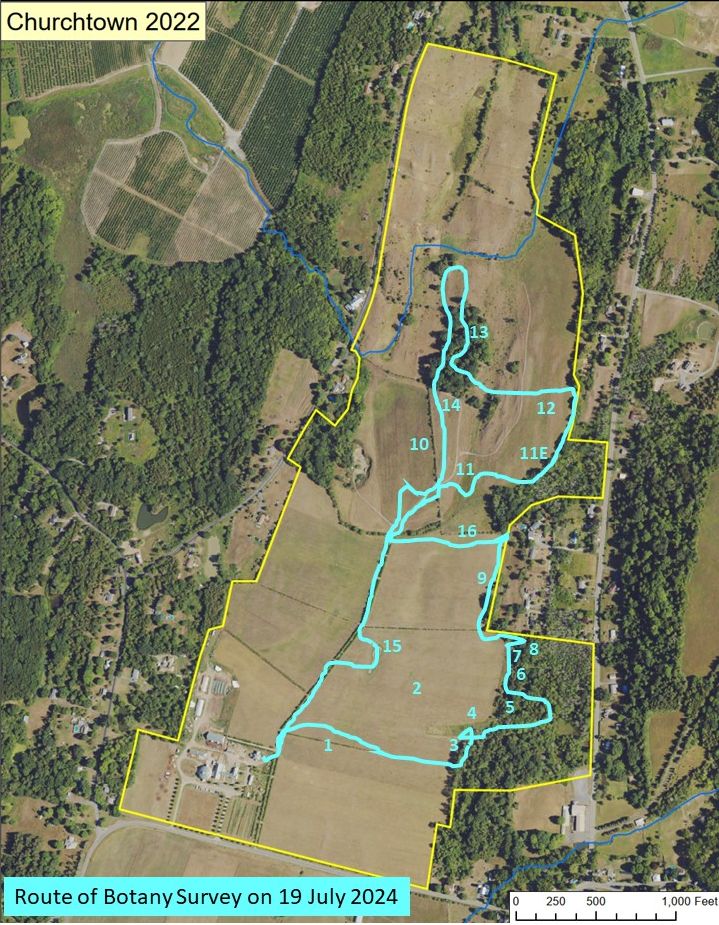
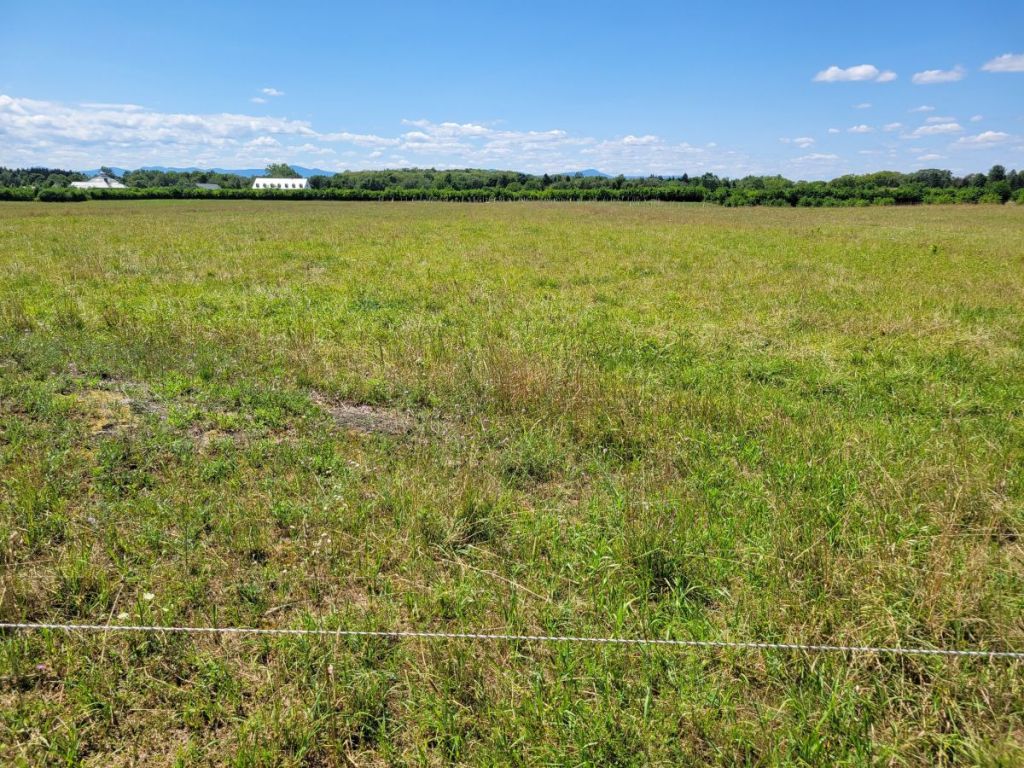
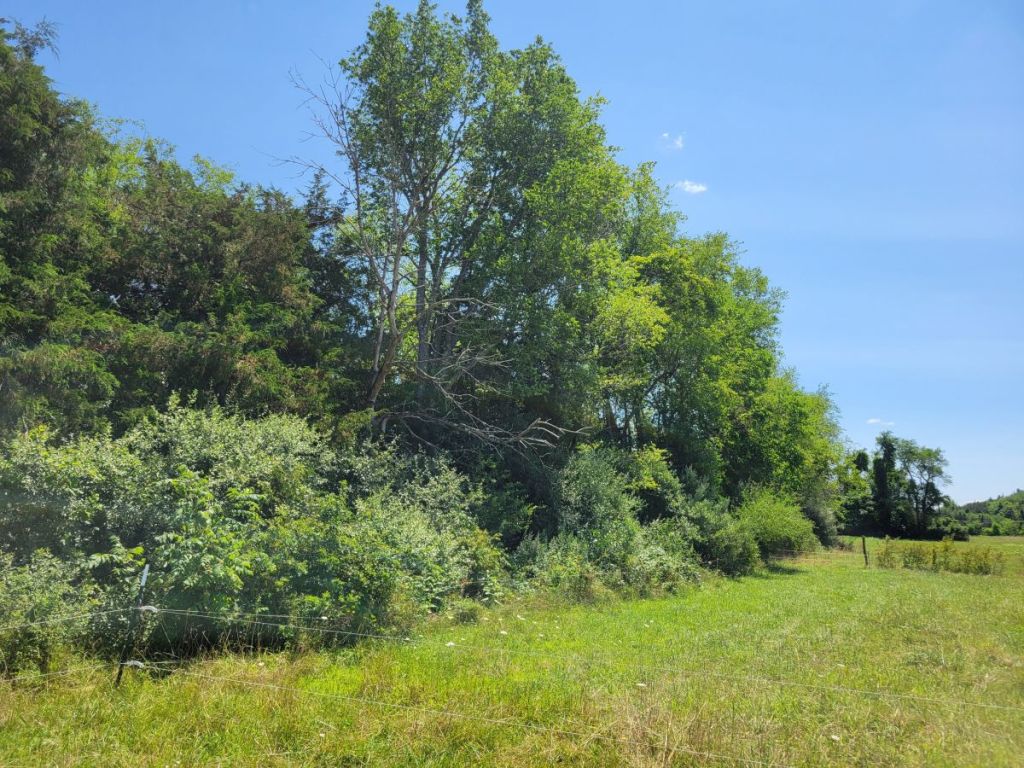
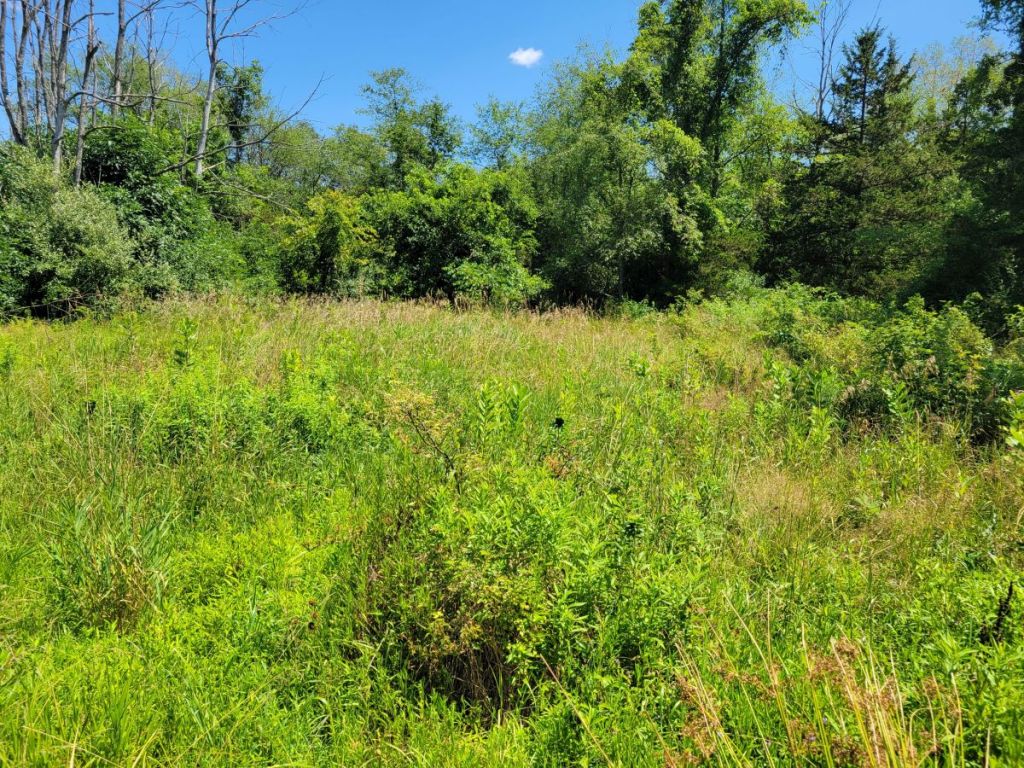
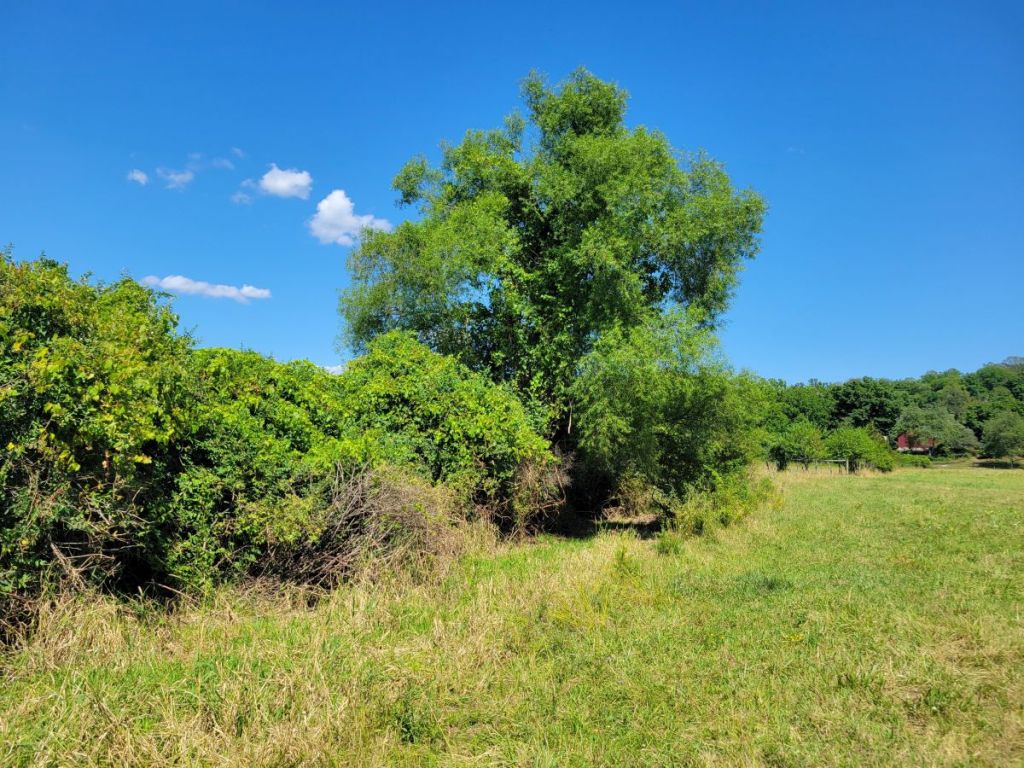
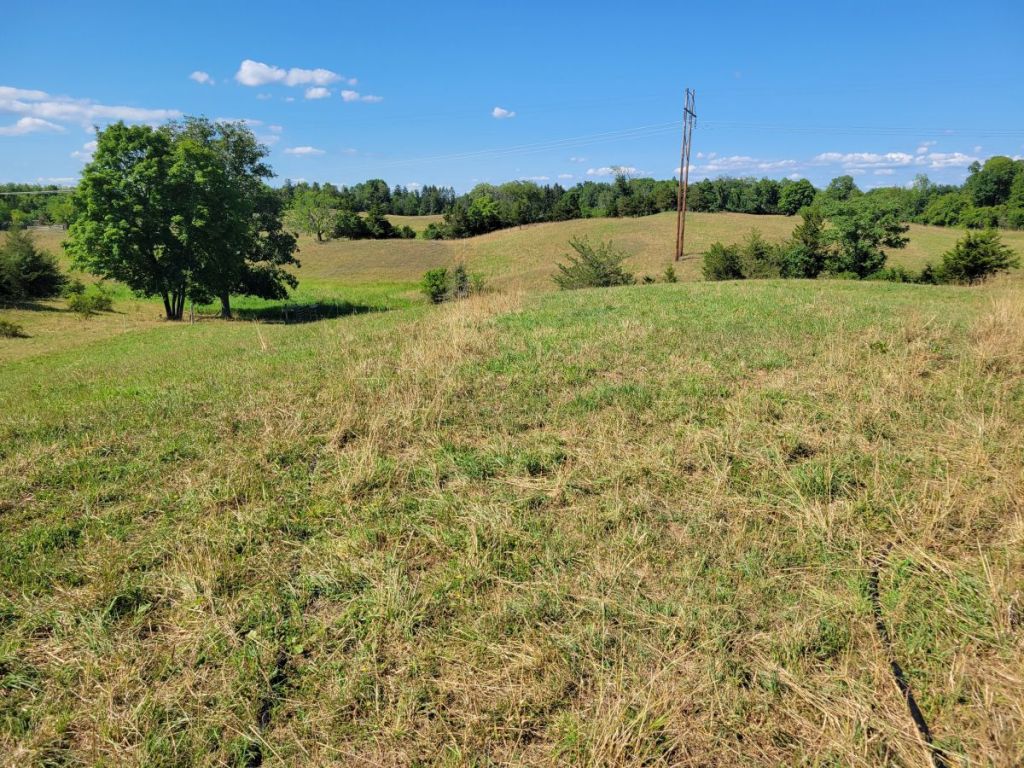
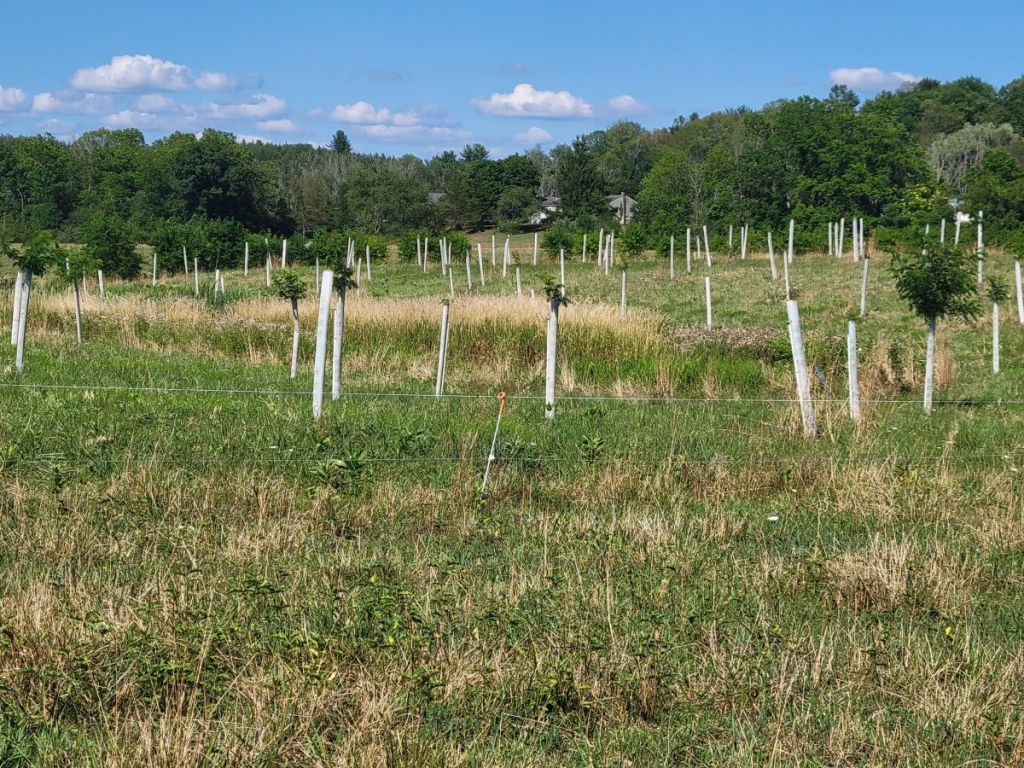
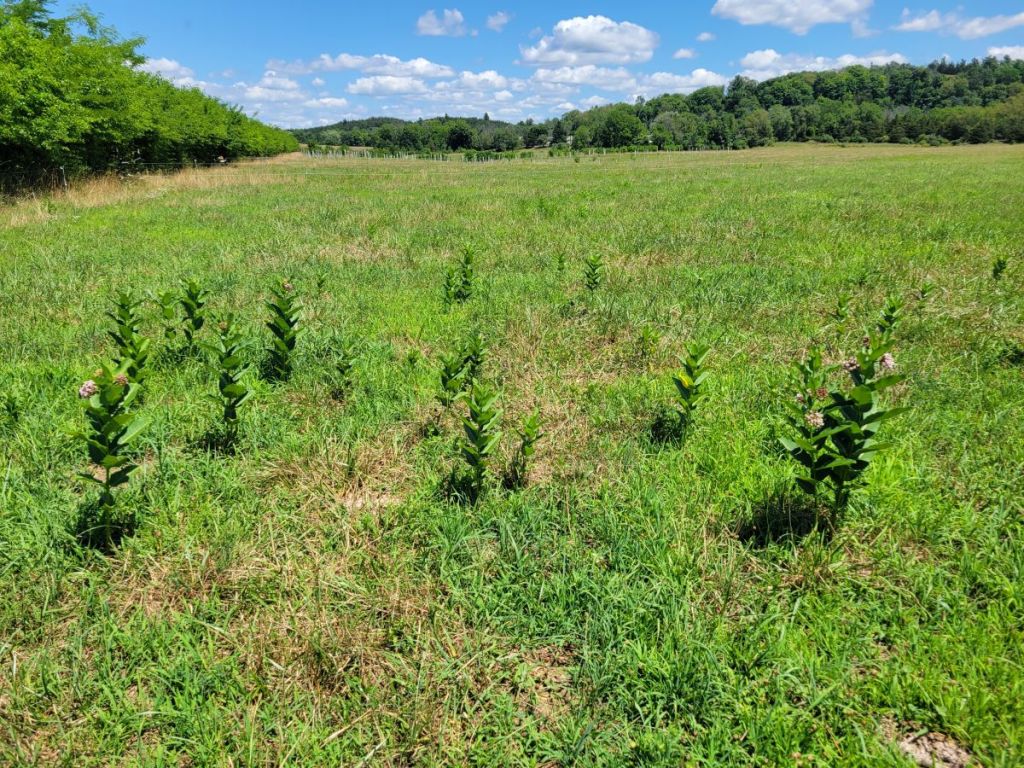


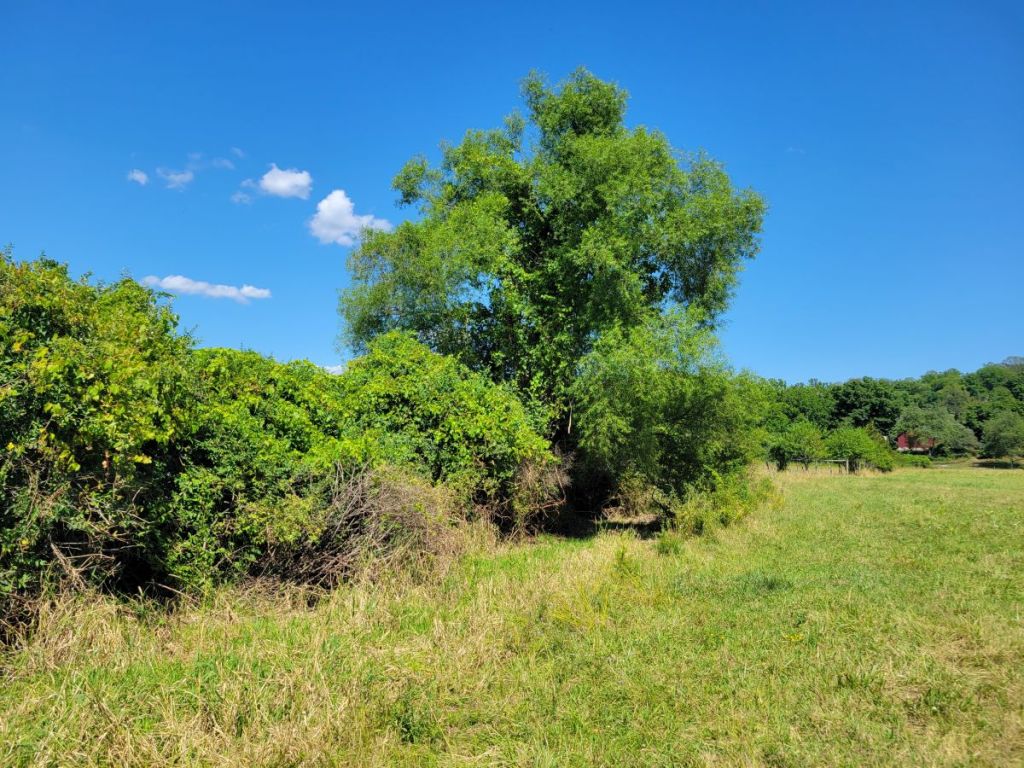
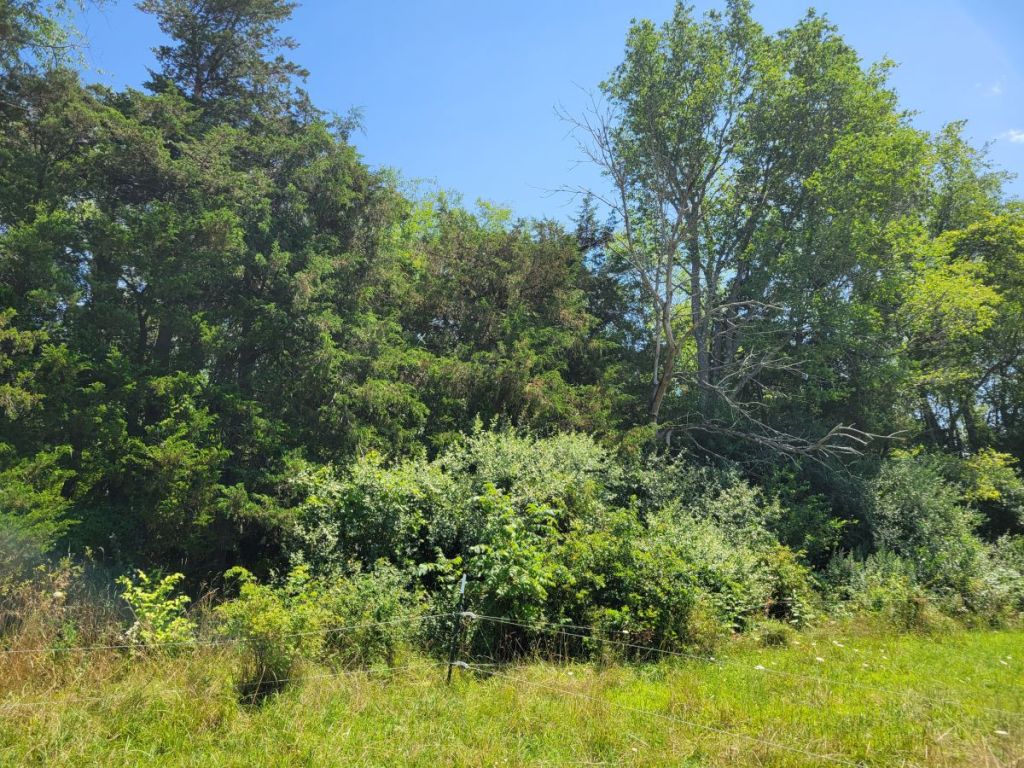
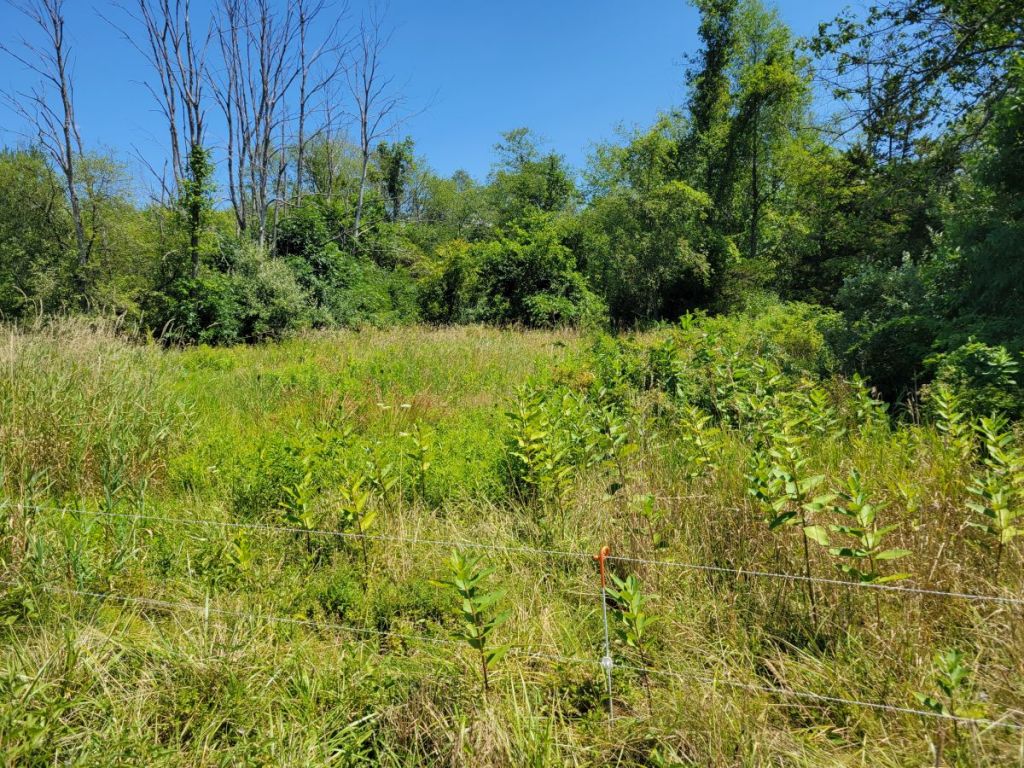
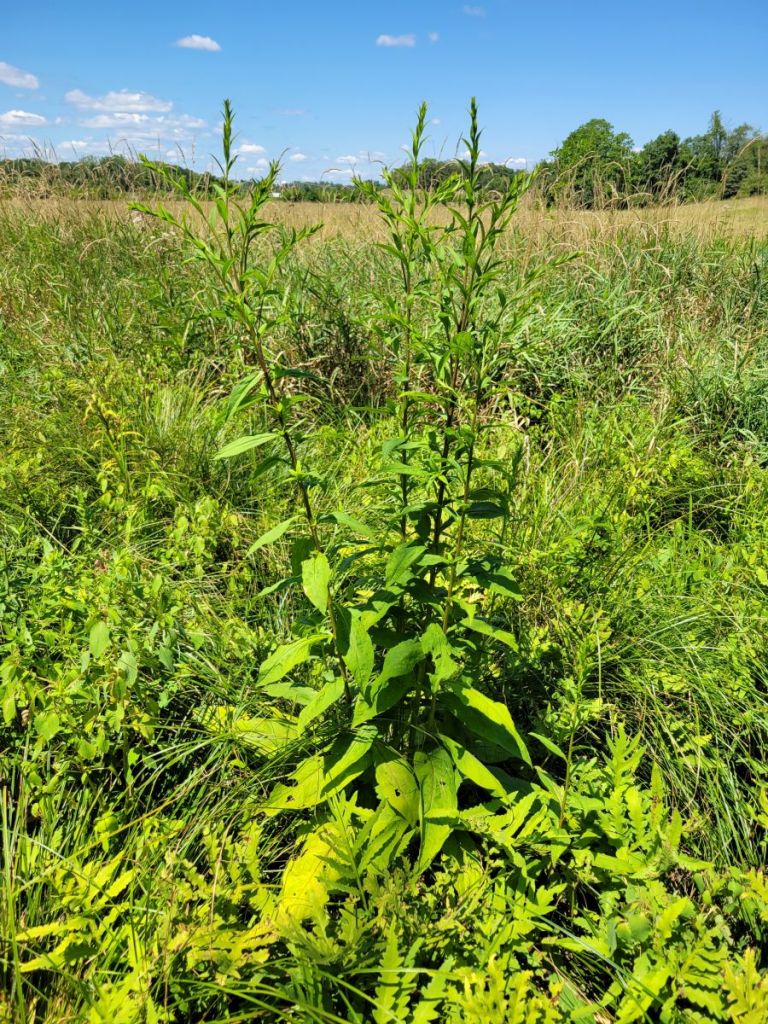
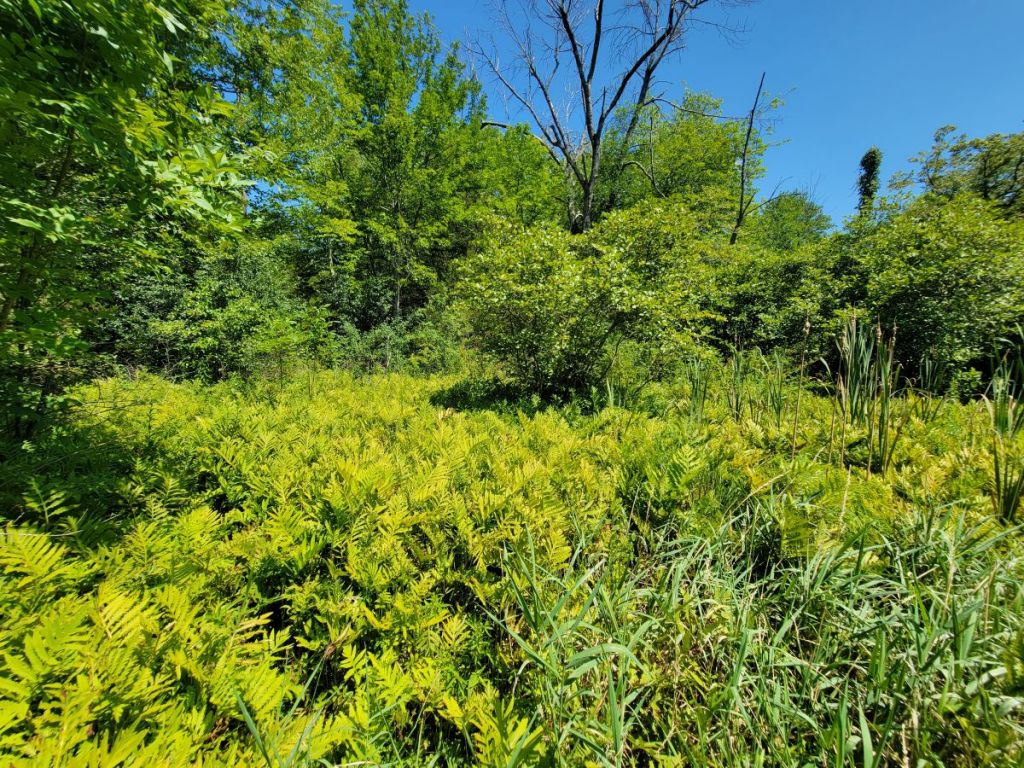
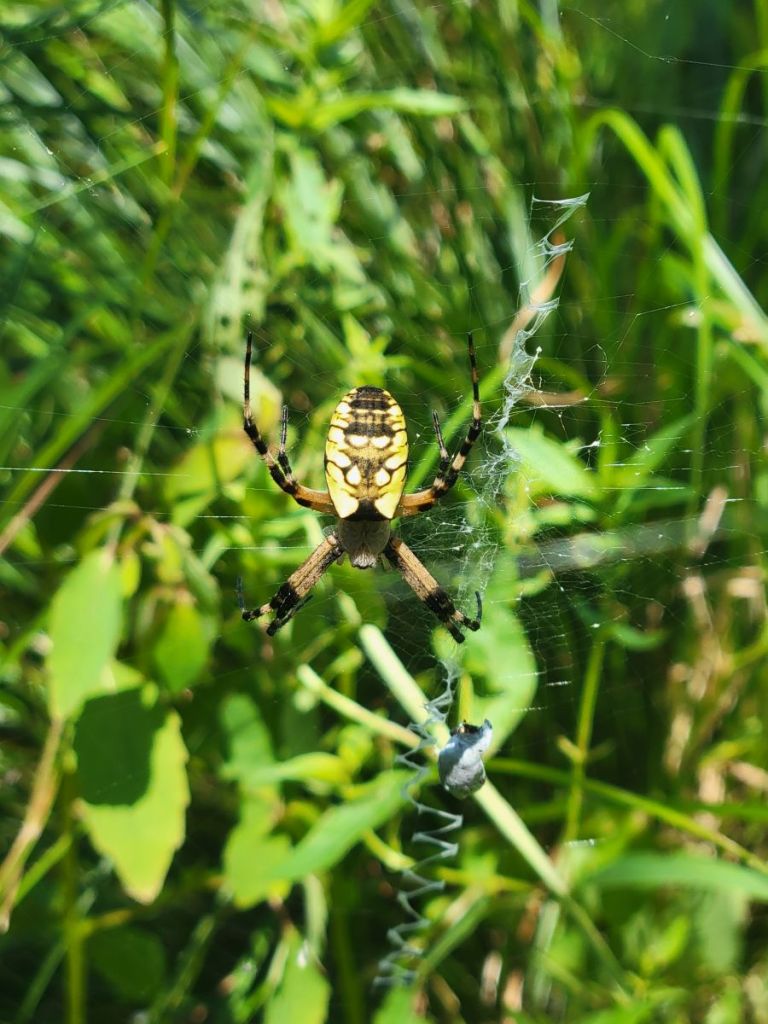
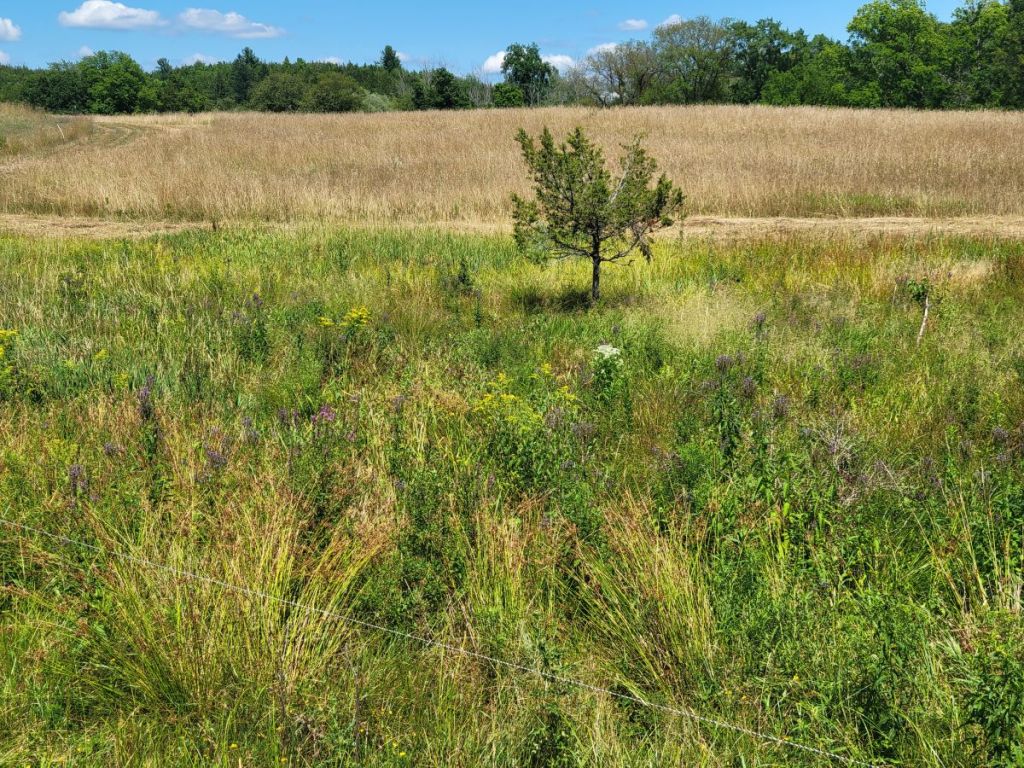
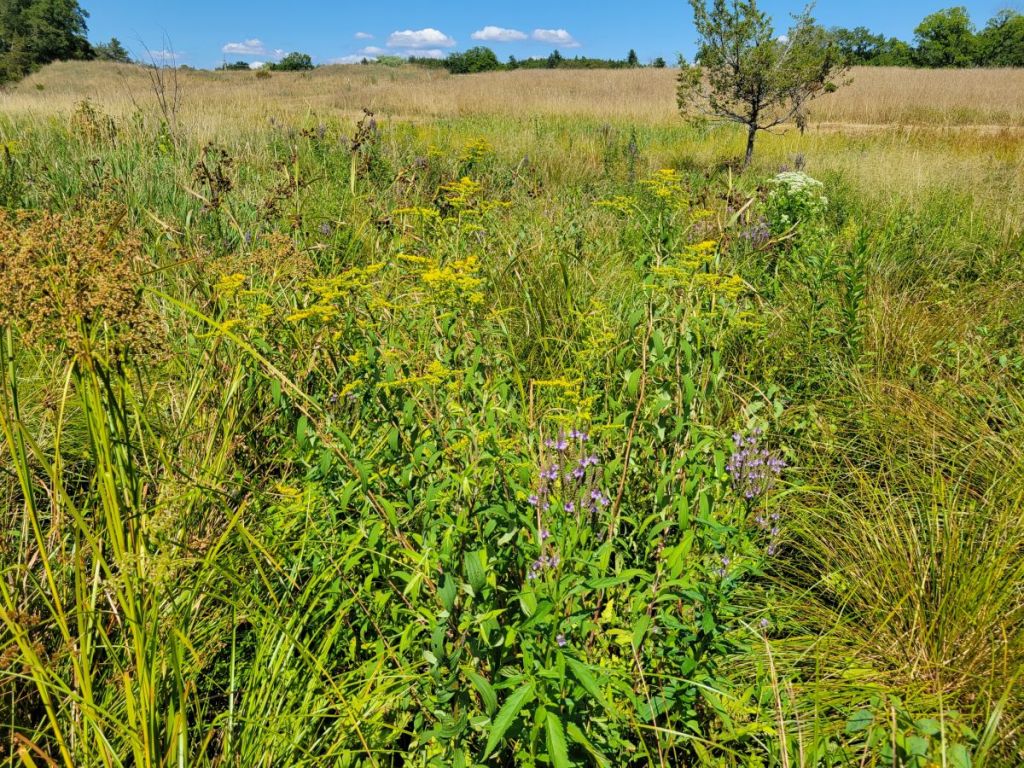
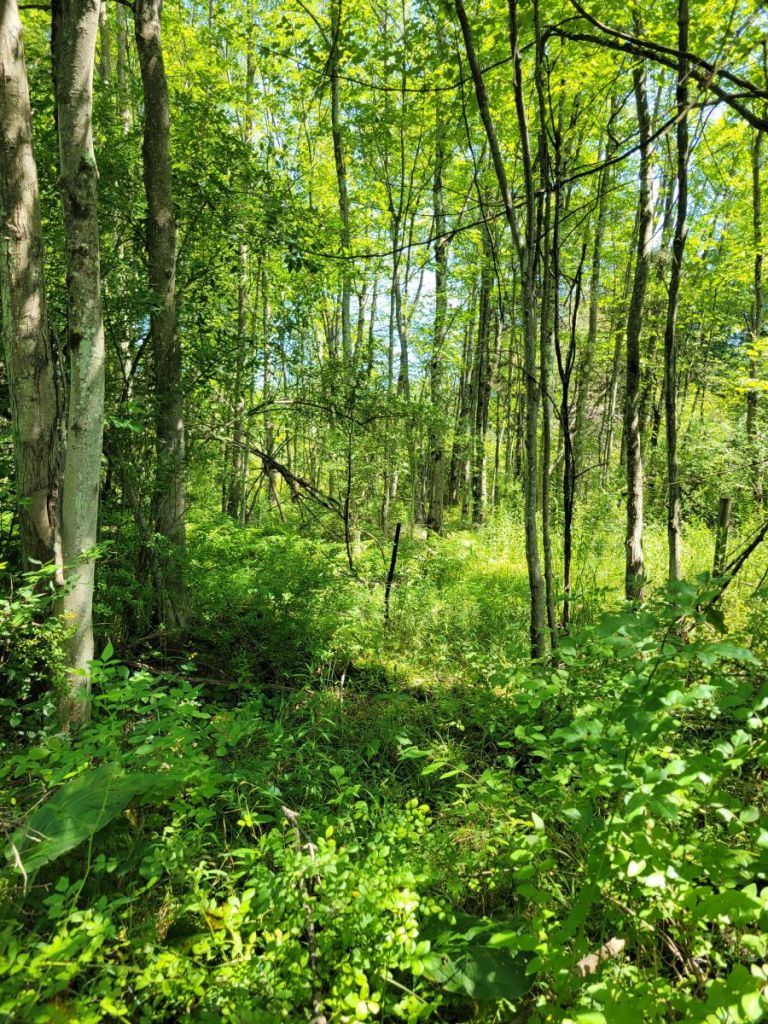
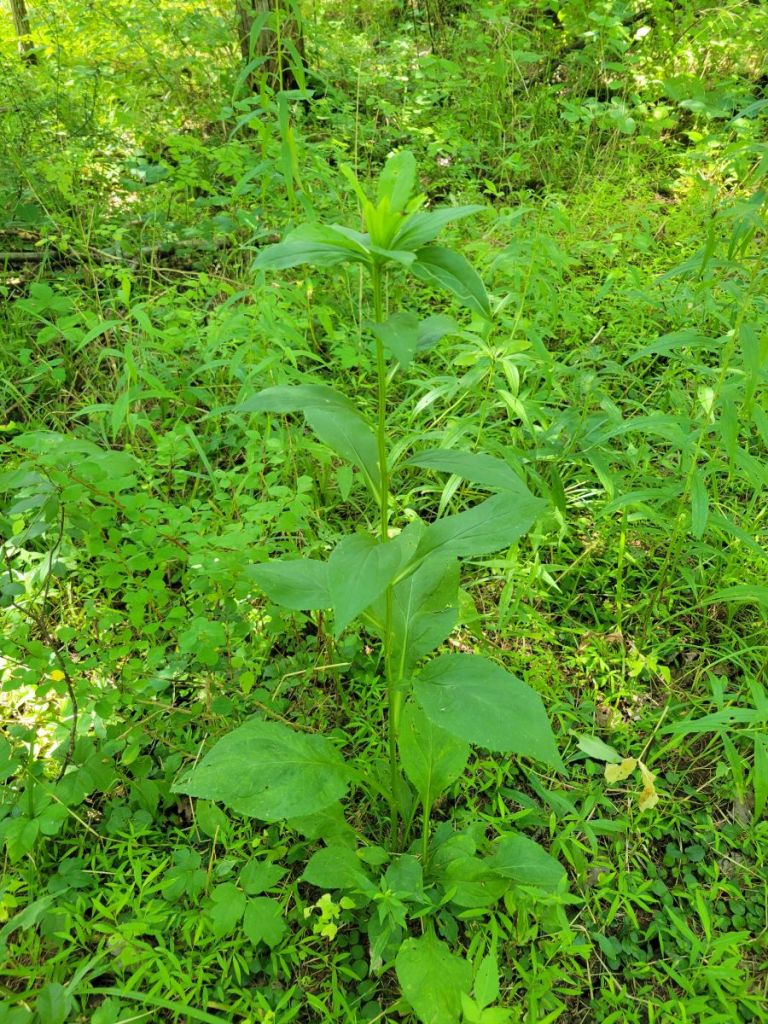


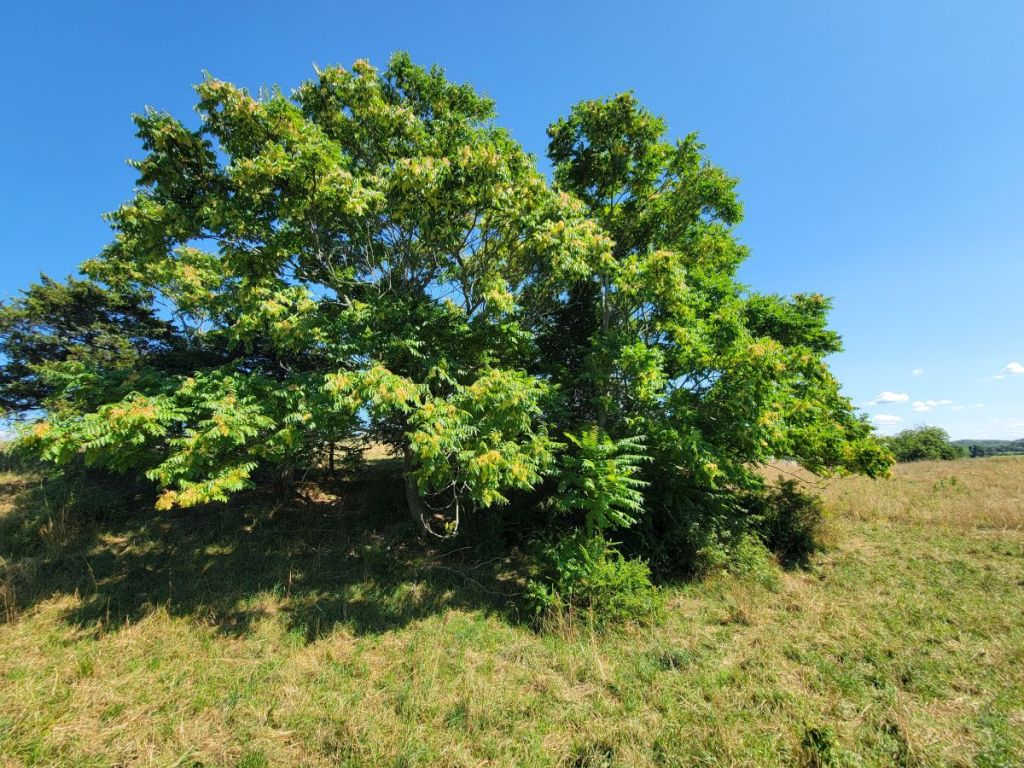
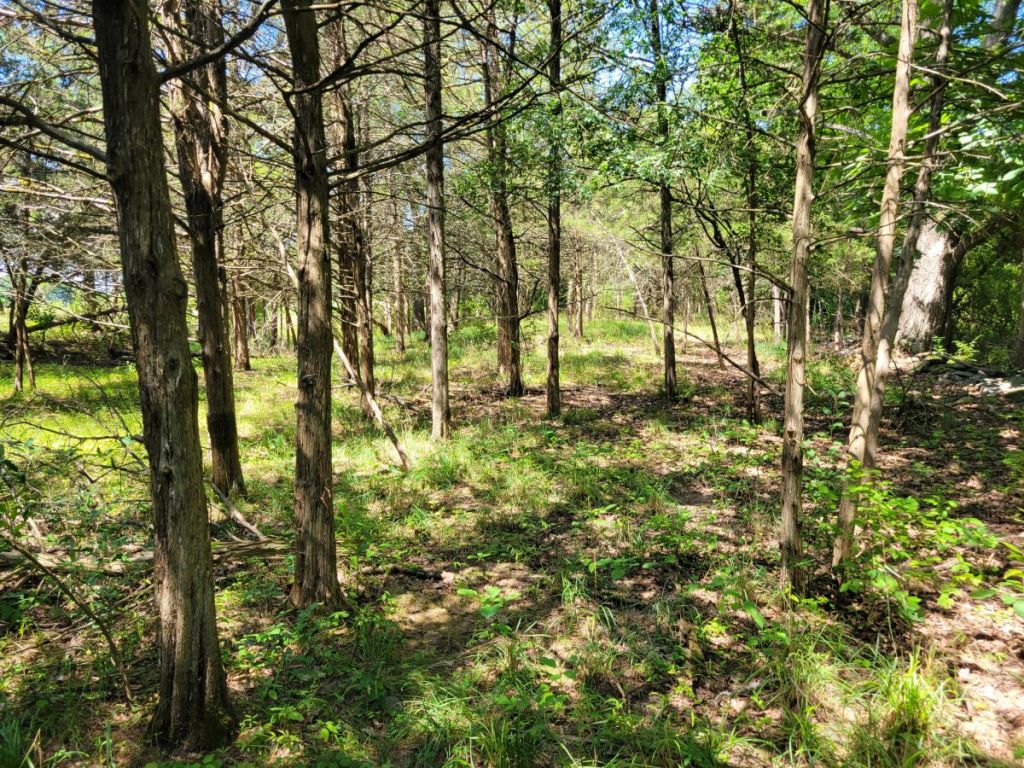
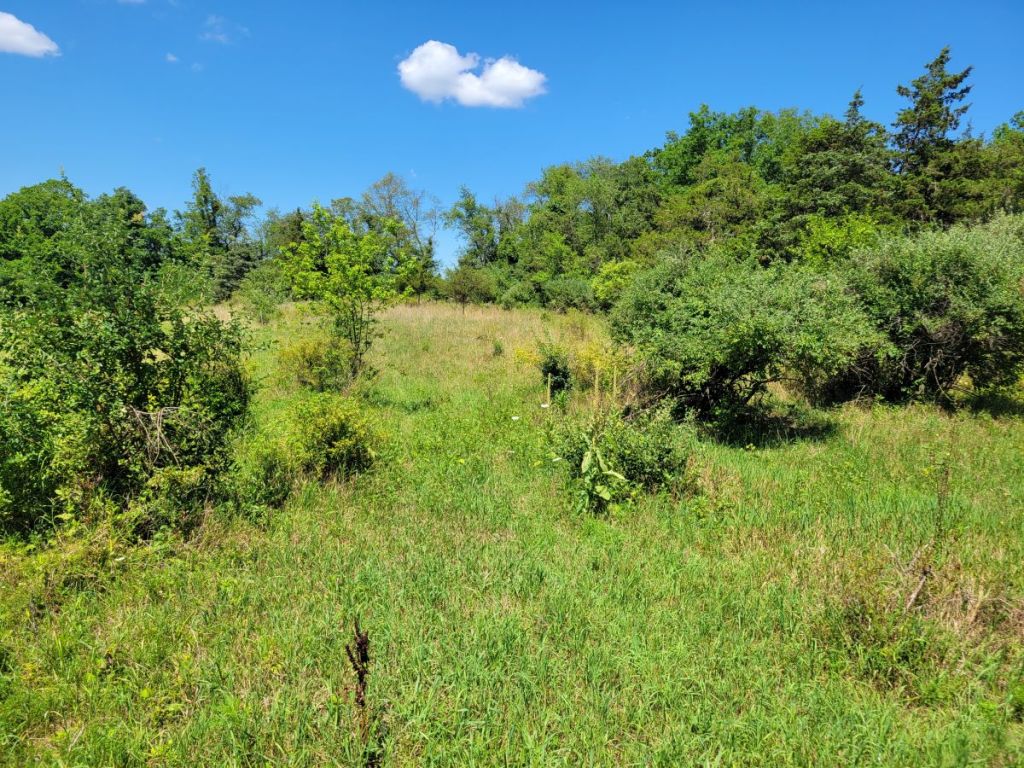
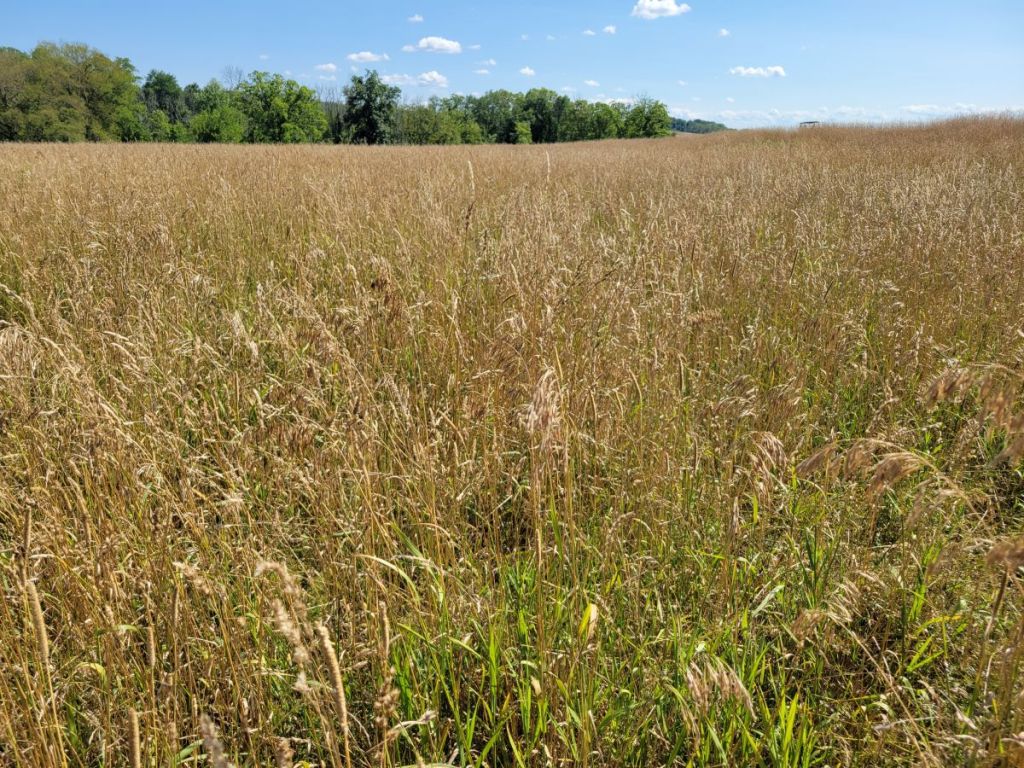


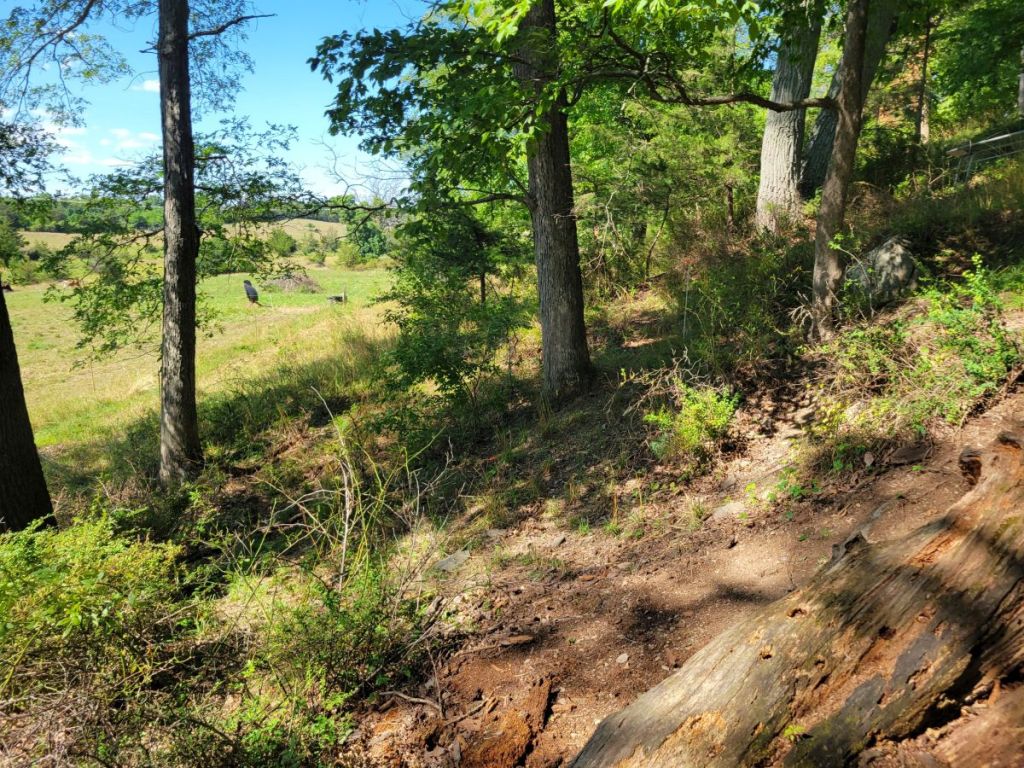
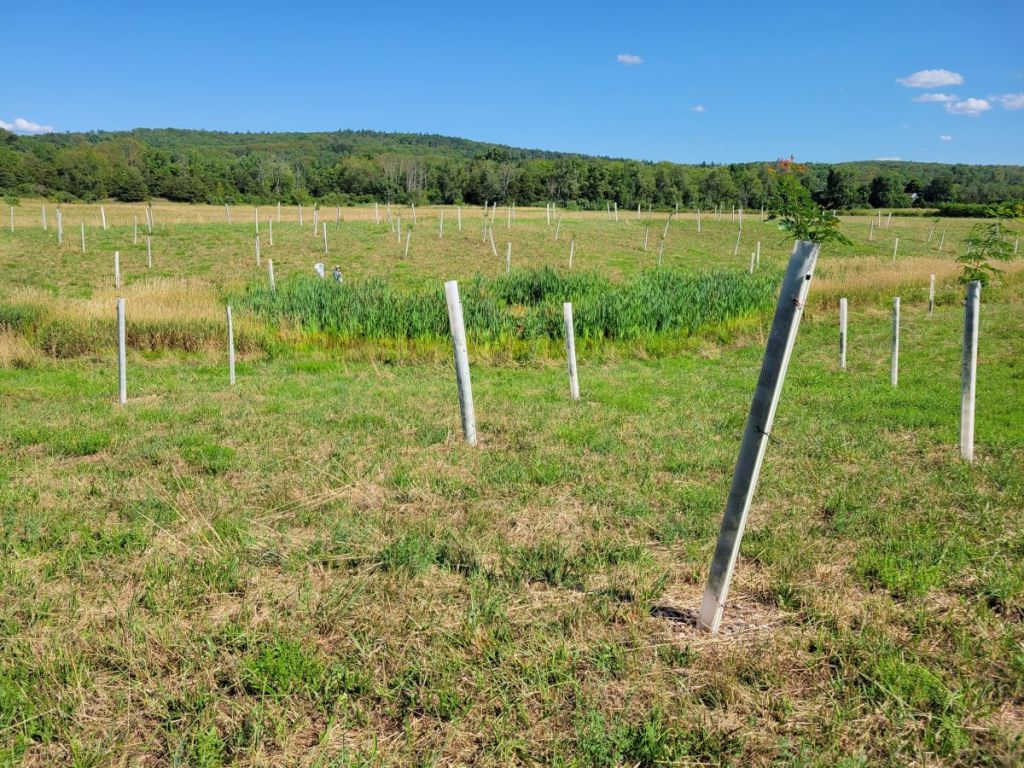
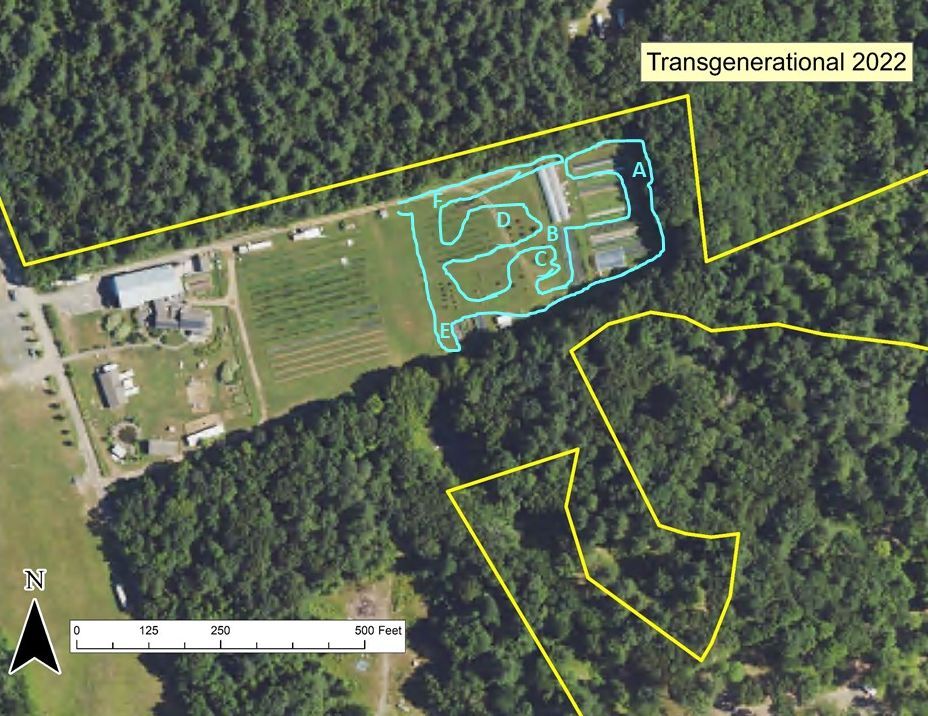
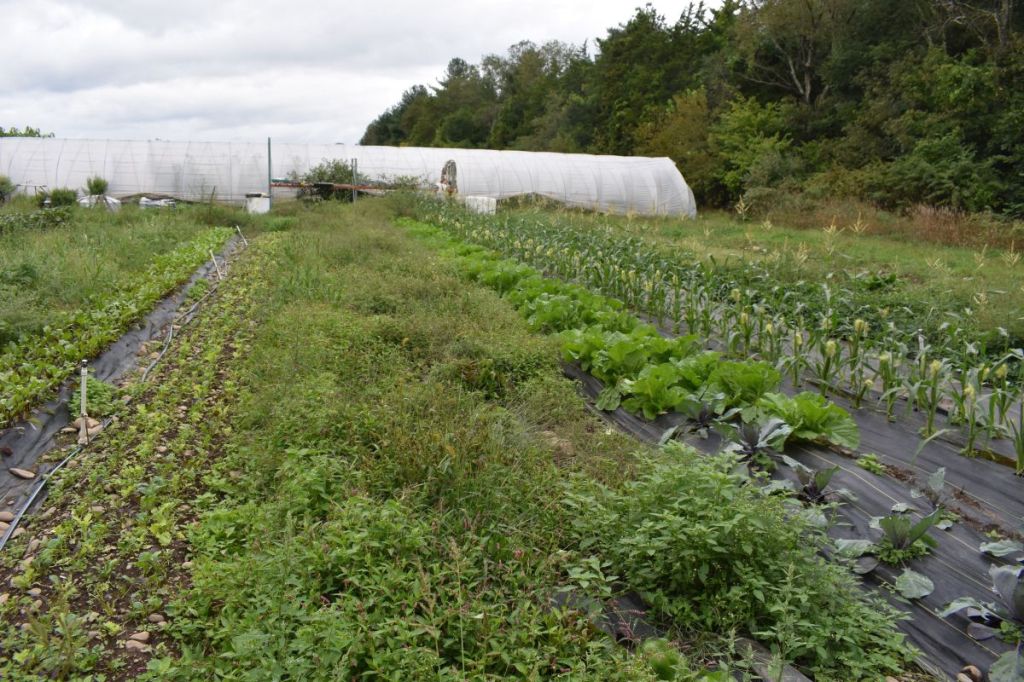
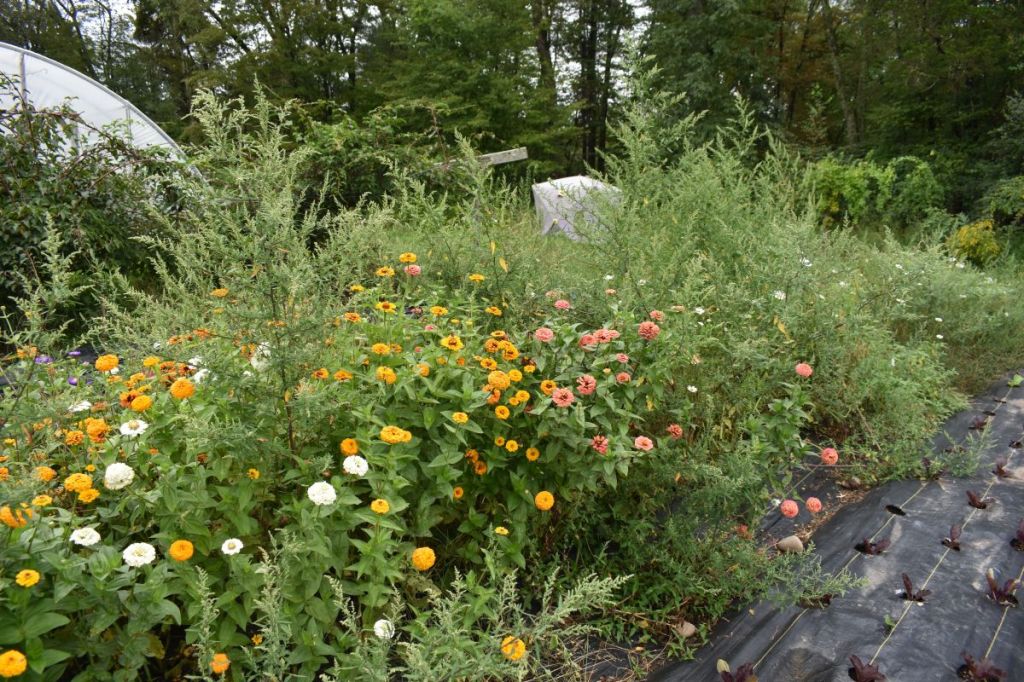
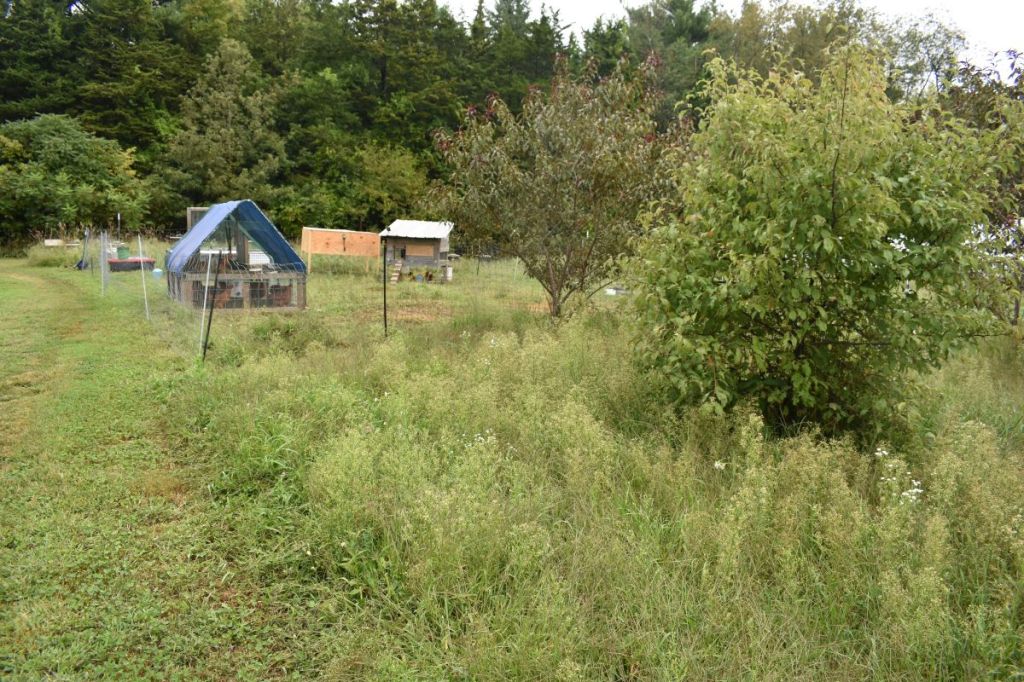
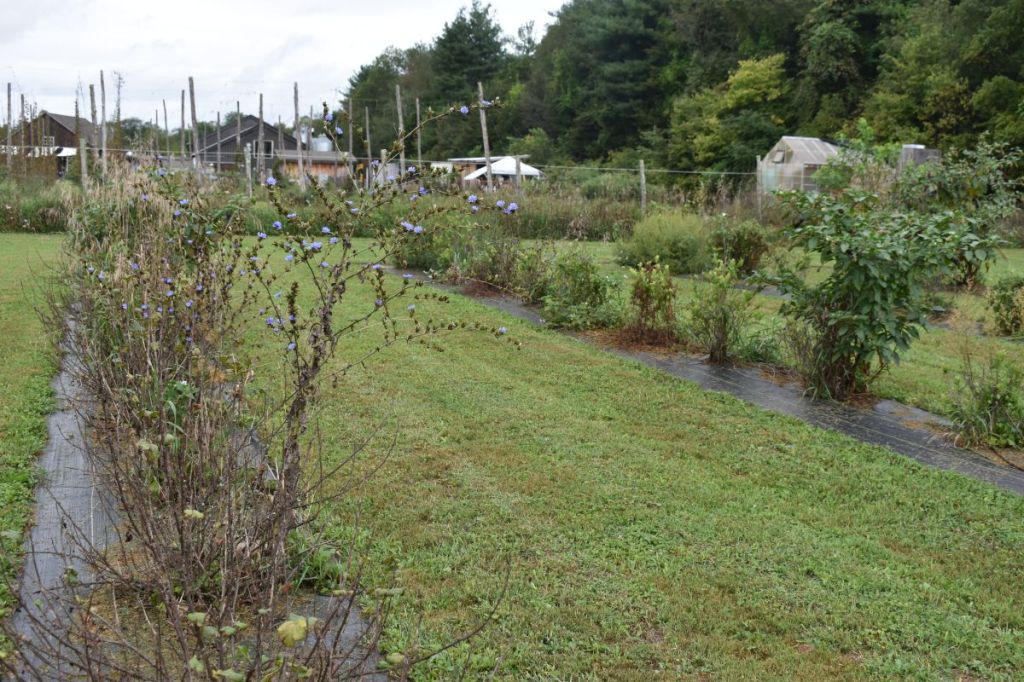
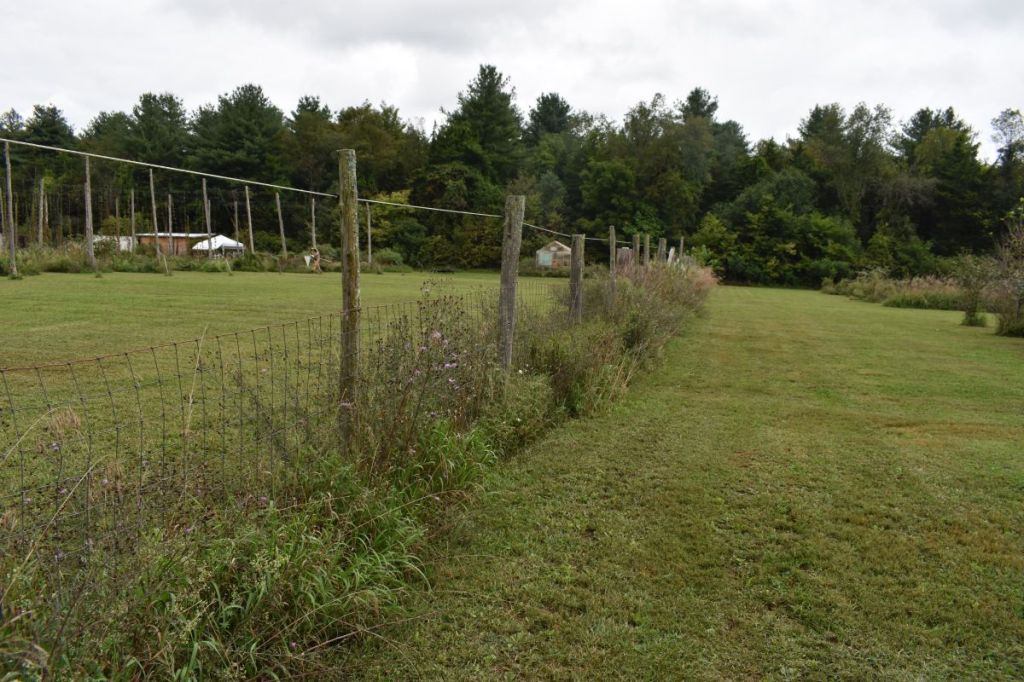
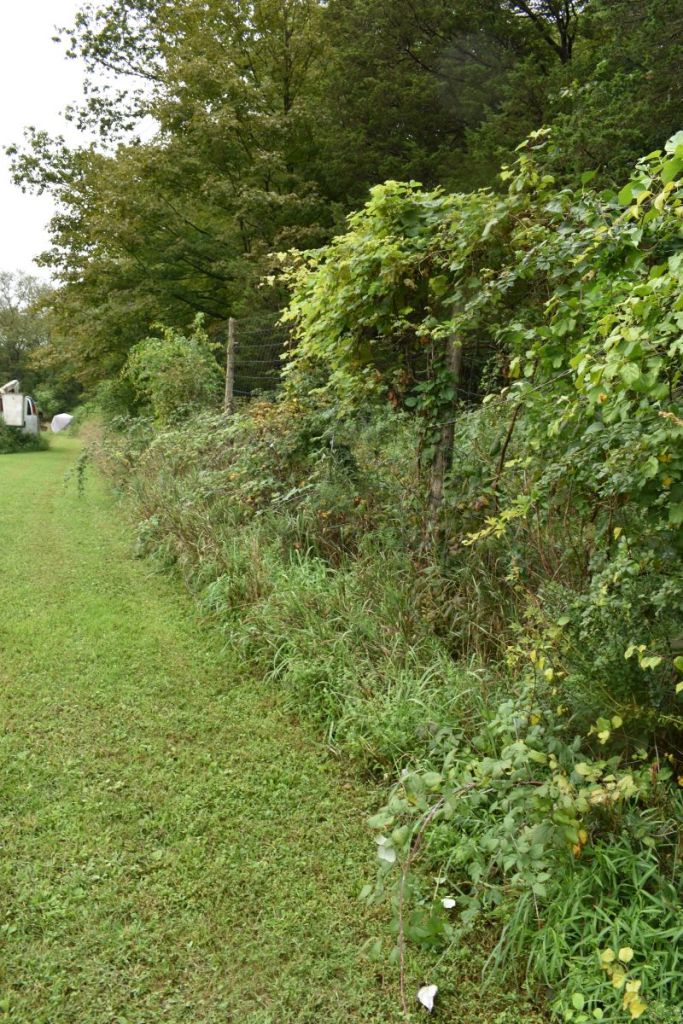
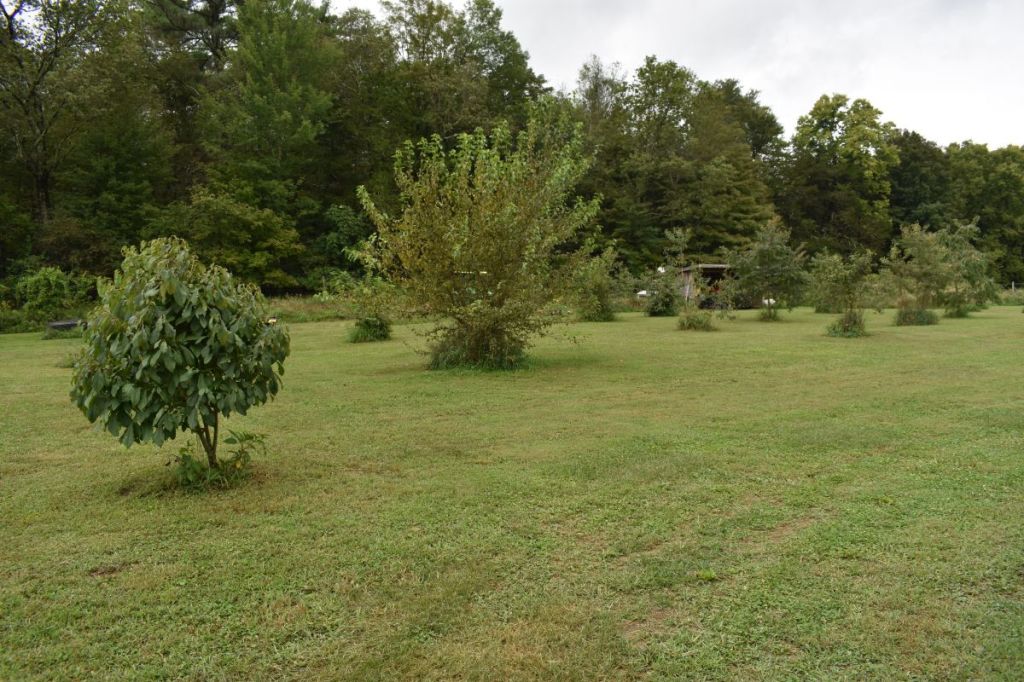
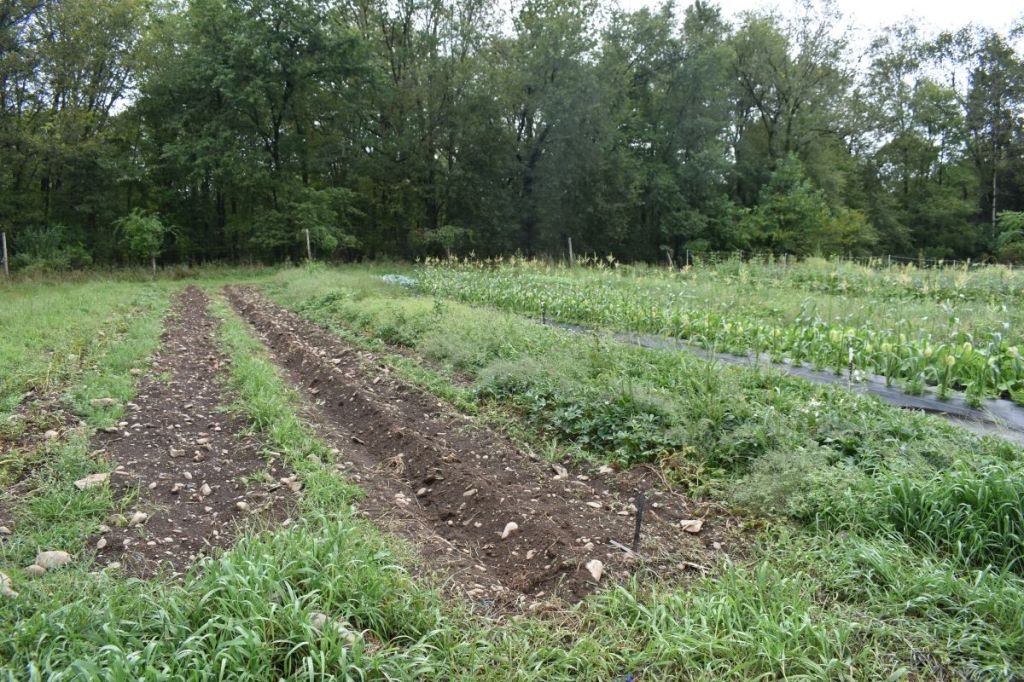
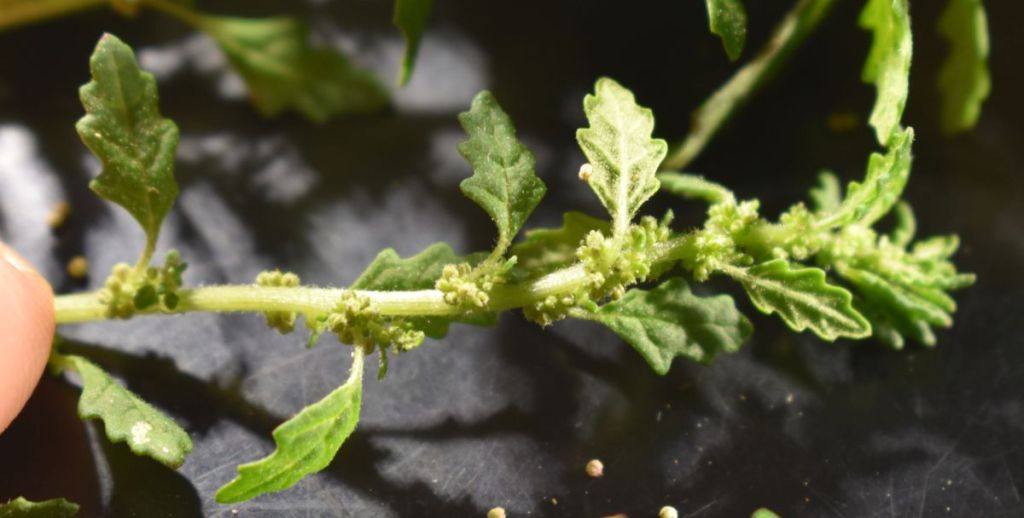

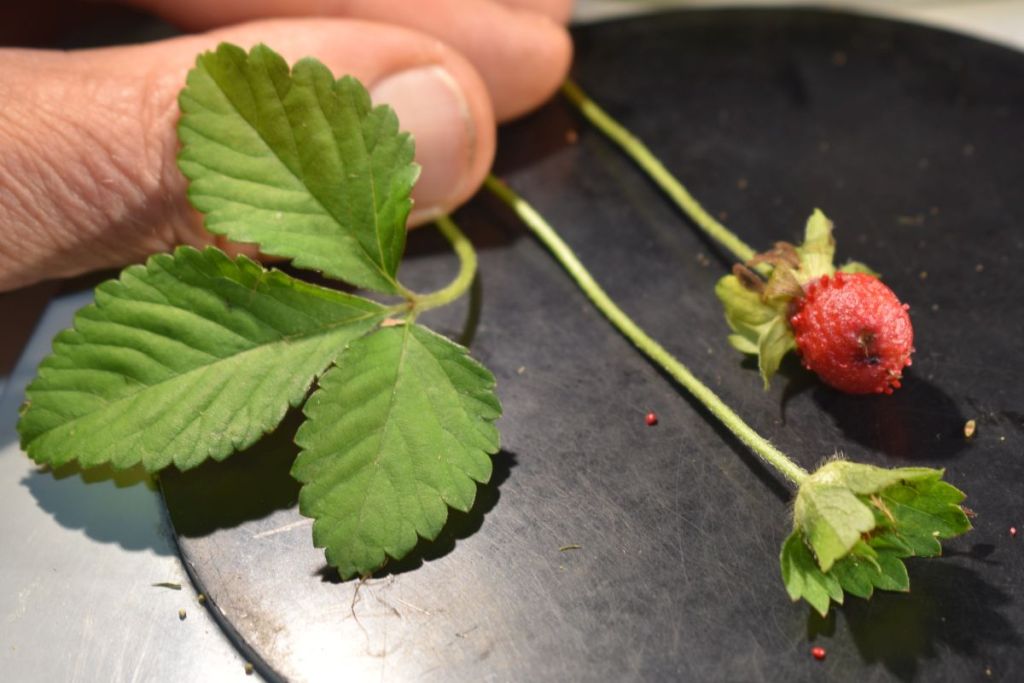
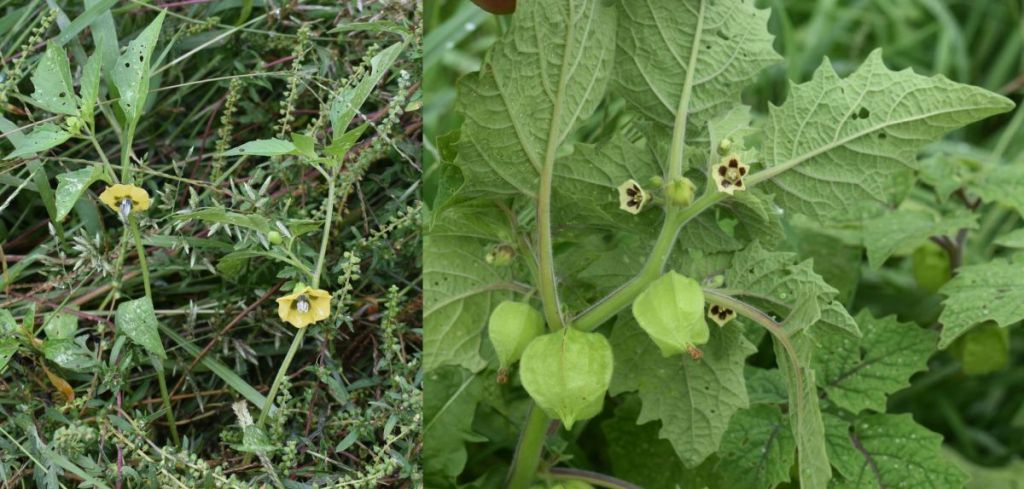
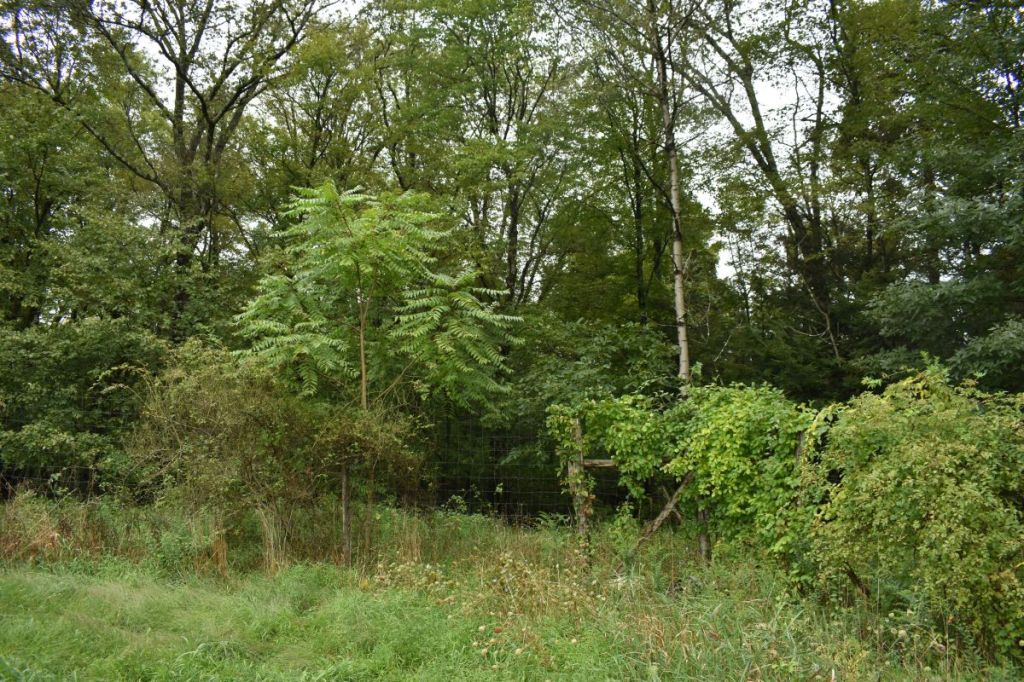
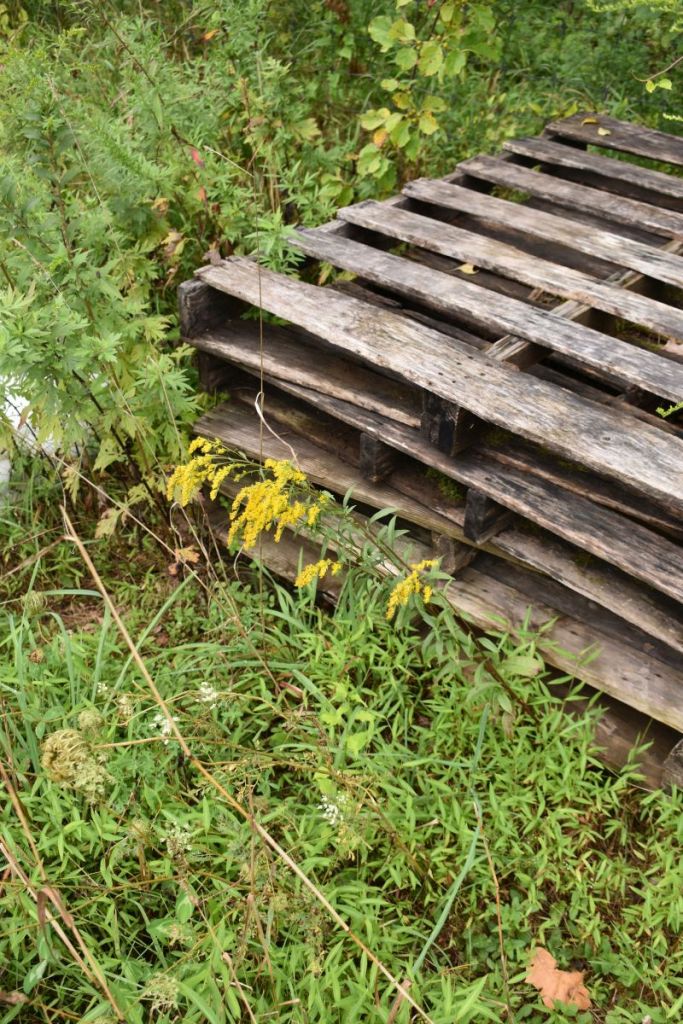
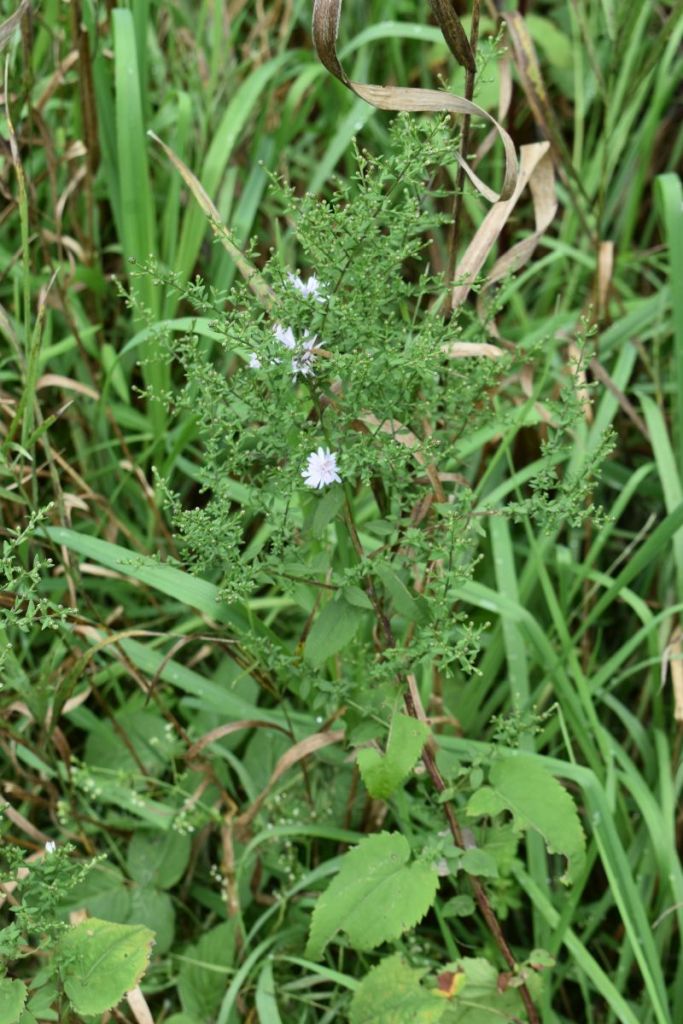
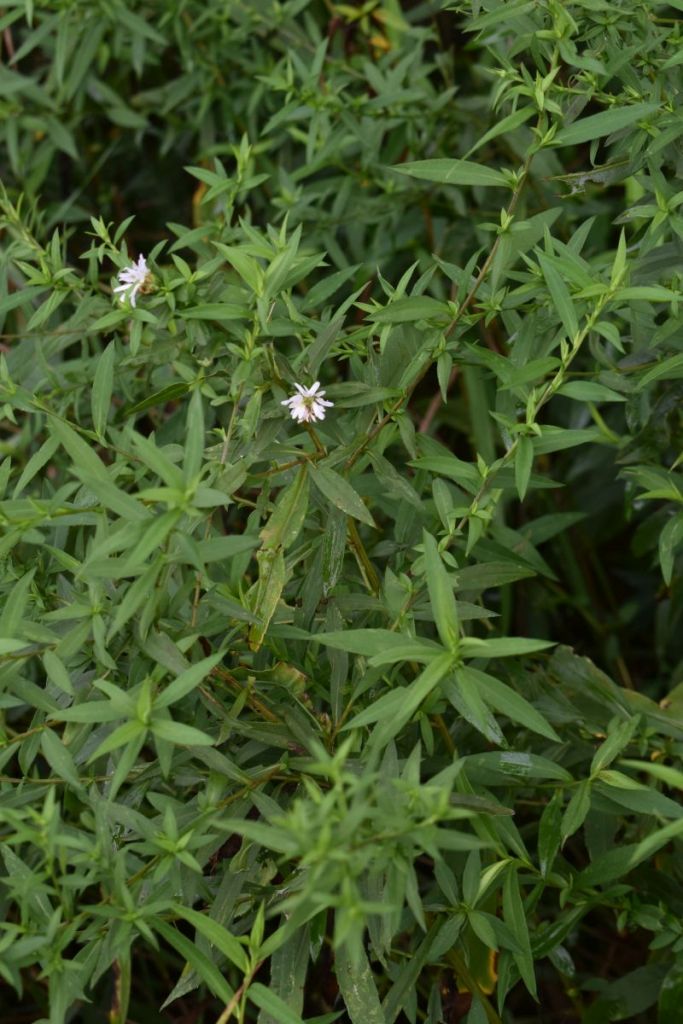
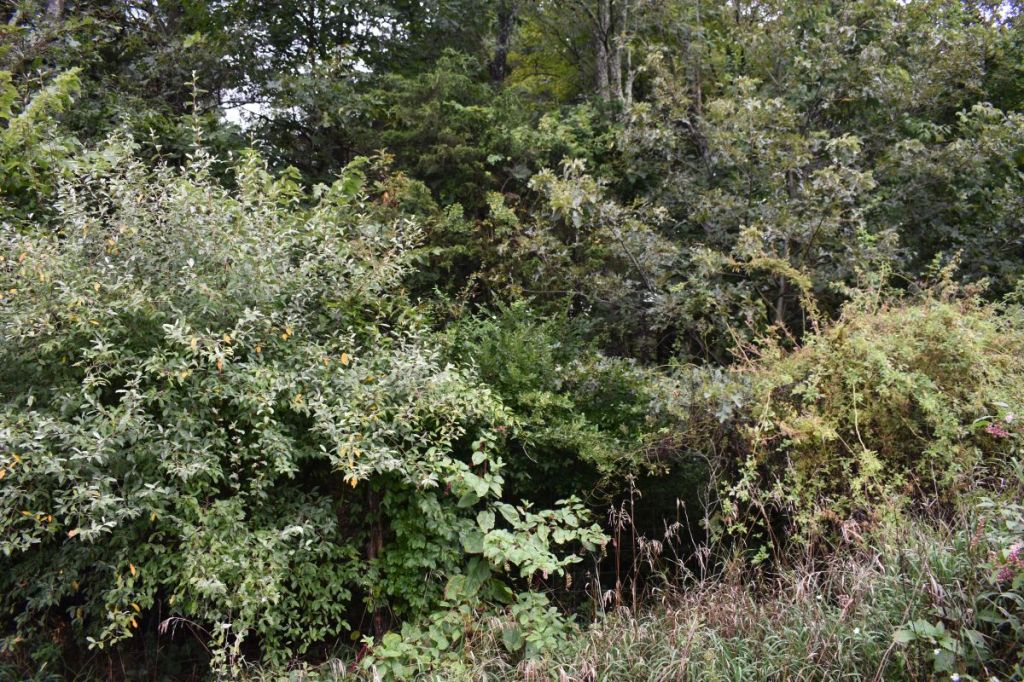


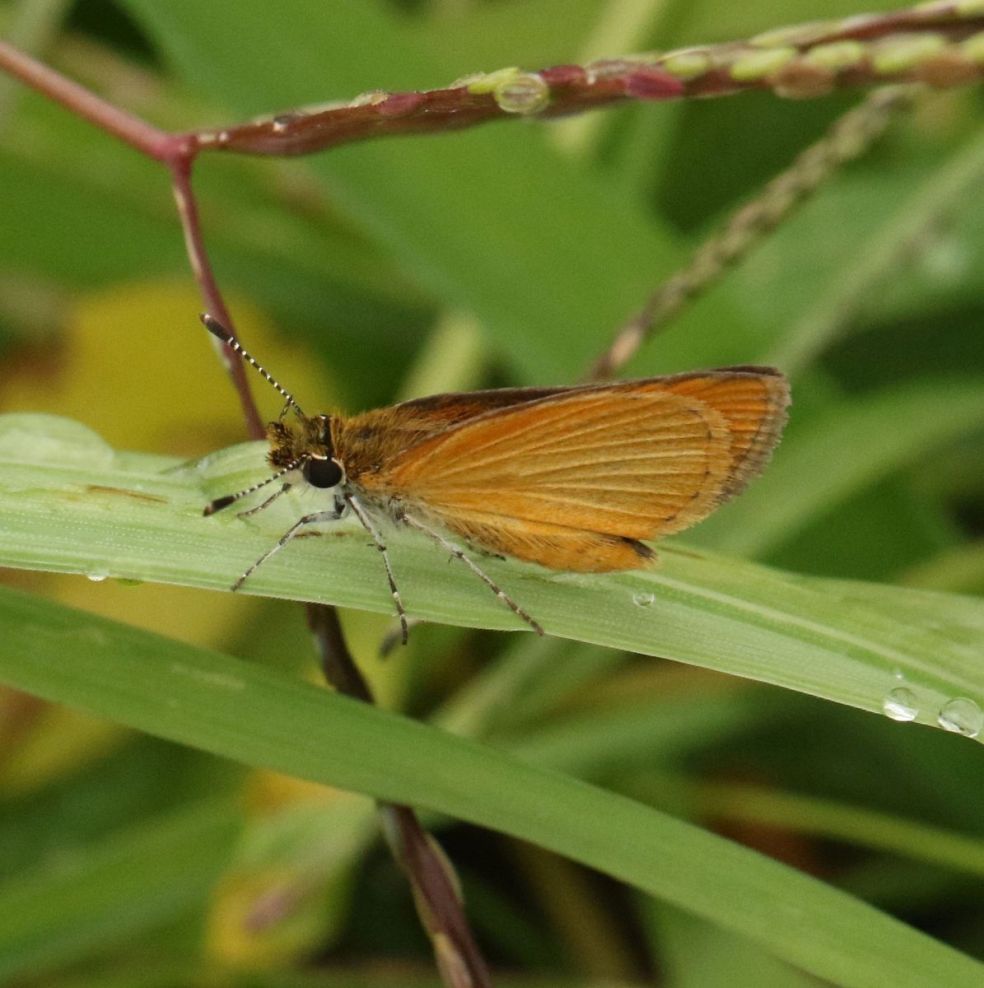
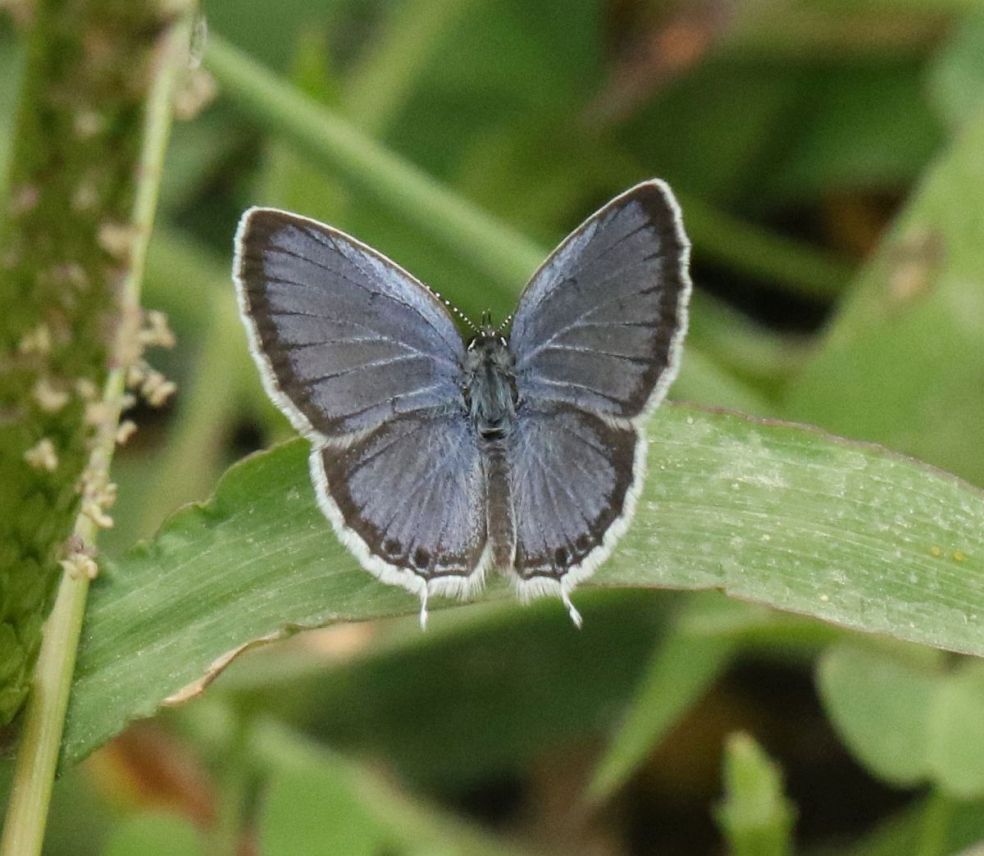
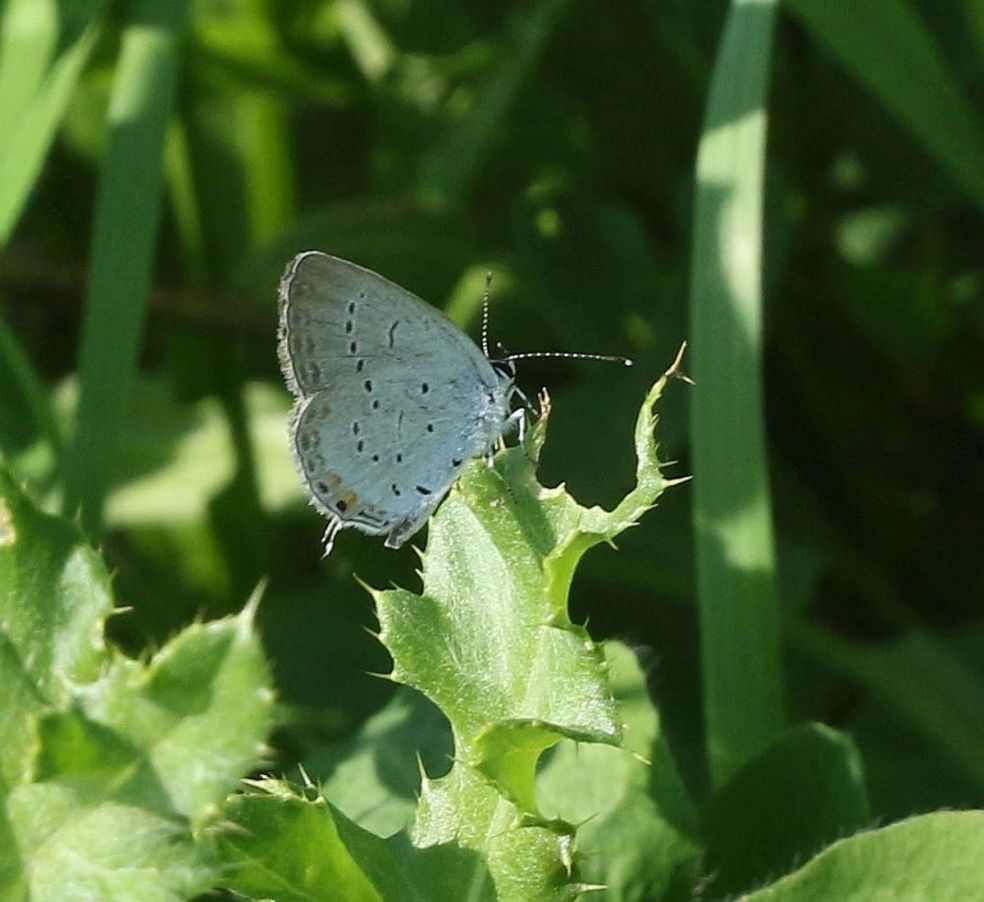
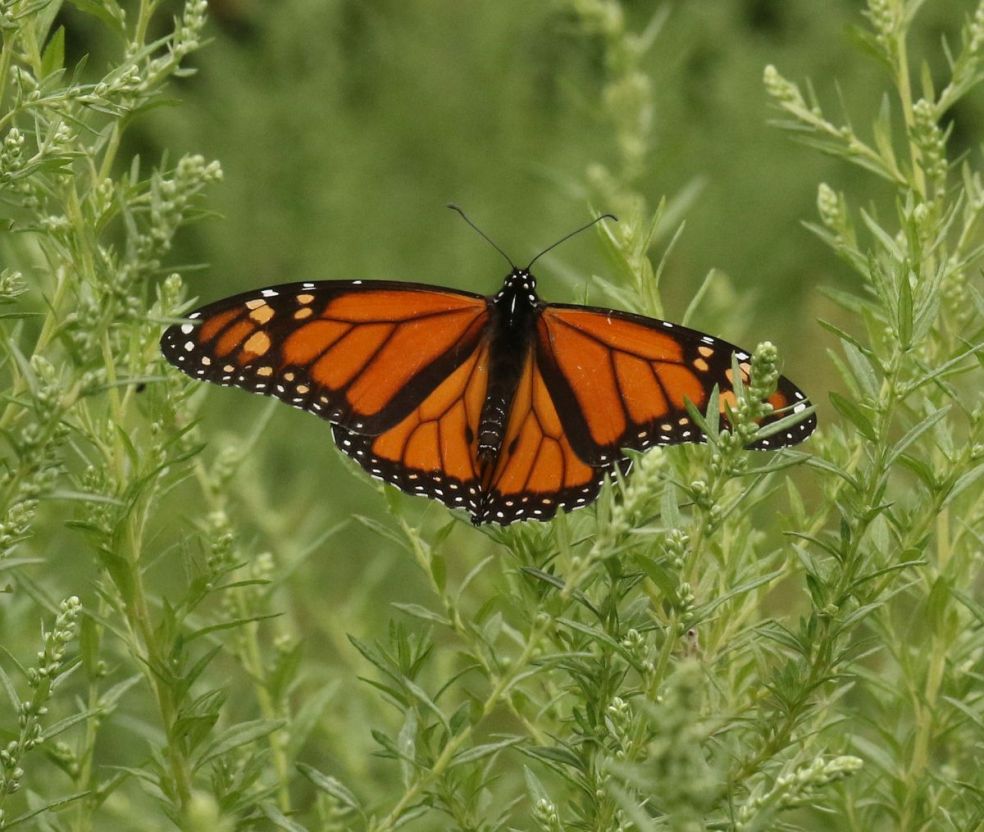

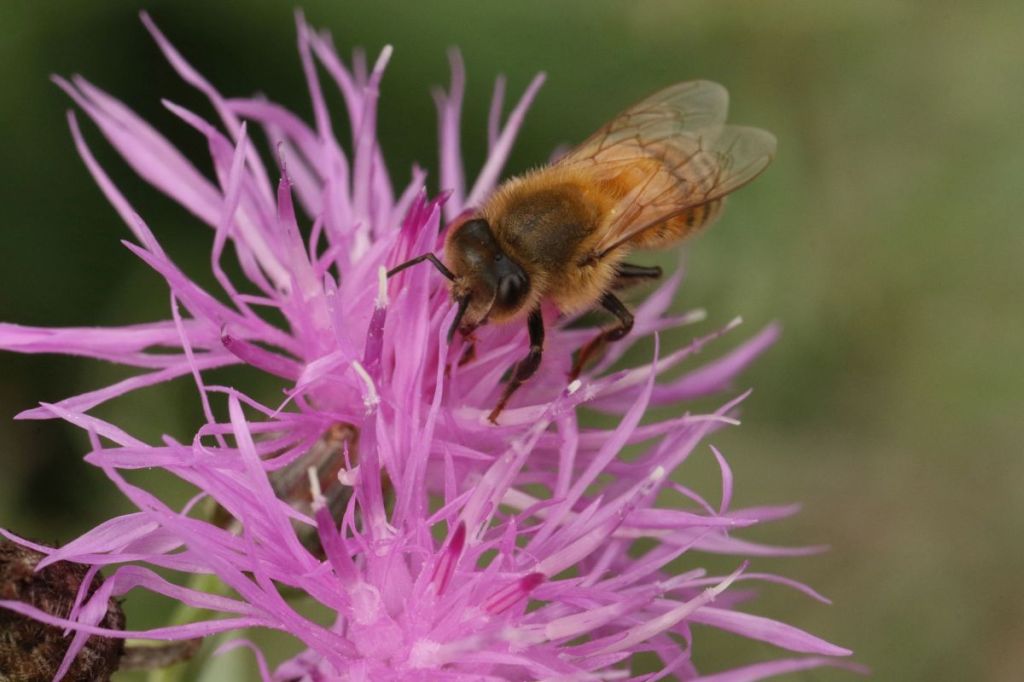
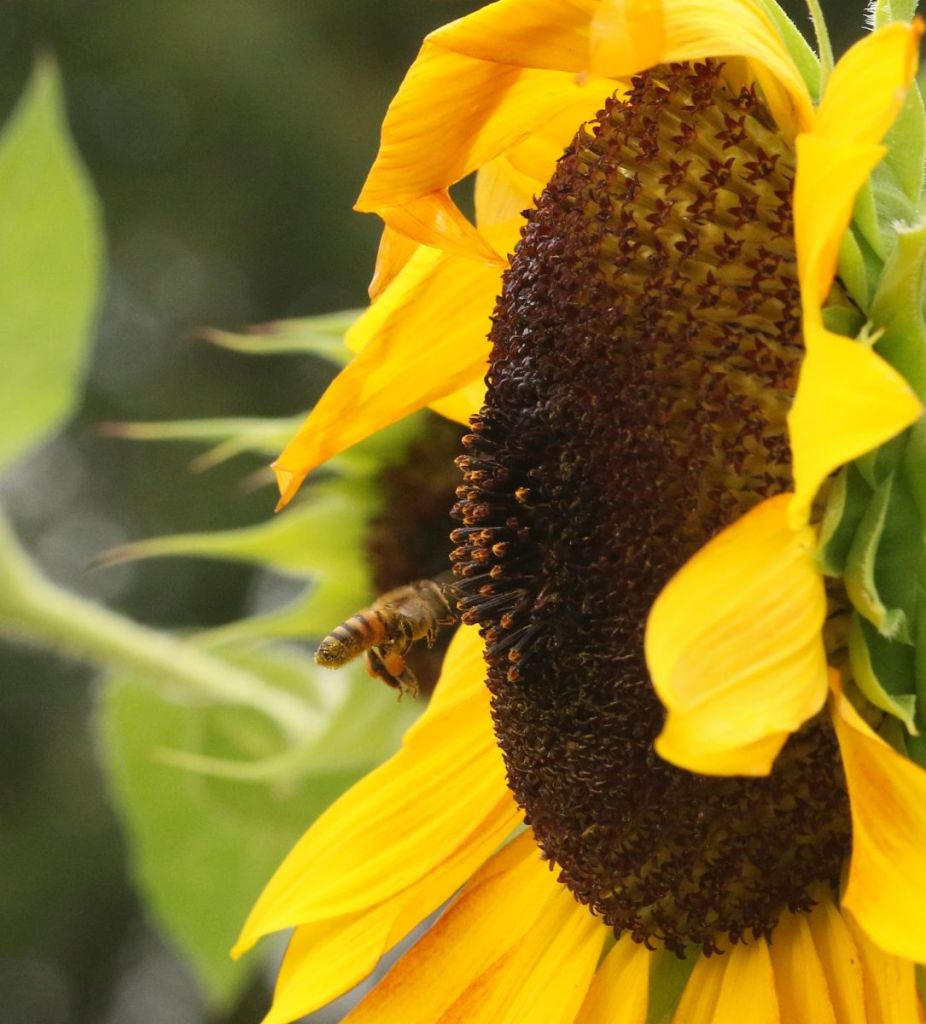
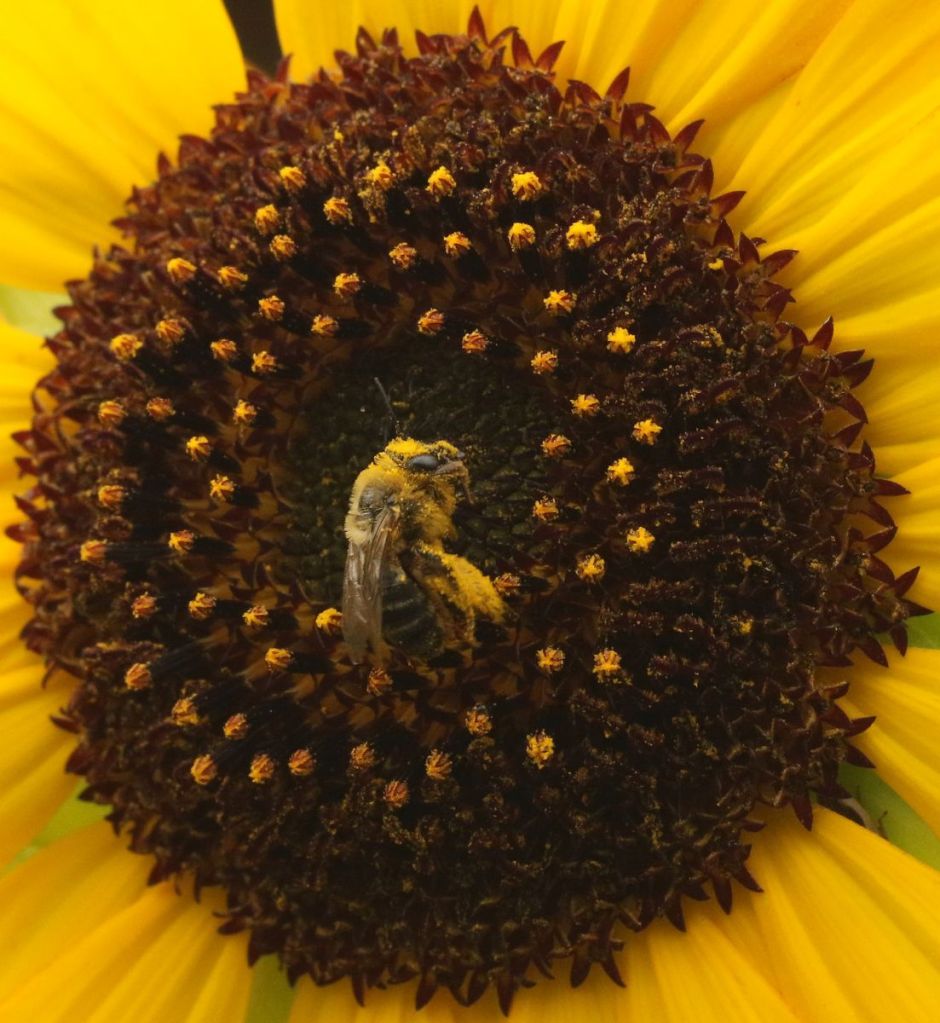
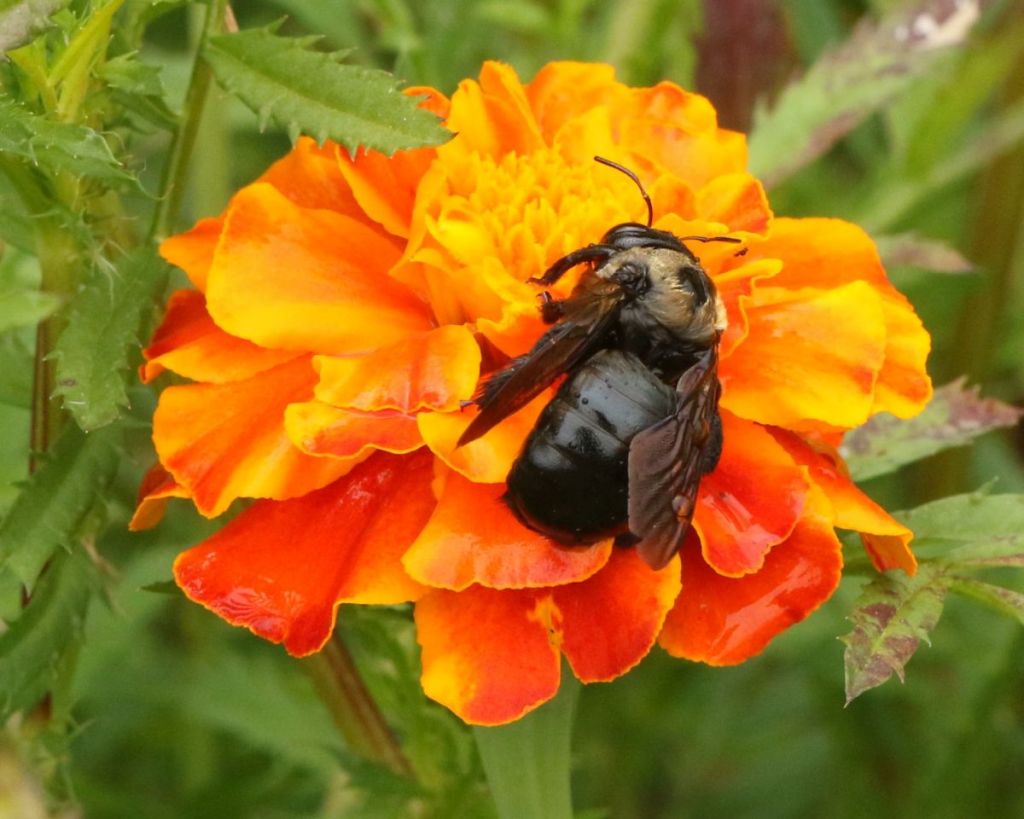
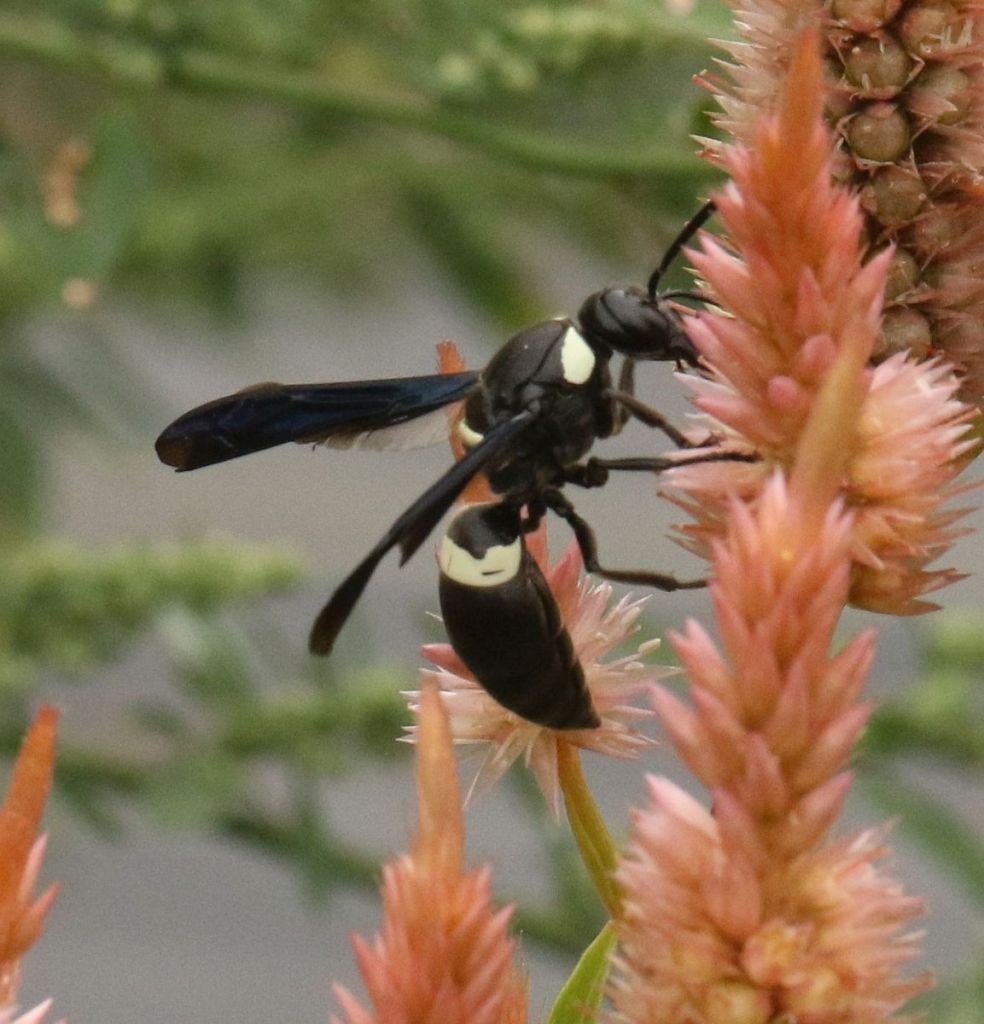
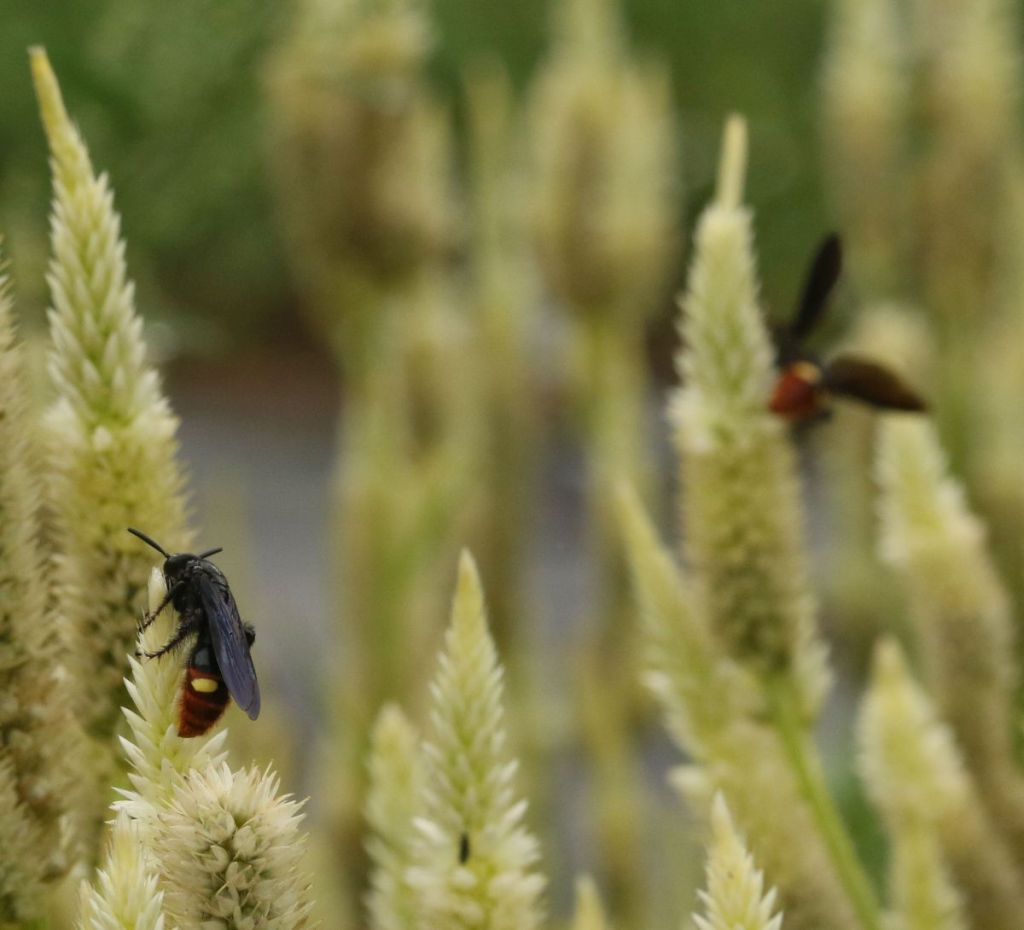
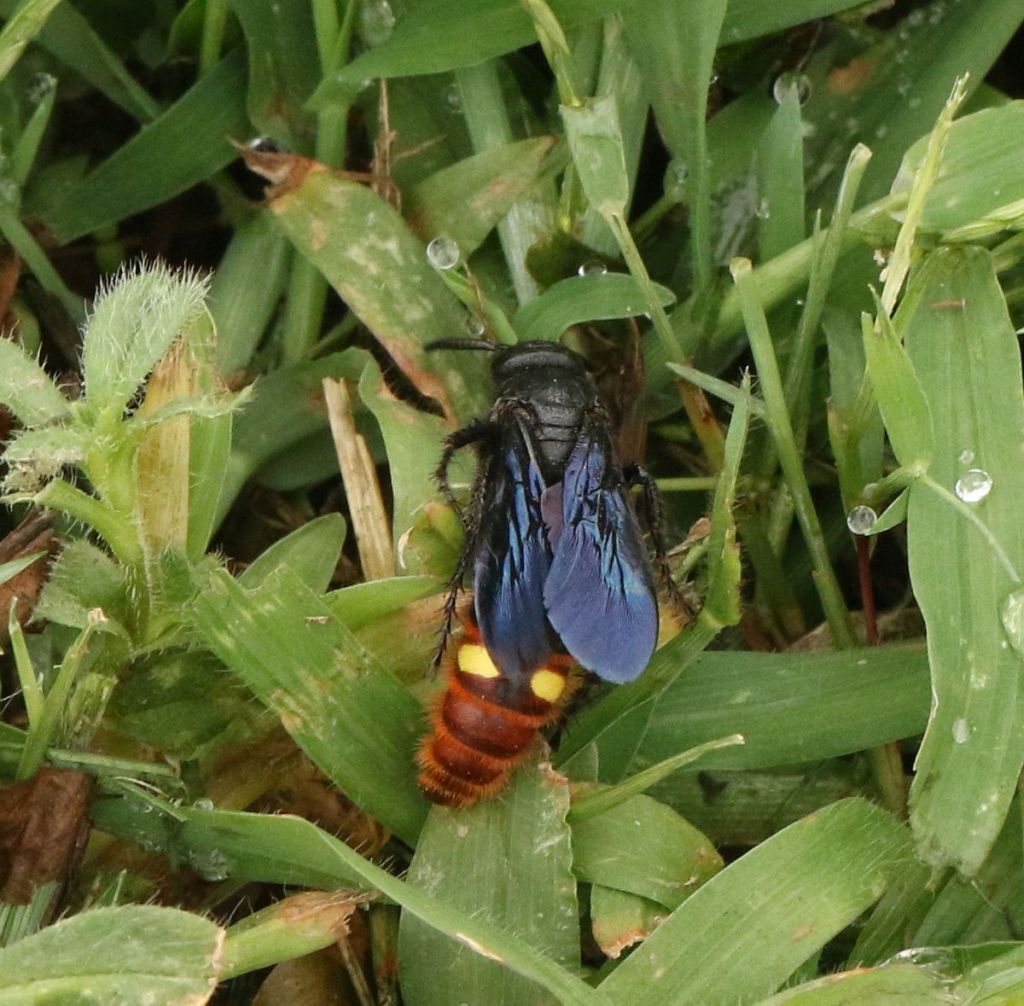
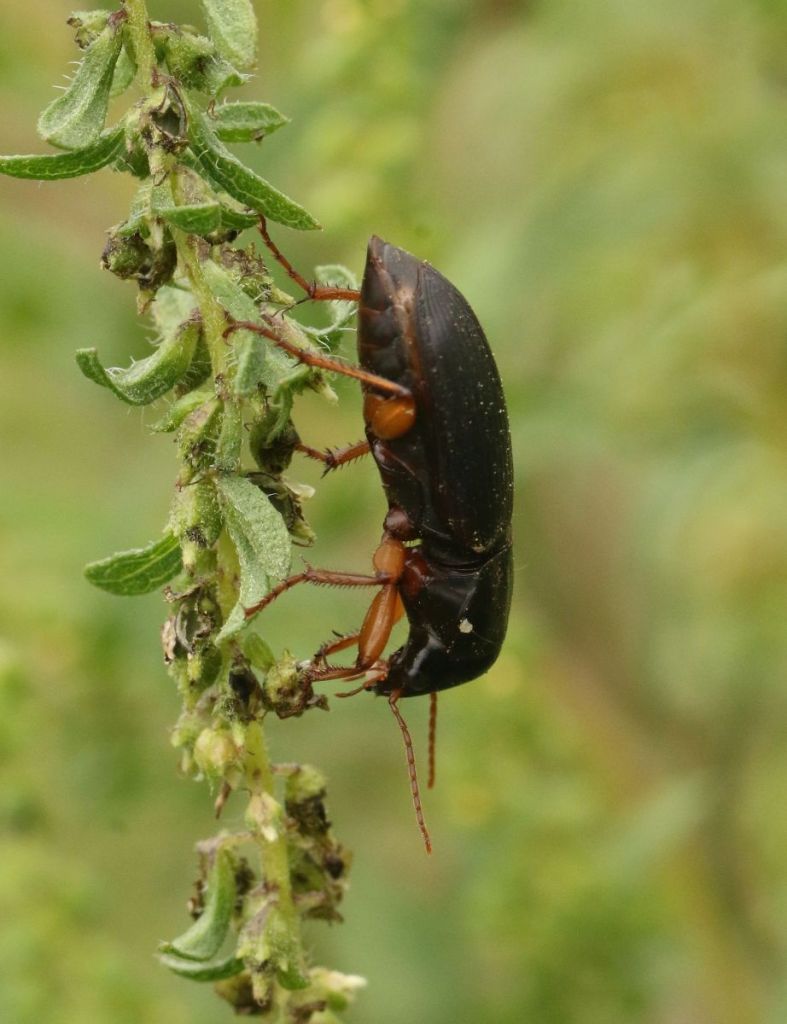

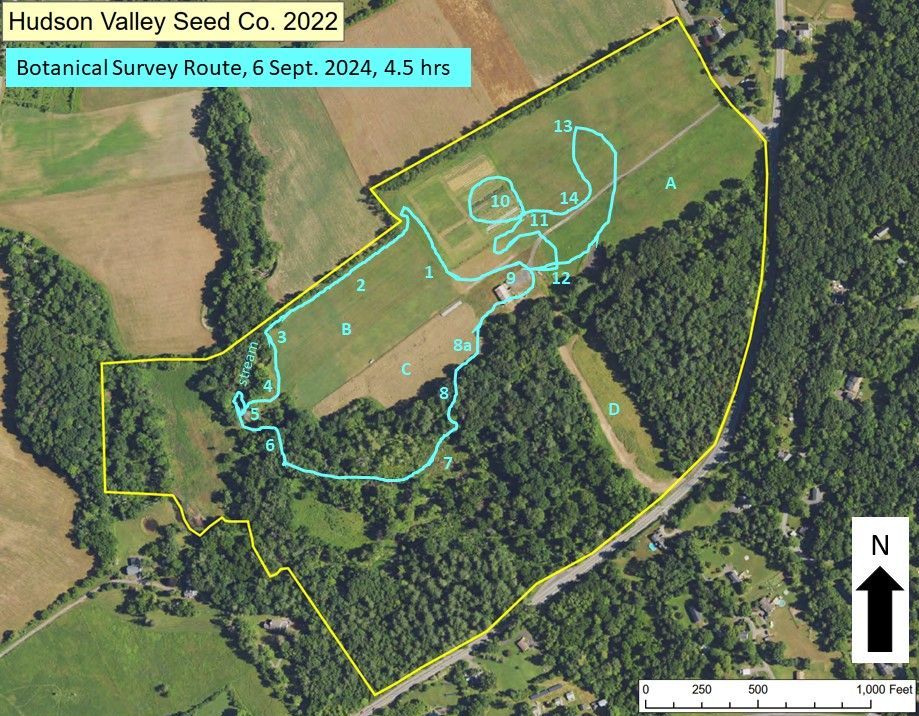
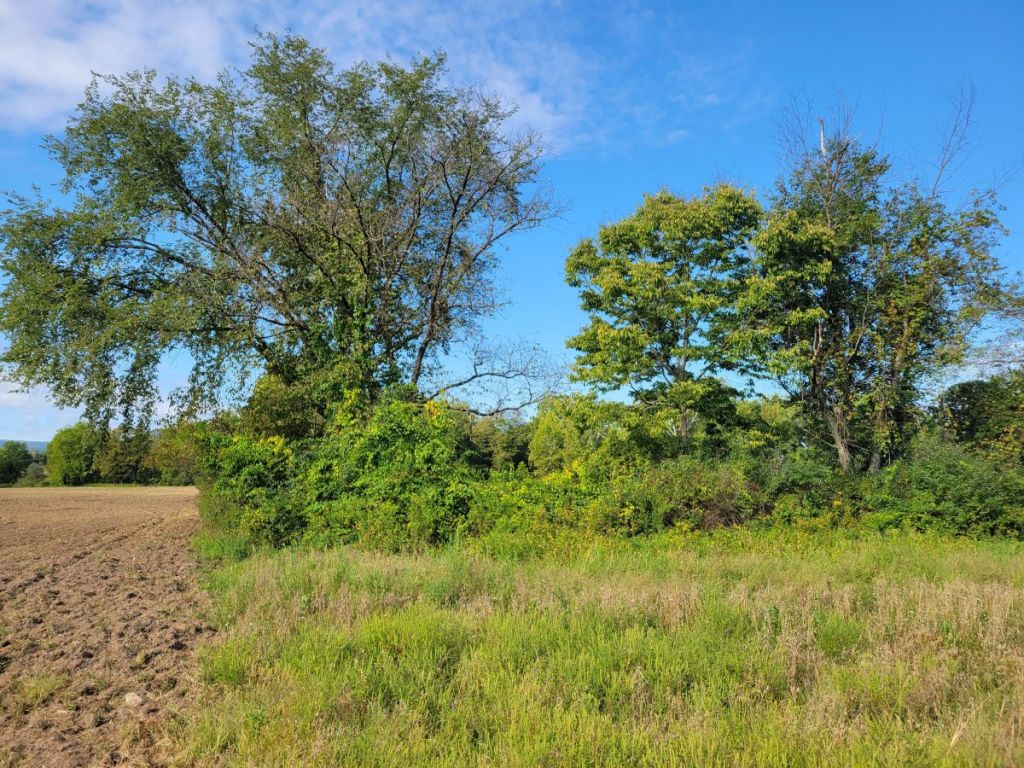
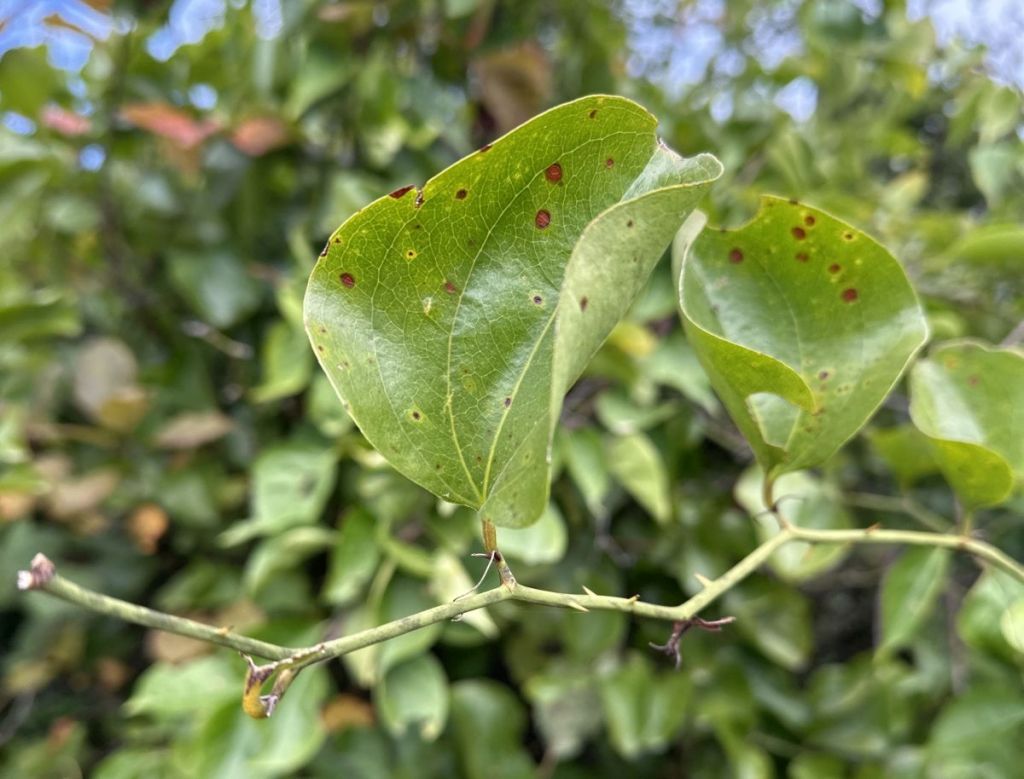
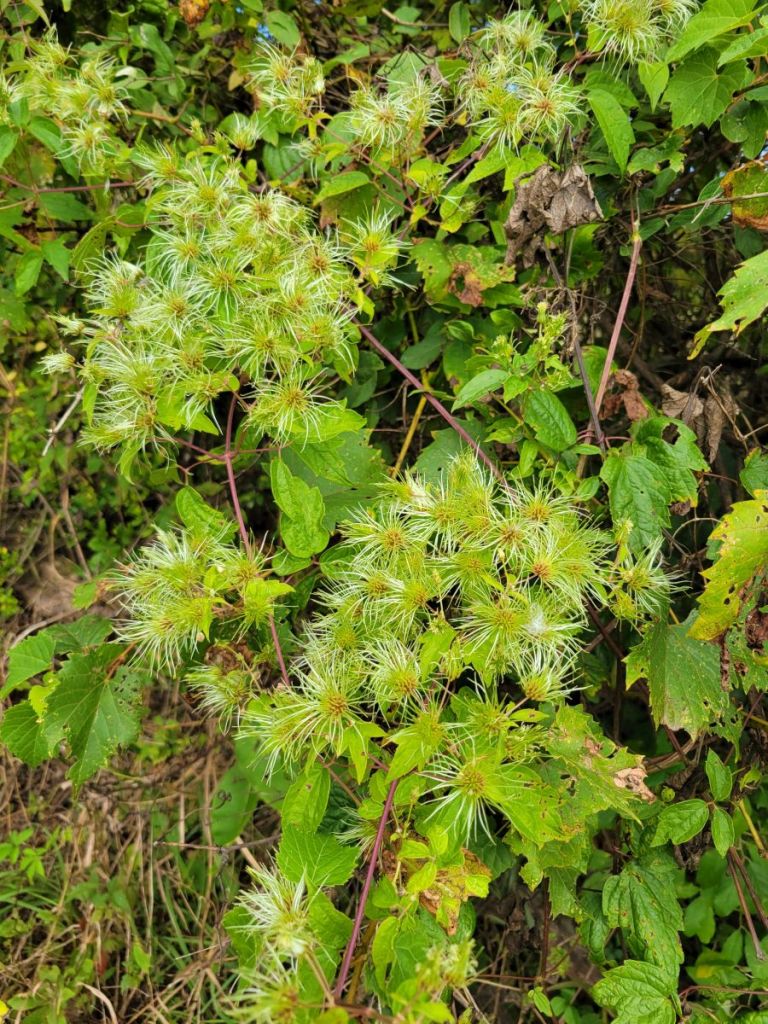
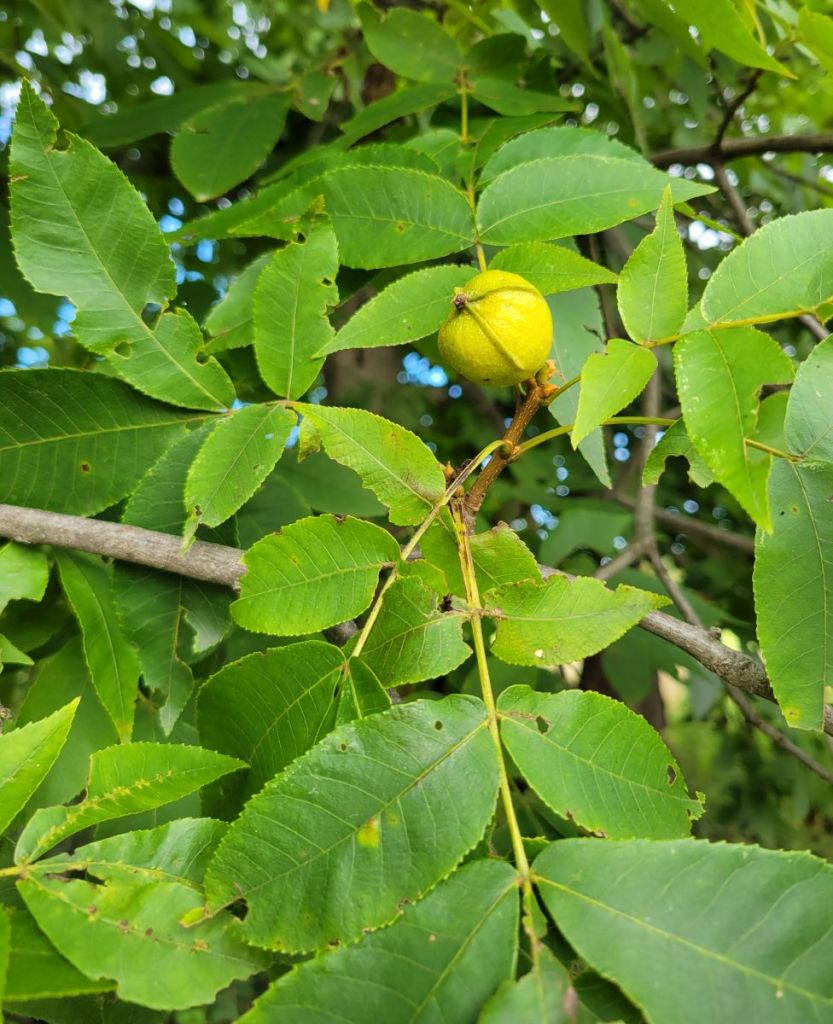
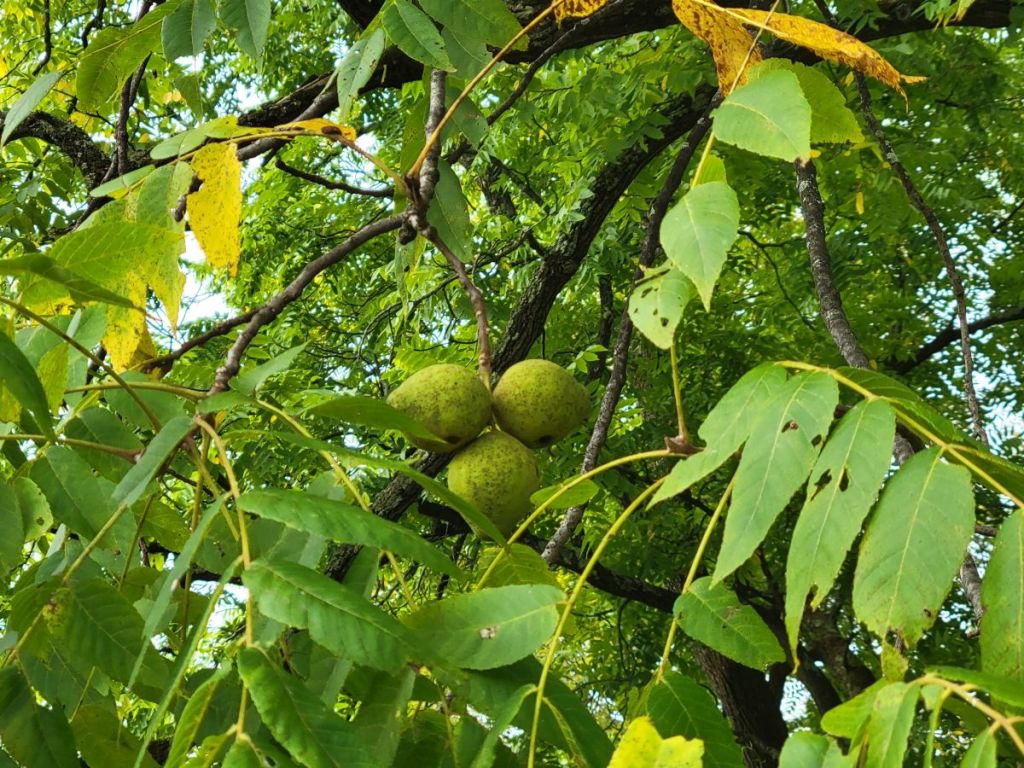
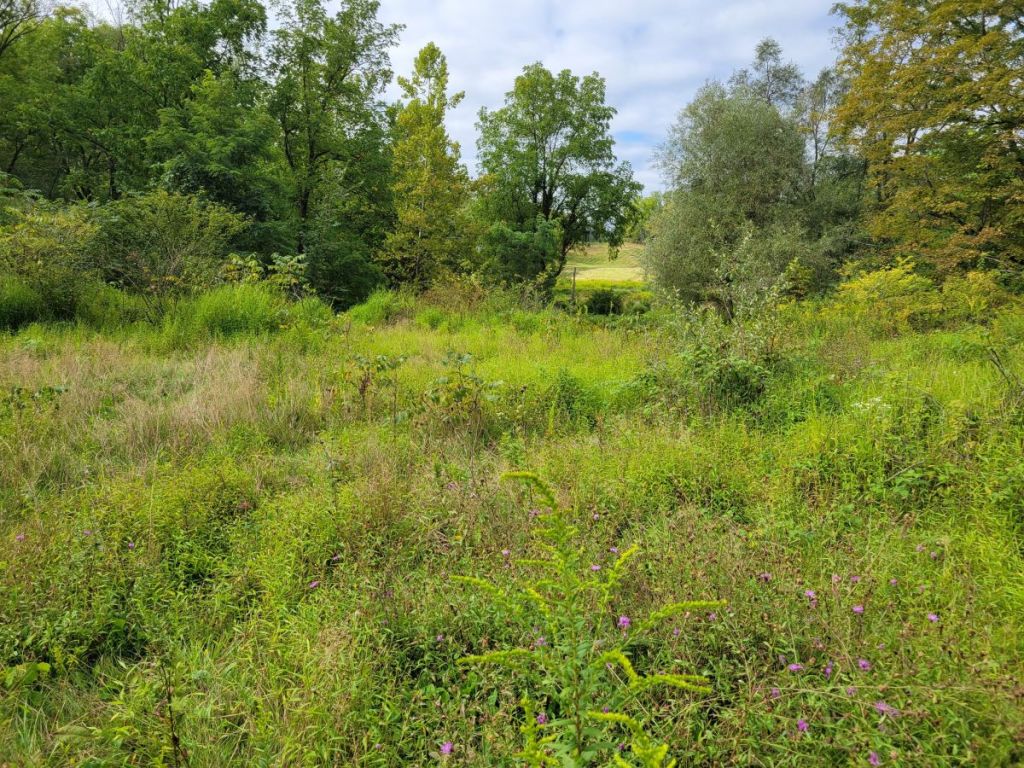
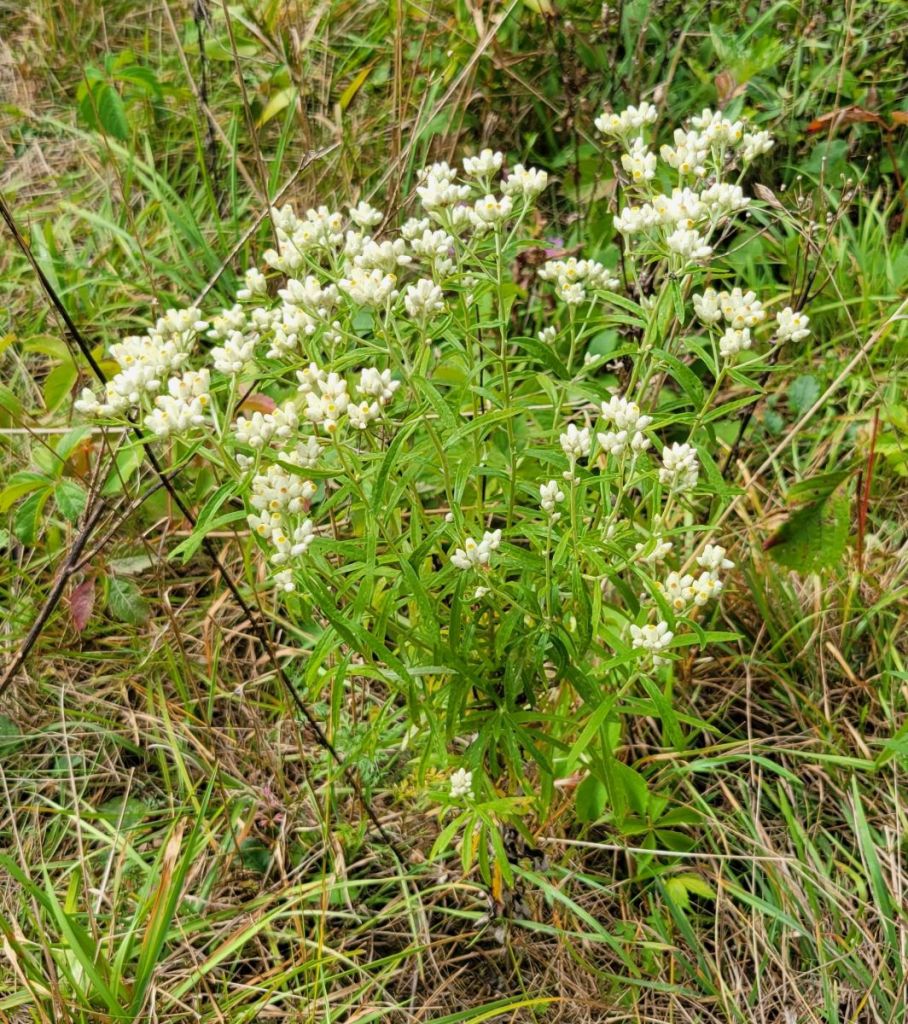
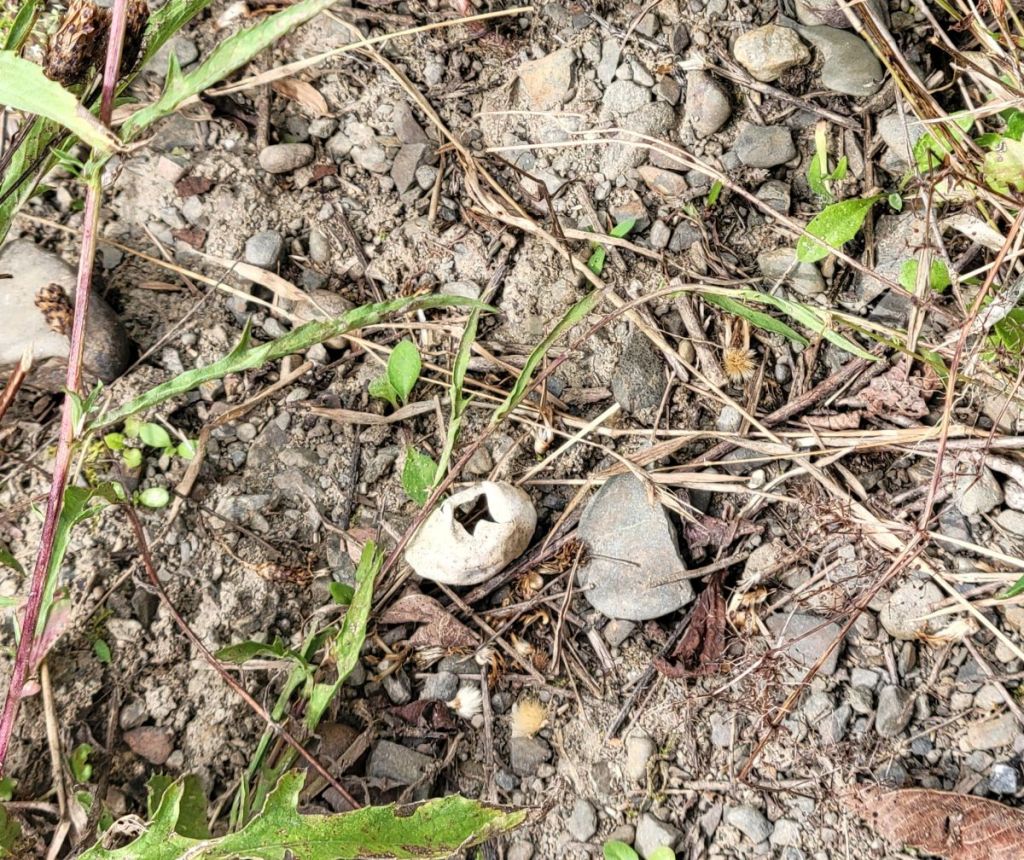
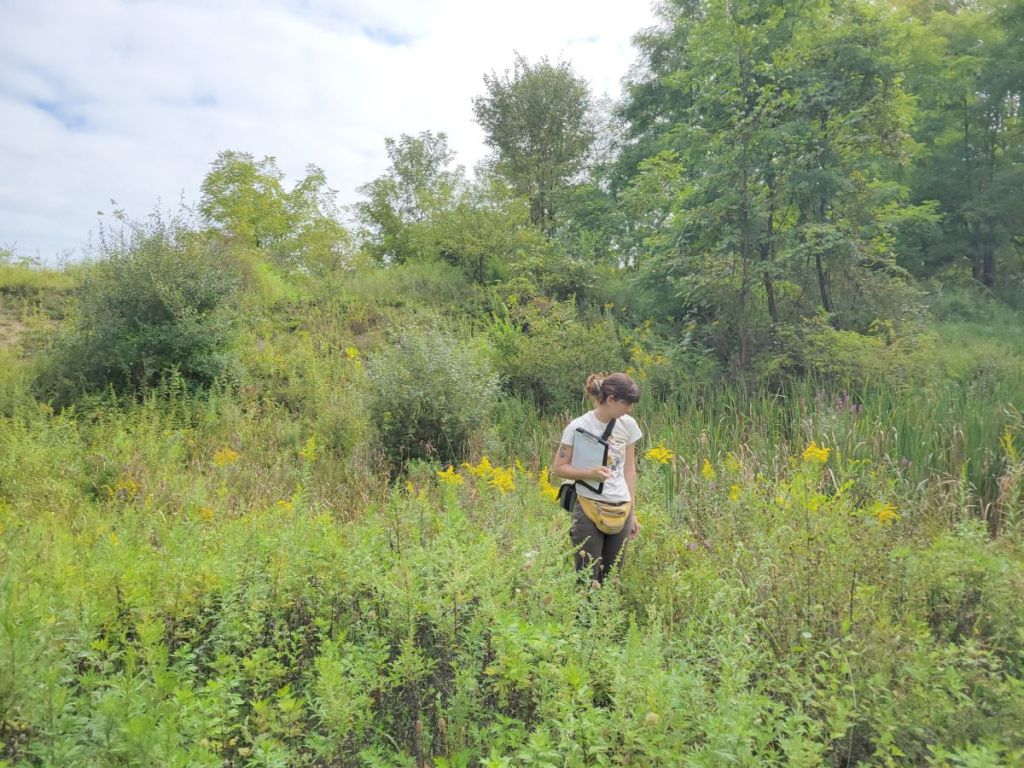
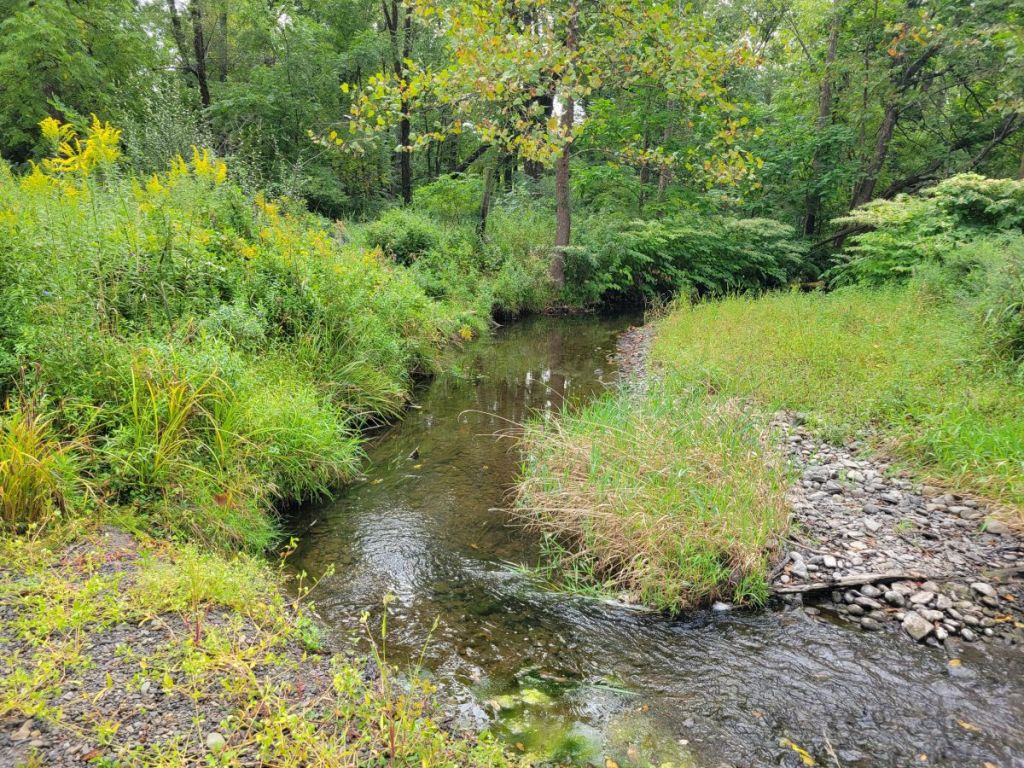
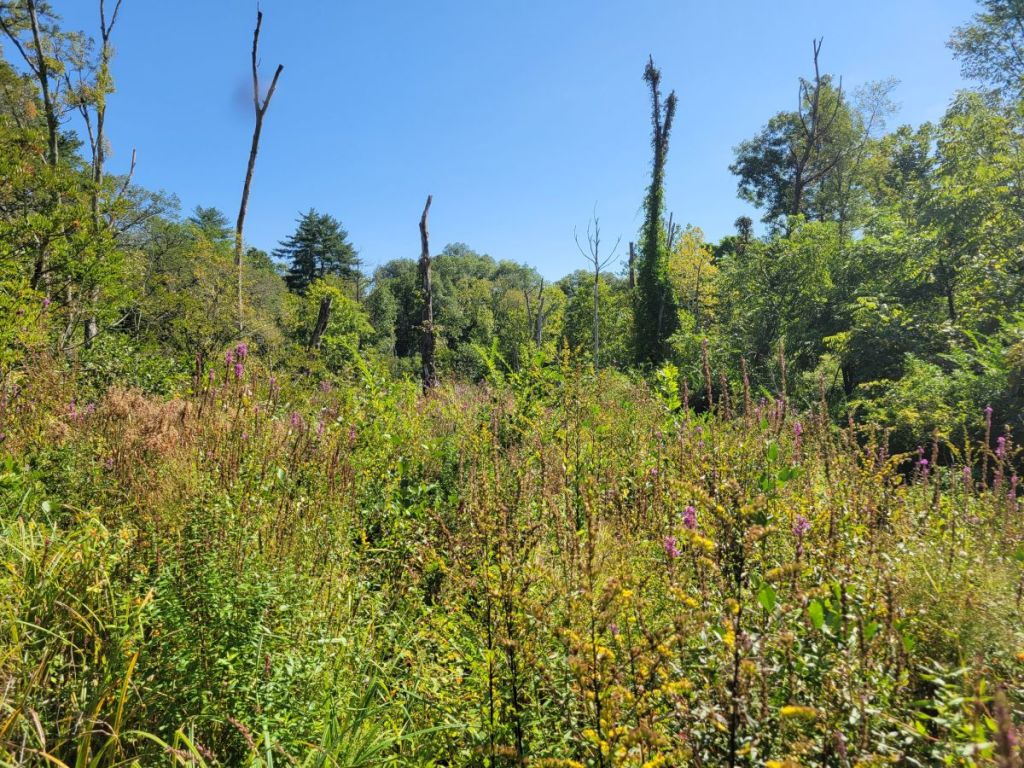
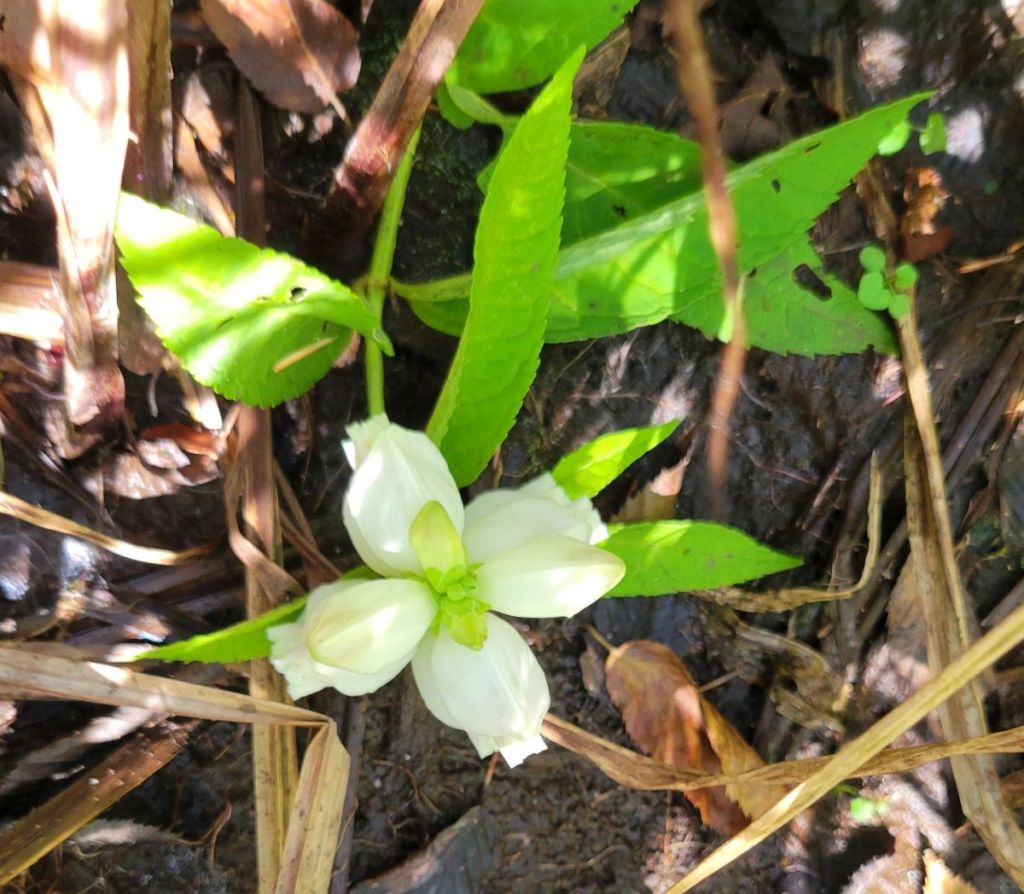
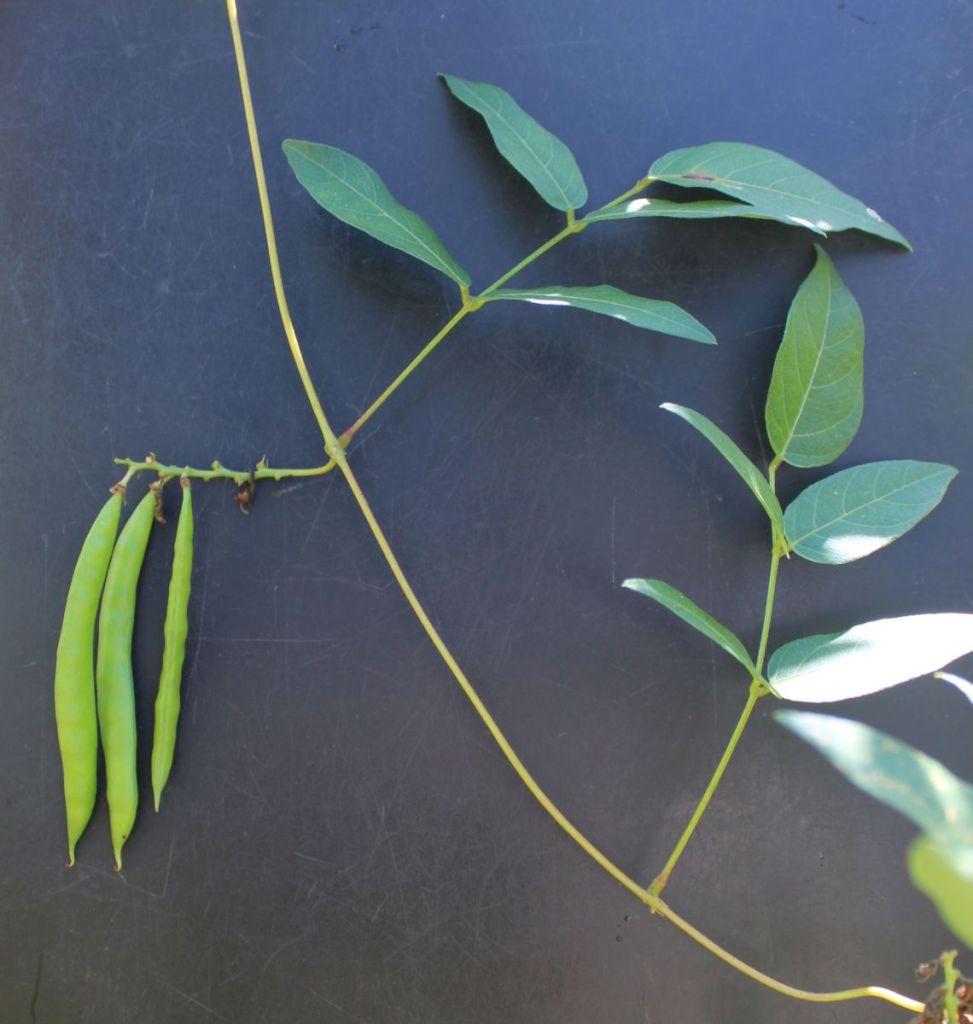
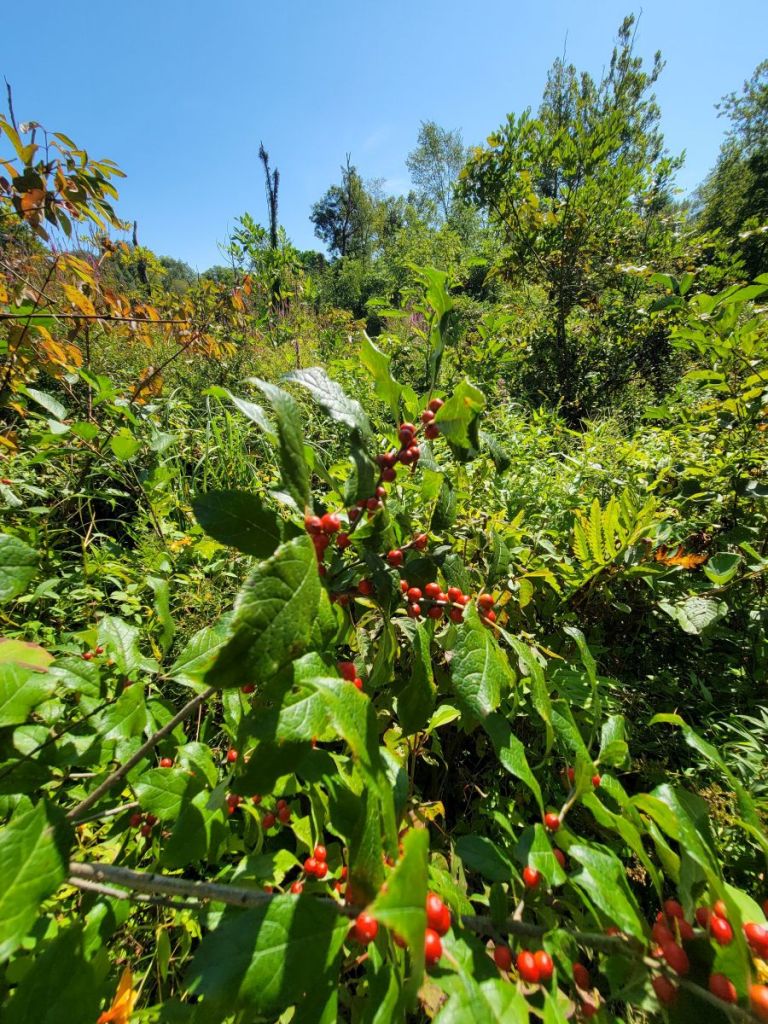
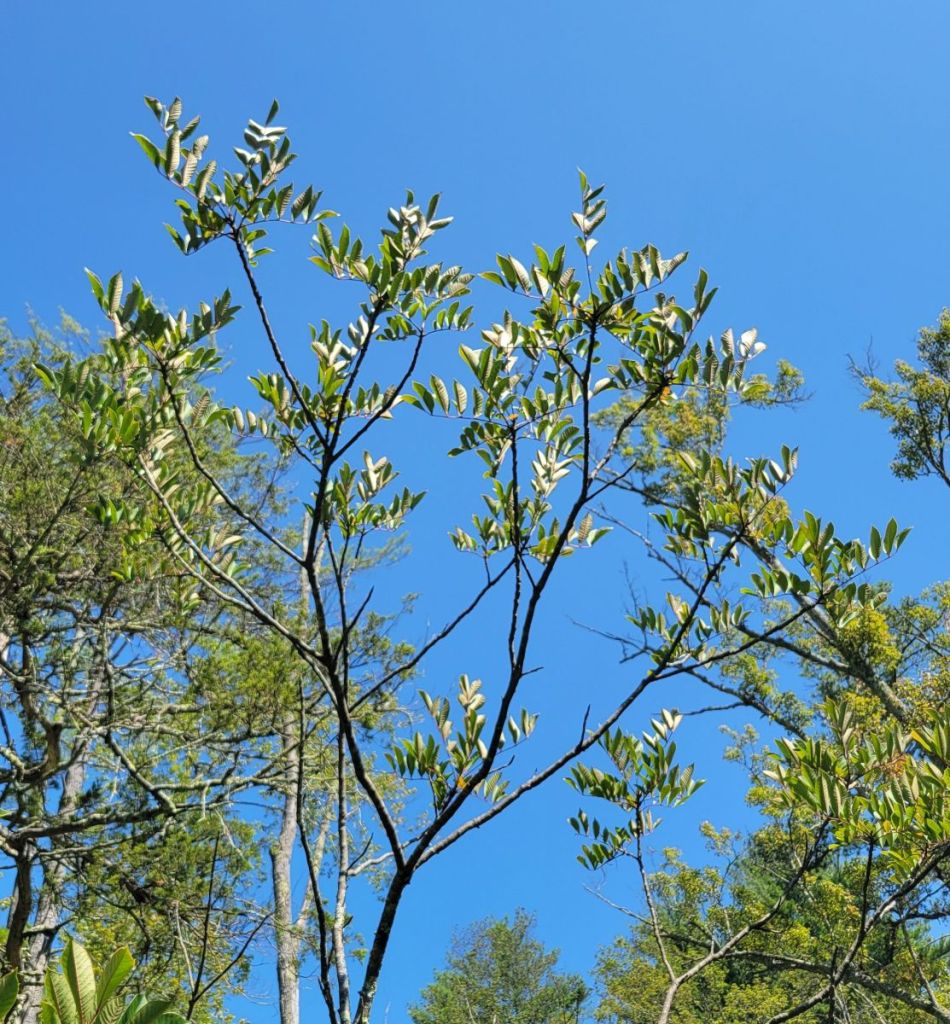
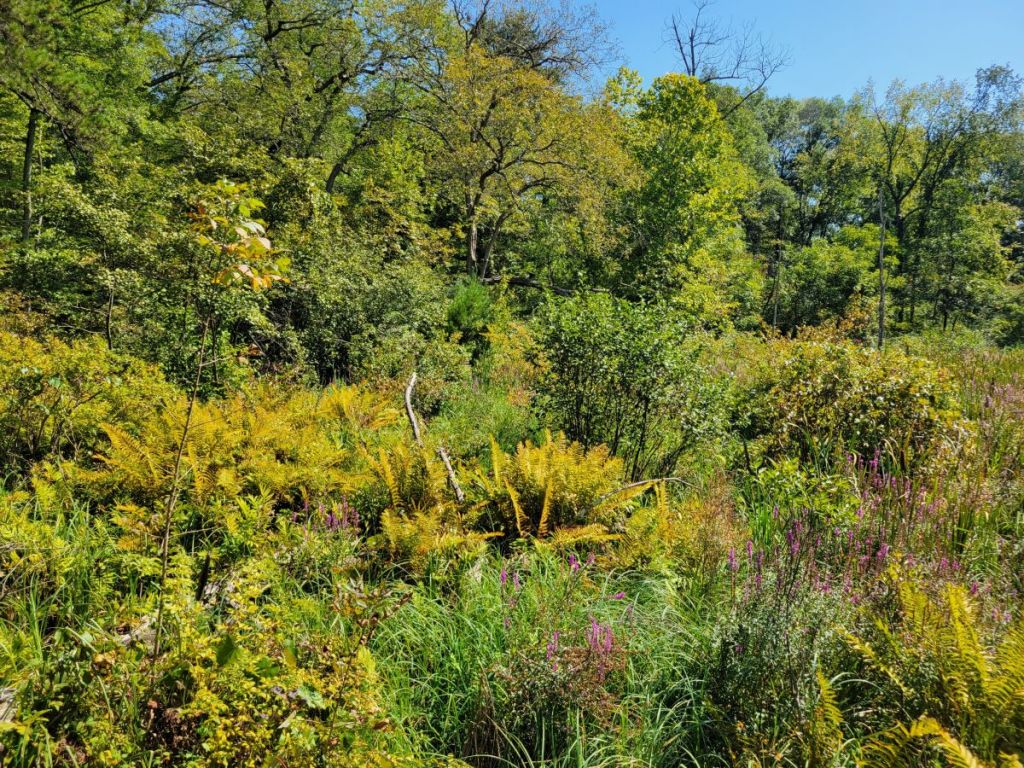
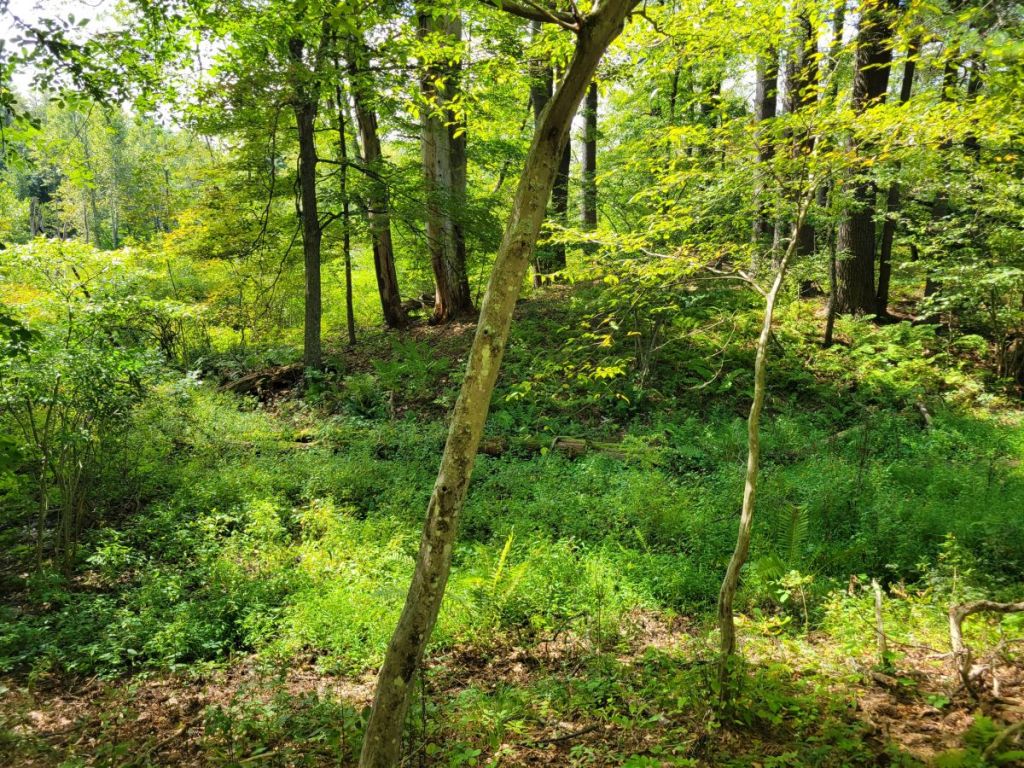
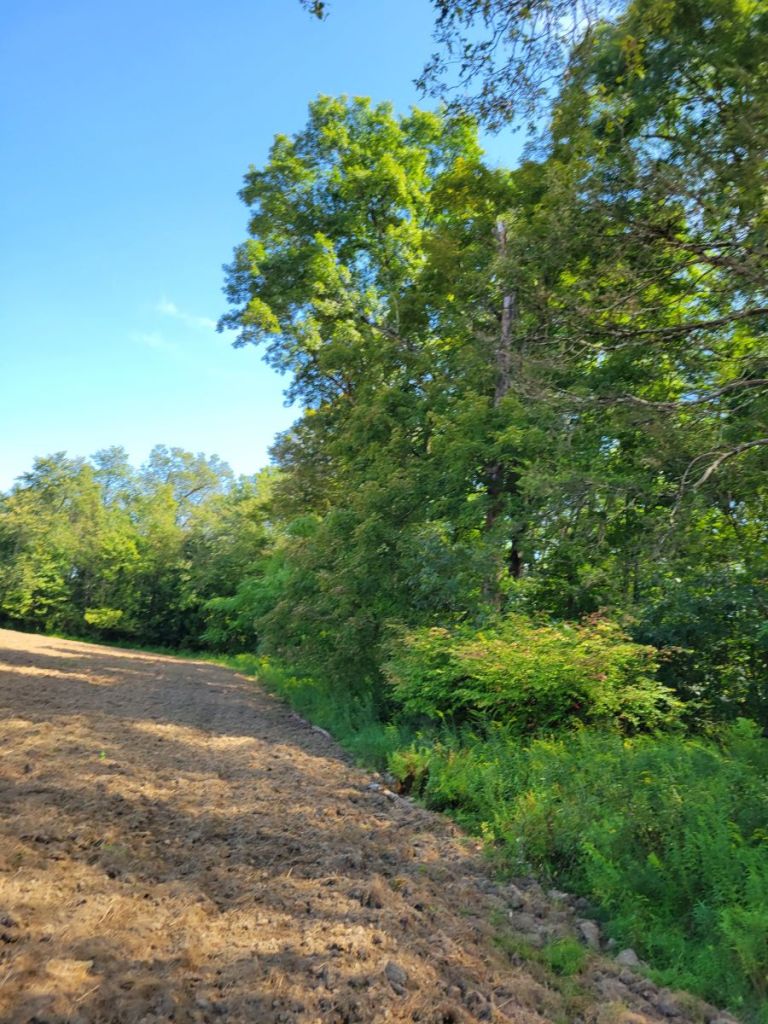
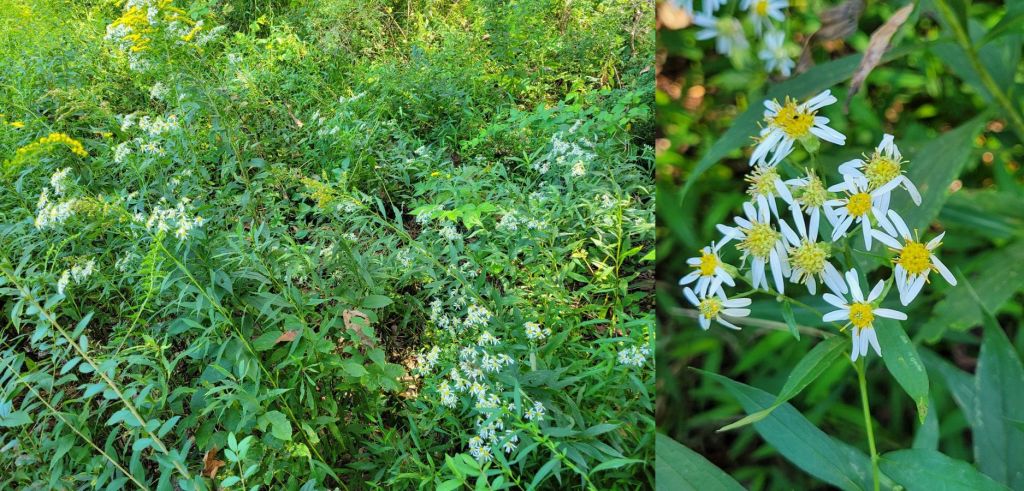
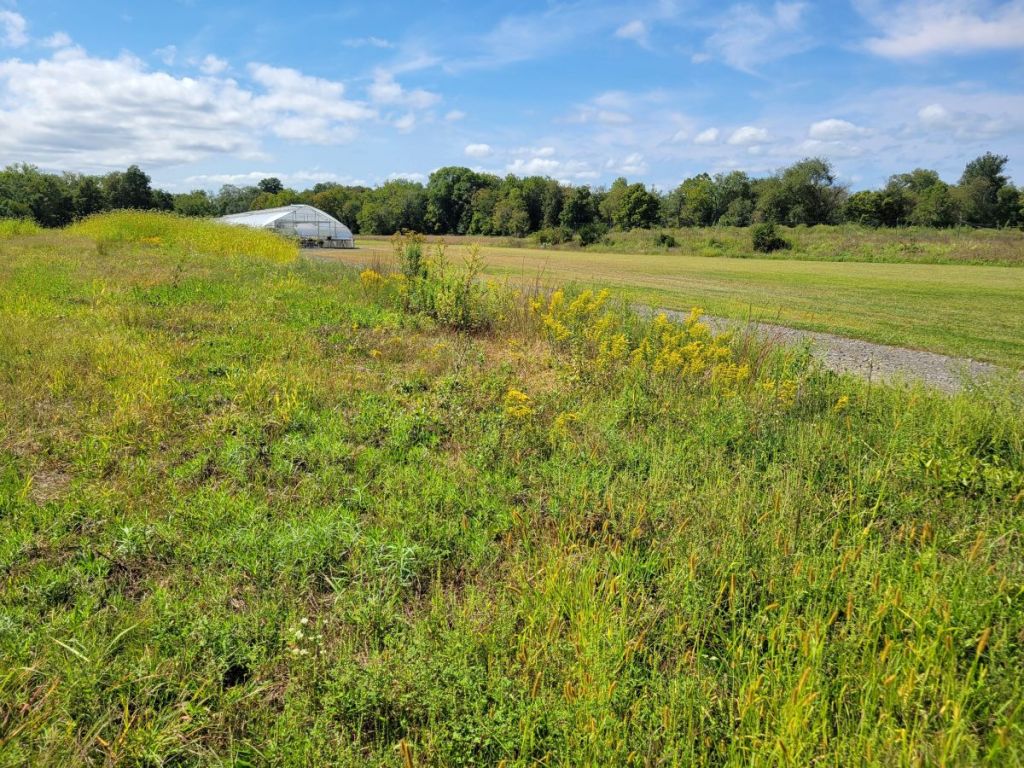
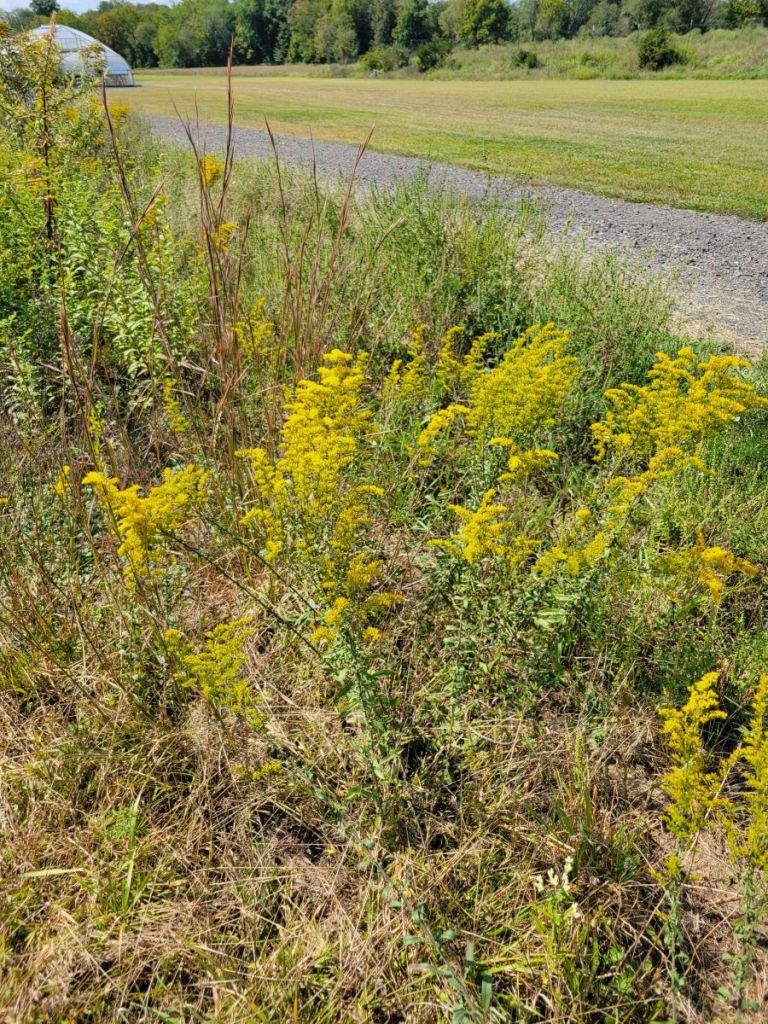
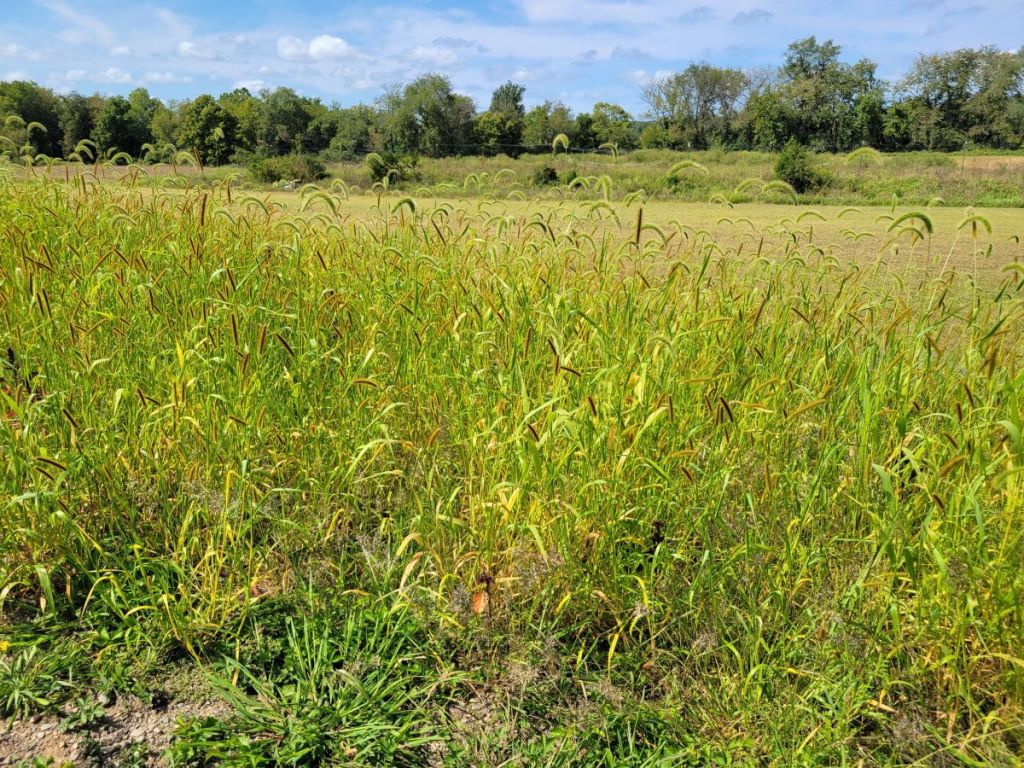
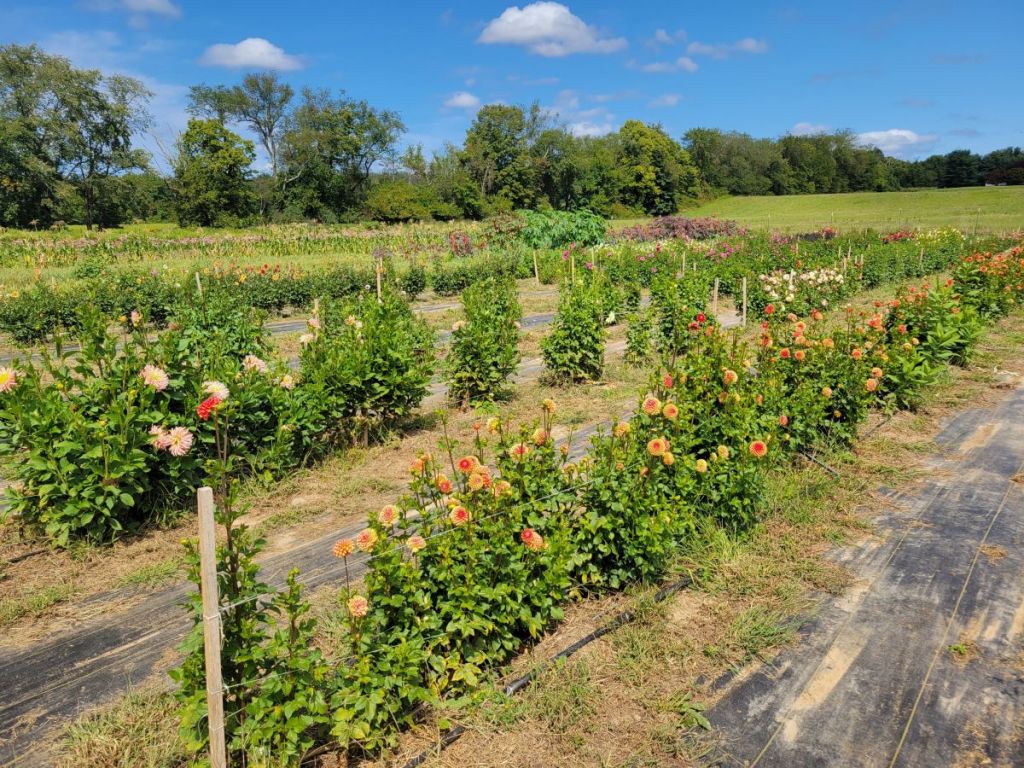

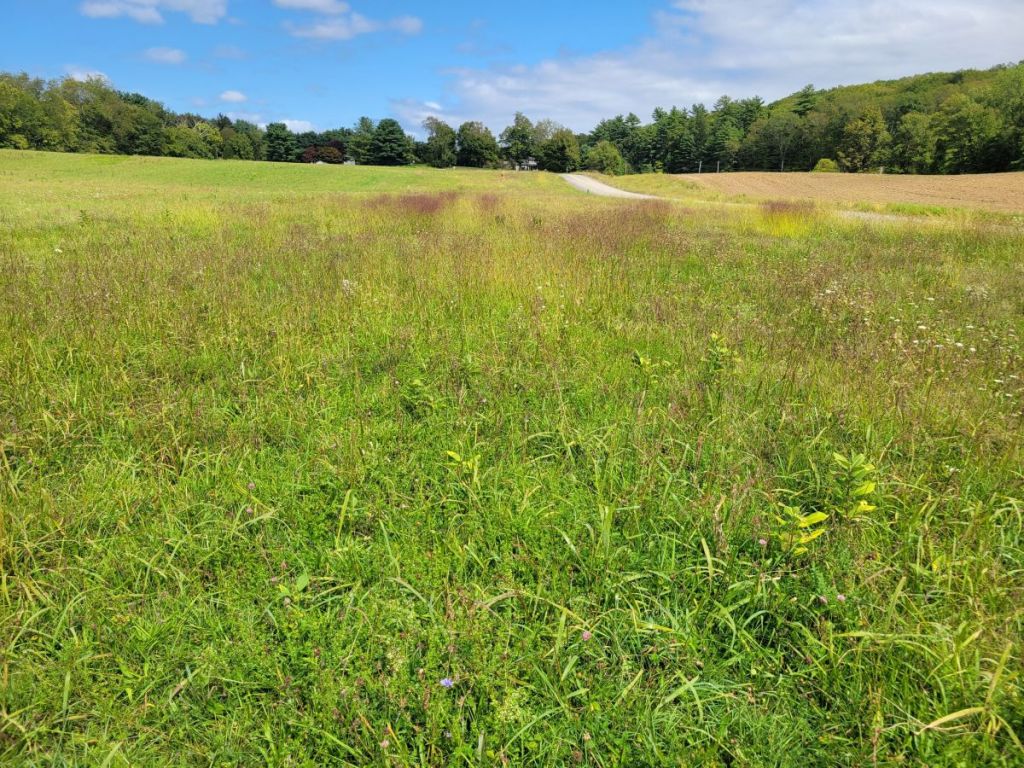
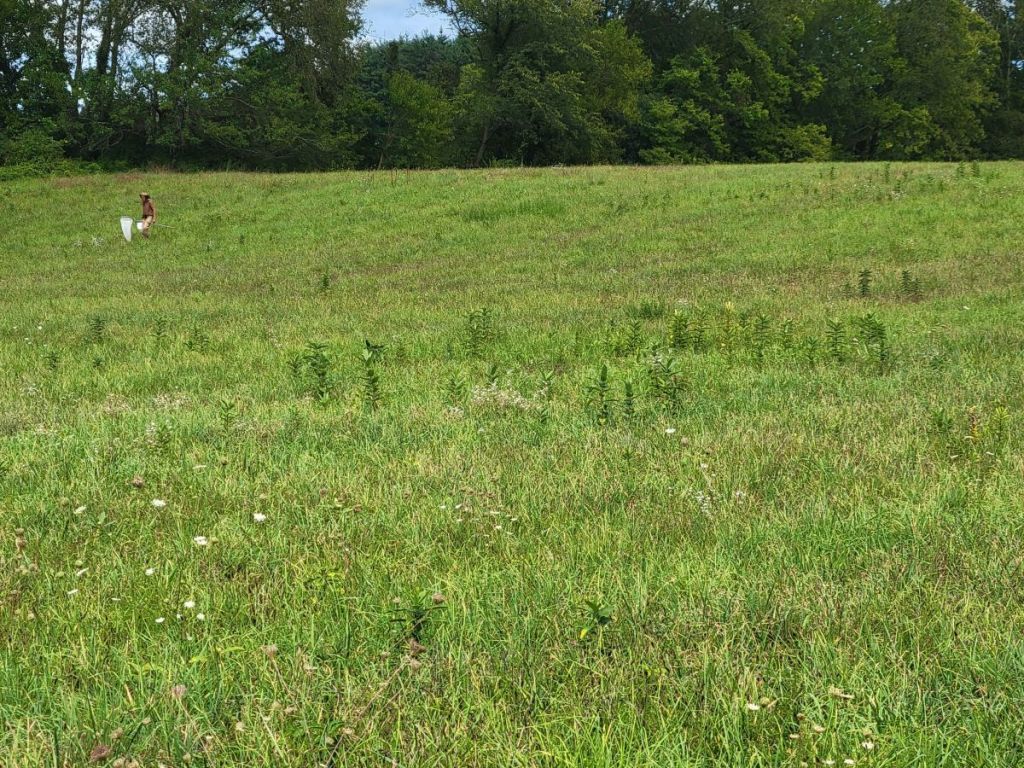
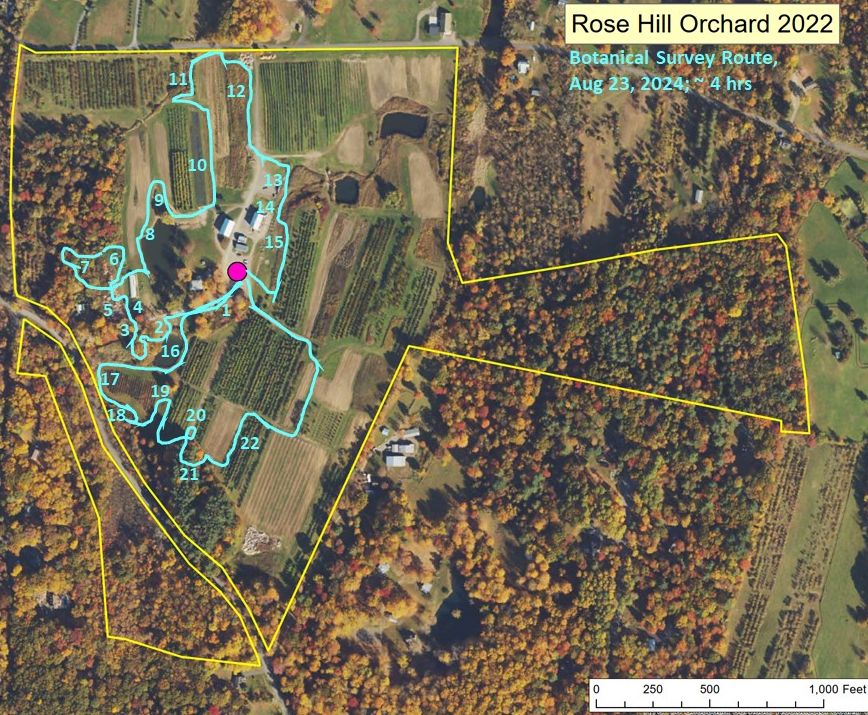
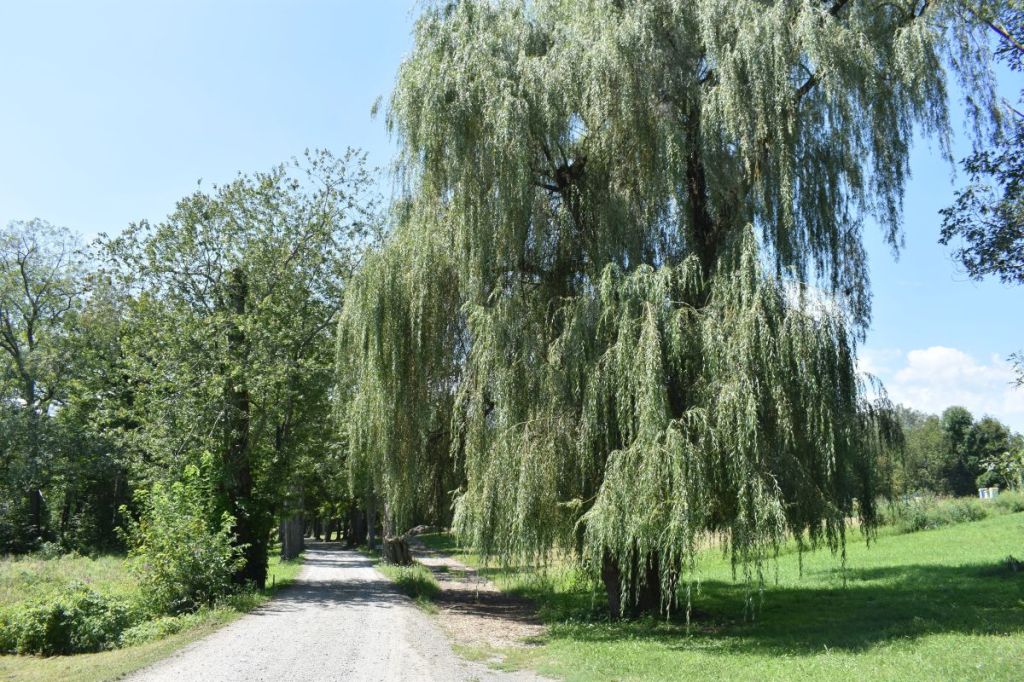
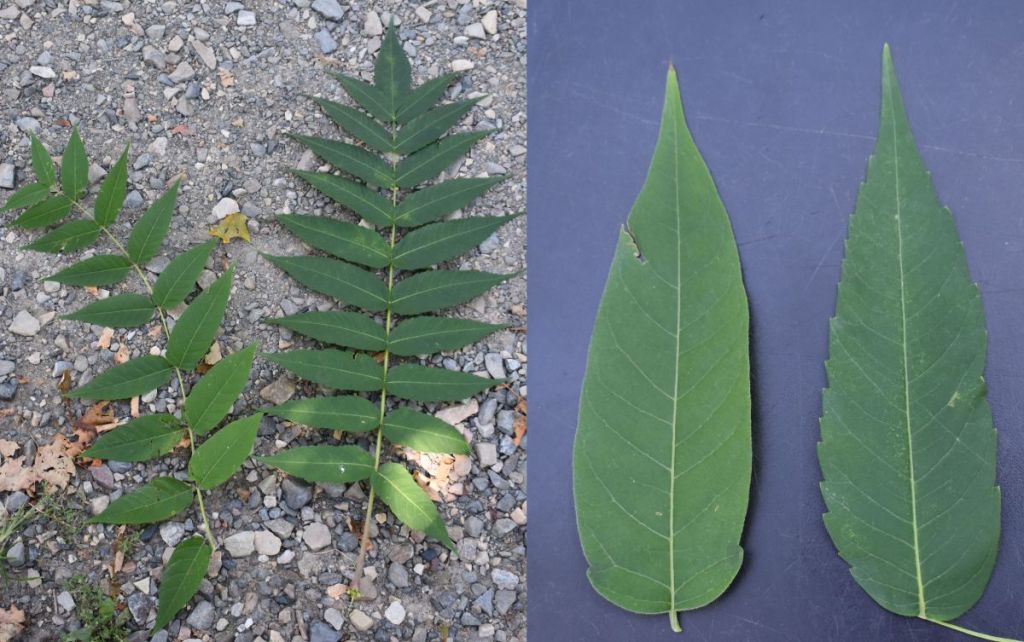


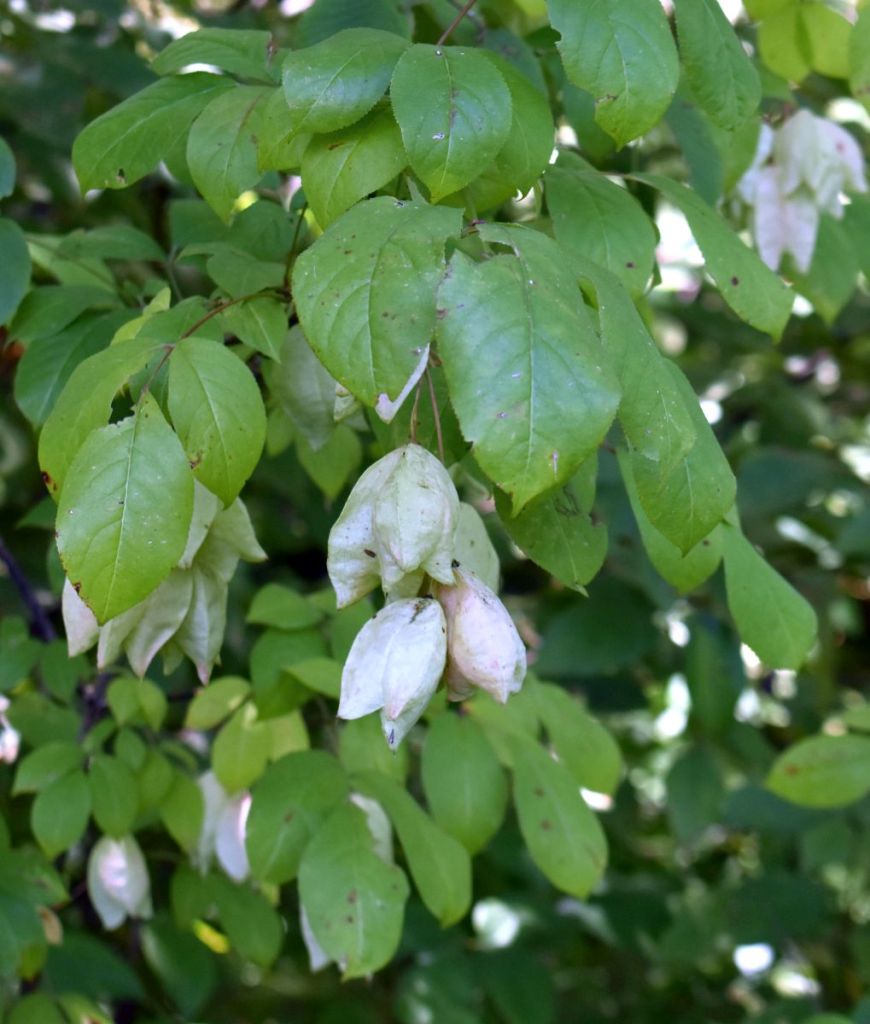
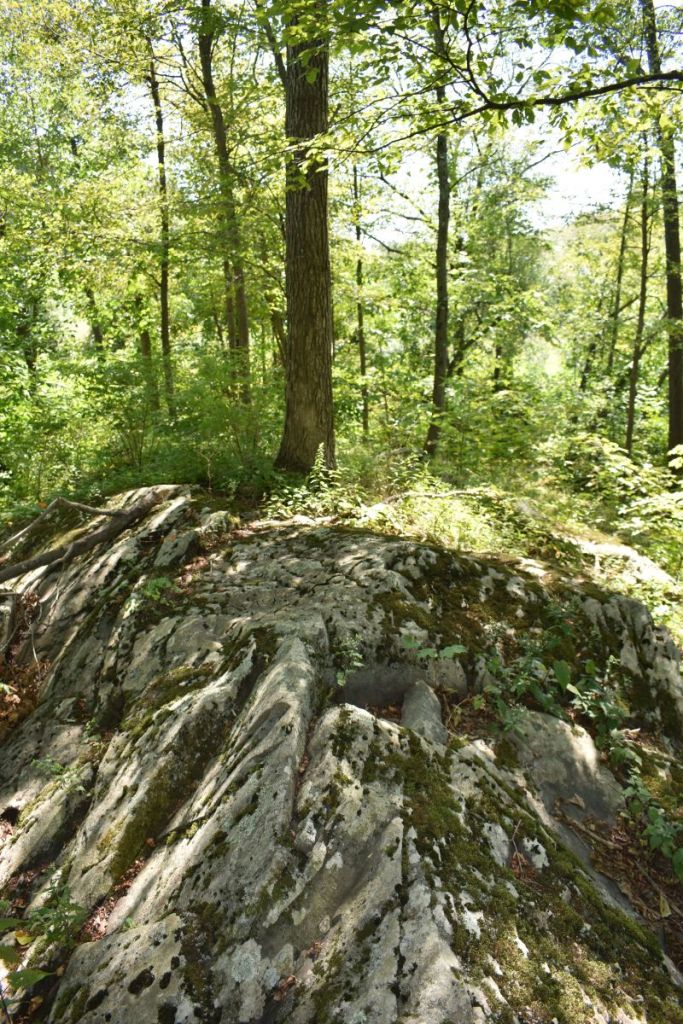
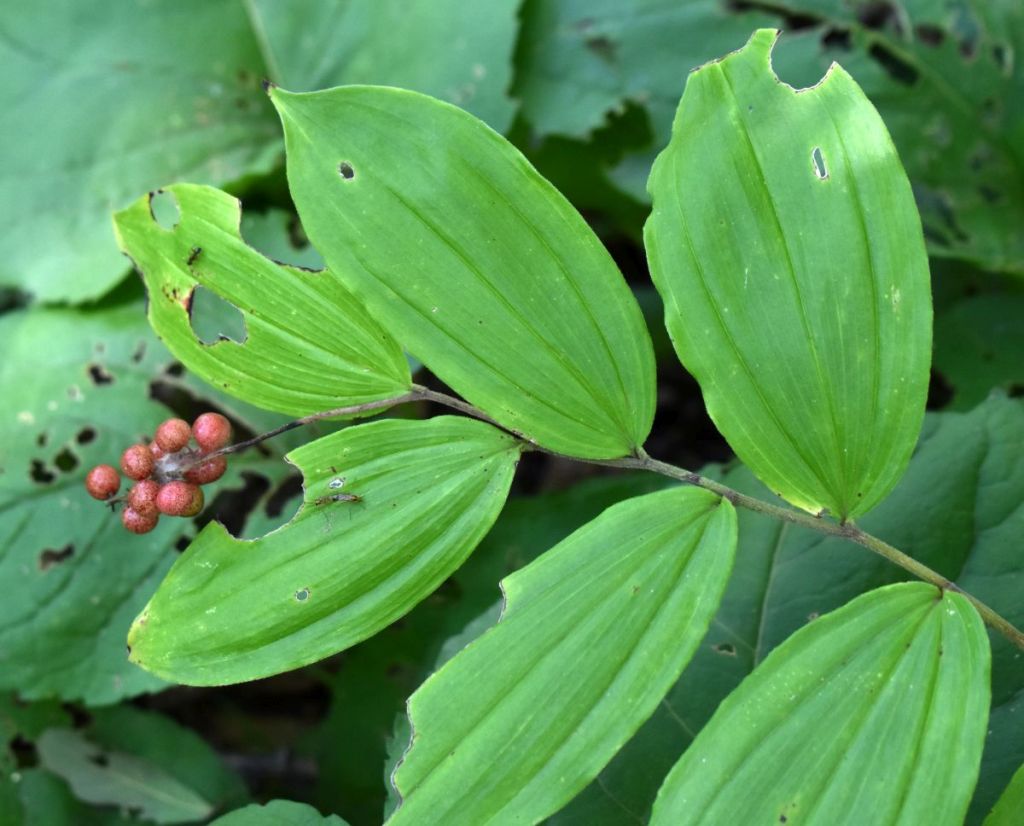
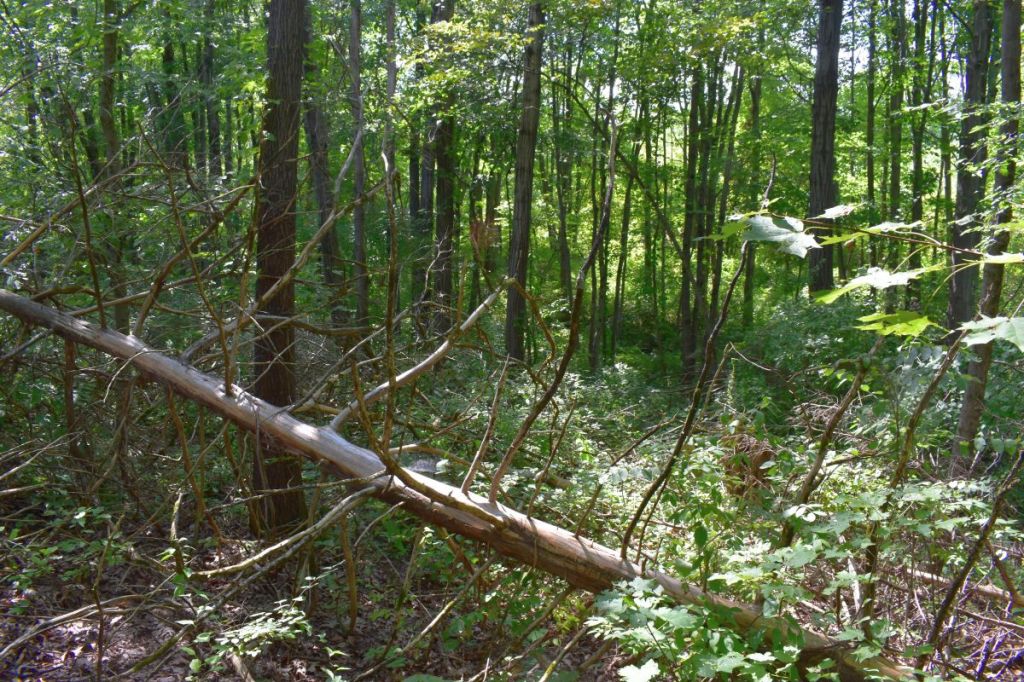
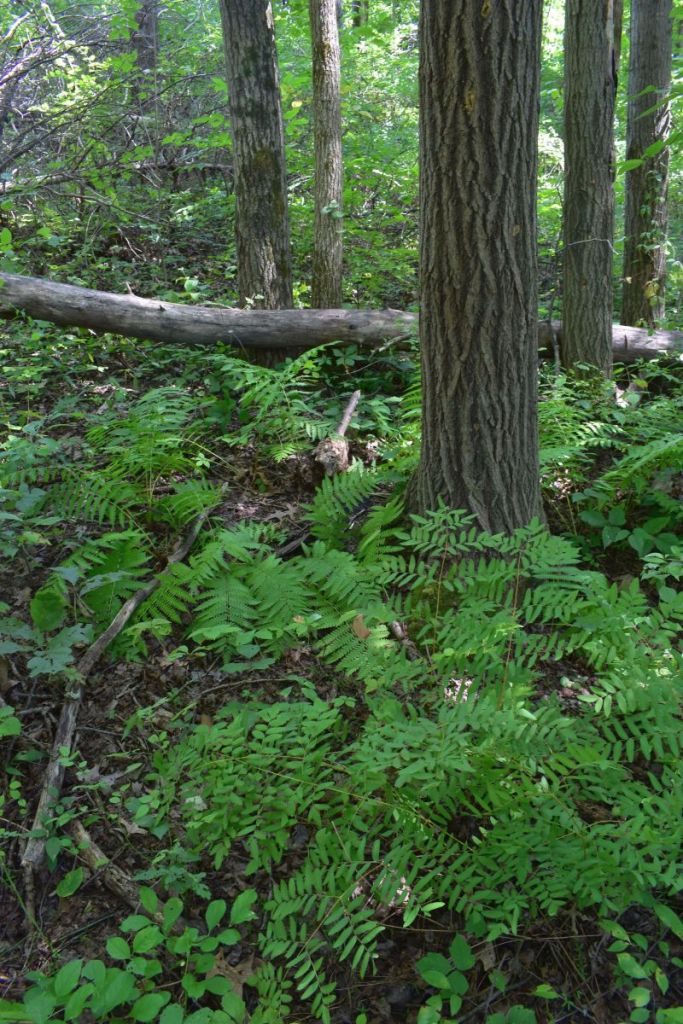
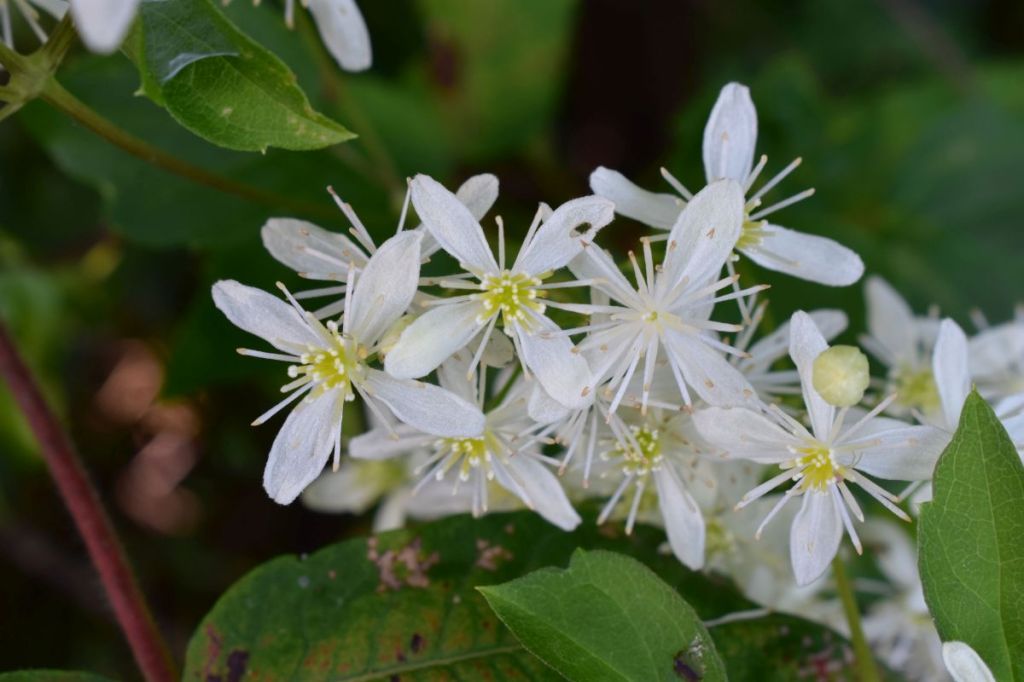

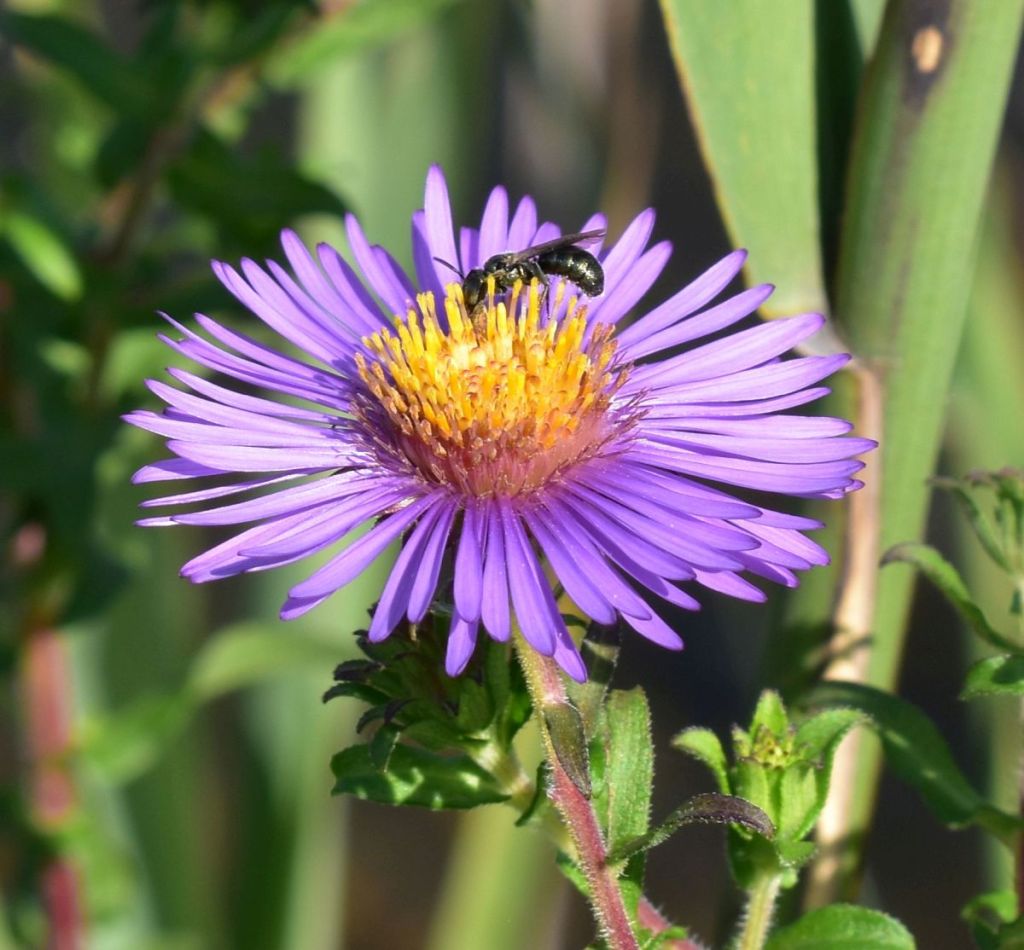
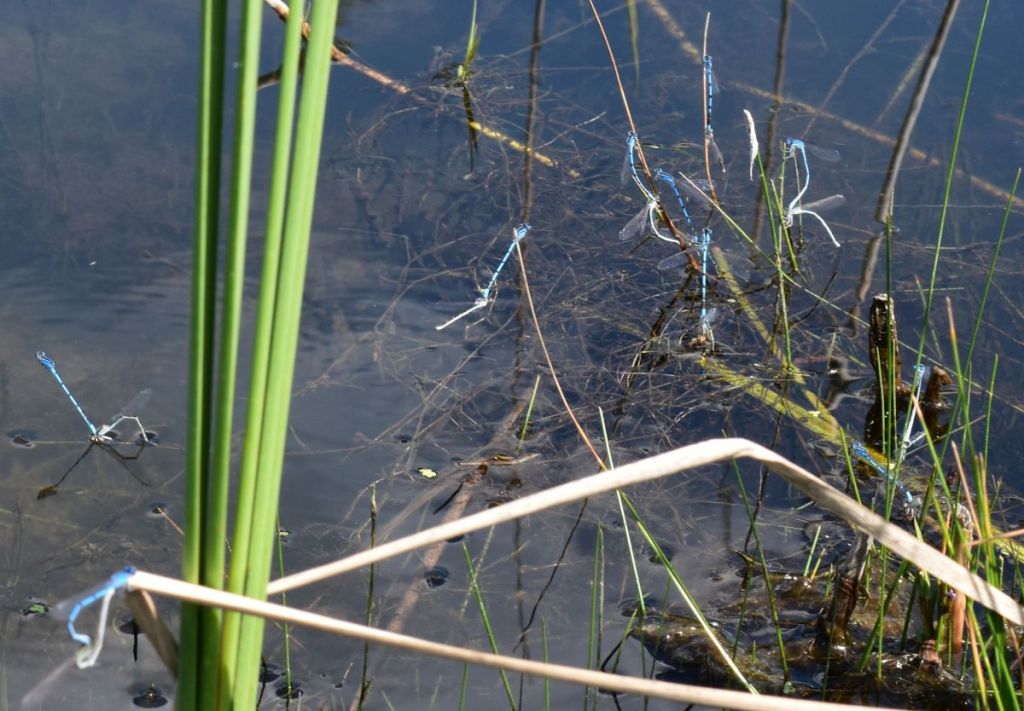
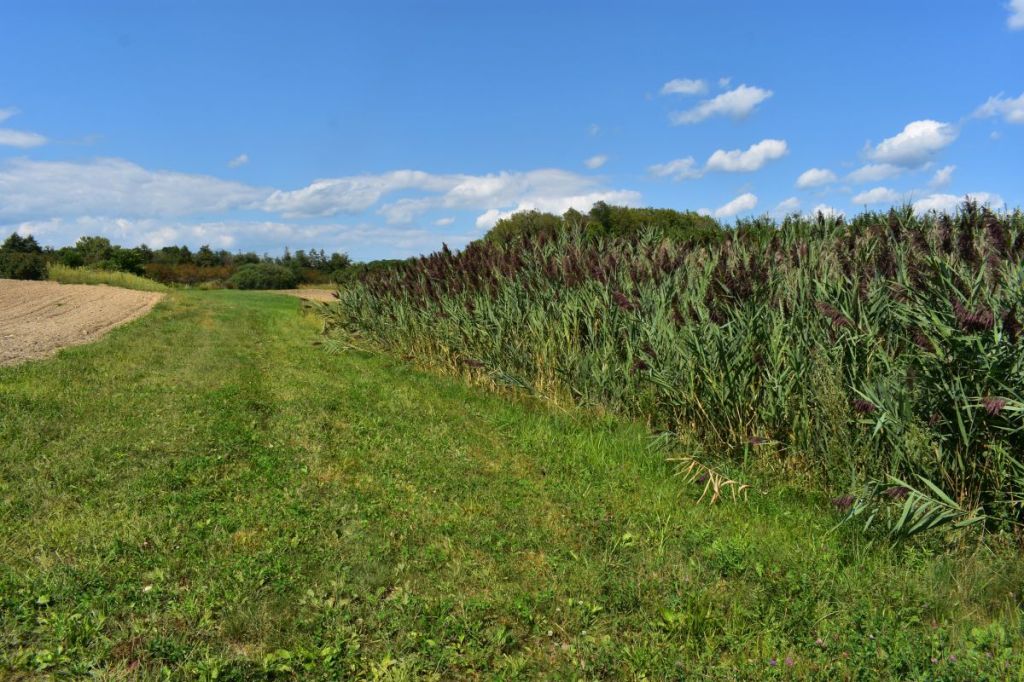
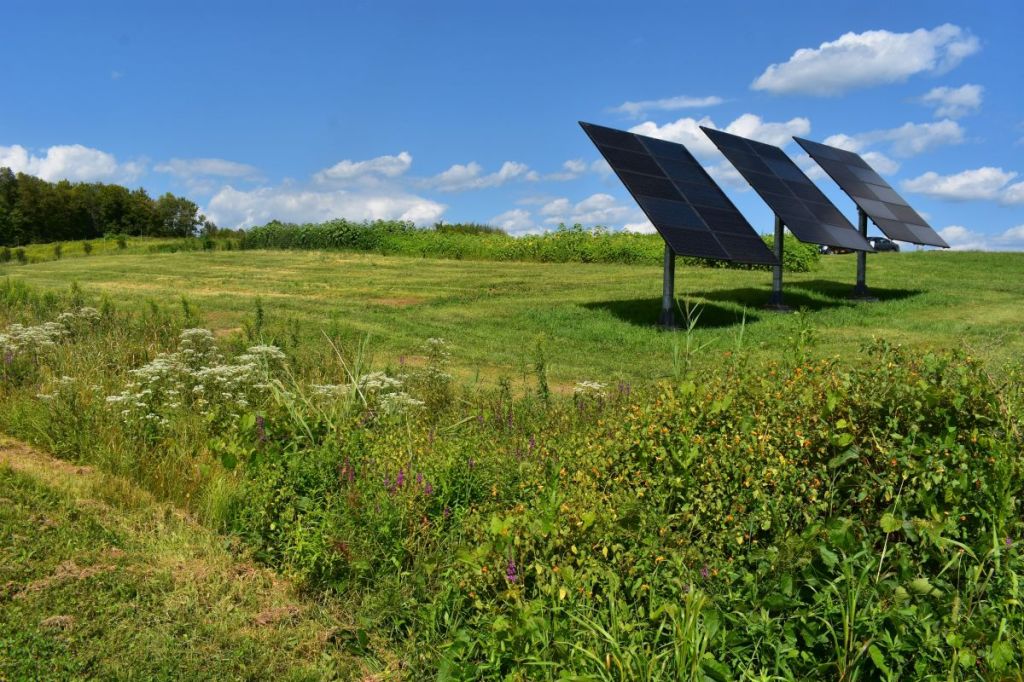
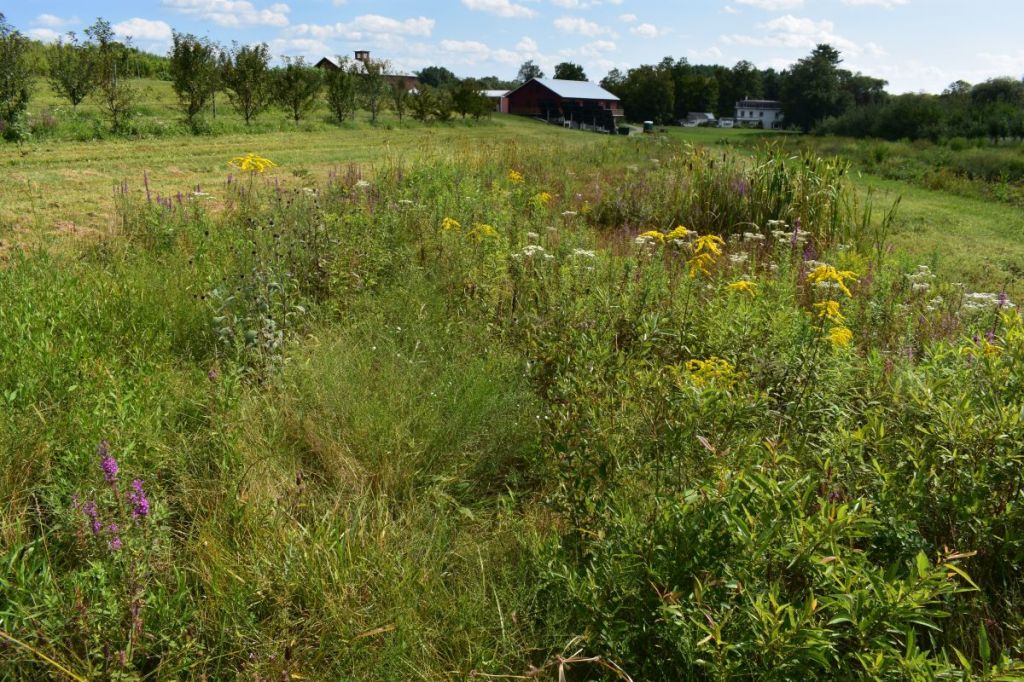
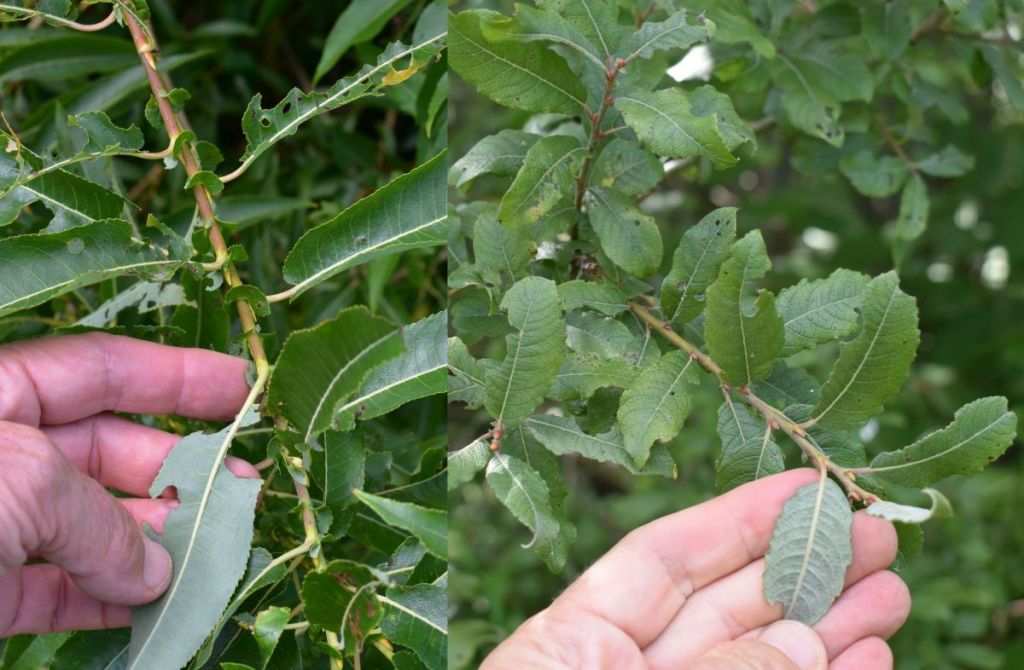
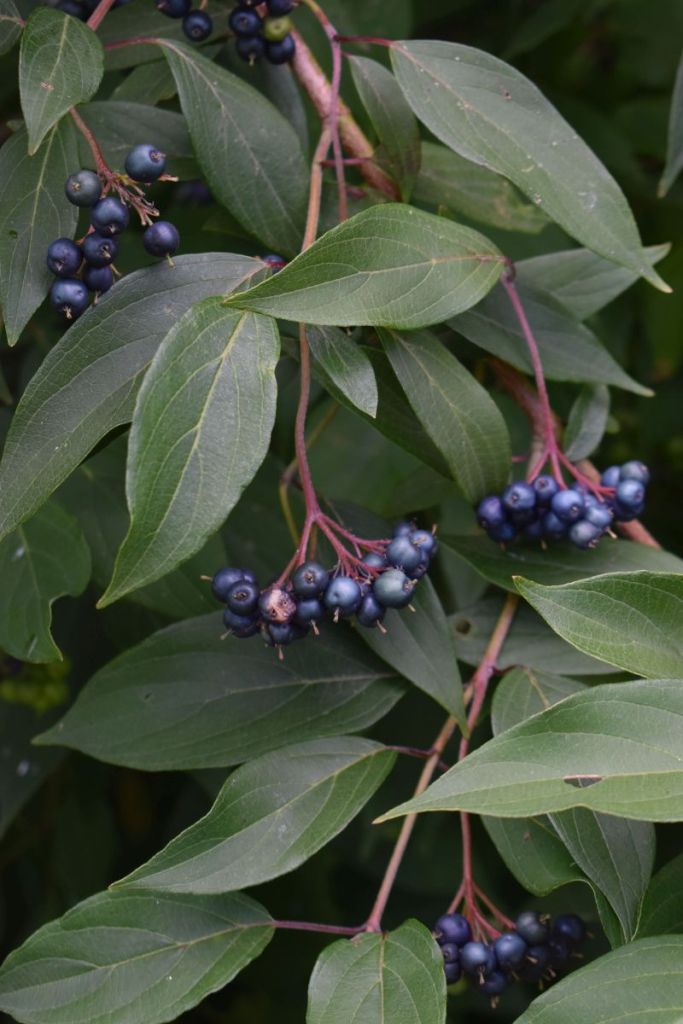
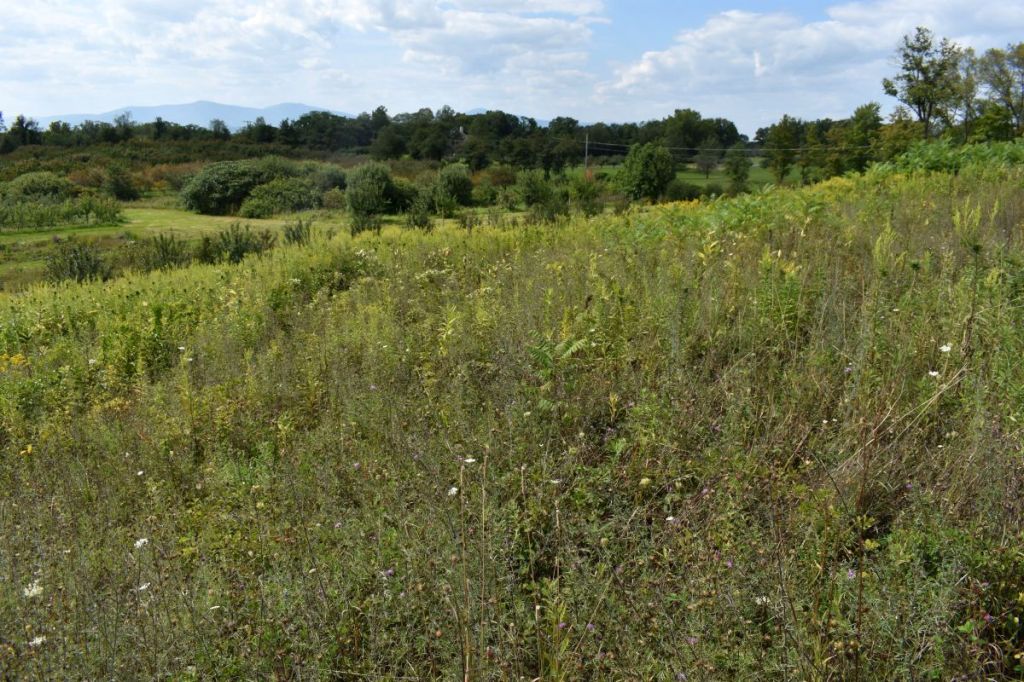

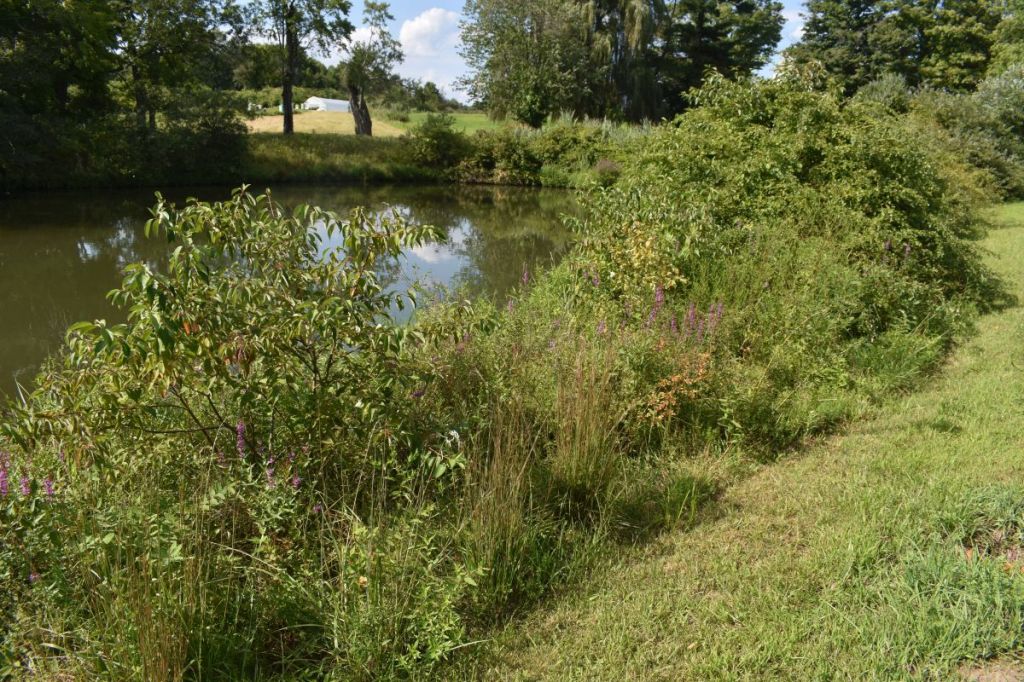
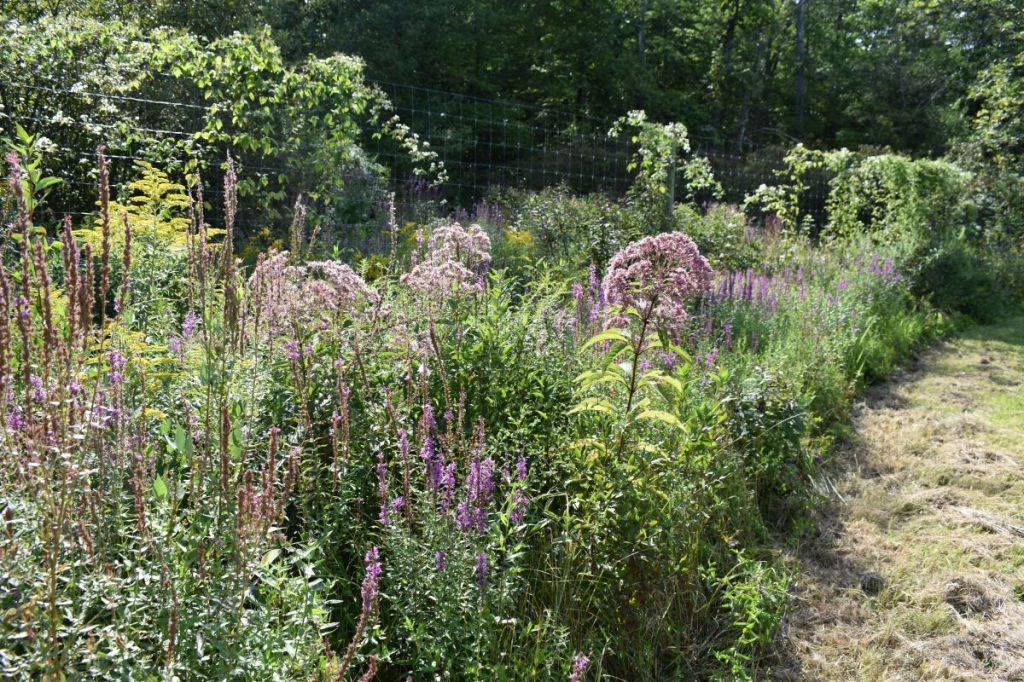
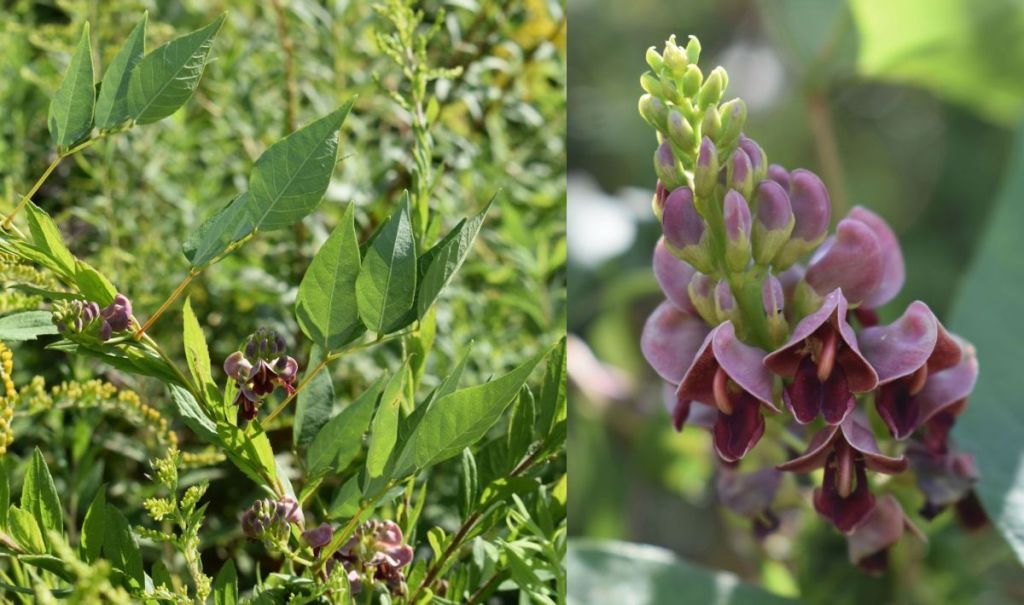
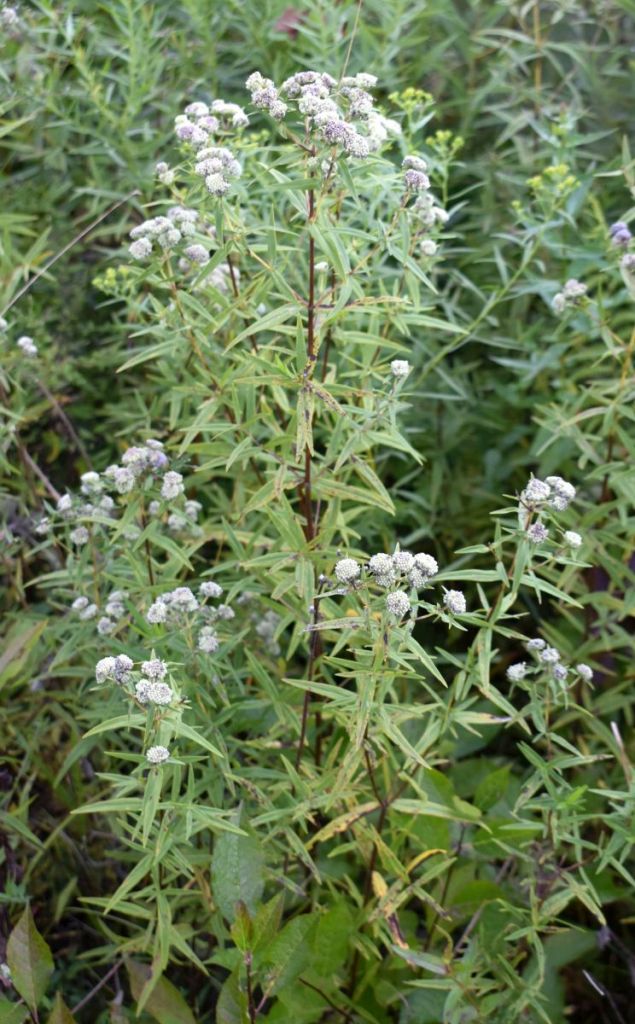
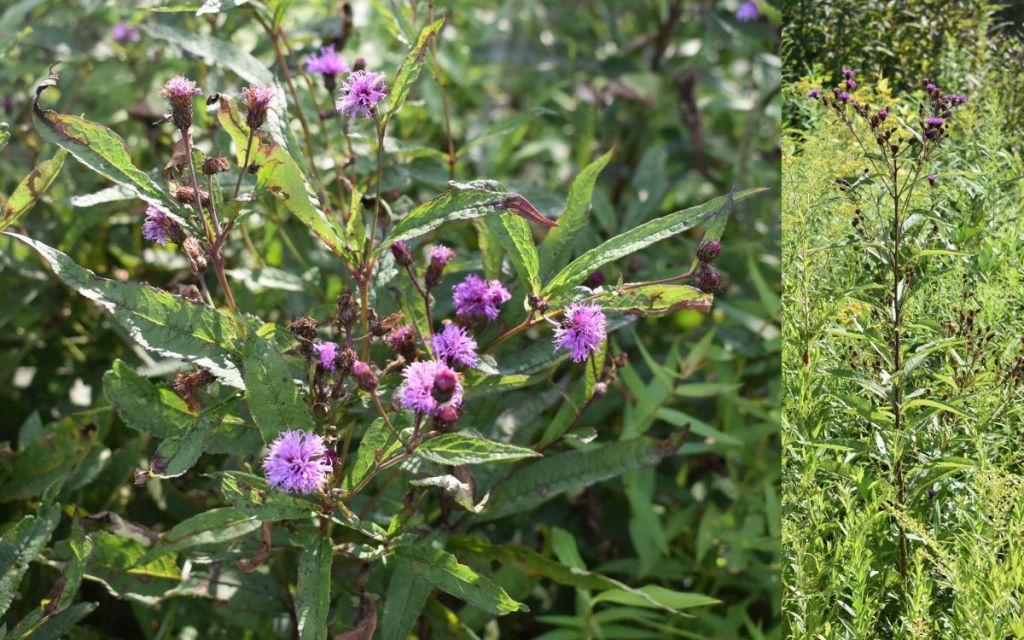
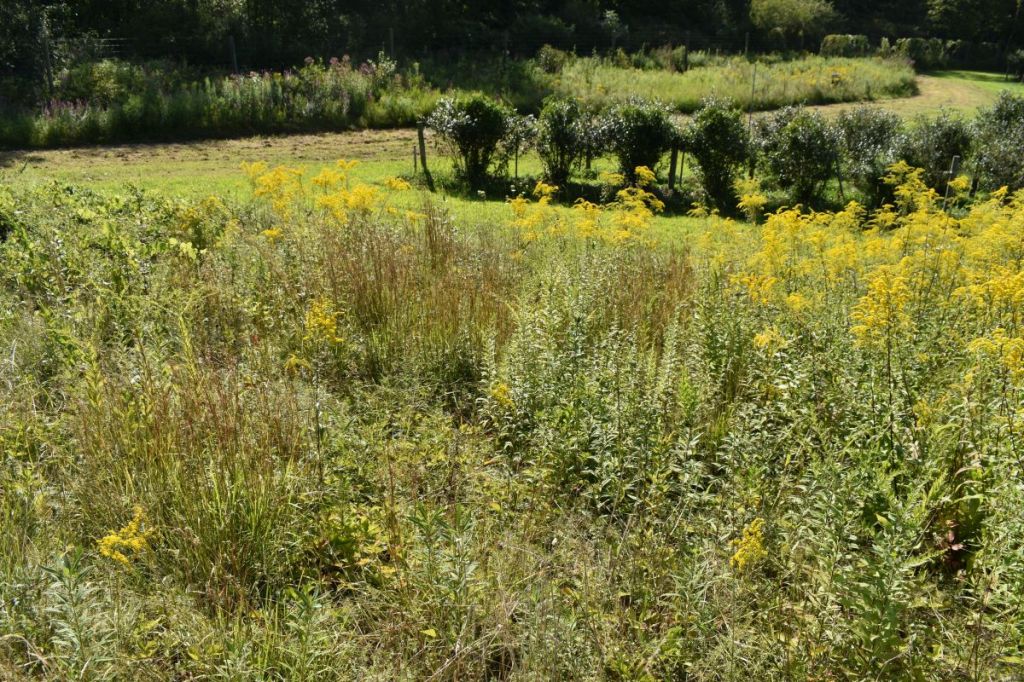
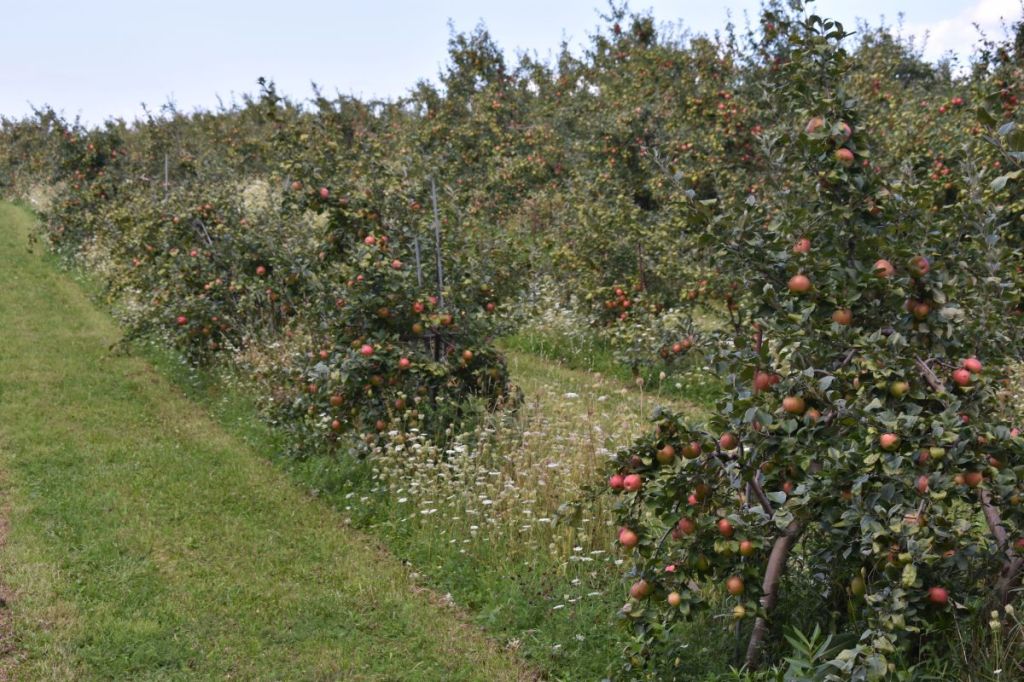
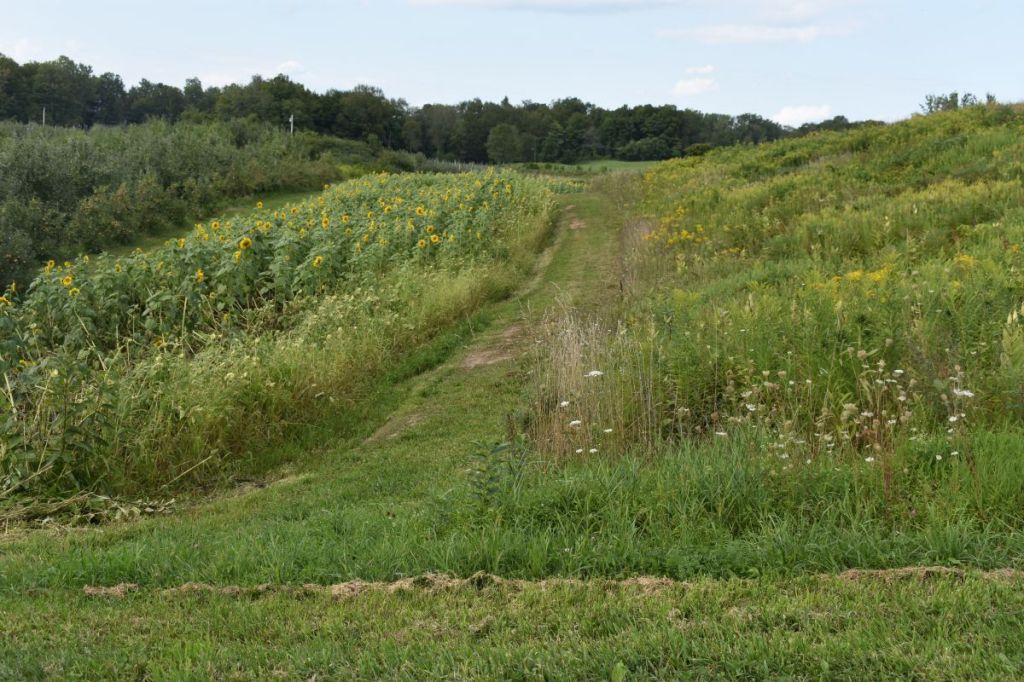
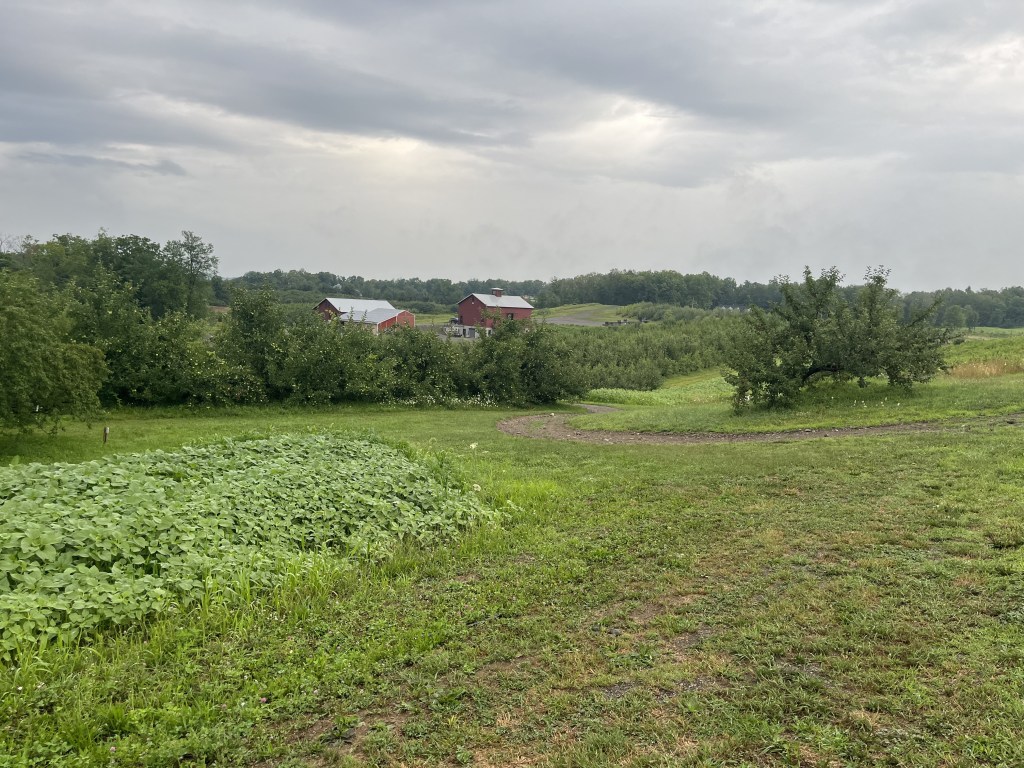
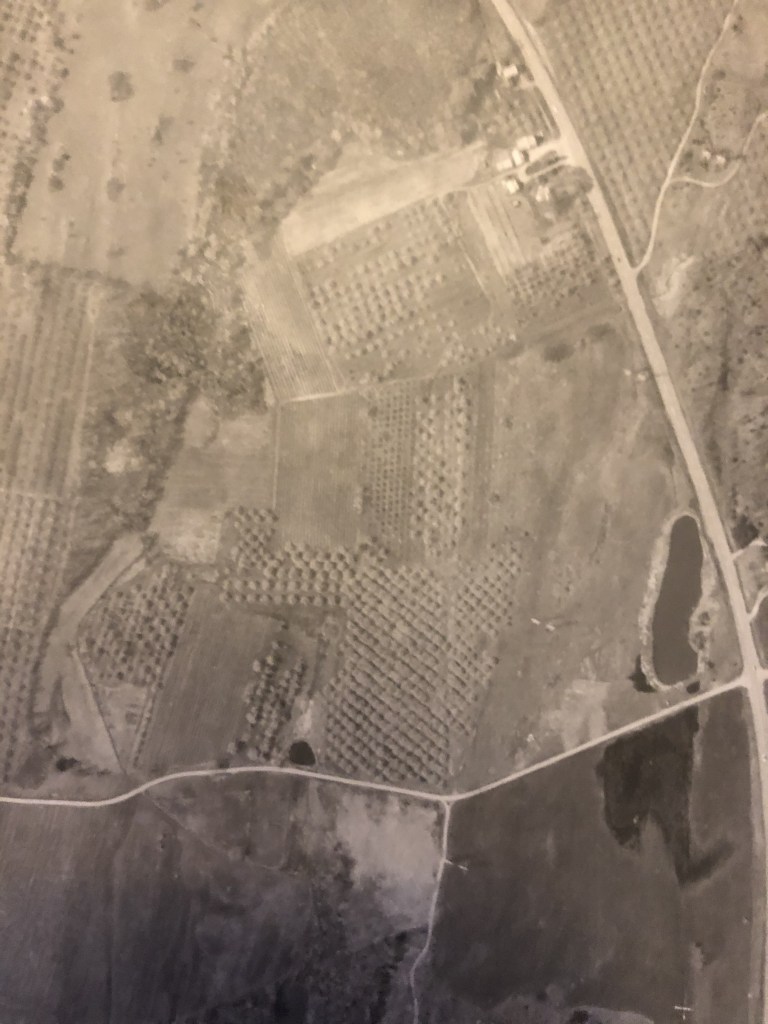
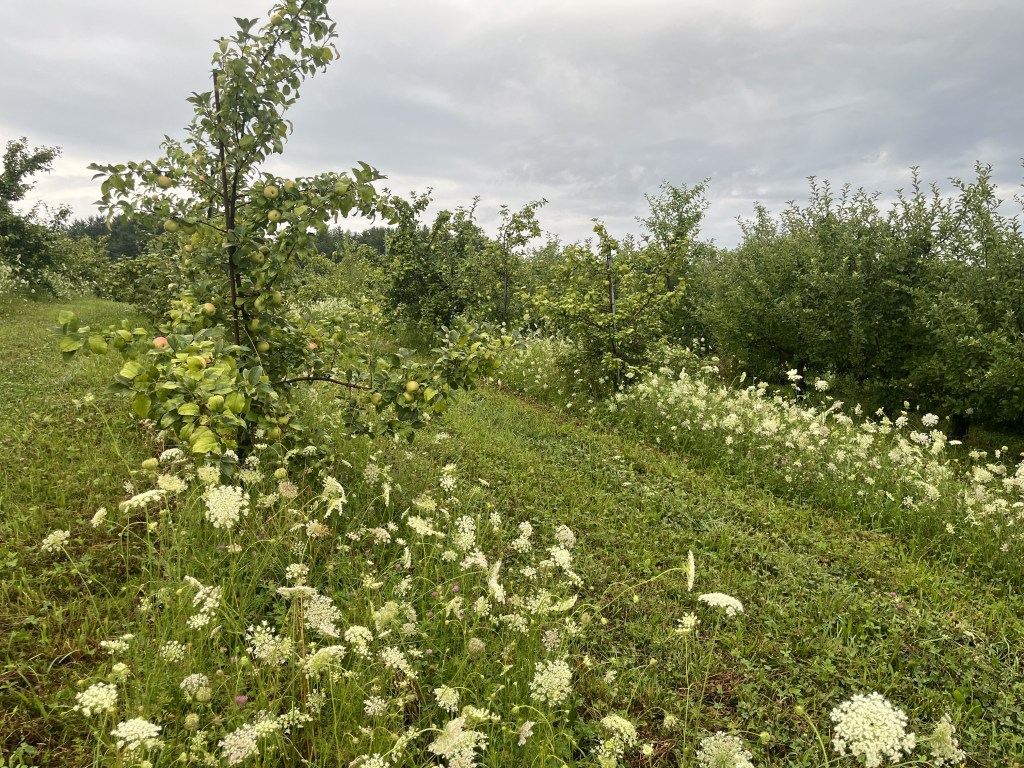
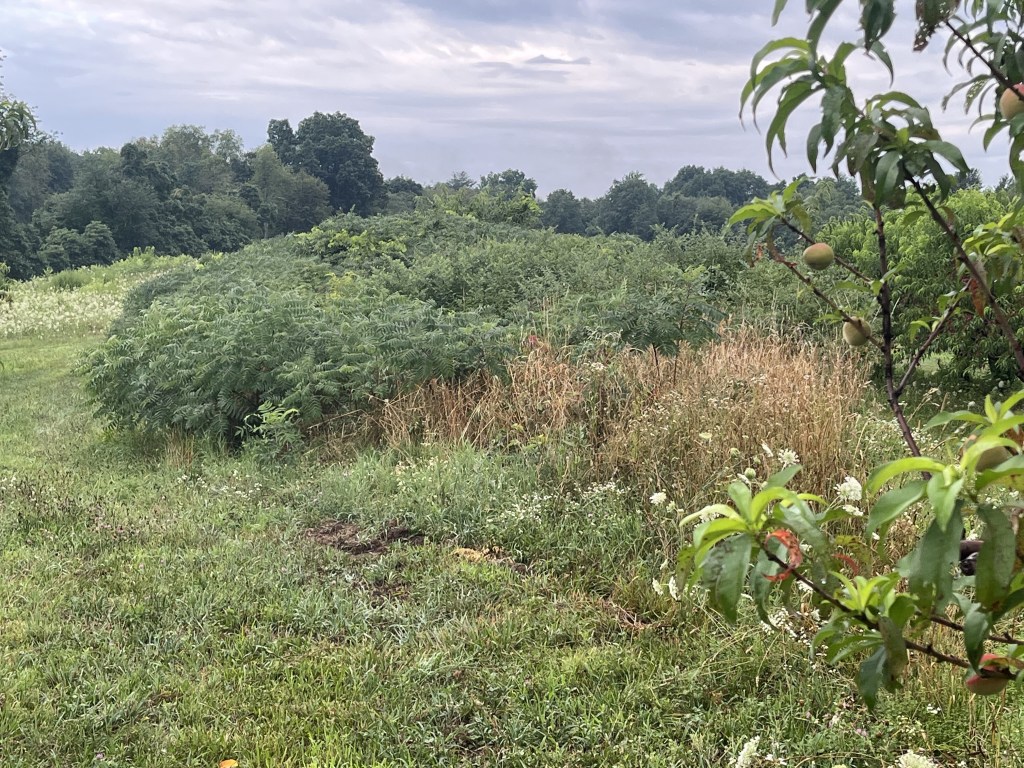


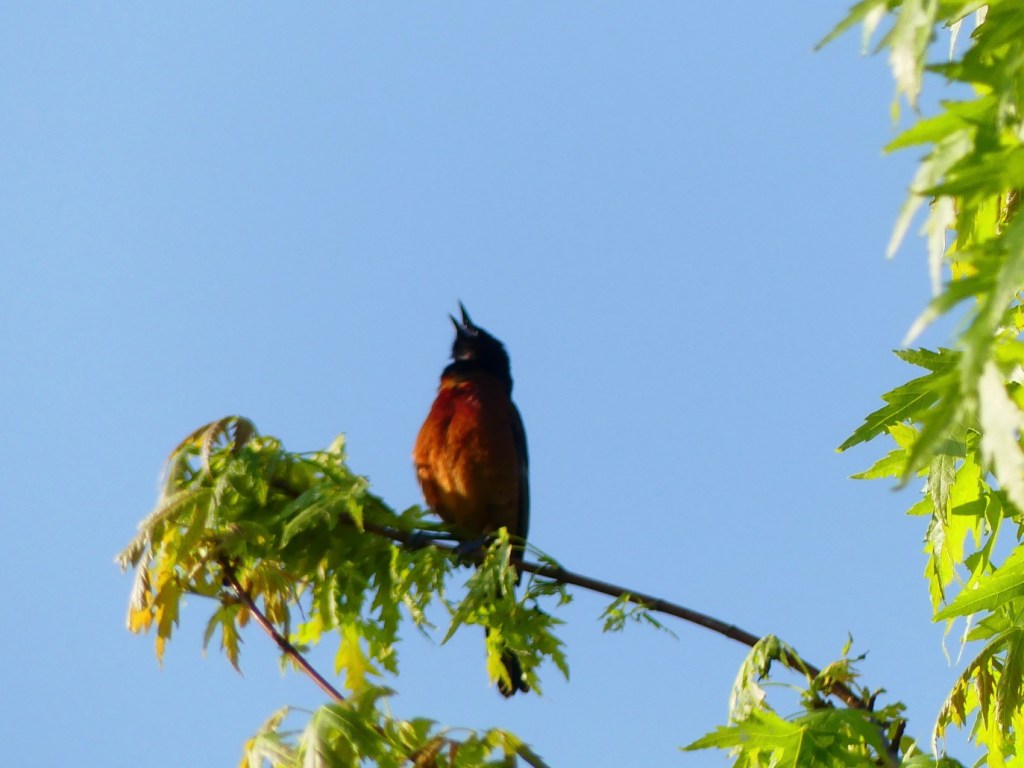
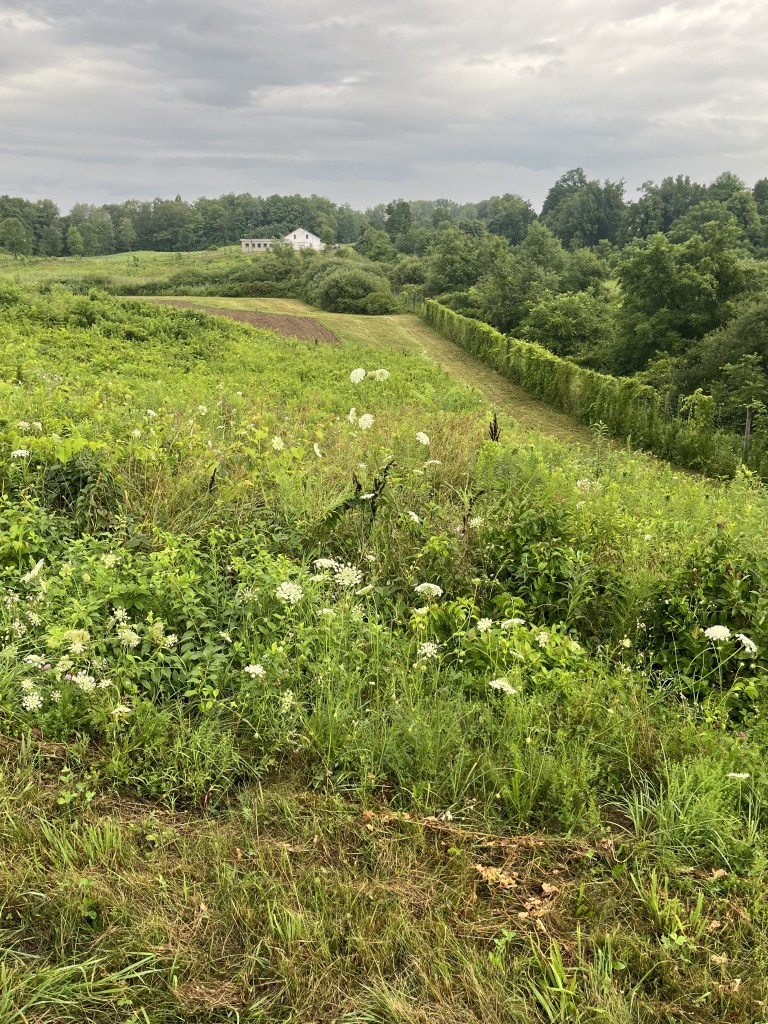

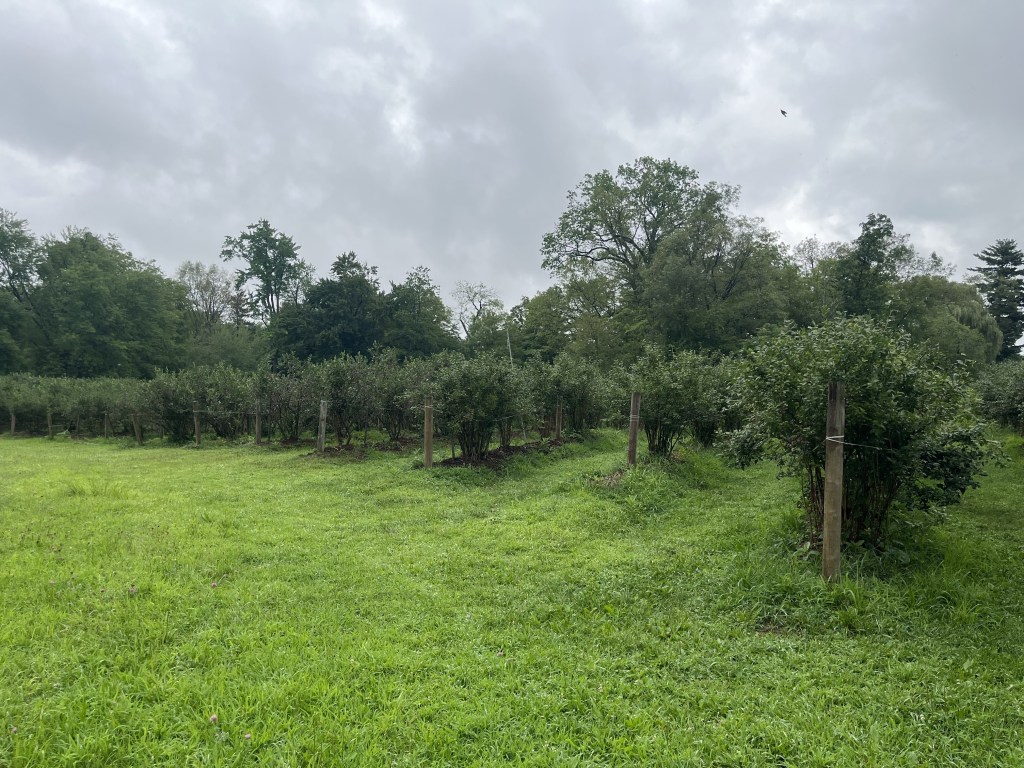
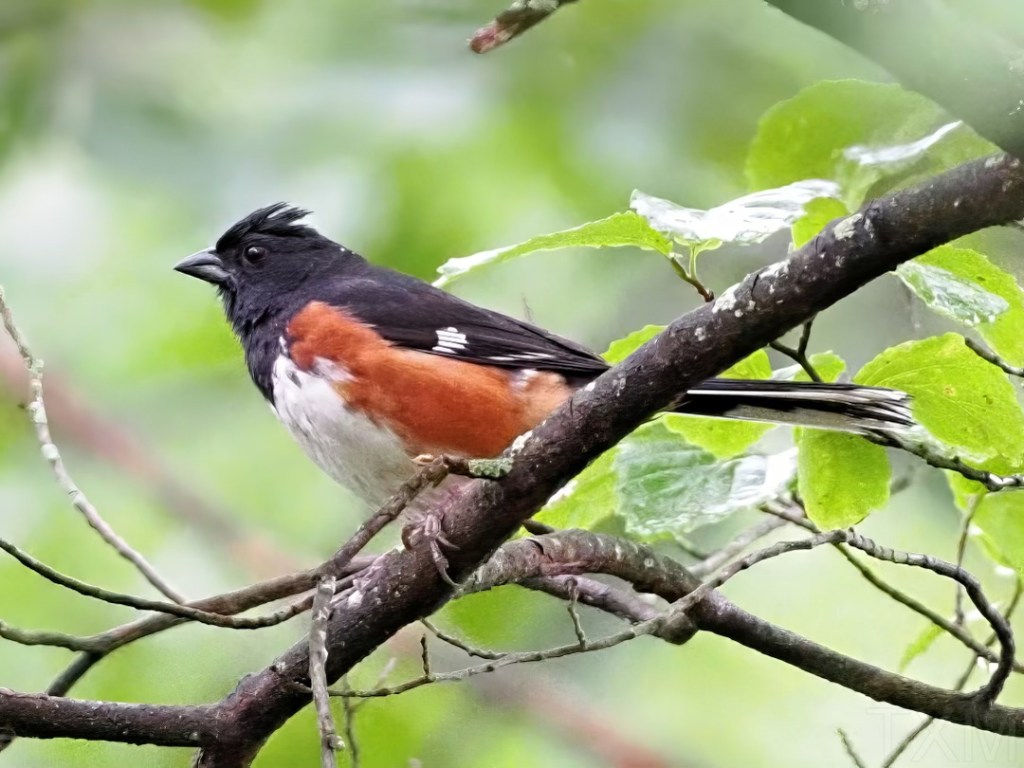
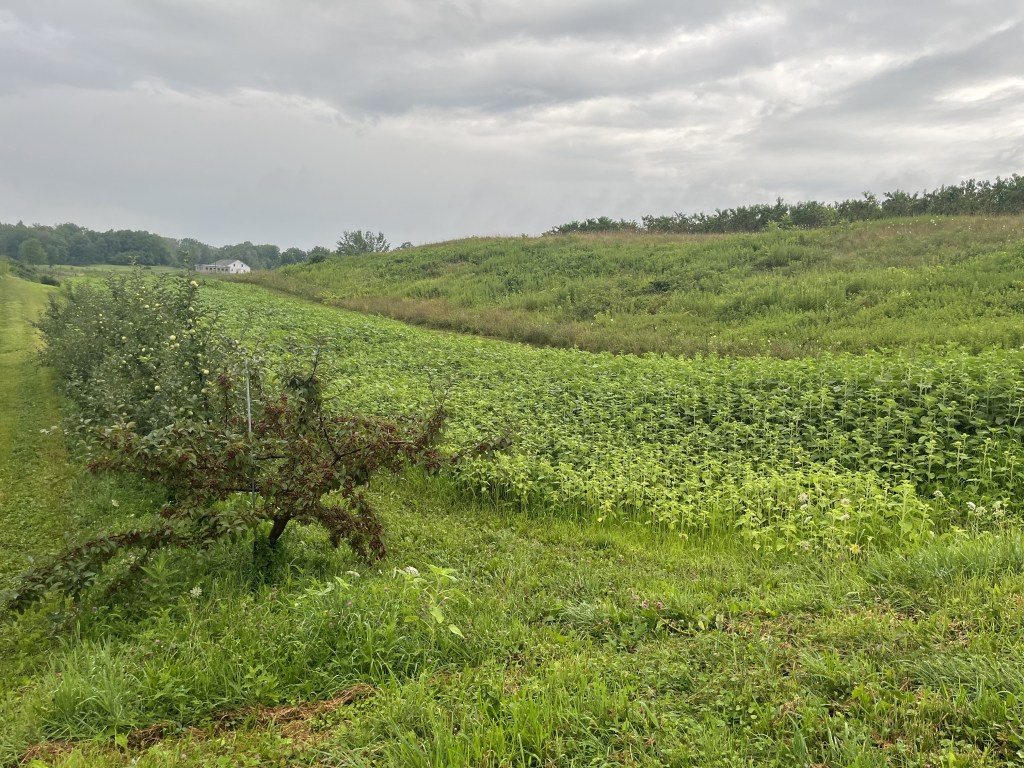

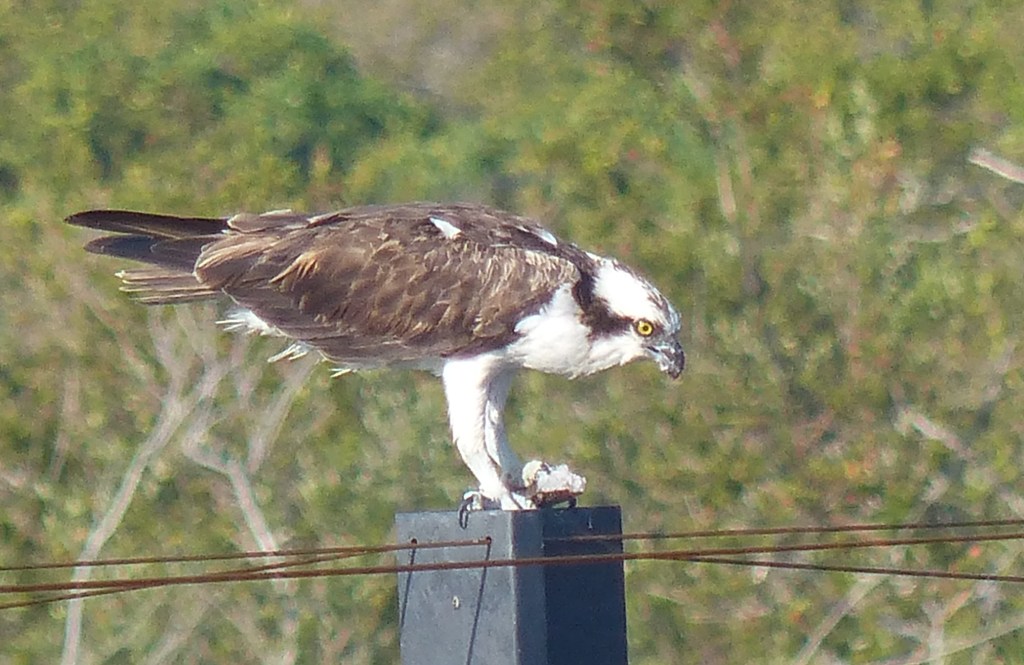

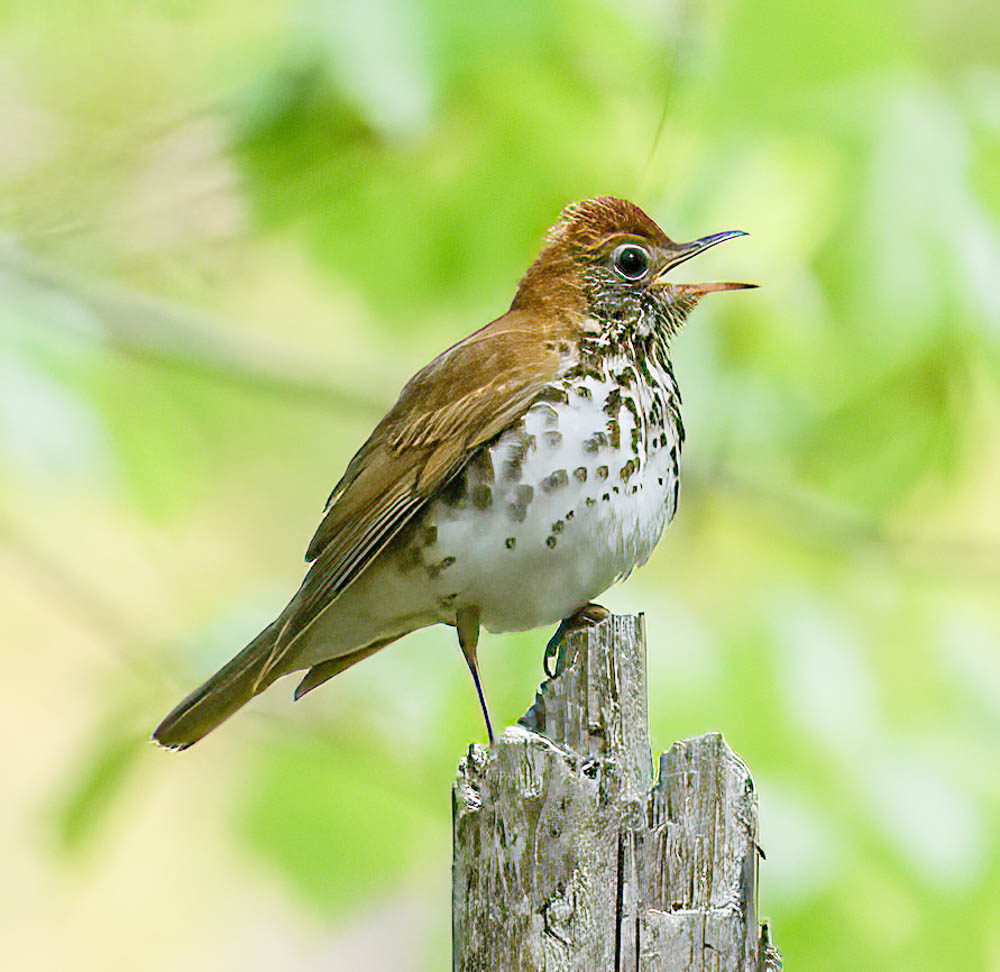
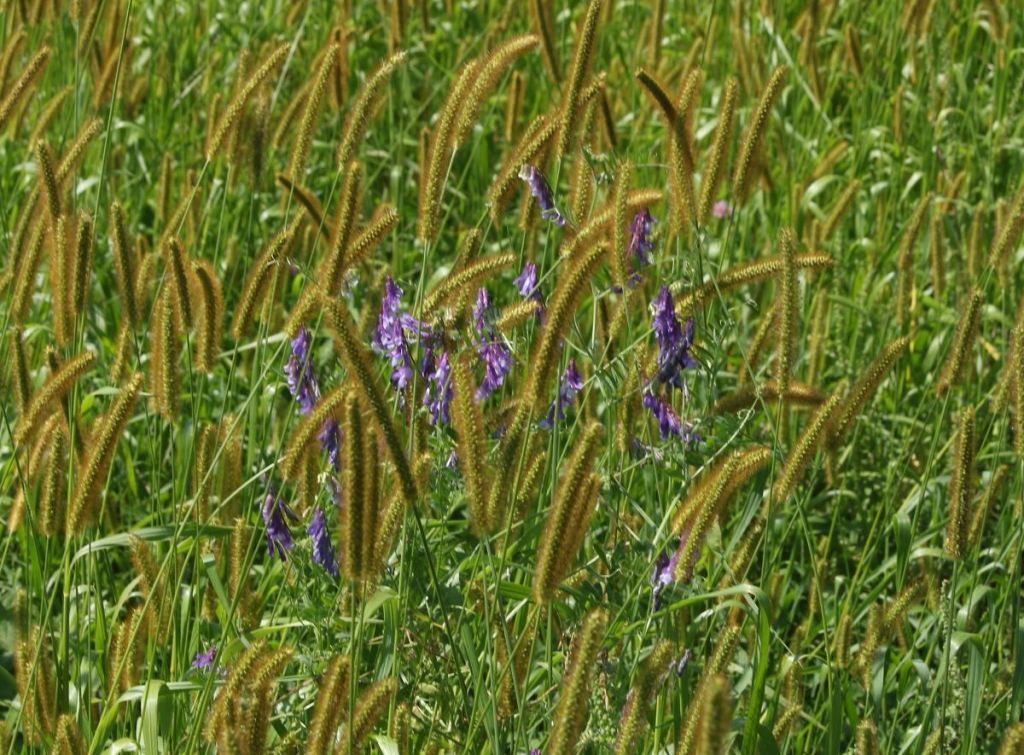
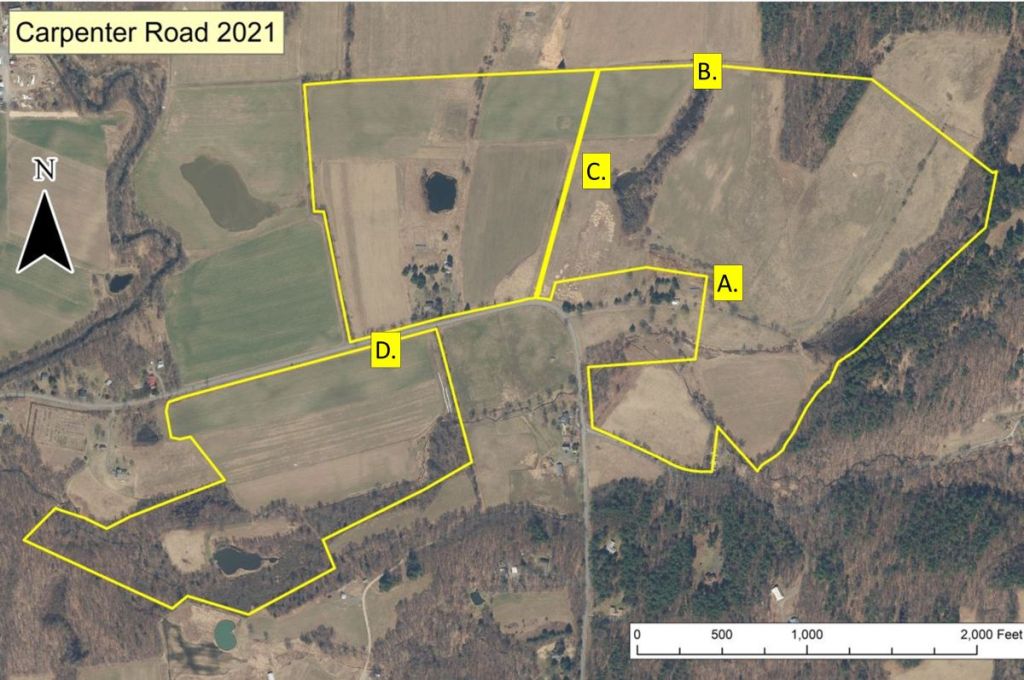
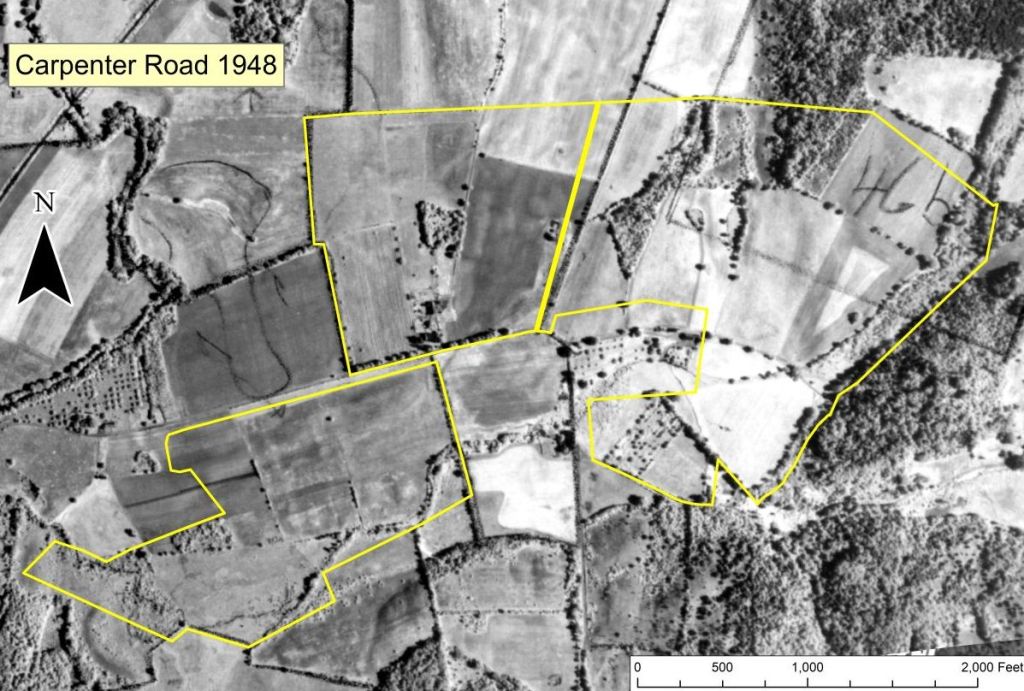
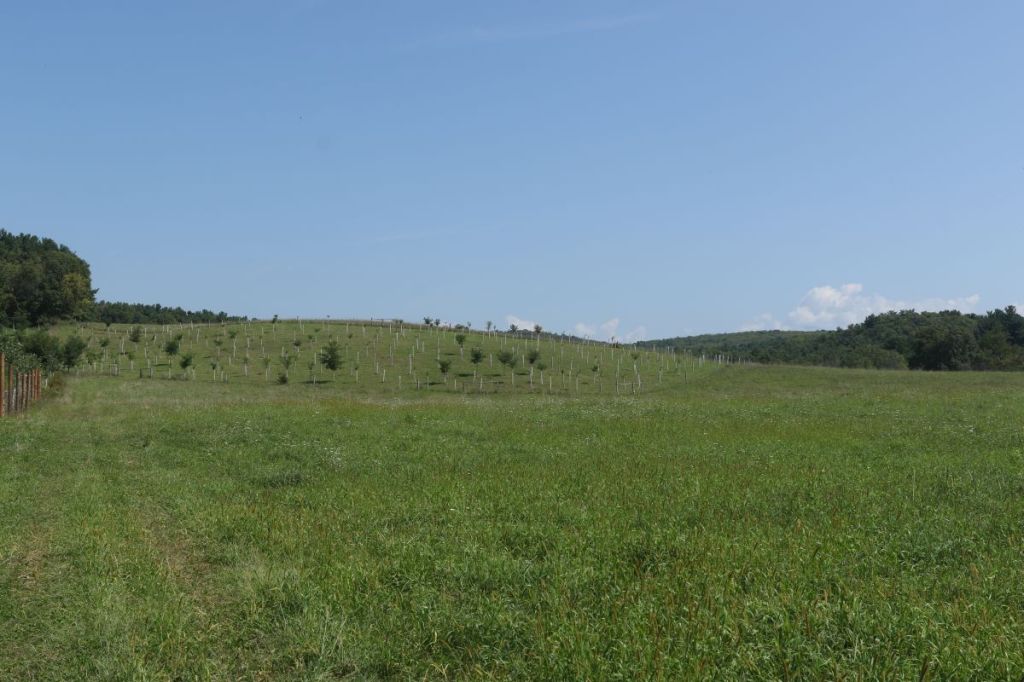
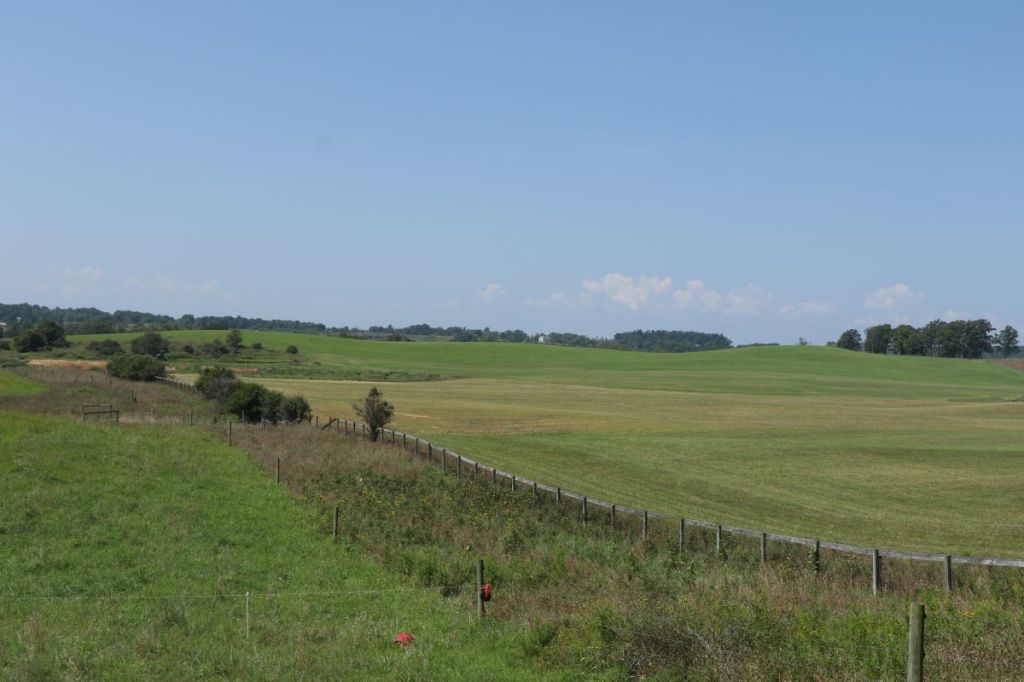
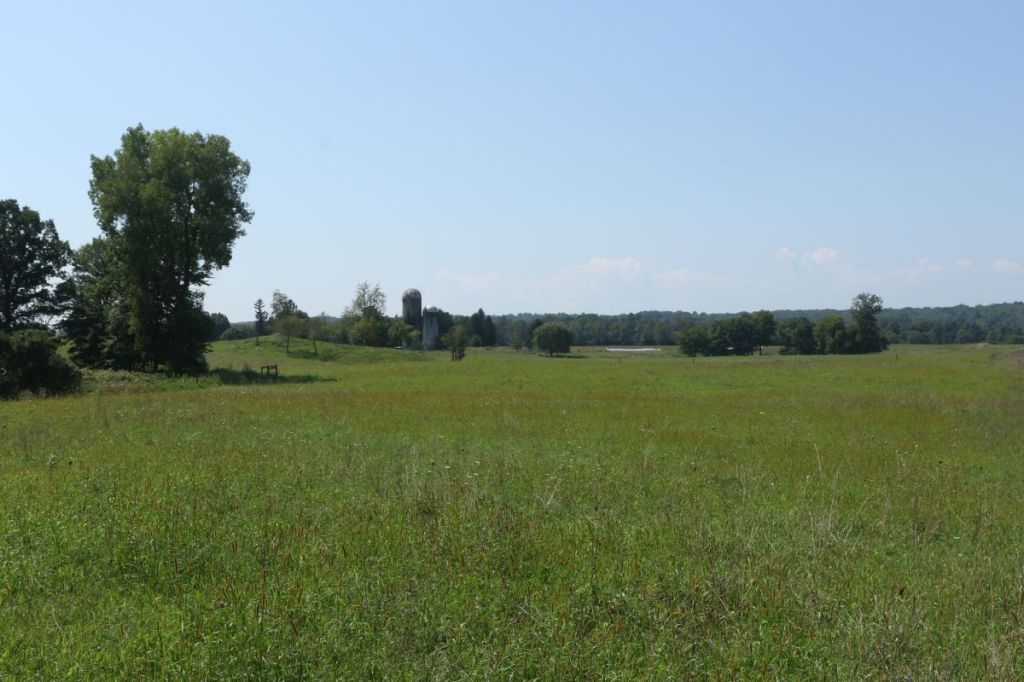
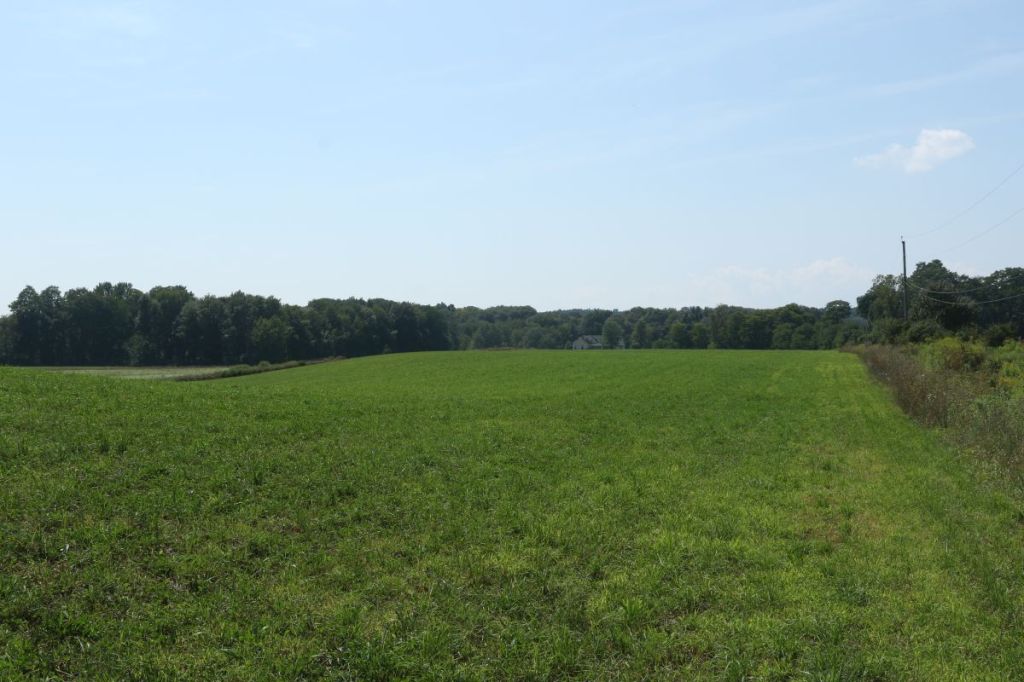
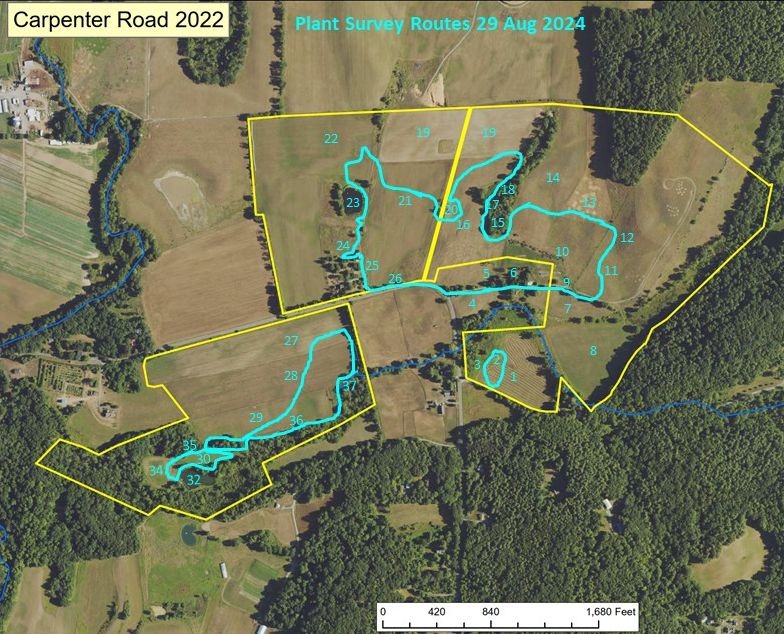
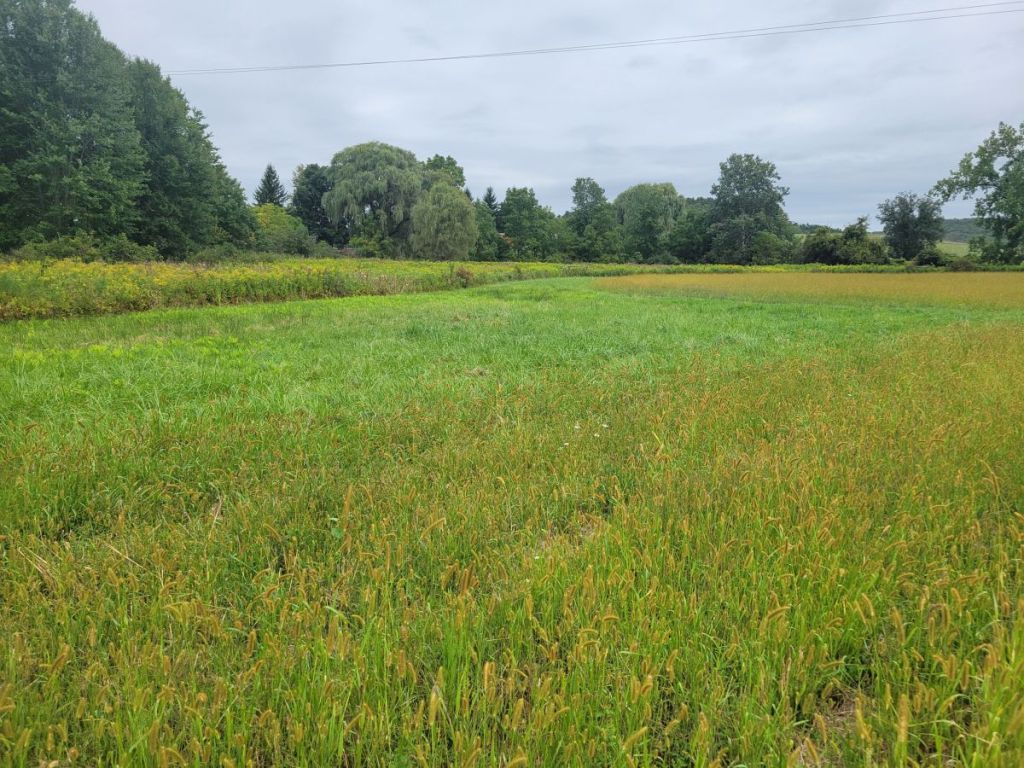
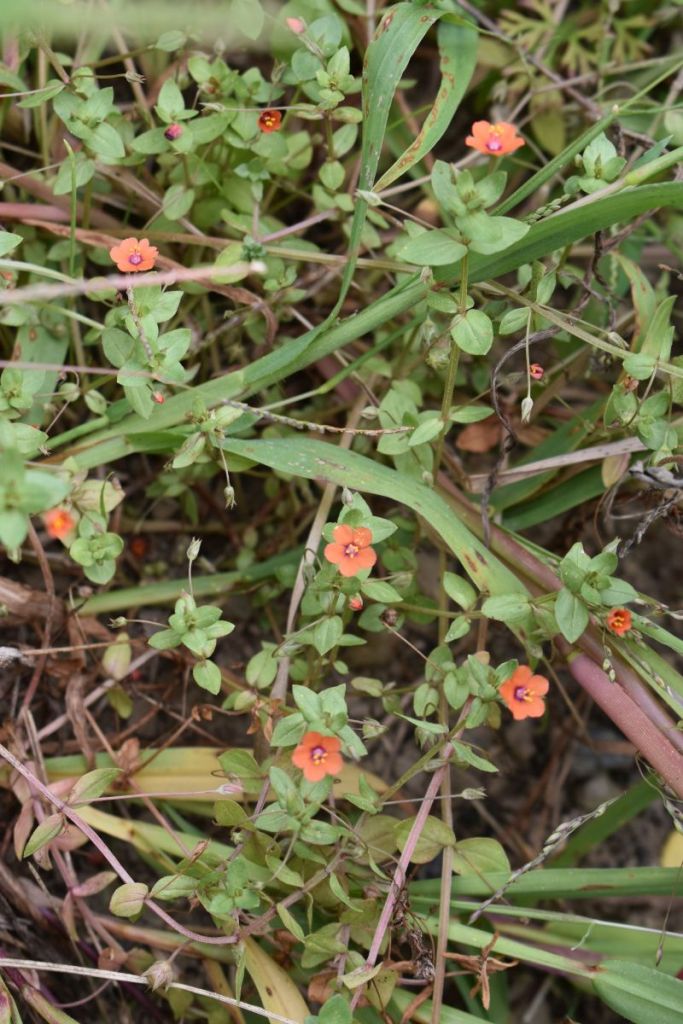
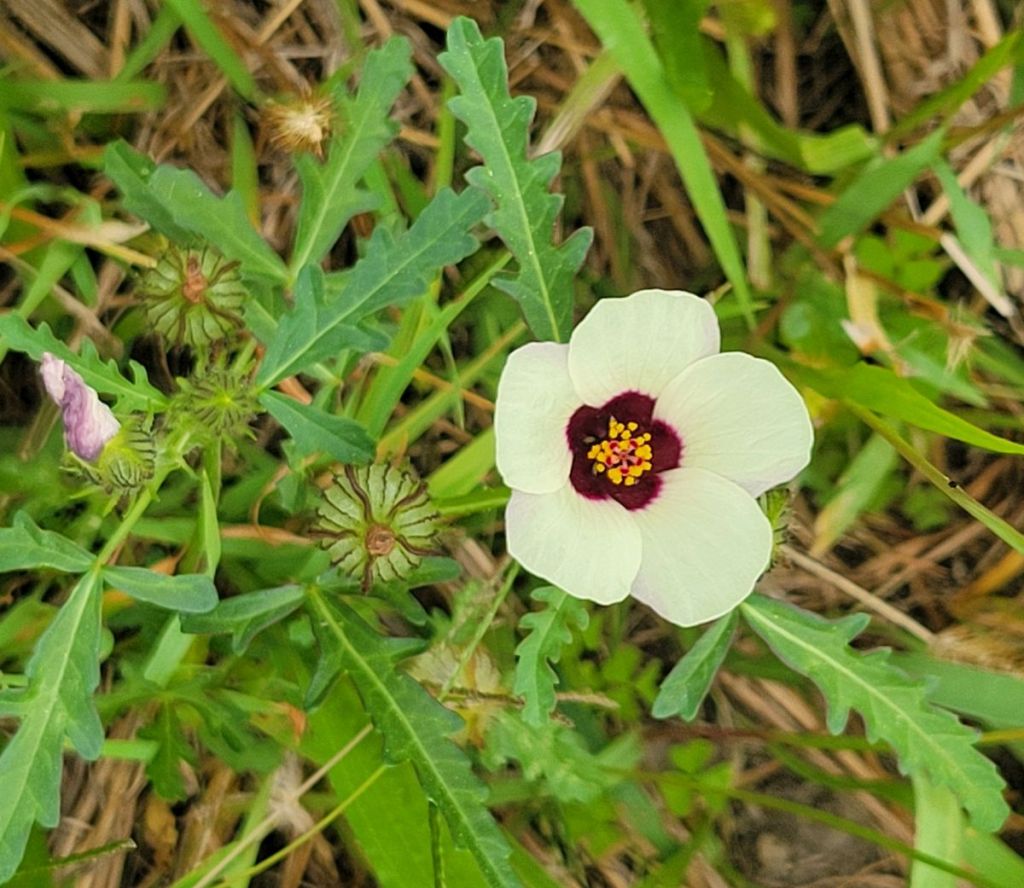
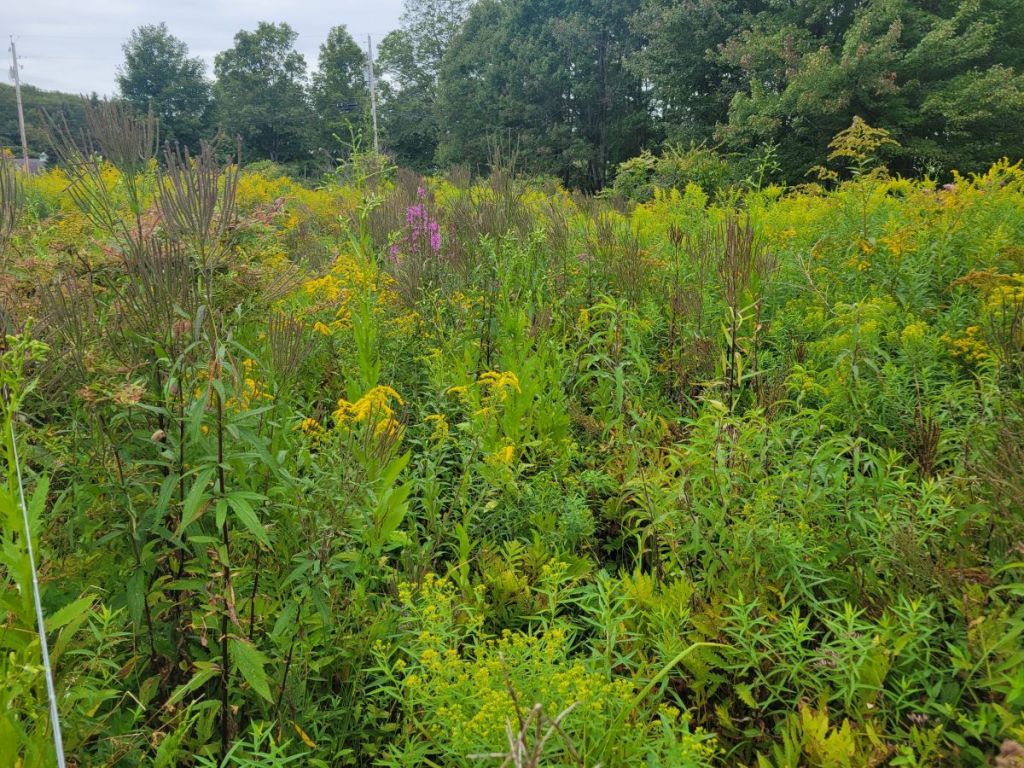

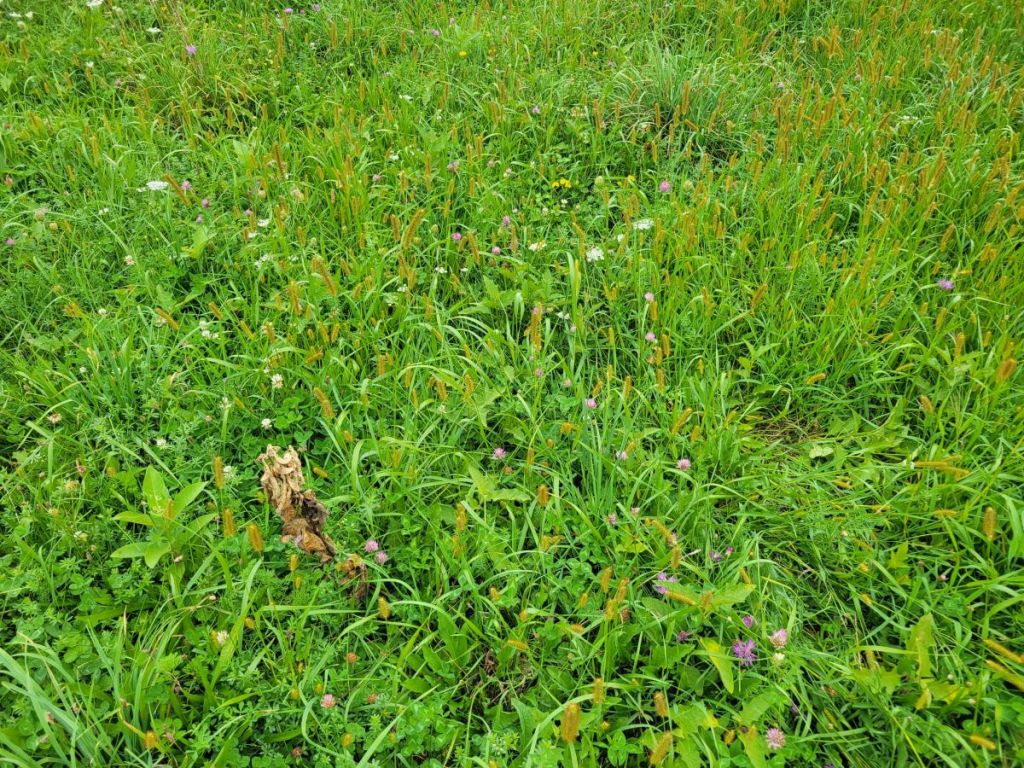

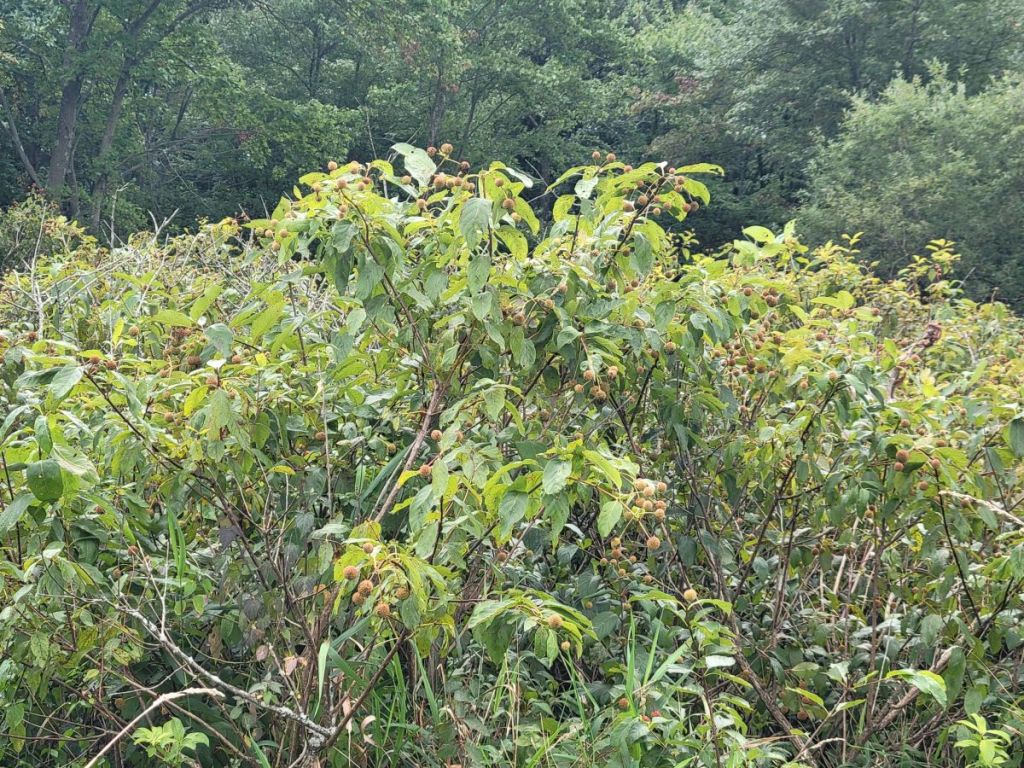
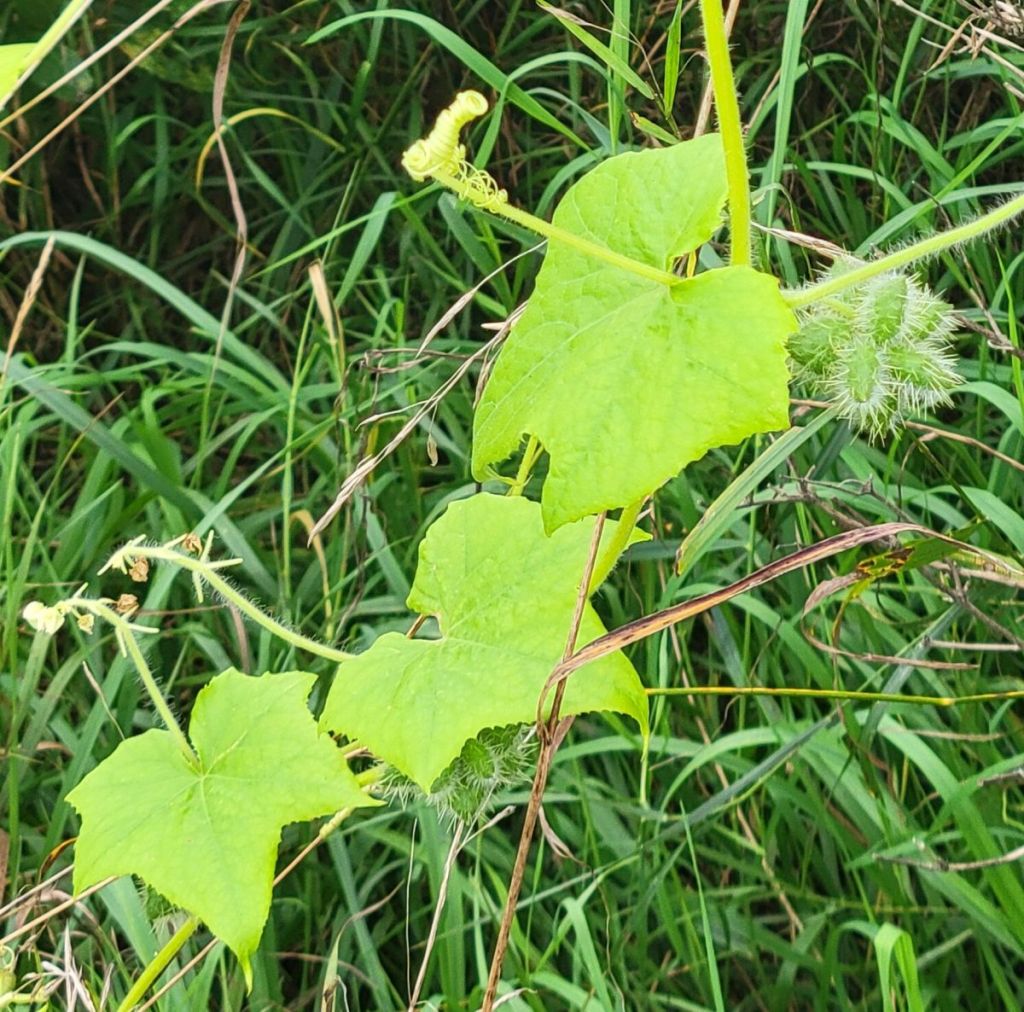

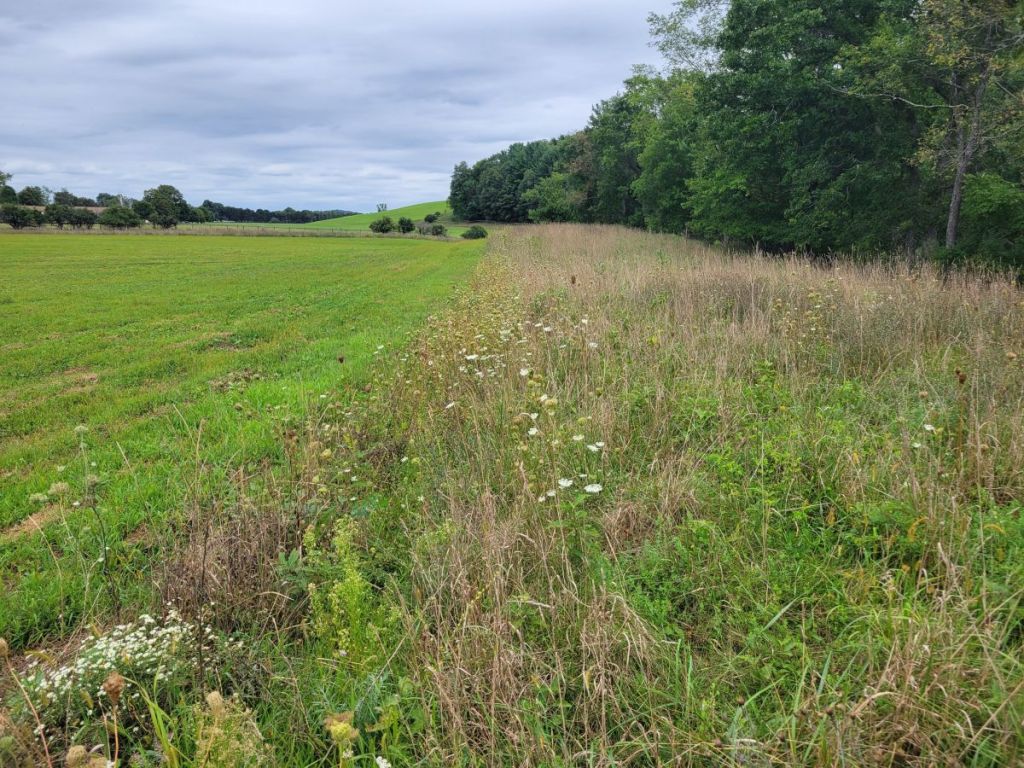
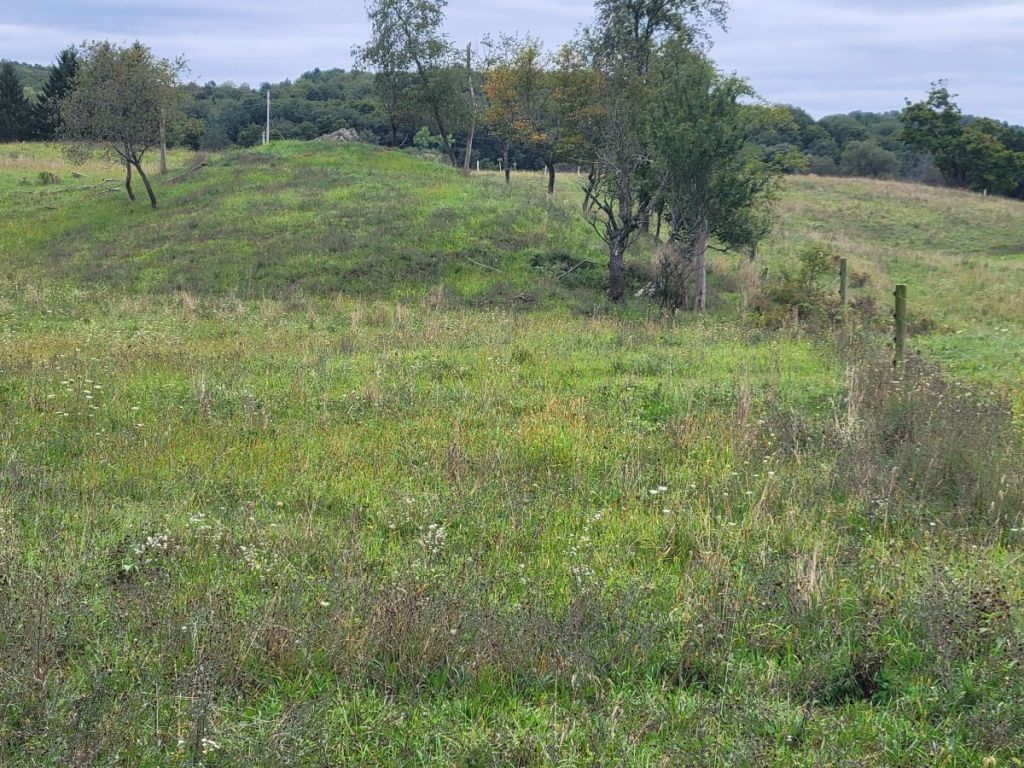
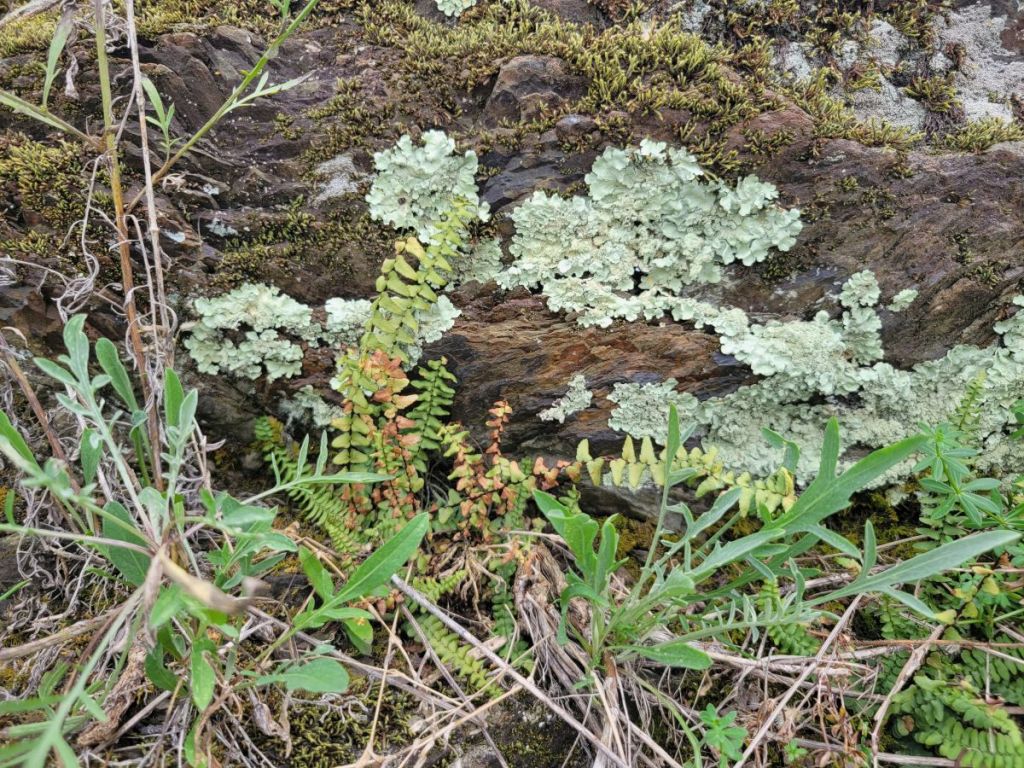
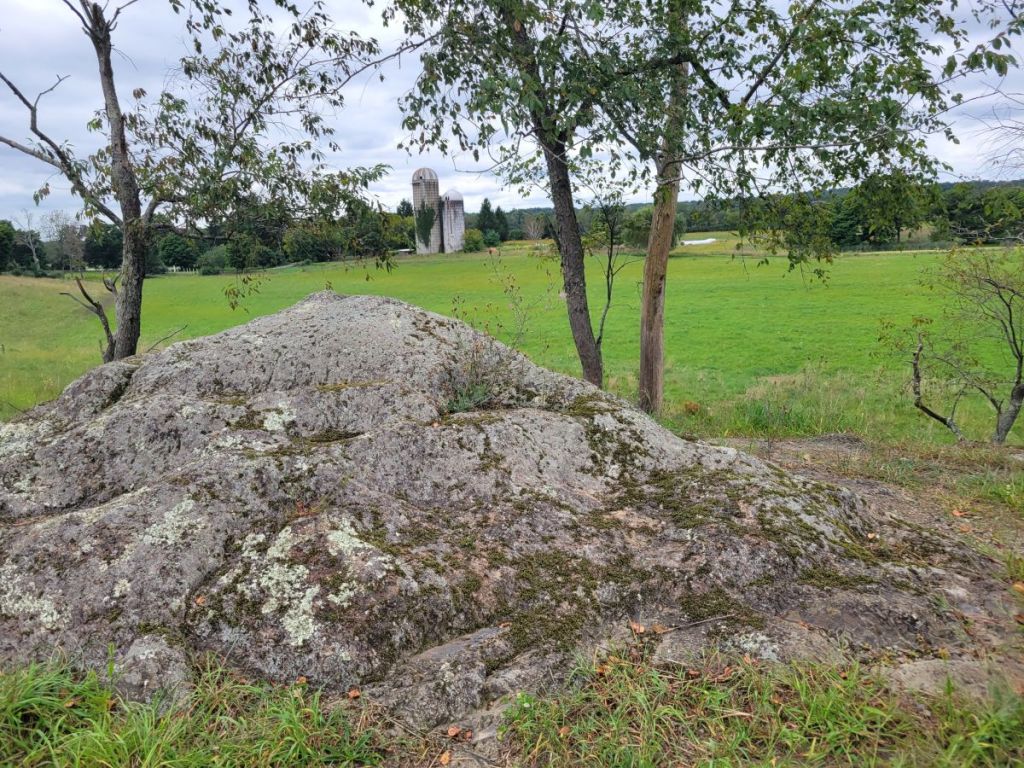

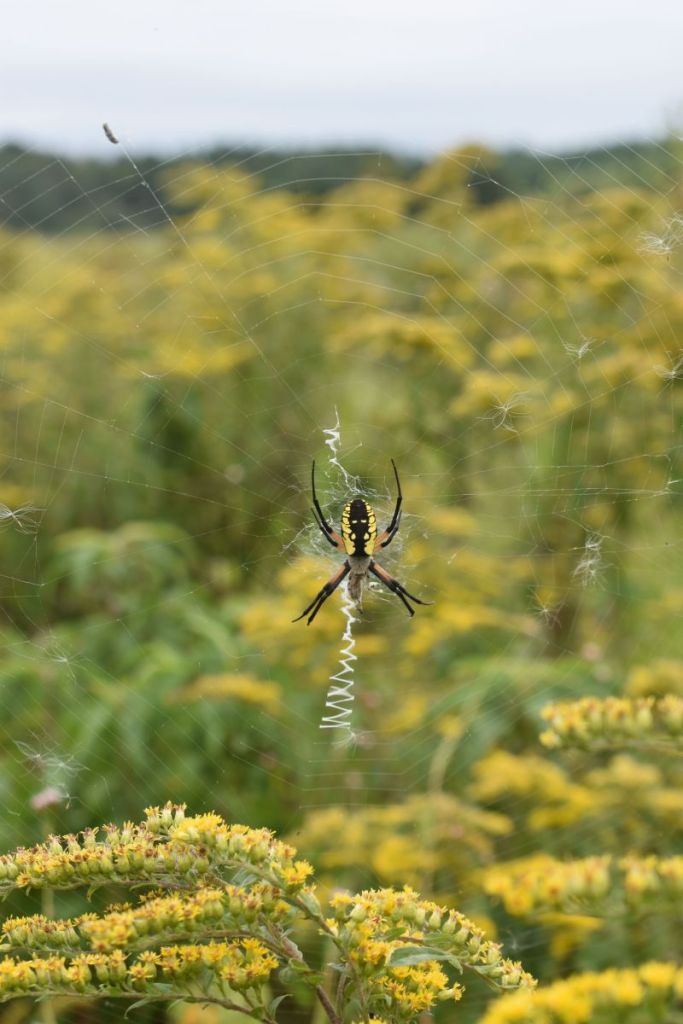
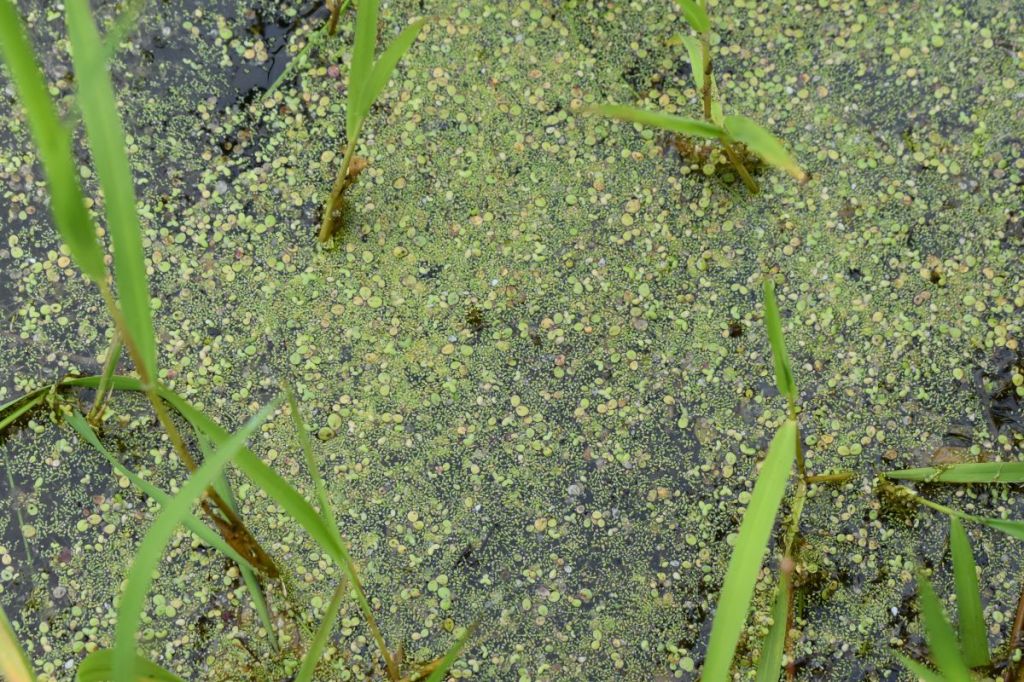

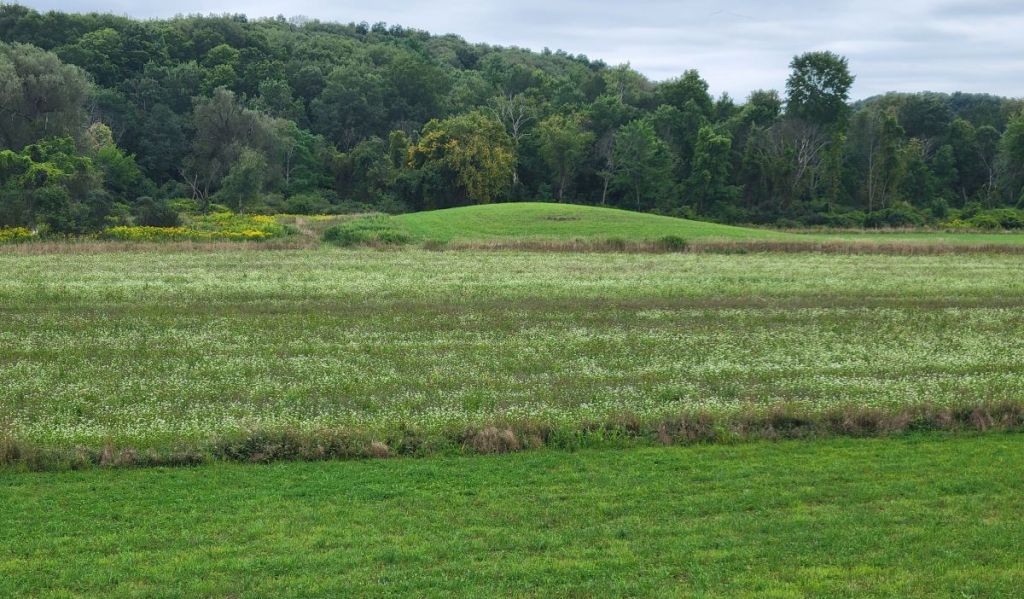

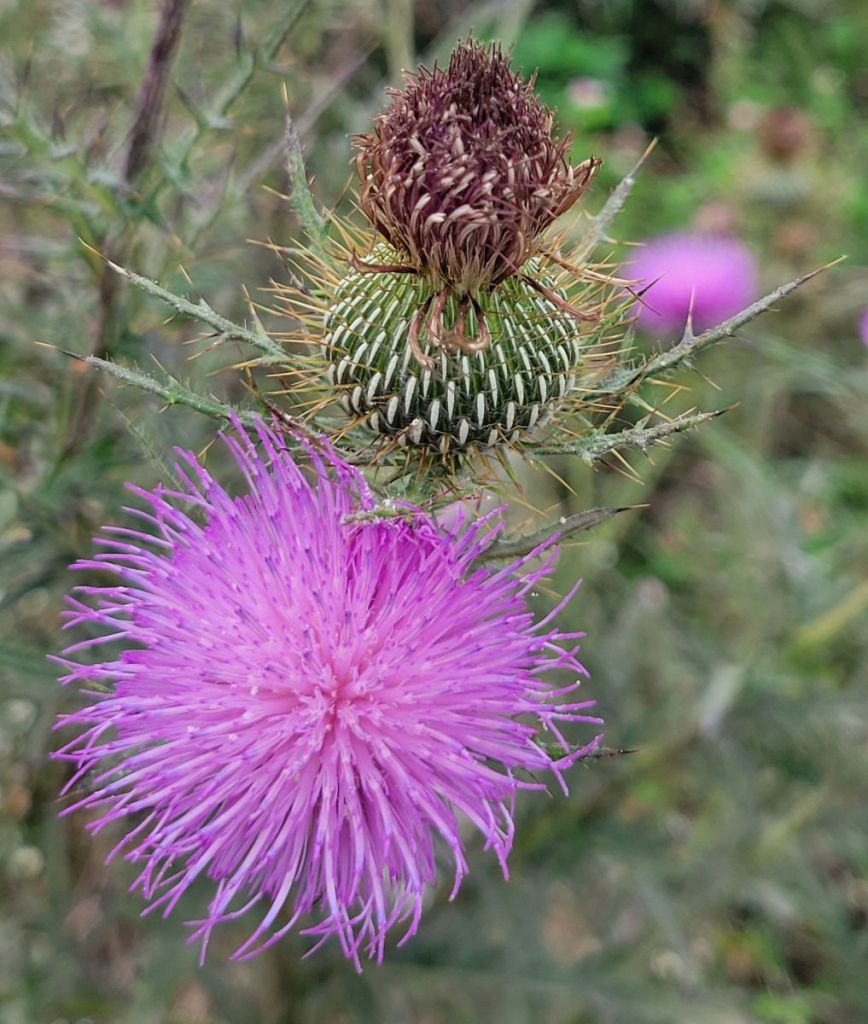

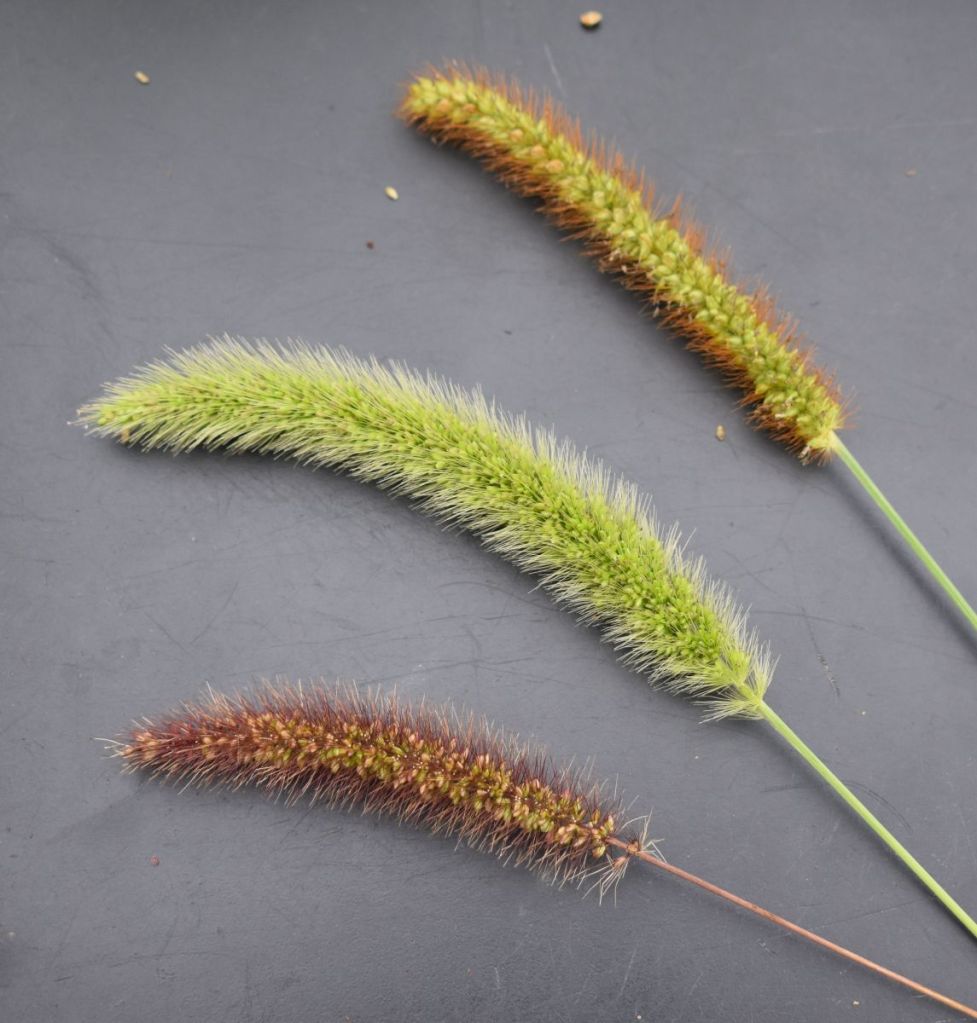
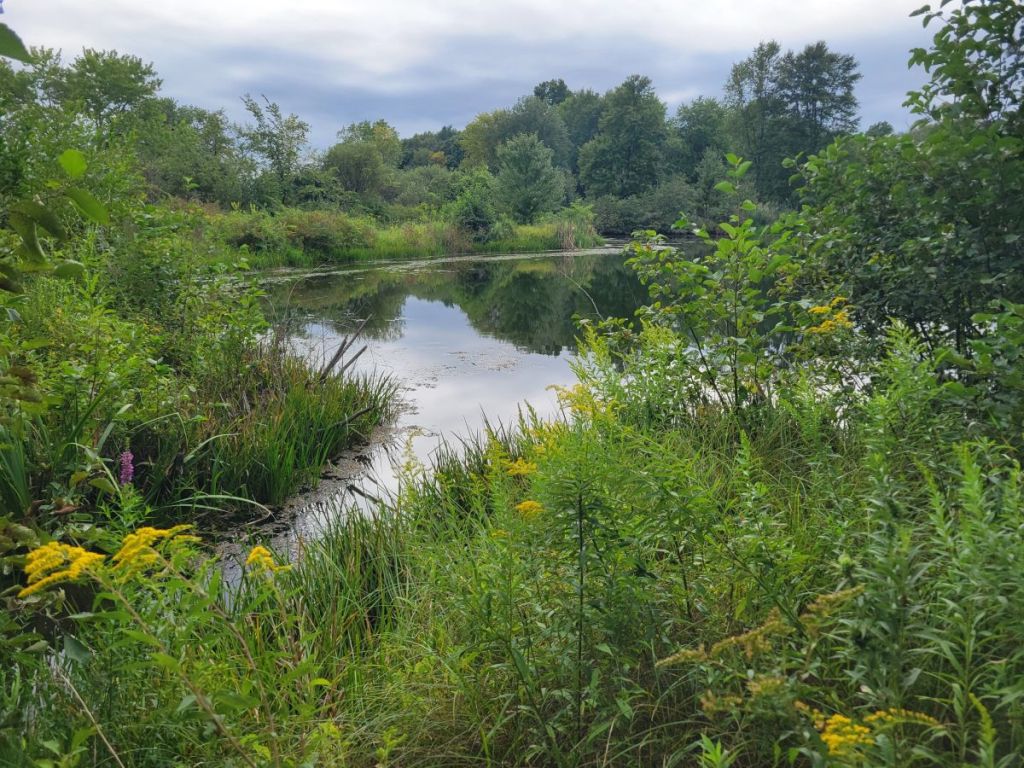
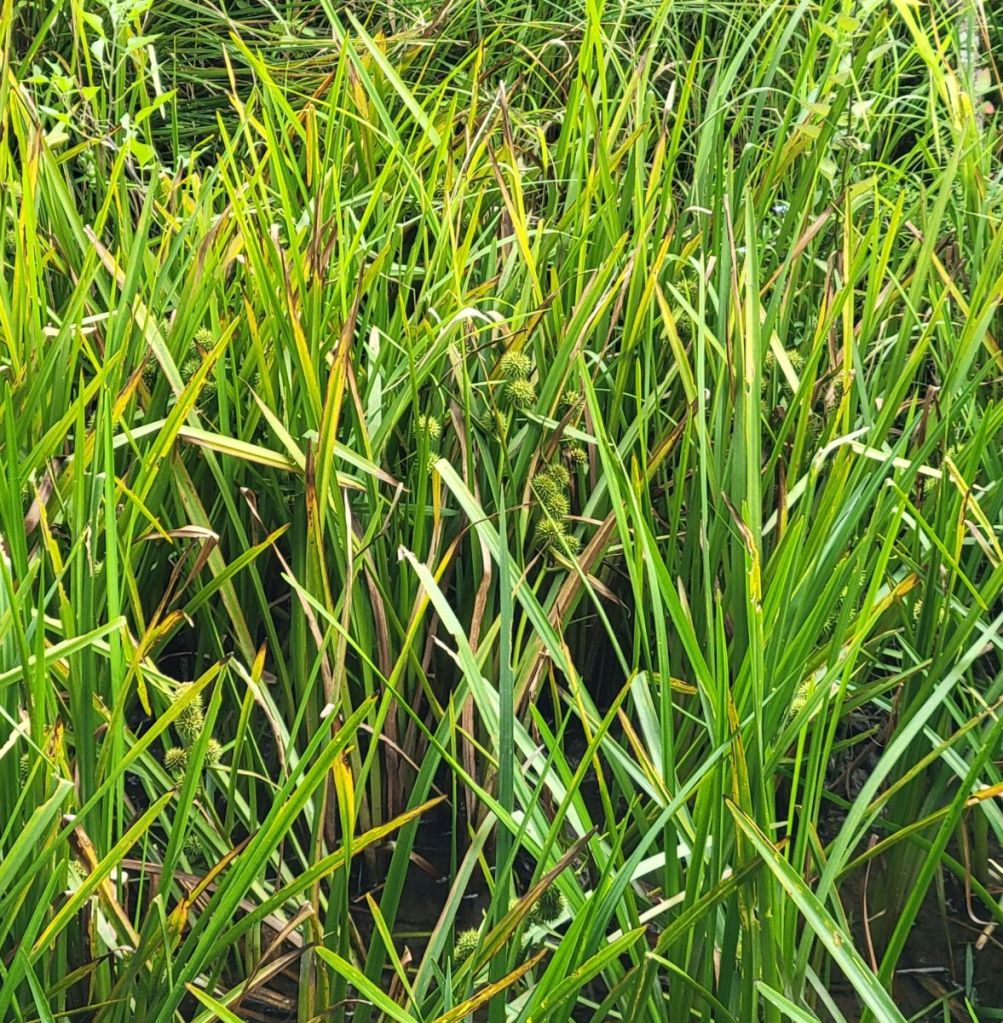
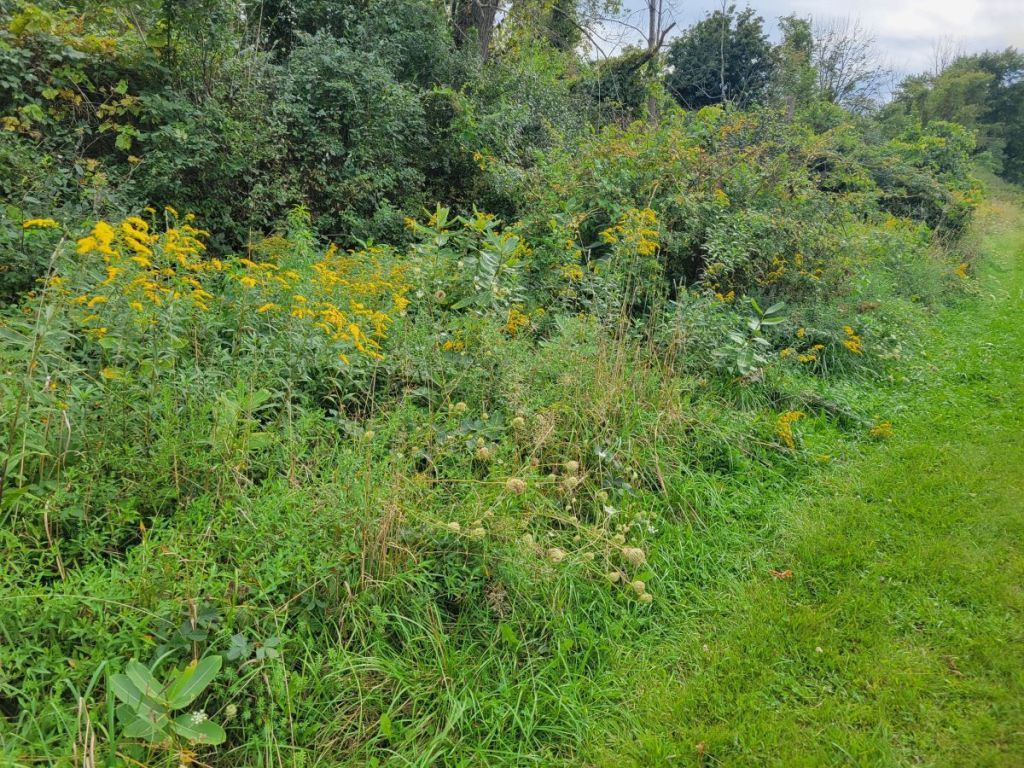

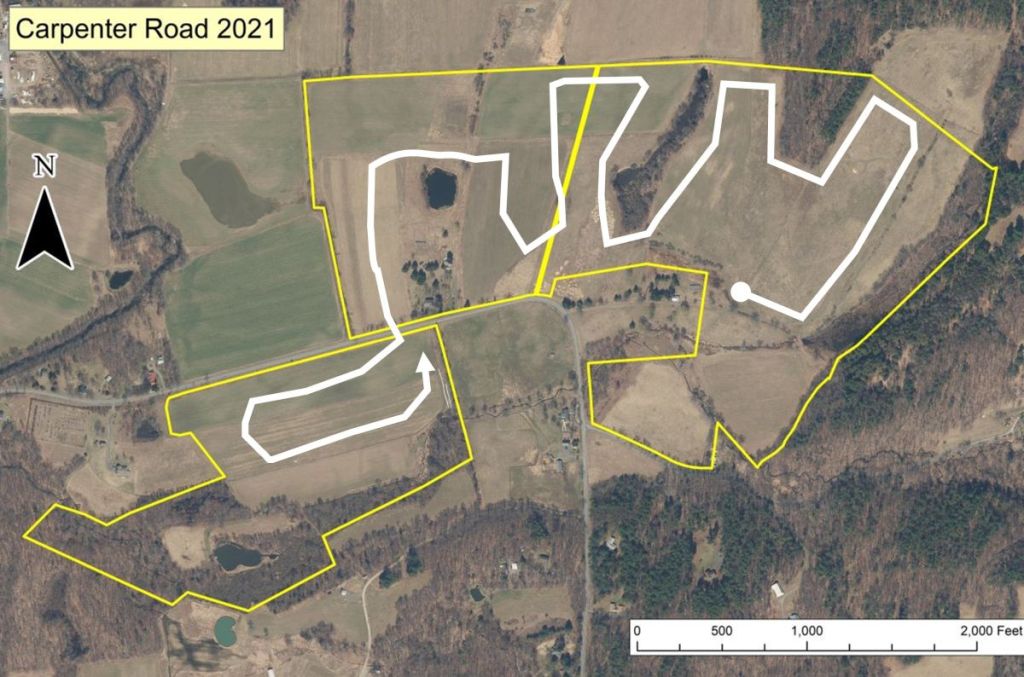
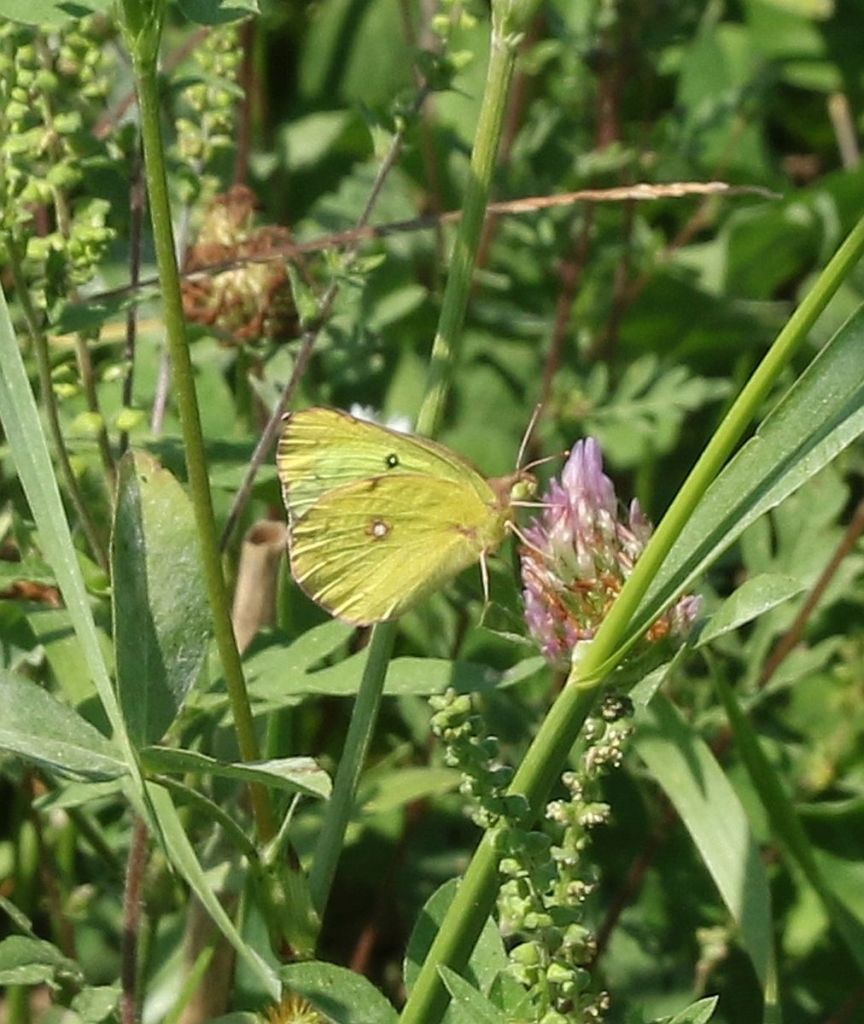

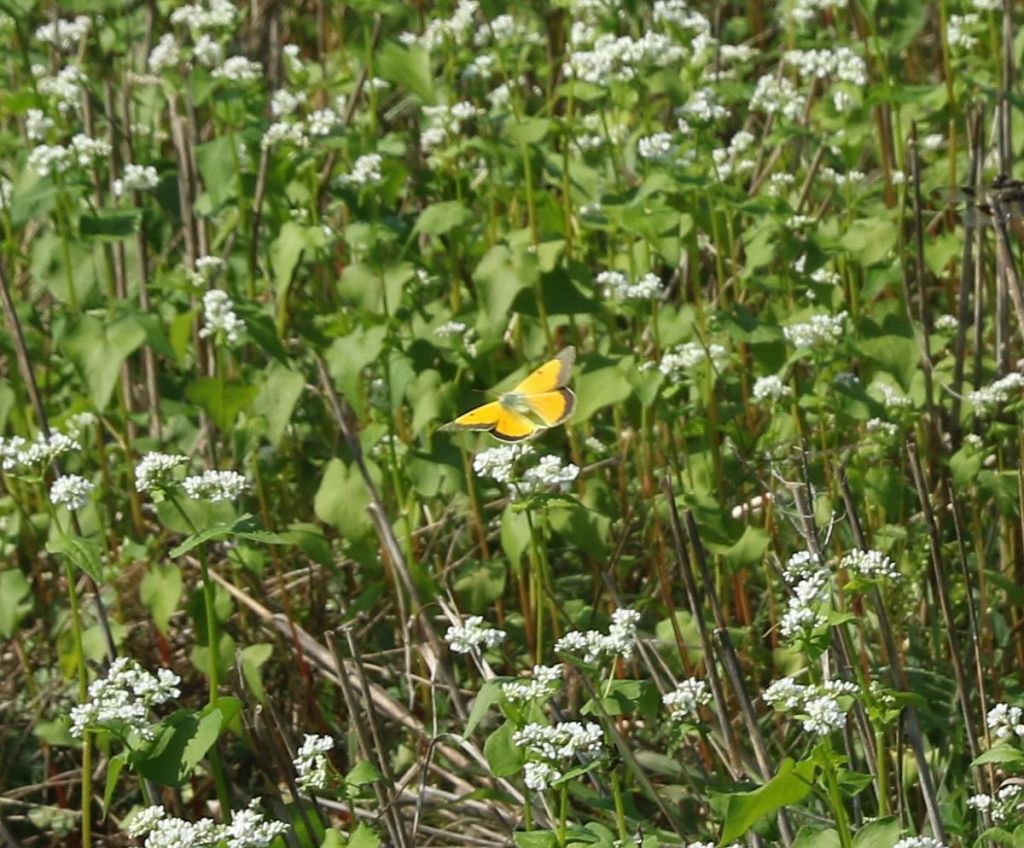


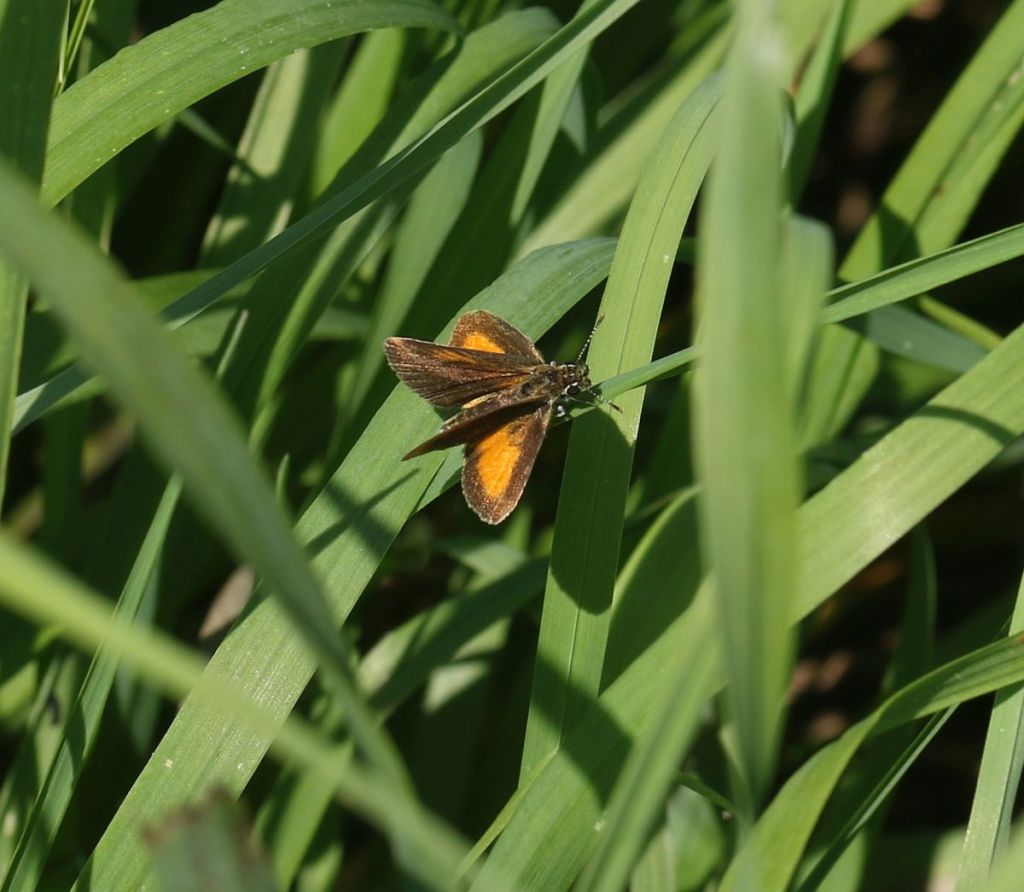

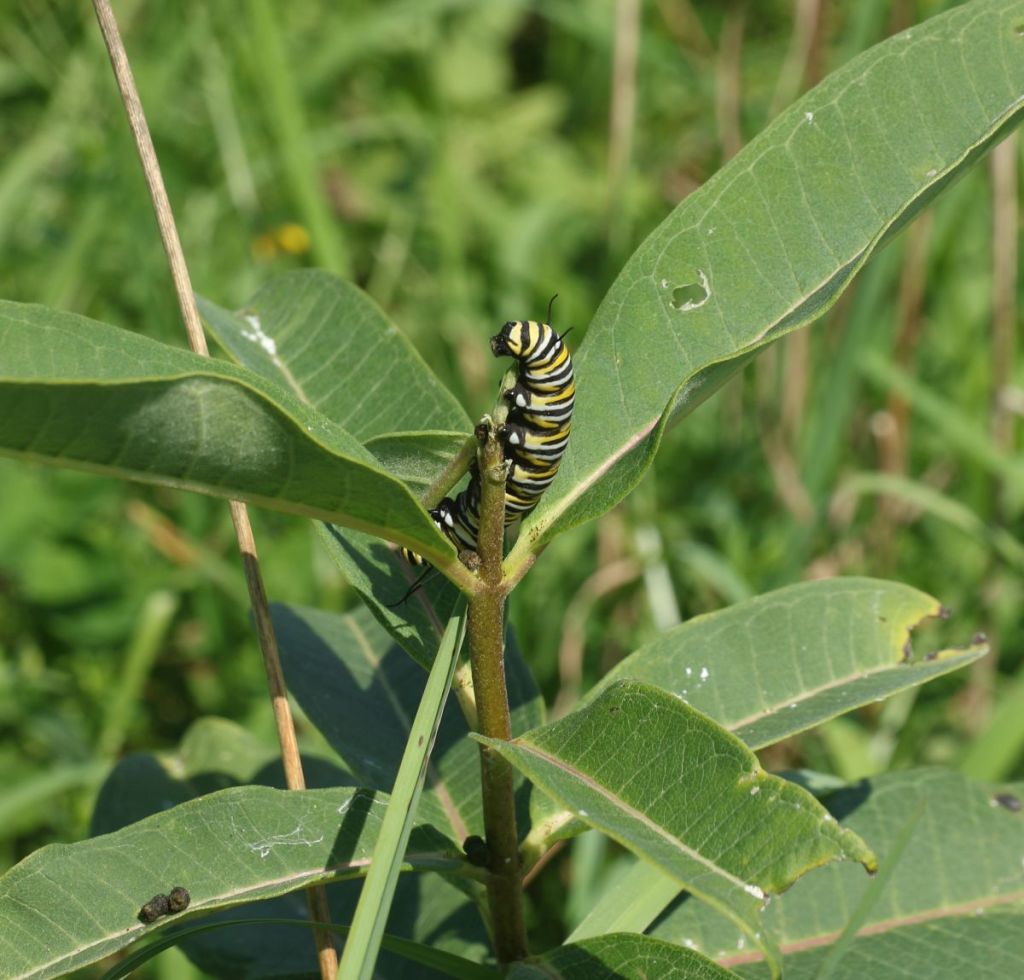

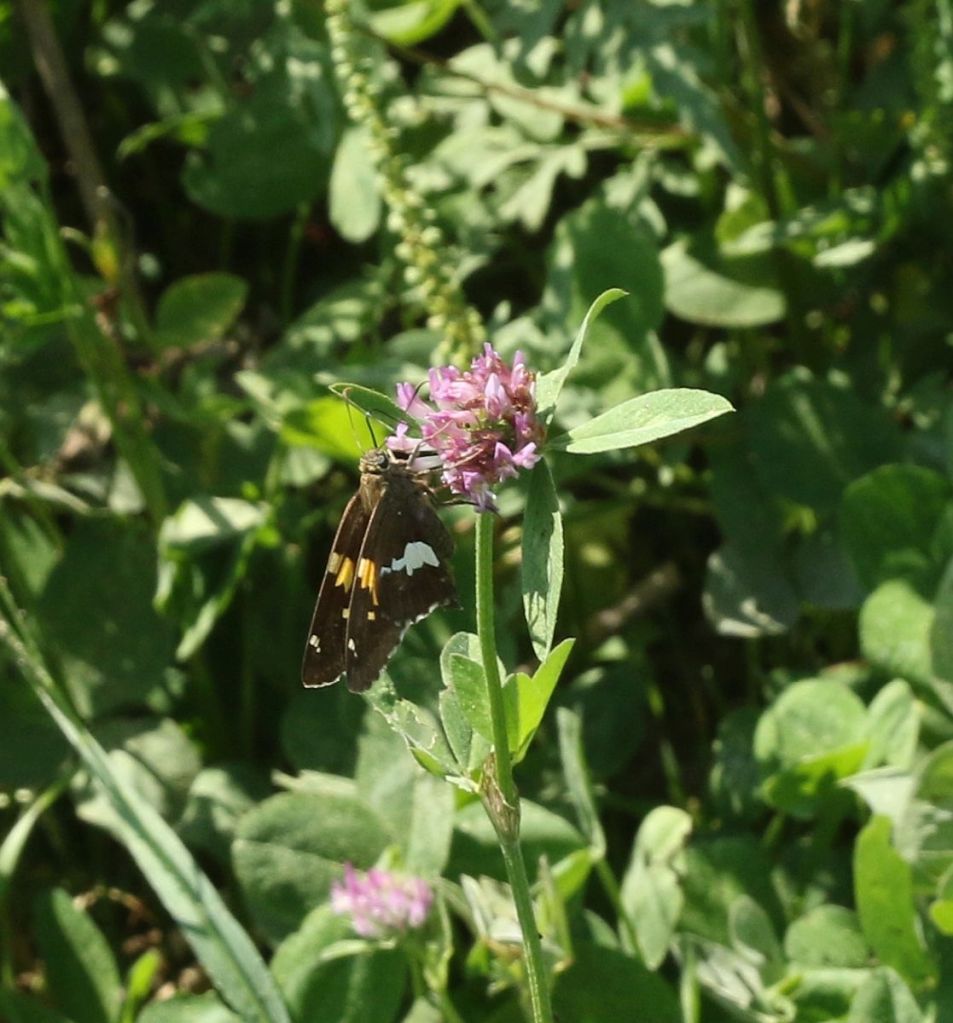
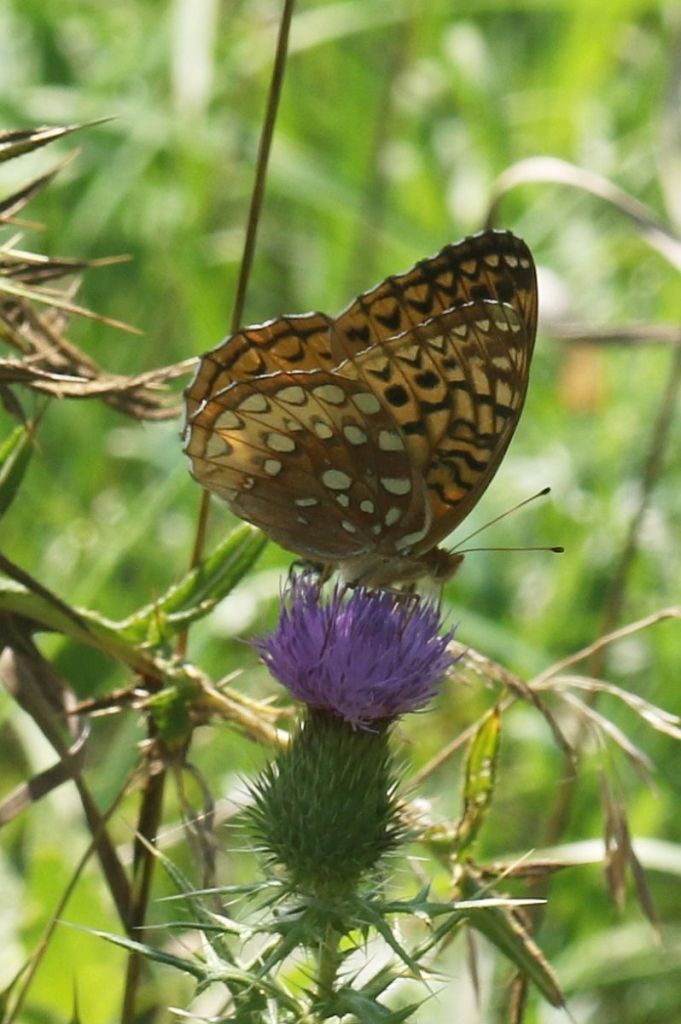

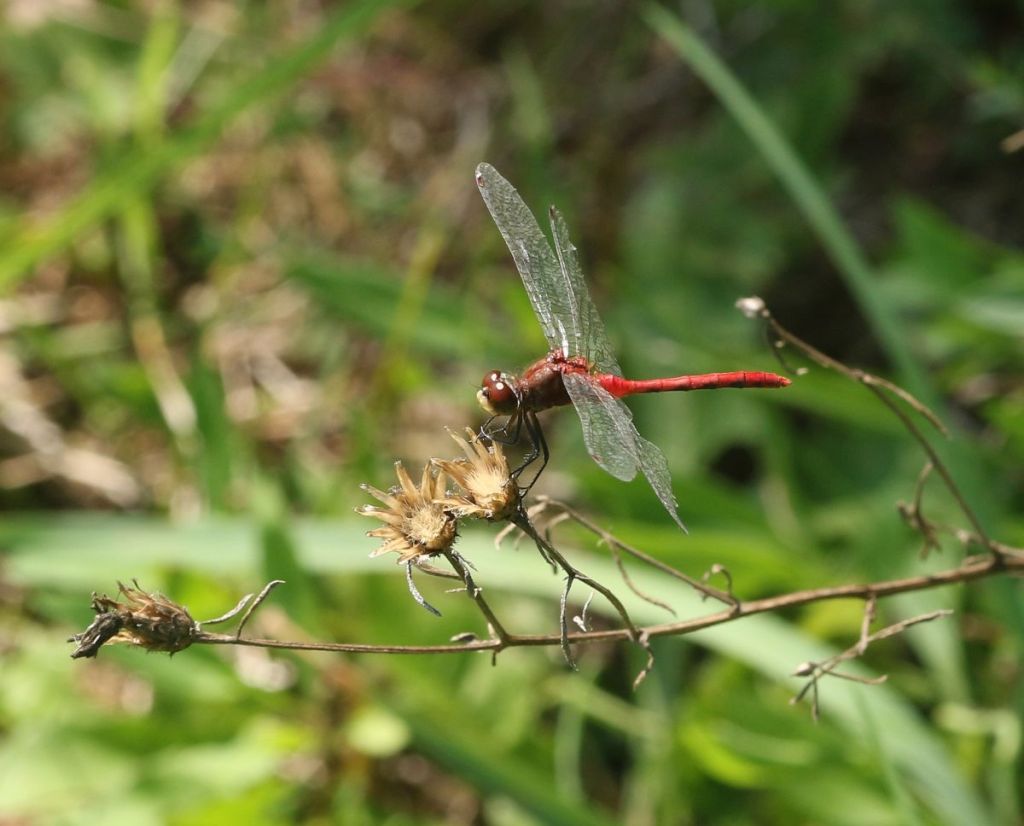
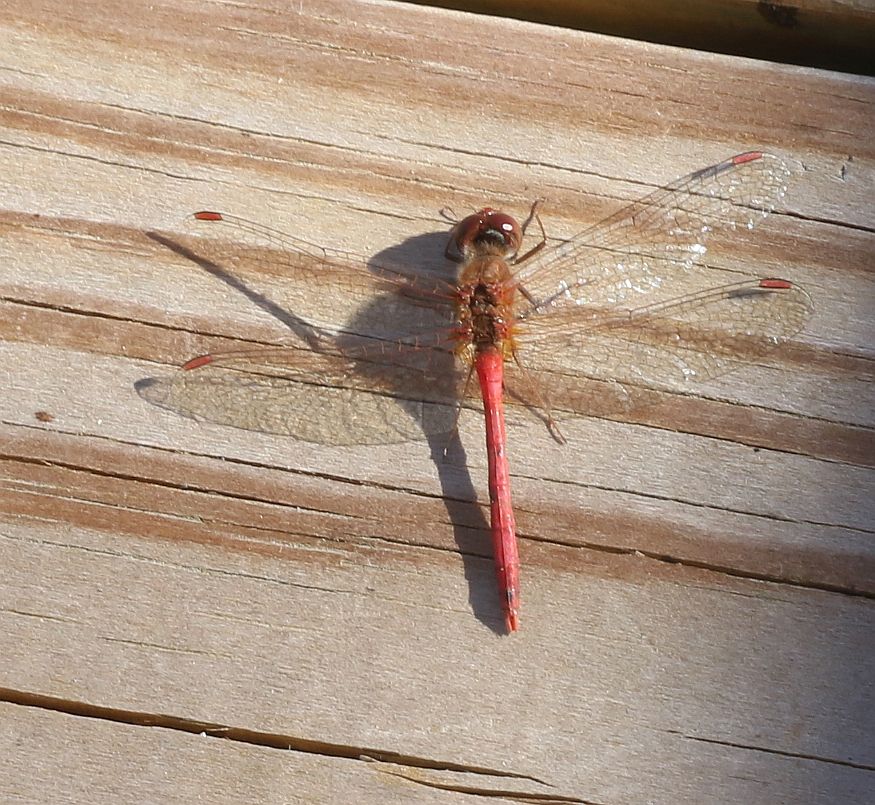
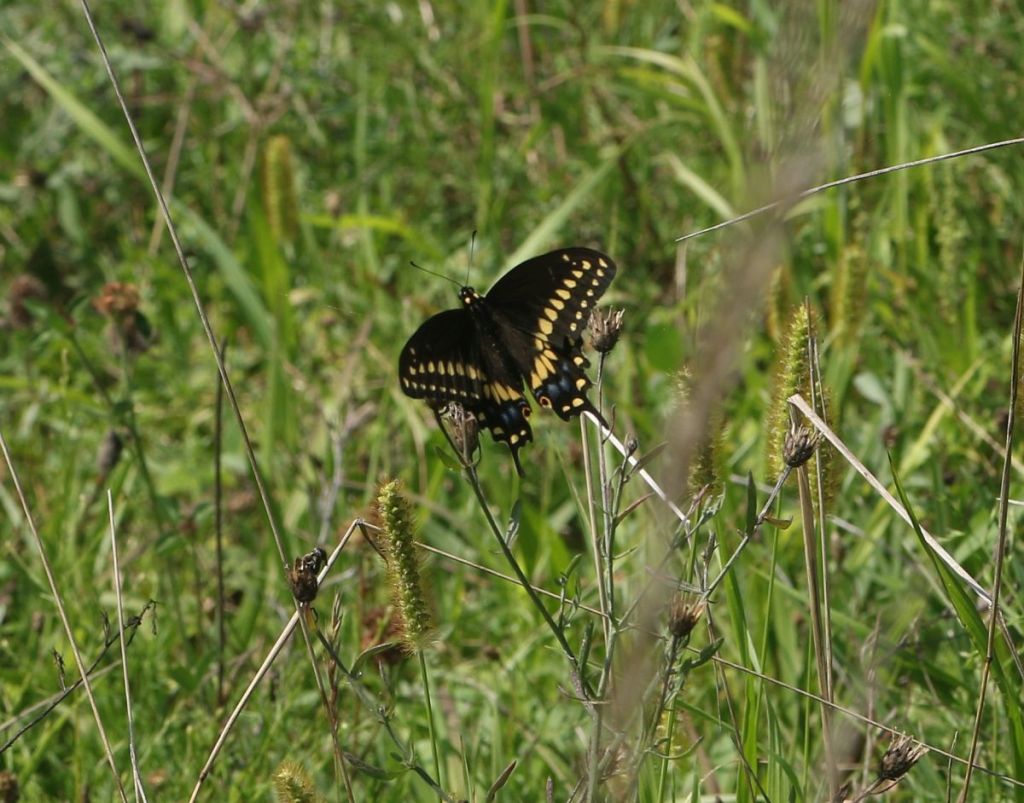
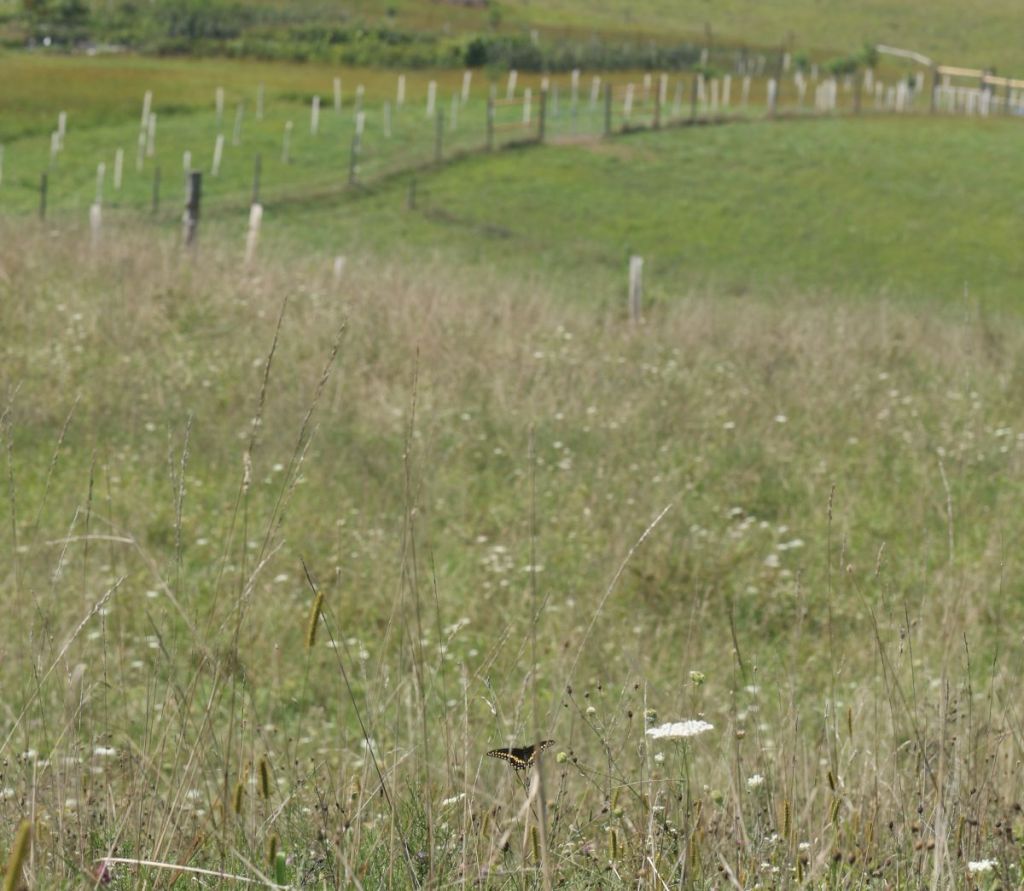


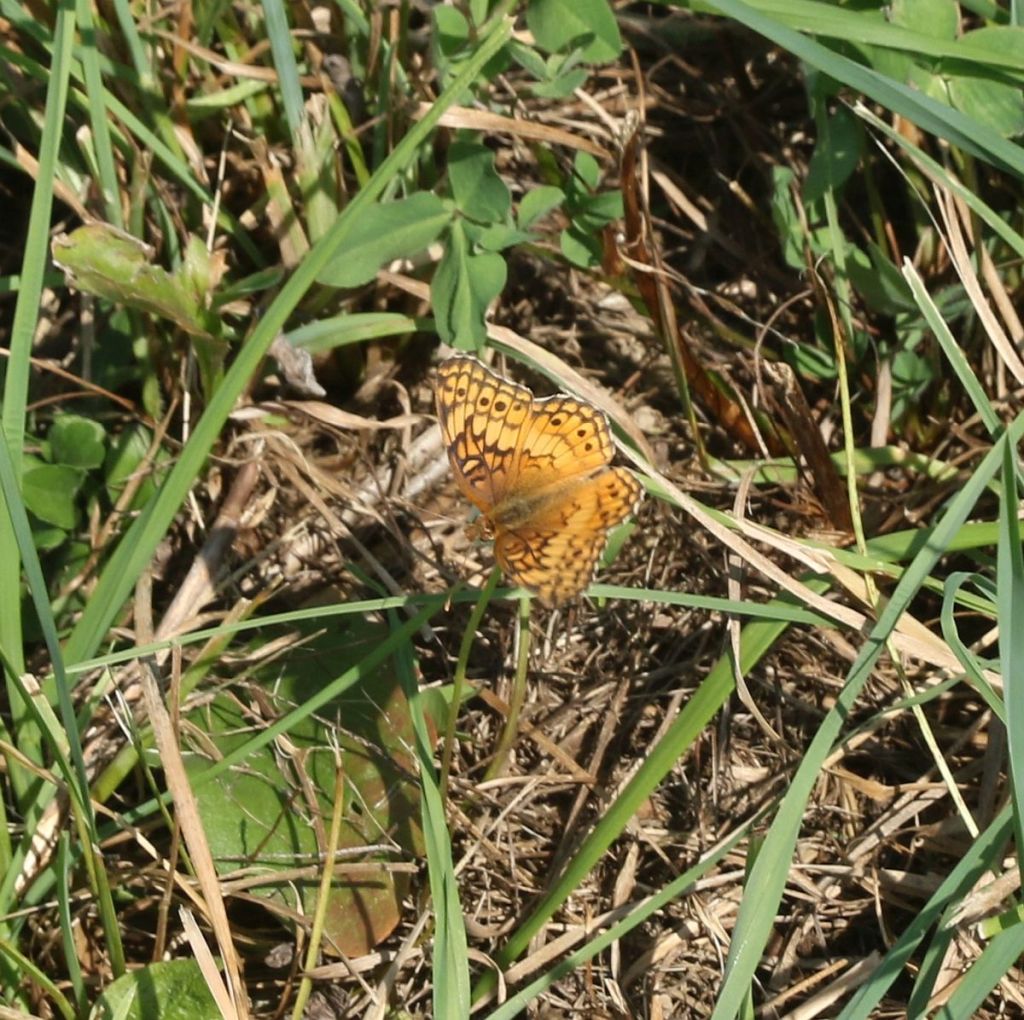


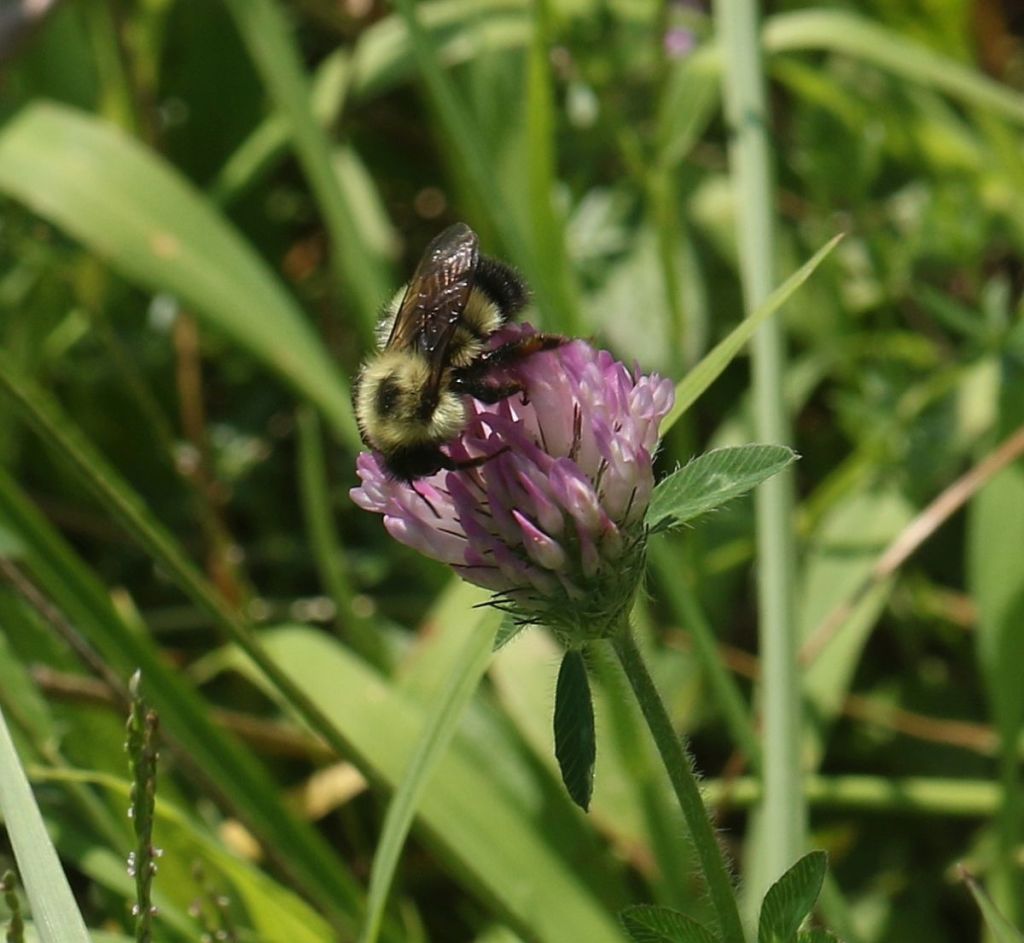
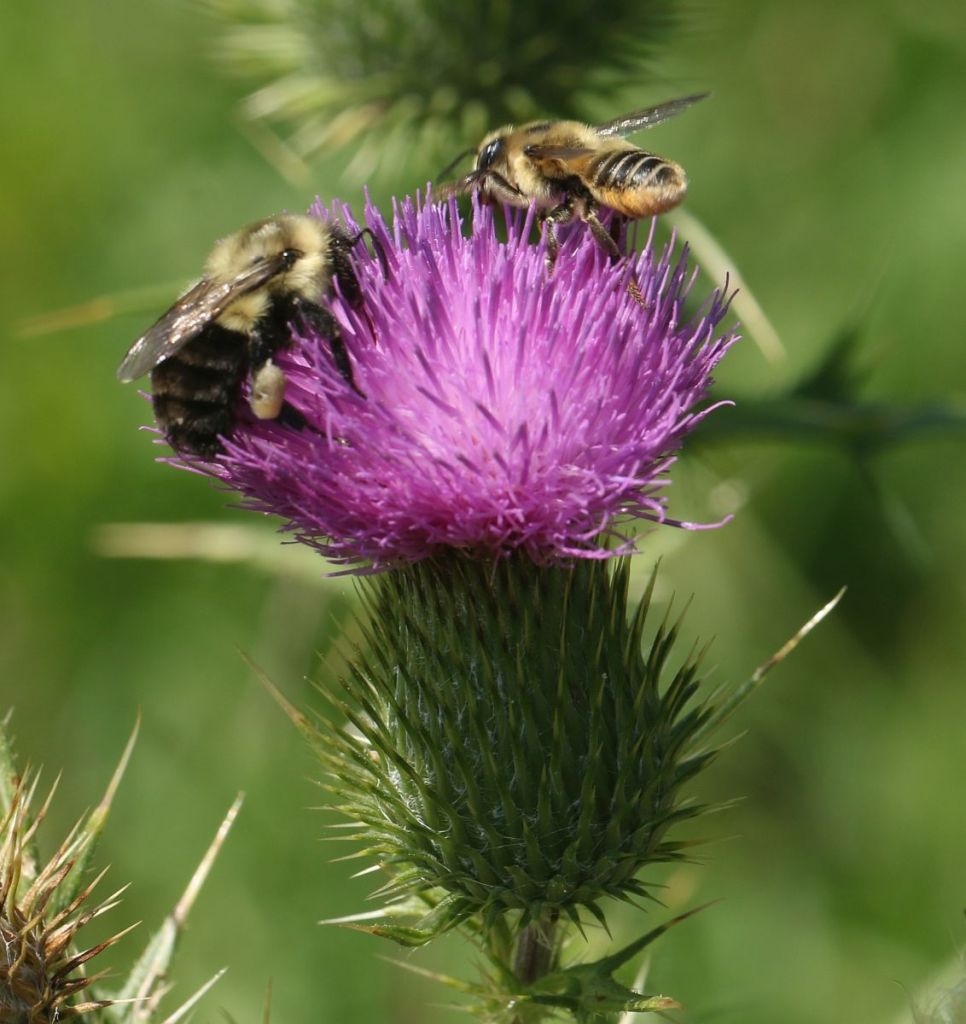
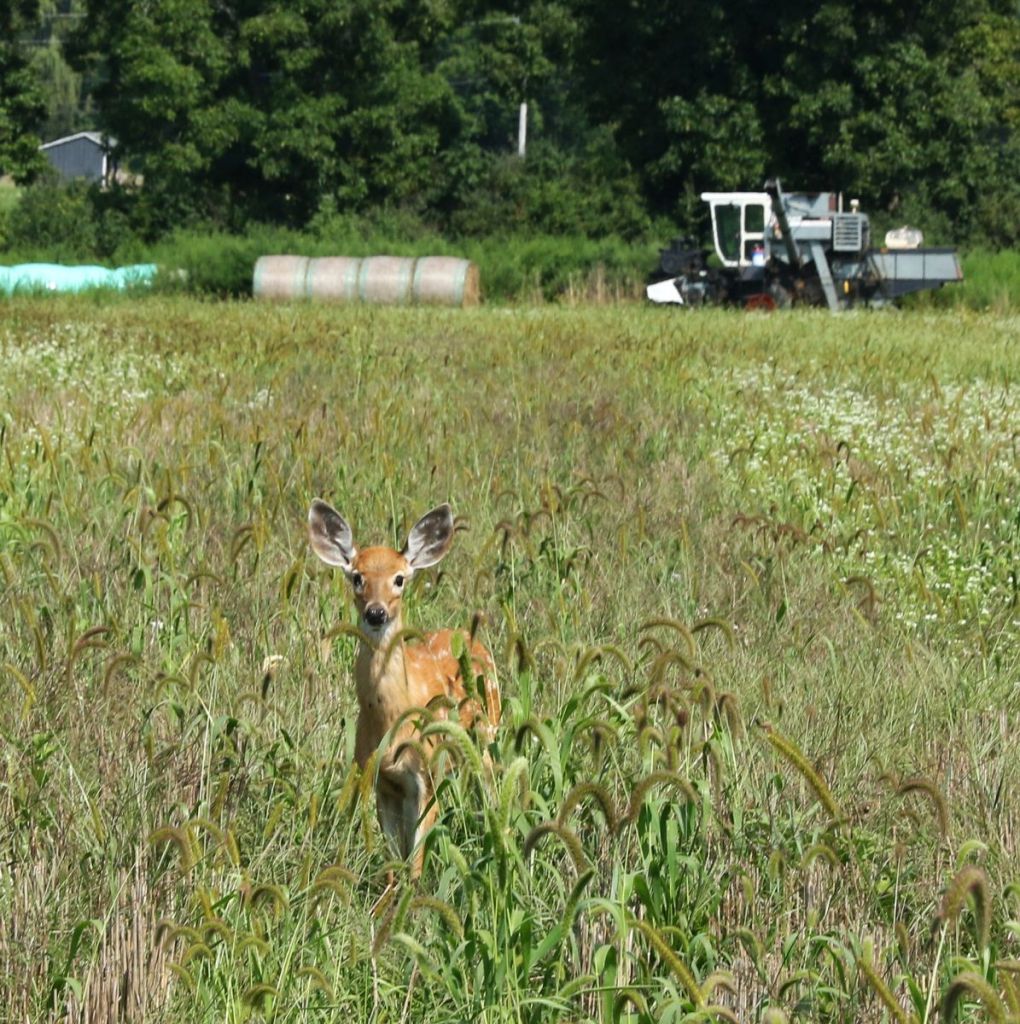
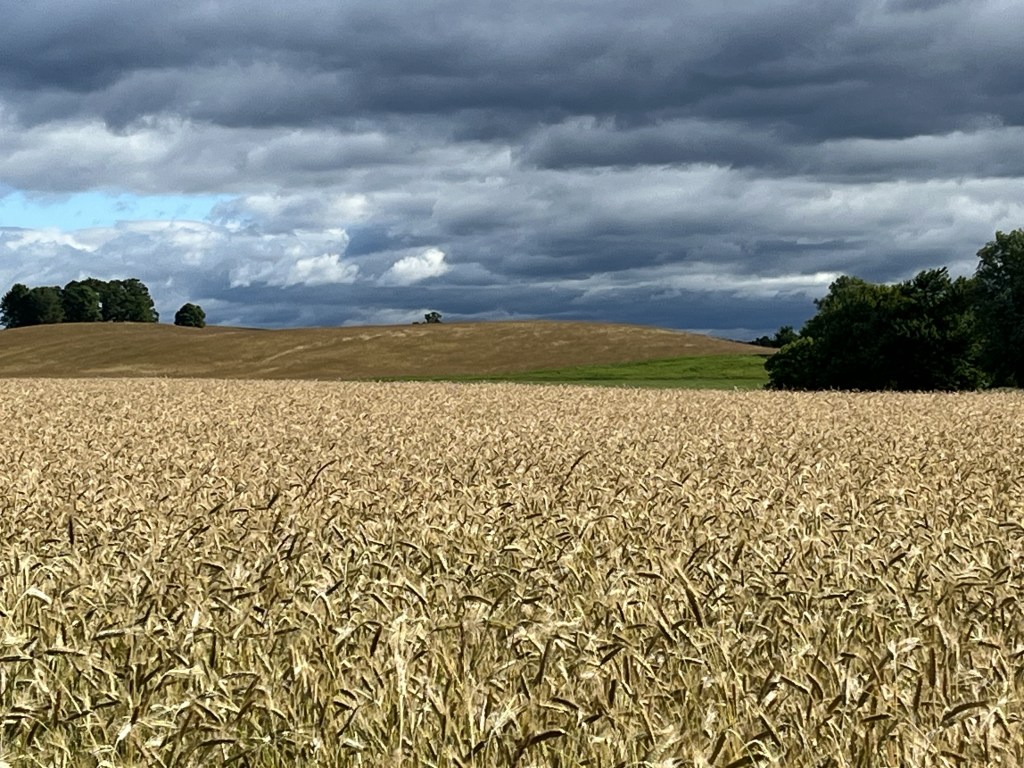

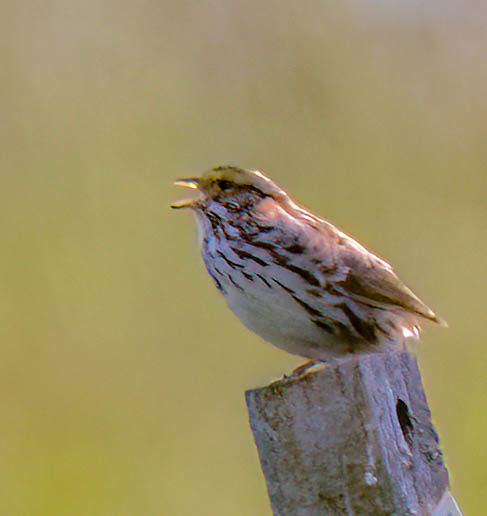
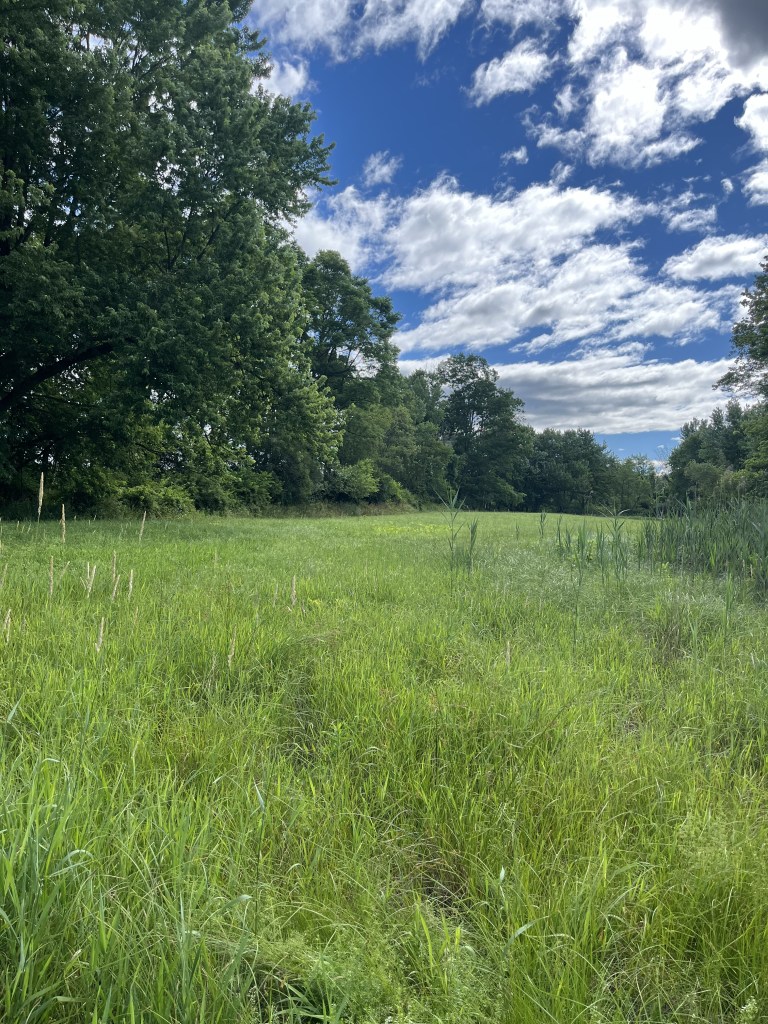
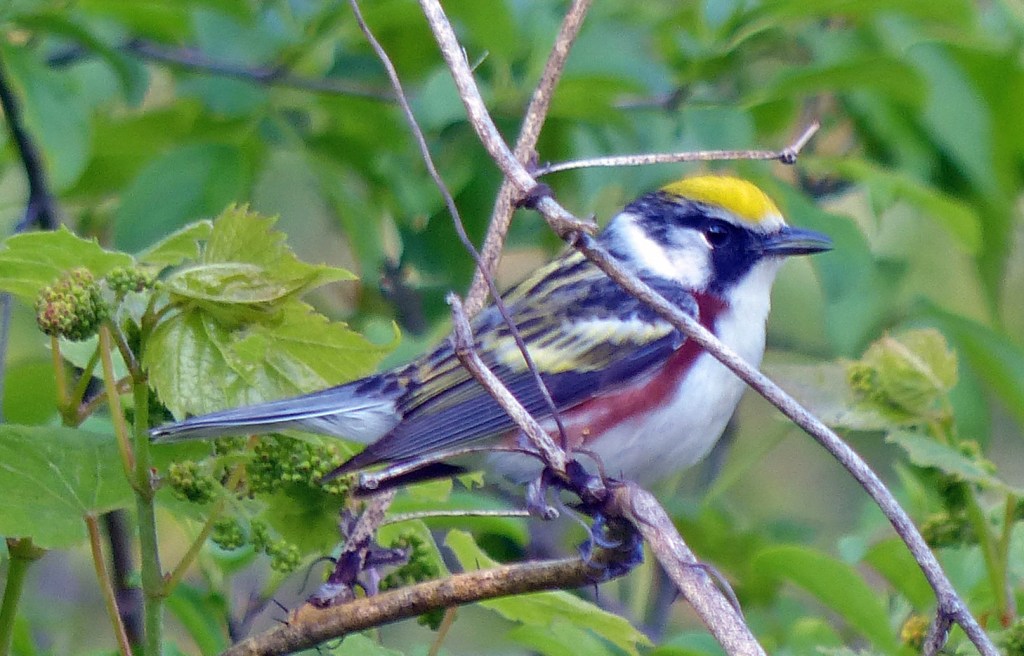
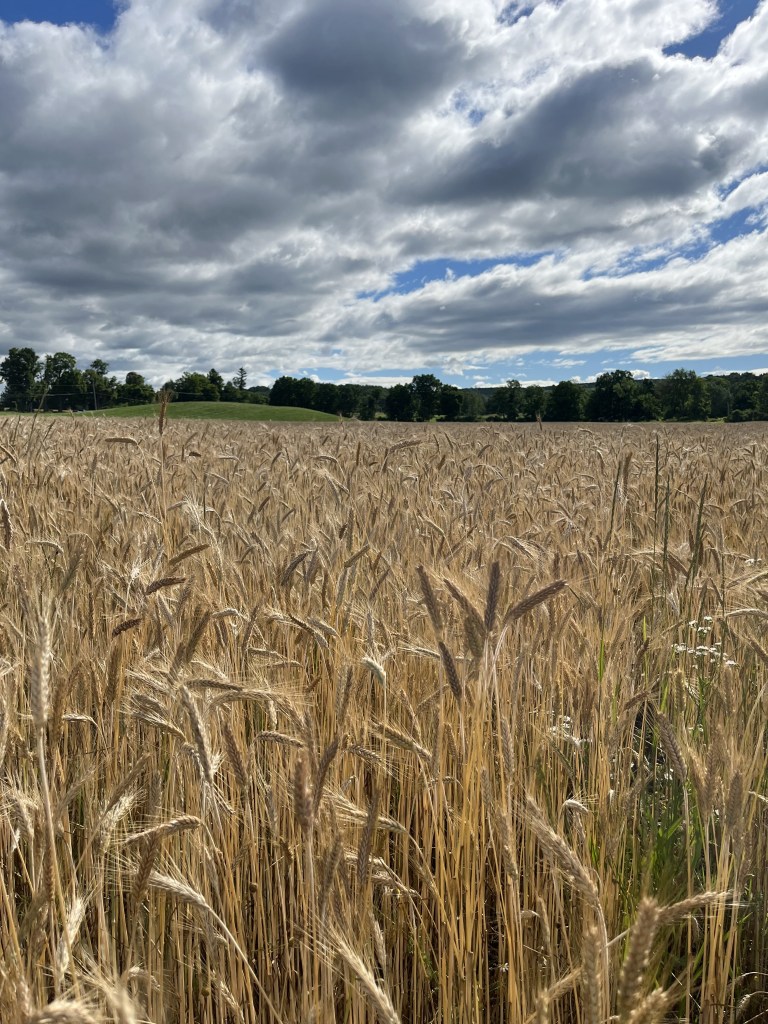
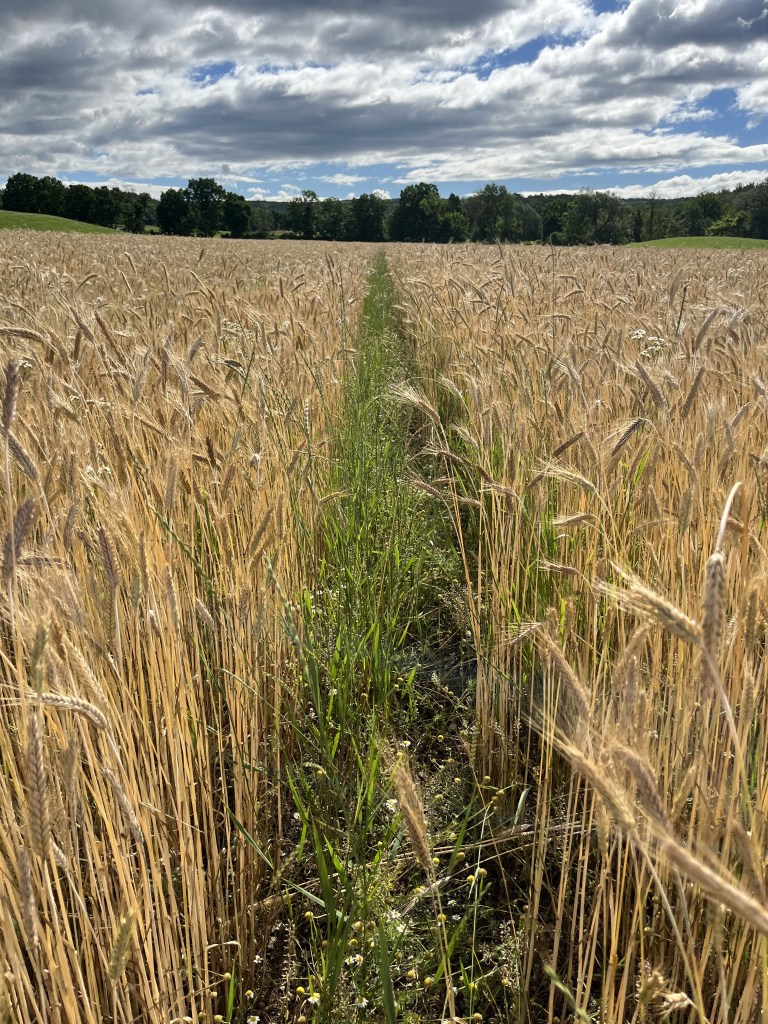
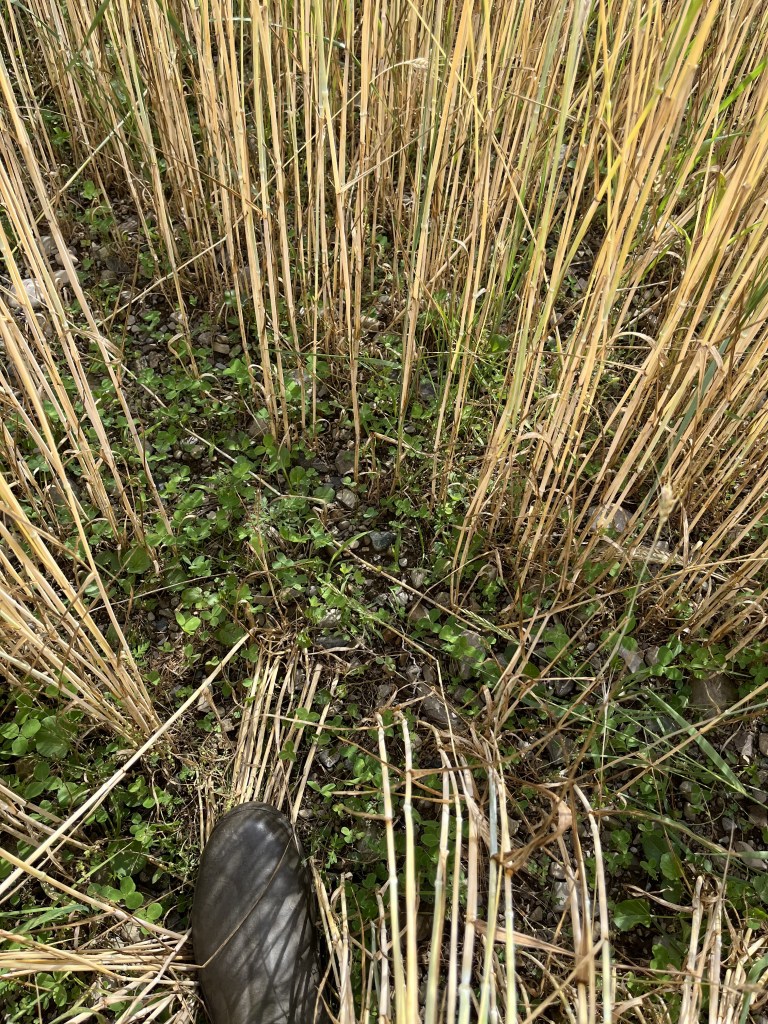
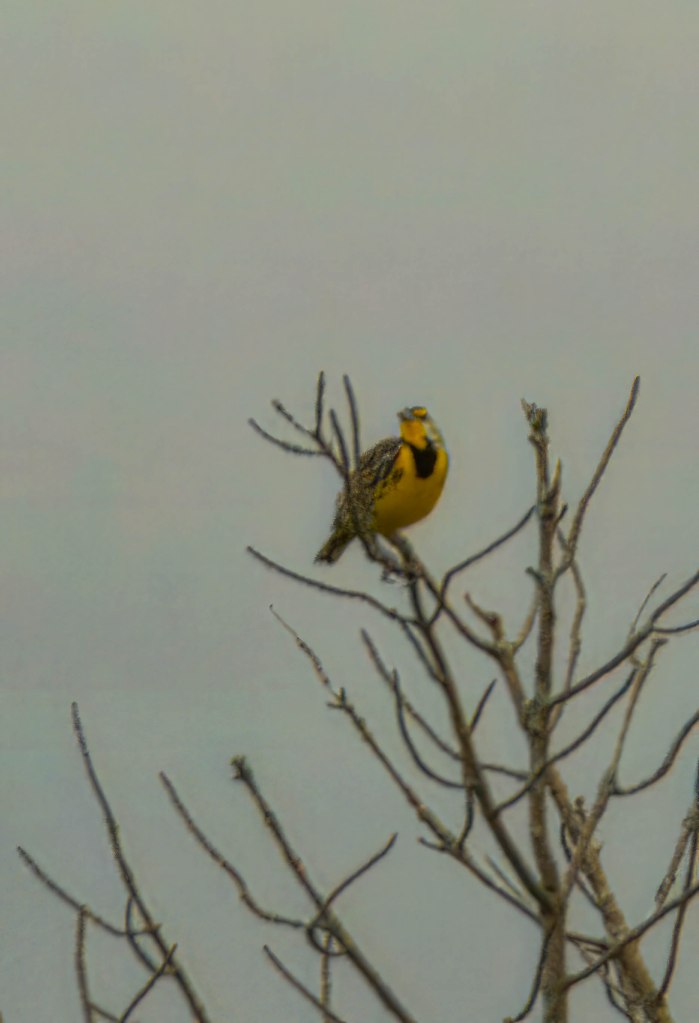
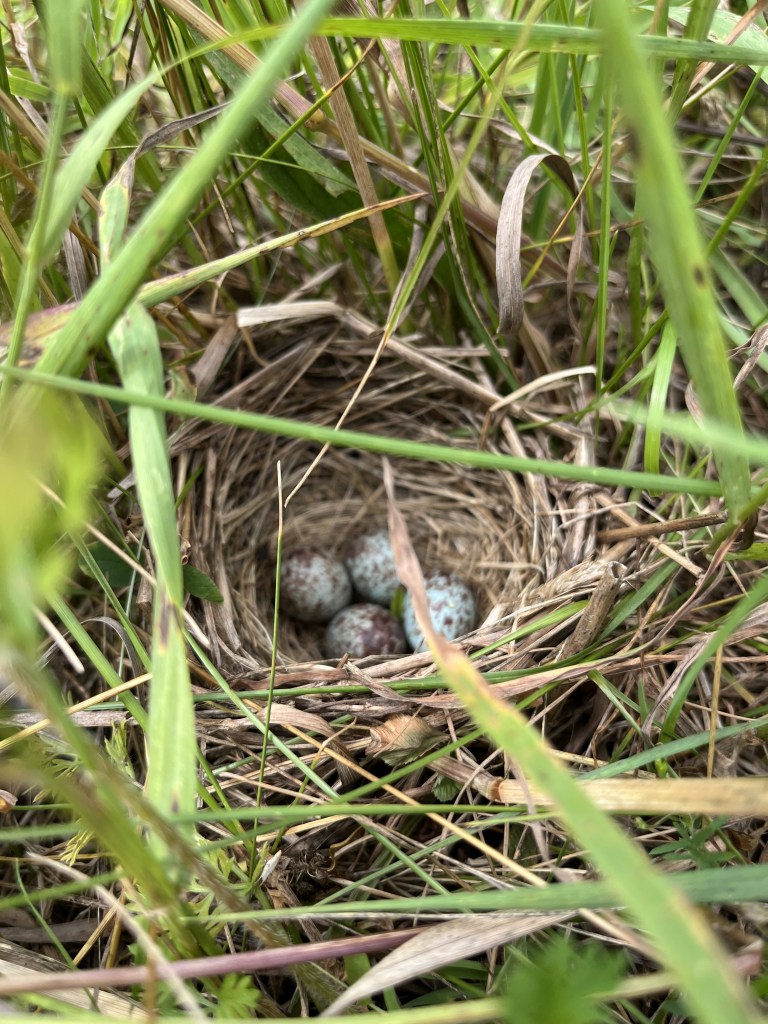
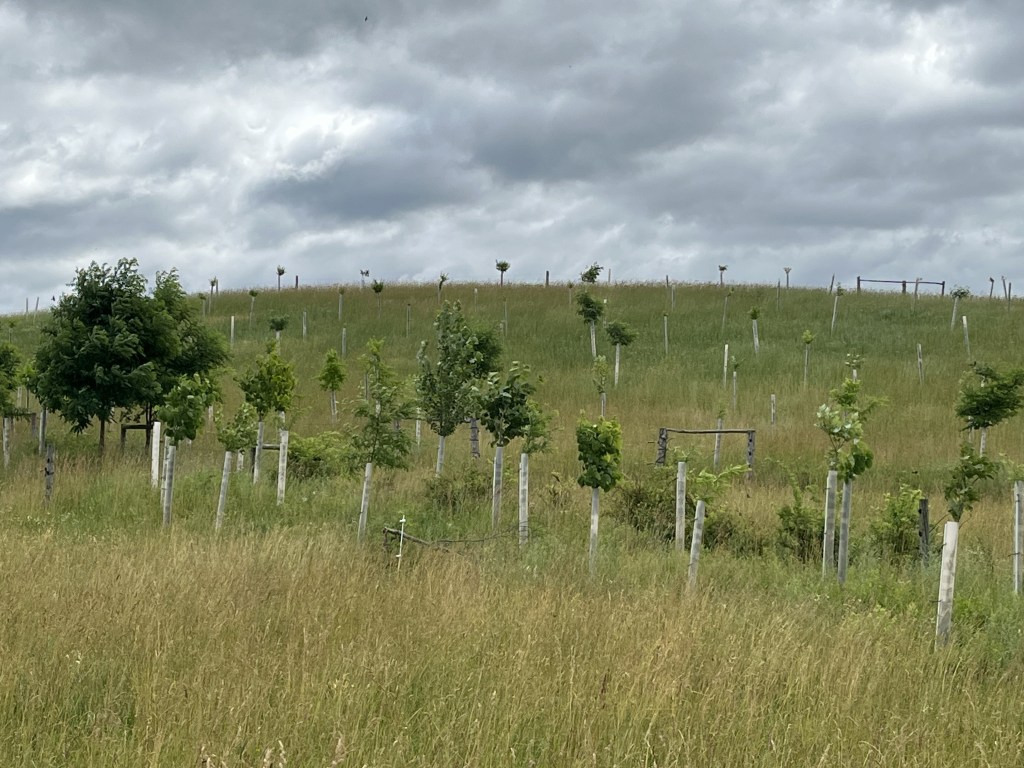
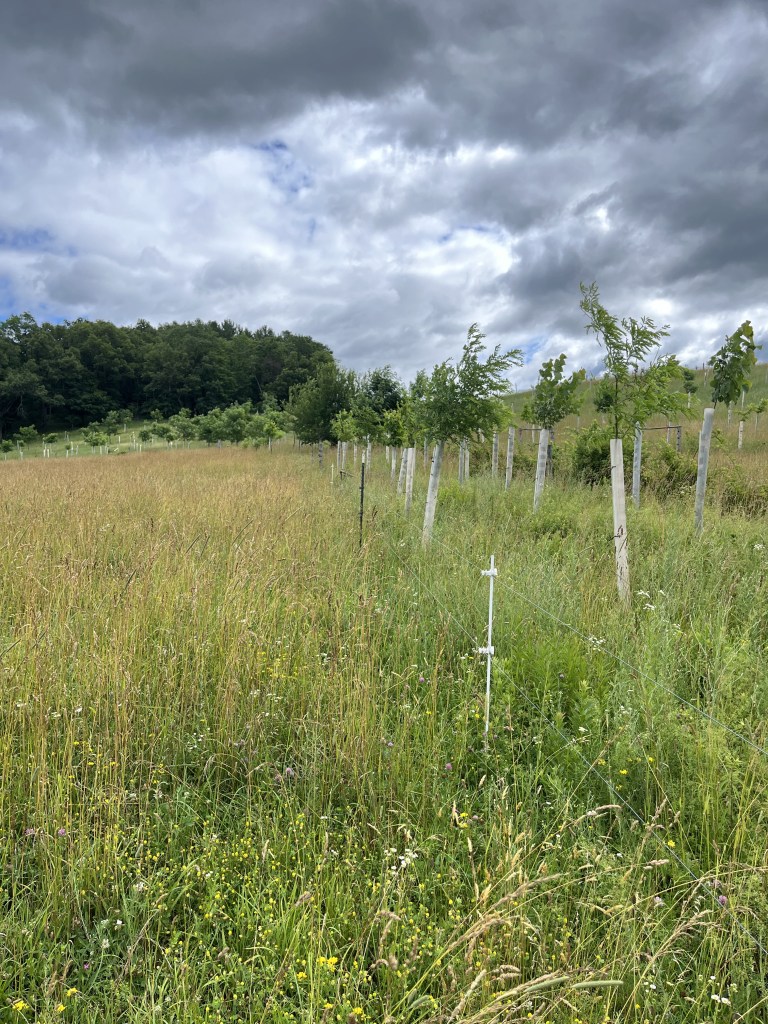
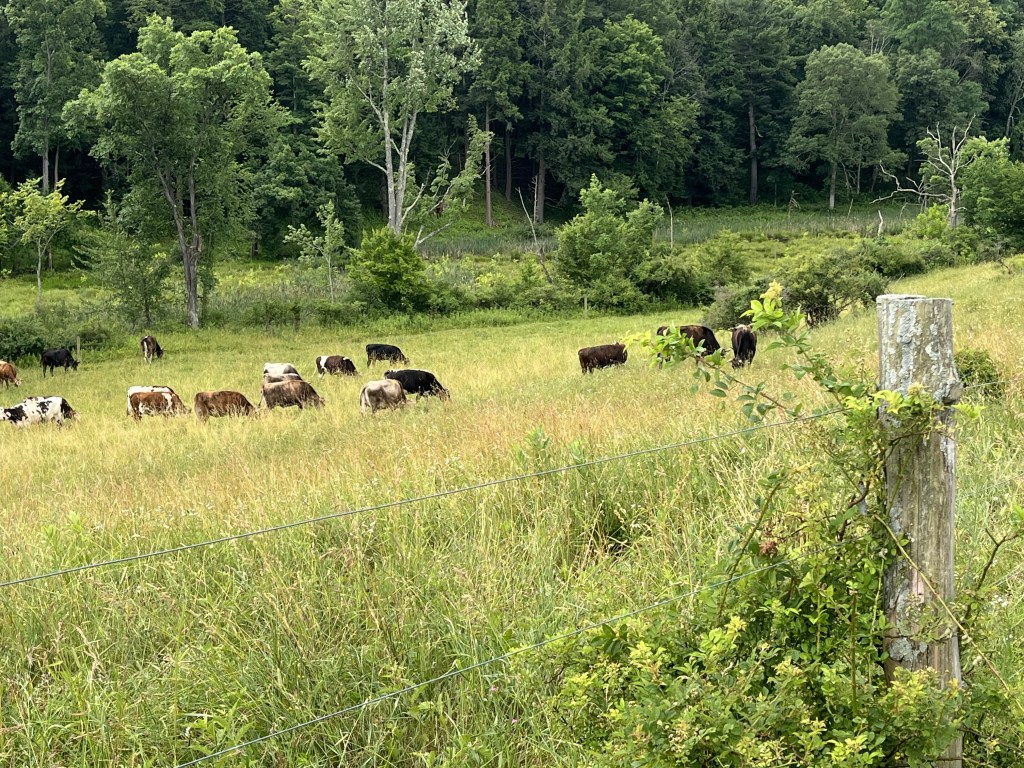


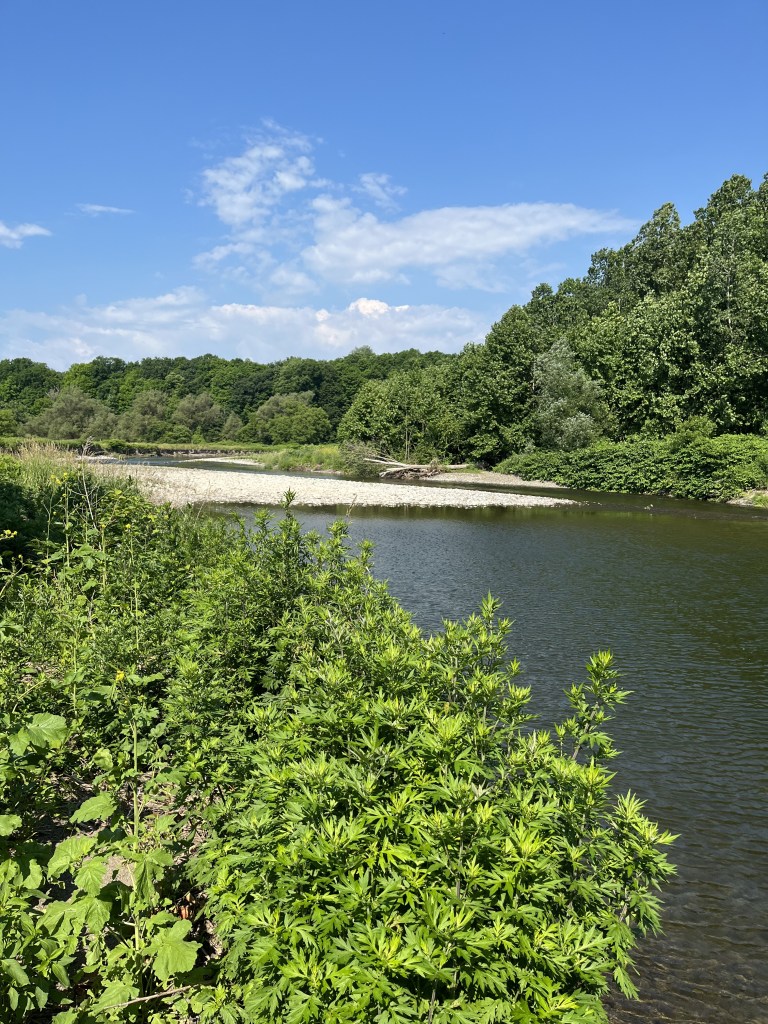
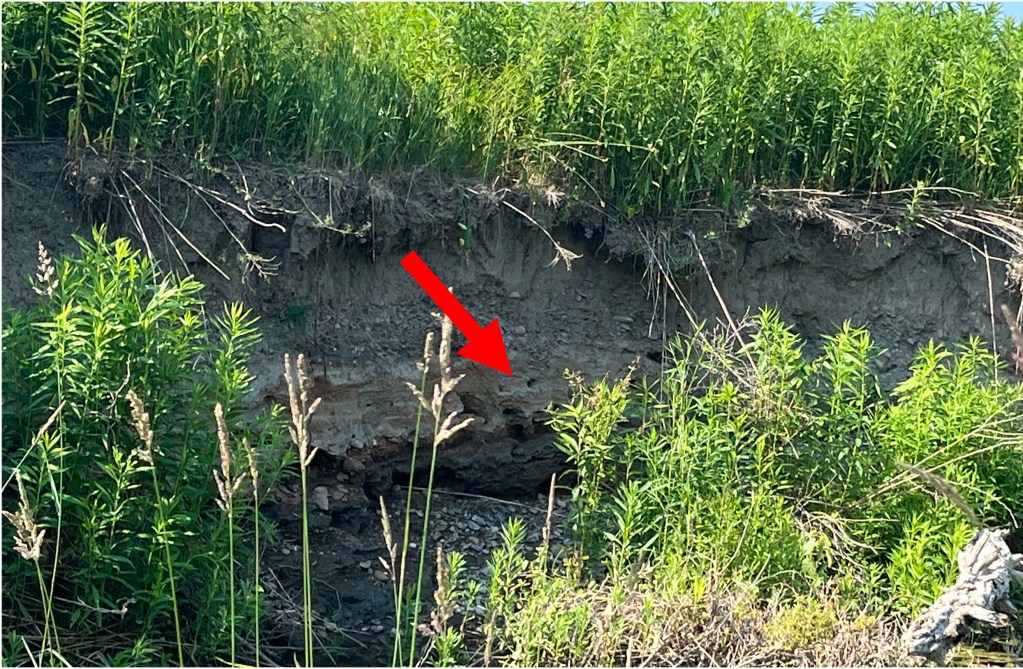


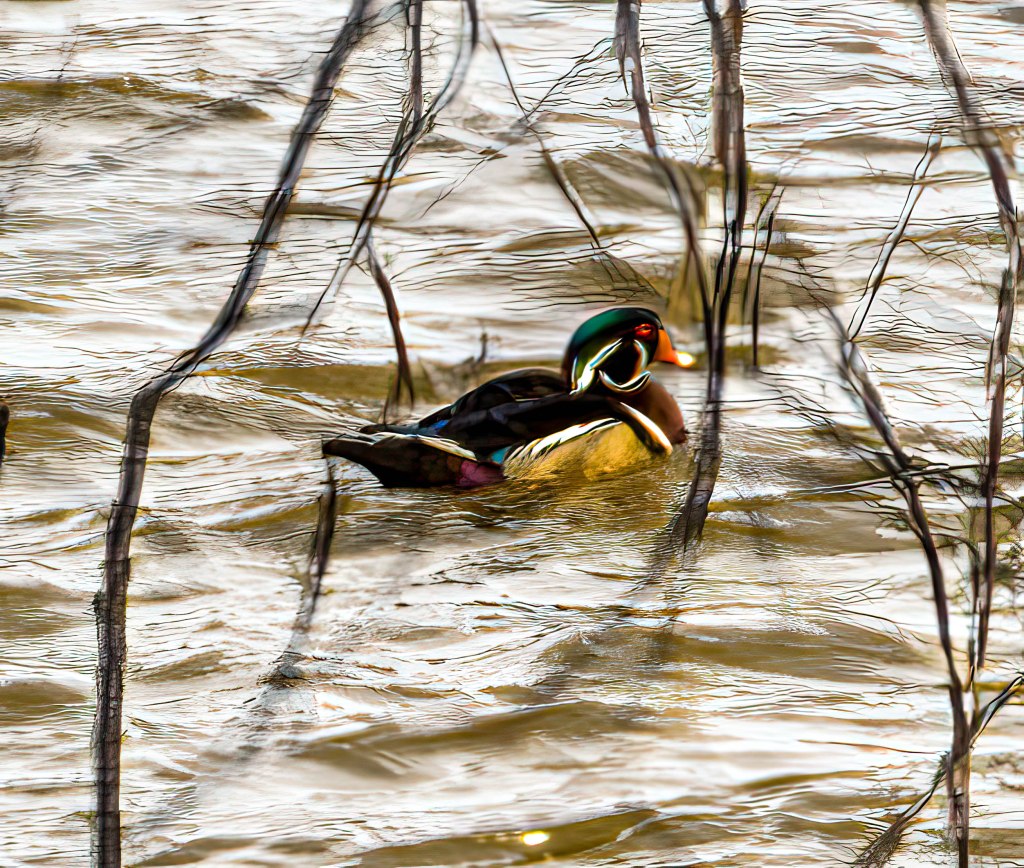
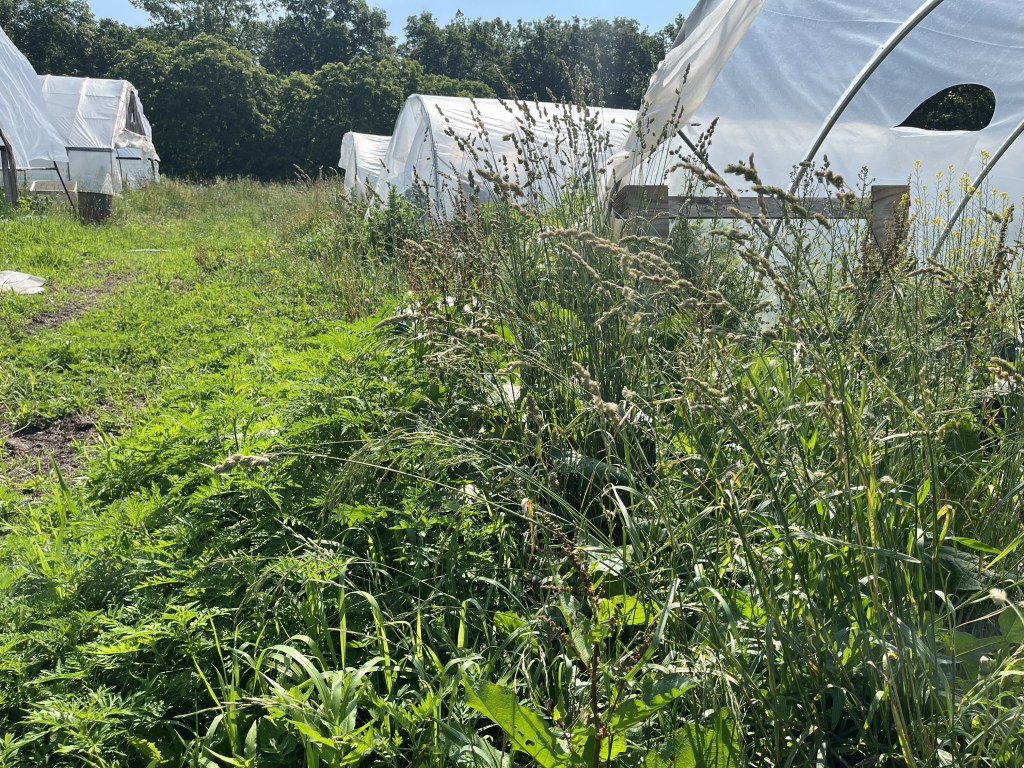
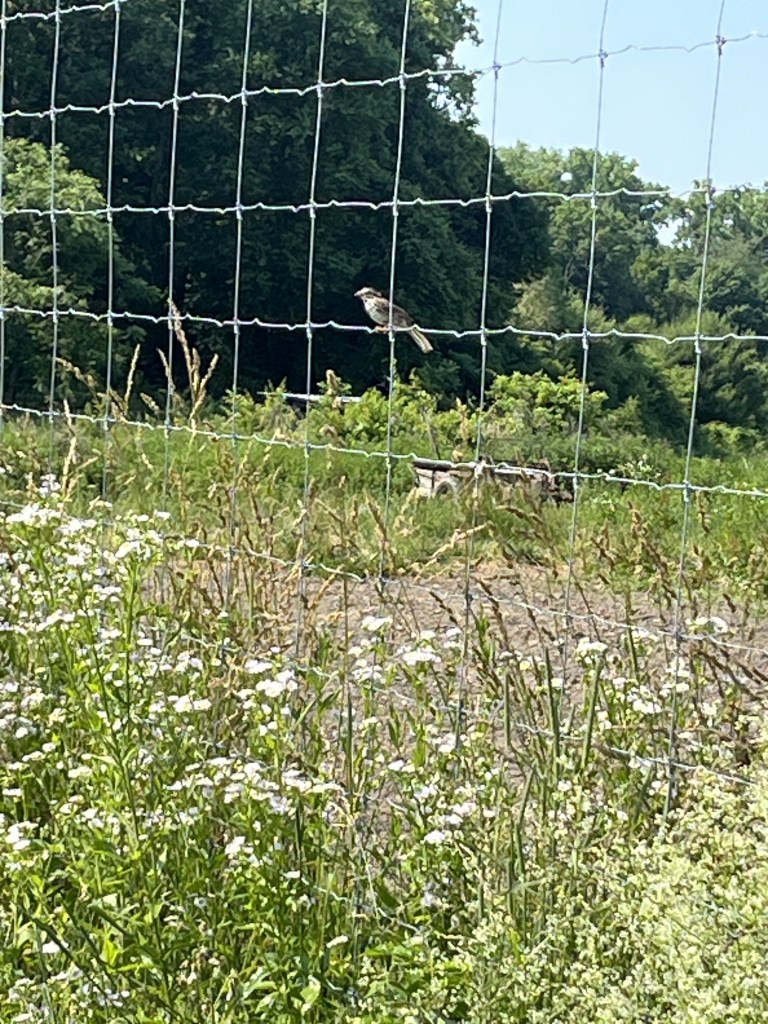
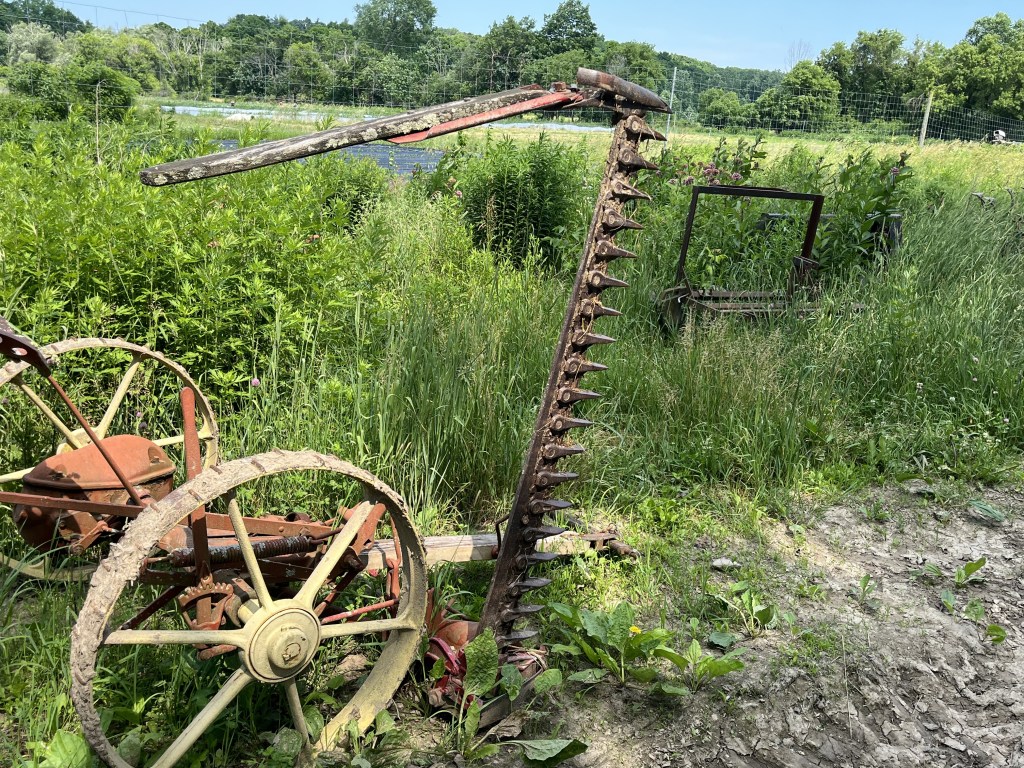
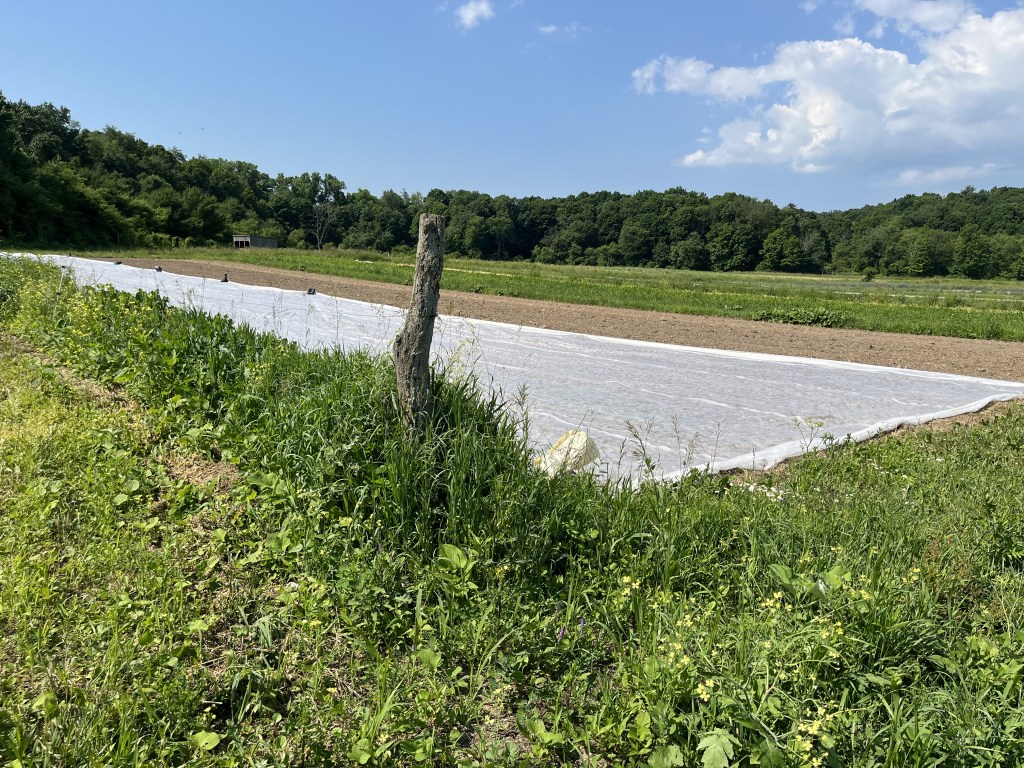
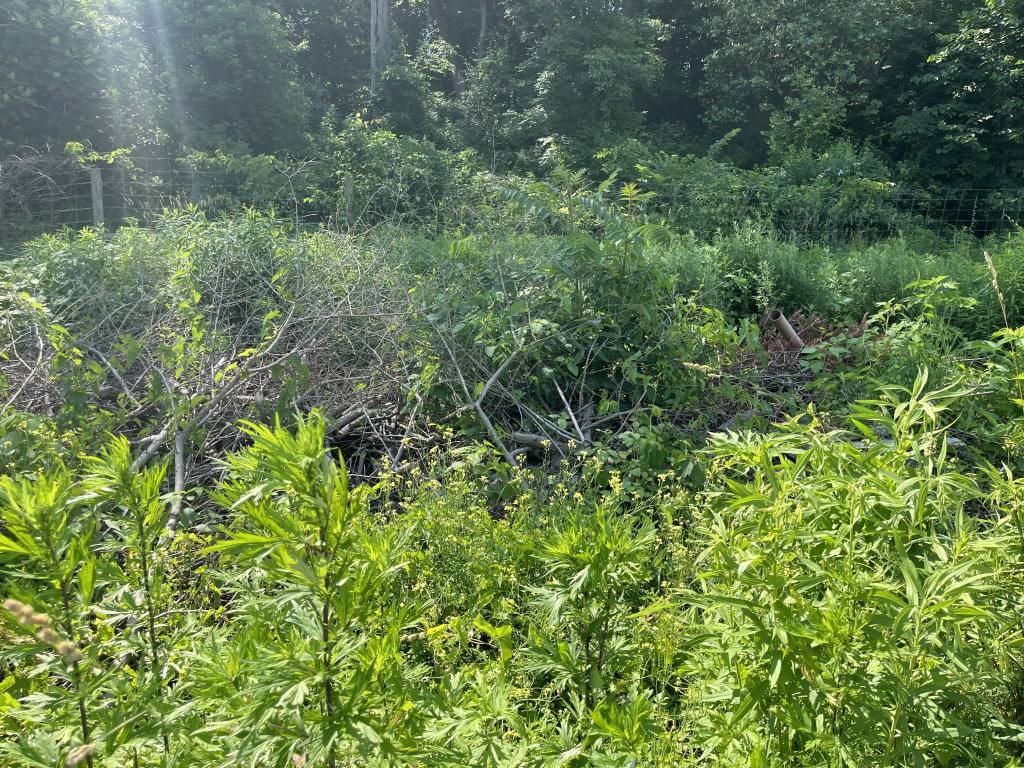
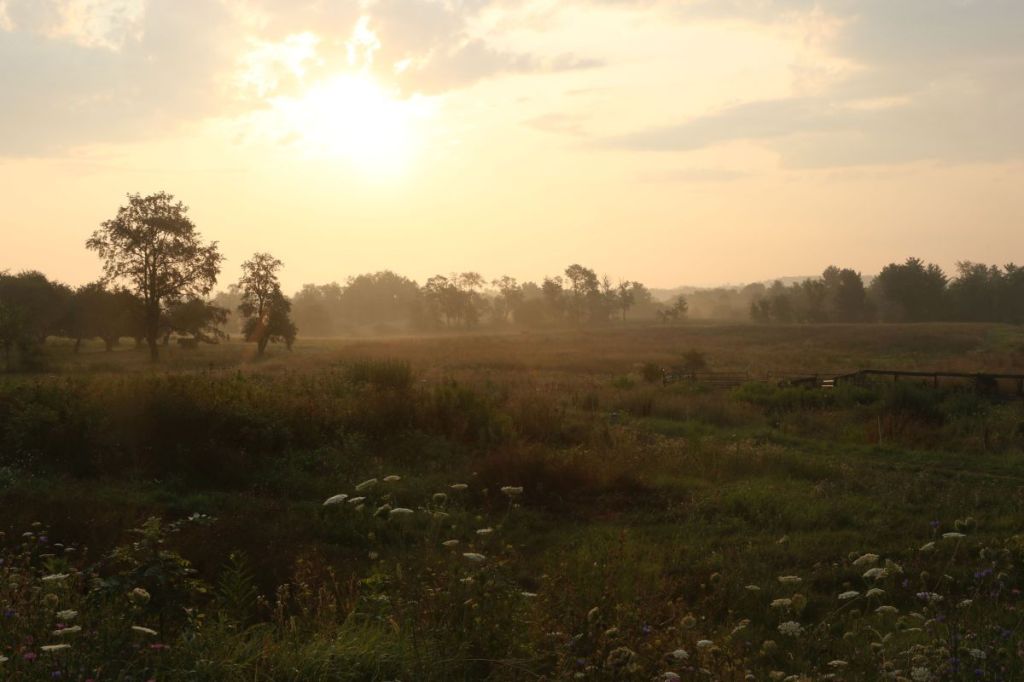
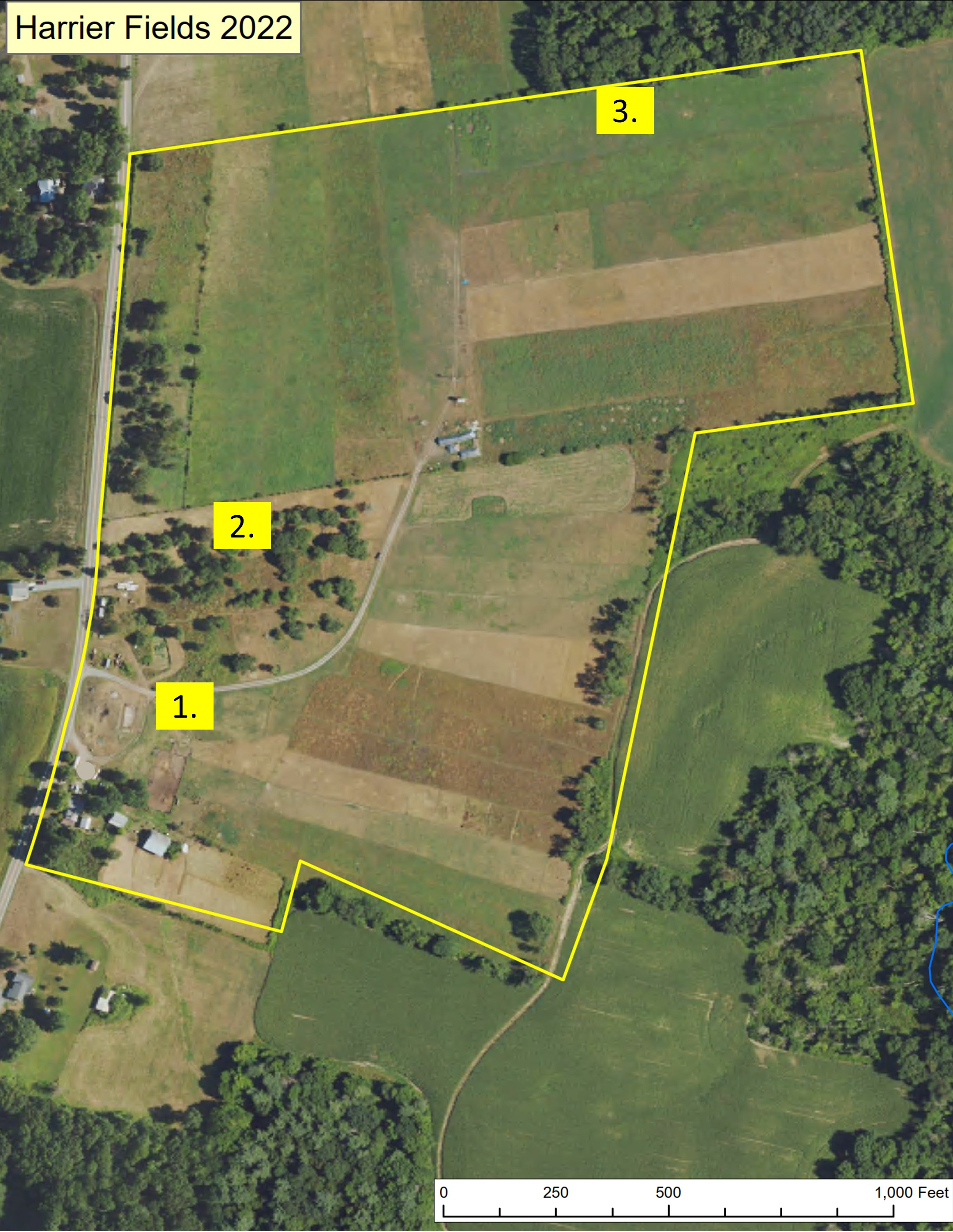
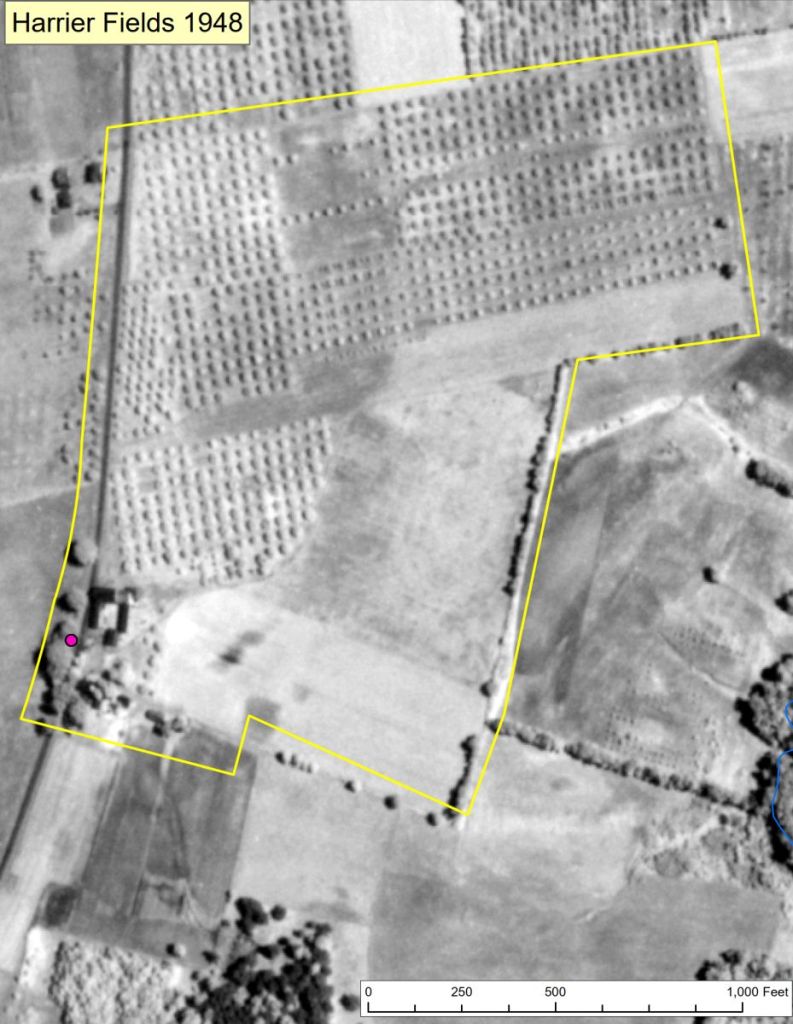
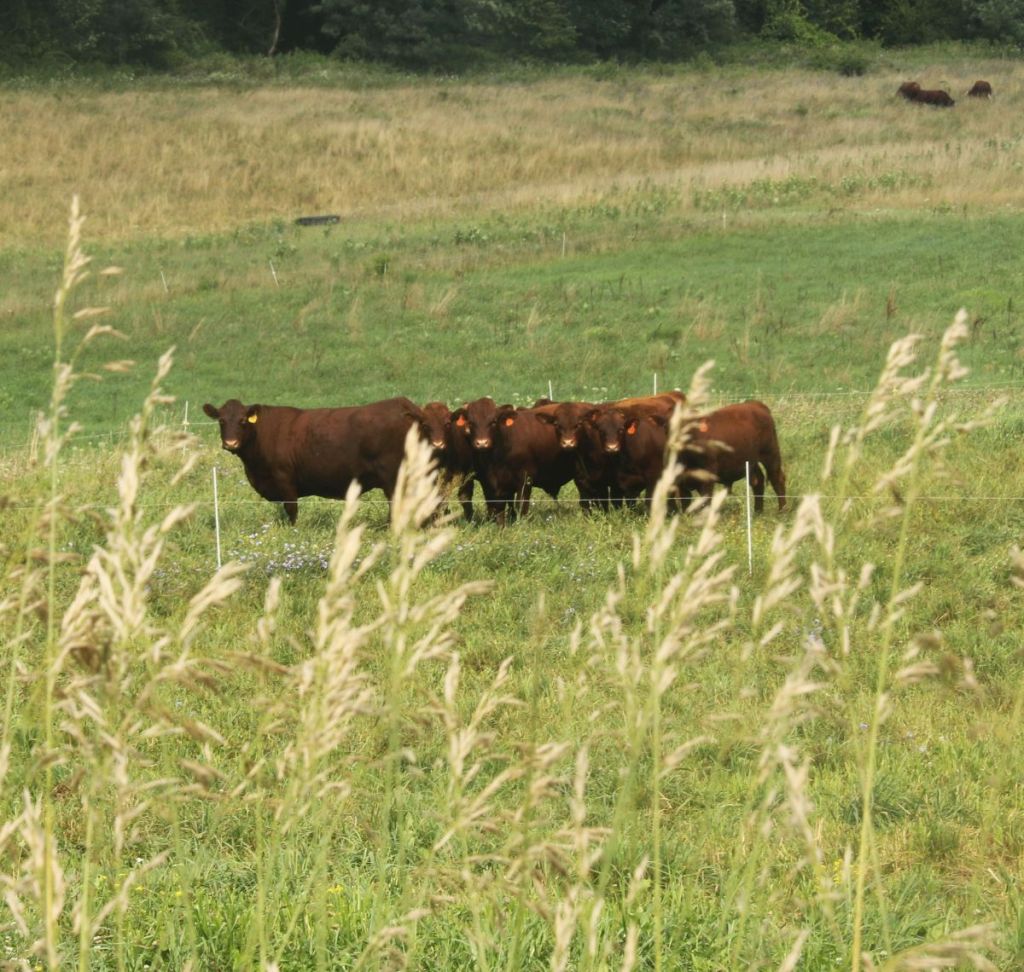
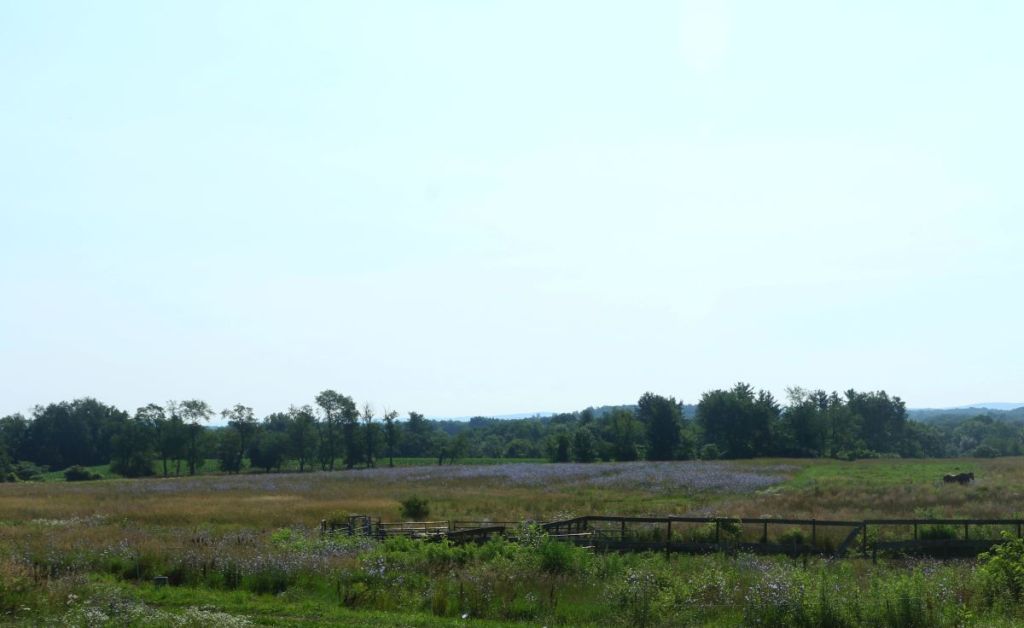
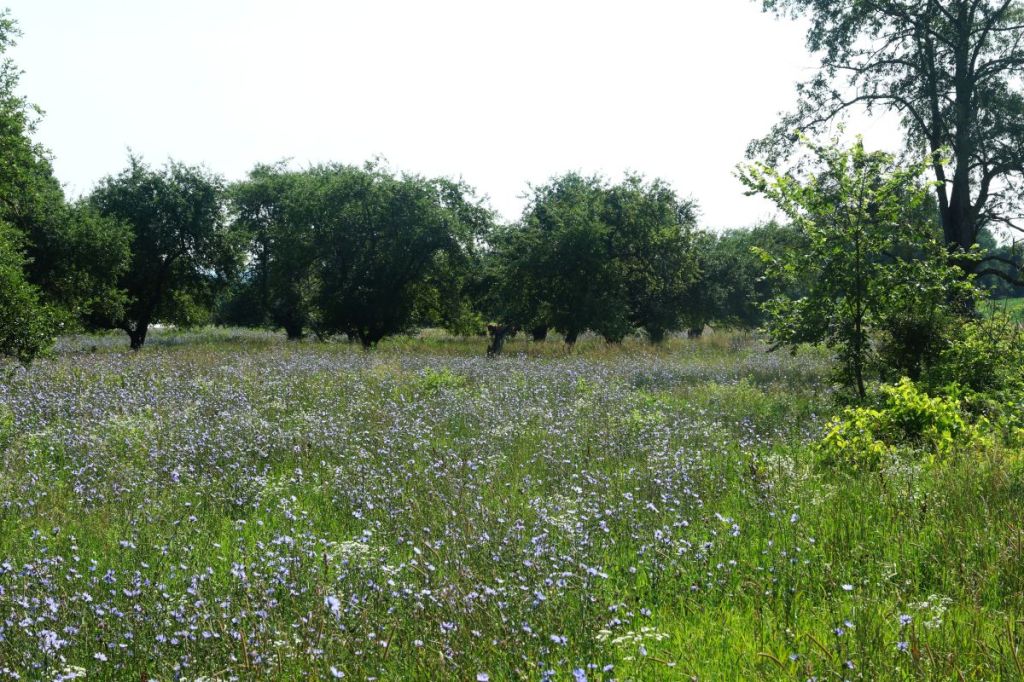
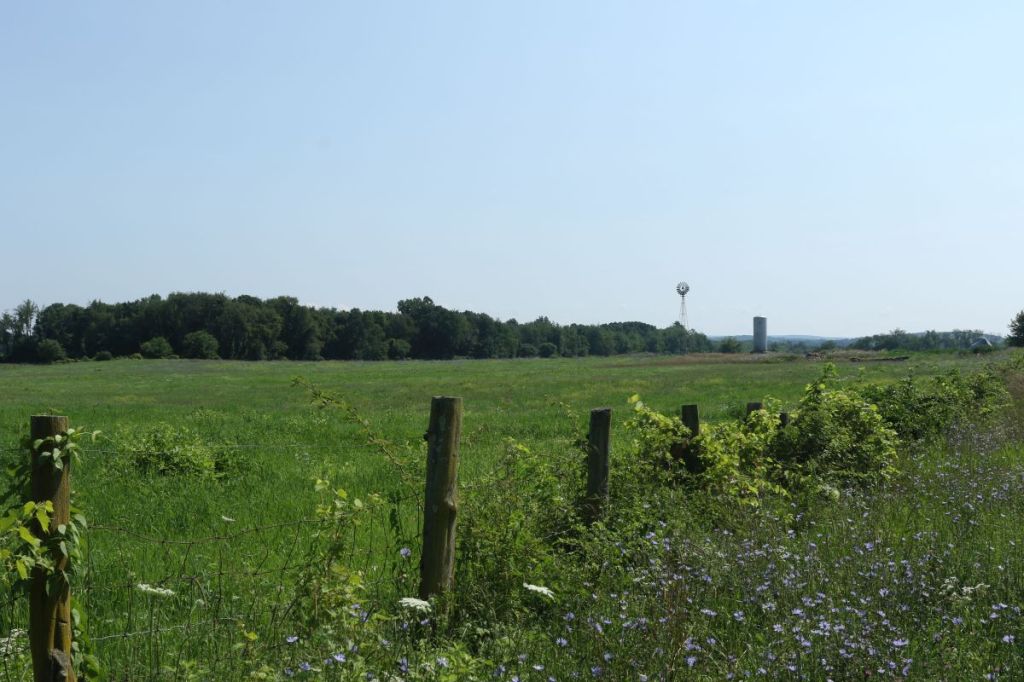

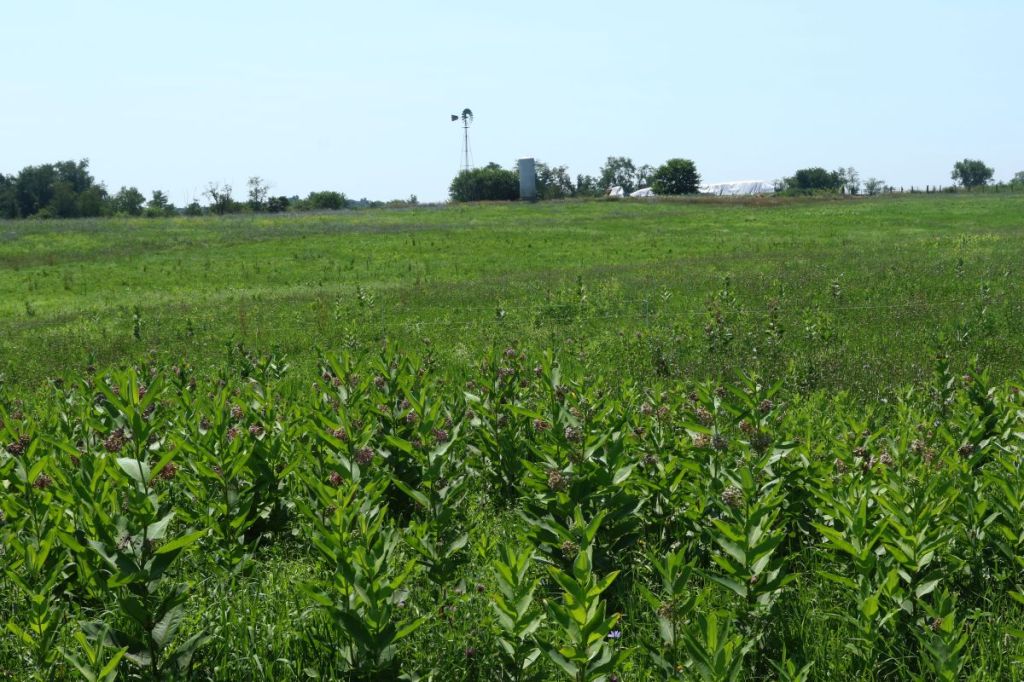
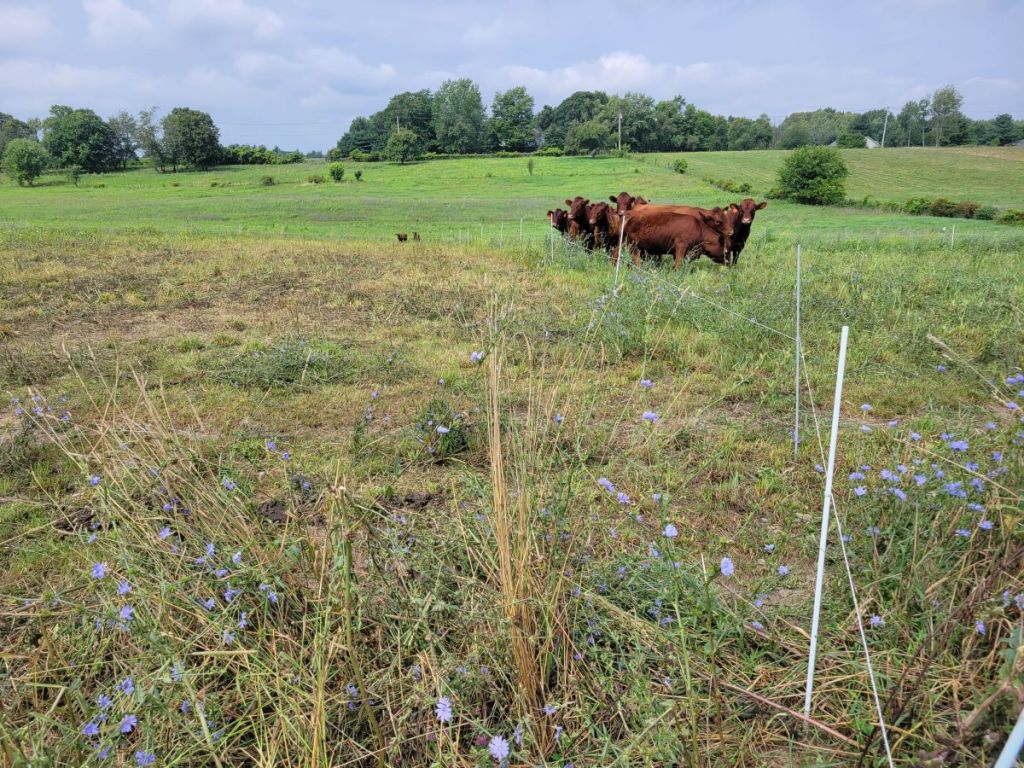
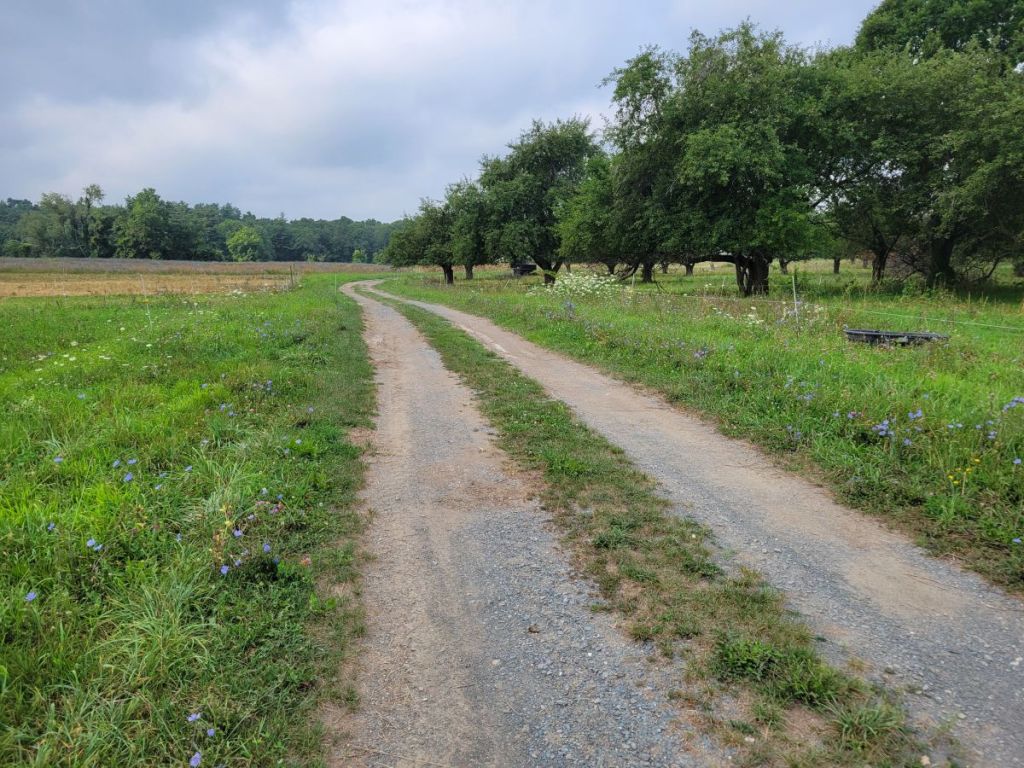
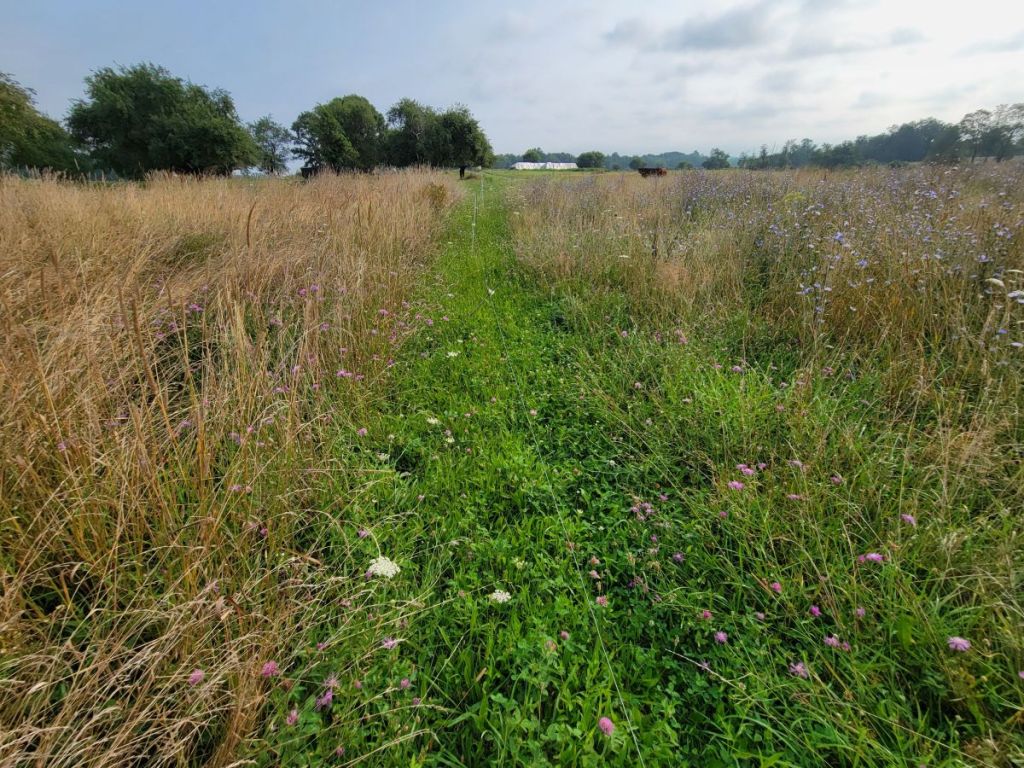
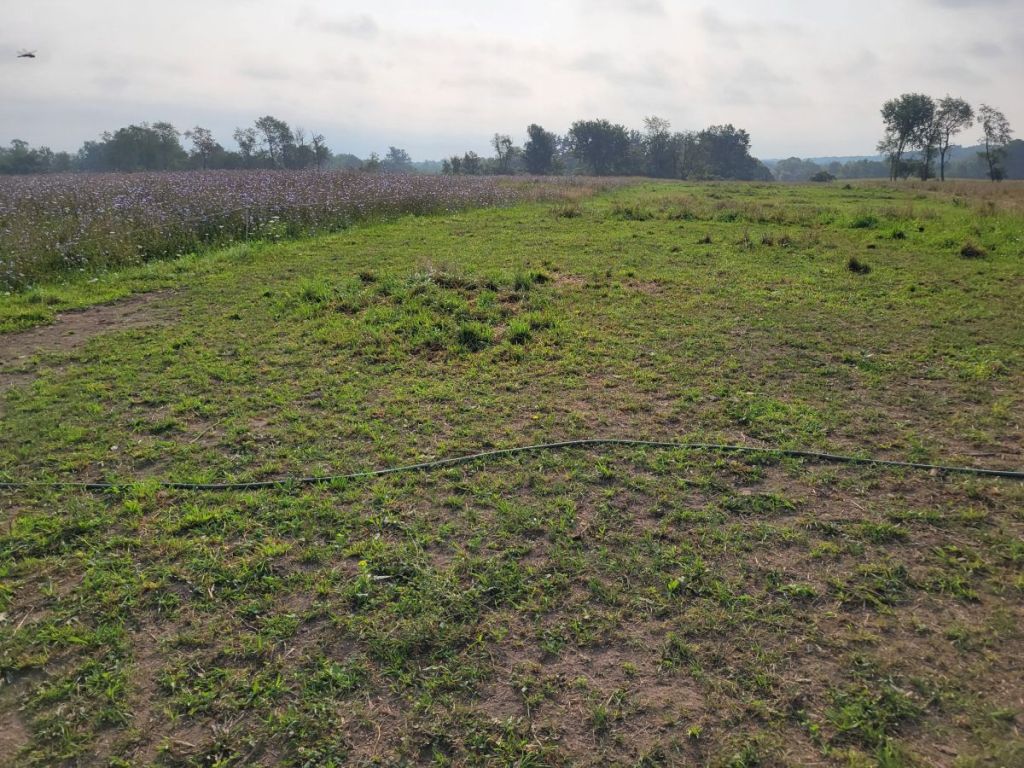
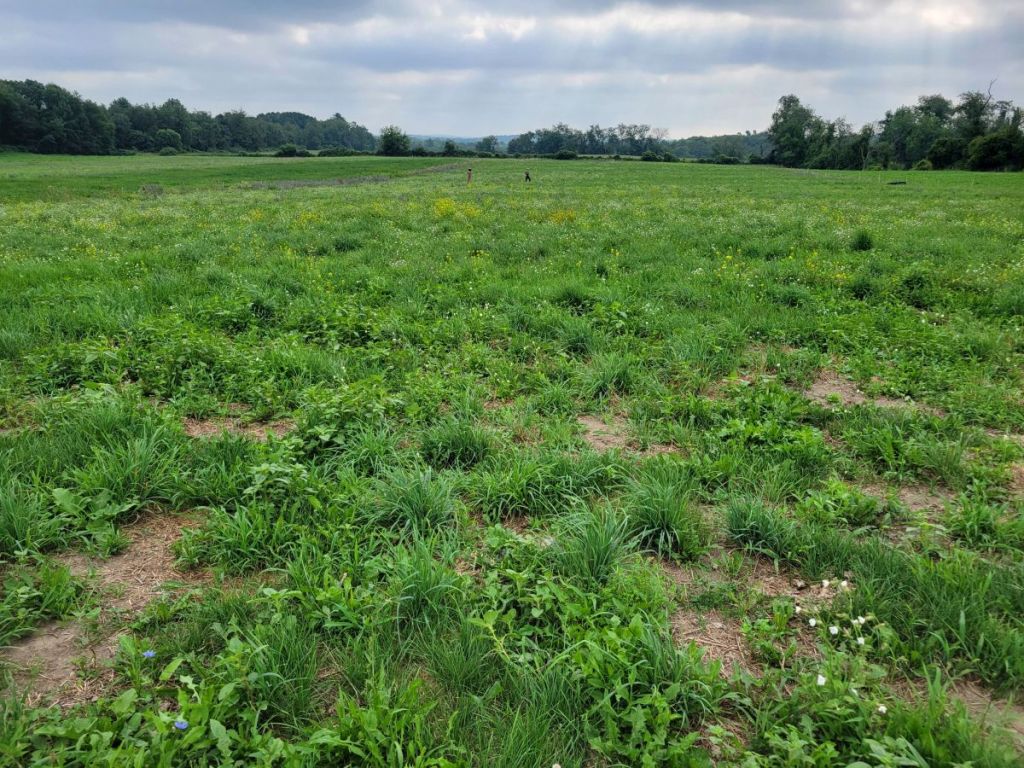
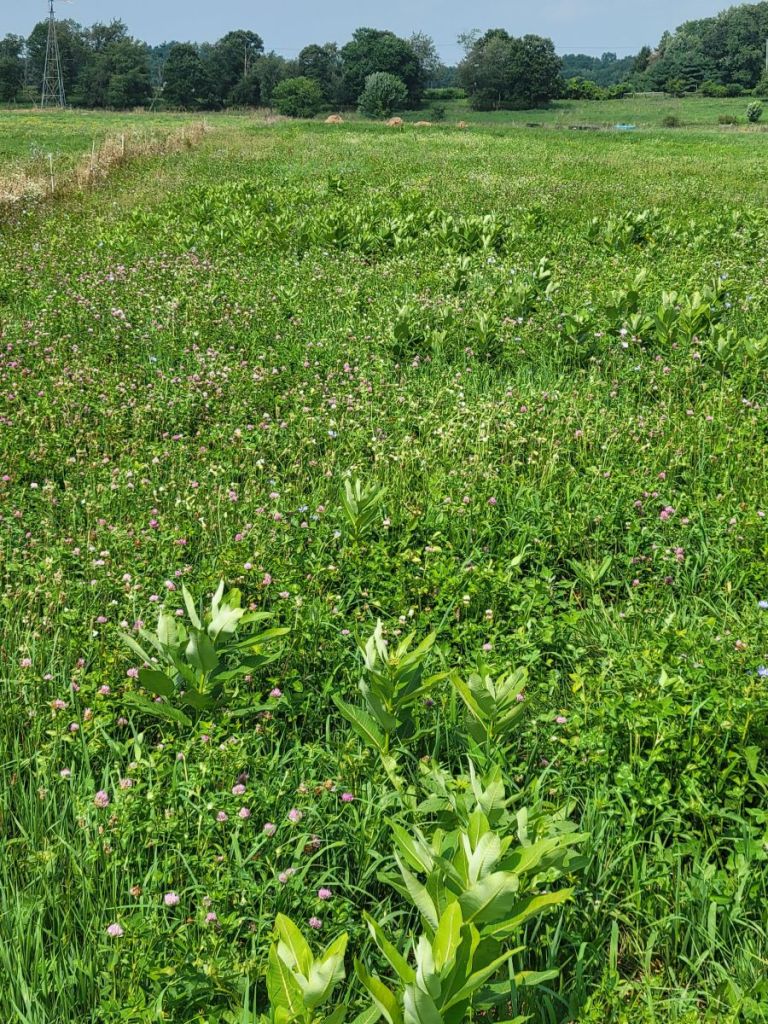
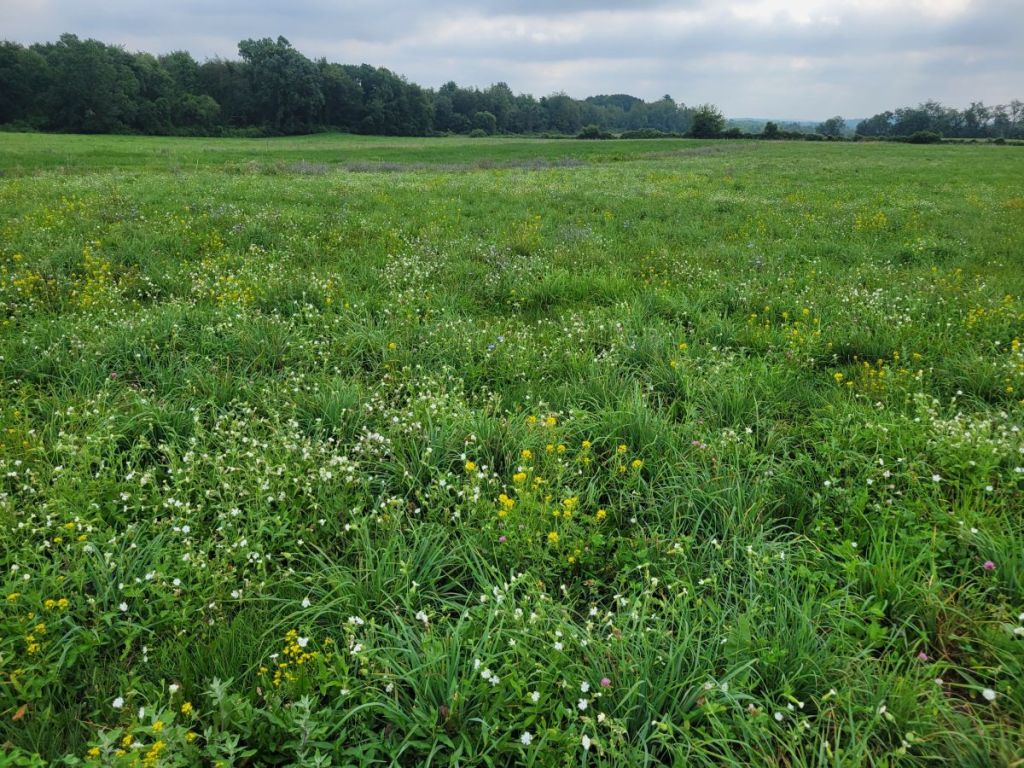

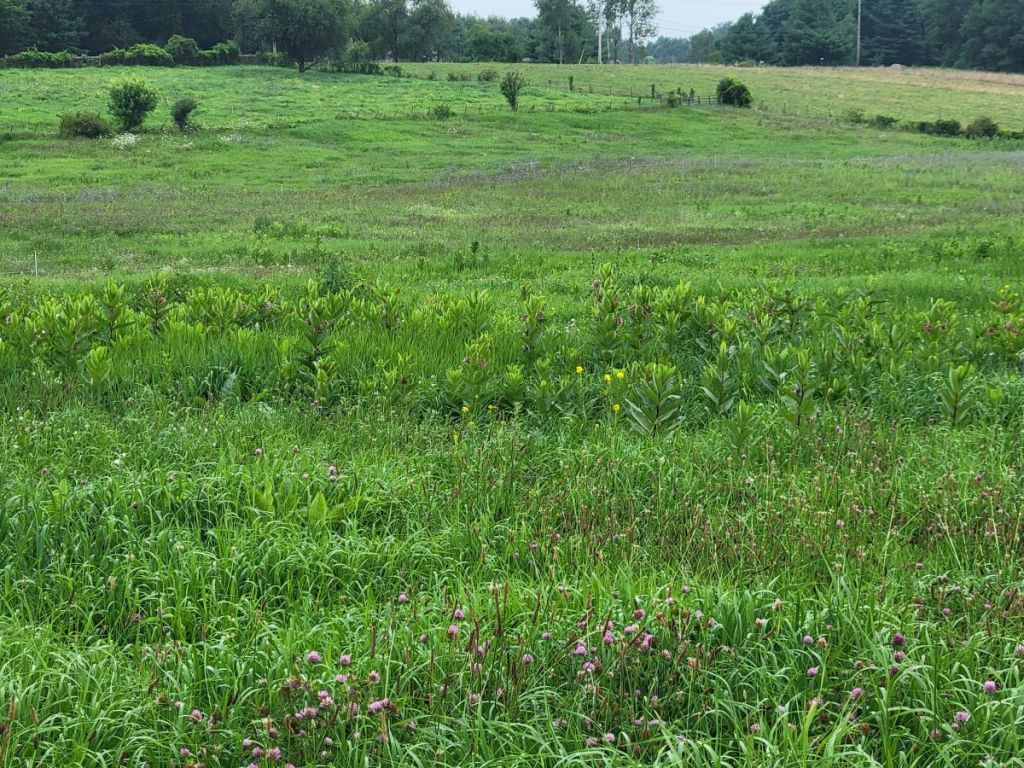
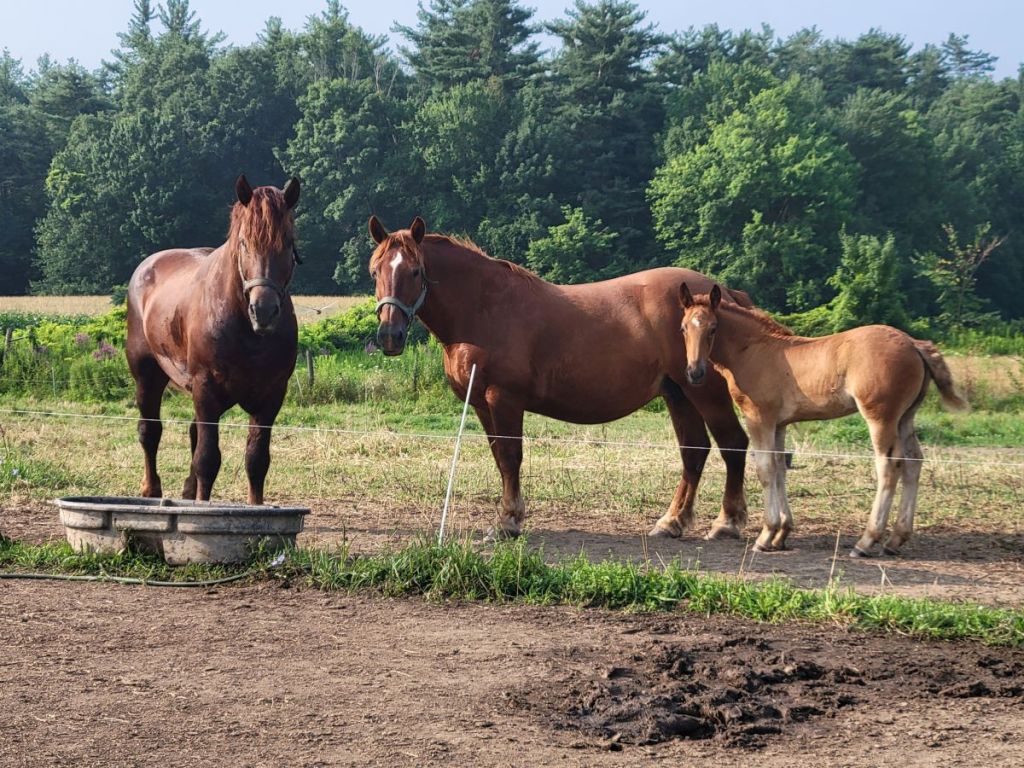
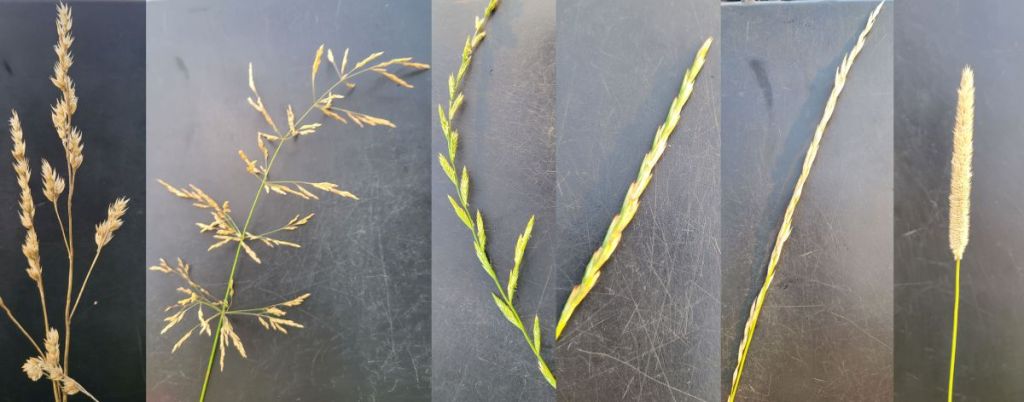

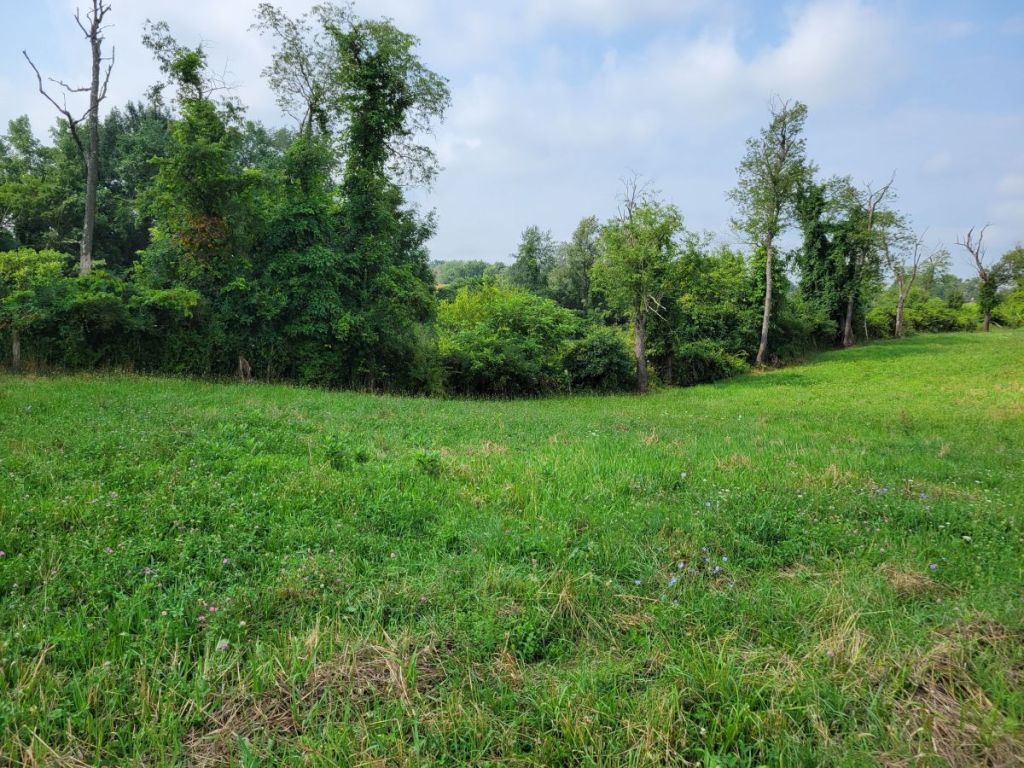
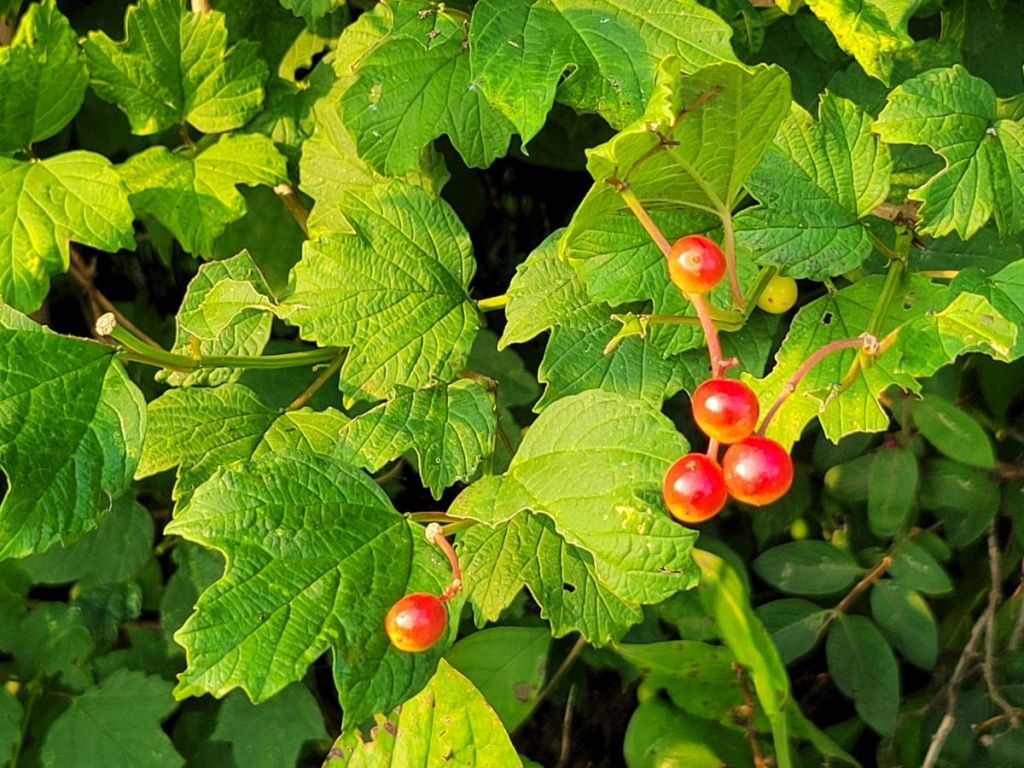
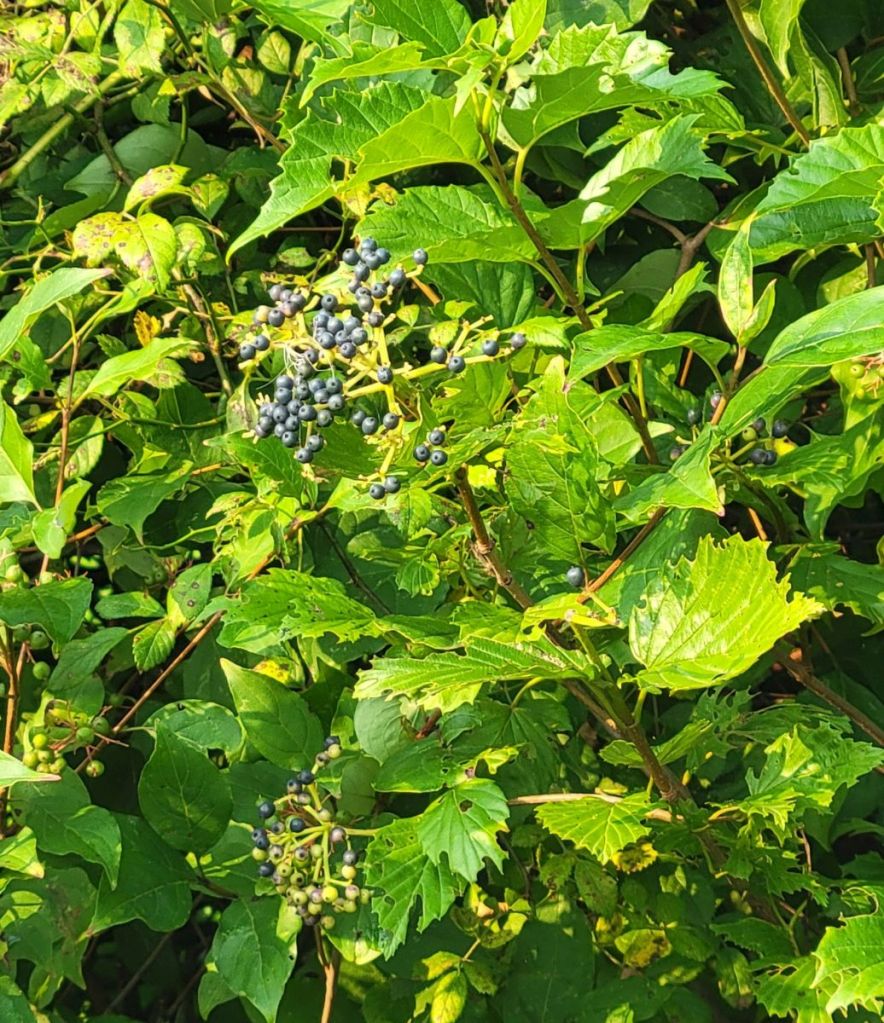
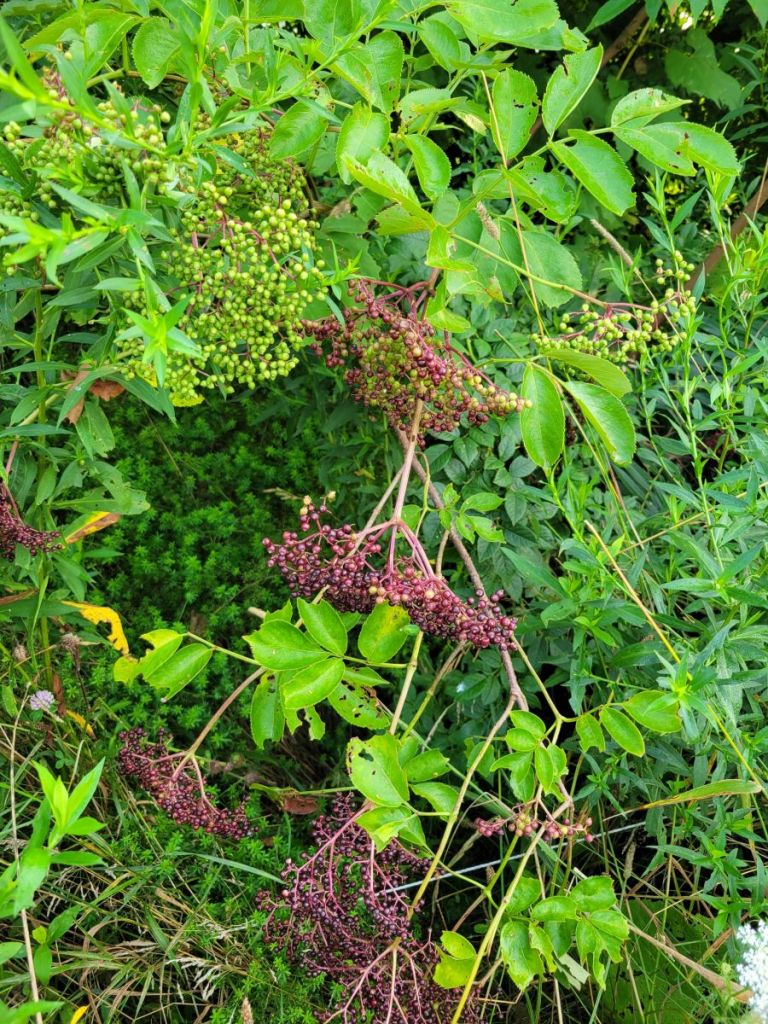
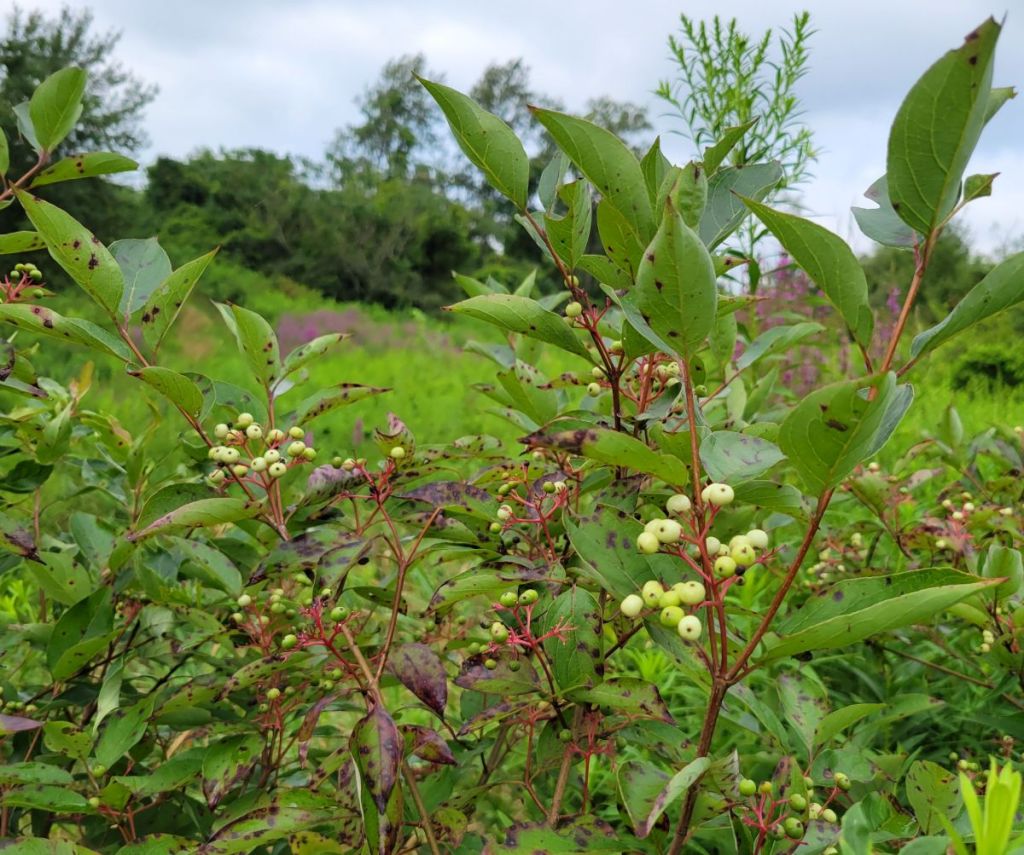

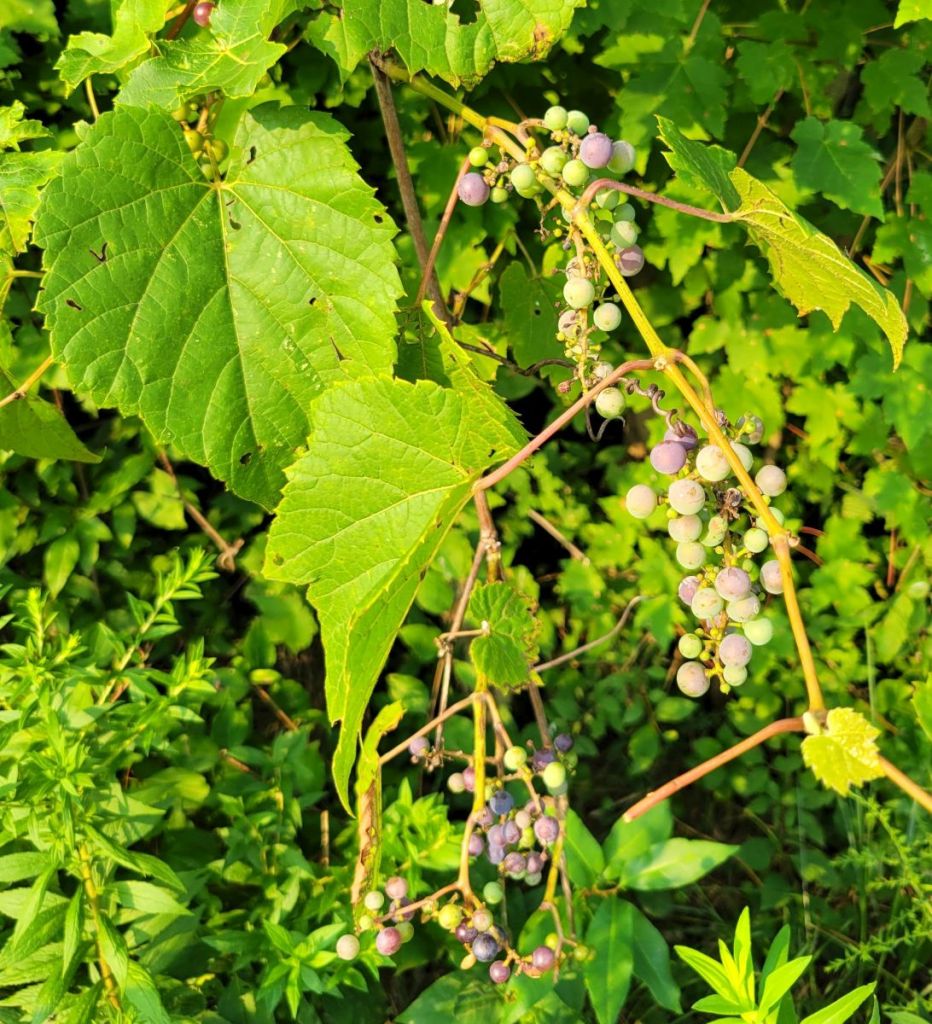


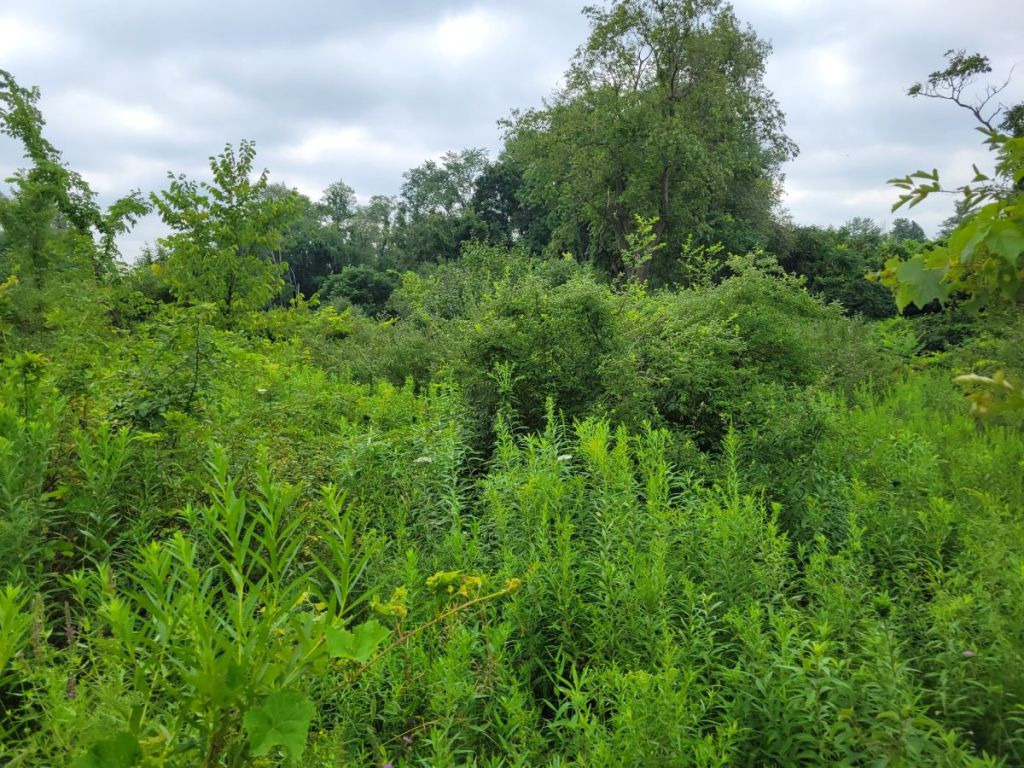
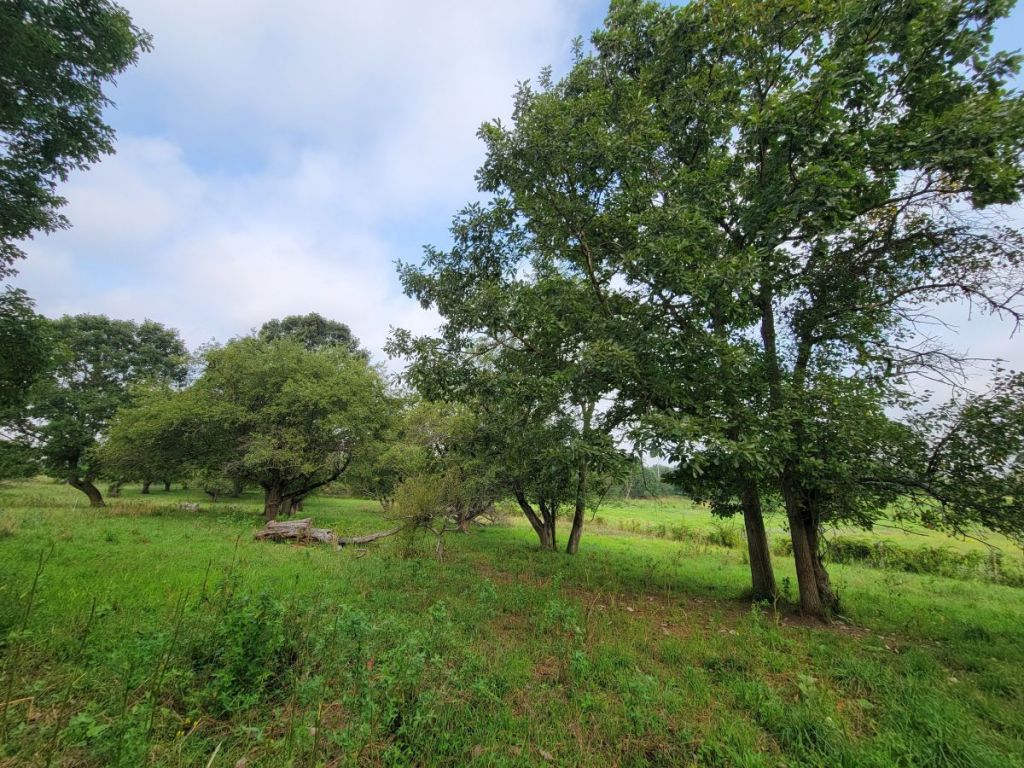
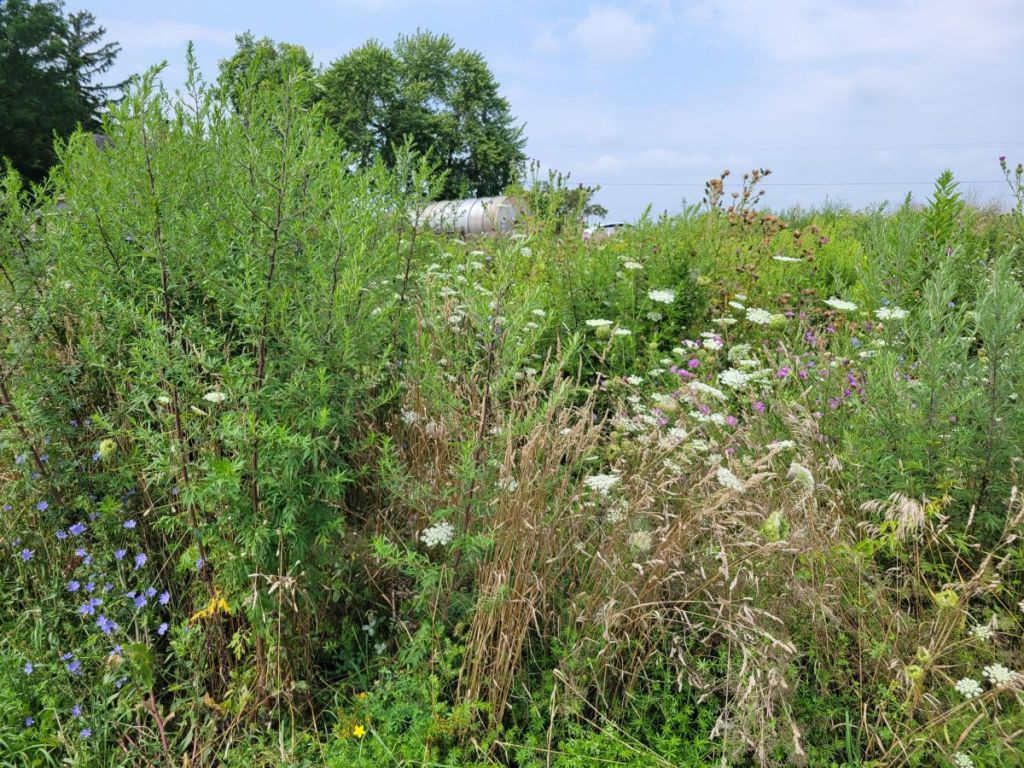

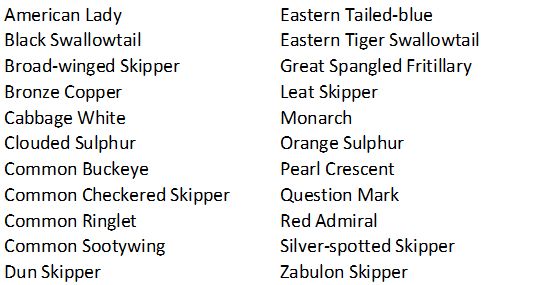
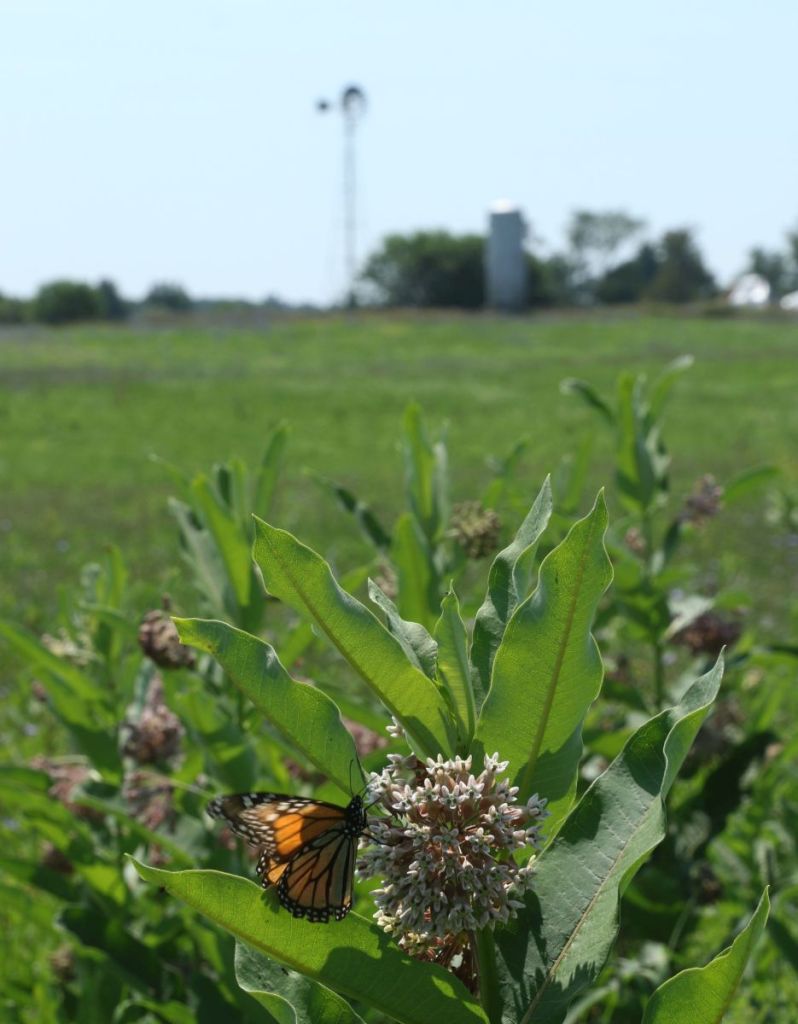
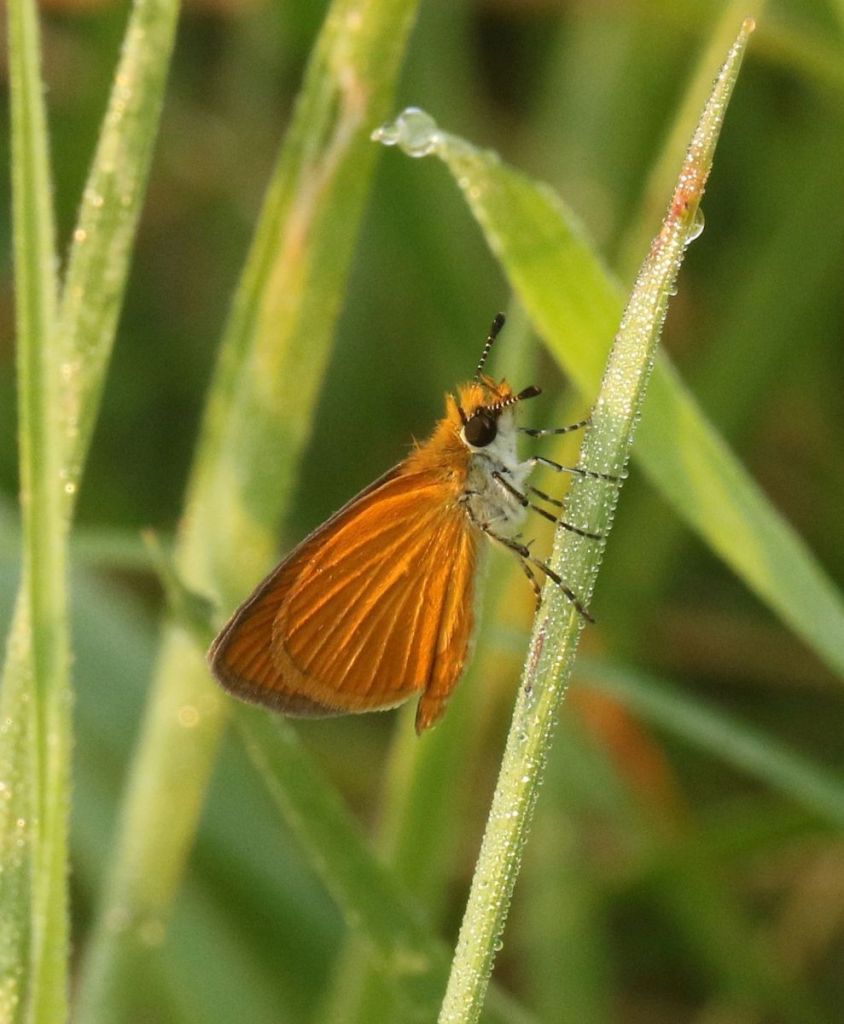
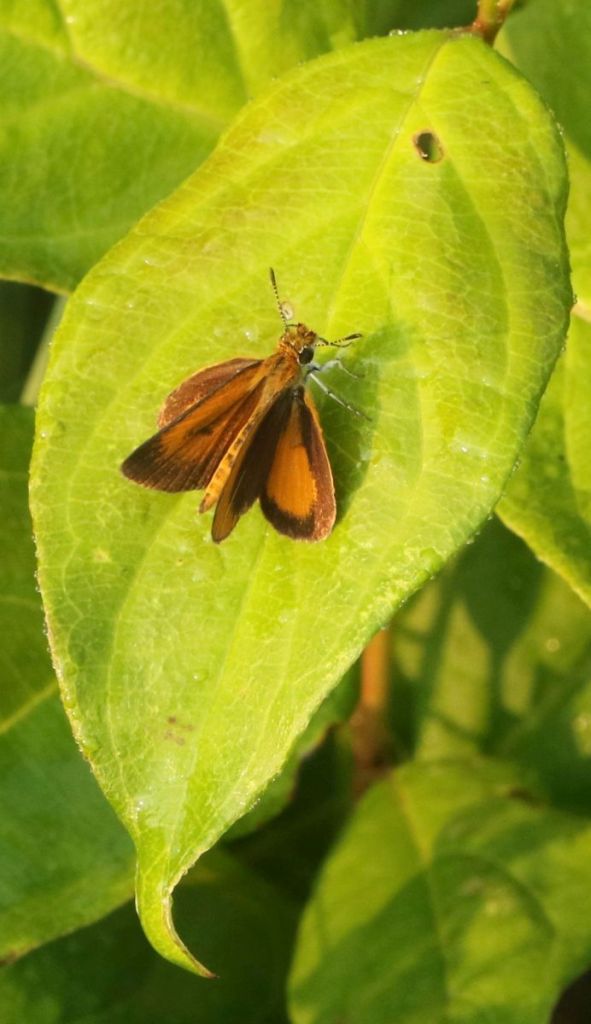
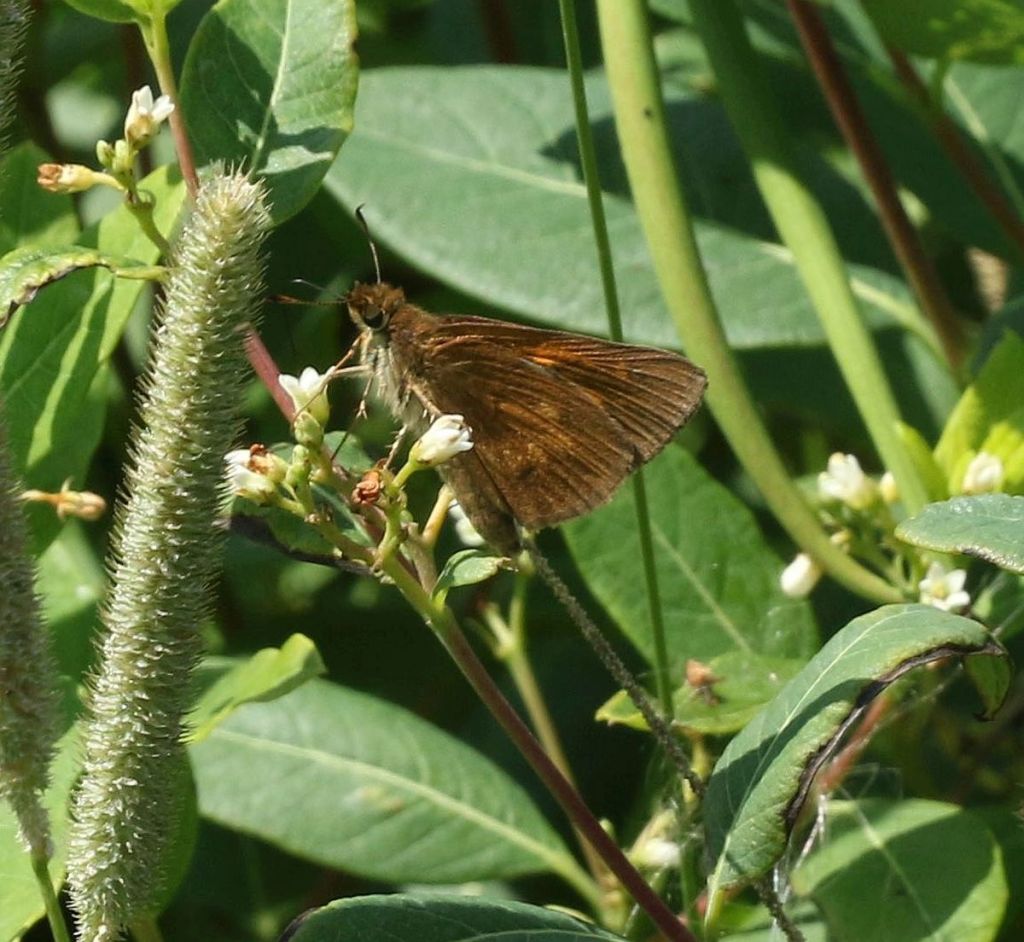
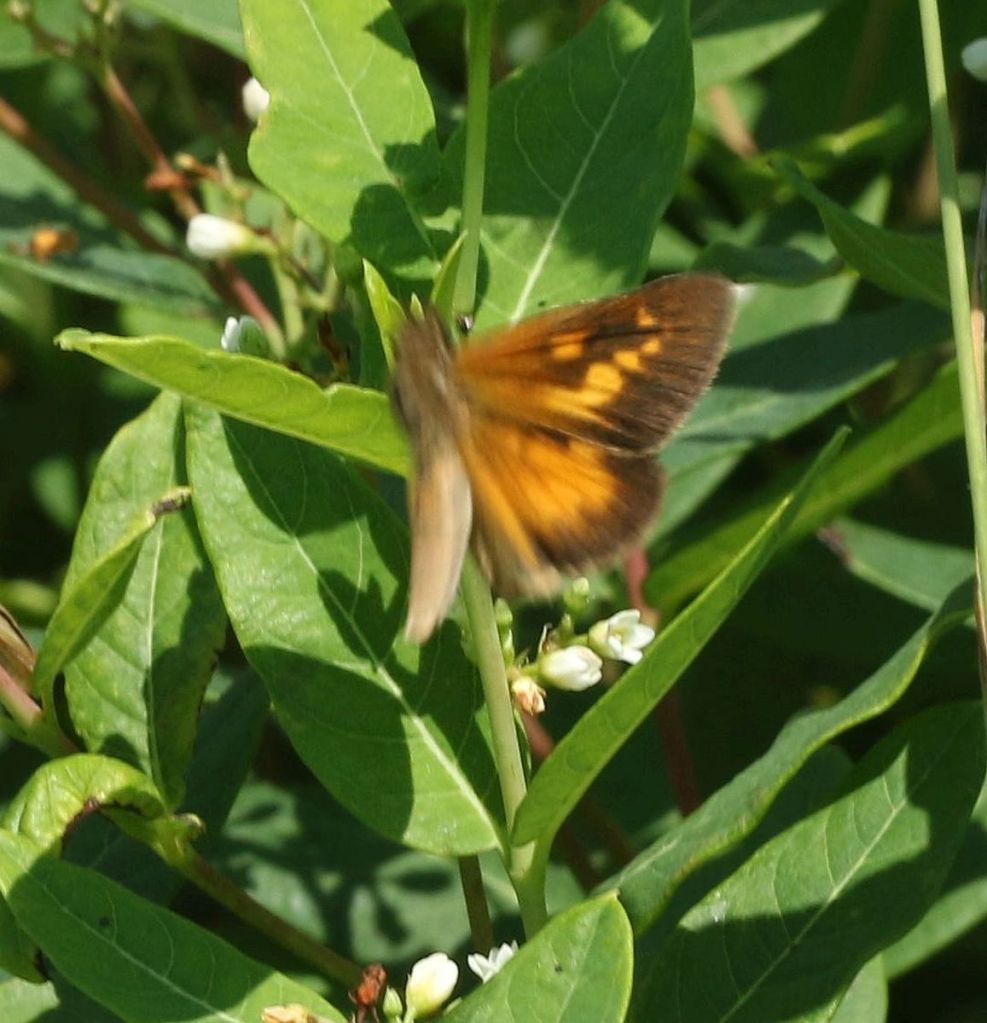
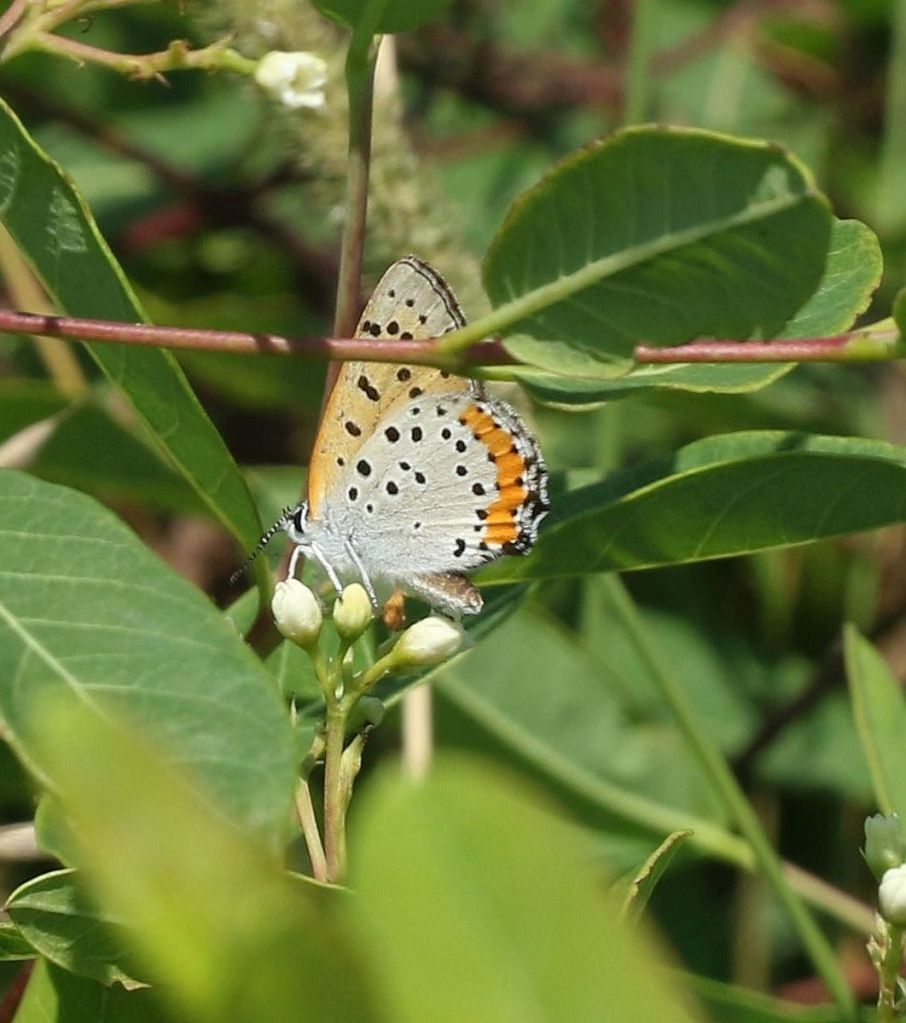
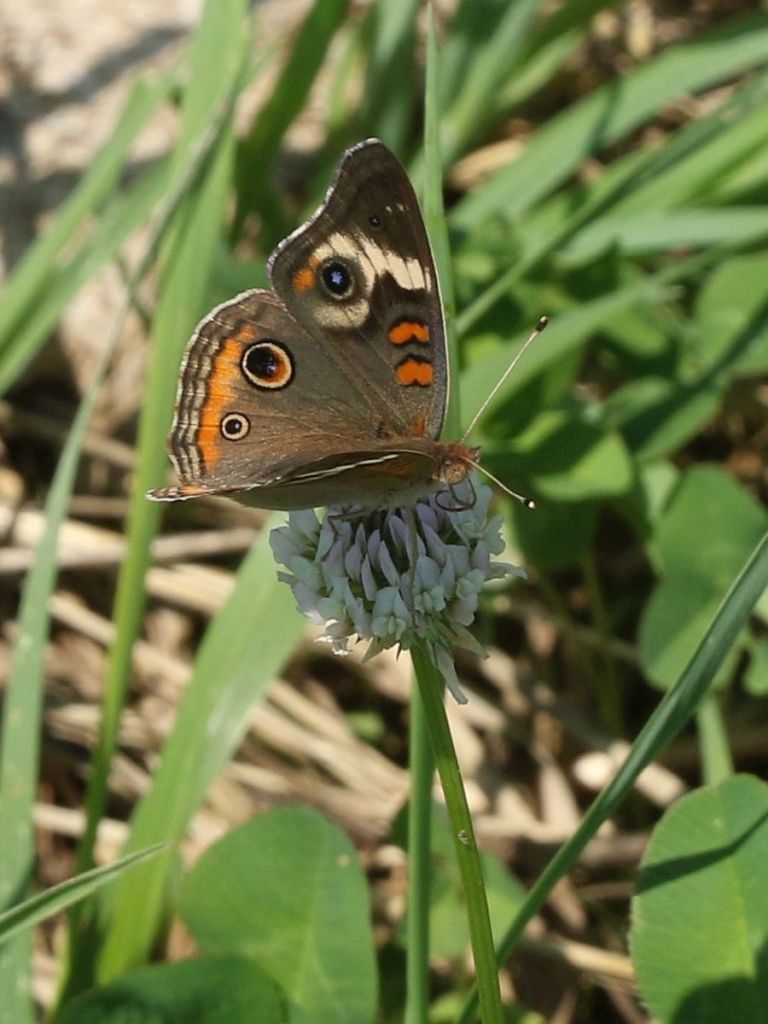
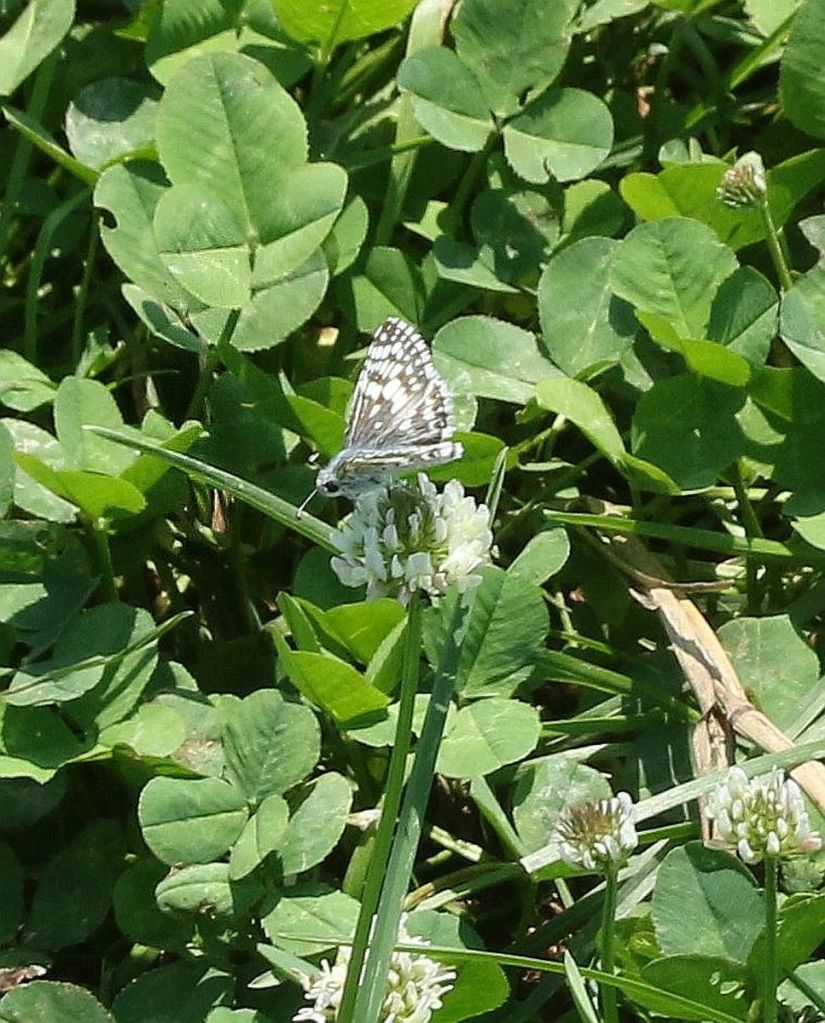
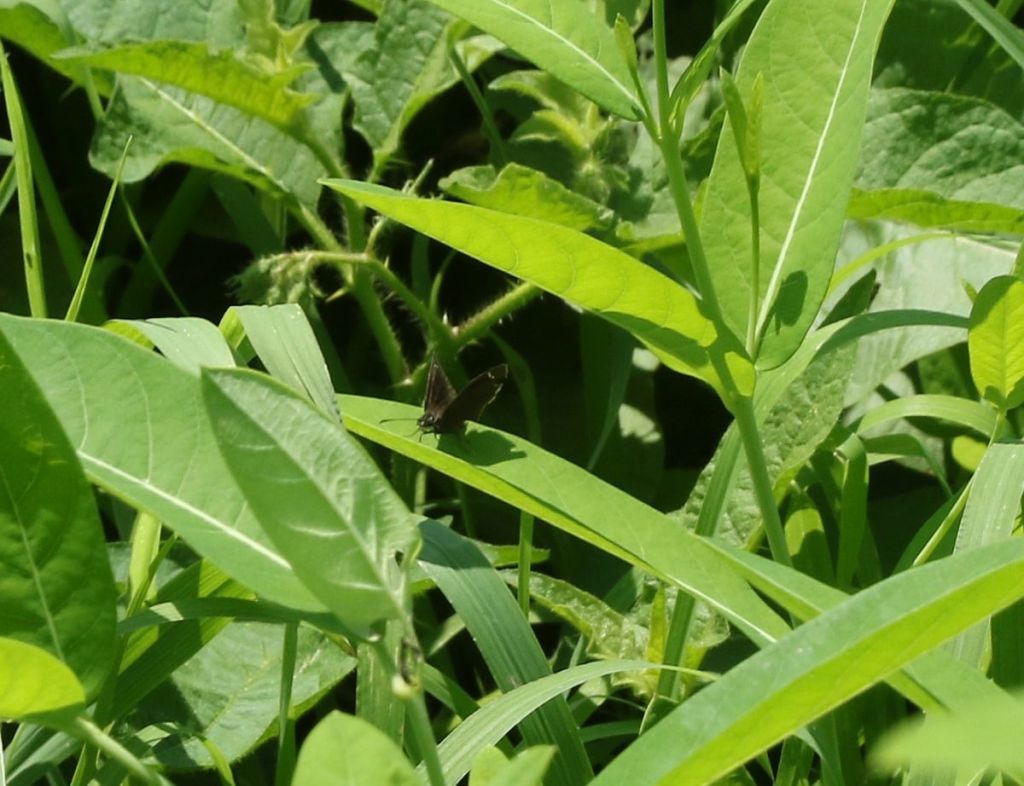

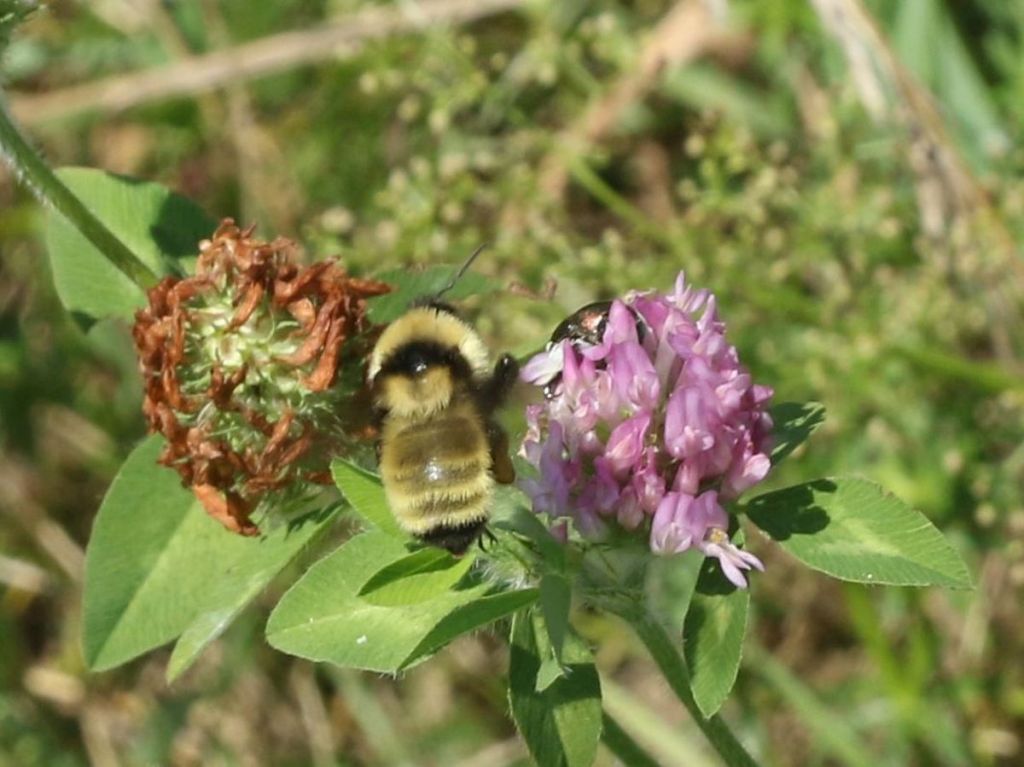
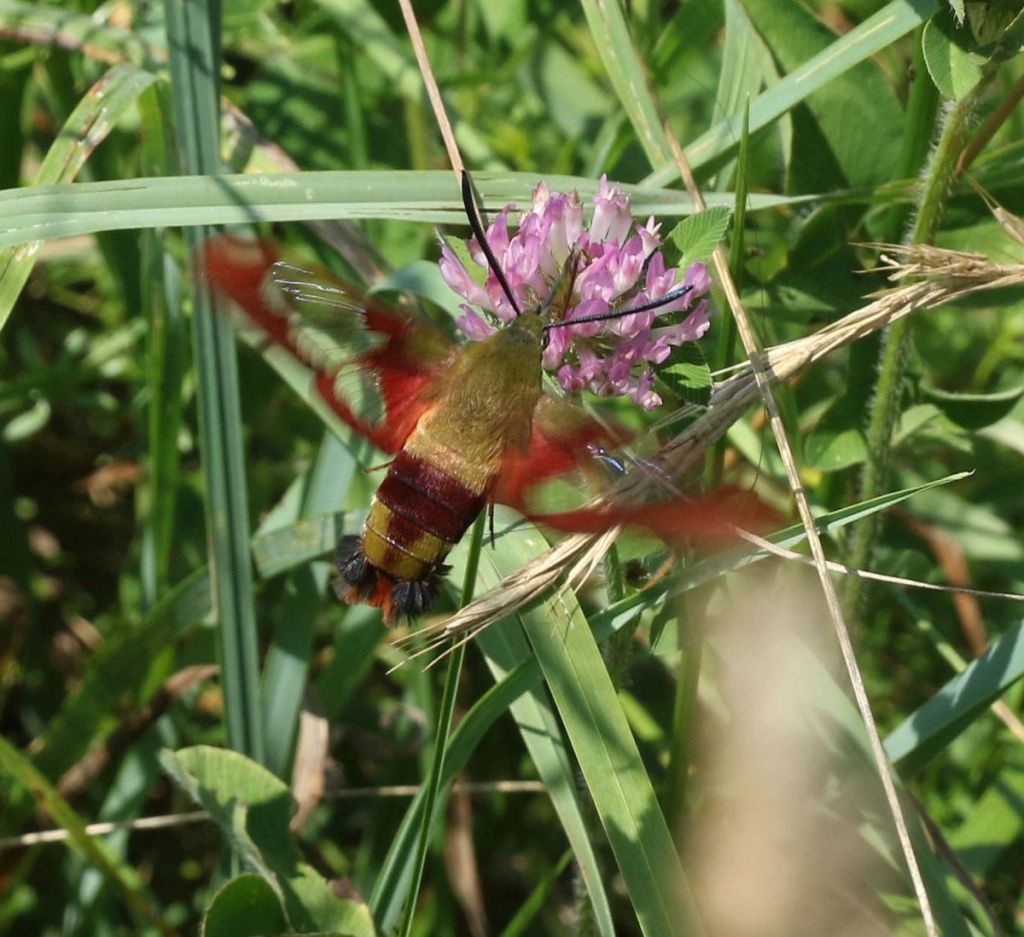
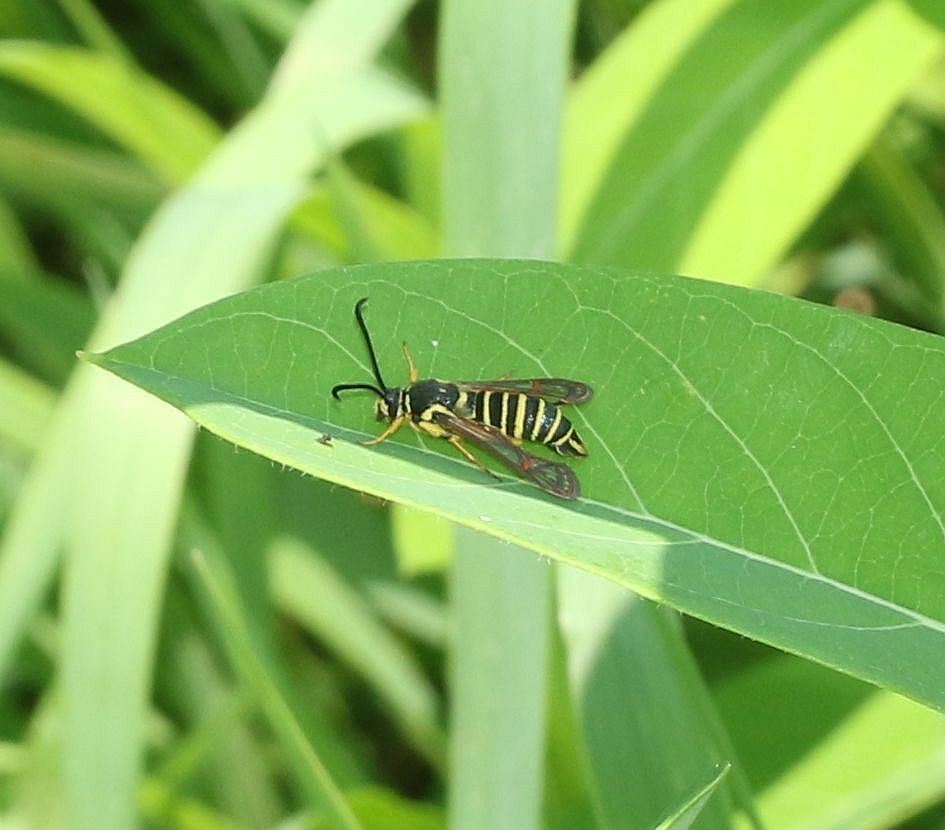

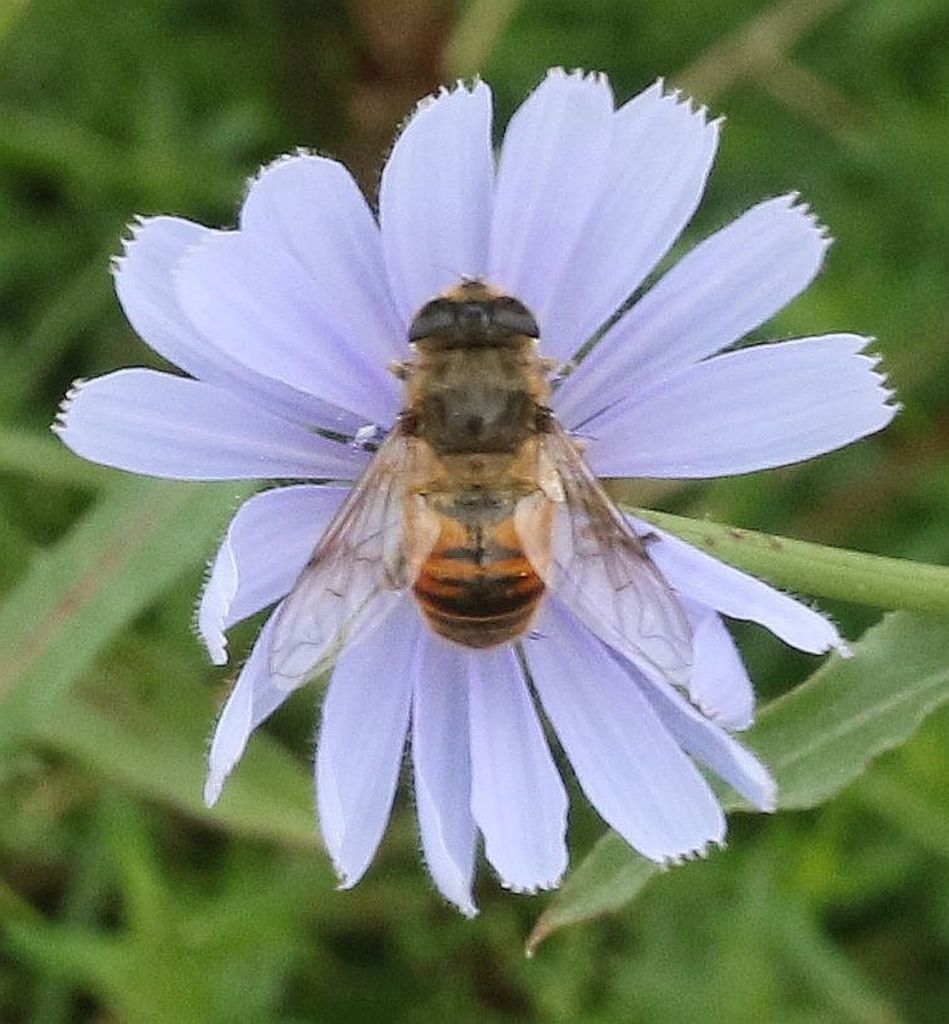
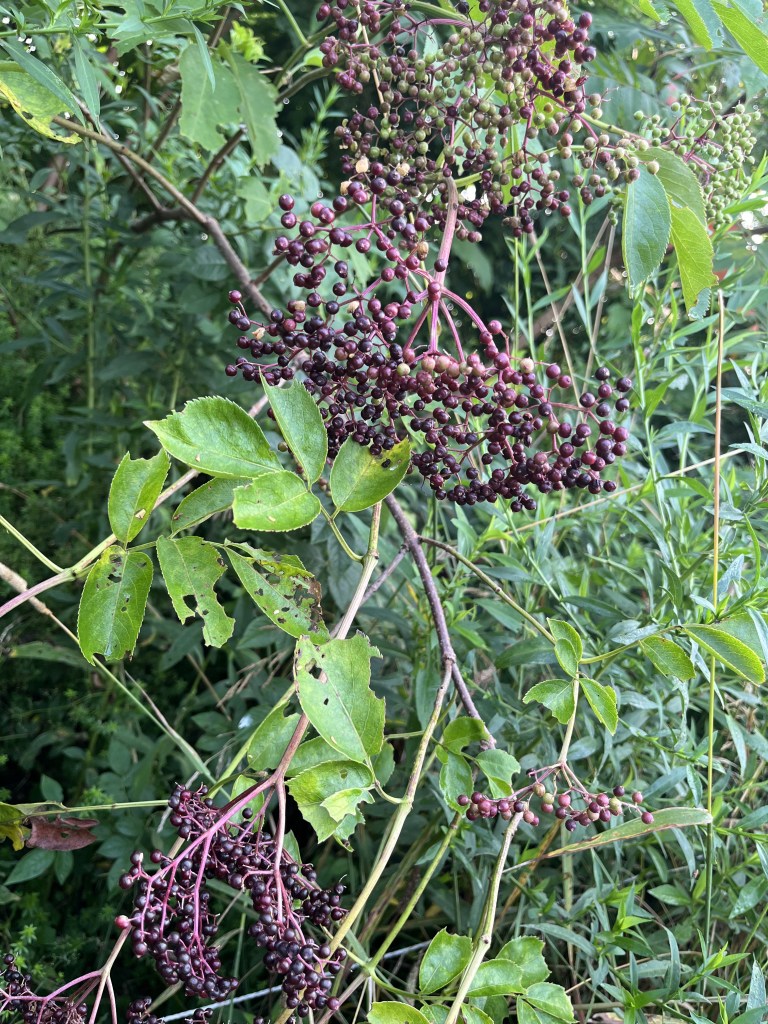
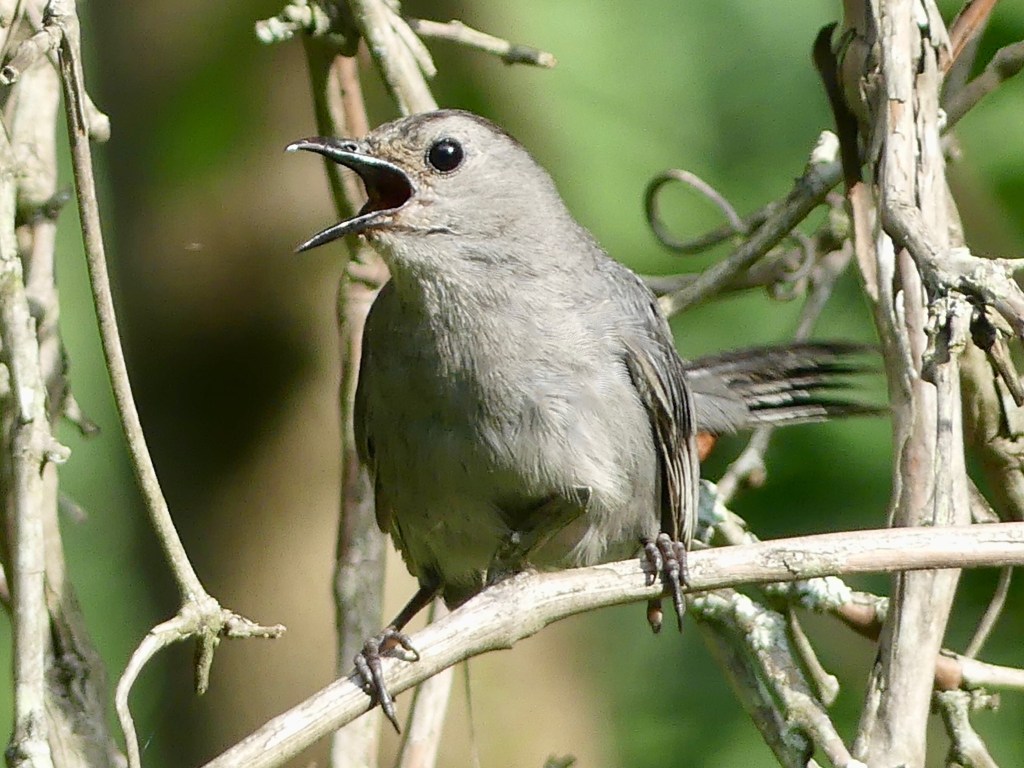
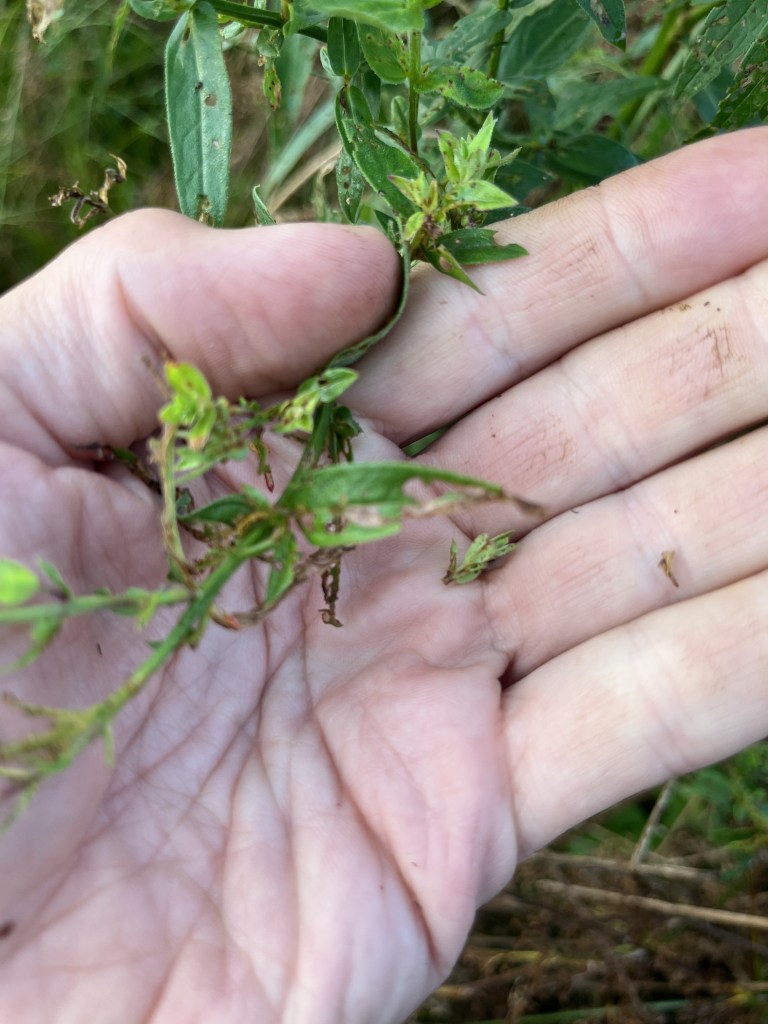

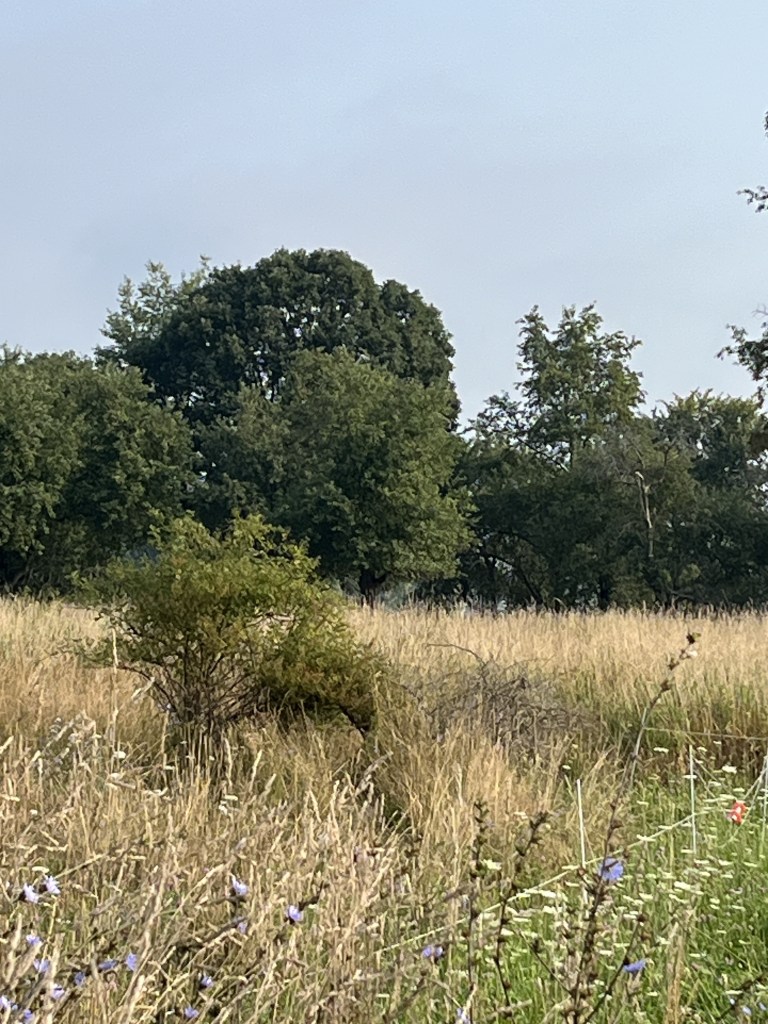
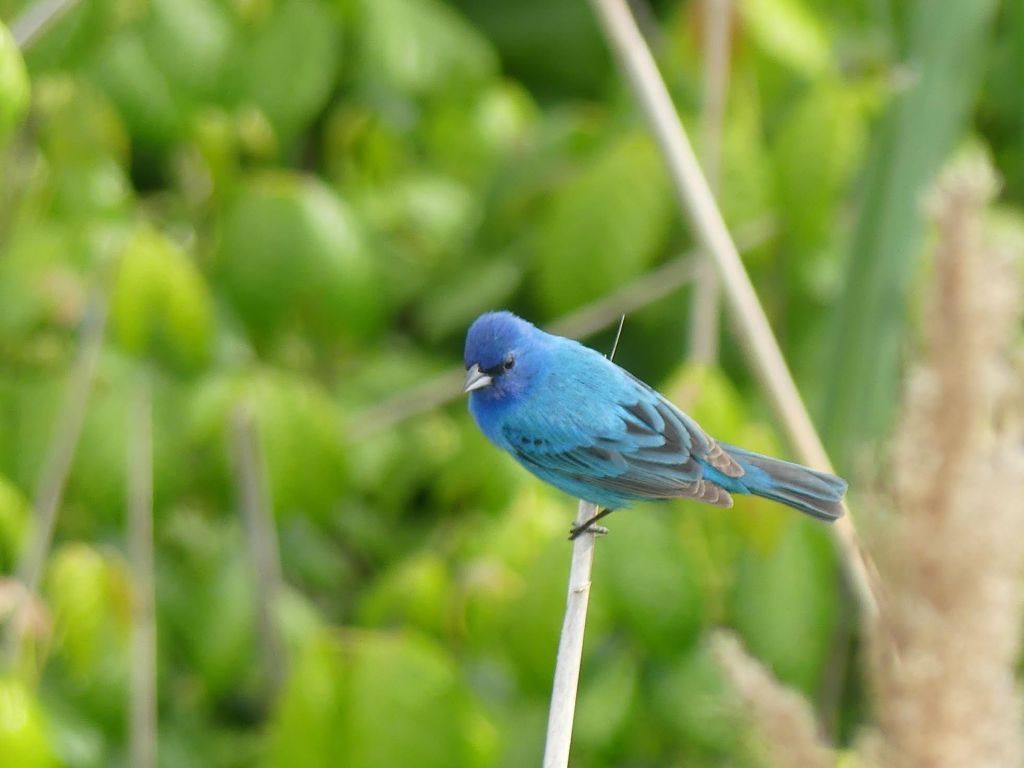

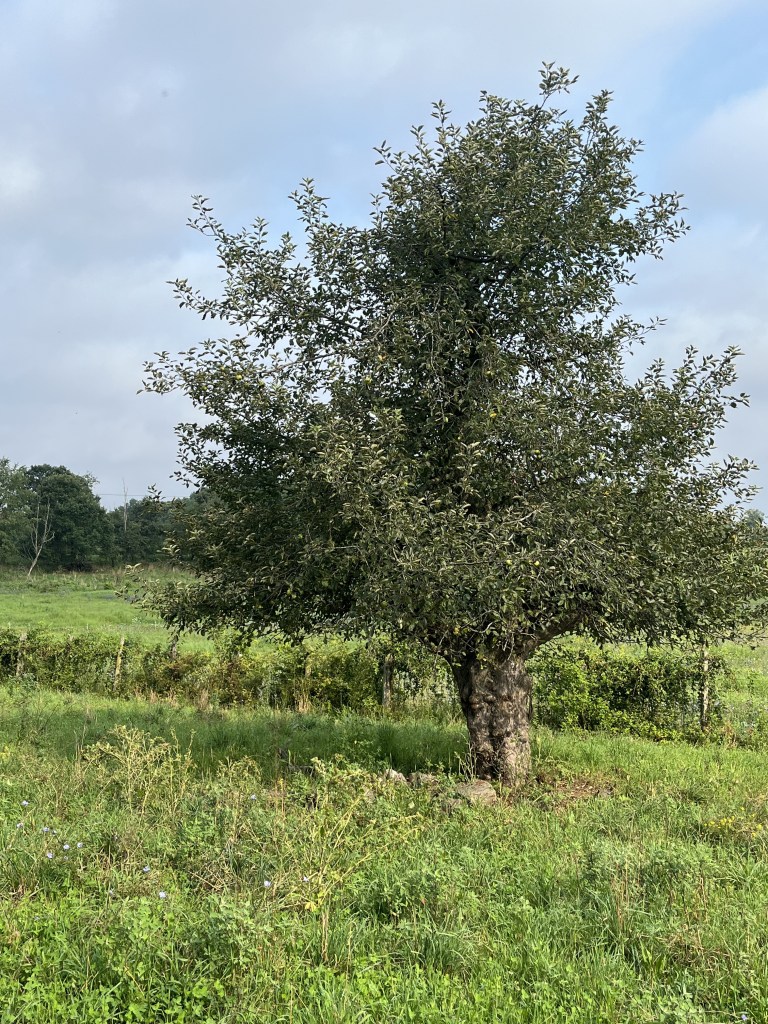
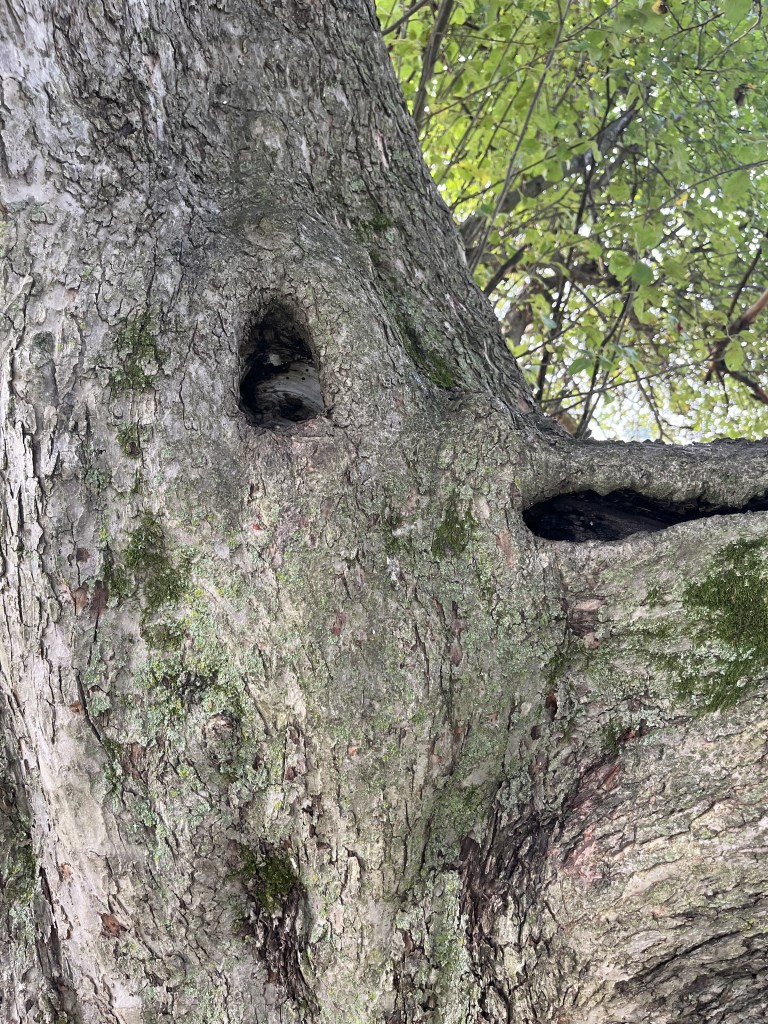
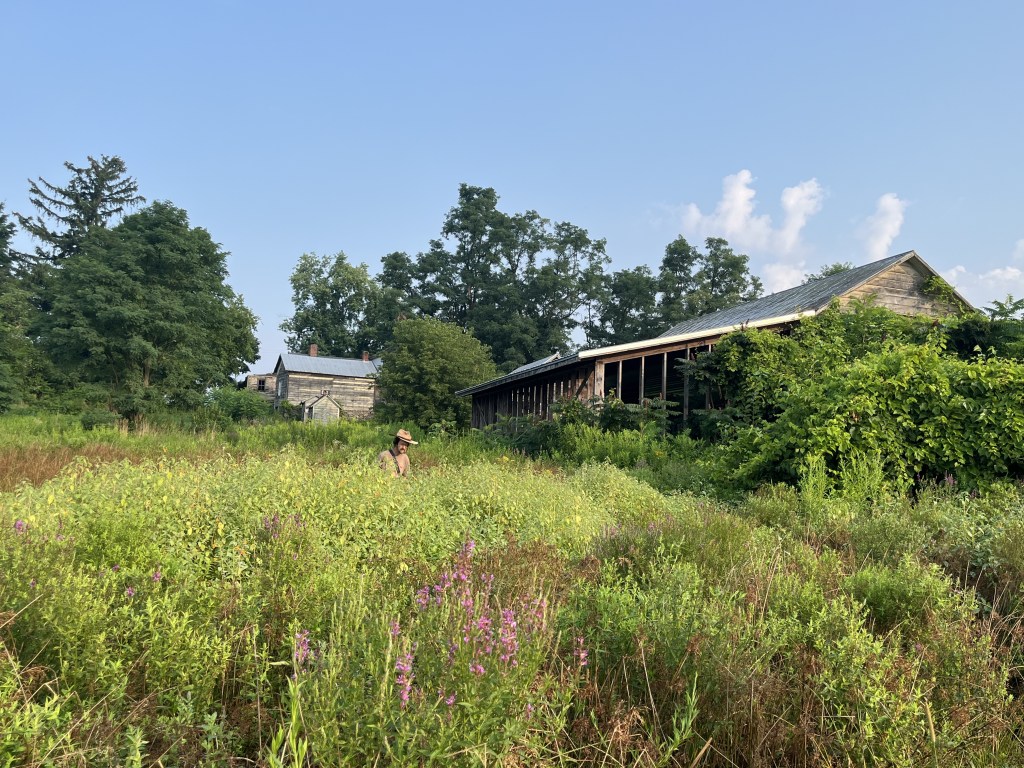
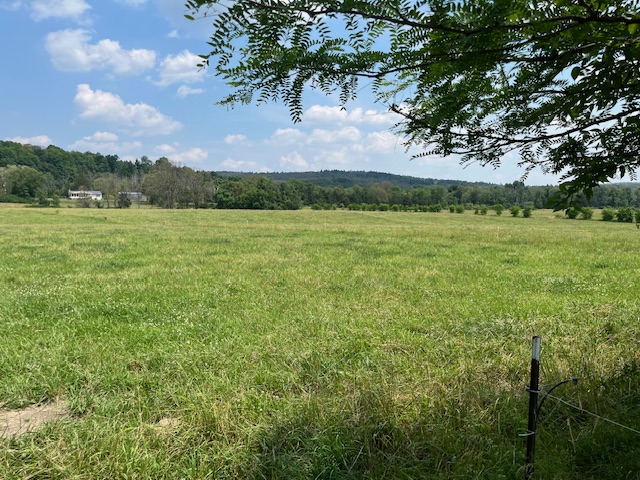
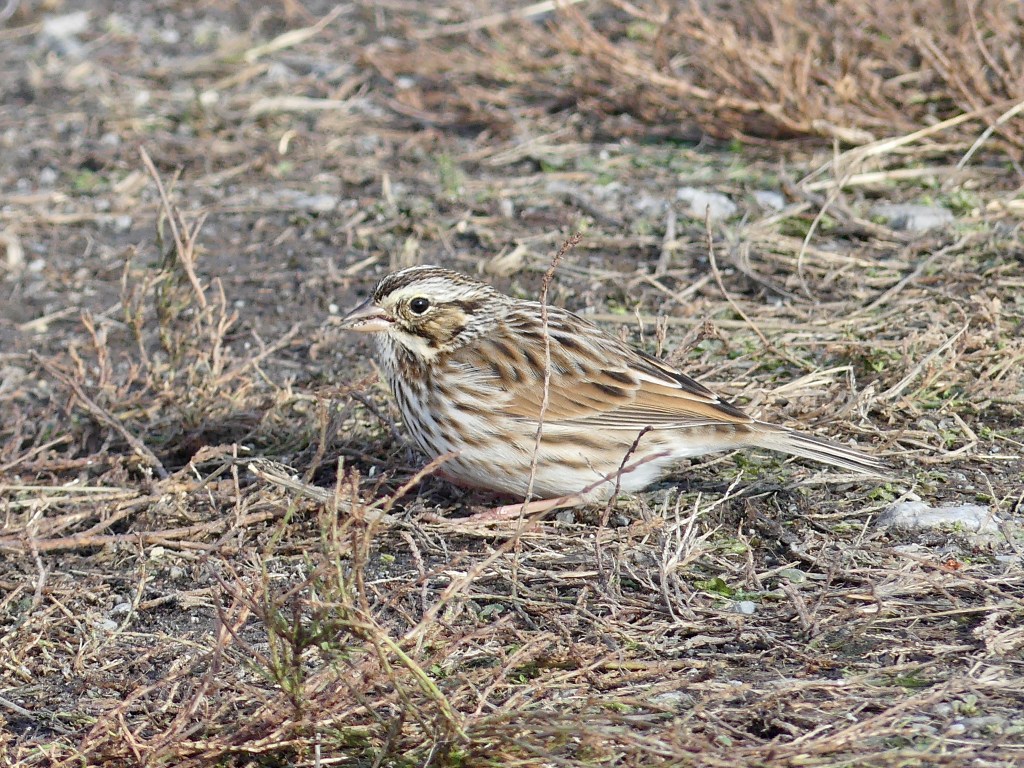

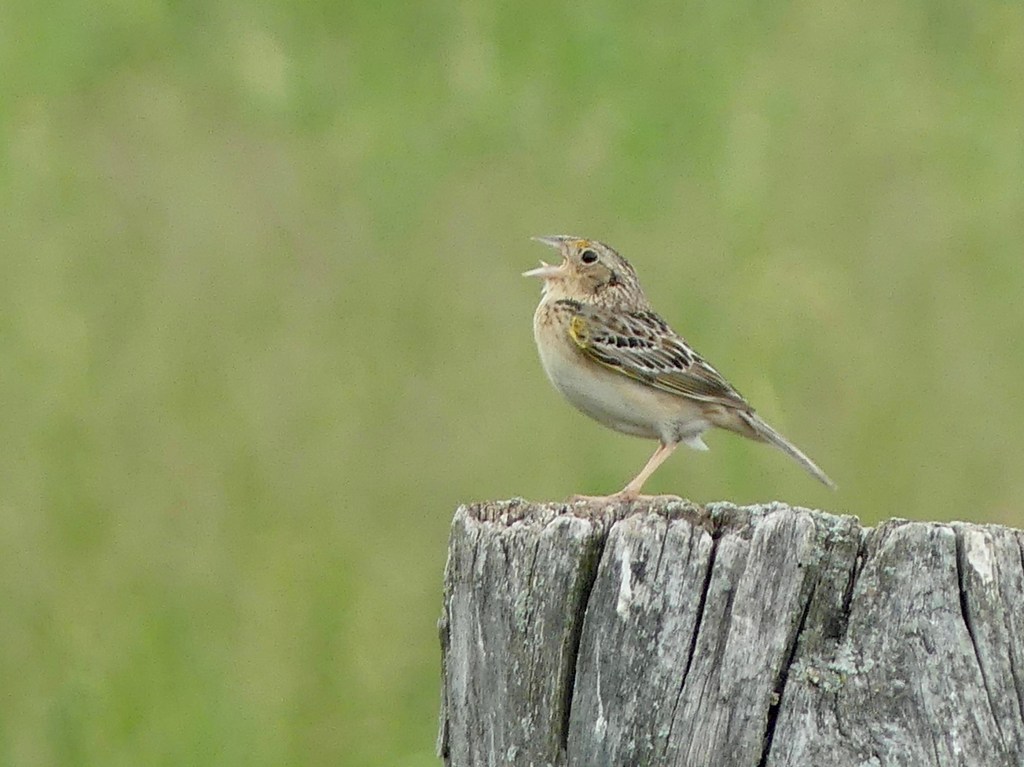
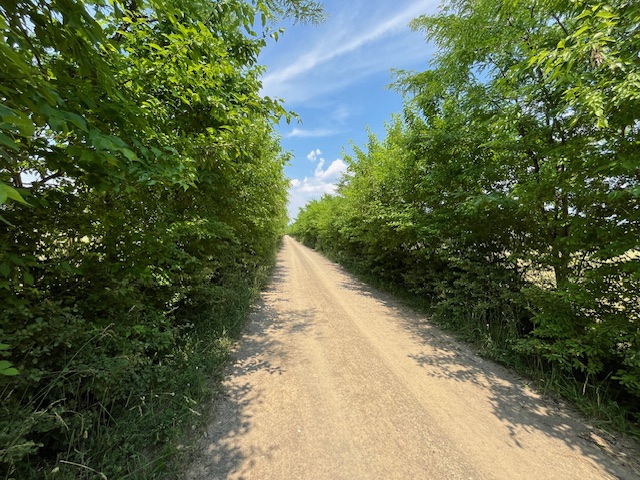

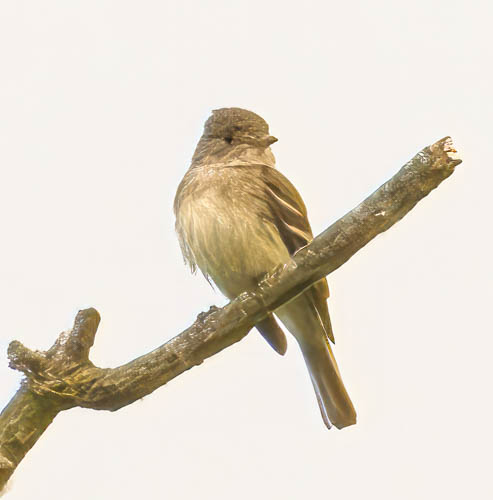
 Farmer-Ecologist Research Circle