The Birds of Rose Hill

By Will

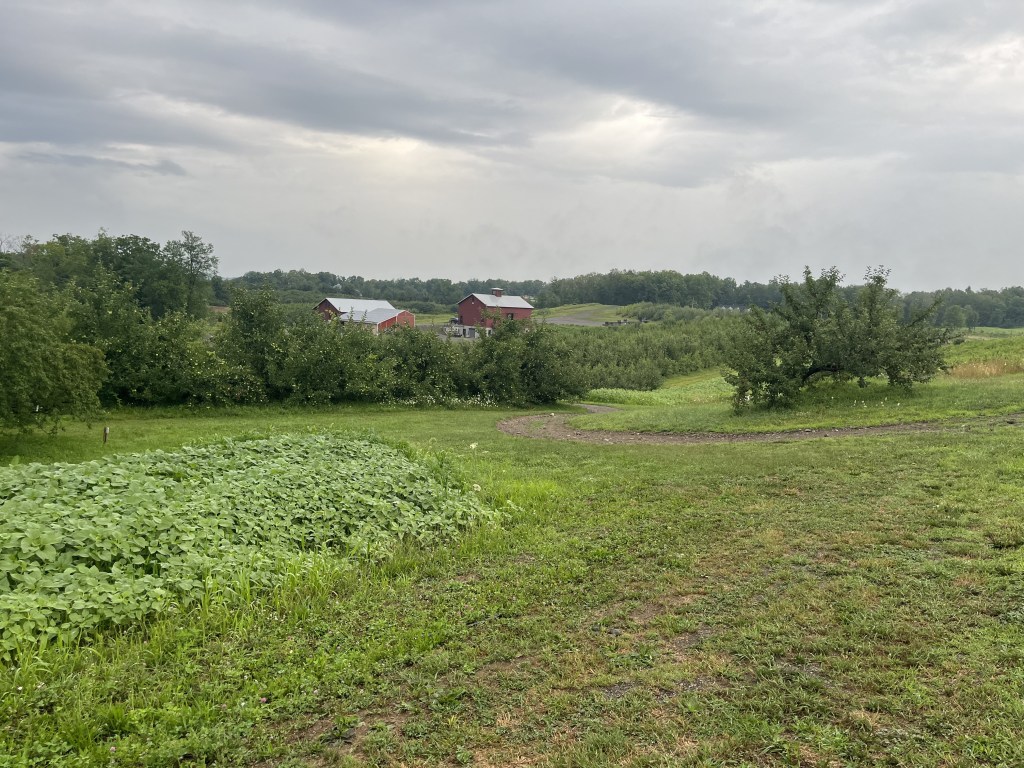
Peruse any aerial photograph of the Hudson Valley from the 1960s and you will see field after field dotted with fruit trees, their neat rows show up as pointillist parcels in even the most blurry photos. There used to be a lot of commercial orchards in the Hudson Valley. Several successful commercial orchards still remain in what is today a very difficult and competitive agro-economy, but New York is no longer the Big Apple and much of its market share has been overtaken by the irrigated apples of Washington state, New Zealand, and other far-flung places. The regional commercial orchards that persist today are either ruthlessly efficient or creative in their direct marketing to tourists and visitors.
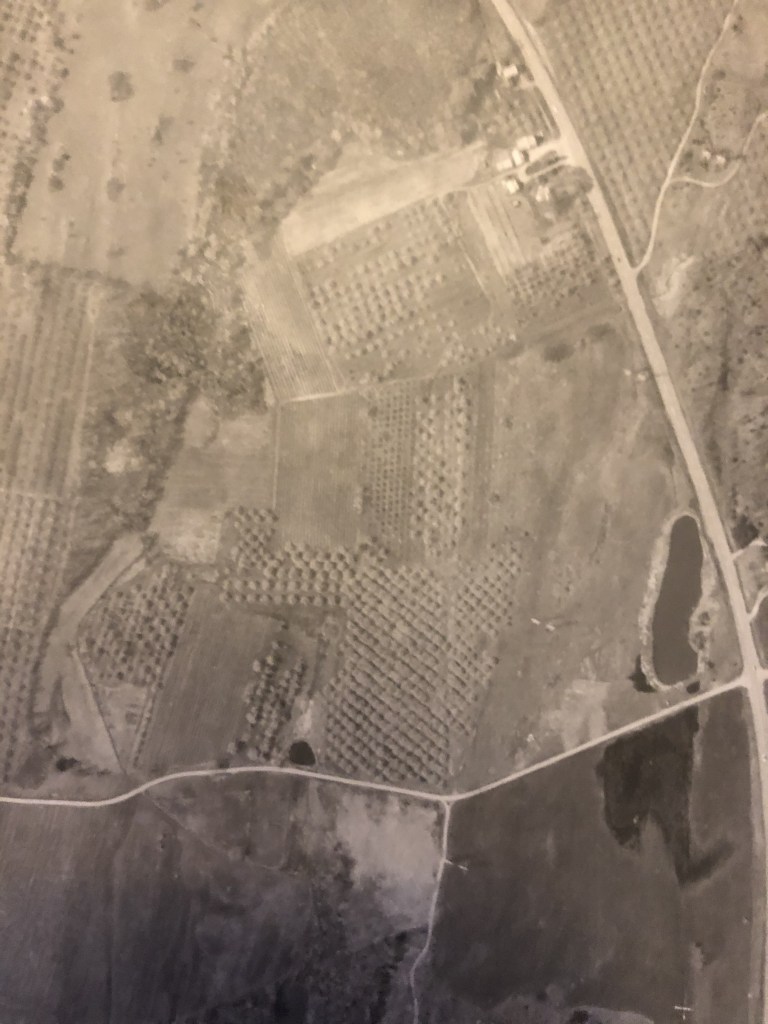
This photo (Livingston, Columbia County) shows the extent to which orchards once dominated “hedgerow to hedgerow” on many farms. 1965.

To be truthful, most commercial orchards in the Hudson Valley do not rise to the top of my list as places to see birds, which is why the bird diversity of Rose Hill was a refreshing surprise.

For birds to survive they need places to roost and rest, insects in May to replenish their exhausted bodies after typically long migrations, places to build nests free from disturbance, and still more insects in June and July to feed their rapidly developing offspring. Most commercial orchards are some of the most intensively managed farmscapes in the Hudson Valley. Many pesticides (both organic and conventional) are necessary to raise the high-quality fruit that consumers demand. It’s been over 50 years since Joni Mitchell proudly sang that she can live with “spots on her apples” but we have a long way to go to convince most American consumers that the tradeoff is worth it for a healthier ecosystem. Our changing regional climate, with its warmer springs still punctuated with snap freezes, and new invasive pests in the pipeline (Brown-Marmorated Stinkbug the newest arrival and Spotted Lanternfly at our doorstep) don’t make things any easier.

I’ll let Rose Hill speak for themselves on their growing practices and philosophy, but as a visiting farmer and ornithologist, a few key features stood out:

  1. Mechanical (rather than chemical) removal of weeds under trees at a reduced rate that provide a lot of structural plant diversity within orchard rows.
  2. Reduced spray schedule and use of non- or less-toxic spray alternatives
  3. Retention of landforms in orchard blocks (vegetated shale ridges, for example)
  4. Adjacent blocks of native vegetation.

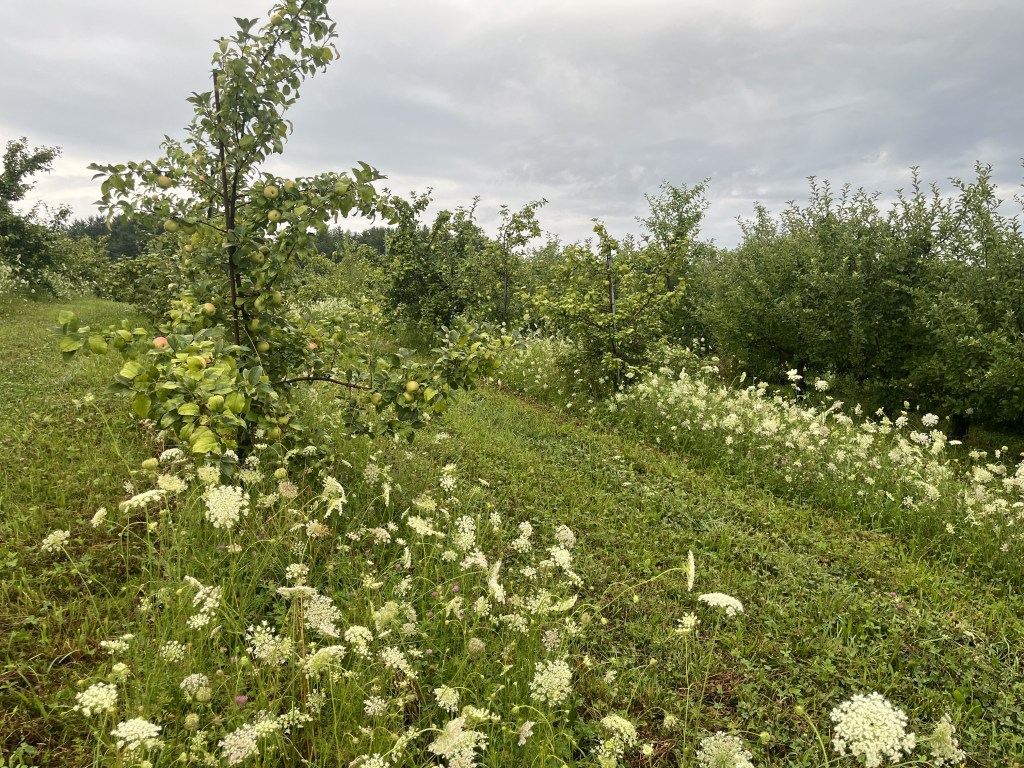
The vegetated strips between trees that cannot be reached by mowers provides spaces for pollinators, and for insect prey that birds depend upon. This structural heterogeneity is closer to the appearance of Hudson Valley orchards in the 19th and early 20th Centuries.
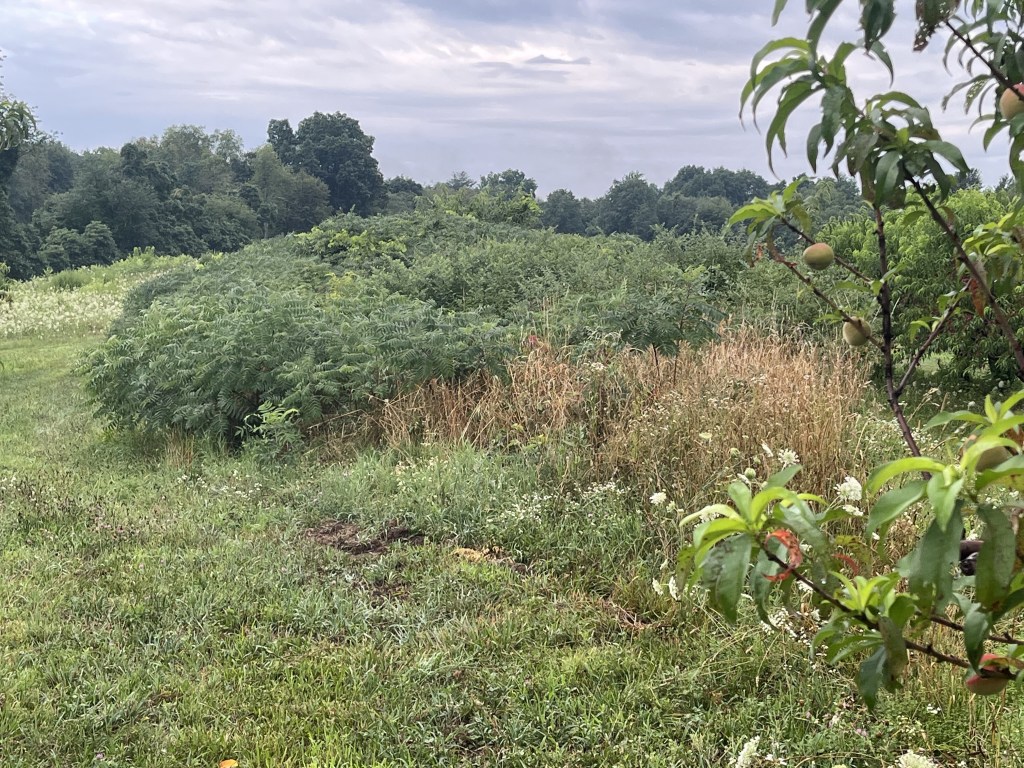
Rather than bulldozing and infilling shale ridges, Rose Hill has left them in place providing important micro shelters and feeding zones for birds.

The savannah-like structure of orchards actually attract a few species of birds who preferentially nest in the grassy matrix of trees.

I find that one of the most common orchard birds, which nests directly in fruit trees, can thrive when spray programs are kept to a minimum. The Eastern Kingbird is a type of flycatcher that builds a grassy cup in the fork of a tree branch that looks like a Disney cartoon of a nest. They are famously aggressive towards other birds and mammals (but oddly, not humans). On a spring day when you look up and see some smaller songbird attacking and chasing a Red-tailed Hawk and think, wow, that bird has chutzpah, chances are that it’s an Eastern Kingbird.

Chris Franks shared this image of a local Eastern Kingbird. These birds perch conspicuously on wires and the tops of trees sallying forth for large flying insects. They have a white band on their tails that identifies the bird in flight even from a distance without binoculars.

Cedar Waxwings often nest in orchards as well. On my farm, I typically see them nesting in plums and early peaches, constructing their nests just as the harvest is winding down. They rarely bother to eat peaches and large fruit but can be considered a management challenge in cherry and small-berry crops. There are plenty of native species of fruit that these birds frequent, and yes, as the name implies, they eat Eastern Red Cedar (juniper) berries, as well as serviceberries, wild grape, hawthorn, and winter berry. Many fruit-eating birds separate the flesh and seeds in their crops and regurgitate the seeds, but waxwing digestion shunts both the pulp and seeds through their bodies and they are a key species for spreading many fruiting trees and shrubs (they can also spread less desirable invasive species such as Japanese Honeysuckle and Multiflora Rose). Sometimes in the fall when fruits such as wild grape partially ferment and produce alcohol the birds can become intoxicated and fly awkwardly.

The “waxy” red tips on the wings, yellow tail band and raccoon mask of the Cedar Waxwing are unmistakable. Their song, if you can call it much of one, is an almost an inaudible high pitched trill. Photo: Chris Franks

The aptly named Orchard Oriole, seen in the apricot orchard at Rose Hill, has a brick-red chest (unlike the tangerine orange of the far more common Baltimore Oriole). They feed on fruit, flowers, nectar, and insects and unusual for orioles, sometimes nest communally in appropriate habitat. The 60-plus-year-old records of the Alan Devoe Bird Club has shown this species increasing in our area for unknown reasons. It may be due to the current successional sweet spot in the Hudson Valley with many young forests and abandoned orchards that provide the structure this species favors without the intensive pesticide use. I never find them in modern commercial orchards and its presence at Rose Hill was a surprise, although my visit in mid July is at the end of their breeding cycle and this individual could have been a migrant on its way back to Central America.
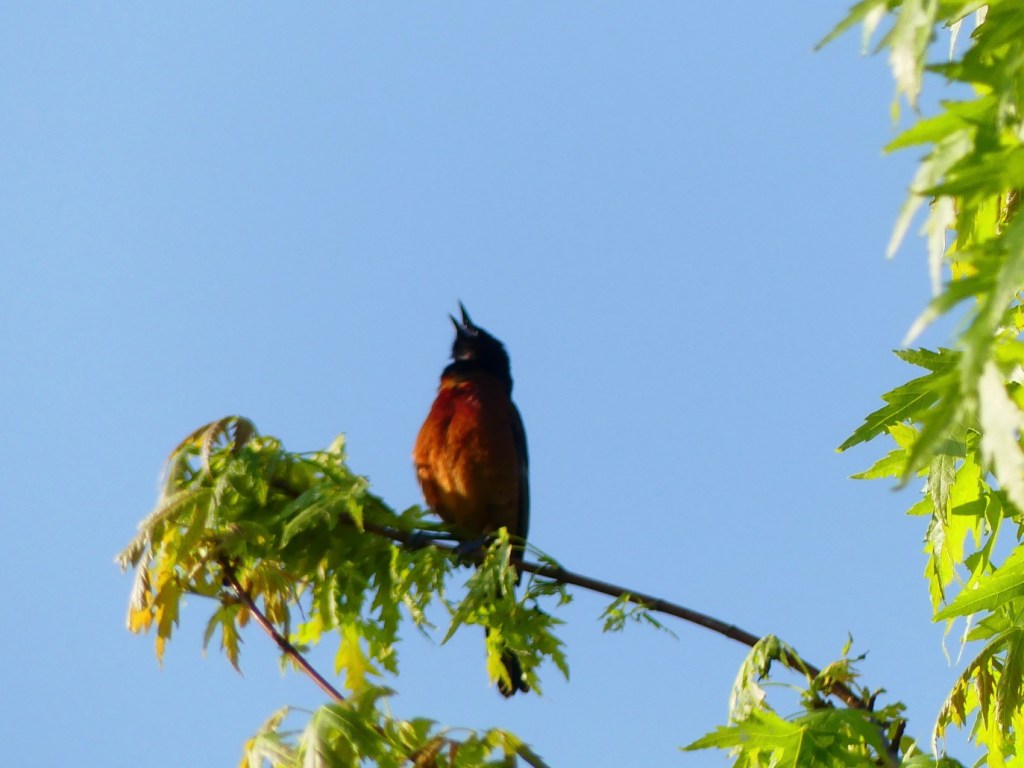
Marian Sole shared this image of a local male Orchard Oriole. Like all orioles, it has a rich lilting complex song.
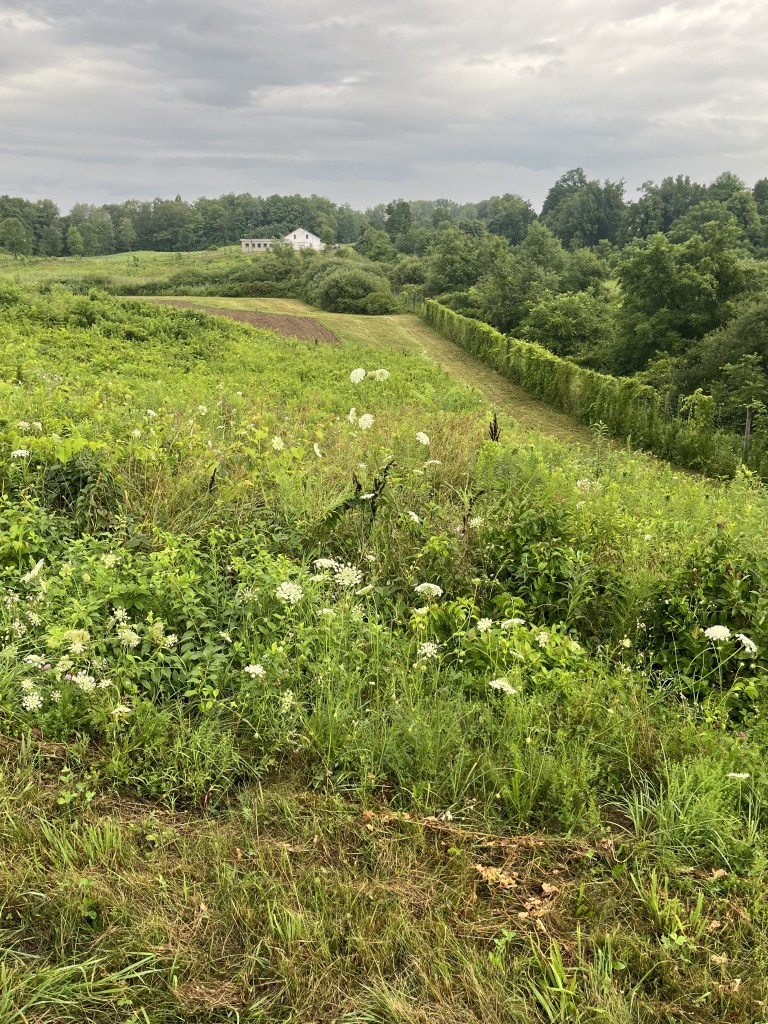
This lightly managed section of the orchard edge (with native vegetation on the opposite side of the fence) was a “birdy” section of the farm and contained a Common Yellowthroat nest with young.

This female Common Yellowthroat foraged for insects in a young planting of plums. Close enough for my iPhone!

Common Yellowthroats are small yellow-olive warblers that nest in brushy tangles and like to be near water. They are a common bird in our area the summer and their ‘whitchity-whitchity-whitchity’ song is a familiar sound if you train your ear to recognize it. They frequently struggle with brood parasitism from another native species, the Brown-headed Cowbirds. Cowbirds do not construct their own nests, but rather like Eurasian Cuckoos, they lay a single egg in the nests of other birds and abandon them for the host bird to raise. Their hatching offspring grow at a fast rate and therefore elbow the lion’s share of the incoming insect food from parents which seem instinctually inclined to shove food into any open mouth regardless of species.

This is a two-way evolutionary race, however, and some populations of Common Yellowthroat have learned to recognize the cowbird’s egg and will build a layer of grass overtop it to isolate it. If that fails, they may abandon the nest and attempt to renest completely at a great cost of energy. The North American Breeding Bird Survey has documented a 26 percent loss of Common Yellowthroats in North America since 1966, probably due to habitat loss. Farms can be essential places for these birds since the unmowed edges, unused fields or the vegetation around irrigation ponds can be more than enough habitat for this species to successfully raise young. A few have learned to use more heavily vegetated suburban yards. You don’t need a lot of land to attract and retain this species, but they can’t eke out a living on mowed lawns dotted with ornamental shrubs–they need a patch of rank growth.

Rose Hill has a wonderful planting of blueberries as part of their U-Pick offerings. The mature plants were heavy with berries on the July morning I visited and although they were not open for customers, more than 30 birds helped themselves to the berries in the patch. American Robins, Gray Catbirds, and Baltimore Orioles dominated the flock, with a smattering of Eastern Towhees, Northern Mockingbird, and a Brown Thrasher. I’ve talked to growers with divergent views on netting berries to prevent birds, some swear it’s essential and others feel there is plenty to go around. I’ve found that birds can nearly wipe out small plantings of a 50 bushes or less, but larger blocks seem to satiate the robbers and leave plenty for us.
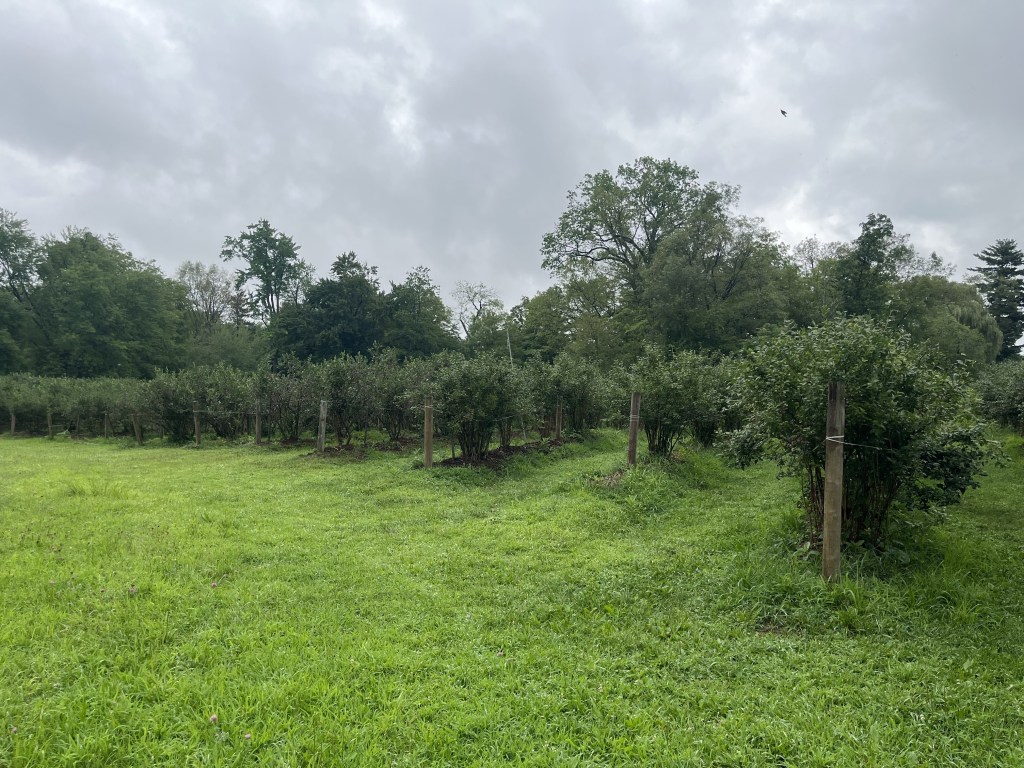
This planting of blueberries hosted 5-6 species of birds attracted to the free fruit
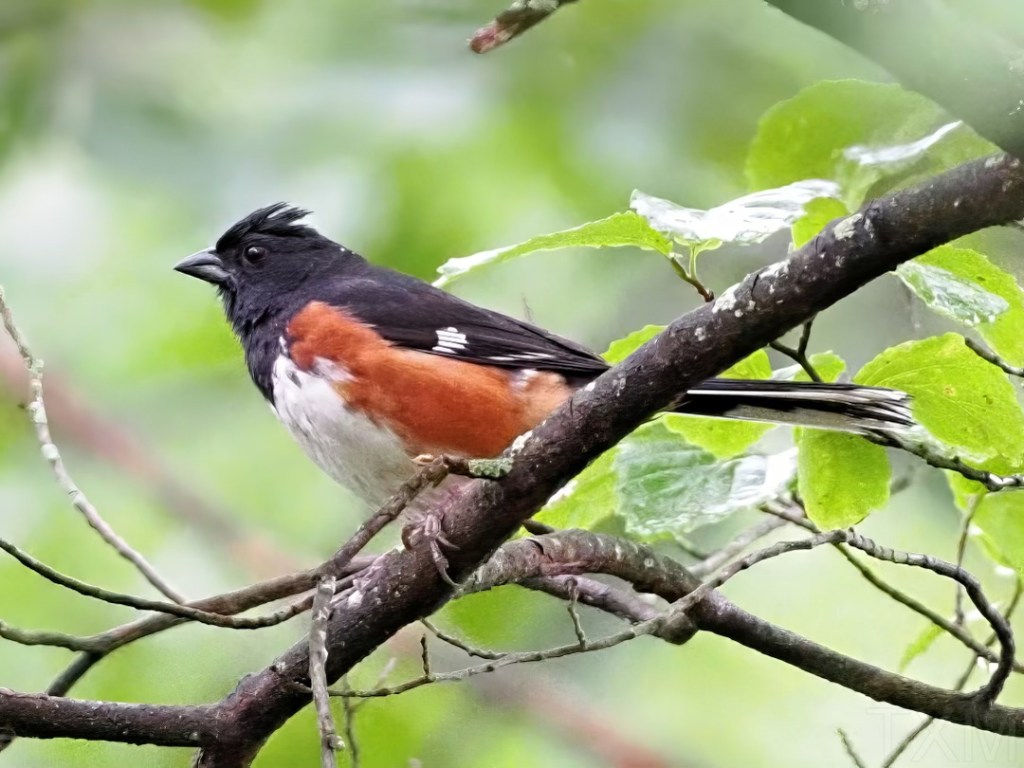
The former name of the Eastern Towhee is the aptly named Rufous-Sided Towhee. Related to sparrows, this is a common bird of scrublands and early successional forests. They scratch through leaf litter with a two foot hop, pouncing on exposed insects. They commonly add fruit to their diet as well
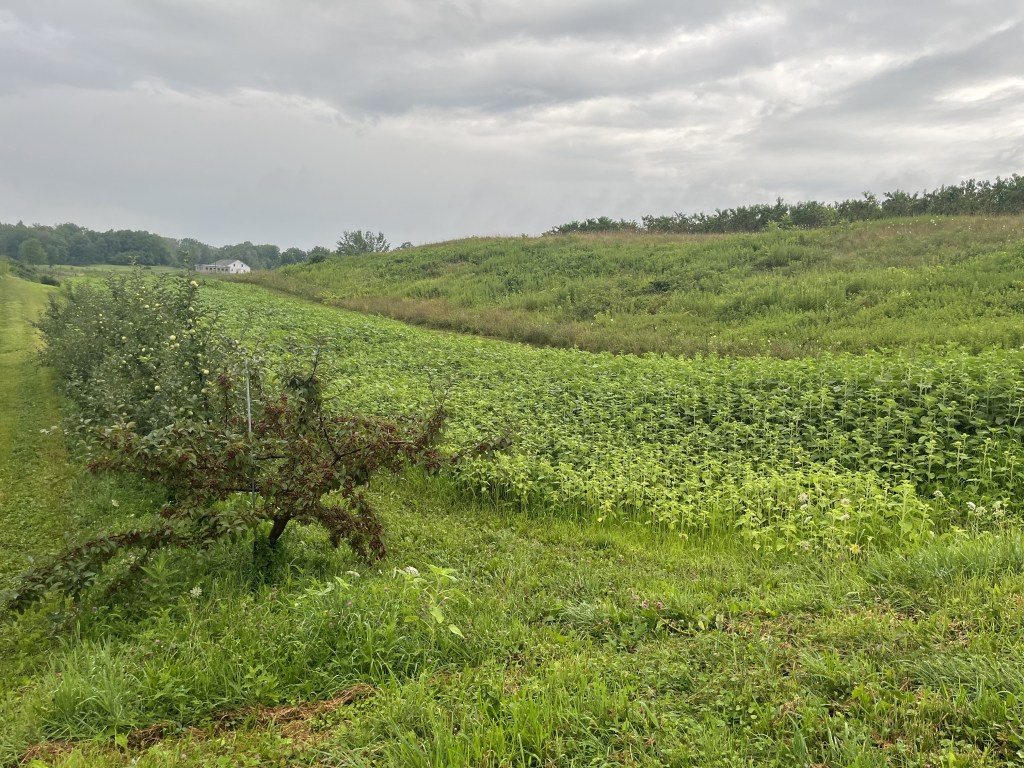
In a month these sunflowers will attract pollinators and if left to go to seed, a calorie-rich seed for a variety of birds

So many of the fruits that we expect and enjoy at commercial orchards — from peaches to apricots, apples to pears, are eurasian imports to North America, non-natives that require a lot of skill and work to bring to fruitfulness and profit. That Rose Hill has managed to do all of this and still leave patches on their farm to attract native birds and other organisms is deliberate proof that this complex relationship of native and non-native, cultivated and fallow, management and benign neglect, can yield positive ecological relationships. All of us who farm and care about wildlife are searching for our own models to achieve something akin to a balance of what we take from nature and what we leave.

The Birds of Blue Star

By Will

On June 12 I visited Blue Star Farm and documented breeding evidence for the following birds:

  • American Robin (Feeding Young)
  • Carolina Wren (Territorial Singing)
  • Chipping Sparrow (Nest with Young)
  • Common Yellowthroat (Territorial Singing)
  • Gray Catbird (Feeding Young)
  • Indigo Bunting (Feeding Young)
  • Killdeer (Fledgling)
  • Pileated Woodpecker (Territorial drumming)
  • Red-eyed Vireo (Territorial Singing)
  • Red-winged Blackbird (Feeding Young)
  • Song Sparrow (Nest with Young)
  • Warbling Vireo (Feeding Young)
  • Wood Thrush (Feeding Young)
  • Yellow Warbler (Feeding Young)

Each section of Blue Star Farm contained unique habitats that hosted a variety of farm and edge-loving species of birds.

Native shrubs such as Staghorn Sumac and large legacy Sugar Maples planted long ago shared space with common non-natives such as Buckthorn, Autumn Olive, and Japanese Honeysuckle (all fruiting shrubs that attract birds) between the farm’s vegetable fields and the main road. Northern Cardinals and Gray Catbirds fed on berries as a Northern Flicker, a yellow-spotted medium woodpecker, investigated nesting cavities in the mature Sugar Maples.

Weediness is a given in most vegetable production systems and they are often the top management challenge. My farm, despite my best efforts to cultivate and hand weed, is often a riot of weeds and I’m slowly learning to make peace with that. Weeds, that catch-all term for an uninvited variety of herbaceous surprises in crop zones, can and often do rob crops of critical moisture and nutrients, but they often include many seed-bearing grasses and forbs that attract insect prey for birds, serve as cover for nesting sites, and feed many ground-feeding sparrows, particularly in fall and winter.

Weeds can be a particular problem for organic farmers because there are limited options available to chemically control them. ‘An ounce of prevention is worth a pound of care,’ is old country advice for dealing with weeds, advising farmers to stay on top of weeds early or else suffer the consequences. A farming manual I have from 1915 has slightly more bellicose advice: “Man must wage continual warfare against weeds should he wish to prevail.”

Just how much weediness a farm can endure depends on the tolerance of the crop and a lot on the time, resources, and philosophy of the grower. I find weeds are most prevalent during dry years (those fast-growing annual weeds seem to thrive in conditions when cultivated crops struggle to keep up). I find that most crops can handle some weediness once they are established and if mowed out shortly after harvest, the weed seed load is mitigated. Like so many things in life, timing is everything.

At Blue Star, A Song Sparrow built a nest in a weedy tangle at the edge of black plastic mulch. An adult foraged for small beetles along the edge of the mulch and noticing me it paused on a spray of Lambsquarter. I stayed motionless until its instinct to feed its young overcame its instinct to be wary of this large mammal. Red-winged Blackbirds perched on the tomato stakes nearby and Chipping Sparrows foraged in the Clover-Wheat cover crops adjacent to the vegetable patch.

I heard a familiar rollicking whistle overhead and noticed a pair of Ospreys flying overhead

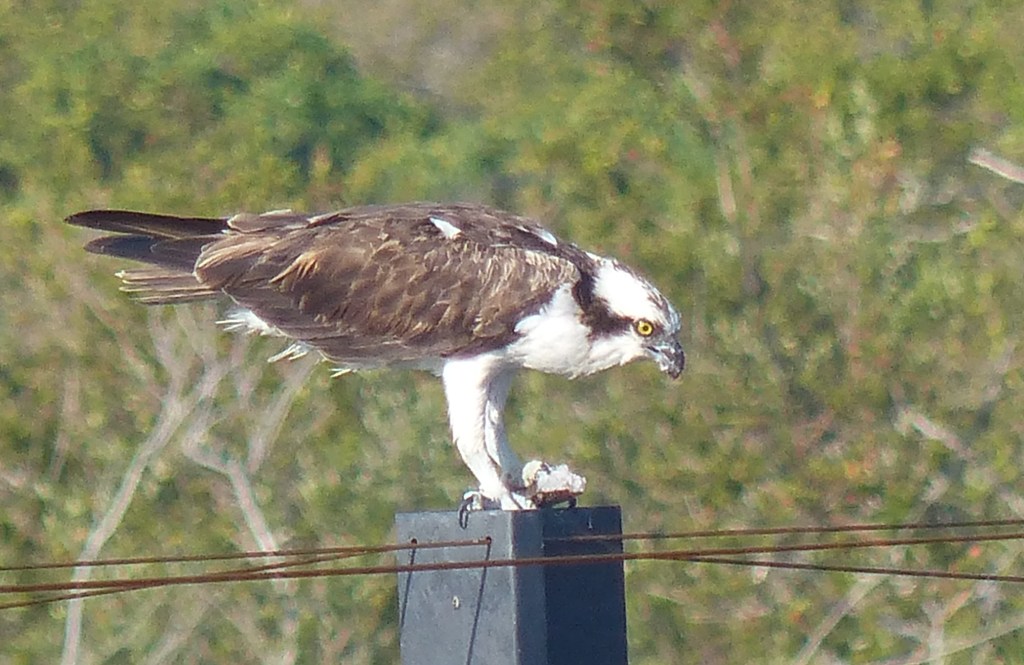
The Osprey or Fish Hawk have rough scaled feet perfect for grabbing and holding onto fish plucked from the water

The two fish-eating raptors seemed out of place on a farm, but here in Stuyvesant the Hudson River is a short distance away. Osprey are just starting to nest again in the middle stretches of the Hudson River Valley. They commonly breed downstate and on Long Island and populations nest on lakes at the foothills of the Adirondacks, but for decades they were not present as breeders in the Hudson Valley even as Peregrine Falcons and Bald Eagles (other raptors recovering from DDT poisoning) repopulated historic ranges.

Their absence was long a local ornithological mystery. In the 1980s students from Columbia-Greene Community College erected nesting platforms on the Hudson River to entice them to settle here, but Ospreys are famously uncritical about where they build nests, and lack of nesting sites was probably not the limiting factor. In Florida, they commonly appropriate power line posts, commercial signs, and even flat roofs in developed areas. Perhaps the population just needed to build up over time to infill suitable habitats. Few things authenticate a large body of water better than an Osprey and its dramatic hover and dive to catch fish. I’m always amazed at how quickly local bird populations can wax and wane within the span of a human life.

A single Wild Turkey launched out and flew noisily from a cover crop patch of rye and wheat into the distant woodlot. Turkeys are another great success story in our area, benefiting both from regrowing forests and reintroduction programs. Victims of habitat loss and overhunting in the early 20th Century, they are now common throughout the Hudson Valley and have even adapted to suburban yards. They are one of two native North American birds that have been domesticated (the other is the Muscovy Duck of Mexico). Spanish explorers sent the Turkey back to Europe in the 1500s where they were further domesticated and spread throughout Europe. English colonists a century later brought them back “home” to North America. Wild Turkeys are found in all states except Alaska (yes, there are even wild introduced populations in the upper elevations of Hawaii!).

I hear the gulping distinctive “KOWP KOWP KOWP” song of a Yellow-billed Cuckoo just to the north of the farm in the old woodlot. 2024 has been a banner year for our two native species of Cuckoo, the Black-billed and Yellow-billed as their regional populations follow outbreaks of hairy caterpillars. The large outbreak of Spongy Moth caterpillars in Columbia County and Duchess County has attracted migrating cuckoos to our area and provided an abundance of easy prey. Cuckoos are some of the only birds able to digest Spongy Moth caterpillars and they can eat more than 100 of them at a time, so many in fact, that the caterpillar hairs become matted into a digestive felt inside the cuckoo’s stomach inhibiting its ability to absorb nutrients. Cuckoos are among the few birds in North America able to feed heavily on hairy caterpillars and have evolved the ability to regurgitate their entire stomach lining and grow a fresh one anew. Although the cuckoos barely put a dent in the spongy moth populations, the spongy moths are a boon for the cuckoos which gain the extra nutrition to lay multiple clutches of eggs.

Cuckoos can be incredibly difficult to see when perched. They are masters at remaining perfectly still and they keep their wings tucked tight when foraging. Mike Birmingham captured this wonderful image of a Yellow-billed Cuckoo on an exposed perch.

The edge between the unmoved pastures and adjacent woodlot hosted several species of forest and edge-adapted species including American Crow, American Goldfinch, Common Yellowthroat, Eastern Wood Pewee, Gray Catbird, Great-crested Flycatcher, Pileated Woodpecker, Red-bellied Woodpecker, Red-eyed Vireo, Rose-breasted Grosbeak, Song Sparrow, Warbling Vireo, White-breasted Nuthatch, and Wood Thrush

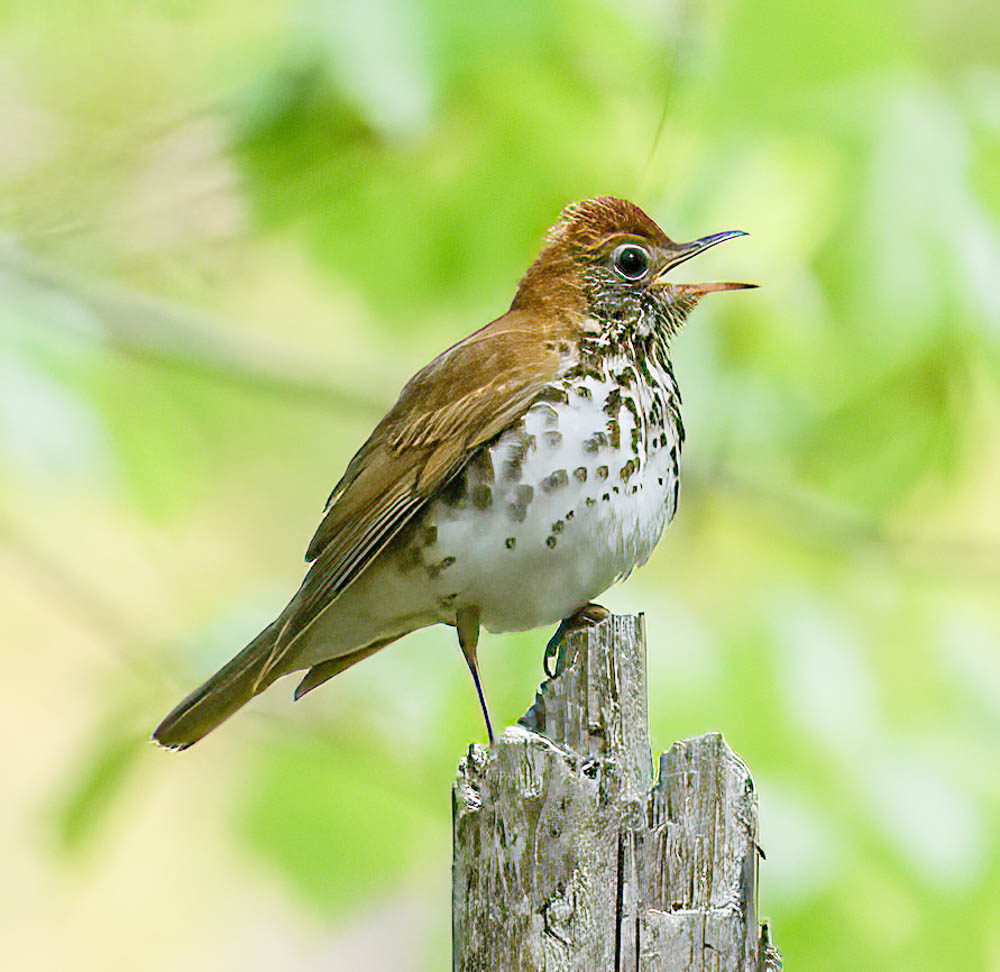
This stunning image of a local Wood Thrush was captured by Chris Franks. Wood Thrushes require at least some undisturbed woodland. Although they have survived forest fragmentation better than other woodland thrushes, their numbers have still declined by half in the last fifty years in New York State.

One hotspot of bird activity at Blue Star is the farm pond that lies to the north of their vegetable plots. Many farms in our region build fewer ponds these days as soil and water district grants have dried up, the importance of ponds for watering livestock has declined with the overall decline in animal agriculture, and many vegetable operations now opt for wells and drip irrigation. Homeowners still build ponds for aesthetic reasons, but new pond construction on farms is now rare. Nevertheless, a multitude of legacy ponds dot the Hudson Valley and can serve as oases for birds.

Blue Star’s pond hosted two territories of Song Sparrow, a pair of Red-winged Blackbirds, Barn Swallows, and several Yellow Warblers that caught some unidentified beetles at the waters edge to feed their young in adjacent willows. A small clan of Killdeer, black-and-white inland shorebirds, foraged along the pond’s muddy edge. While the nearby Hudson River is ancient, natural ponds are recent landscape features and quite rare because the fate of most ponds are to fill in quickly over time. The intentional disturbance created by pond construction in the last two centuries has provided a wealth of habitat value for our area. Are there ponds on your farm or property? If so, how long has it been there and what sorts of organisms does it host?

Not all disturbances are net negative events for wildlife. The sad looking oaks defoliated by Spongy Moths throughout the Hudson Valley this June have generated the highest populations of cuckoos I’ve ever seen and the oaks will surely rebound. The soil disturbances associated with Blue Star’s vegetable production created a flush of annual weed seeds now enjoyed by sparrows and their farm pond has produced the insects feeding a variety of native song birds. How to we measure ‘creative destruction’ and gauge how some disturbance is valuable or harmful? What values do we bring to that question and how does it affect the management decisions we make?

The Birds of Little Seed

The diversity of habitats in such a compact area, including a stream and riparian zone, upland pasture, hedgerows, weedy field margins, and vegetated crop zones permit many species of birds to coexist with the farming practices of Little Seed.

On a bright sunny morning on 17 June I was able to document breeding evidence for the following species at Little Seed

  • American Redstart (Feeding Young)
  • Bank Swallow (Used Nest)
  • Belted Kingfisher (Used Nest)
  • Chestnut-sided Warbler (Fledgling)
  • Common Grackle (Fledgling)
  • Common Yellowthroat (Singing territorially)
  • Eastern Kingbird (Feeding Young)
  • Field Sparrow (Fledgling)
  • Gray Catbird (Carrying Food for Young)
  • Indigo Bunting (Singing territorially)
  • Killdeer (Fledgling)
  • Northern Rough-winged Swallow (Fledgling)
  • Red-eyed Vireo (Carrying Food for Young)
  • Red-winged Blackbird (Fledgling)
  • Savannah Sparrow (Singing territorially)
  • Spotted Sandpiper (Singing territorially)
  • Song Sparrow (Fledgling and Nest with Eggs)
  • Warbling Vireo (Singing territorially).
  • Wood Duck (Fledgling)

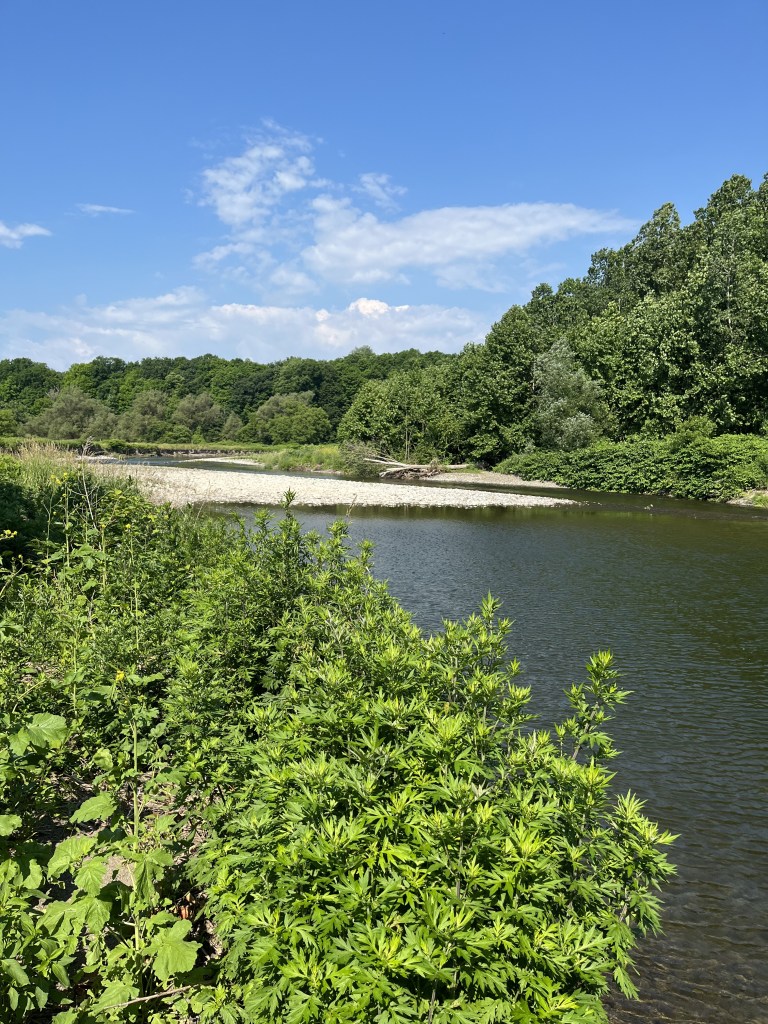
As Conrad and Cladia described in their post, one of the most ecologically interesting and unique features of this farm is the stream and riparian edge that runs adjacent to the farm’s pastures. In addition to looking like a well-used and marvelous swimming hole, the stream and shorelines hosted a variety of interesting birds.

The pebble beach and distant exposed stream banks hosted several range-restricted riparian species of birds

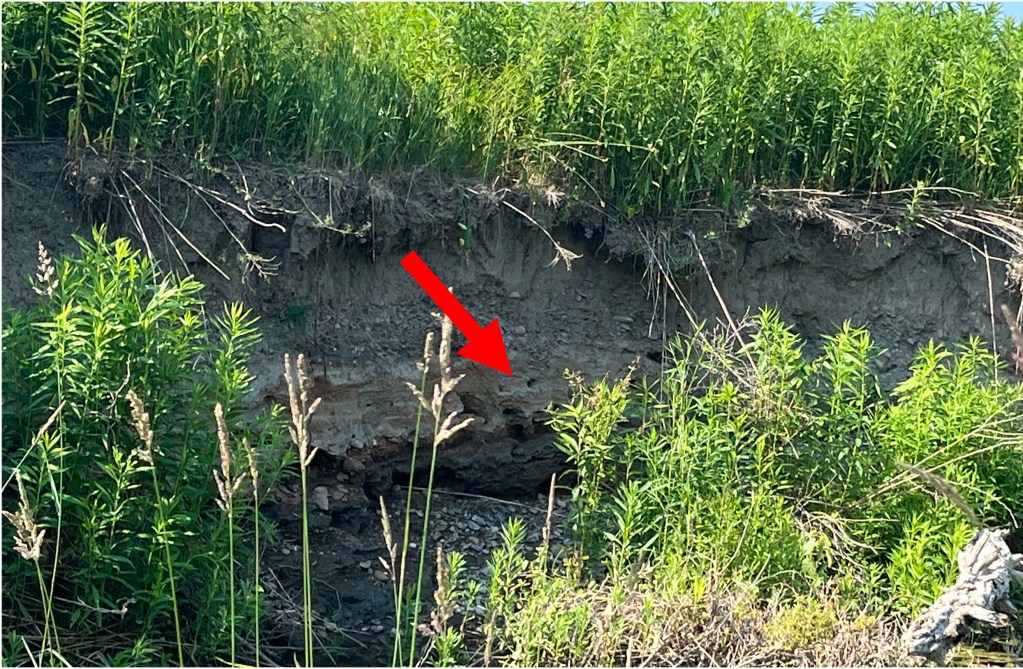
The silt embankment of the stream provided nesting sites for three species of birds that take advantage of this specialized habitat. Bank Swallows, aptly named for their tendency to dig into the soft silt/sand edges of watercourses to form communal nesting cavities were present. Northern Rough-winged Swallows (that often nest as single pairs rather than in groups) also called this section of the stream home.

The red arrow points to one of the excavated cavities of a Bank Swallow nest. Bank Swallows were present flying over the creek, but this particular nest is likely abandoned, perhaps picked up by another cavity nester such as the Northern Rough-Winged Swallow. Bank Swallow colonies are inherently ephemeral, taking advantage of recently exposed banks due to flooding or erosion. Bank Swallows have been documented nesting in human-altered gravel banks and sand mines when natural habitat is unavailable.

This Bank Swallow was photographed by Mike Birmingham in the Hudson Valley. Like all swallows, its long wings allow it the great aerial performance necessary to chase and catch flying insects. Bank Swallows arrive to the Hudson Valley in May and depart to Central America in late August and September when flying insect biomass begins to decreases here locally.

The larger cavity to the left was recently used by a Belted Kingfisher, a much larger fish-eating crested bird that also nests in exposed embankments. This nest looks like it was also used in a previous season. Fresh nests show two clean groves where the adult kingfisher drags its feet as it enters and exits. A variety of mammals will renovate and inhabit this kind of valuable real estate when the breeding season ends.

An adult Wood Duck, another cavity nester, swam past on the creek with seven recently fledged ducklings in tow. Ducklings are a classic example of precocial young, meaning that shortly after they hatch they are mobile and able to explore and feed. Contrast these young swimmers with the pink, blind and helpless young of an American Robin (which are altricial young) that must be fed and kept warm to survive. Wood Ducks nest in cavities, but as their name implies, inside the cavities of trees rather than soil embankments. Sometimes suitable nesting holes can be so scarce that multiple females will lay in the same cavity creating super clutches of forty or more young. As soon as the birds are hatched and mobile they exit the cavity (sometimes falling 20 or 30 feet to the ground). Wood Duck chicks have a layer of fat that cushions the fall as they don’t always drop into the water from their nesting trees!

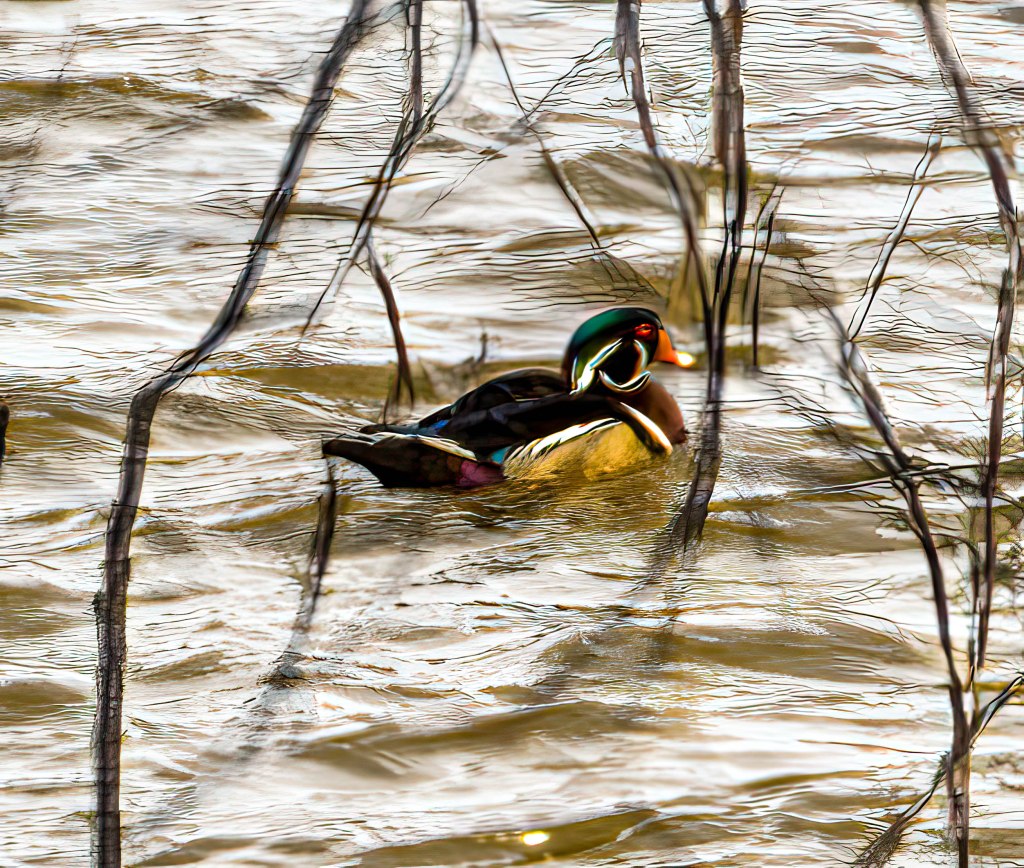
A drake (male) Wood Duck photographed by Mike Birmingham. Wood Ducks are examples of short-distant migrants. They typically leave the Hudson Valley in December but don’t go too far, finding open water in the Mid-Atlantic States. They return earlier than most migrants as well, typically showing up in the Hudson Valley in March. More than 100 years of data have shown us that as the climate warms, Wood Ducks linger here longer in the fall and arrive earlier in spring, often returning in February now, 2-3 weeks earlier than average.

In the pasture adjacent to the stream, three species of early breeding birds are already wrapping up the year’s nesting cycle. Red-winged Blackbirds fly in mixed age flocks in the pasture. They alight and drop back down into the grasses like rain. Common Grackles and their recently fledged soft gray young join them. These small flocks begin as the association of a few dozen breeding pairs. As the summer draws to a close these local flocks aggregate, joining others of their own species and and perhaps too by European Starlings and Brown-headed Cowbirds, sometimes reaching numbers in the tens of thousands. Birds of a Feather Flock Together, so the proverb goes, but in this literal sense the ecological needs of these bird change. In the summer, males aggressively defend individual territories. The proud red flash of a Red-winged Blackbird is designed in part to keep others away from their nesting territories. As breeding season ends, however, and their sexual hormones diminish, the value of so many neighbors becomes an essential survival tool. Many eyes can quickly spot predators and the dodge and weave of a large flock of blackbirds confuses their assailants. There is safety in numbers.

Some of the more experienced Red-Wing Blackbirds will raise a second clutch, but the bulk of breeding is already over just as the summer solstice arrives. Other species of birds, like the pair of American Goldfinch that fly over the pasture, are just forming their pair bonds and attracting mates, not yet ready to lay eggs. They will gather together nests of spider webs and milkweed silk embroidered with lichens as the first apples of the Hudson Valley are picked. Each species of bird has its own season and rhythm.

Tree Swallows, a third early breeder also flies over the stream near the pasture. These iridescent blue-green, white-bellied swallows nest in tree cavities just like Wood Ducks. Placing a bluebird box next to a water course is almost certain to attract them. They are the first swallows to arrive to the Hudson Valley each year, typically in March, and the last to leave. Unusual for migrants, they have a long season locally after their breeding cycle. In early July they perch crowded on local power lines and those flocks always remind me of the pivotal moment when summer has peaked and we begin the long slow walk to winter. They seem to be able to eke out a living when other species of swallows have long departed and it’s not impossible to see them in our area as late as October.

On many conventional farms, active cropping areas typically have low bird diversity, but the unmanaged edges at Little Seed provide habitat for birds even in places that are heavily travelled and used for production.

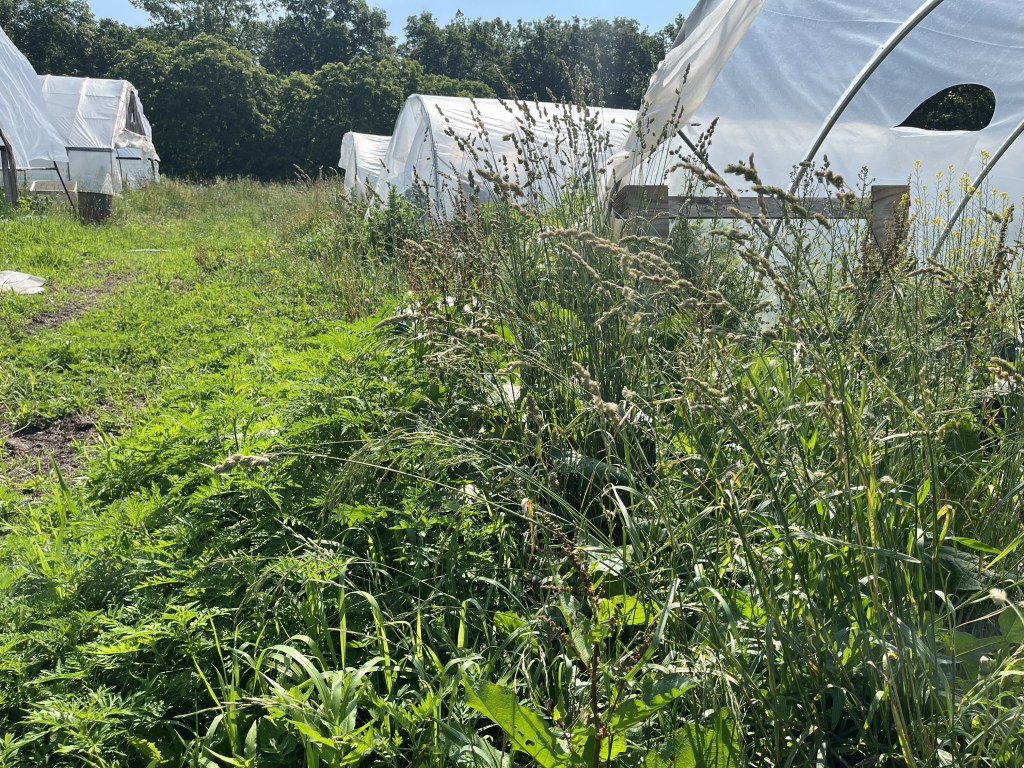
The seeding grasses in and around these plastic tunnel greenhouses provide enough habitat for sparrows to nest and feed.

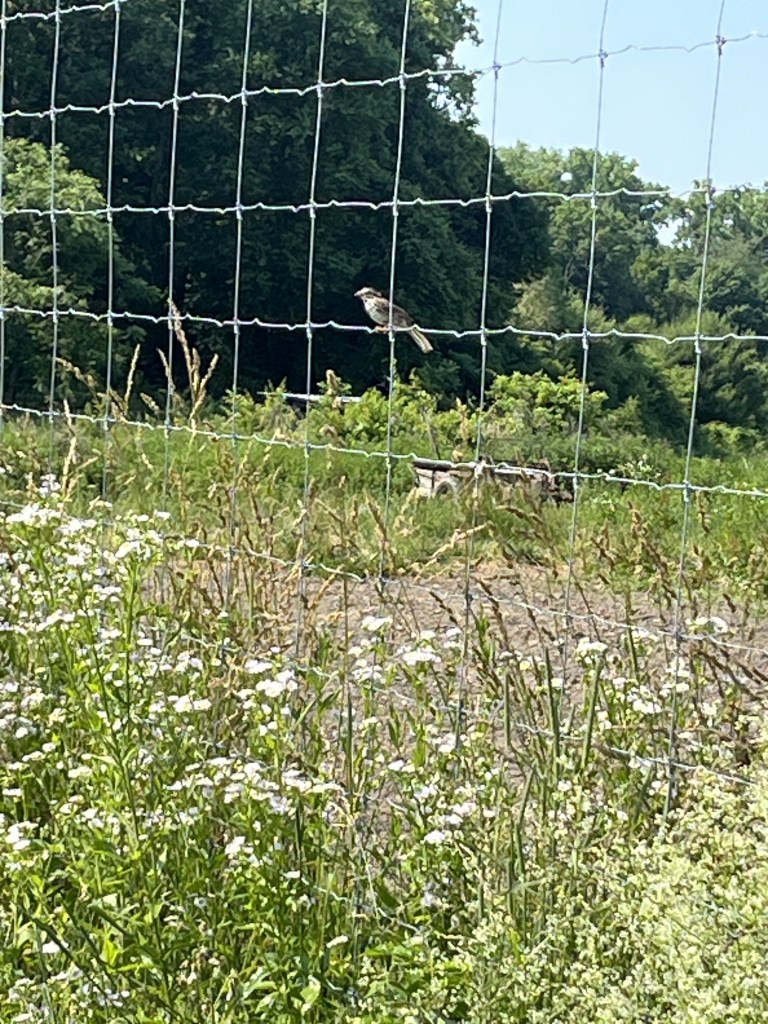
Song Sparrows are particularly good at finding small breeding niches in weedy field margins and hedgerows when given the chance. They are true omnivores feeding on a variety of insect prey, seeds, and fruits.

As their name implies, Song Sparrows have complex — and to our ears, pleasant — songs that they sing over and over to define and defend their territories.

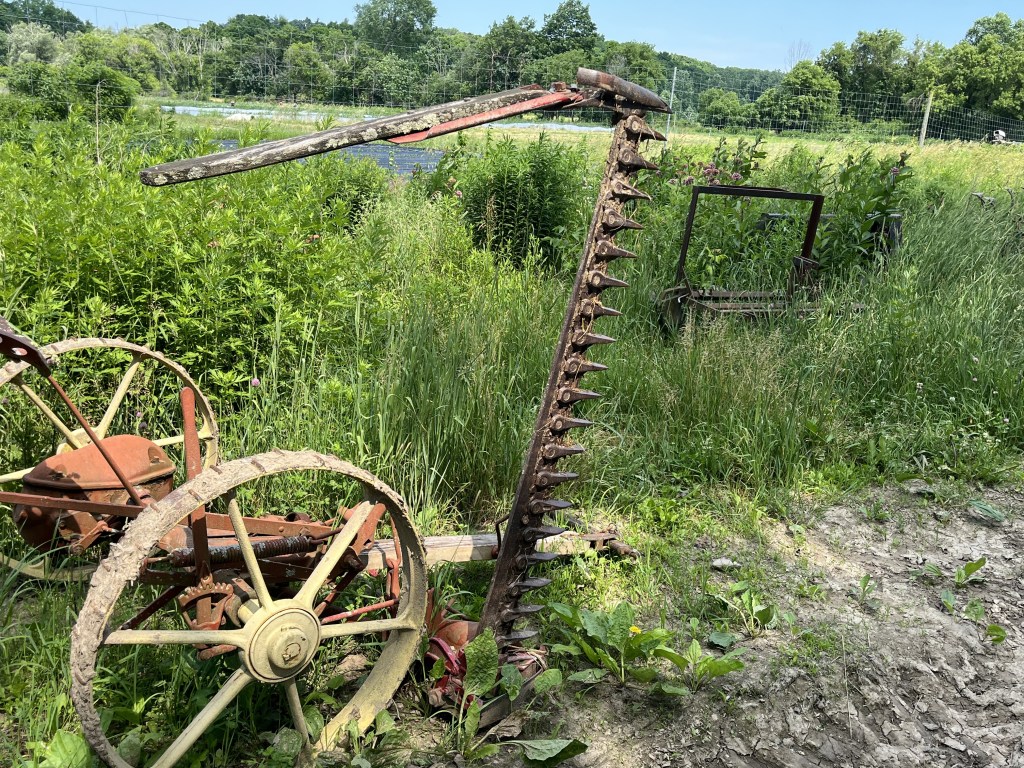
Even the seasonal weeds that grow up around equipment storage sties can be an oasis for sparrows and other birds

Fenceposts can be important feeding sites for birds. An Eastern Bluebird (that just dived out of view of my camera!) used this post to ambush and pounce down onto insects below.

Brush piles can be essential cover for sparrows and other birds, particularly in the winter when the lack of leaves makes many small birds easy targets for aerial predators.

As an ecologically minded farmer, I often ask myself the question: Is it better to provide wildlife habitat on my farm by encouraging more undisturbed and fallow land, or should I work harder to integrate spaces for wildlife in and among my cropping areas? Little Seed clearly demonstrated both solutions. And although, I’m not sure there is ever a firm answer to this question, or if I have even framed it correctly, I left the farm thinking more and more about these two approaches.

Birds of the prairie at the Churchtown Dairy

A recently grazed paddock at Churchtown with a ‘messy’ field edge hugging hedgerows and electric fencing

By Will

I live a short walk from the Churchtown Dairy and my family’s 109-year old fruit and vegetable farm is only a few miles to the south so I have come to know this area well. The old Churchtown General Store to the left of the introductory photo was one of the last places in Columbia County to sell bushel baskets of penny candy (without novelty or irony) and I recall biking past these fields on my ten-speed nearly forty years ago to get a regular and affordable sugar rush. The store is long gone now. In the 1960s, against the advice of all of our farming neighbors not to buy such steep and “useless” land, my mother purchased the top of a drumlin just across the road from the dairy where my father planted an unsuccessful Christmas tree farm. That hill, now a riot of eastern red cedar and red maple is taking its time growing back into a oak-hickory forest.

I can’t remember a time when grass did not dominate this road. When I was young, The Weaver family (also still farming in the area today after more than a century) managed many of the hayfields to the South and when I was a teenager it was the first place I saw and heard many of the grassland species of birds that I now study as an adult. Grassland birds are particularly good at site fidelity, meaning that birds that successfully raise chicks at a location return to that same location again and again, year after year. And so have I, it seems, returned after careers abroad, flying back to my nesting grounds at my family farm to rear my own young. It is with these layers of context and familiarity that I was pleased to accept the chance to visit this property with fresh eyes.

Before I begin, I’d like to thank the members of the Alan Devoe Bird Club for providing photos of local birds for this blog. Although they are not the exact individuals I found and describe in my posts, they are representative examples found here in the Hudson Valley. Special thanks go to Mike Birmingham, Chris Franks, Mayuko Fujino, and Marian Sole for laboring in the field with heavy telephoto lenses to capture great images of birds so I didn’t have to! Future blog posts will have live links to the Alan Devoe Bird Club (and other bird groups in the Hudson Valley) should readers wish to connect and learn more.

We can only guess at how many grasslands and fields existed in the Hudson Valley before European settlement. Some clues come from old surveying records, pollen samples from undisturbed accumulated layers of mud, and the guesses of anthropologists familiar with the farming practices of the First Peoples who lived here for millennia. What is clear from the historic record is that grassland birds took off quickly after European settlers cut the eastern forest into pastures and hayfields that mimicked the tall-grass prairies that these birds evolved in. Today, as much of the the Midwest grows corn instead of grass, these leftover eastern hayfields and pastures act as areas of last refuge among regrowing forests and human development. Grassland birds that shifted their breeding locations east today continue to breed here like fish in shrinking pools. Their fate is uncertain. All of New York’s grassland species of birds are in decline, some precipitously. Many are in decline on their ancestral lands too making them a natural subject of conservation.

Why are they declining? There are lots of reasons, but habitat destruction and intensive uses of remaining grasslands top the list. A century ago, farming was inefficient. The horse-drawn world could not mow a field from hedgerow to road in a few minutes. Moreover, among the busy calendar of chores, mowing didn’t start until late June and July and birds had a chance to nest and fledge before the cutting started. Today, hay is cut earlier to maximize its nutritional value, rotational grazing of livestock is intense and even non-farmers prefer to mow their lands to look like estates and golf courses. In many grasslands, there simply isn’t enough time between disturbances for most birds to mate, build nests, and rear young. That these birds manage to persist at all is a kind of miracle of determination. Colleagues of mine at the Hudson Valley Farm Hub in Hurley routinely record nest failures even when conditions are prime.

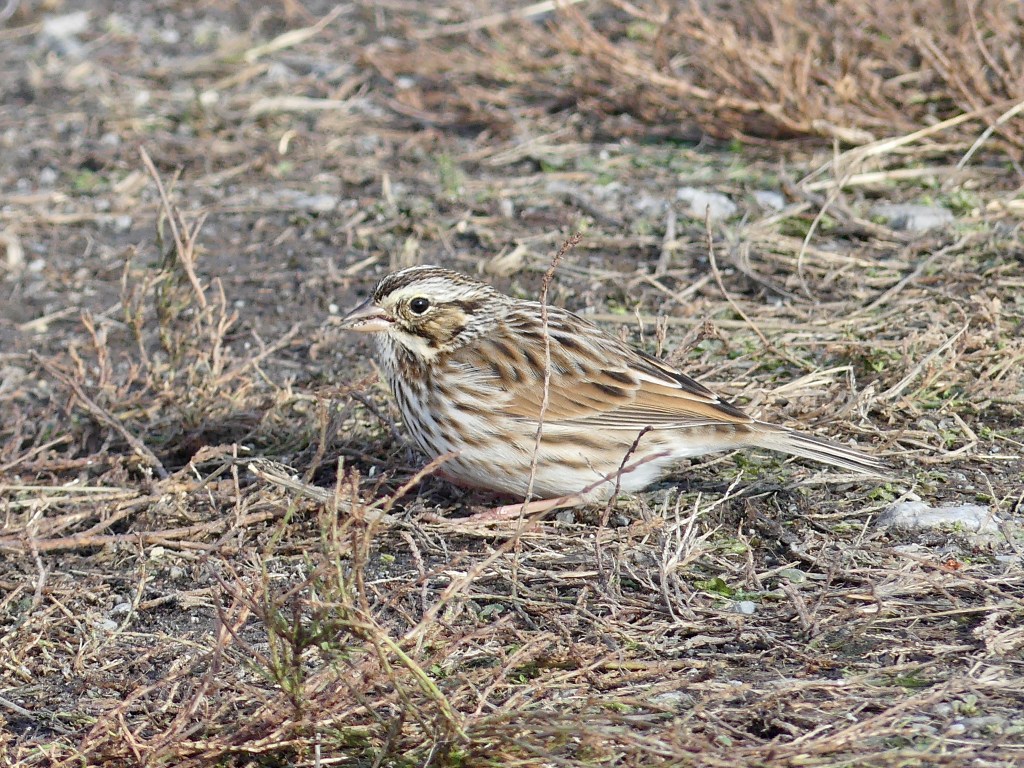
Savannah Sparrows fare better than most other grassland birds due to their ability to nest in the margins of fields, farm lanes, and active crops. As climate change warms our winters we find many more of them in the Hudson Valley year round. Photo: Mike Birmingham

What interests me most at Churchtown is that there are grassland birds — many of them, in fact, and they exist on a working farm where bird habitat management is an ancillary goal. Millions more grassland birds existed in New York a century ago when virtually zero farms managed for their success at all. Why do some farms host birds and others do not?

I think cows are one of the primary reasons that Bobolinks, Eastern Meadowlarks, Savannah Sparrows, and Grasshopper Sparrows can all be found at Churchtown. Cows can trample nests and remove grass but not as fast as a rotary mower. Both Savannah and Grasshopper Sparrows have seemed to find a niche in these pastures, building nests in the shaggy field edges under single-strand electric fences that cows are shy to graze closely for fear of electric shock.

These messy edges that are lightly grazed provide just enough habitat for grassland sparrows to eke out a nest or two.

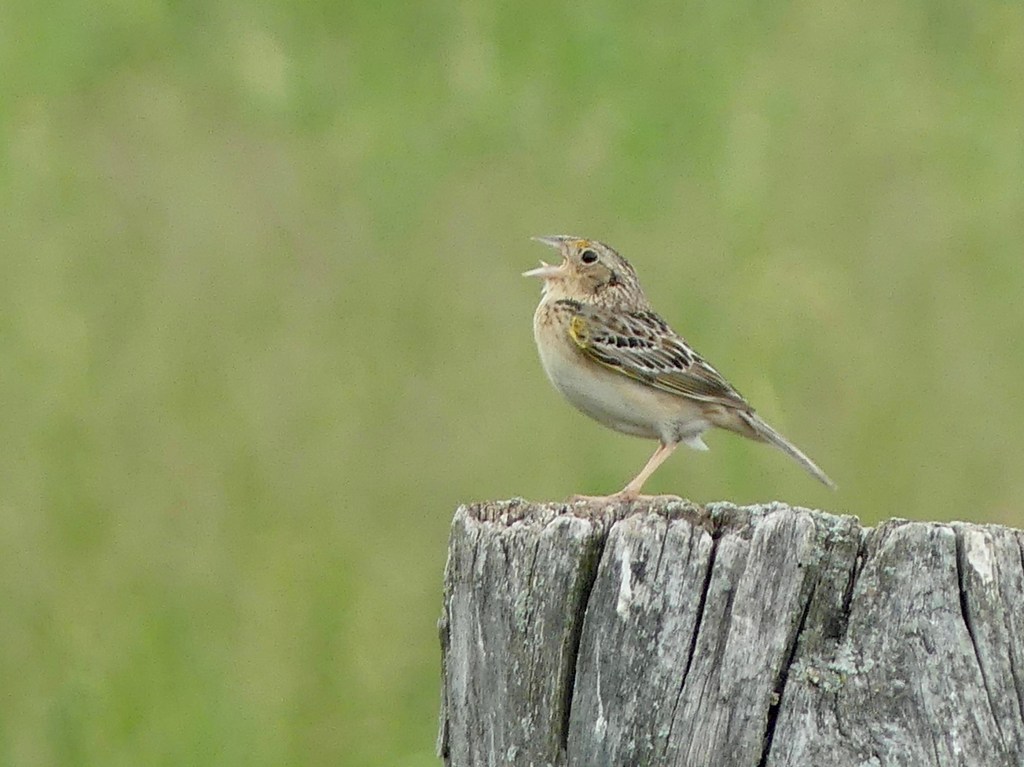
It was exciting to note breeding evidence for at least two pairs of Grasshopper Sparrows. These birds are easily overlooked, even by experienced birders, because they are small and drab and their song is very unbirdlike–a quiet lisping insect buzz. Even in their core breeding range in the Midwest, this species has declined 72 percent since 1966, according to the North American Breeding Bird Survey. I have only documented a handful of nesting records for this species in all of Columbia County so its presence here is special. They need largely undisturbed mature hayfields and pastures during late May and early June in order to rear young. I have never seen this species using the unique habitat of electric fence ‘edge.’ The birds I found were carrying food for young, which fledge in 6-9 days after hatching. It’s a race against time. When nests are destroyed, they often try a second, even a third time. More study is needed to accurately track their success at Churchtown.

So many drab or overlooked species show subtle beauty such as the dab of warm Naples yellow above the eye or lemon wash on the forewing of this Grasshopper Sparrow. Photo: Chris Franks.

On that point, it’s unclear to me if the bobolinks and eastern meadowlarks found at Churchtown are successful nesters or displaced birds from nest disturbances. Unlike the sparrows, both of these birds avoid edges and need larger areas of grass. Bobolinks are less picky about the vegetation type they nest in, but meadowlarks need long grasses to weave an intricate nest that looks more like a hutch than a cup — not easy to do in alfalfa or clover. They need true grass. They also breed early, preferring to nest in May just as many hayfields are getting their first cutting. Many are the fields that attract meadowlarks in the Hudson Valley only to encourage nests that are destroyed shortly after by mowers. The landscape at Churchtown is attracting meadowlarks but are they rearing young successfully?

As we reached out to each of the participating farms in this study we asked the question: What would you like us to pay attention to? In addition to a report on grassland birds, Churchtown specifically asked about the value of its unique hedgerows for birds.

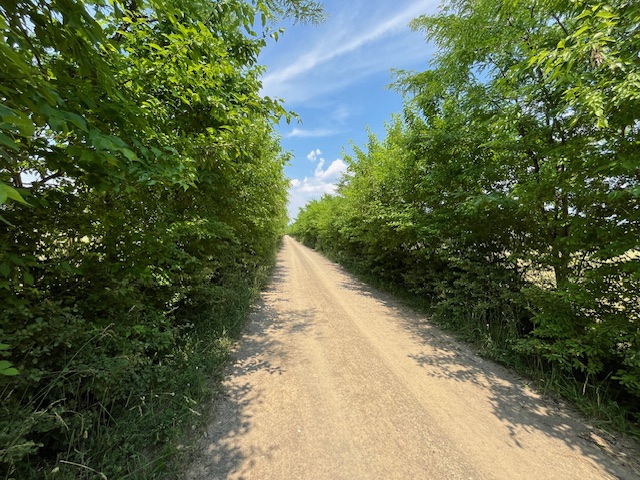
This lane-and-hedge aesthetic is common in England and Europe and fairly uncommon in North America. Would native birds use it for food and shelter?

We have a long tradition in America of borrowing European, specifically English aesthetics, and surrounding the Churchtown Dairy are extensive lanes bordered by hedges. Some European immigrants planted hedges specifically as “living fences” for livestock, but most hedges in eastern North America are the product of neglect rather than design. As shrubs overtook “rail over rock” fences and stone walls, they too became living fences, particularly as livestock abandoned a field and mowers did not trim field edges . The hedges at Churchtown are dominated by a non-native species of hazel and are poker straight — I wondered if these ‘English’ hedges would attract birds any better than a suburban landscape?

To my surprise, the answer is largely yes.

Two Brown Thrashers, declining shrubland species in New York, foraged for caterpillars in the hedges, possibly a breeding pair.

Brown Thrashes are related to mockingbirds and mimic the sounds of other birds, cats, even beeping cars, singing in April and May in distinct couplets. I’ve noticed that this species seems to be developing a tolerance for human landscapes as other shrublands grow into mature forests or are lost to development. They are particularly fond of transmission line corridors that are not mowed annually allowing for analog shrub habitats. Notice the striking yellow eye and warm chestnut back. Photo: Mike Birmingham.

The hedges also hosted the following species of birds

  • Mourning Dove
  • Cedar Waxwing
  • Northern Mockinbird
  • House Wren
  • Eurasian Starling
  • American Robin
  • Song Sparrow
  • Field Sparrow
  • Chipping Sparrow
  • Yellow Warbler
  • Red-winged Blackbird
  • American Goldfinch

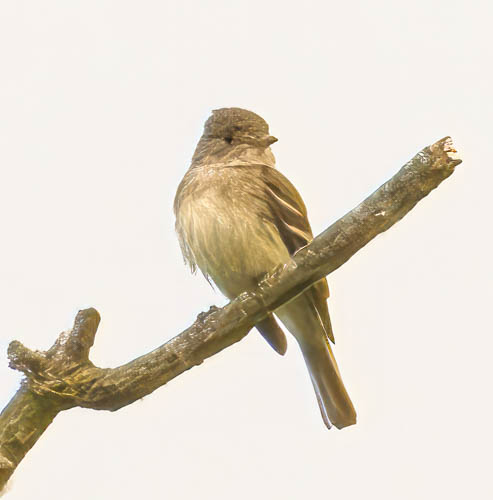
Another surprise in the hedges were three Willow Flycatchers. As the name implies, these birds perch on snags and twigs, sallying forth to capture flying insects with a keen vision that has evolved to detect rapid movement. They are not uncommon in the Hudson Valley, but I rarely see them in dry agricultural landscapes, and almost never in nonnative landscape plantings. They prefer wet pond margins or slow stream beds overgrown with willow and alder. Their song isn’t much of a song at all — a sneezy FITZbew! They are a member of the Empidonax tribe of flycatchers, all drab yellow-green small birds that reach their highest diversity in South America.

Willow flycatchers nest in woven cups in dense shrubs. They are expert renovators and if a nest fails they have been observed taking the building materials of the failed nest and carrying it to a new place to rebuild. Photo: Mike Birmingham.

It’s tempting to think of the ecological past as unchanging, but dynamism has always been a part of ecology as plants and animals have always moved, evolved, flourished, died, and changed. Studying birds provides such an interesting perspective because significant regional and continental changes can sometimes occur within the span of a human lifetime (in this case, the span of the life of a middle-aged farmer). Churchtown has changed since I was a kid, and it’s interesting to see how some of the birds are changing with it. Bird communities have an astounding and, dare I say, hopeful ability to rebound when given the essential ingredients they need to raise young and survive to breeding condition.

Are there new birds that you’ve noticed on your property or in a favorite landscape? Have others disappeared? I’ll revisit a few of these grassland species (and other farm species) in future posts.