Farming, Ecology and Landscape Recovery in the Brecklands of Eastern England.
This talk by visitors to the Farmer-Ecologist Research Circle was hosted by Bard College and supported by the Hudson Valley Farm Hub and Hawthorne Valley Farmscape Ecology Program.
Richard Evans, co-founder and lead farmer in the Breckland Farmers Wildlife Network, described his experiences and motivations for protecting and enhancing the biodiversity of the Brecks, (a geographical region in eastern England). He also shared about his efforts to help shape future policy to benefit this area, and consider its current balance of food production and ecology. Chris Sharpe, an ornithologist who has helped gather avian data in the same region, provided an ecologist’s view of the interaction of bird life and agriculture in that landscape.
East Anglia, England—and Breckland in particular—is one of the most intensively managed regions of the UK for food production. Its landscape and environment are consequently highly modified. Although these changes have often reduced biodiversity, some historical human practices have created the very environments upon which now scarce, often threatened, local species depend. The last few decades have seen significant efforts to document and understand the region’s biodiversity with a view toward restoring nature on both agricultural and non-productive land. A growing number of contemporary farmers have enthusiastically adopted nature-friendly management practices.
Evans and Sharpe recounted more than two decades of farming and wildlife interactions in the Brecklands and shared lessons that they hope will shed light on how to organize a community around the values of conservation, both in England and beyond.
“Many of us here in the Hudson Valley are working to find our own balance between the need for our farms to succeed as profitable enterprises that feed our community, and as places that shelter and nurture native wildlife,” said Will Yandik, a member of the Farmer-Ecologist Research Circle. “I think our visitors from England have provided us the opportunity to evaluate our own lands with a fresh perspective.”
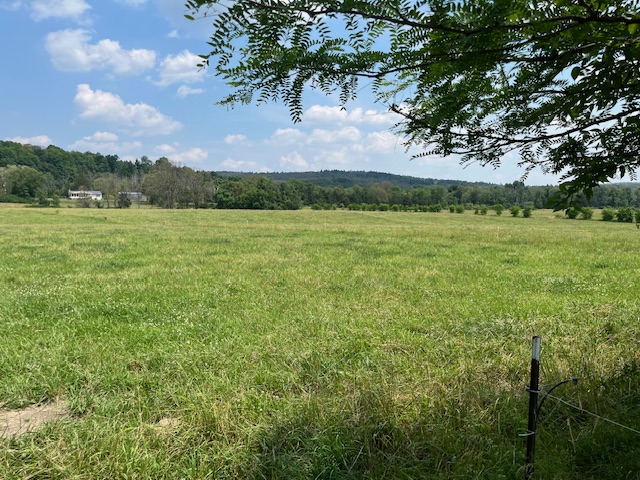
A recently grazed paddock at Churchtown with a ‘messy’ field edge hugging hedgerows and electric fencing
By Will
I live a short walk from the Churchtown Dairy and my family’s 109-year old fruit and vegetable farm is only a few miles to the south so I have come to know this area well. The old Churchtown General Store to the left of the introductory photo was one of the last places in Columbia County to sell bushel baskets of penny candy (without novelty or irony) and I recall biking past these fields on my ten-speed nearly forty years ago to get a regular and affordable sugar rush. The store is long gone now. In the 1960s, against the advice of all of our farming neighbors not to buy such steep and “useless” land, my mother purchased the top of a drumlin just across the road from the dairy where my father planted an unsuccessful Christmas tree farm. That hill, now a riot of eastern red cedar and red maple is taking its time growing back into a oak-hickory forest.
I can’t remember a time when grass did not dominate this road. When I was young, The Weaver family (also still farming in the area today after more than a century) managed many of the hayfields to the South and when I was a teenager it was the first place I saw and heard many of the grassland species of birds that I now study as an adult. Grassland birds are particularly good at site fidelity, meaning that birds that successfully raise chicks at a location return to that same location again and again, year after year. And so have I, it seems, returned after careers abroad, flying back to my nesting grounds at my family farm to rear my own young. It is with these layers of context and familiarity that I was pleased to accept the chance to visit this property with fresh eyes.
Before I begin, I’d like to thank the members of the Alan Devoe Bird Club for providing photos of local birds for this blog. Although they are not the exact individuals I found and describe in my posts, they are representative examples found here in the Hudson Valley. Special thanks go to Mike Birmingham, Chris Franks, Mayuko Fujino, and Marian Sole for laboring in the field with heavy telephoto lenses to capture great images of birds so I didn’t have to! Future blog posts will have live links to the Alan Devoe Bird Club (and other bird groups in the Hudson Valley) should readers wish to connect and learn more.
We can only guess at how many grasslands and fields existed in the Hudson Valley before European settlement. Some clues come from old surveying records, pollen samples from undisturbed accumulated layers of mud, and the guesses of anthropologists familiar with the farming practices of the First Peoples who lived here for millennia. What is clear from the historic record is that grassland birds took off quickly after European settlers cut the eastern forest into pastures and hayfields that mimicked the tall-grass prairies that these birds evolved in. Today, as much of the the Midwest grows corn instead of grass, these leftover eastern hayfields and pastures act as areas of last refuge among regrowing forests and human development. Grassland birds that shifted their breeding locations east today continue to breed here like fish in shrinking pools. Their fate is uncertain. All of New York’s grassland species of birds are in decline, some precipitously. Many are in decline on their ancestral lands too making them a natural subject of conservation.
Why are they declining? There are lots of reasons, but habitat destruction and intensive uses of remaining grasslands top the list. A century ago, farming was inefficient. The horse-drawn world could not mow a field from hedgerow to road in a few minutes. Moreover, among the busy calendar of chores, mowing didn’t start until late June and July and birds had a chance to nest and fledge before the cutting started. Today, hay is cut earlier to maximize its nutritional value, rotational grazing of livestock is intense and even non-farmers prefer to mow their lands to look like estates and golf courses. In many grasslands, there simply isn’t enough time between disturbances for most birds to mate, build nests, and rear young. That these birds manage to persist at all is a kind of miracle of determination. Colleagues of mine at the Hudson Valley Farm Hub in Hurley routinely record nest failures even when conditions are prime.
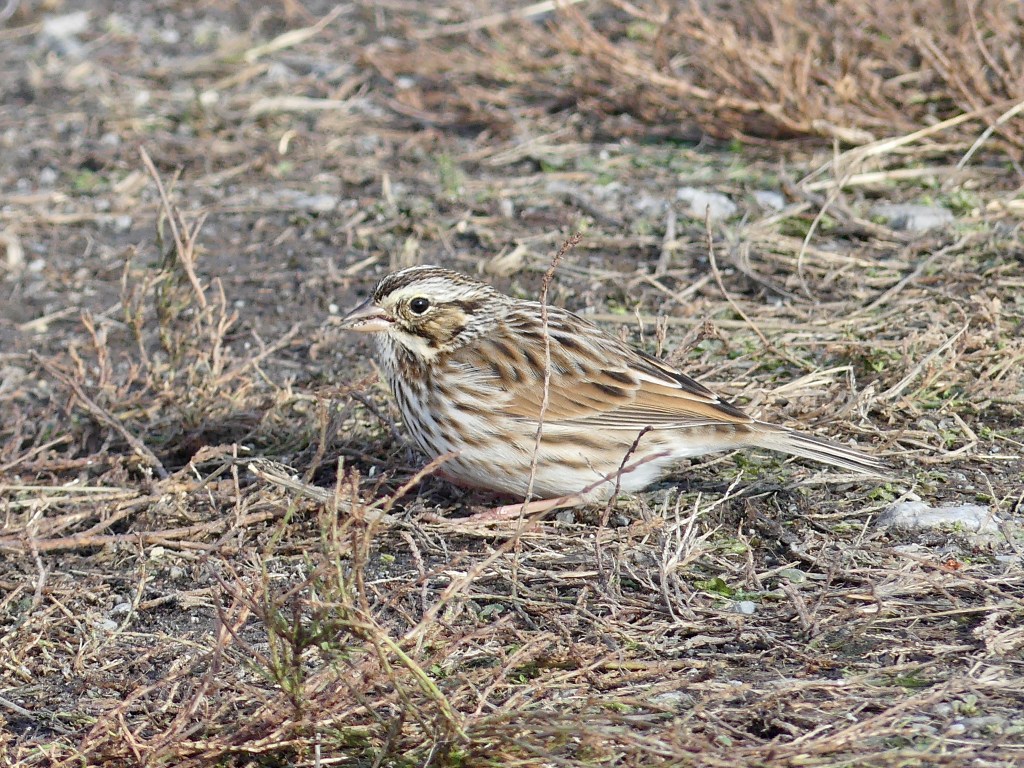
Savannah Sparrows fare better than most other grassland birds due to their ability to nest in the margins of fields, farm lanes, and active crops. As climate change warms our winters we find many more of them in the Hudson Valley year round. Photo: Mike Birmingham
What interests me most at Churchtown is that there are grassland birds — many of them, in fact, and they exist on a working farm where bird habitat management is an ancillary goal. Millions more grassland birds existed in New York a century ago when virtually zero farms managed for their success at all. Why do some farms host birds and others do not?
I think cows are one of the primary reasons that Bobolinks, Eastern Meadowlarks, Savannah Sparrows, and Grasshopper Sparrows can all be found at Churchtown. Cows can trample nests and remove grass but not as fast as a rotary mower. Both Savannah and Grasshopper Sparrows have seemed to find a niche in these pastures, building nests in the shaggy field edges under single-strand electric fences that cows are shy to graze closely for fear of electric shock.
These messy edges that are lightly grazed provide just enough habitat for grassland sparrows to eke out a nest or two.
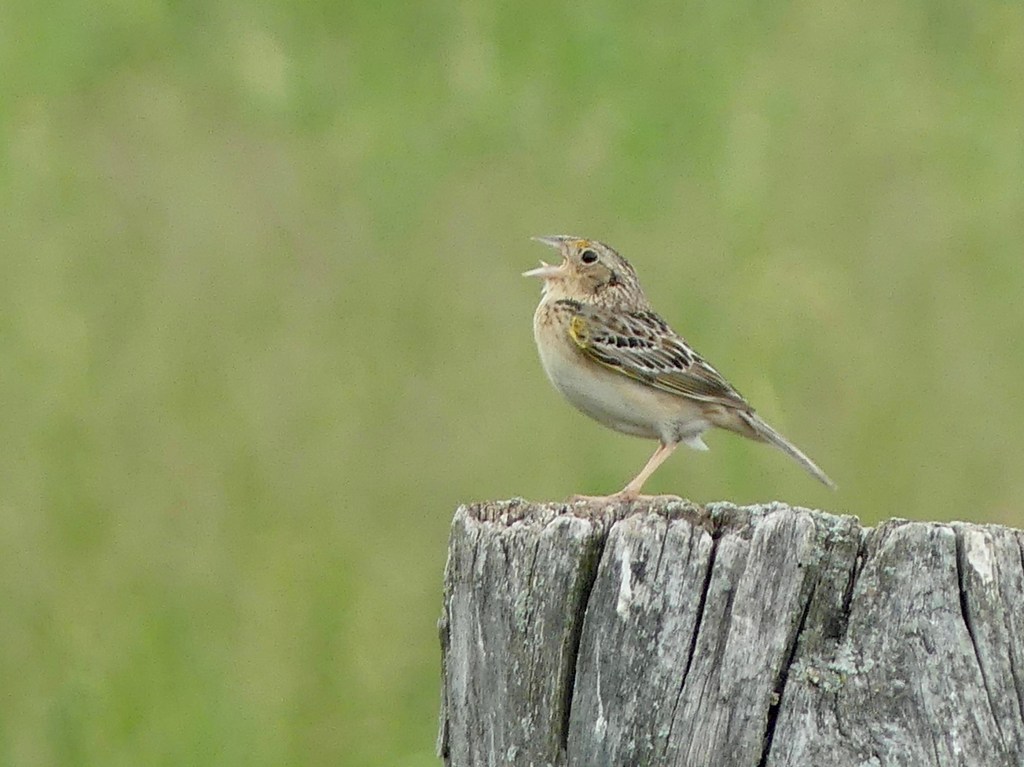
It was exciting to note breeding evidence for at least two pairs of Grasshopper Sparrows. These birds are easily overlooked, even by experienced birders, because they are small and drab and their song is very unbirdlike–a quiet lisping insect buzz. Even in their core breeding range in the Midwest, this species has declined 72 percent since 1966, according to the North American Breeding Bird Survey. I have only documented a handful of nesting records for this species in all of Columbia County so its presence here is special. They need largely undisturbed mature hayfields and pastures during late May and early June in order to rear young. I have never seen this species using the unique habitat of electric fence ‘edge.’ The birds I found were carrying food for young, which fledge in 6-9 days after hatching. It’s a race against time. When nests are destroyed, they often try a second, even a third time. More study is needed to accurately track their success at Churchtown.
So many drab or overlooked species show subtle beauty such as the dab of warm Naples yellow above the eye or lemon wash on the forewing of this Grasshopper Sparrow. Photo: Chris Franks.
On that point, it’s unclear to me if the bobolinks and eastern meadowlarks found at Churchtown are successful nesters or displaced birds from nest disturbances. Unlike the sparrows, both of these birds avoid edges and need larger areas of grass. Bobolinks are less picky about the vegetation type they nest in, but meadowlarks need long grasses to weave an intricate nest that looks more like a hutch than a cup — not easy to do in alfalfa or clover. They need true grass. They also breed early, preferring to nest in May just as many hayfields are getting their first cutting. Many are the fields that attract meadowlarks in the Hudson Valley only to encourage nests that are destroyed shortly after by mowers. The landscape at Churchtown is attracting meadowlarks but are they rearing young successfully?
As we reached out to each of the participating farms in this study we asked the question: What would you like us to pay attention to? In addition to a report on grassland birds, Churchtown specifically asked about the value of its unique hedgerows for birds.
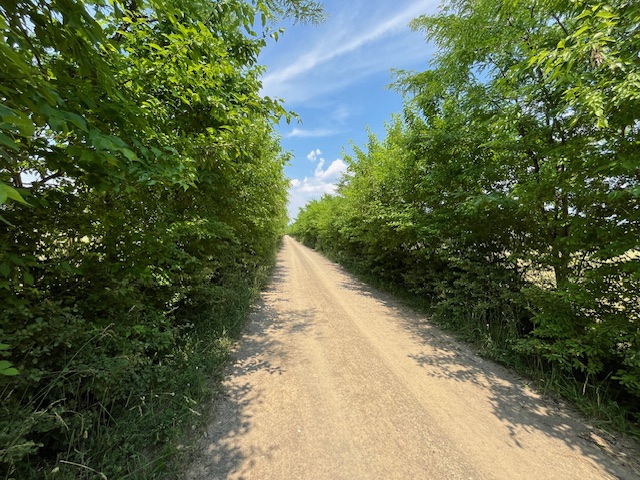
This lane-and-hedge aesthetic is common in England and Europe and fairly uncommon in North America. Would native birds use it for food and shelter?
We have a long tradition in America of borrowing European, specifically English aesthetics, and surrounding the Churchtown Dairy are extensive lanes bordered by hedges. Some European immigrants planted hedges specifically as “living fences” for livestock, but most hedges in eastern North America are the product of neglect rather than design. As shrubs overtook “rail over rock” fences and stone walls, they too became living fences, particularly as livestock abandoned a field and mowers did not trim field edges . The hedges at Churchtown are dominated by a non-native species of hazel and are poker straight — I wondered if these ‘English’ hedges would attract birds any better than a suburban landscape?
To my surprise, the answer is largely yes.
Two Brown Thrashers, declining shrubland species in New York, foraged for caterpillars in the hedges, possibly a breeding pair.
Brown Thrashes are related to mockingbirds and mimic the sounds of other birds, cats, even beeping cars, singing in April and May in distinct couplets. I’ve noticed that this species seems to be developing a tolerance for human landscapes as other shrublands grow into mature forests or are lost to development. They are particularly fond of transmission line corridors that are not mowed annually allowing for analog shrub habitats. Notice the striking yellow eye and warm chestnut back. Photo: Mike Birmingham.
The hedges also hosted the following species of birds
Mourning Dove
Cedar Waxwing
Northern Mockinbird
House Wren
Eurasian Starling
American Robin
Song Sparrow
Field Sparrow
Chipping Sparrow
Yellow Warbler
Red-winged Blackbird
American Goldfinch
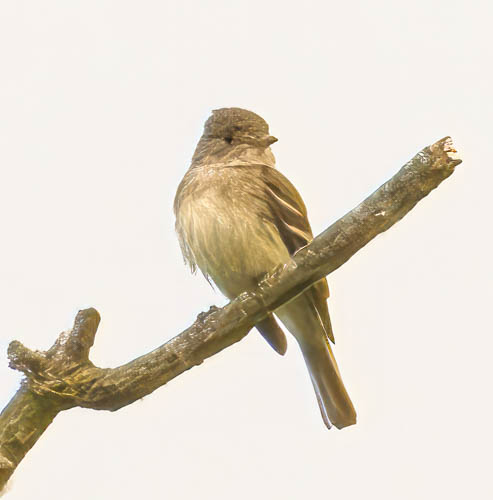
Another surprise in the hedges were three Willow Flycatchers. As the name implies, these birds perch on snags and twigs, sallying forth to capture flying insects with a keen vision that has evolved to detect rapid movement. They are not uncommon in the Hudson Valley, but I rarely see them in dry agricultural landscapes, and almost never in nonnative landscape plantings. They prefer wet pond margins or slow stream beds overgrown with willow and alder. Their song isn’t much of a song at all — a sneezy FITZbew! They are a member of the Empidonax tribe of flycatchers, all drab yellow-green small birds that reach their highest diversity in South America.
Willow flycatchers nest in woven cups in dense shrubs. They are expert renovators and if a nest fails they have been observed taking the building materials of the failed nest and carrying it to a new place to rebuild. Photo: Mike Birmingham.
It’s tempting to think of the ecological past as unchanging, but dynamism has always been a part of ecology as plants and animals have always moved, evolved, flourished, died, and changed. Studying birds provides such an interesting perspective because significant regional and continental changes can sometimes occur within the span of a human lifetime (in this case, the span of the life of a middle-aged farmer). Churchtown has changed since I was a kid, and it’s interesting to see how some of the birds are changing with it. Bird communities have an astounding and, dare I say, hopeful ability to rebound when given the essential ingredients they need to raise young and survive to breeding condition.
Are there new birds that you’ve noticed on your property or in a favorite landscape? Have others disappeared? I’ll revisit a few of these grassland species (and other farm species) in future posts.




 Farmer-Ecologist Research Circle