
by Conrad.
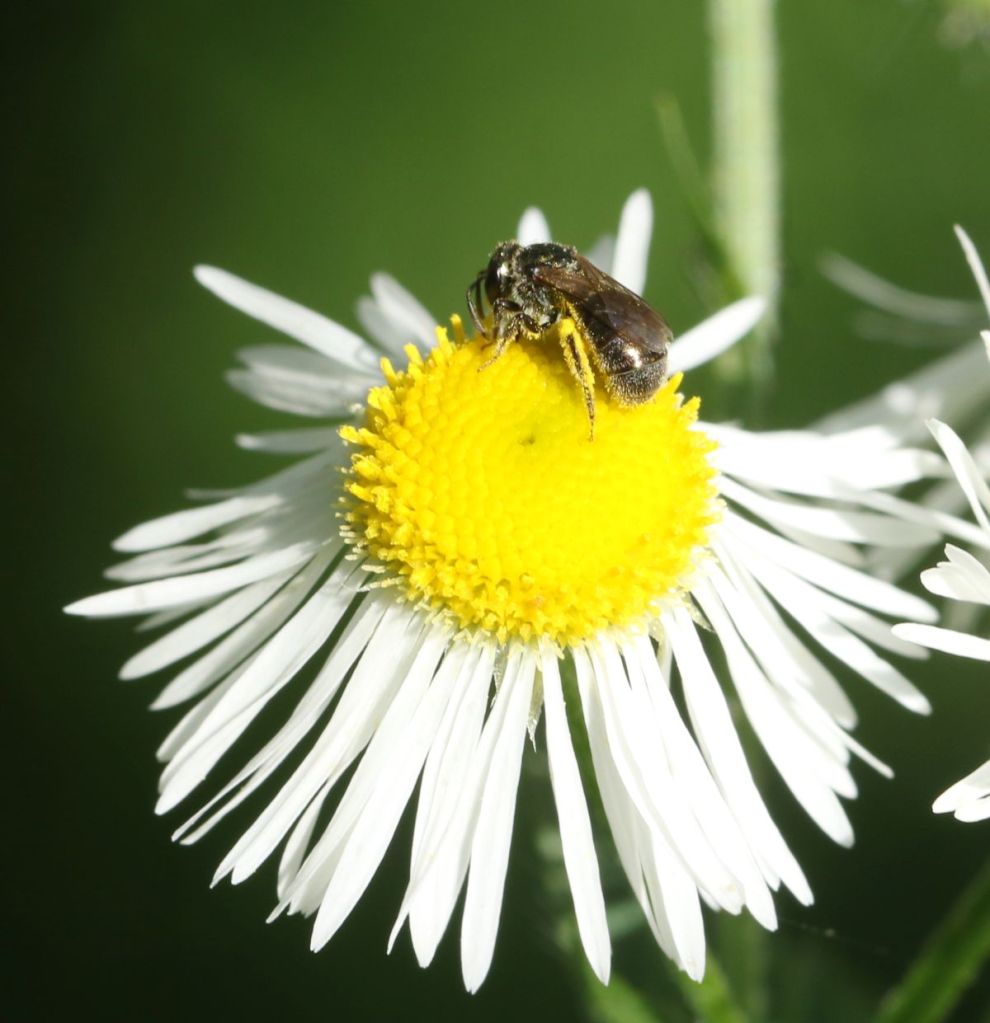
We’ve begun our Summer bumbling (both because we’re still trying to find our way methodologically and because I’m counting bumble bees). Basically, on each of your farms, Claudia and I outline a portion, often with your input, that we’re going to focus on. Within that portion, Claudia maps management units (for example, different beds or edge situations) and tallies the flowers, giving them each a general abundance rank. I then follow and count flower visitors at each of the most common types of flowers that Claudia has noted. I wander around generally spending five minutes with my eyes on a given flower species (I use a stop watch so that if I have to walk between flower patches or want to take a photo, that time is not included in my survey).
So far, I have spent almost six hours looking at flowers and the graph below illustrates the results to date:
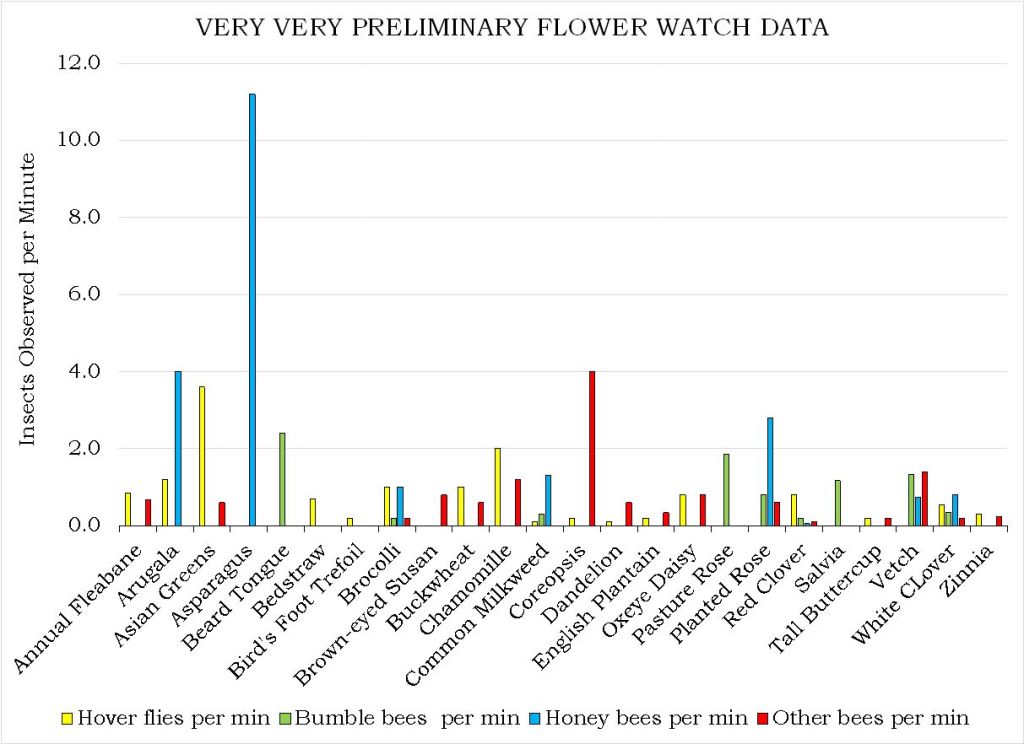
So, for example, Asparagus was the favored Honey Bee flower so far, Coreopsis had the most “other bees” (these are wild, mostly native bees excluding bumble bees), Bumble Bees were most common at the Beard Tongue, and hover flies seemed to like Asian Greens gone to flower.
There are lots of reasons to be critical of these results: five minutes of wandering flower watches can encompass widely varying numbers of individual flowers; flower ‘ripeness’ may also vary widely with some flowers that make look fine to us being long past prime nectar production; these data come from farms which may have quite different bee communities; and, although I have standardized for number of minutes of observation, the actual total number of minutes any one species was observed varies from 20 or more minutes for Annual Fleabane, White Clover, and Red Clover and only about three and half minutes for Pasture Rose (we have, for example, only observed flowering Asparagus at one farm for five minutes).
Nonetheless, if you have a moment, please take a look at these results and let us know how they mesh with your own observations. Which flowers do you usually think of as ‘bee-full’?
Once we finish the first round of farm visits, we’ll be posting a more detailed account.


Interesting, I always think of buckwheat and clovers as being bee-ful. Would never have guessed asparagus.
LikeLike
And I think those flowers may well be good (indeed some clovers did pretty well). This is based on a very small and partial sample size and I only shared it to hint at the shape of things to come and solicit feedback (like yours!) I’d bet on buckwheat to improve as we add more data.
LikeLike